

Sara Arnaù was born and raised in the province of Milan. Having studied art since she was a child, she is currently finishing her master's degree in painting at the Brera Academy of Fine Arts in Milan. @sara_arna
Where were you born and raised? How did it influence your art and your thinking about the world? I was born and raised between Milan and Brianza, in a family environment where there was a lot of space for creativity and my curiosity. Since I was very little, my grandparents gave me paper and colored pencils with which I spent practically most of my time. I felt that what I was doing, once I took a sheet of paper and a color in my hands, was something special that had to be treated as an important matter. And obviously, I really liked imagining scenarios and inventing shapes through which to tell myself a story. The family environment was so open and permissive towards my ideas and led me to have a lot of consideration about the fact that what I thought and imagined could take shape in objects or drawings that could enrich my reality and have an impact on others in a concrete way. Still, my approach to paper has always been special and privileged, and it is its delicate manual nature that I like when I begin a new work. I always start by reasoning with that material. Then I also head elsewhere.
Was there a particular experience that made you realize you wanted to be an artist, and how did that choice shape your identity and direction? I can't find a specific moment or episode in my life that tells me when I became passionate about art. I would rather say that some small daily gestures like drawing, tracing signs on paper, and scribbling as a child made me think I was doing something important for myself. I felt inside me that those things I did with my hands, with paper and with pencils, could be special and offer a way of joy to those who could see it. Over time, I understood that making art and seeing the art of the great masters who preceded me lifted my spirits. It gave me and gives me a sense of relief and brings new energy, which detaches me from the daily routine of negative things. I see being an artist as a strong cultural mission. A way to bring people to another level that can provoke in them a sense of trust and harmony. A momentum guided only by their intuition.
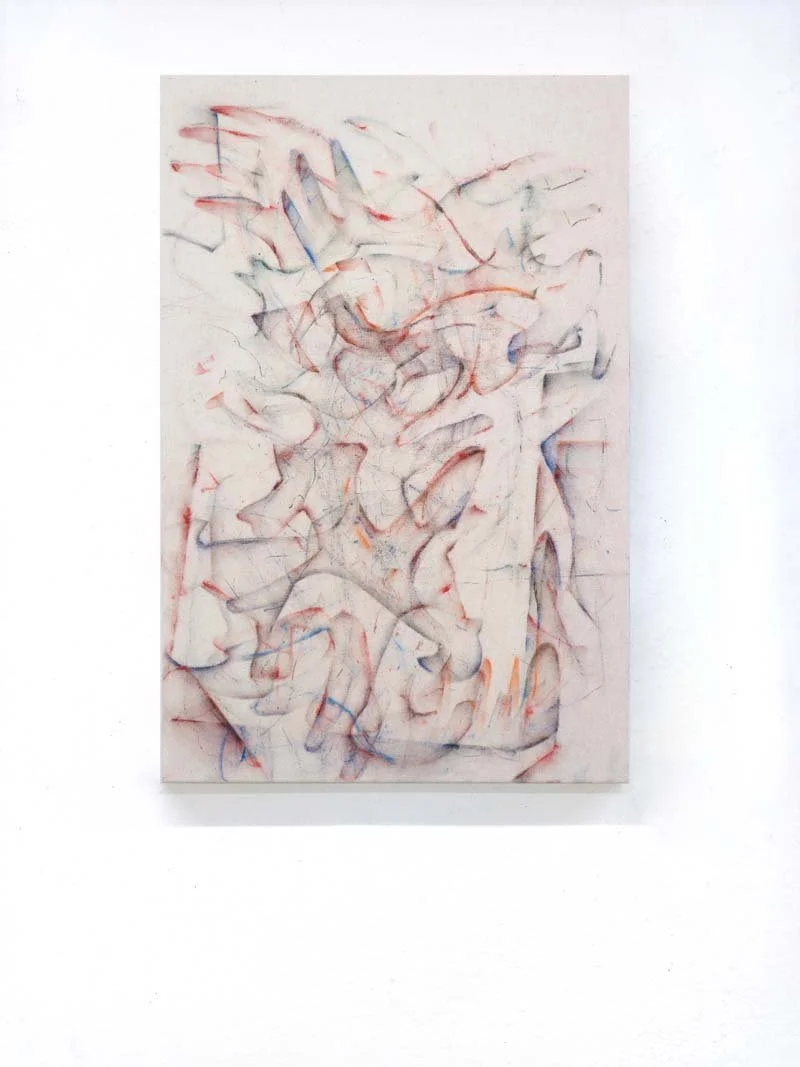
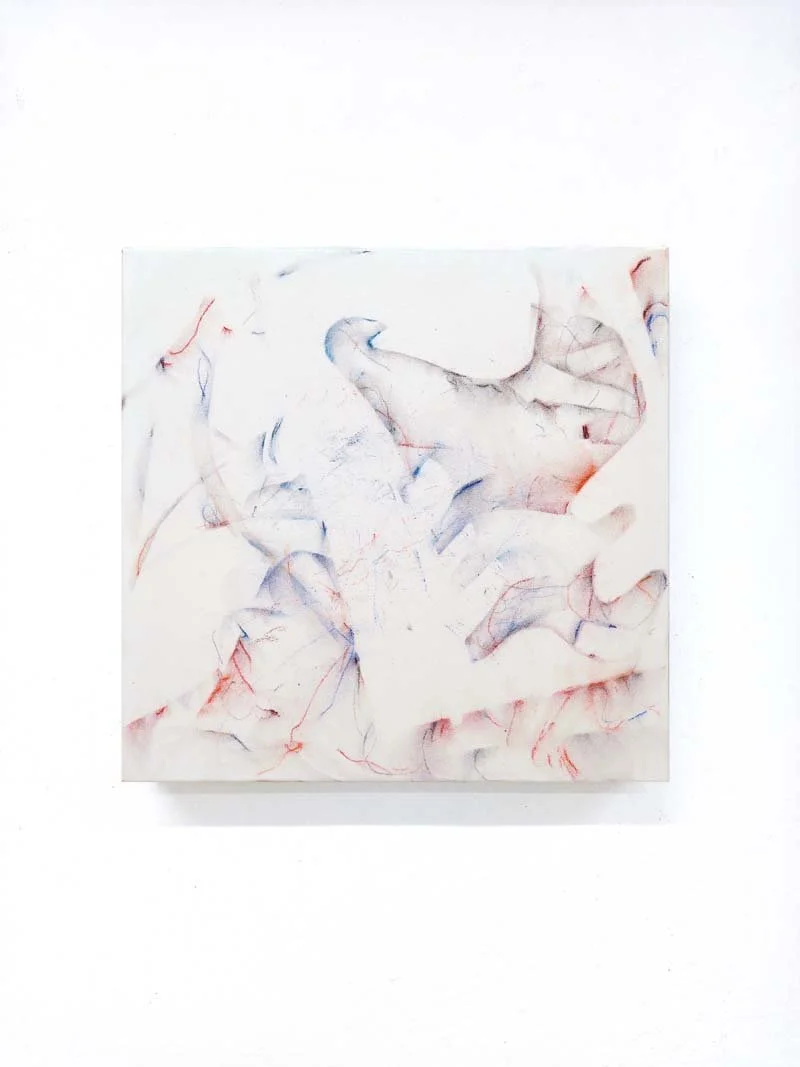
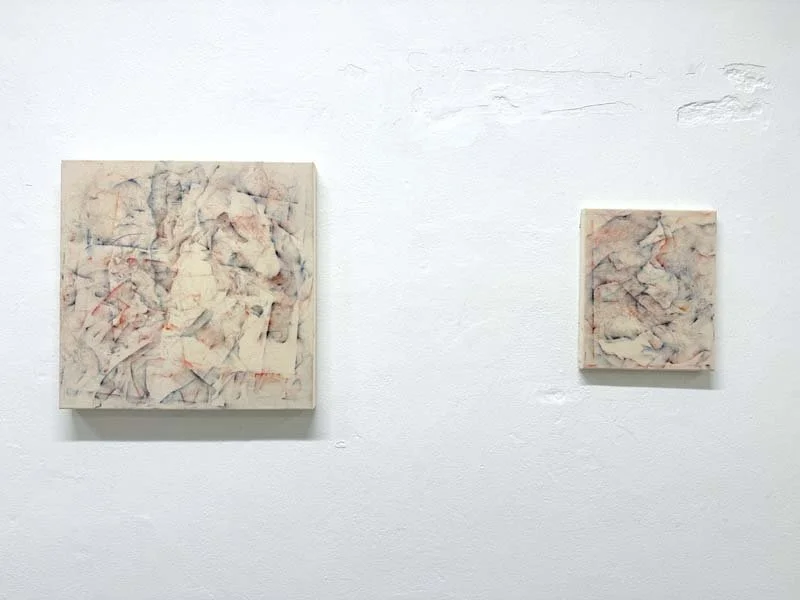
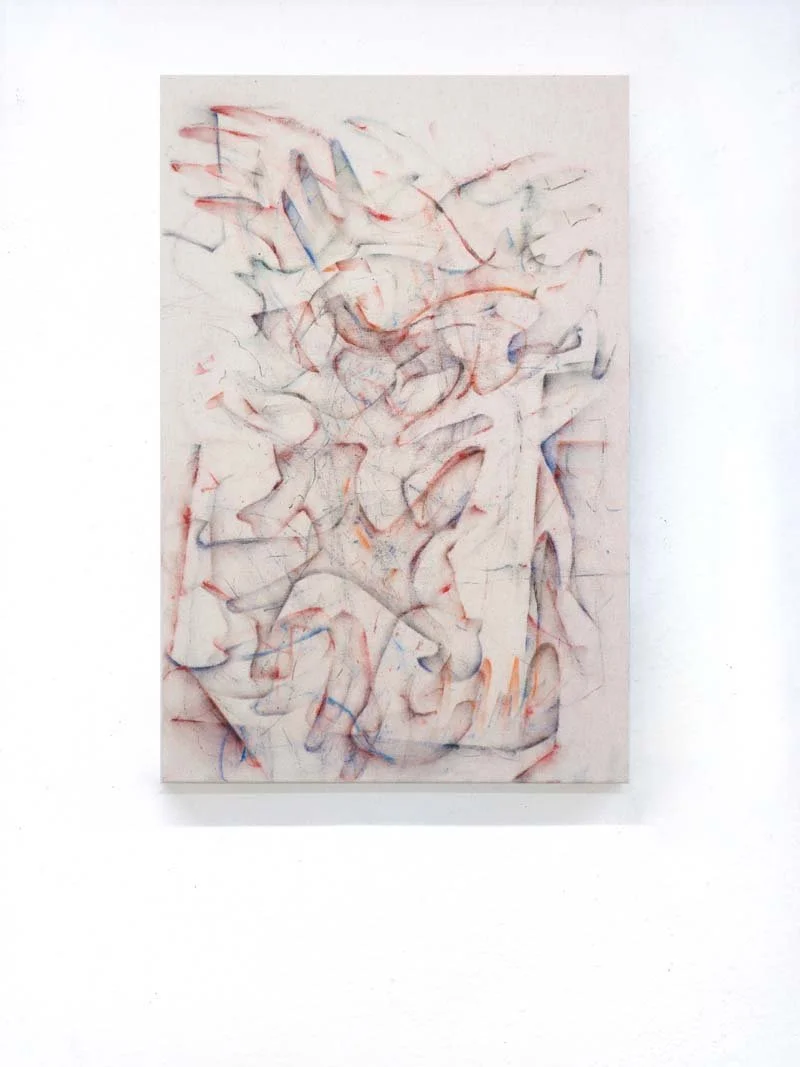
What does your typical day in the studio look like? What are the materials and tools most familiar to you? My typical day in the studio always begins with a moment of intense focus and concentration when I gather my energy and empty my mind. You don't have to work with too many thoughts in your head; you have to let your body, hands, and eyes flow on the objects and follow the sensations you have. Follow whatever you feel like doing in that moment. In my studio, I only initially think about what format I want to work with, but the rest is entrusted to the flow of things and my actions. I usually use soft pastels in a very simple way, rubbing the pigment powder that crumbles from the chalk bar with my hands. This powder that I spread on the support, which can be paper or canvas, creates waves, real movements of color. Traces that preserve my passages over the canvas of the movement made with my hands. This process is usually combined with large scraps of paper that I place and play with, overlapping and masking. I don't use brushes or other intermediate means very often. I act a lot with my hands.
What projects are you working on at the moment? And what themes or ideas are currently driving your work? I am currently working on large format canvases, and I am focusing on creating a more evident material mixture with changes in tone. Color is very important, and so is the quantity in which it’s distributed over the entire surface.
What do you hope people feel when they experience your art? What are you trying to express? What others feel is theirs and I can't control it, but when I work and paint, I let myself be guided by a strong energy that I hope restores freshness and jolts the viewer to keep them awake to what is important to see. I want to shed light on the questions that need to be asked.
Are there figures in the art world—historical or contemporary—you’d consider mentors from afar? I have great admiration for female artists like Katharina Grosse or Julie Mehretu because they are artists who make it clear that one can confront oneself decisively and face every obstacle without fear. Their large-format works are like universes in which one can get lost. They reveal great mastery, concentration, and a sense of balance.
What other mediums and disciplines inspire your work? A bit of everything. There is no pre-established path in which I tell myself where or what area I have to turn to get a certain result or a particular reaction. Sometimes it is simply what happens to me in my daily life that can offer fuel to work. Experience is very important because without life, there is no art. Sometimes living without making art for a certain period can become a reservoir, to then deposit everything in a "written" way in the works.
What is it like to live and work in Milan? Milan offers many opportunities to interact with very different artists and with very different minds from mine. And this can enrich my knowledge and vice versa.
Tell us about important teachers/mentors/collaborators in your life. My teachers at the Academy of Fine Arts of Brera helped me a lot to grow on a human and professional level, certainly thanks to their passion for art and for students. Many people outside the academic field, who already have a career started in the art system, helped me improve my approach. They taught me to never give up, even when there are very difficult moments, and to keep faith with the promise that, in a certain sense, I made with myself.
How does your art respond to your environment? Does being in nature inspire your art or your process? Nature inspires my art to the extent that I can recognize in it biological rhythms that I try to respect. There is the contraction and expansion of mental forces and energies. I don't overload, and I try to understand when I feel like working and when I'm too tired to do something good. I am of the opinion that we, as part of this earthly world, must listen to our intuition more, and we must listen to our body and indulge its internal needs. Even the works that we produce are a mirror of this internal state. Working like a machine to satisfy market demands makes sense up to a certain well-defined limit, beyond which I then look for new stimuli or, instead, rest and recharge my batteries. We know trees don't bloom all year round, and it's not always spring. We must follow this same natural cycle.
What are your reflections on AI and technology? What is the importance of human art and handmade creative works over industrialized creative practices? I believe that making "human" art is now becoming an act of resistance against the invasion of the machine in every field. Certainly, this artificial intelligence can help industrial, mechanical, and medical fields, but it cannot replace the "natural intelligence" of art, which remains the only trace of our passage on this earth, exactly like the handprints on the rocky walls of prehistoric caves. Nothing has changed. We are those hands that say "I was there".
Exploring ideas, art and the creative process connects me to… How to live as best I can in this moment by doing something that I know can restore a sense of beauty.