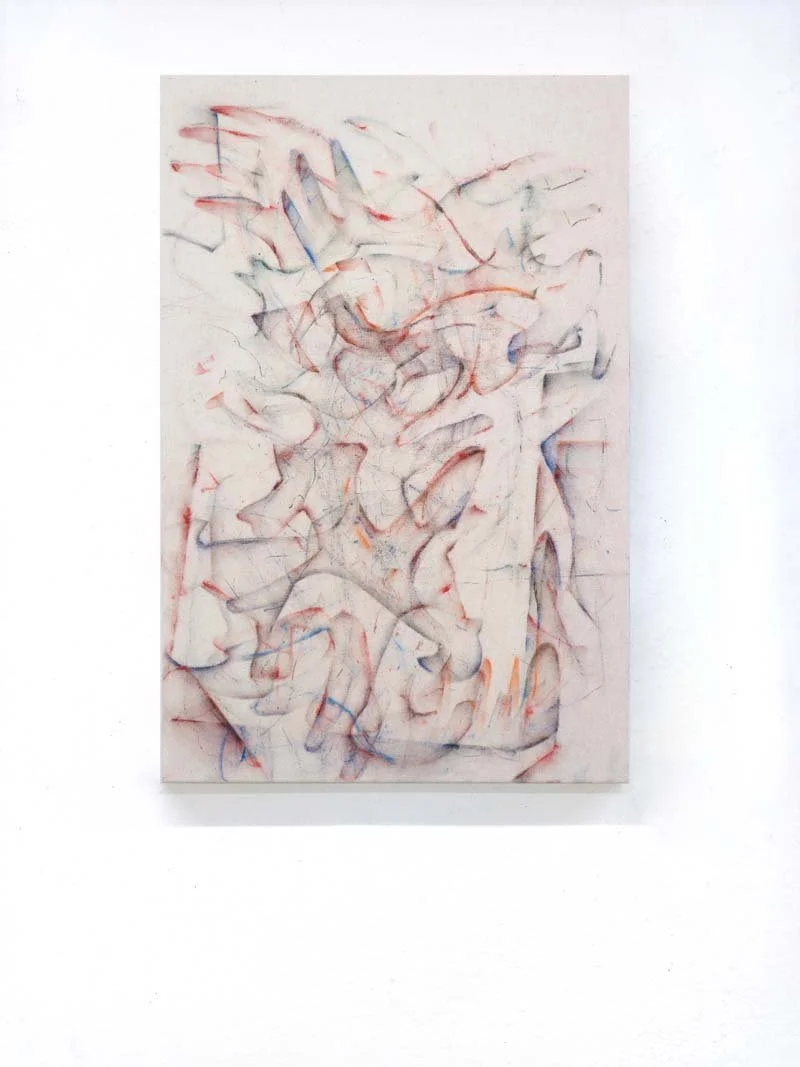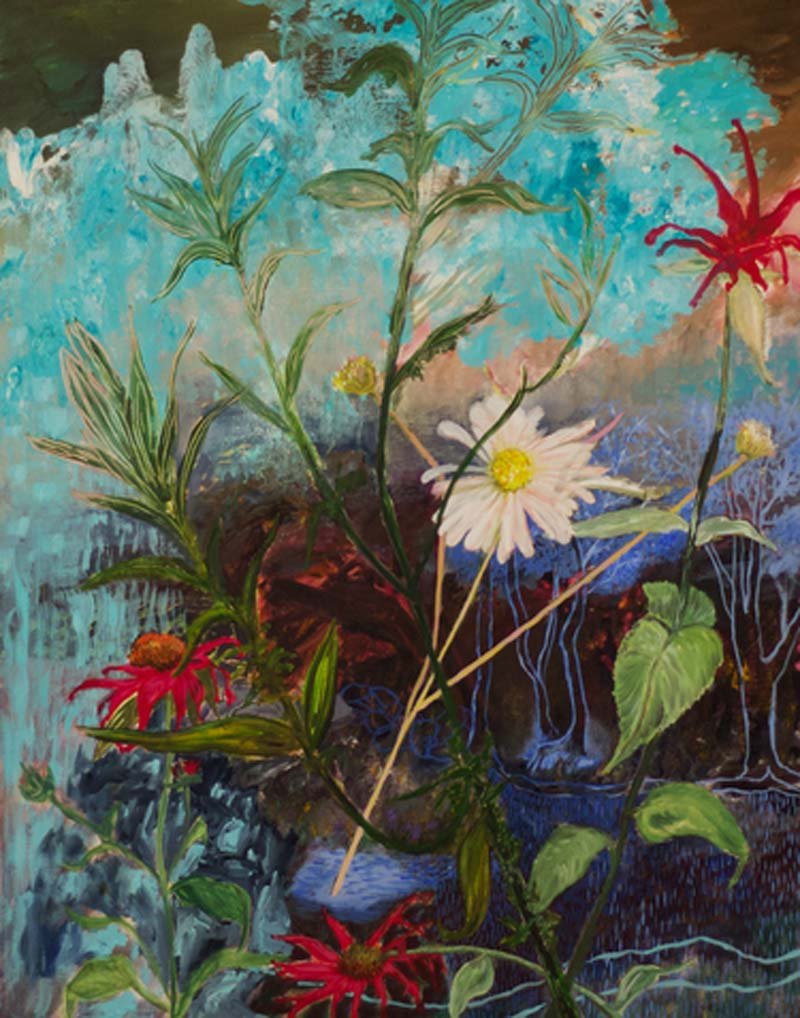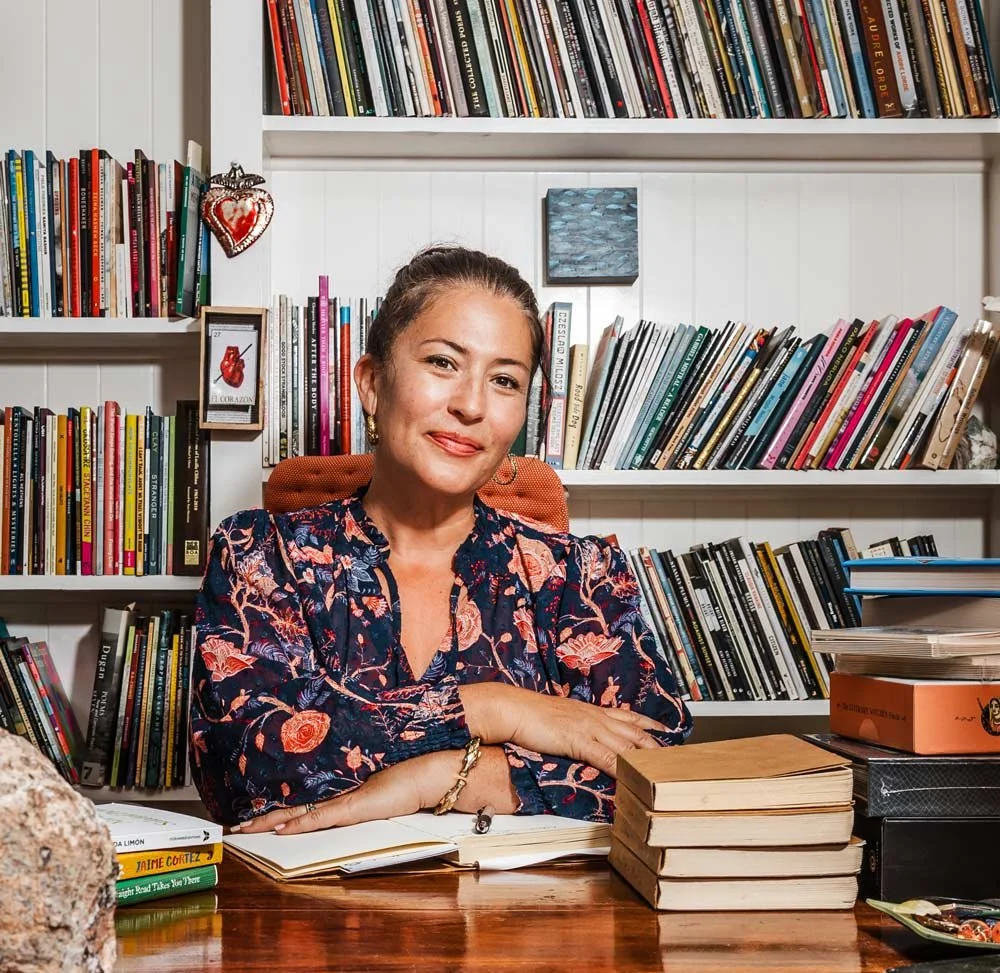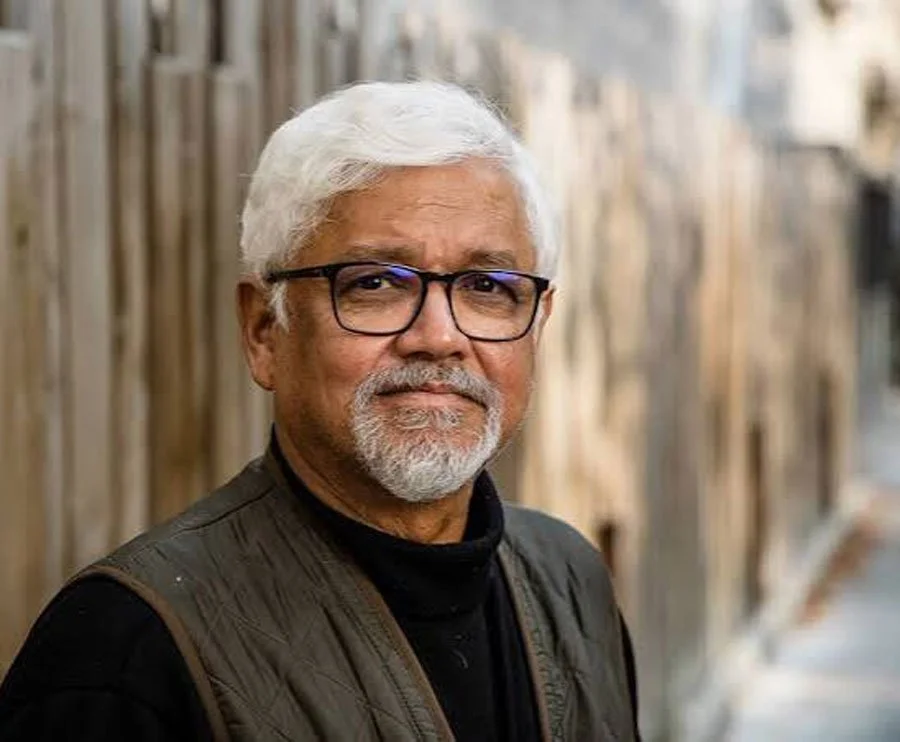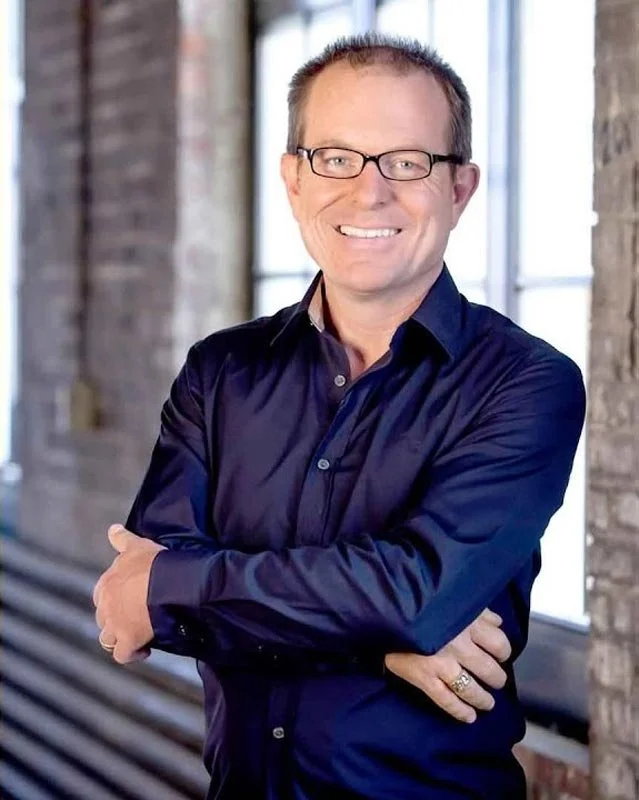


Steven Pearson is the Joan Develin Coley Chair in Creative Expression and the Arts and Professor of Art at McDaniel College in Westminster, MD. Pearson teaches perceptual painting and drawing at the foundation level but encourages an interdisciplinary approach in his advanced studio classes that follows his mantra, “don’t let the medium dictate your idea, let your idea dictate the media.” Pearson currently focuses on narrative figuration and representational art, but was an abstract painter much of his career. Pearson exhibits regionally and nationally and works out of his home studio in Mechanicsburg, PA, and his school studio at McDaniel College. @stevenpearsonart

Where were you born and raised? How did it influence your art and your thinking about the world? I was born in Gloversville, NY, and raised in Johnstown, NY. The region was once known as the glove and leather capital of the world. It was and is a very working-class town, and I grew up with a leather mill on one side of our house and railroad tracks on the other. Growing up in my neighborhood, we assumed our future would be work, most likely in a leather mill or the military. College was a distant dream. I joined the Navy in the summer before my senior year of high school, thinking I would make a career of it. I did three years’ active duty and 3 years’ reserve duty. Once I was in the Navy, I knew I wanted to pursue an education in Art. I moved back to Johnstown and pursued an Associate’s degree in Fine Art, a Bachelor’s in Studio Art, and finally an MFA in Painting. Growing up in a working-class neighborhood and town taught me the work ethic I needed to be an artist and to sustain art as a career. My father was a truck driver and worked long hours to provide for us. I knew if I put the same effort and work into my art, I would be able to make it a sustainable career.
When did you first realize you wanted to build your life around art, and why is artmaking so important for you? I remember liking to draw and trying to copy images from an early age. I always wanted to be the best at art throughout my K-12 education, but I really didn't know how to pursue it after college. I didn't have anyone talking to me about the possibilities of being an artist or pursuing art in college. When I was in the Navy, I realized I missed drawing, and I was fortunate enough to have an officer who was in charge of the area I worked in who saw I had potential and encouraged me to pursue college after my enlistment. Initially, I thought I would pursue a degree in art education, but in my junior year, I started to realize I liked painting more than I liked making lesson plans. I changed my major in my senior year to focus on being a painter. Over time, I realized that being a painter, being in the arts, gave me the opportunity to express the things that were important to me. Through my time as an abstract painter and a figurative painter, I've always tried to find ways to respond to the world I live in. The arts give us the opportunity to speak about our world, local or global, in ways that can be both subtle and powerful. How we do that as artists is up to us and individual. We get the opportunity to affect 1 or many. The more artists, the greater the effect.
What does a day in your studio entail? Do any routines guide your creative process? A typical day in the studio starts with putting down the distraction, the phone and emails, and deciding whether to listen to audiobooks, podcasts, or music as I work. Once that decision is made, I clean my palette, stare at the current painting in progress, and decide what to focus on to start the day. Painting has always been a balance of staring and actual painting. My process involves drawing with paint from life or a photograph, depending on the work, and then adjusting the drawing or composition as I work. I enjoy the struggle as a process through the painting. The more changes I make to the drawing, or adding to or subtracting from the composition I have to do, the more I feel I am working and making something good. The changes I make are both for content and composition, as I question what is needed or not needed to convey the idea. The struggle makes the creative process feel more real.
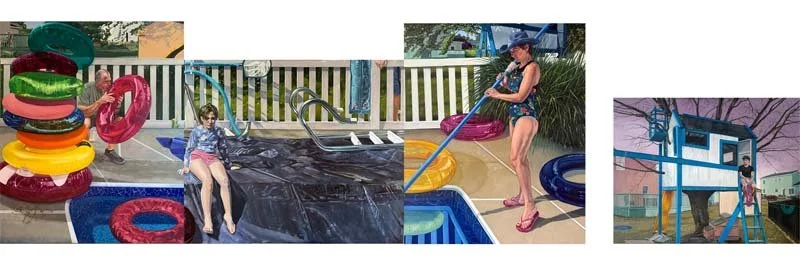
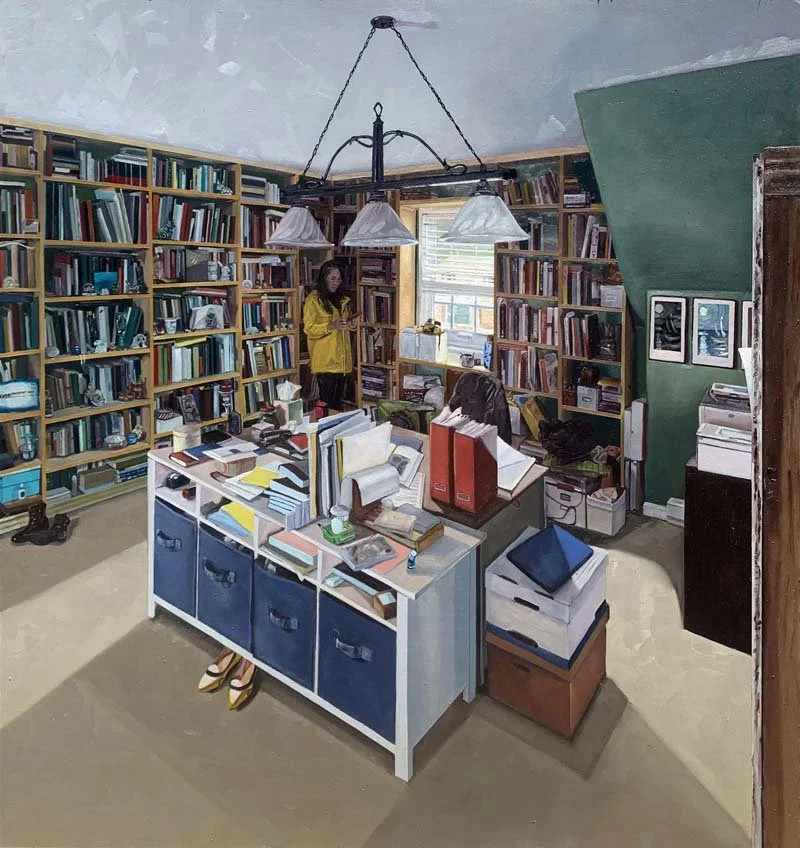
Could you share some details about your latest artistic projects and what they’re thinking through? I am currently working on a series of paintings where I try to convey the humor and frustrations of aging and living in a suburban development. More specifically, I am working on a painting of me mowing the lawn. There are 3 of me in the composition to convey the time and receptive nature of mowing the lawn, at the time of mowing and through the course of mowing season. It sometimes feels like a Sisyphean effort. I use myself as a kind of Hercules meets Don Quixote character as I tackle home labors that are completely mundane and anything but heroic. Through still life and narrative painting, I attempt to use the mundane to show the importance of everyday life. We each have our struggles and triumphs. The statement that follows guides my effort.
The smell of spring mulch heavily applied to regulate flower beds in their carefully curated rectangles and semi-circles, summer sounds of mowers and edge-trimmers that ensure manicured lawns, and the splashing and screeching emerging from backyard pools, define most of the American suburban living. In her book, Lure of the Local: Sense of Place in a Multi-centered Society, Lucy Lippard speaks of places as hybrids of knowledges and experiences that are both visible and invisible to the exterior: “By entering that hybrid, we change it; and in each situation, we may play a different role.” How does one recognize the impact they have upon entering an existing space while also acknowledging one’s self-transformation through the process? Through a series of paintings and drawings that investigate my domestic space, and a comedic interpretation of the labor required for its upkeep, I reimagine the disciplined tasks of the suburban homeowner as a cultural staple of the American middle-class. I foreground my suburban middle-aged experience as I portray myself as an aging Hercules engaged in Quixotic chores. While my drawings are meant to ridicule the implied heroism of the mundane, yet sustained activities, they also interrogate my own role in maintaining suburbia’s protocols.
What do you hope people feel when they experience your art? What are you trying to express? I hope people see the humor and the humanity in my work. It can be both funny and sad, and I believe, universal. Our chores and our struggles may be slightly different, but as we get through them, we grow and can sometimes feel heroic. Then we are right back at it, but we know from past efforts that we can succeed.
Which artists, past or present, would you like to meet? And why? Carravagio for his passion, Rembrandt for the humanity conveyed by his brush, Vermeer for his precision and light, I studied under Grace Hartigan, but would have loved to have met all the women of abstract expressionism, Joan, Helen, Lee, and Elaine, for their strength and tenacity to achieve in a shitty world that didn't make it easy for them. Bill De Kooning for his inventiveness with paint. Lennart Anderson, Jack Beal, Sydney Goodman, and Vincent Desiderio (present) for their ability to convey a narrative without giving away the whole story.
Do you draw inspiration from music, art, or other disciplines? I find inspiration in set design and stage interactions of actors in plays and sitcoms, cinematography in movies, plots and narratives in books, and composition and dynamic-action comic books. I like the range of emotions I can feel from different genres of music, but I especially love the fractured, layered, and heavily sampled lyrics of the Beastie Boys.
In what ways has living in Mechanicsburg, PA influenced your daily practice? Mechanicsburg is right across the Susquehanna River from Harrisburg. Harrisburg is a small city, but it has good theater, a good symphony, a minor league baseball team, and a variety of foods to explore. The Art Association of Harrisburg is a great venue for all levels of artists, and the Susquehanna Art Museum brings in a really good range of contemporary art exhibitions.
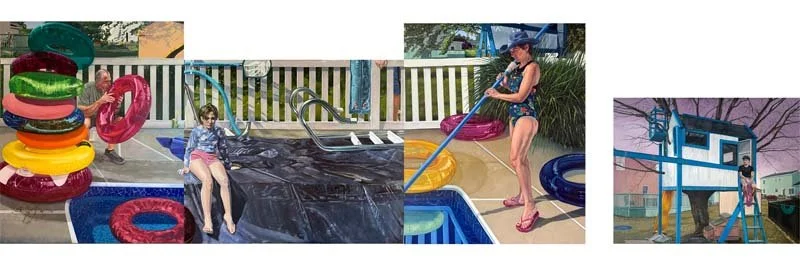
What helped you keep going during the difficult process of creating your recent painting, Blinded by His Labors? Blinded by His Labors is a 21-foot-long, 6-foot-tall, four-panel painting that is as much about time and seasons as it is about the seasons and struggles of relationships. I started it and the end of a relationship, and as I worked through it, I was able to look at each panel as a season, a moment, separate, but connected to the next panel. Struggling through the drawing, composing, and painting helped me shift the narrative from something negative to something more real, accessible, and relatable.
Tell us about important teachers/mentors/collaborators in your life. I studied under Scott Brodie at the College of St. Rose. He is a great still-life painter who always made sure we understood the importance of our creative practice. Thomas Lail was an adjunct professor at St. Rose who made me understand the importance of the ideas behind my work. Grace Hartigan, Sam Gilliam, and Raoul Middleman were my graduate professors at the Hoffberger School of Painting at MICA, and they brought mid-20th-century art history to life by sharing their stories, struggles, and experiences with us, and never letting us forget that art was a lifelong pursuit. They lived art, and they made me want to live art.
How does the environment show up in your art? Does being in nature inspire your art or your process? I grew up in the foothills of the Adirondack Mountains. It was easy to see nature and be surrounded by it with a short drive out of town. I always loved seeing the hills and fields of the farms that surrounded Johnstown, but never tried painting them. I tried Plein Air painting a few years ago and still like to do it on occasion. Being out in nature, painting what you see as you see it, is daunting and challenging. It helps you understand color and light, but also makes you realize how small you are in relation to what surrounds you as you try to focus and make sense of all the visual information around you.
What are your reflections about AI in art? What is your relationship with technology as a creative tool? I haven't utilized AI in my process at this moment, but I'd like to think that it may be useful as a tool in the same way photography or Photoshop became useful, or the technology has become useful to a variety of artists in different arts. I don't think it can or should replace the human touch, though. Nuance, thought, and emotion are important to the success of good art, and I think you still need humans for that.
Exploring ideas, art and the creative process connects me to… To life and the world I live in. I would be empty without it.