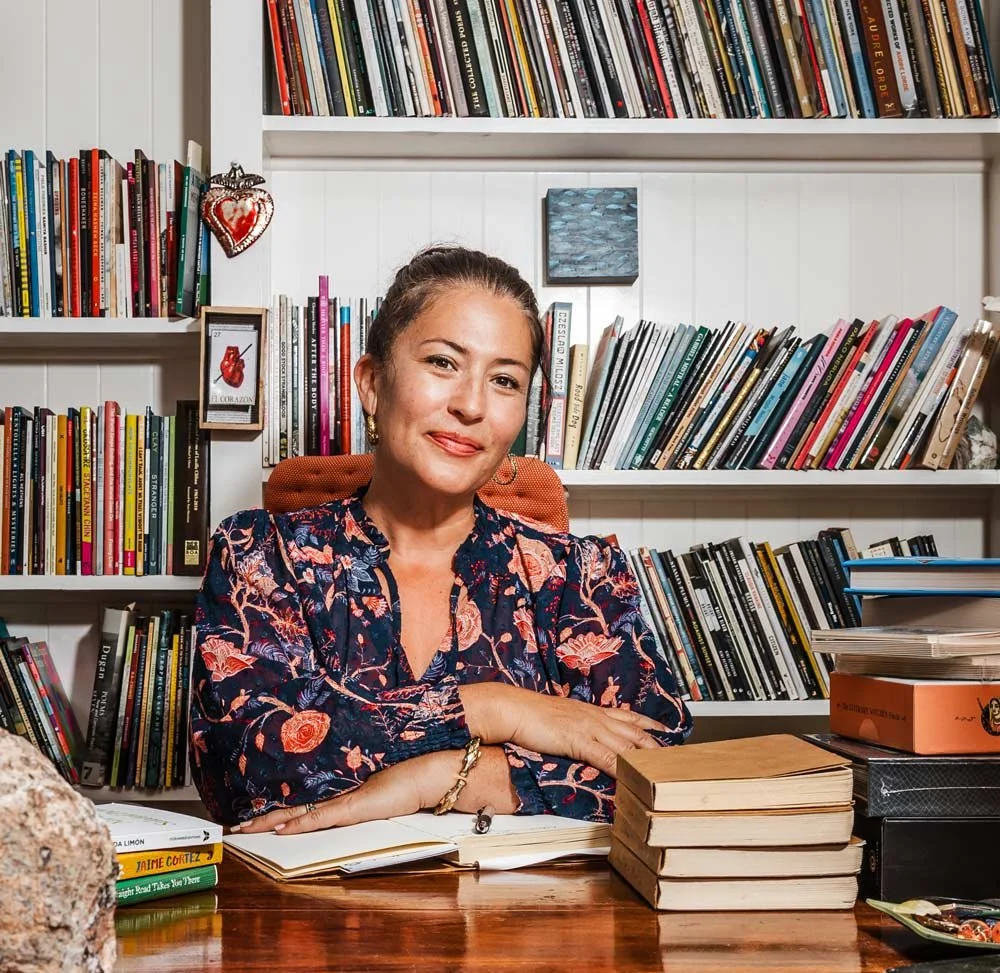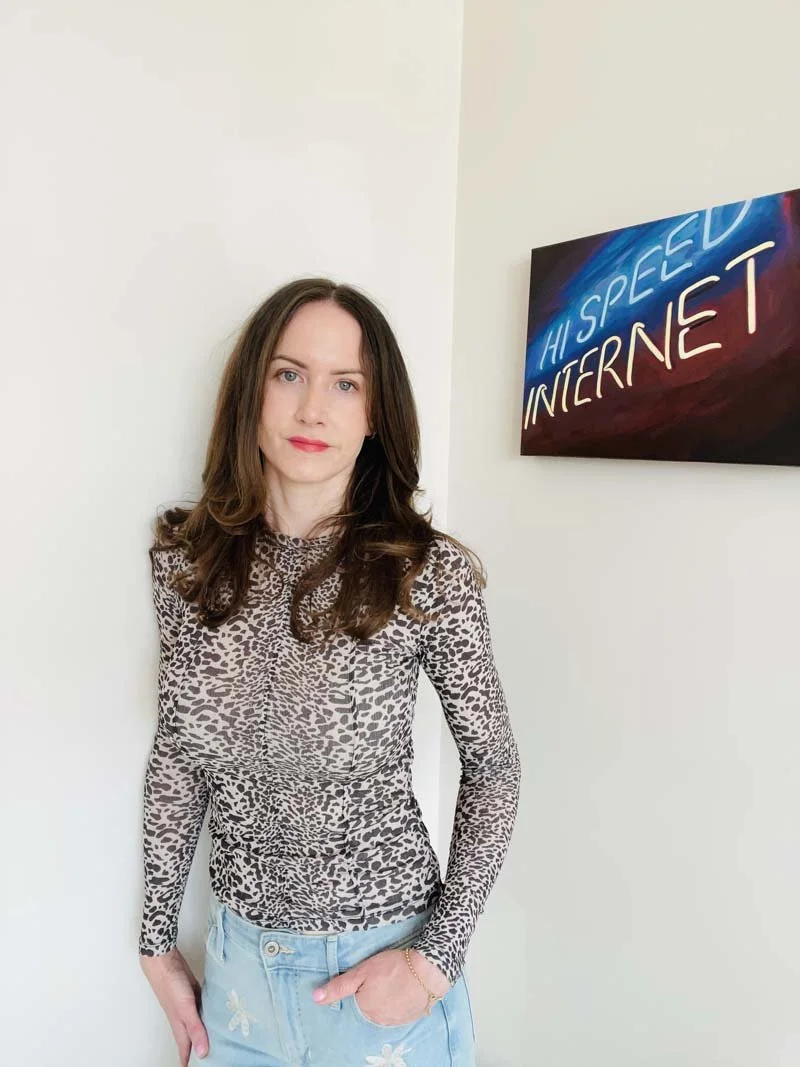


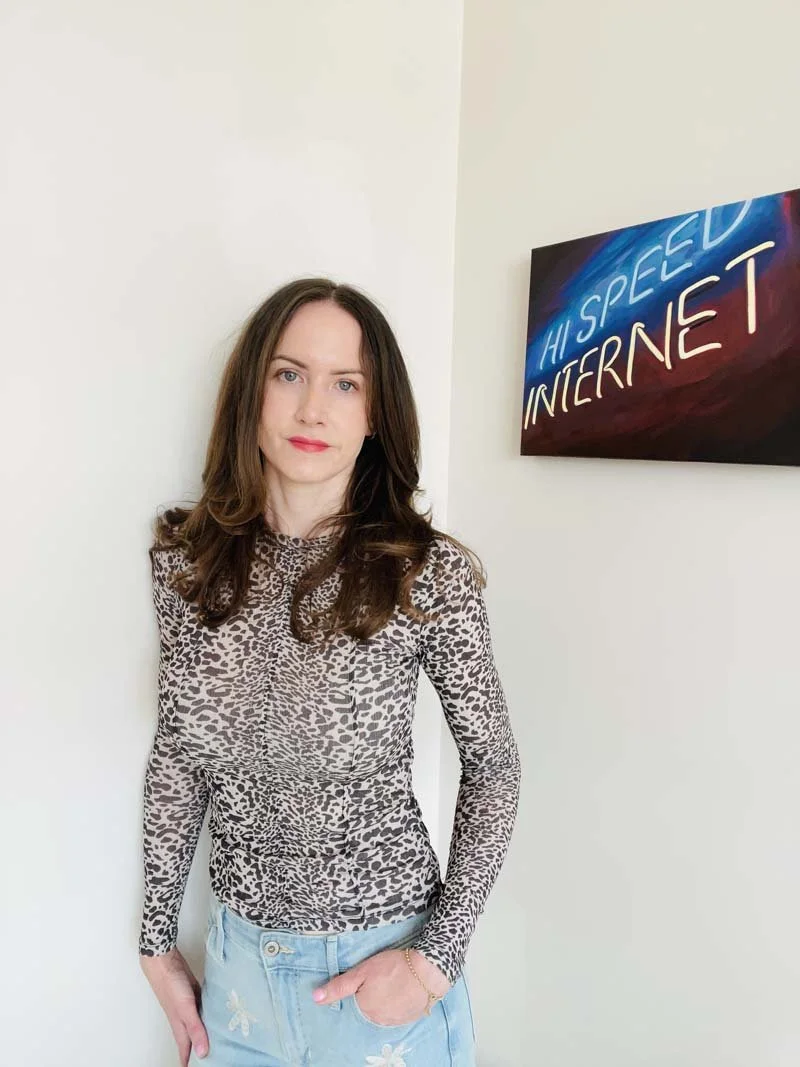
Katherine McMahon is an American multidisciplinary artist based in London. Her work has appeared at Guild Hall Museum (East Hampton, NY), Peter Mendenhall Gallery (Pasadena, CA), and SITE: Brooklyn (Brooklyn, NY). In early 2018, she participated in a solo residency at the Elaine de Kooning House in East Hampton, NY. In 2020, she mounted 'The Roast Beef is the Story,' a presentation of paintings that thematically explored the American diner, presented in the windows of the abandoned Silver Lining Diner in New York during the COVID lockdowns. Her work has been featured in The New York Times, Rolling Stone, ARTNET, and TimeOut New York. @katherinemcmahon
Where were you born and raised? How did it influence your art and your thinking about the world? Maryland in the USA. Americana and particularly American films influence my work.
When did you first fall in love with art and realize you wanted to be an artist? For you, what is the importance of the arts? As early as I can remember. In my elementary school yearbook, I said I wanted to be an artist when I grew up.
What does your typical day in the studio look like? Walk us through your studio and your most used materials and tools. I paint wherever I can find the space to do so, even if I’m traveling. For now, I’ve set up a studio space in my home, and a typical day is unpredictable aside from a lot of caffeine and music constantly being played while I’m working.
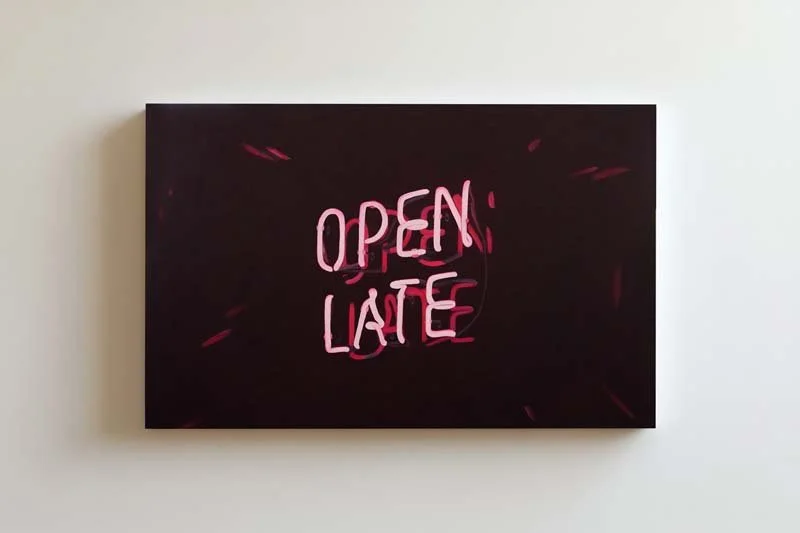
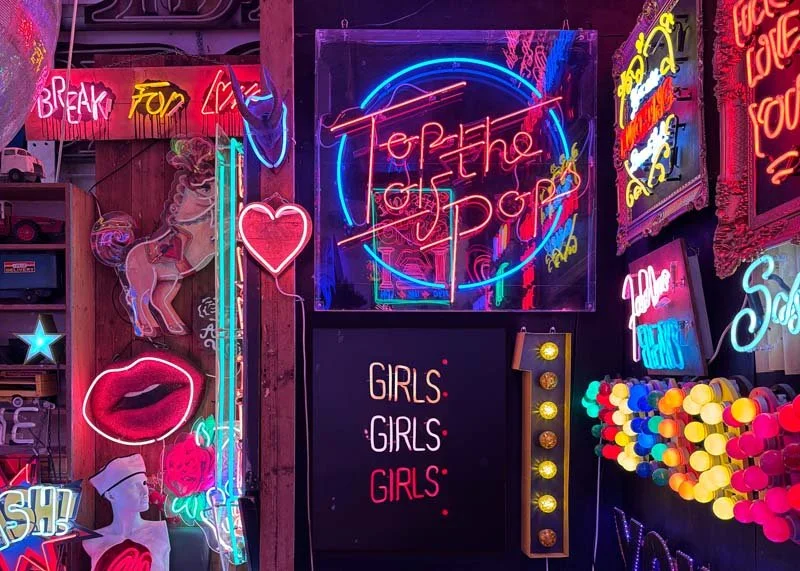
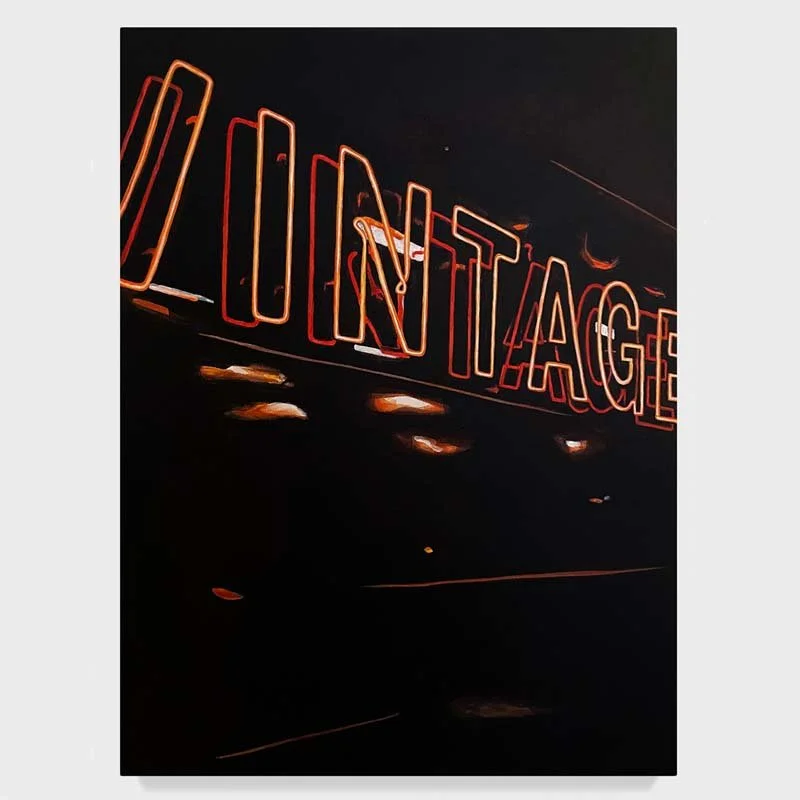
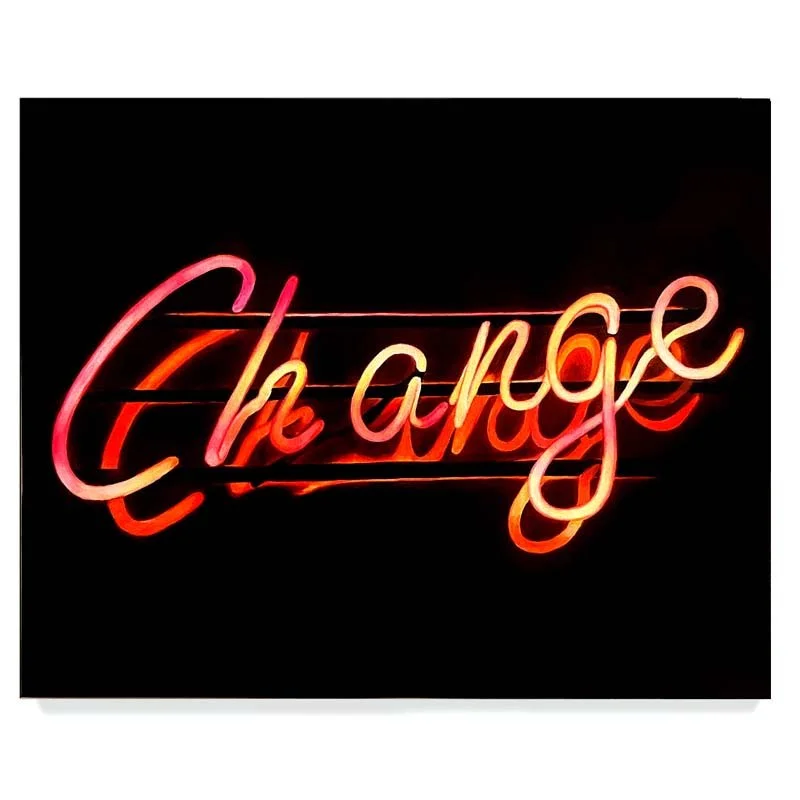
What projects are you at work on at the moment? And what themes or ideas are currently driving your work? I’m working on a series of neon sign paintings that I will present as a pop-up exhibition from Oct 10-19 at God’s Own Junkyard, an amazing space in North London that houses the biggest collection of neon signs in Europe.
What do you hope people feel when they experience your art? What are you trying to express? This new suite of paintings celebrates neon’s golden age while taking a wider lens to the way culture facilitates the transition of mainstream objects to cultural artifacts in the 21st century. Furthermore, this series explores the literal messaging of neon signs–often with hedonistic undertones–framing words and phrases as a historical record that reflects shifting priorities in consumerism and culture from the past to the present.
‘Open Late’ explores the inverted symbology and psychological effect of presenting the sentimental, sculptural neon sign object via the two-dimensional, flattened medium of painting. Drawing inspiration from Mark Fisher’s concept of hauntology—the idea that the present is haunted by lost futures–these paintings consider the complexity of the neon sign’s contemporary identity as a material casualty of the 20th century.
Which artists, past or present, would you like to meet? And why? The pioneering, mystical Swedish painter Hilma Af Klint, the comedian George Carlin, and Sir William Ramsay and Morris Travers, who discovered the element of neon in 1898 when they isolated the element from liquid air.
Do you draw inspiration from music, art, or other disciplines? I draw tons of inspiration from music and think of it as pure magic, the way a great song can get under your skin and make you feel things. The most powerful thing about the arts in all their iterations is the nuance with which they can communicate inexplicable emotions and the absurdity of everything.
A great thing about living in London is… it’s a more relaxed version of NYC, with fascinating history and easy access to the rest of Europe.
Can you describe a project that challenged you creatively or emotionally—and how you worked through it? Probably the ‘Public Domain’ collaborative music project I did with my friend, the musician Ray Angry. The process entailed a lot of research from songs and lyrics that had entered the public domain and were free to use and adapt. Ray would write compositions, and I was mostly adapting and rewriting lyrics to structure new songs about contemporary themes. Working in a collaborative setting with Ray and more incredible musicians helped me approach things in a new way, creatively and conceptually, and it was a joy for me.
Tell us about important teachers/mentors/collaborators in your life. I’ve had countless mentors and teachers, and often the ones that make the biggest impact aren’t the people you seek out for advice. Sometimes I’ve resented the lessons they teach me, but in the end, the more difficult and challenging lessons push you to be better and go further in the end.
Sustainability in the art world is an important issue. Can you share a memory or reflection about the beauty and wonder of the natural world? Does being in nature inspire your art or your process? I’ve been living in major cities for over a decade, so I often feel like a fish out of water when I’m in the country, but my nervous system seems to thrive whenever I leave metropolises.
AI is changing everything - the way we see the world, creativity, art, our ideas of beauty and the way we communicate with each other and our imaginations. What are your reflections about AI and technology? What is the importance of human art and handmade creative works over industrialized creative practices? I think there’s no way to cheat actual human experience, and that goes for everything. My cynical view on AI is that it has a place as a perpetual generator of mediocre/often wrong machines that lack nuance. I think there’s this narrow-minded fear of how “human-like” these machines can be, but perhaps if we try to see AI as a mirror of where we’re at currently in culture, it can open up the possibility for us to delve into weirder, less predictable, and probably much more interesting creative output as humans.
Exploring ideas, art and the creative process connects me to… Something I can’t fully understand or explain.