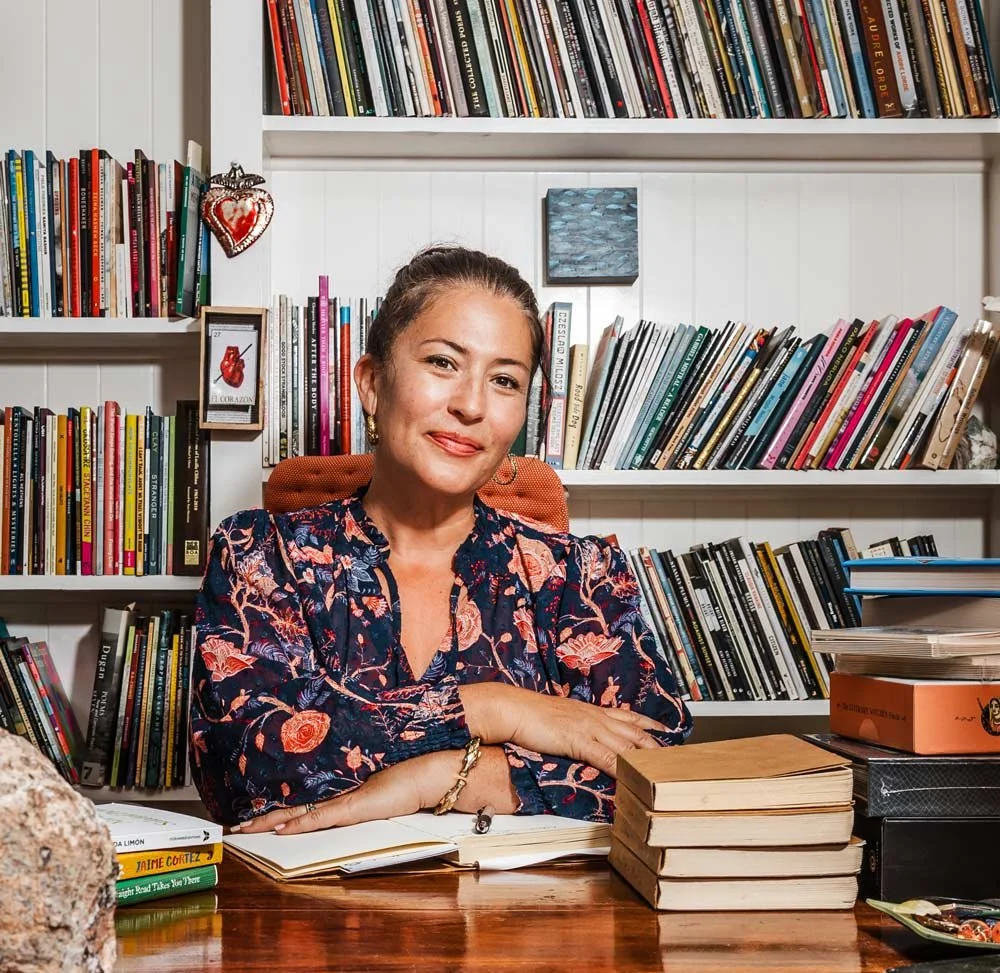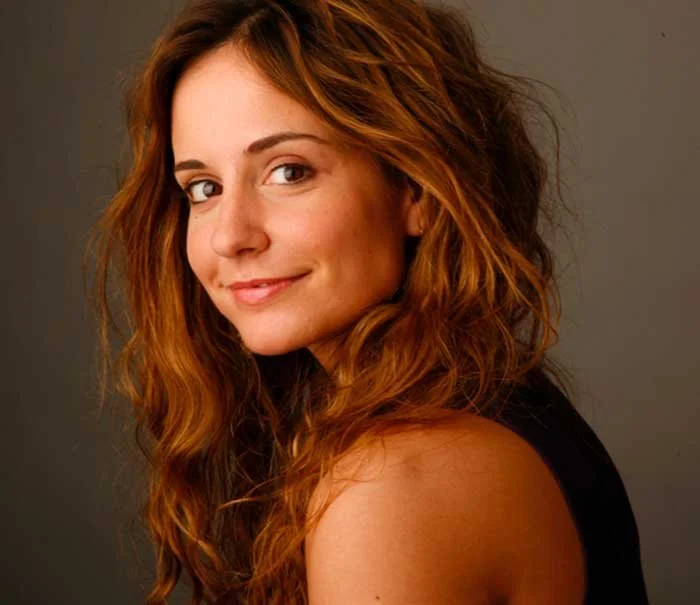


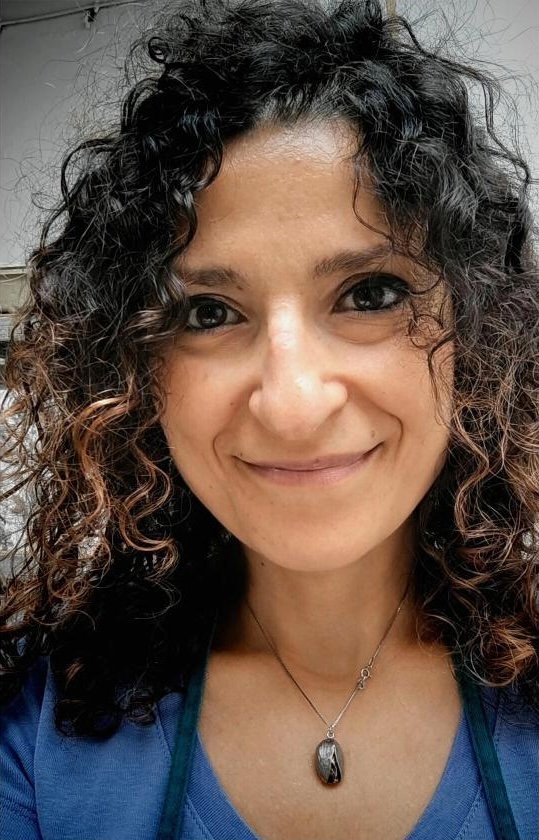
Giulia Leonelli is an artist printmaker living in Paris, who holds a doctorate degree in Visual Arts from the University of Paris 1 Panthéon-Sorbonne, where she teaches as a printmaking instructor. @giulialeonelli.85
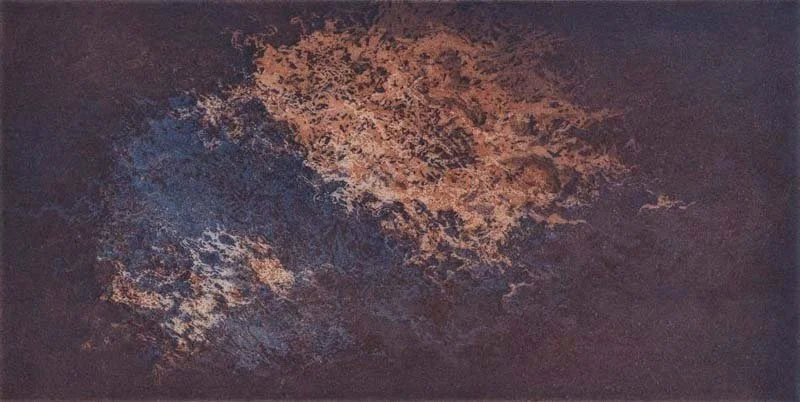
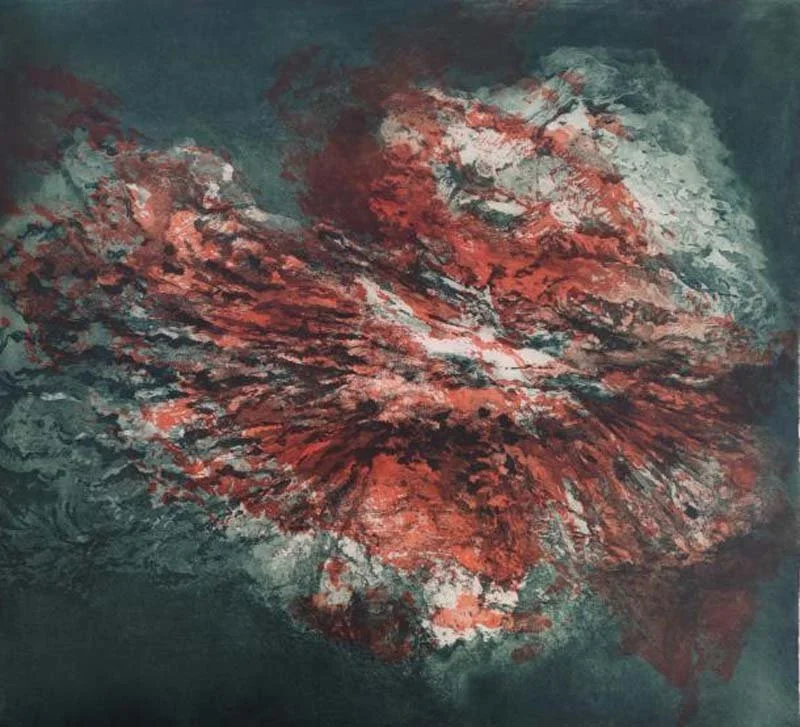
What memories from your childhood in Italy continue to inspire your art today? I was born in the south of France, but my family moved to Italy when I was a child. I grew up in a town 50 km south of Rome. Being close to such a cultural tradition and artistic heritage had a profound influence on me. Very early on, I developed a passion for drawing and got interested in art and art history. I have always had a passion for research in various fields related to human expression.
On the other hand, I lived in an industrial city until my twenties. I think this is why I have been craving nature since my childhood, and this desire clearly shines through in my work, in a completely unconscious way.
When did you first fall in love with art and realize you wanted to be an artist? For you, what is the importance of the arts? For as long as I can remember, music has always been a reason to be alive for me. I couldn't express it any other way. Although I'm not a musician, I grew up with the need to be surrounded by music, with this immense desire to sing. But for various reasons, I never followed that path. Also, I drew all the time, and after high school, I chose to enroll at the School of Fine Arts in Rome, primarily studying painting. But things became more serious when I took up printmaking, which became my music.
I think the importance of art lies in the fact that it connects us to the heart of existence, a place where we can share and receive the essence of all things. Art allows us to express something that could not be expressed any other way. And all of this comes from our body, from our mind.
Art has given me the immense privilege of meeting other artists and creatives who inspire my life and with whom I share this same desire, as essential as breathing.
What does your typical day in the studio look like? Walk us through your studio and your most used materials and tools. I usually enter the studio in the late morning, after spending the early hours of the day reading, writing, and running. This way, from the moment I arrive, my mind and body are receptive to what lies ahead.
When I'm preparing to print an edition, I work at the press and have to handle paper, inks, and copper plates.
I need a good amount of order and discipline in my creative process, whether engraving a metal plate or printing an edition, mainly because I believe that making art is about confronting chaos. This is neither good nor bad; it is simply the reality of life, and art comes directly from life. It expresses its essence.
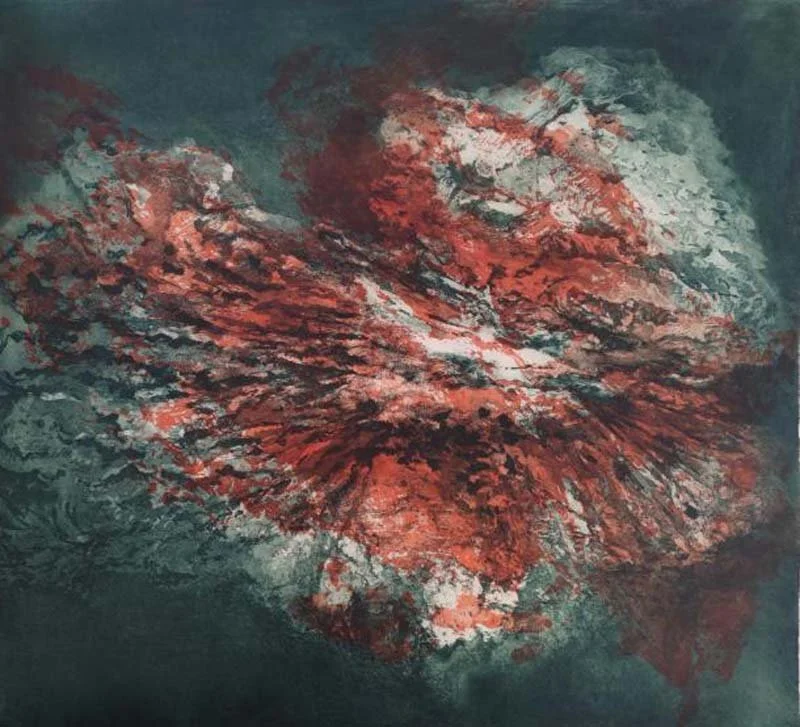
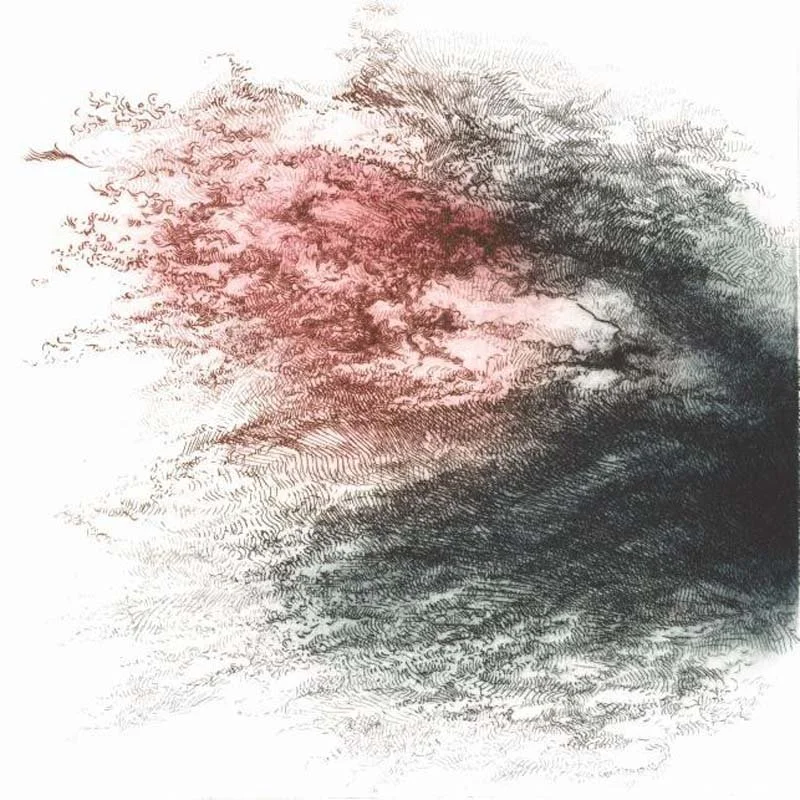
When I engrave a copper plate, I alternate meticulous interventions with experimental processes that leave room for chance. I always need to lose control at some point, to ignore where I'm going for a while, to try to move forward in the darkness. Until a choice is required, a choice that sounds like a responsibility.
What projects are you at work on at the moment? And what themes or ideas are currently driving your work? I am currently preparing a solo exhibition to be held this fall in the suburbs of Paris.
My recent works explore how variation can affect a series of printed images, how polyphony can be suggested by layering multiple copper plates on a single sheet of paper. To explore these compositional issues, I rely on the use of color to highlight my purposes.
What do you hope people feel when they experience your art? What are you trying to express? I don't think I'm trying to express anything specific with my art. I'm just a human being trying to make printed images on paper with my hands, my mind, my body, and my whole heart. The important part here is: trying. I put all my effort and energy into creating art because I believe we should care about what we do, how we live. With honesty, vulnerability, openness, and courage. Of course, we fail at times, but then we'll try again.
What I produce is just a fragment, a moment of something that will return, in different forms, again and again. Because I can't help but start anew every day. And sometimes I have to forget what I've done before.
Which artists, past or present, would you like to meet? And why? I admire so many artists, past and present, that it would be impossible to choose. On the other hand, I'm not sure I'd necessarily want to meet them, because I feel like I've met them many times and, in a way, I already know them well in a very intimate and precious way, because I've experienced their art.
Do you draw inspiration from music, art, or other disciplines? Absolutely. I draw inspiration from a wide variety of subjects that influence my artistic approach, including literature, poetry, philosophy, music, etc.
Music, and more specifically Baroque and late Renaissance music, in their constructive processes relying on polyphony and counterpoint, are my main sources of inspiration.
A great thing about living in Paris… Living in a city like Paris facilitates artistic exchanges through encounters with other artists and creators, as well as access to a varied and high-quality cultural offering.
I suppose it's above all a question of inspiration.
Can you describe a project that challenged you creatively or emotionally—and how you worked through it? Each project is a challenge in itself. It always involves a deep emotional approach that must confront creative doubts, while the passage of time—crucially—influences the entire process. Therefore, I can't choose to talk about just one project, because they all represent a challenge, every time, and each time in a different way.
Tell us about important teachers/mentors/collaborators in your life. I met Danish master printmaker Bo Halbirk in 2014. He had established his printmaking studio in Paris in the early 1990s. From the moment I walked through the doors of that studio and met this incredible artist and human being, my life changed.
I owe him so much, far more than I can express. Far beyond the simple transmission of a technique or know-how, he gave me all the freedom and the confidence I needed to become who I am, a joy and experience so rare. I have come to believe that this probably only happens once in a lifetime with such intensity.
Sustainability in the art world is an important issue. Can you share a memory or reflection about the beauty and wonder of the natural world? Does being in nature inspire your art or your process? I firmly believe that humanity is inseparable from nature. Nature is part of us. For me, it certainly embodies the sacredness that permeates all human life.
In 2023, I participated in an artist residency in Cantabria, in northern Spain, focused on the relationship between art and nature. The landscapes of this region are breathtaking. I was captivated by the simple and self-evident beauty of the place. But nature is never just about appearances: it always implies a relationship, something that resonates deeply within us. I experienced one of the most intense moments of my life there, thanks to nature.
Since then, I feel that the abstract forms I engrave still echo the ocean, the caves, and the cliffs of Cantabria.
I can't help but shape and render abstract evocations of the horizon I perceived within me, during the hours spent atop the cliff.
AI is changing everything - the way we see the world, creativity, art, our ideas of beauty and the way we communicate with each other and our imaginations. What are your reflections about AI and technology? What is the importance of human art and handmade creative works over industrialized creative practices? AI is becoming a tool that integrates and influences a wide range of our daily lives, particularly when it comes to technology. Like any other tool, it can prove useful and bring improvements in certain areas.
In my opinion, its influence cannot substantially alter the essence of art, which is directly linked to our reality as human beings.
First of all, intelligence is not limited to the mind. As human beings, we are embodied, and this body has its own understanding. Like all animals, we are guided by an intuitive knowledge of our environment. In our Western culture, we are not accustomed to paying such attention to the body, which is generally considered or judged as something external, as opposed to the faculty of thinking. Yet, the body and the mind come together and reveal themselves simultaneously. Intelligence is part of this whole and exists thanks to the body.
Second, unlike AI, human beings experience life and everything that is part of it. We know suffering, illusion, loss, happiness, joy, sorrow, birth, love, and hope. We know freedom, and we have the capacity to listen, to believe, to cry, to kiss. This is our raw material, as artists and humans. This is where it all begins.
As an artist and teacher, I am convinced that it is essential to continue transmitting to younger generations the values that come with handmade art and activities that involve bodily presence.
If AI makes everything effective and performant, we need to explore boredom, failure, and patience in order to grow as humans. It's the only way we can refine ourselves, and the only way we can be alive.
Exploring ideas, art and the creative process connects me to… the opportunity to refine as a human being.