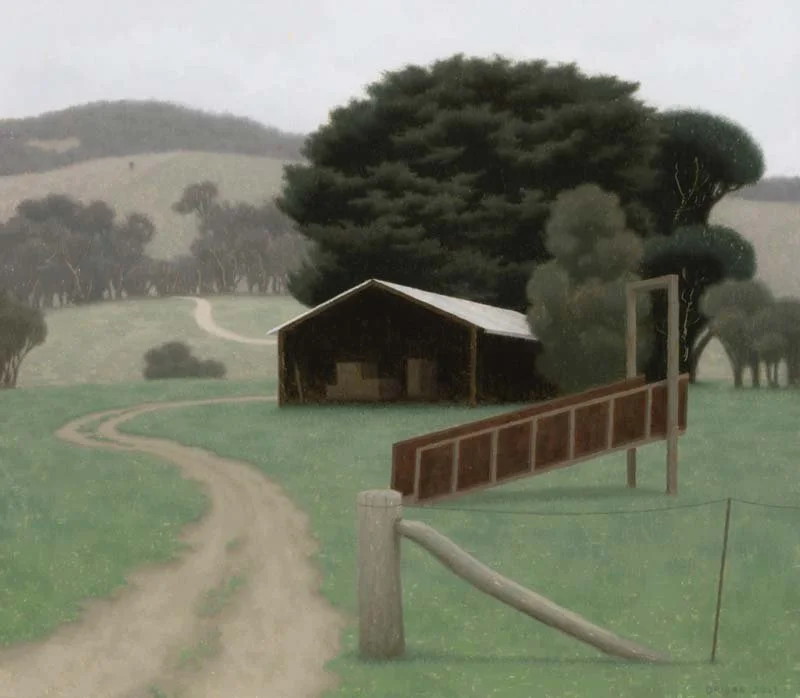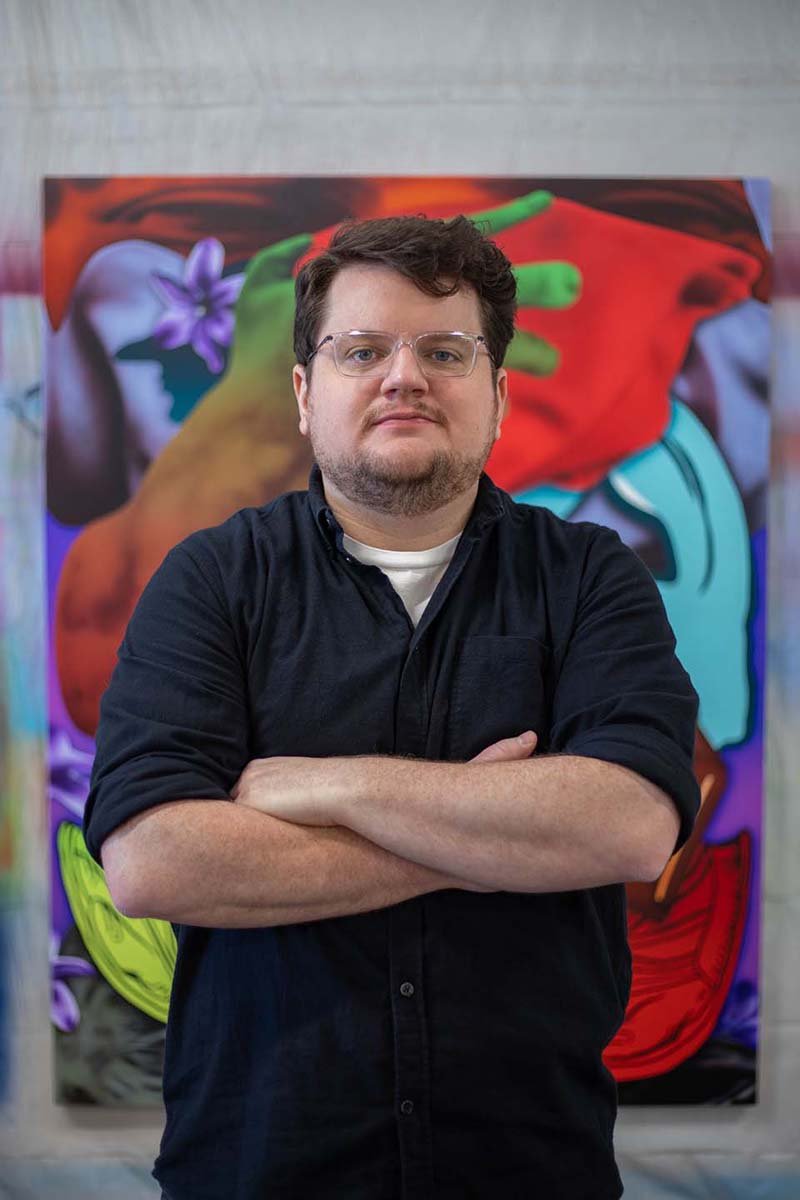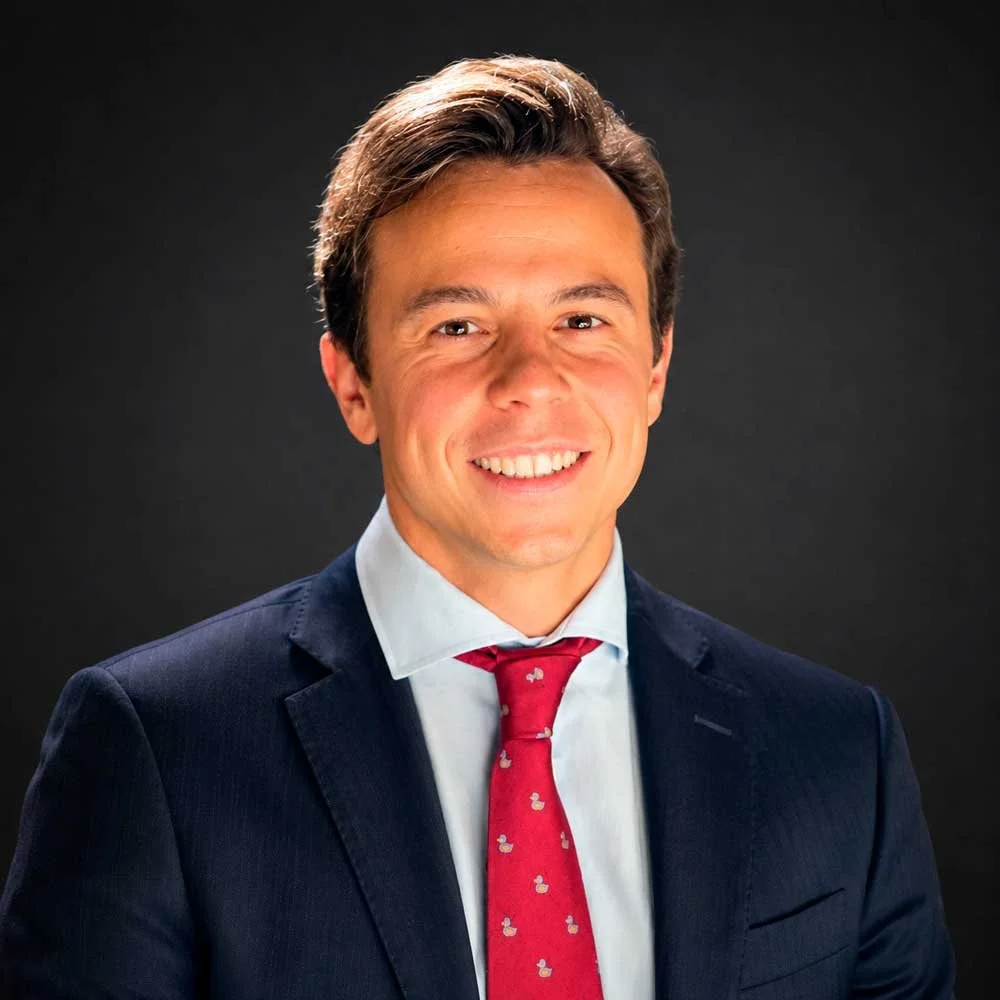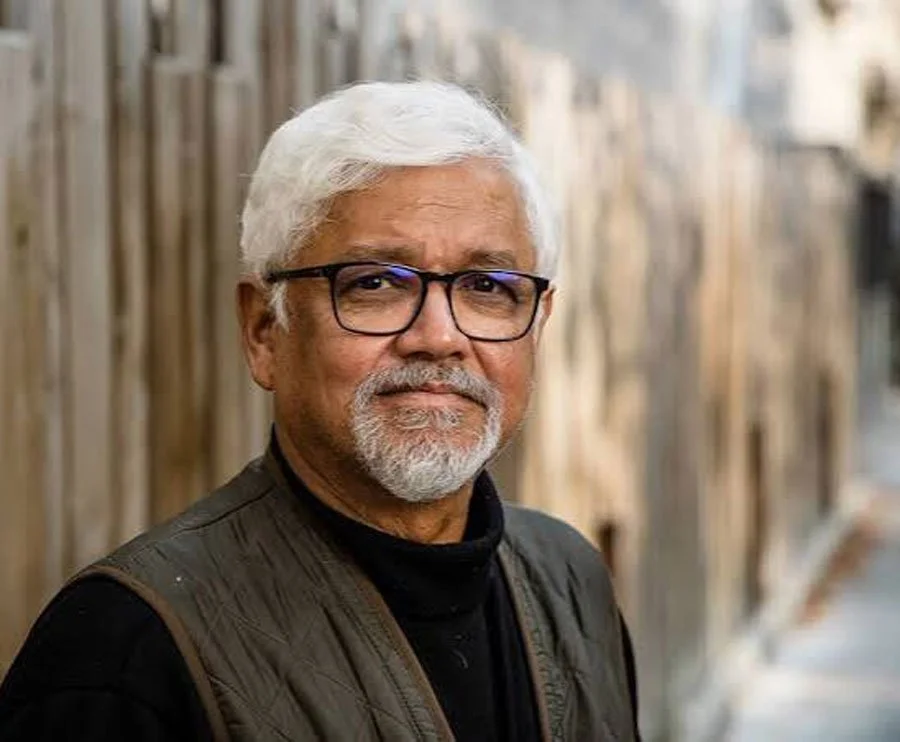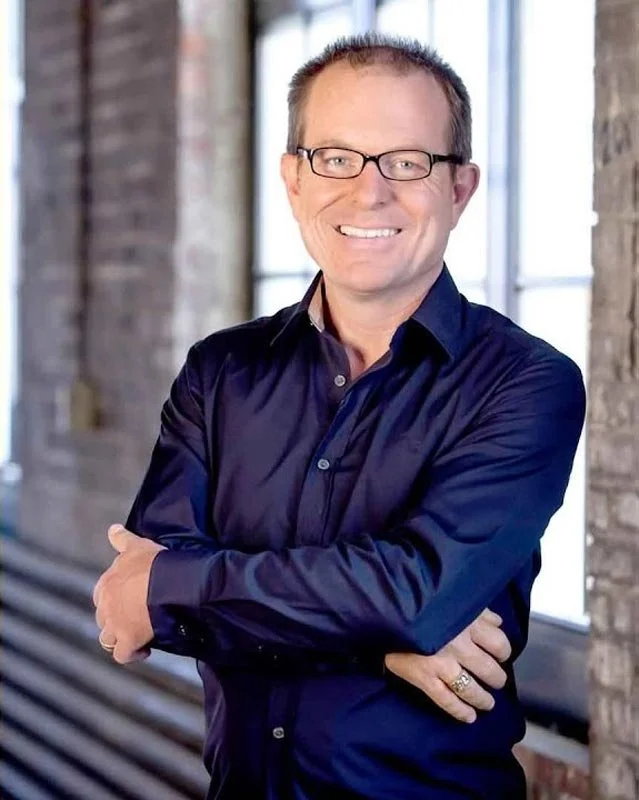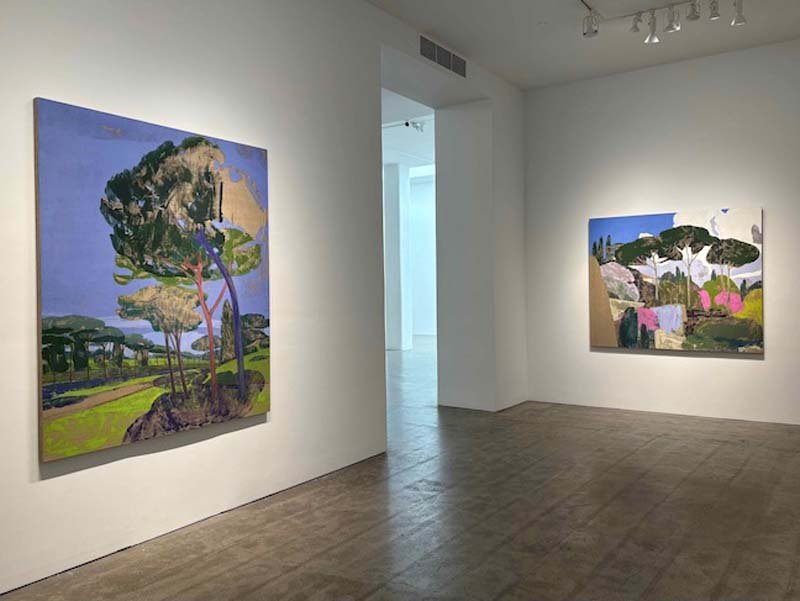


Eric Dever is a painter on Eastern Long Island—Water Mill, New York. Coupled with his studio garden, recent artist residencies, including the Warhol Foundation/Nature Conservancy-Montauk and Parrish Art Museum, have deepened his connection to the East Coast landscape. Born in Los Angeles. Dever earned his MA in painting at New York University/Steinhardt. He has exhibited throughout the United States, including the Art in Embassies program in Helsinki and Hong Kong/Macau. Collections include Grey Art Museum/NYU, The Heckscher Museum of Art, Parrish Art Museum, and Guild Hall Museum. Dever is represented by Berry Campbell. His fourth exhibition with the gallery, Points of Interest, was on view July/August 2025. @ericdever11976
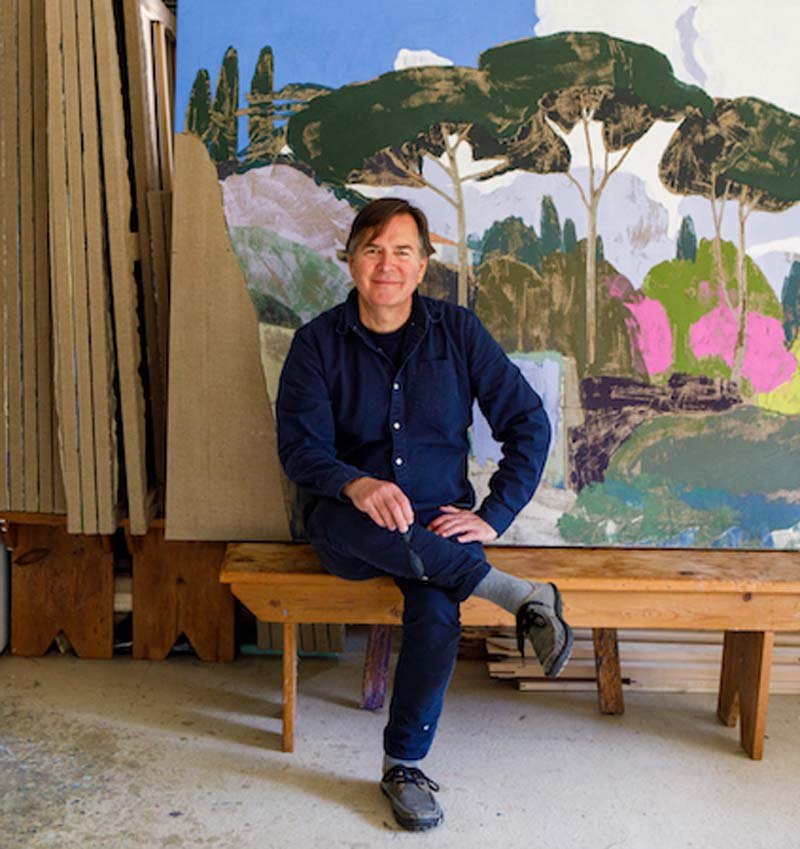
How has your background in California contributed to your artistic identity? I was born in Los Angeles, California, in 1962. Aerospace and the film industry, or Hollywood, were the chief employers in the region at this time. As a young student, I encountered the large-scale gestures and emotional immediacy of mid-century American painting, Abstract Expressionism. This exposure was never unanchored from the world and existed alongside my personal discovery of landscape, nature, and place. The physical expansiveness of the American West, its vast horizons and wildly diverse ecosystems, informed my visual imagination and vocabulary of reinvented and repurposed forms.
Simultaneously, I was immersed in a cultural milieu where Japanese art, philosophy, and aesthetics were palpably present in museums and collections across California, which offered a different form of pictorial logic. Here, space was rendered as fluid, forms were outlined and hovered in negative space among asymmetric gestures.
When did you first fall in love with art and realize you wanted to be an artist? For you, what is the importance of the arts? I have always self-identified as an artist, even as a child. I spent a lot of time drawing, painting, and working with clay and wood. These were more than go-to activities in and out of school, but how I metabolized existence. Midpoint through high school, it became clear that art, specifically painting, was to be my vocation. The importance of the arts is nothing short of a measure of our collective and individual humanity, offering lifetime opportunities for creativity, expression, and participation.
What does your typical day in the studio look like? Walk us through your studio and your most used materials and tools. Before I reach my studio, I spend some time surveying the garden and adjacent treescape, it's a nice feeling like being welcomed. I usually have a good idea of what I will be working on in the studio before I open the door. I photograph my work at the end of the day and look at the images before I go to sleep--a lot of solutions are reached as we sleep. Painting itself follows the same daily course, mixing paint as needed, gradually working across the canvas with a brush or the edge of a palette knife, sometimes focusing on areas that need particular attention. The studio is small, but I have a large window that overlooks a stretch of trees that conceal train tracks. I am still startled by the train horn, which sounds as it passes in the late afternoon and early evening, before I finish. I am painting with oil and emulsified wax, which is usually soft for a few days; this medium suits me well and contributes to my sense of daily continuity in work.
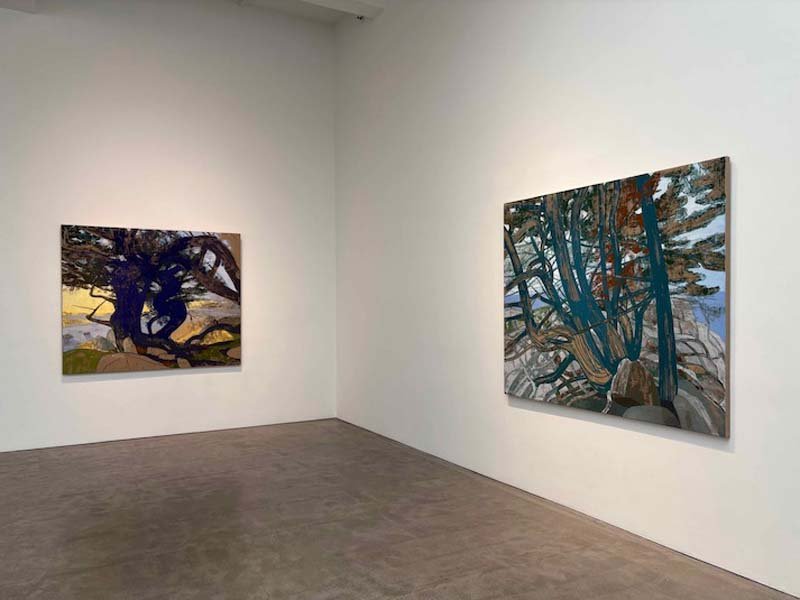
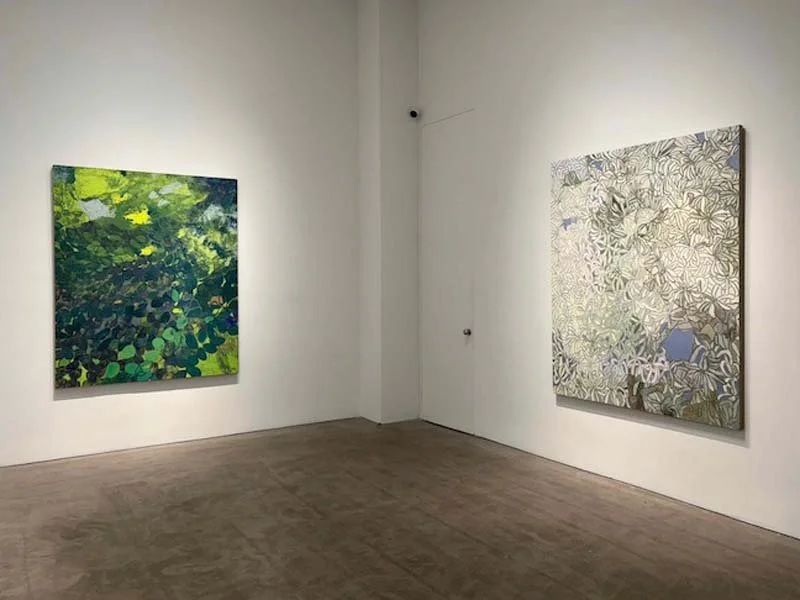
What projects are you at work on at the moment? And what themes or ideas are currently driving your work? I am exploring further some of the hallmarks of my recent exhibition "Points of Interest" at Berry Campbell Gallery in New York, which includes the all over quality of the paintings themselves, recently described as a democratic focus where everything holds the same attention. I am preparing for a one-person exhibition at the Greenville County Museum of Art in March 2026. We will be featuring new work, and it is a tight deadline. Subjects I intend to explore include the stone quarry and falls in the center of Greenville, paintings of flowering plants, including Dumbarton Oaks, a forest view of the southern edge of the Appalachian Mountains, and my own property tracking the progress of rewilding.
What do you hope people feel when they experience your art? What are you trying to express? These paintings offer a time to look and slow down, so much happens on an unconscious and nonverbal level when looking at art. I am thinking that the paintings might parallel the experience of gardening or being in nature, one on one with the object of our attention, maybe a self-identification with nature itself.
Which artists, past or present, would you like to meet? And why? I recently saw the terrific Gustav Klimt landscape exhibition at Neue Galerie in New York. I wish I could talk to him about these paintings, the trees, the water views, and his feelings for this particular landscape.
Do you draw inspiration from music, art, or other disciplines? I draw a lot of inspiration from literature; my paintings are frequently journalistic in that I am trying to describe a place I'd like to know better or remember. Some of these places are fictional or no longer exist, but I know about them through reading and research.
A great thing about living on Long Island is… We are surrounded by water on Eastern Long Island, including bays, ponds, and creeks, which attract and sustain a lot of wildlife--I have allowed all of this to enter my work. Here, I am able to carefully notice and track the progress of our long, cold Spring, my favorite season.
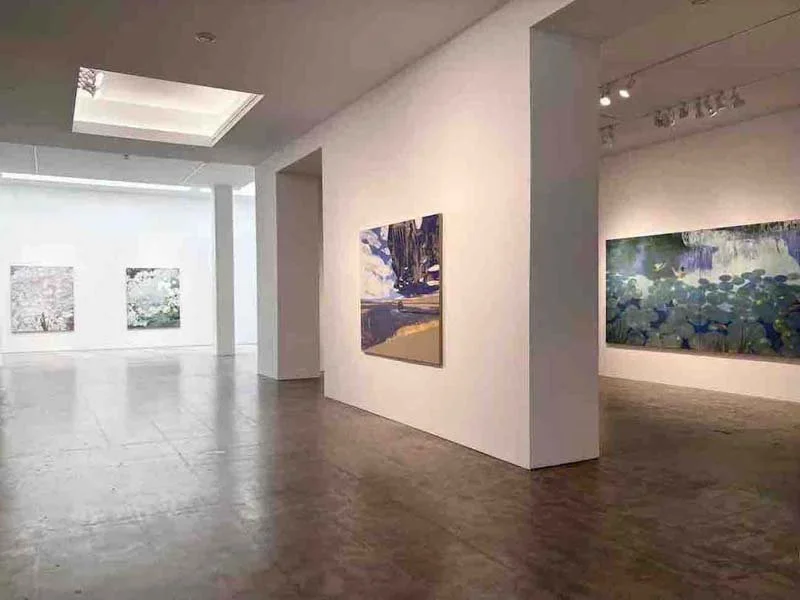
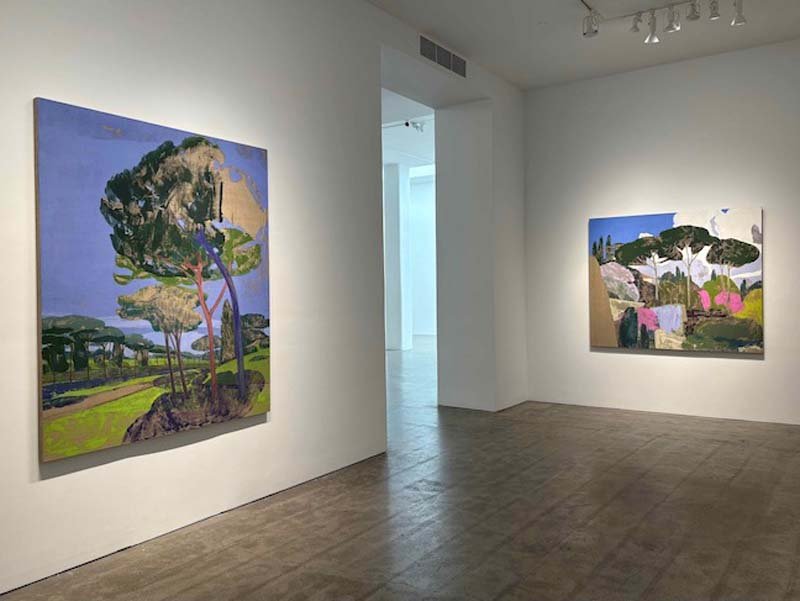
Can you describe a project that challenged you creatively or emotionally—and how you worked through it? A recent, very large painting of a pond view was particularly challenging. I was grappling with an impossible view, which I was able to resolve through compressed layers of observation, specifically including plants and animals: a duck floated on reflected clouds, while a variety of fish swam at levels below water lilies. The painting came to command a large gallery wing with Italian Stone Pines or Umbrella Trees on the adjacent walls, which gave the space the qualities of a Roman nymphaeum.
Tell us about important teachers/mentors/collaborators in your life. I've been fortunate to work with brilliant collaborators. Joseph Pintauro was a playwright, novelist, and poet, and he included a large painting of mine, a cloudscape, on stage in a play about an artist and a cloud that he had written. He was a dear friend who would often visit and read his plays aloud in my studio while I painted. We talked and listened at length to one another about our work, and this came to expand my sense of the importance of what a painting or exhibition could be--opening a door to something higher and offering me the courage to do so.
Sustainability in the art world is an important issue. Can you share a memory or reflection about the beauty and wonder of the natural world? Does being in nature inspire your art or your process? Nature has been the subject of my work, from explorations of material nature, as one might experience in yogic thought, to our own empirical perception of the natural world. Painting, gardening, and spending time with plants all contribute to our awareness of climate sustainability. This has directly impacted my color palette: white, black, then red for ten years; to paintings that embrace the color spectrum as we experience in red, orange, yellow, green, blue, purple--I mix each hue today from this selection of paint colors.
AI is changing everything - the way we see the world, creativity, art, our ideas of beauty and the way we communicate with each other and our imaginations. What are your reflections about AI and technology? What is the importance of human art and handmade creative works over industrialized creative practices? AI offers some important integrative advantages, bringing vast amounts of information together, particularly in science and medicine. I think there is a place for AI in the humanities as an aid to research. Since our own need to create is so essential, it is extremely difficult for me to imagine that we would abandon our original, creative, and tactile selves to AI production--we would lose so much that makes us human.
Exploring ideas, art, and the creative process connects me to… my higher self and to others spanning time and distance.