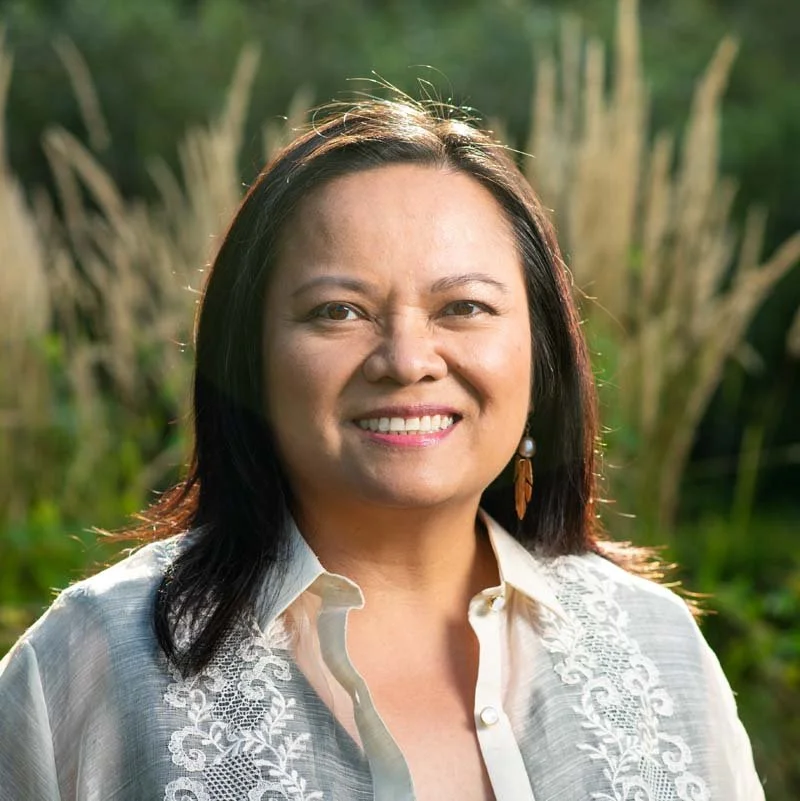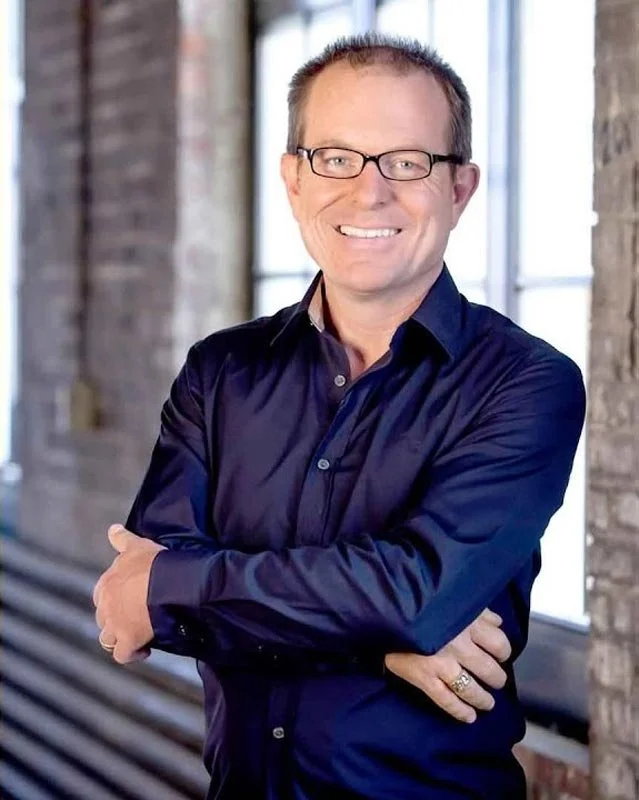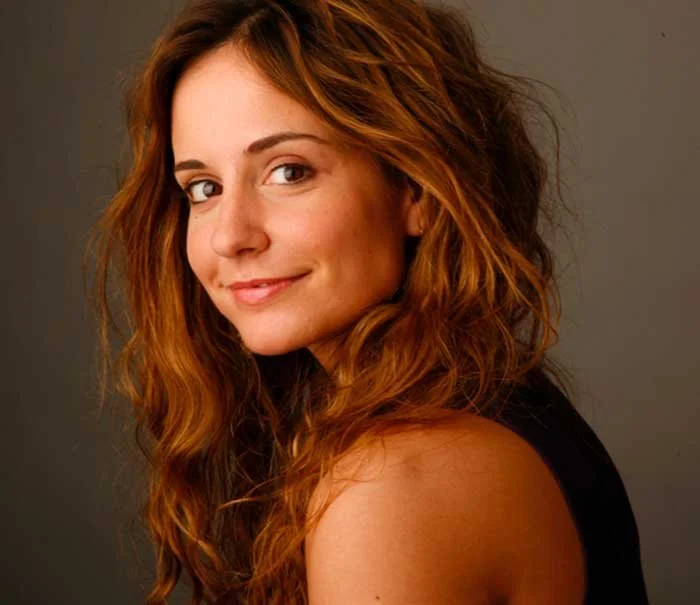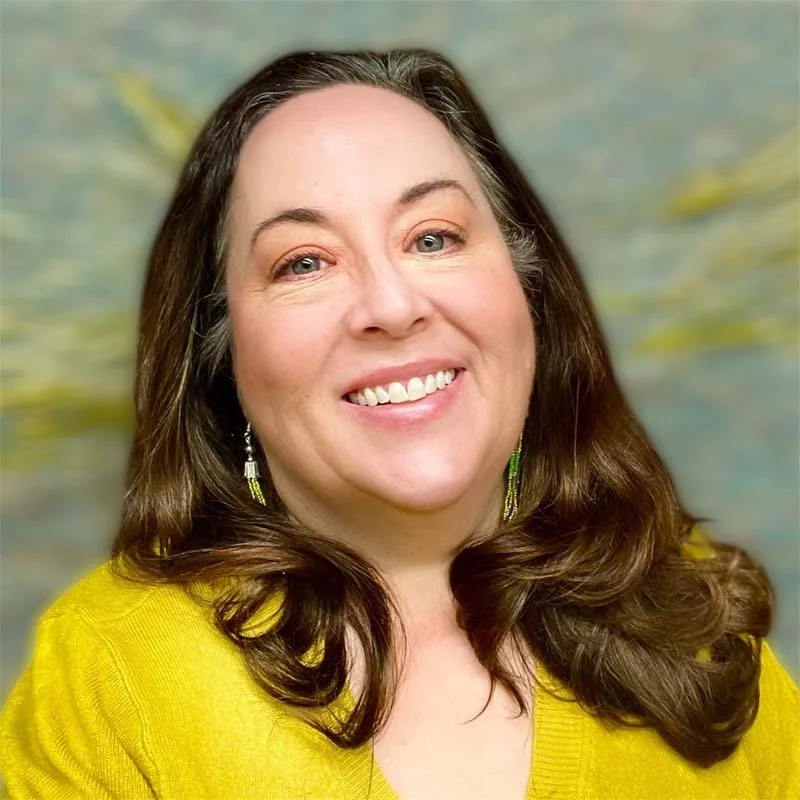


Rachael Holliday (she/her) is a Houston-based writer and photographer. Born in New Mexico, she spent her childhood in Colorado and England. Holliday earned a BA in Creative Writing from the University of Houston and a dual MLA in English and Irish Studies from the University of St. Thomas. She has attended workshops through Tin House, Community of Writers, and the Kenyon Review. In 2024, she was awarded a Harpo Foundation fellowship to attend a residency at Vermont Studio Center. Her work has appeared in HuffPost, Motherwell, Reservoir Road, The Establishment, Houstonia, and more. She is currently writing her first book. @hollidayree
You moved many times in your life — how would you say each place influenced your work?
I was born in Holloman AFB, which is near White Sands National Park in New Mexico. My father was in the Air Force, but quit when I was a toddler. We then moved to his hometown of Paonia, Colorado, a tiny coal town nestled in a lush mountain valley. Dad worked at one of the mines and we homesteaded. I roamed the hills of our property for hours, monitoring the wildlife’s habits and making up stories to entertain myself. I was ten when the mine closed and my father rejoined the Air Force. He was stationed in New Mexico again, which meant we had to leave Paonia. After a few years in New Mexico, we were sent to England where I spent high school. Landscape, searching for home, and a close attention to the rhythms of nature are threaded throughout a lot of my writing, stemming from moving a lot and the bereavement I felt when we left Colorado.
Wherever I lived growing up, there was darkness to the space, both literal and figurative. My family either lived in narrow trailers or utilitarian base housing, where my mother kept the curtains drawn over the few windows while she rested. My parents are evangelicals and raised my sisters and I in a highly controlled, insular environment. In order to discourage anything that might disagree with their ideology or lead to critical thinking, they sectioned us off from nonbelievers. While I read my Bible and tried to behave, I found it impossible to stop searching for answers to questions I had that dogma couldn’t answer. Reading illuminated my world by giving me the opportunity to encounter different ideas and people in spite of my parents efforts to keep me sequestered. Although education was not a thing I was expected to pursue, I did go to college in my late twenties, and with supportive teachers, I began cultivating a passion for writing which has helped me in shedding that early programming and seizing control of my own story.
What kind of reader were you as a child? Who were some of your favorite authors?
My mother kept a record of my infant milestones, noting that at 10 ½ months: “Rachael loves to look at books. If she has to choose between candy and books, she’ll take books, but would rather have both. Still, books are her favorite.” This observation of my mother still holds true. I will take books over just about anything, if I have to choose. But really, I’d like to have both things.
I was the youngest of three sisters. Jody, the middle child, was seven years older than me and a voracious reader. She read to me for hours, either books at her age level such as Misty of Chincoteague, Harriet the Spy or The Hobbit, as well as books aimed at younger children, like those by Richard Scarry, Rosemary Wells or Arnold Lobel. Lots of Little Golden Books. She taught me how to read when I was three so that I could read to myself while she was at school.
In elementary school, I tended to reread books over and over. I continued to love Richard Scarry, and I was fascinated by a book series on cryptids that my school library carried. I saved the little money I earned doing chores to spend at the Scholastic Book Fair. I think the book fair was what I loved most about elementary school because I could buy lots of books due to the low prices. I remember discovering Judy Blume through the book fair and she quickly became one of my favorite authors.
In middle school, I was one of several summer youth volunteers at the local library. During our break, two other girls and I would look for books that had sex scenes in them, to read through in the break room. Many of the books were more frightening than sexy, such as Looking for Mr. Goodbar. Around this time, I started reading the Sweet Valley High series as well as VC Andrews and Stephen King. I hid the books under my mattress and would read late at night, shielding the light that shined under my door with a blanket so that my parents wouldn’t see it.
In high school, I read mostly English writers of the 1700 and 1800s, perhaps because we were living in England. I felt dramatic at this time in my life, and Dickens, Shelley, the Brontës and such were a good match.
Do you have a certain routine when writing?
I have experimented with different routines, such as beginning writing at a specific time, giving myself a specific amount of time I must write or having a specific word count I must reach. I haven’t managed to stick to any of these schedules due to daily demands of work and my children. Instead, I have had to learn to adapt my writing around these constraints. Some days, I have hours to spend on a piece. Other days, I have half an hour to make some small edits.
That said, I occasionally get to have my ideal writing day which begins with twenty minutes of reading, to warm up the word building part of my brain. Then concentrating on new writing for an extended time, followed by a walk, lunch and then continuing the new work or editing, and the evening spent reading.
I write by hand in a notebook at the very beginning. I have a couple of Lamy fountain pens that I like using. When I have a draft fleshed out, I move to typing on my computer. I often do a rough outline at this stage to act as a guideline with enough space left for surprises. I like to revise after completing a draft but often I do some tweaking as I read over what I’ve written that day.
What is the creative process behind your current writing project?
I am working on a novella about a sculptor living in Marfa, Texas. Through the story, I am thinking about the many ways of seeing the world, what makes art “art”, government overreach and borders. The bones of the story began as a dream I had in 2017. Originally, I had set the story in the Midwest, but during one of my early drafts, I felt that the story needed to be set in Marfa. Once I made the location change, the story began expanding in directions that have surprised me. Overall, the process has been organic rather than strategic and I have learned that I can trust the story to go in the directions that it needs to go.
Do you keep a journal or notebook? If so, what’s in it?
I have many notebooks and favor the spiral bound type. Some are filled with research, ideas, a scene or bit of dialogue. Some are dedicated to a specific project’s early draft. I also like to jot notes down on index cards because I can play around with structure by changing the placement of the cards while laying them out in my desk. I do journal but it is not a daily practice. I use my notes app a lot because I will have ideas occur to me during a walk or it’s a snippet of conversation that I don’t want to forget.
How do you research and what role does research play in your writing?
I put a lot of research into my projects, nonfiction or fiction alike. Nonfiction, I am often writing about my past, so I use old letters, photos, newspaper articles (clippings or archived online), maps (I love old topographical maps), report cards and yearbooks to gain insight into people or situations that I have to get at in a slantwise way. For fiction, I read a lot about the themes I am exploring, or research small details that I want to make sure are factually correct.
Which writer, living or dead, would you most like to have dinner with, and why? What would you ask them?
I’d like to have a chat with Mary Shelley about the fragmentation of self that comes from inherited trauma and long-term grief and using art to reclaim agency. I would love to hear what James Baldwin would think about the USA in 2025. Joy Harjo: I would enjoy talking about her life, and how oral tradition has influenced her writing.
Would you say you draw inspiration from music, art, or other disciplines?
I do listen to music while writing, and I have found I need to listen to instrumental. I am distracted by lyrics because I want to focus on them, so if I am also trying to get words down, it all becomes a muddle in my mind. Two works that I have been writing to for years are Music for Egon Schiele by Rachel’s, and Philip Miller’s Music for the Films of William Kentridge (this one has few lyrics but not enough to pull me out of writing). I find it interesting that both albums are music that was intentionally composed to correspond with visual art.
I see my attention to visual details in my writing as an extension of my photography and the mixed media art I create. I visit the Museum of Fine Art and the Menil, both here in Houston, frequently. This past summer, the MFAH had an installation of five connecting works by A.A.Murakami. Using light and sound, the works interrogate the transiency of life and center non-Western ways of calculating time. I have been thinking about these constructs since then, looking to how I can use time differently in my writing.
I’ve always been fascinated by ekphrastic writing and the way different mediums "speak" to one another. I’m curious if any of my paintings spark a particular creative response or reflection for you?
The Menil, the Houston museum I mentioned earlier, has a significant collection of Surrealist paintings. Tucked in among the paintings is a small, dark room displaying objects that are purported to have been owned by, or are similar to objects displayed by the Surrealists. Included in the 200+ objects are numerous musical instruments, statues of deities, and spirit masks. I have slowly been writing creative responses to objects in the room, exploring the ideas of psychology and dreamwork, colonialism and looting, that are represented by the collection.
I am particularly drawn to the Inside the Artist’s Studio triptych, perhaps because I see a relationship with the Surrealist room as well as stories and expressionism in each painting.
AI and technology are changing the ways we write and receive stories. What are your reflections on AI, technology and the future of storytelling? And why is it important that humans remain at the center of the creative process?
AI, while able to imitate art, will only be simulacrum because it can not experience the world in a meaningful way. It’s limited to its container. Each artist puts their experiences and personality into a context that becomes a unique way of seeing the world. And that viewpoint enhances and expands the world for those who connect with the art. What does concern me is that the generic art or bland writing coming from AI will just become another rung on the ladder of anti-intellectualism.
I hear in the discourse that AI is just a research tool. In college, I took a lot of history courses. My teachers placed an emphasis on finding as many primary sources as possible because it was important to be able to prove that what you were writing was factual, and that discipline has stuck with me. Therefore, while I understand that AI can spew forth information at a rapid pace, I am circumspect in trusting how reliable that information is because I doubt AI is concerning itself with the veracity of what it is churning out by doing deep research and finding primary sources. I don’t see AI being capable of moving beyond a faulty and superficial logic.
Tell us about some books you've recently enjoyed and your favorite books and writers of all time.
I recently finished The Reformatory by Tananarive Due. It’s proving to be a book that is sticking with me. I think about it a lot. I read Crazy Brave by Joy Harjo this summer. I was familiar with her poetry but really enjoyed her memoir and the musicality of her writing. I’ve just started reading Avoiding the Rapture by Karen J. Weyant, a book of poetry. So far, it’s like making a new friend that you feel like you’ve known forever.
Some of my favorite writers include: bell hooks, Carmen Maria Machado, Victoria Chang, Oscar Wilde, Toni Morrison, Rebecca Solnit, Melissa Febos, Julian Barnes, Louise Erdich, and Shirley Jackson.
Exploring literature, the arts, and the creative process connects me to…
understanding myself as well as taking me beyond myself. Art expands my field of vision from its singular pinhole camera limits to an infinite panorama.
I write to say the things that are on my heart, that are too big to say out loud. Things that need the space of the page to be expressed.
I write to explore what has happened in my life, as well as experience all the what-could-have-beens.
I write to stay connected to my sisters. A lot of what I write is about them, keeping the three of us still tethered.