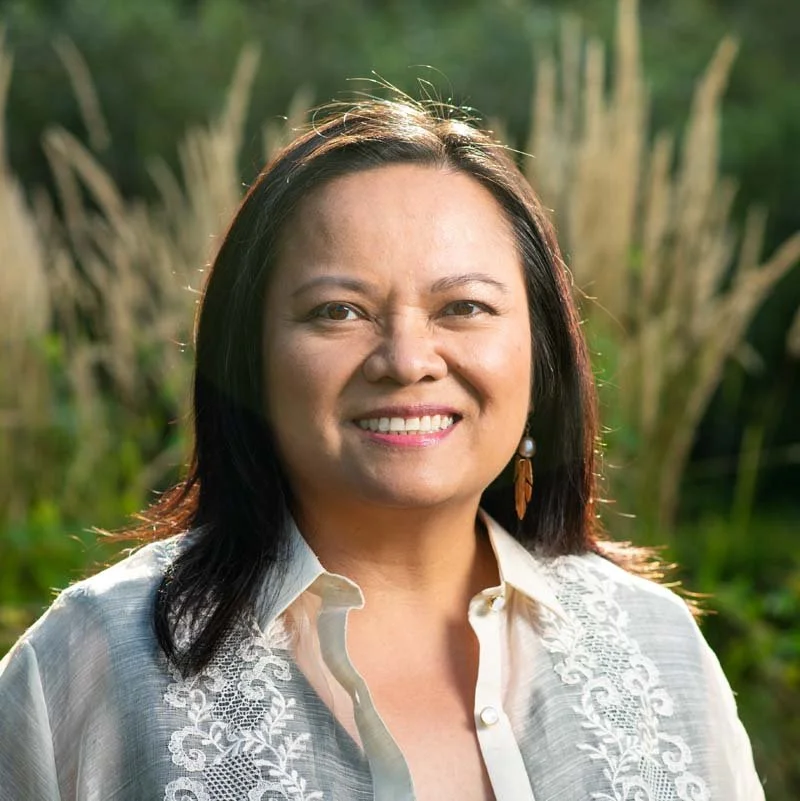
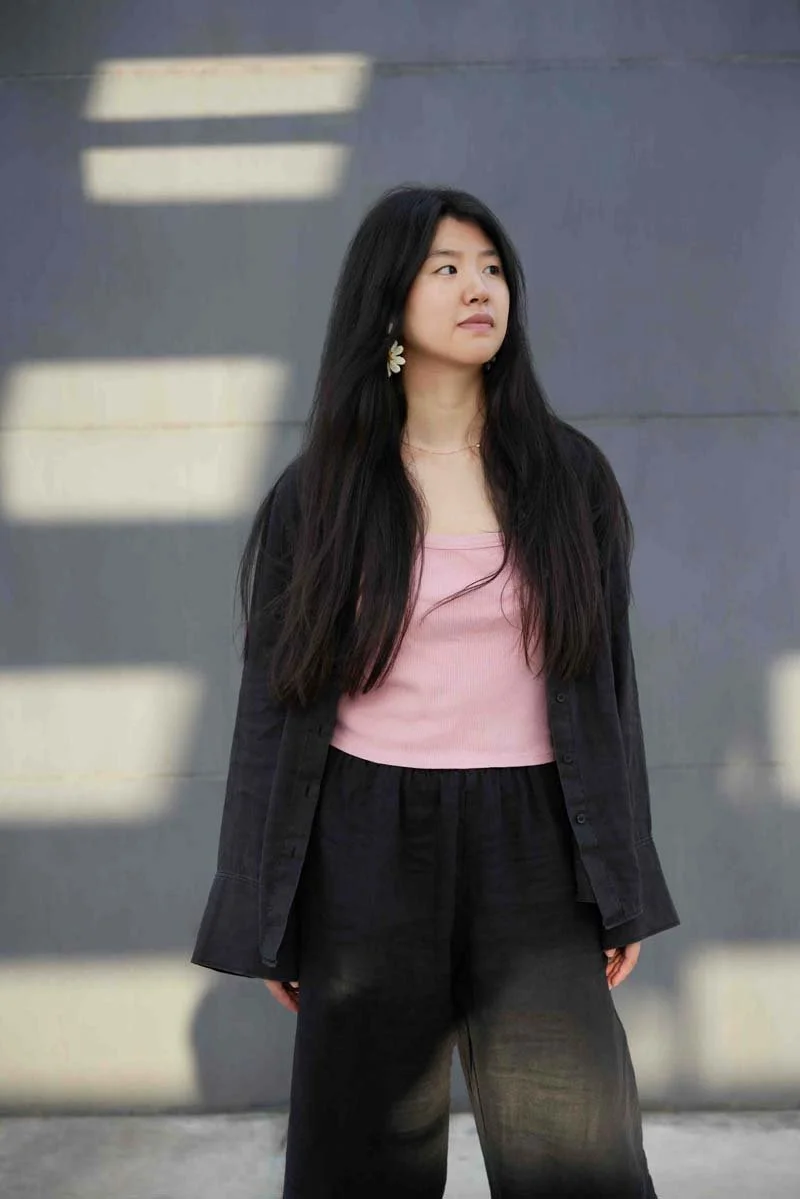
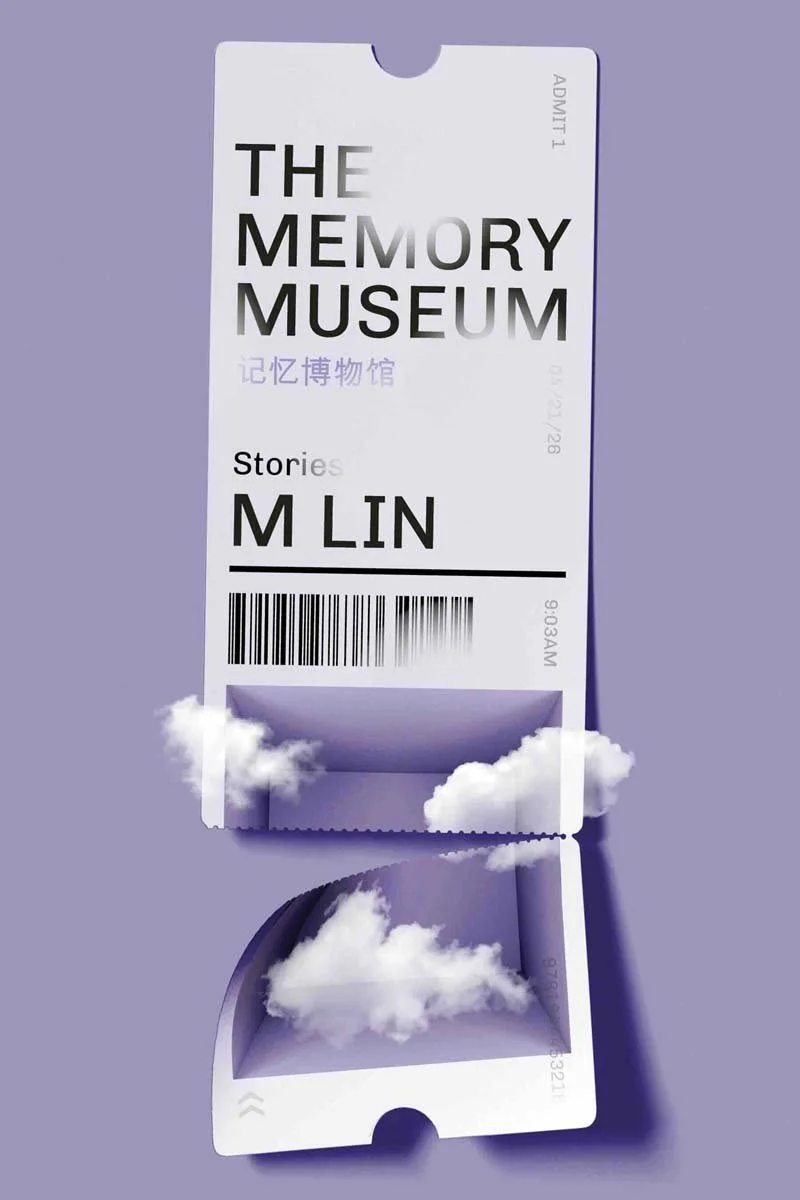
M Lin is a Chinese writer and translator living in the US. Born and raised in Beijing, she writes in English as her second language. Her stories have appeared in Ploughshares, Swamp Pink, Joyland, Epiphany, Fence, and Best Debut Short Stories 2023, and her nonfiction can be read in The New York Times, Guernica, The Rumpus, and elsewhere. The Memory Museum (Graywolf Press) is her first book. @the_memory_museum
Does your past, such as where you were born and raised, impact your writing?
I was born and raised in Beijing, China. I think when we talk about contemporary China, it’s also important to mention the period. Born in 1992, I grew up during a time when China’s politics and economy were changing dramatically and there was a strong intention to connect with the rest of the world. Everything was opening up, blooming, expanding, and at the same time, history grounded - still grounds - the city. So I was surrounded by both the ancient and the modern, the traditional and the radical, the memory and a myriad of possibilities the future holds. I like to think my upbringing in Beijing during the 90s and the early aughts made me a writer who welcomes contradictions and complications, who is sensitive to the relationship between the individual and the collective, and who keeps an open mind to what is new and what is changing. Something is always changing.
What kind of reader were you as a child? Were there any books that made you fall in love with reading as a child?
I was an eclectic and obsessive reader as a child and I am just the same today. I don’t remember a book that made me fall in love with reading because it felt like I’d never not been in love with reading.
What does a day of writing look like for you? Does it start at a certain time?
I’m not a morning person, so mostly I write in the afternoon. Usually, I only have the beginning of a story or a character or a situation that I’m interested in before I start writing, then I discover the actual story sentence by sentence. Sometimes I’m able to think ahead a bit, and I’ll take down some notes for myself for the next day. For short stories, I edit a lot as I go, which means the progress can be frustratingly slow, but it also means that when I get to the end, I won’t need major revision. If I think the story is not working, most of the time it can only be fixed by starting over entirely. Now I’m working on a novel, I hope I won’t have to do that too many times.
Tell us about the creative process behind The Memory Museum.
My debut short story collection, The Memory Museum, is forthcoming from Graywolf Press in April 2026. In late 2020, during peak pandemic times, I realized that there was so much the world doesn’t know or understand about the China I grew up in and my Chinese generation, and what was known consisted of a lot of bias and stereotypes. I wanted to write about the stories and people that made up my world. In 2021, I attended Brooklyn College’s Creative Writing MFA program and for four semesters of workshop, I wrote a new short story almost every month, as I thought about the craft of writing alongside my teachers and cohort. Under the pressure of workshop deadlines, I didn’t have much time to ruminate and simply wrote whatever came to my mind. The stories in The Memory Museum were all written in those two years. It felt like they had always lived within me and all I had to do was to put them on the page.
Do you keep a journal or notebook? What’s in it?
I keep a handwritten journal in a mix of Chinese and English - writing longhand seems connected to a different part of my brain because I’m never able to write fiction longhand. My journal is strictly personal, while the notes I keep on my phone and laptop contain more creative ideas: characters, anecdotes, daily observations, overheard conversations, story ideas, words or quotes I find interesting.
What is your research process?
I research as I go - whenever something in the narrative calls for knowledge outside of my reserve, I open the search engine, which leads me to videos, online forums, books, or the depth of Wikipedia. Research often takes me to unexpected places and I like the serendipity of it. It’s the best when I come across something other than what I was looking for that I can also use in the story, or even better when it sparks a new idea.
Which writer, living or dead, would you most like to have dinner with, and why?
As an eclectic reader, this is impossible to answer! I have so many people I’d like to invite over. Recently I’ve been loving Claire-Louise Bennett, so I’d like to have dinner with her just to find out if she talks the same way she writes, and if a conversation with her would digress and meander and circles around like her fiction. I also think she’d make me laugh!
I would regret if I don’t mention Elena Ferrante here, but as soon as I thought of her (yes, I believe she is a woman) I realize that she would hate this idea - she obviously doesn’t want to have dinner with anyone!
Do you draw inspiration from other artistic endeavors?
I studied Film and Art History in college and am a piano enthusiast - so yes, film and music are especially important to me (I think if I had to choose to live without music or books, I’d give up books, never music!) I feel so fortunate to be living in New York where there’s always so much art to see, to be inspired by, and to love (or hate). I’m working on stories about women artists and maybe one day they will coalesce into another collection.
We share an interest in ekphrastic writing—the conversation between the word and the image. I’d be interested in hearing your reflections or creative responses to my art?
I think many other forms - painting, sculpture, photography, music, performance art, theater - is much more of a somatic practice. The artist’s body, in addition to their mind, forms a relationship with the work, as well as the physical space. Language, by nature, lacks that, or it’s almost the antithesis of body - it takes you out of your own body, out of the physical space you’re in. Nevertheless, it does have the power to evoke a visceral feeling. I’m interested in learning more about how you might think of this relationship (between your body and your artistic practice).
Thank you for asking. I think most about my body when I dance. It’s curious because as much as visual art represents the physical world, it can also be an out of body experience. Like other interpretive arts, when you are painting people or landscapes or abstracts, I feel there is moment when you leave yourself behind and become one what you are painting. It is about exploring surfaces to convey interior states, but it is something that can be experienced by viewers all at once, wheres as writing unfolds over time. For that reason, I love reading and writing because it is a way of experiencing other people’s minds.
AI and technology are changing the ways we write and receive stories. What are your reflections on AI, technology and the future of storytelling? And why is it important that humans remain at the center of the creative process?
I so seldom use AI that I don’t have much to say about it. I’m happy that, at least so far, what AI can produce is still quite inferior and thus obvious to the eye of a skilled reader. But the learning curve seems horrifying - who knows what kind of text it could produce in another decade? But to continue to write, I can believe only one thing and no other: only humans can make meaning of ourselves.
Tell us about some books you've recently enjoyed and your favorite books and writers of all time.
It’s hard for me to name favorite writers of all time, because I’m constantly learning and inspired by different writers who are each unique in their own way. I’ll share a few books and authors that I’ve enjoyed in the past year or two: Cold Enough for Snow by Jessica Au, Loved and Missed by Susie Boyt, If an Egyptian Cannot Speak English by Noor Naga, The Beginners by Anne Serre, Minor Detail by Adania Shibli, Theory by Dionne Brand, The Details by Ia Gerberg, as well as works by Mariana Enriquez, Sayaka Murata, Yoko Tawada, Marie NDiaye, Rachel Cusk, Deesha Philyaw…I can go on! I’ll end by saying: read women, read translations!
Exploring literature, the arts, and the creative process connects me to…
the unknown and the unknowable.