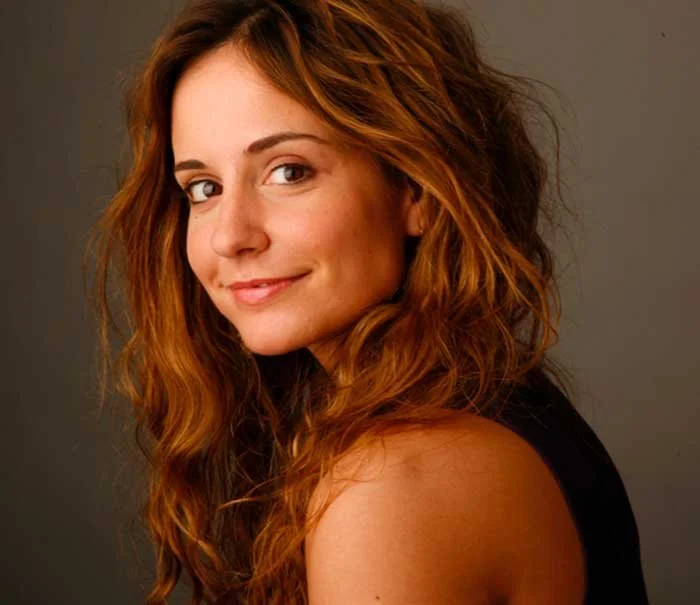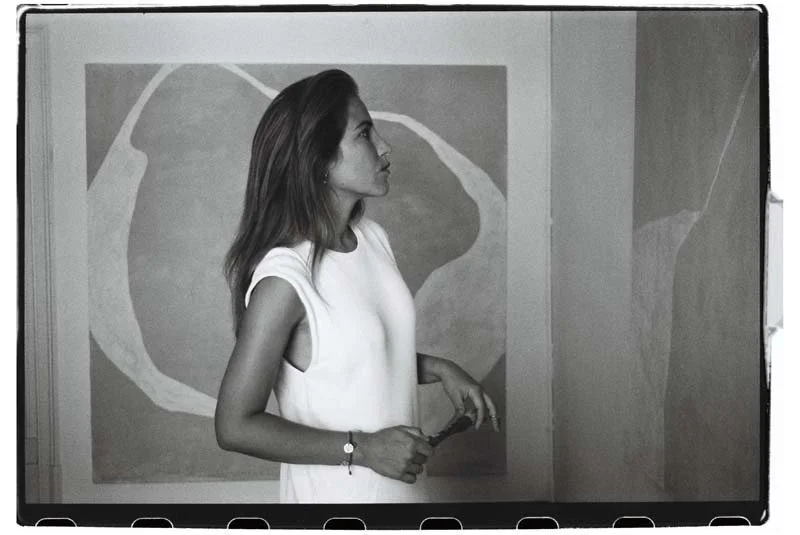


Alicia Gimeno (Barcelona, 1989) is a visual artist specializing in abstract painting and sculpture. Her work is defined by a refined, gestural language influenced by Japanese calligraphy and the wabi sabi aesthetic. She has exhibited internationally and collaborated on projects related to architecture and design. She is currently developing large-scale and site-specific works, with a clear focus on international collaborations. Her practice combines rigorous formal research with a strong interest in materials, spatial composition, and the dialogue between contemporary art and architectural or natural contexts.
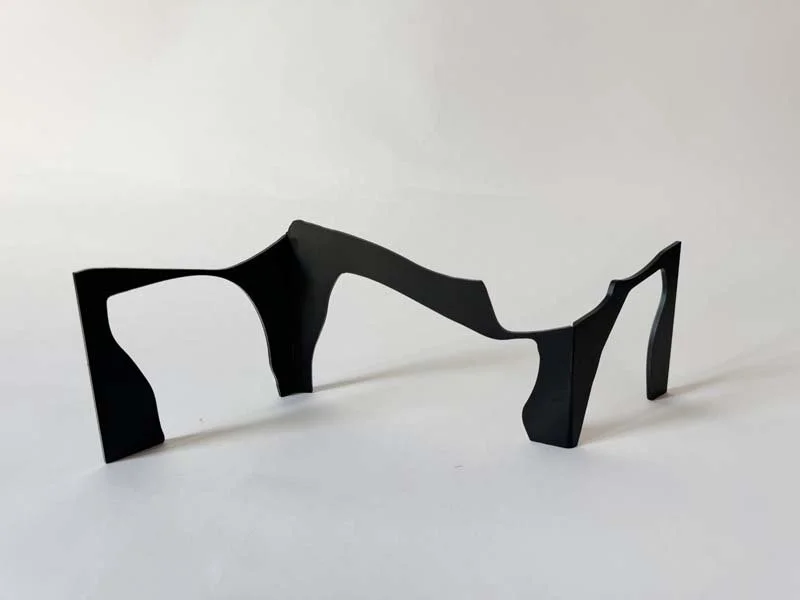
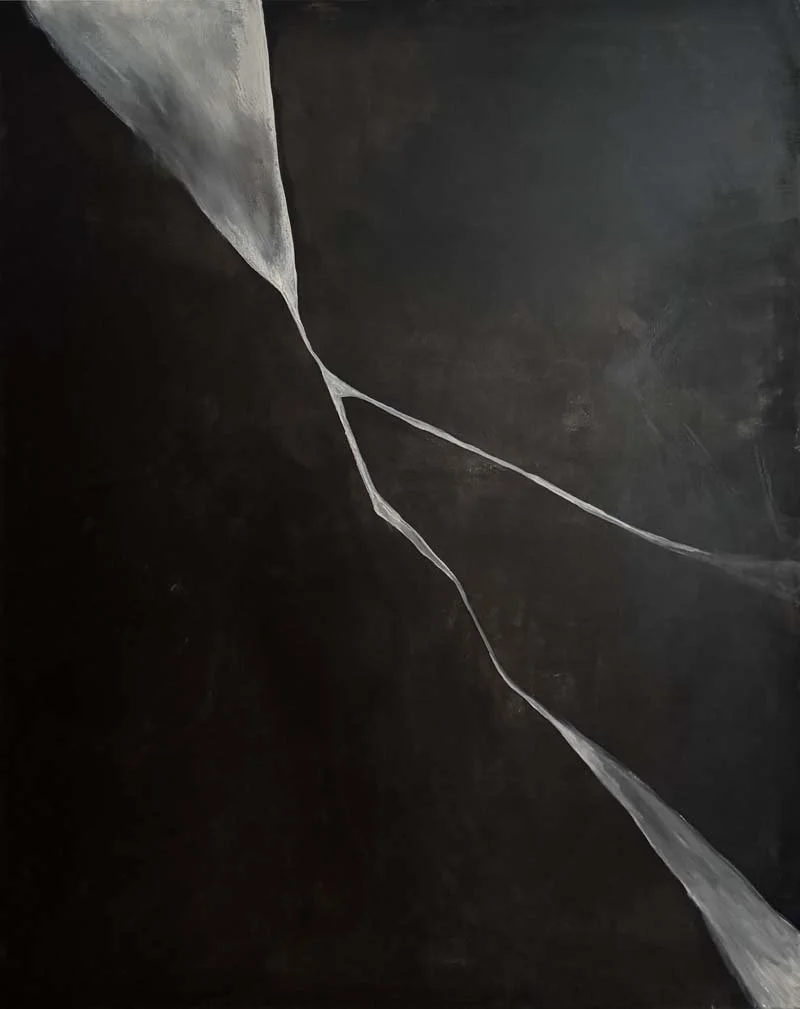
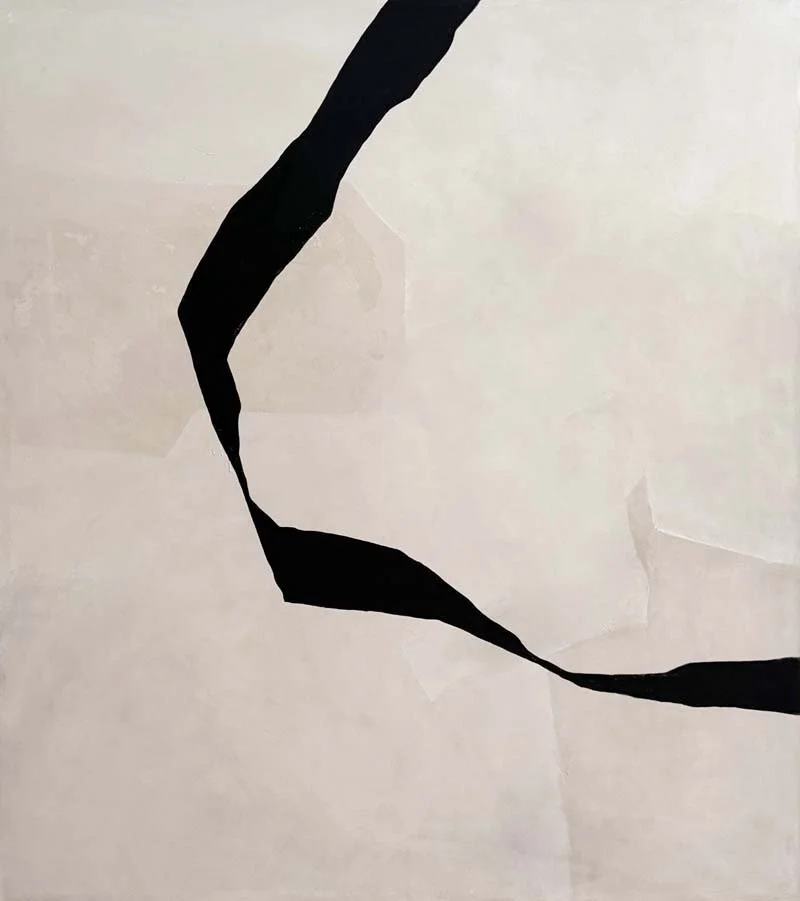
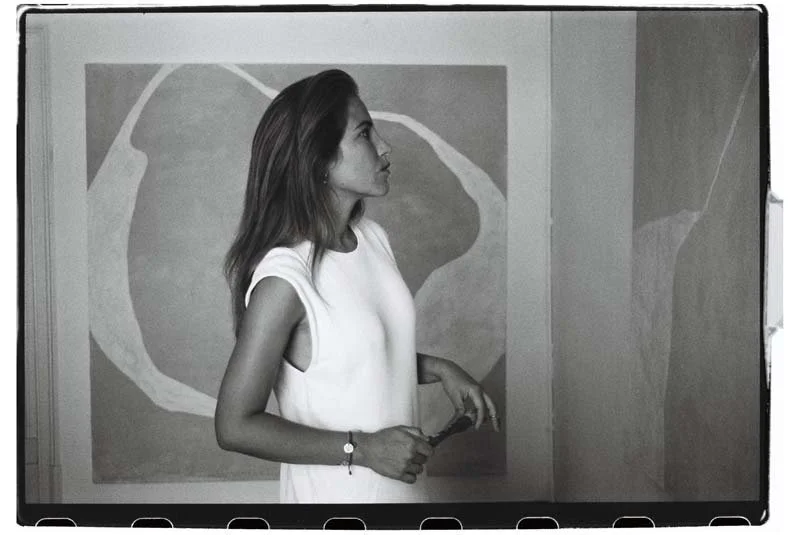
Growing up in Barcelona, what aspects of that environment have permeated your artwork? Barcelona is a city where architecture and design are deeply embedded in everyday life. Growing up surrounded by organic forms, handcrafted details, and modernist structures left a lasting impression on me. That sensitivity to curved lines, beautiful imperfections, and the dialogue with nature is very present in my current work. Over time, I became interested in other aesthetics, such as Eastern calligraphy and wabi sabi, but I feel that my way of seeing was shaped early on, just by walking through the streets of my city
When did you first fall in love with art and realize you wanted to be an artist? For you, what is the importance of the arts? For me, art is inevitable—my way of being sensitive needs that personal channel of expression. I also believe the world needs art to nourish its soul, to water a spiritual dimension that is often lost in the grey tone of modern life. I don’t remember when I first fell in love with art, but I do know I never planned to become an artist. I had worked as a designer and in galleries, supporting artists behind the scenes. But it was during my second pregnancy that I felt a clear and powerful impulse to begin my own artistic journey. It was something intuitive and strong—something beyond reason happened then.
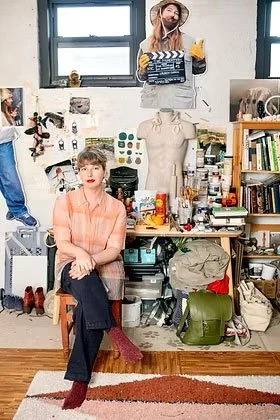
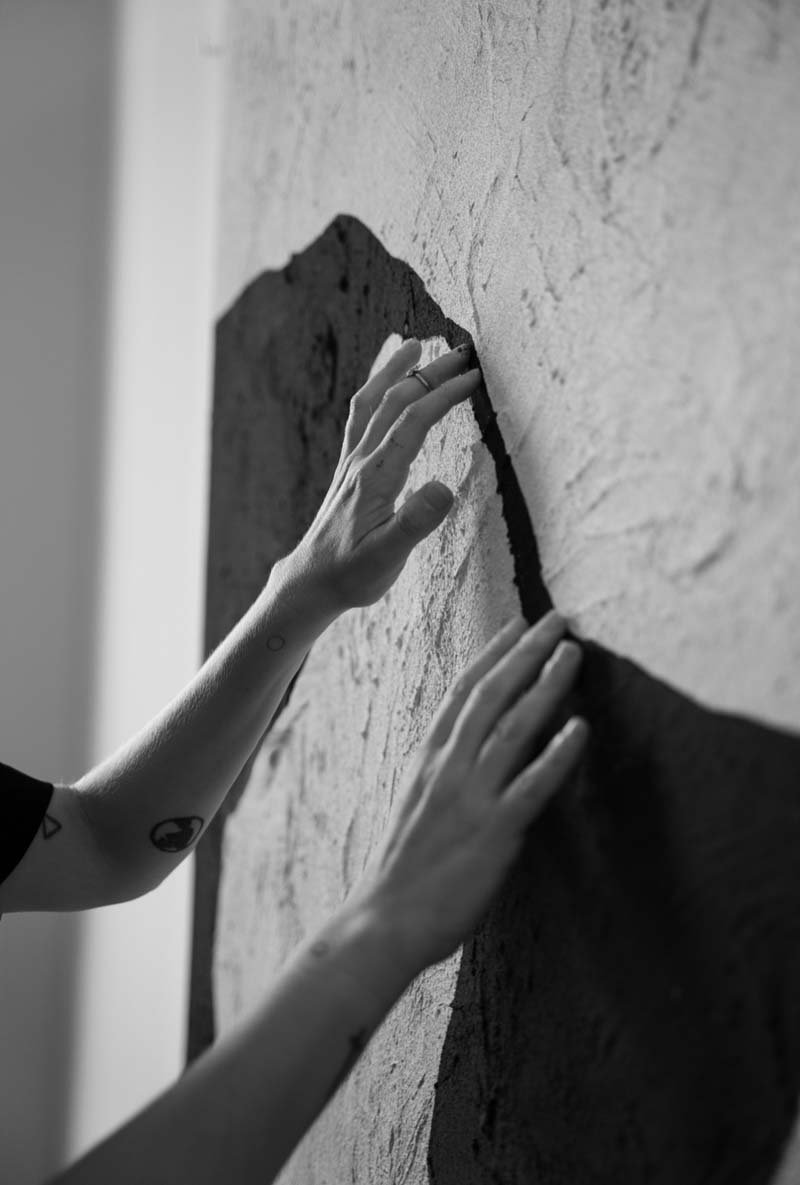
What does your typical day in the studio look like? Walk us through your studio and your most used materials and tools. There are no typical days in my studio. Although, in truth, each day begins the same way—with a long walk to the studio. It’s important because it acts as a form of active meditation, a space to leave behind everyday worries and arrive with the right mindset to work. I start each day with a kind of childlike enthusiasm, doing whatever I most feel like—maybe experimenting with new materials or beginning a new piece. Later, though, I need to focus and take care of whatever is most urgent, whether it's a commission or tasks that need to be done, whether I feel like it or not.
What projects are you working on at the moment? And what themes or ideas are currently driving your work? These days, an important project I worked on in Tokyo has just been inaugurated, which has been a real source of joy for me. Eastern culture has been a major influence on my work, and I’m currently developing another project in the city of Nagoya. I’m also excited about a book I’ve been working on with Hsiao Lin Liu, my calligraphy teacher. We’re still in the editing phase, but I hope it will be published in the coming months. In addition, I’m preparing an exhibition planned for early 2026.
How do you hope the viewer connects with your work? With my work, I’m not trying to provoke a specific emotion or guide the viewer’s experience. What interests me is creating a space of silence, of pause, where each person can project something of their own. If someone stops, breathes a little more slowly, and connects with something intimate or essential, then I feel the piece has fulfilled its purpose. I work through gesture, rhythm, and material—and I believe all of that has the power to resonate beyond words.
Which artists, past or present, would you like to meet? And why? I would have liked to meet Isamu Noguchi. I’m drawn to how his work moves between art, design, sculpture, and landscape without being confined to any one category. His ability to give form to the intangible—to build silence through matter—is deeply inspiring to me. I think a conversation with him about the relationship between emptiness, space, and time would have been truly enriching.
In what ways does your interest in music shape your visual practice? While I need silence and concentration—an almost meditative space—when painting the form, music is very present during the other tasks in the studio. There’s often a subtle connection between what I’m listening to and what I’m doing, as if they shared a common rhythm or atmosphere. I don’t look for music to directly inspire the work, but it supports the process. Composers like Ludovico Einaudi or Ramin Djawadi are often part of the sound environment that helps me enter a deeper state of focus.
What is it about the community and environment in Barcelona that keeps you inspired? Barcelona is an incredible city. I love that it’s an old city, full of history, with so many different periods that have left their mark. It’s culturally rich and very open to sharing with people from all over the world. It has both sea and mountains, joy, and great food. It’s a unique place, and I’m deeply in love with it.
Can you share a time when a project tested your limits? I suppose the first time I painted a mural, I felt a bit overwhelmed. It was a six-story spiral staircase with very high ceilings, in Paris. On top of that, I had very little time to complete the work. It was a challenge, but also a very interesting experience. When you spend so many hours on a project like that, you stop thinking—you just enter a state of work, fully focused on the present moment. It creates a unique state where you don’t feel hunger or fatigue, just deep concentration.
Tell us about important teachers/mentors/collaborators in your life. If I have to mention important teachers in my life, I should start with my time at Abad Oliva school. Luis Seguí, a philosophy and religion teacher, supported me through some difficult moments. In terms of my artistic path, the calligraphy professor and Doctor of Fine Arts Hsiao Lin Liu has been a strong source of inspiration. She speaks about spirituality applied to the execution of gesture in Eastern calligraphy, and our long conversations have been deeply meaningful to me.
Can you share a memory or reflection about the beauty and wonder of the natural world? Does being in nature inspire your art or your process? Nature is a central axis in my artistic practice. The forms I work with are entirely organic—often resembling roots—as a symbol of our connection to the earth, to our origins, to the most natural and primitive aspects of being human, and as a metaphor for the bonds that unite us as a species. We often forget that we are part of that primal, wild world.
What are your reflections on the relationship between art and AI? How do you think artists can maintain the handmade in a high-tech world? I’m not concerned about AI. It’s a tool—very useful in some cases, and completely useless in others. AI can produce something well-executed, but it will never create something with soul. There will be people who don’t see the difference, and for them, what AI generates may be enough. But that’s not the kind of audience who will be moved by a musical composition or who will value the work of a craftsman. Human beings will always seek to connect with their soul, and instinctively, they’ll sense that this cannot be found in AI. That said, it’s a powerful and positive tool when used well.
Exploring ideas, art and the creative process connects me to… To myself. I feel that if I’m not creating, I become disconnected from a part of who I am. It brings me back to something deeply authentic—the part of me that expresses itself without fear, in a raw, almost primal way.