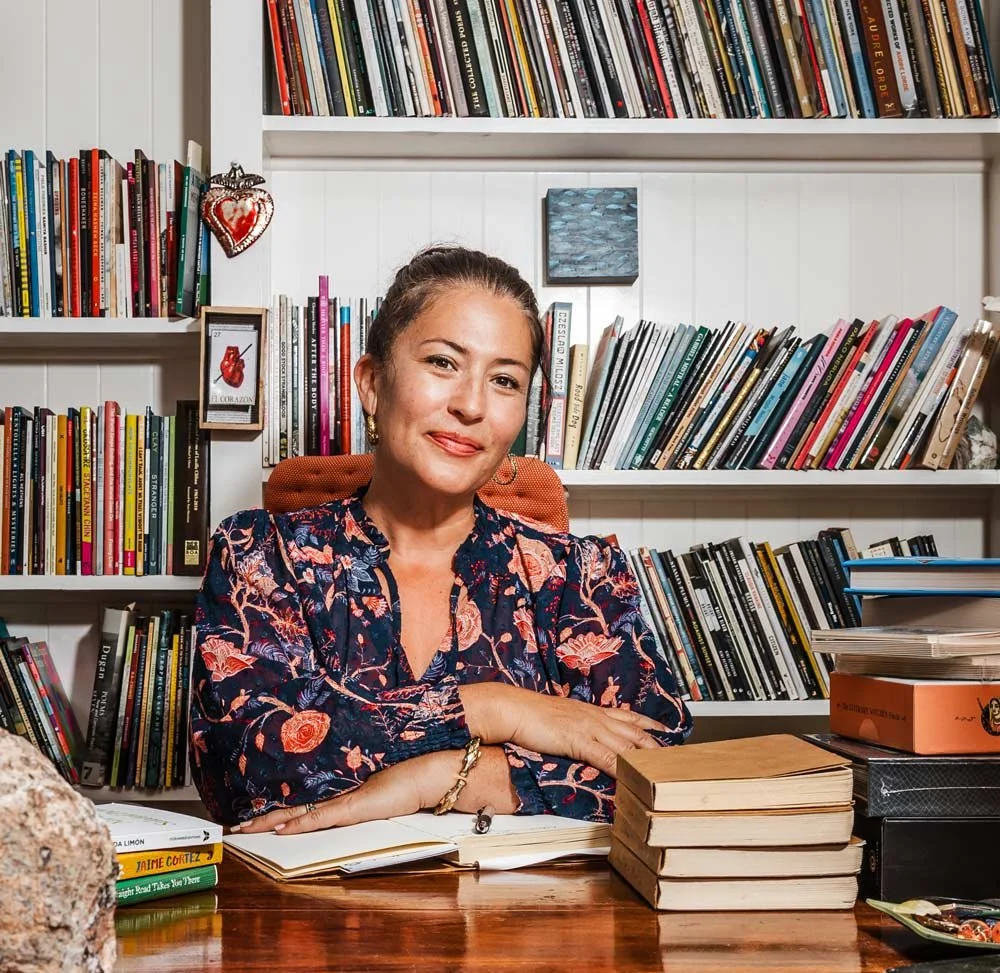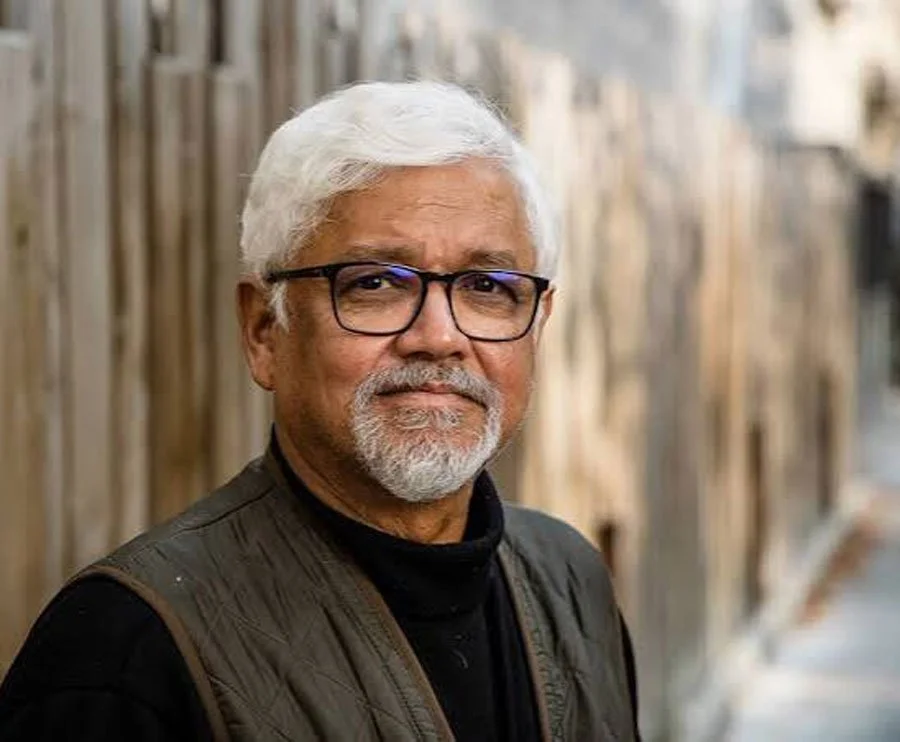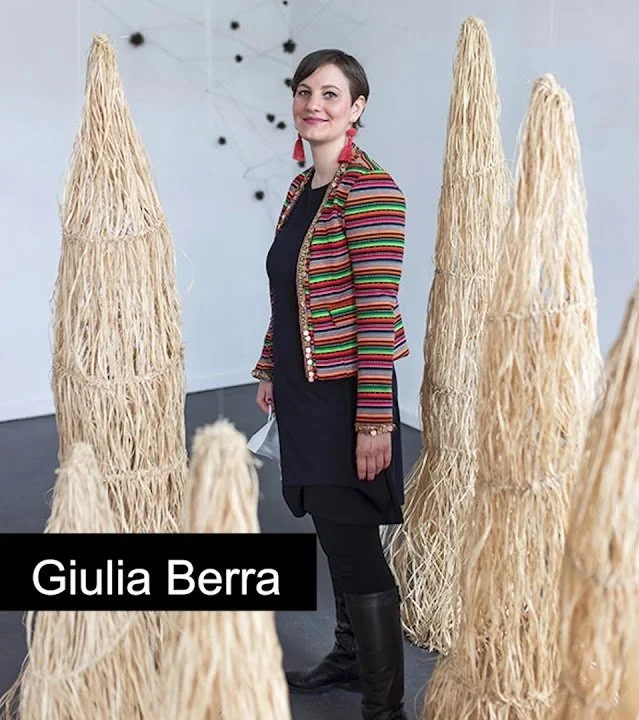


Giulia Berra (Cremona, Italy, 1985) is an Italian visual artist. She lives and works between Cremona and Turin, where she is Professor of Artistic Anatomy at Accademia Albertina di Belle Arti di Torino. She exhibits in group and solo exhibitions in Italy and abroad, developing projects deeply connected with Nature, architecture, and heritage. @berra_giulia

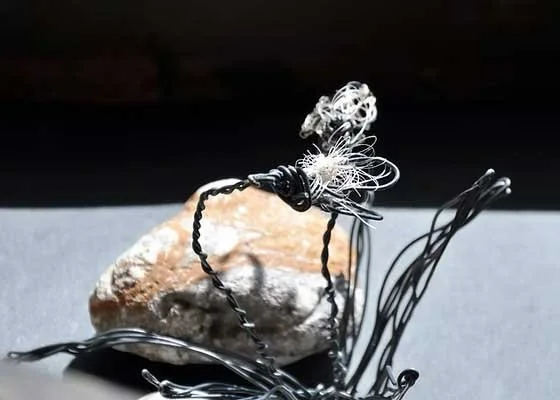
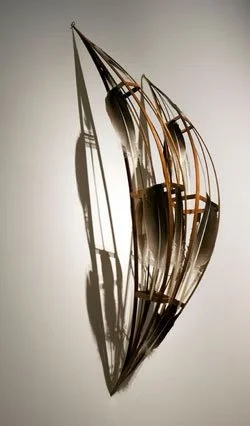
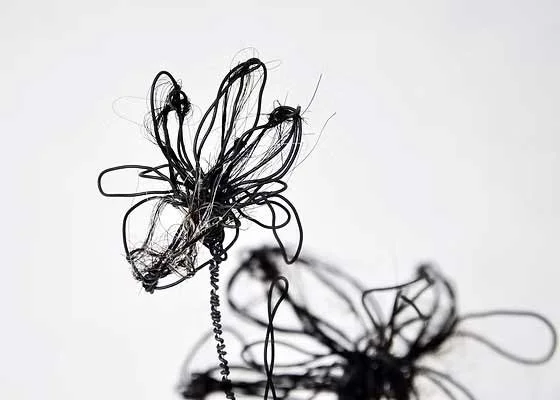
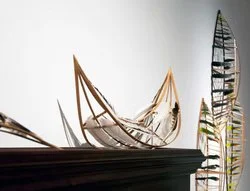
In what ways did your childhood in Cremona inform your artistic identity? For those who may not know, Cremona is a little provincial town in the North of Italy, famous for its violins, but as flat as its surroundings of agricultural centre. As the daughter of an entomologist, my imagination was more influenced by the experiences in Greece, Turkey, and Spain, where Mediterranean nature met the myth and millenary cultural stratification. I was one of those lucky '80s kids who still had skinned knees, left free to get bored, imagine, explore, and climb the trees, alone or with peers. For sure, growing in a little wunderkammer—surrounded by books or by golden rugged landscapes, so different from my fields and rows of poplars—has been so formative. I recognize in me something like a naturalistic imprinting, but I also feel part of a bigger, great, interconnected unity. Then, young adult, I went to Milan to study Art, and this was a shock, because I wasn't used to big international cities. Milan, always dynamic and up to date as art, culture, design, and architecture, is still so important for me.
When did you first fall in love with art and realize you wanted to be an artist? For you, what is the importance of the arts? Since I was a child, I have always been good at drawing. I started photorealistic oil paintings when I was twelve years old, and I wanted to become a cartoonist and join the Disney team. Because I was also a good student and a great book reader, my family made me attend humanistic studies. Then, I studied at the Art Academy of Brera in Milan. I think the arts are important to keep the contact with matter, shape, time, imagination, perception, sensations, emotions, structures, rationality, dreams...the fundamental essence of human beings.
Can you describe your studio environment and how it influences your work? Walk us through your most familiar tools and materials. My home studio is big enough, but a bit shady, with a chest of drawers for drawings, tables, and modeling equipment. I don't have a typical day or a routine at the studio, since my main tool is my sketchbook, and my art materials are usually natural leftovers collected while walking. A great part of my day is dedicated to drawing and collecting materials. I need to have clear ideas, because I depend on the natural availability of materials, and a mistake could compromise a whole project. I also spend hours at the computer, for all the collateral activities of an artist's life and for my job as a professor. If I have to realize sculptures or big artworks, I work in the studio, but very often I prefer to stay in other rooms...I think because I didn't have a real space for my own for a lot of years. I'm a very adaptable person.
Can you share details about your latest artistic endeavors? What concepts or feelings are you trying to explore? Last artworks are more connected to violence, others to protection and care. I'm not so hopeful at the moment, according to the global situation. I'm embroidering a new wall installation with a flight of mantises, while taking a pause from modelling several plants reproducing in real scale protected Italian flowers. My projects are all handmade by me, so I alternate the phasis, sometimes just to avoid tendonitis.
What do you hope people feel when they experience your art? What are you trying to express? It depends on the project: very often lightness, fragility, freedom, suspension, hope, regeneration, respect. Sometimes my artworks could be sharp, threatening, and cruel. If I design a site-specific installation, usually I try to imagine people's movements to generate specific sensations.
If you could have a conversation with any artist who ever lived, who would it be? I would like to meet Giuseppe Penone and Andy Goldsworthy, because their research was so inspirational, the great masters of the past, young artists, and artists from different backgrounds, countries, cultures, and disciplines.
Do you draw inspiration from music, art, or other disciplines? I draw inspiration from Nature, books, the humanities, the natural sciences, eco-design, architecture, people...When I speak with my friends, designers, architects, or music composers, we realize that our processes, words, and concepts are similar, but expressed in different ways. Also, the discussions with my town violin makers were so interesting, because they model the void to create the space for sound.
How does the place you live shape your art? Well, I don't recognize myself in Cremona's mood, and probably I'll move...I always perceive and feel myself as an outsider, with no roots. I have been a commuter for years...before Mian, now Turin, then... I don't know.
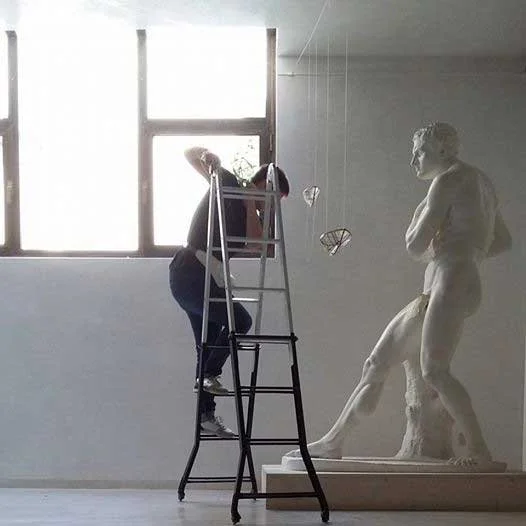
What’s been your most transformative artistic challenge, and how did you work through it? Big projects are always physically challenging, and very often in the past, I was stressed because of the art and job balance. The most emotionally and creatively challenging were “Nowhere is a cloud” and “Punti di sospensione”. I'm still an outsider artist, but at that time I was a real debutante. “Nowhere is a cloud”, because up to then I created just little sculptures and it was my first site-specific installation, my first large-scale project, all the feathers were molting plumes picked up from the ground, and the place was a medieval tower with a lot of constraints...And I pretended to be used to this kind of project and to work on a ladder lying on stones, 4 meters high. “Punti di sospensione”, at Canova Museum, was projected while I was in Portugal. I had constraints (no nails) and the original Antonio Canova's casts in my room. Thanks to their great lightness, my feather boats were suspended with nylon yarns to the audio system...I was very concentrated and scared the whole week of the hanging process, because I had to work on the ladder so close to those precious ancient statues, and a wrong movement could have ruined my whole life. Specially for this project, collaboration was fundamental: I still have to thank the curator, Fabio Carnaghi, my architect friends, Daniele and Benedetta, who valued the weight resistance of the audio system, and the other artist, Maria Savoldi, for being so helpful.
Tell us about important teachers/mentors/collaborators in your life. I had good professors and good people as professors. Bad professors and bad people as professors, too. Both were useful for my growth in very different ways. I like collaboration among people, but I have no collaborators, just sometimes nice friends or colleagues, and my mom, who is a real Italian mom.
You’ve shared that the natural world made a great impression on your art and how you think about the world. How do you sense and connect with nature in your work? As a child, I grew up deeply in contact with Nature, fascinated by ancient myths and scientific descriptions, dreaming of metamorphosis, and appreciating animals and plants. I feel them as individuals, part of a great interconnected unity we belong to. I was fascinated by open spaces, life and freedom, and not by archives of bodies, collections, appropriation, and control. I am aware of Western cultural dualisms, their limits, and the conditioning influence of language, which makes us use a lot of periphrasis to go beyond cultural oppositions. I have been trying to abandon the hierarchical and anthropocentric perspective. It's a process, not a clear way, a succession of questions, contradictions, and mistakes, with few answers. My artistic research deals mainly with natural leftovers and residual elements, found abandoned on the ground and patiently collected over several months. The slow development of my works is determined by my capability of reading various territories, by chance, and by the natural availability of materials. Therefore, there are no resources, waste, and refuse, with references to the social, economic, and environmental spheres.
How do you feel about the growing use of AI in the arts? I still don’t have an opinion about AI. I know it could be useful for research and the sciences. Up to now, it's so powerful that I have been more concerned about the aspects of it being an energy vampire and a mystifier of reality. As a professor, I have to stay aware, because students tend to use it and abuse it, delegating study, interpretation, and personality to AI, and therefore skills and competencies too.
Exploring ideas, art and the creative process connects me to… Something that transcends me.