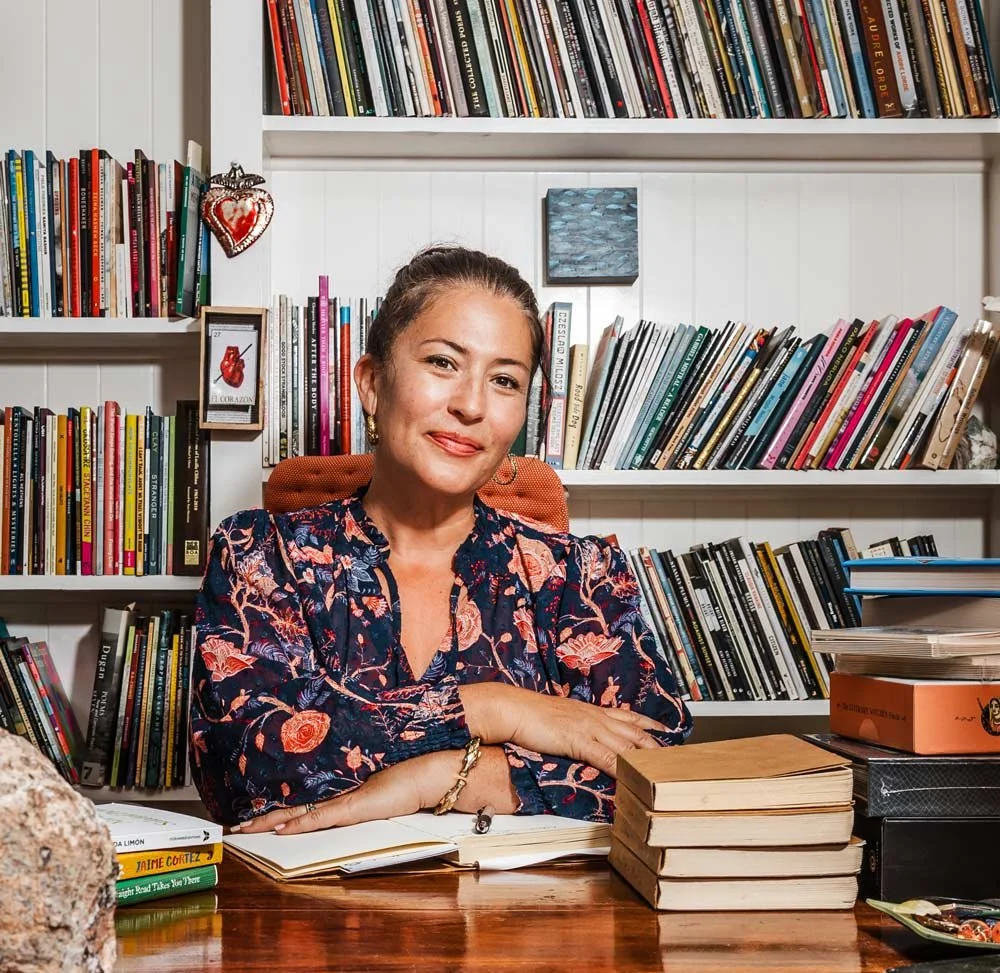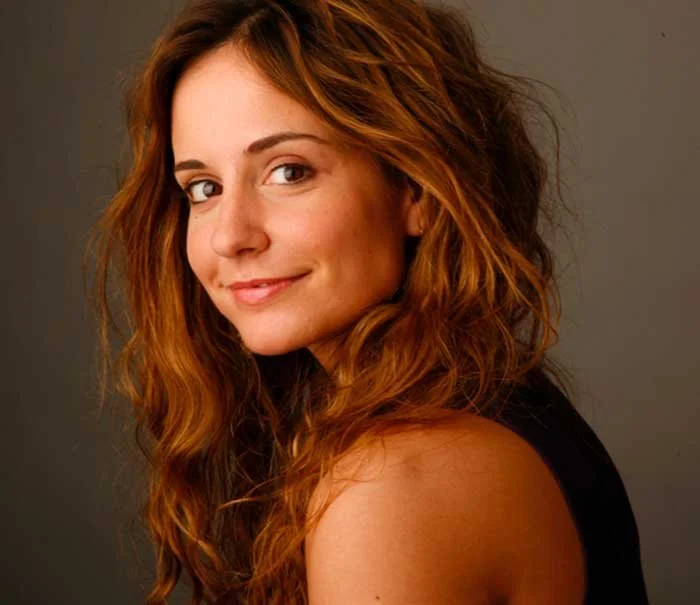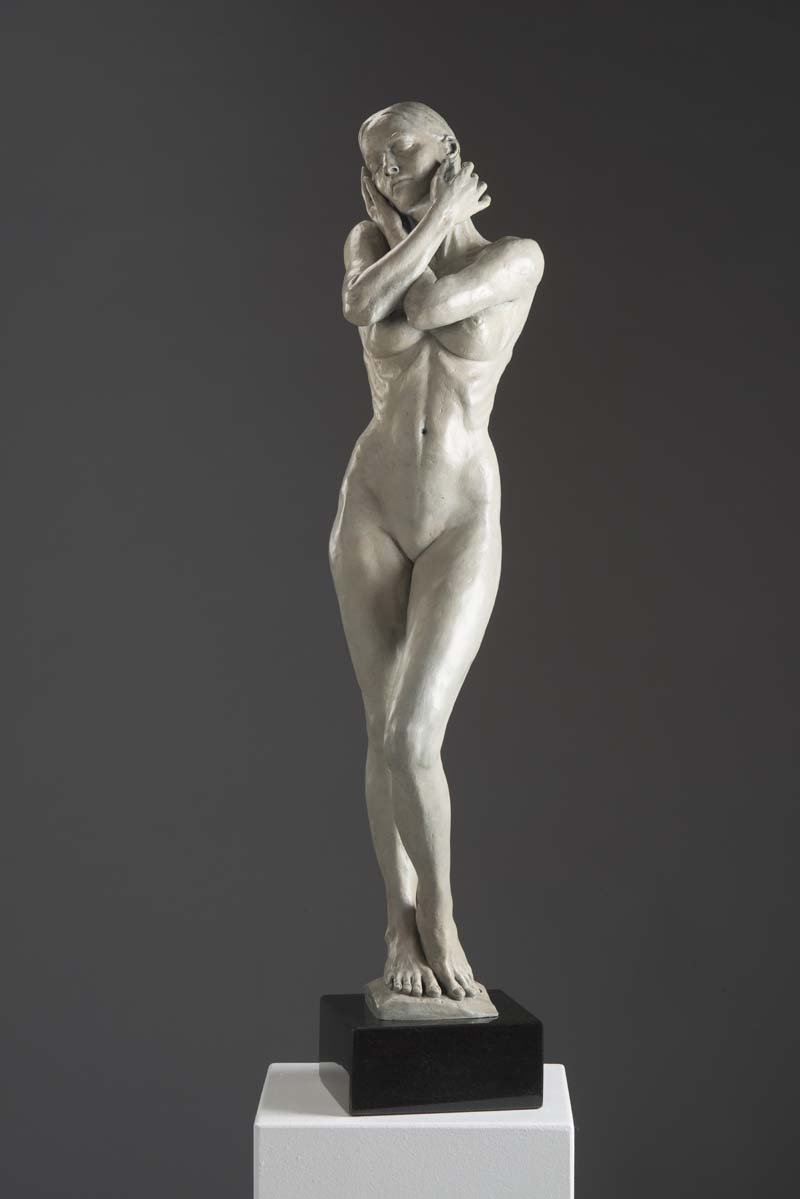


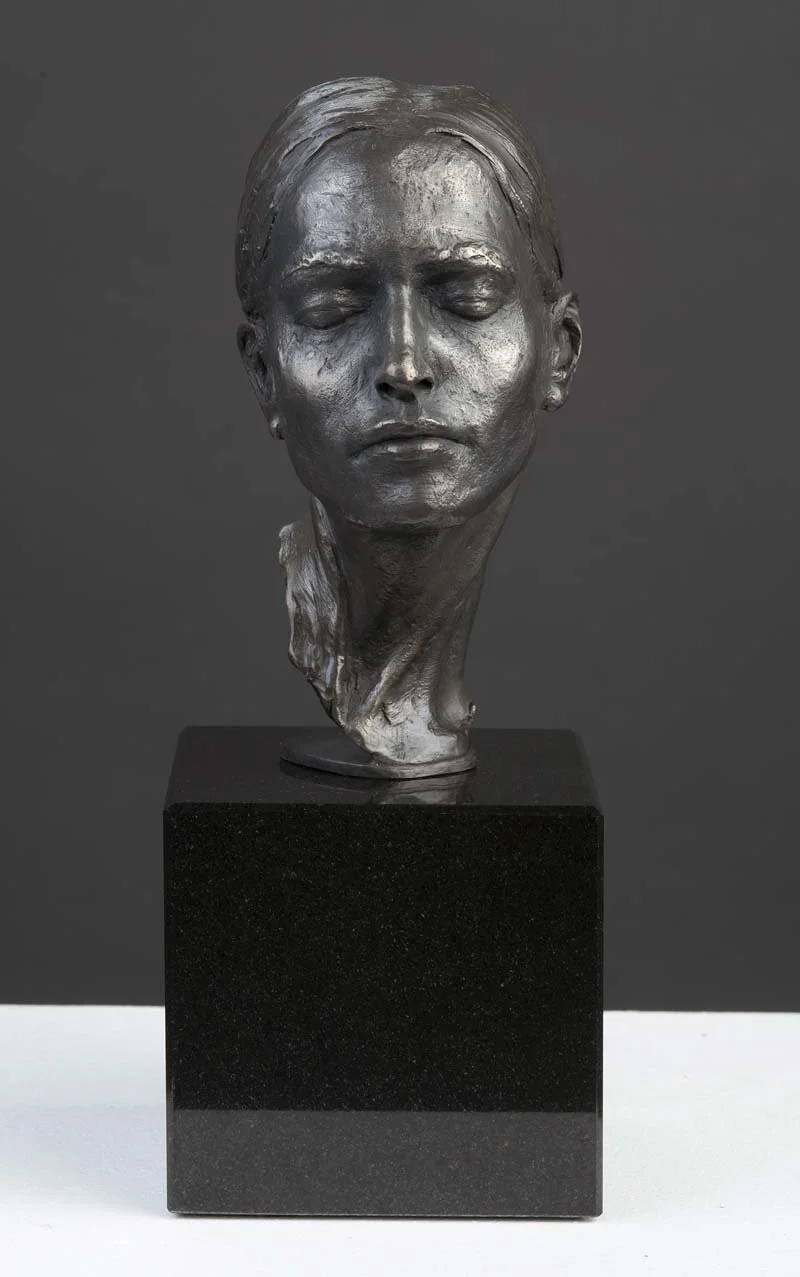
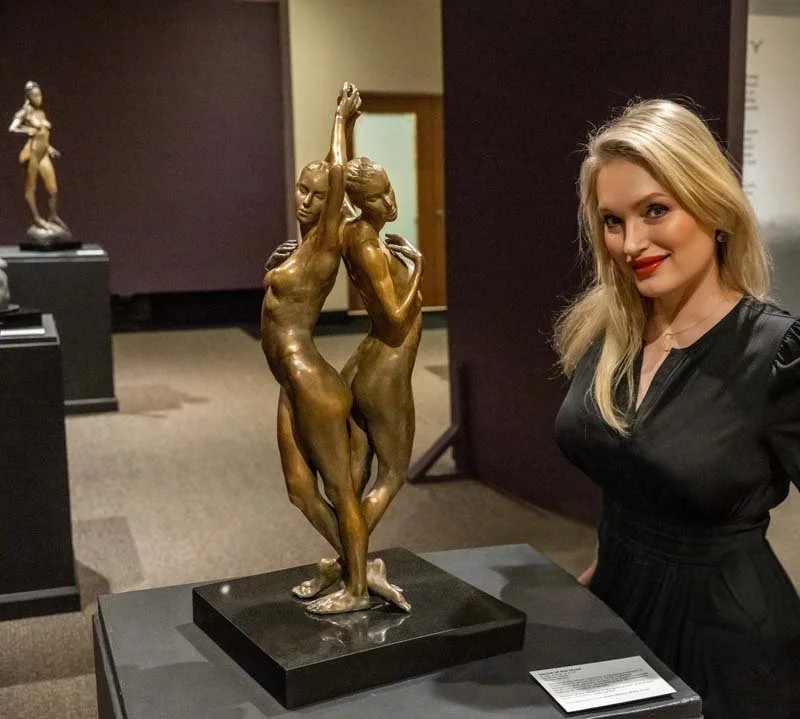
Oceana Rain Stuart is an award-winning San Francisco Bay Area sculptor, poet, and author. She is known for her figurative bronze works, having her art archived on the Moon, and is among the first female artists to achieve this. Her work is featured in the documentary The Art Side of the Moon and exhibited in museums including the Louvre, Wausau Museum of Contemporary Art, and the Museum of Contemporary Art Sicily. Her solo traveling exhibition Enigma, featuring works included in lunar archives and her book Enigma, premiered at the Haggin Museum in 2025.
Where were you born and raised? How did it influence your art and your thinking about the world? I was born in Forest Knolls, California, during a rainstorm, two weeks early, by candlelight, at home. My early years were spent in British Columbia, Canada. Then at age 5, we moved back to California and lived in the Sierra Foothills, and later at age 12, we relocated to Mill Valley. In the foothills, we lived close to the land, surrounded by intellectuals, creatives, and those building lives outside convention.
My mother is a figurative painter who leans toward abstraction more than realism, and my father is a jazz musician. Instead of babysitters, my mother created a space in her art studio with my own canvas to paint while she worked. That was when I began creating art from intuition, imagination, and instinct.
Growing up surrounded by nature and wildlife is something I have always felt deeply grateful for. Nature is still where I go to reset, to find balance. It is where I feel most connected to something greater. In many ways, it has become a cathedral of inspiration. Much of my poetry has been written in response to it.
Poetry entered my life through writers in our community, including Beat poet Gary Snyder. It became a natural extension of my sculptural process. I came to see my work as three-dimensional poems, shaped by a similar emotional expression and intuition.
In my early teens, we moved to Mill Valley, a town just north of San Francisco. It was a very different world, more structured, refined, and socially polished. The landscape was beautiful, with the ocean and Mount Tamalpais nearby, but the cultural environment carried a pressure to conform. I felt the difference immediately. I had come from a life rooted in wildness and a close-knit community, and suddenly I was surrounded by different social expectations and a more conventional world.
Fitting in did not come easily, but that contrast shaped me. It taught me to move between very different environments, to observe, and to rely on myself. Feeling like a stranger gave me a kind of freedom. It helped me stop worrying about how my art would be perceived and allowed me to go deeper into the work itself.
Traveling to foreign countries showed me how much more existed beyond my small corner of the world, and this exposure to different cultures and perspectives widened my understanding and deepened my awareness. This is when my art practice began to incorporate symbology, the psyche, the circle of life, and aspects of existence that have an eternal effect on humanity.
Can you locate a specific moment or time when you knew you wanted to commit your life to doing art? What, for you, is the importance of the arts? I have been an artist and creating for as long as I can remember. Art has always been how I communicate best.
I decided to pursue it as a full-time path when I turned forty. At the time, I was running a successful women’s clothing boutique in San Francisco. It was a creative endeavor, but I did not have enough time for my sculpture practice. I knew that if I did not give myself fully to art, I might regret it one day. I felt compelled to make the change.
It was a choice I am grateful I made. Art has always helped me feel like I belong in this world. It is a way of seeing and expressing what words cannot always hold. Art is important because it reveals raw, unfiltered authenticity and beauty in many forms. But it also asks questions and challenges what we think we know. It makes space for emotion, for reflection, for change.
Art is a language of its own, a voice that speaks across experience. I do not think we need to agree on what a particular work of art means, and that is one of its most powerful aspects. It invites us to see from other perspectives, and in doing so, gives us the chance to grow and broaden our understanding.
What does your typical day in the studio look like? Walk us through your studio and your most used materials and tools. The day begins with preparing the space: heaters for the model, coffee brewing, and music to set the vibe. When the model arrives, we discuss the pose and how the weight is carried, the gesture, the gaze, and the overall feeling. The model draws much inspiration from the process, and it is important to me that they feel completely comfortable and relaxed. That trust and mutual respect are essential to the work.
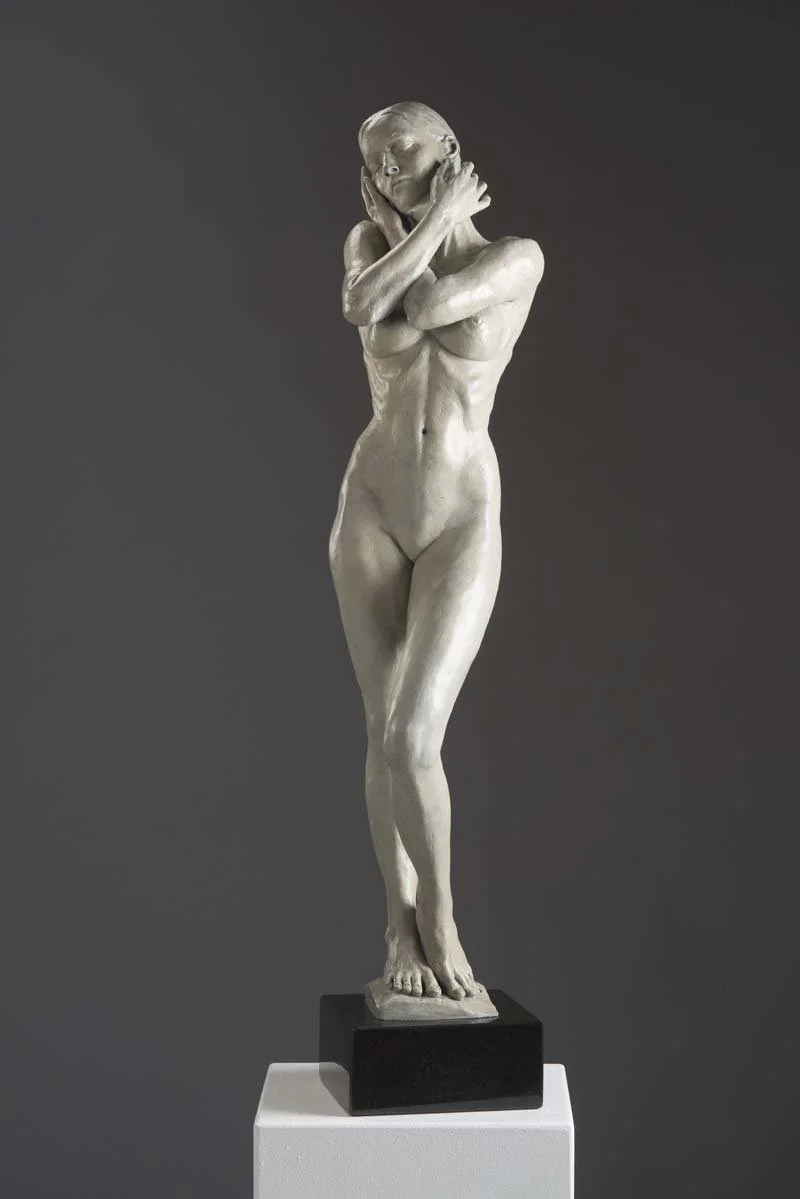
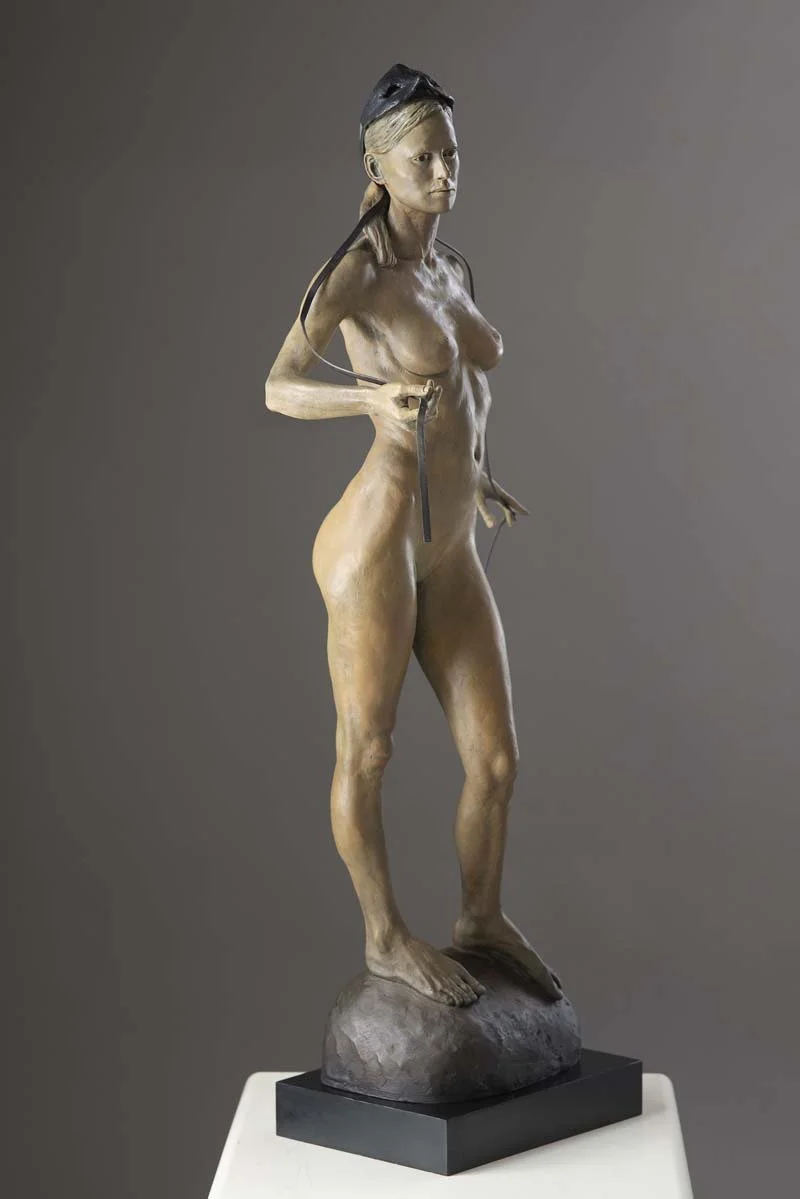
Working from life is essential to how I engage with the form, observing the subtle nuances and the vulnerable rawness of the form. Although I do not typically sculpt the model’s exact likeness, I do reference the anatomical structure while taking considerable artistic license. I am not rendering the figure in a literal sense; I am leaning into intuition more than replication.
I sculpt in clay using the traditional lost-wax method, a centuries-old process involving many steps to create a bronze sculpture. Lately, I have been working more with non-sulphur plasticine clay rather than water-based clay. My tools are simple: modeling tools, wire loops, and a caliper for measuring the skeleton and checking proportions throughout. I follow Leonardo da Vinci’s Vitruvian system as a foundation, but ultimately, I must truly see and feel the work to create it.
You’re currently working on your solo exhibition, Enigma. What has that been like, and what themes or ideas have been driving your work? Yes, Enigma is my touring solo exhibition that premiered at the Haggin Museum in June of 2025. Alongside the exhibition is my book Enigma, published by Snap Collective, which includes a memoir, photographs of my sculpture, and original poetry. The exhibition features my bronze sculptures that have been archived on the Moon through the Lunar Codex and LifeShip missions.
The plans for Enigma began prior to my work being invited to the Moon. But when that invitation came, I integrated it into the exhibition. It deepened the themes of time, permanence, and human legacy that already lived within the work.
I’m also developing a new series called Nocturne. It is sensual and mysterious, exploring the subtleties of body language and the hidden aspects of the psyche. Much of the work speaks to what is unspoken and the body language of a figure.
Themes that continue to move through my work include the sacred feminine, archetypes, and the space between what is seen and unseen. I am drawn to what lingers in the body over time, how nature reflects our internal landscapes, and to the kind of truth that does not need explanation.
At the heart of it, I am always trying to create work that can be felt, not just observed.
What impact do you hope your art has on viewers? I hope people feel something that stays with them, even if they can’t describe it right away. I’m not trying to offer answers—I’m creating a space for reflection, emotion, and presence. My work is deeply felt, and I think people sense that. Even in stillness, there’s a pulse beneath the surface, a rawness, tension, and symbolically, a message I’m attempting to convey.
What I’m trying to express shifts with each piece. Sometimes it’s an experience, resilience, the weight of memory, or the beauty of vulnerability. But at the heart of it, I hope people experience my work slowly, inwardly, allowing their own meaning to unfold.
I also want to remind people that it’s never too late to follow what calls to them.
Which artists, past or present, would you like to meet? And why? I’d host a dinner party at a long table with the Renaissance and Dutch masters, Gothic artists, and philosophers Socrates, Aristotle, and Kant. They lived in times when art, philosophy, and craftsmanship were deeply intertwined. Creating was a way of thinking, of feeling, of reaching for the divine or making sense of the world. They gave everything to their work, often without recognition, and still helped shape the world.
Do you draw inspiration from other art forms or disciplines? I draw inspiration from many sources, both ancient and contemporary; visual art, music, dance, architecture, astronomy, philosophy, science, poetry, among others.
How has living in the Bay Area influenced your creative life? One of the things I love about living in Sausalito and the Bay Area is being surrounded by both natural beauty and creative energy. There’s a deep history of artists, poets, and thinkers who came here to create, and I can still feel that legacy. The ocean, the mountains, the wildlife, and the way the light shifts through the fog all influence me. Living close to San Francisco also means I can engage with a wide range of art and connect with a community that values creative work.
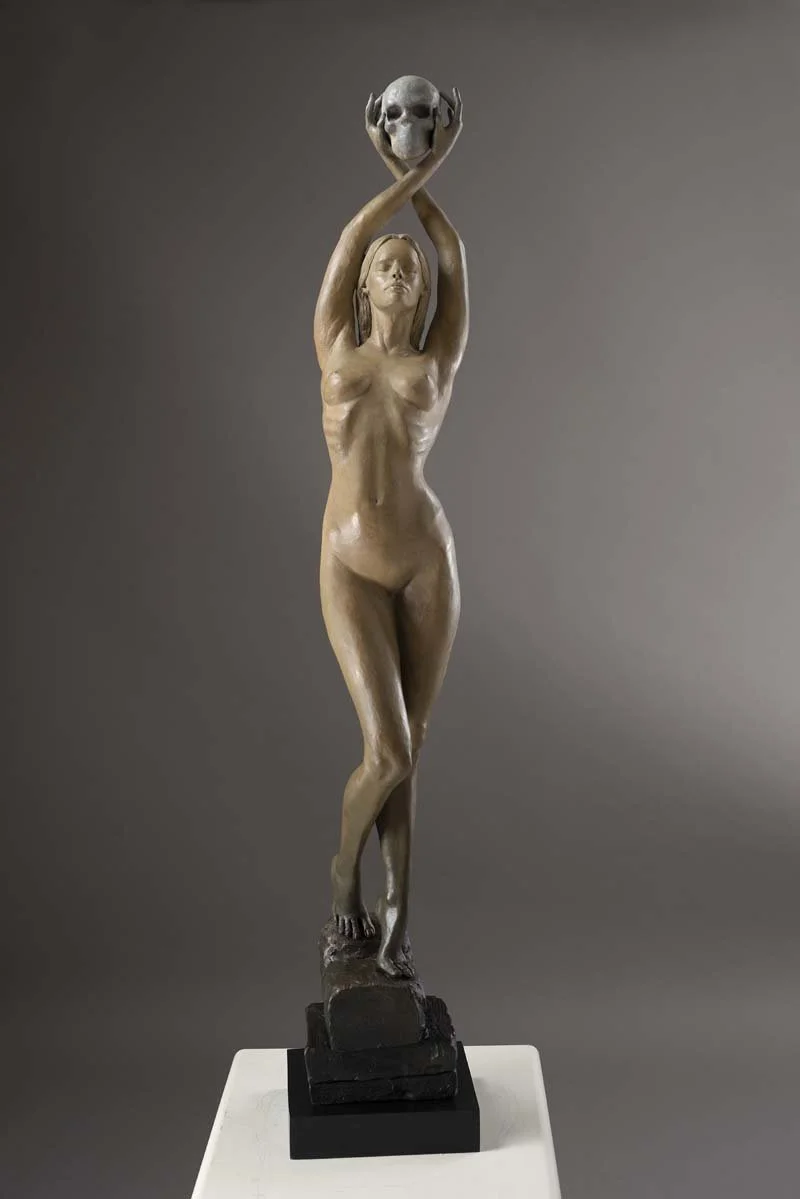
Can you describe a project that challenged you creatively or emotionally—and how you worked through it? When I sculpted the Eternity series, I was working in plasticine clay, which is oil-based and sensitive to temperature changes. A heat wave hit just as I had finished my Eternity series, and my air conditioner gave out. The sculptures turned to the consistency of butter. Some collapsed completely, others slowly dripped down the armatures. It was devastating—they were all finished and scheduled to be delivered to the bronze foundry for casting.
To make things more complicated, the models I had worked with were no longer available, so I had to hire new ones. That meant starting over with measurements, references, and building new working relationships from scratch. I spent months resculpting the entire series. It was exhausting, but something shifted in the process. That’s when the three skulls intuitively appeared in the work. The series took on a deeper symbolic meaning after that.
Tell us about important teachers/mentors/collaborators in your life. I’m basically a self-taught sculptor. I’ve taken a few workshops over the years but most of what I’ve learned has come from time in the studio, trial and error, and observation. I’ve had numerous mentors and people who encouraged me to trust what I was doing and stay close to the work. I feel fortunate to have crossed paths with so many creative, wise souls over the years.
The models I’ve worked with have been important, too. Their presence, their patience, and the way they helped me, just by being present, have meant a lot. It can take time to find what I’m trying to convey in the work. That kind of calm, grounded energy has allowed me to focus, and it’s had a real impact.
Time in the studio, a lot of practice, and humility have been my greatest teachers. I’ve learned to listen closely to my intuition and to start over when something doesn’t feel right. I try to let the work unfold on its own terms, even if that means changing direction midway through.
I started writing poetry as a child. It came naturally to me, and I’ve continued to develop it over the years. It became a way to understand what I was feeling, and over time, it began to weave into my sculptural process. Many of my sculptures are, in essence, poems in form.
In what ways does the environment show up in your work? Sustainability has been part of my life for as long as I can remember. I grew up off-grid. My parents bought raw land, dug a well, and grew an organic garden. We lived closely with the land. That early connection to nature shaped the way I see the world, and it still lives in my work.
Spending time in nature helps me find clarity in both life and art. I take hikes near the ocean and on Mount Tamalpais. I am fortunate that owls live in the trees outside my home, and at night I often hear them calling to one another. I feel deeply connected to the natural world. It grounds me.
Much of my poetry is inspired by nature. The San Francisco Bay Area has many microclimates, and one of the things I find beautiful is the shifting marine layer, the way light moves through fog, creating moments of deep contrast. Light and darkness, symbolically and emotionally, are recurring themes in my work.
My experience of nature informs both my sculpture and writing. It reminds me that we are all connected. Every living thing on this planet is part of one circle of life. That awareness is part of what guides me, not just in my practice, but in how I live.
How do you feel about the growing use of AI in the arts? In what ways do you think human-made work holds power in a digital age? Technology and AI are changing the world. While it can be useful and even fascinating, I think we need to learn how to be intentional with it, to protect fine art from being replicated, stolen, diluted, or distorted. It is evolving fast, and that is part of what concerns me. I believe it has value in advancing certain aspects of technology, but not as a replacement for human creation. Part of making art is the challenge of bringing something into being. It is a profound process, and authenticity comes through that effort.
Handmade work is irreplaceable. It is a timeless part of our human legacy. Its imperfections matter because they are human, they can be felt, and they are relatable. When I sculpt, I am in direct conversation with the material. There is no shortcut for that kind of relationship. It is physical, intuitive, emotional, and deeply human.
I think human art matters more than ever. In a world where so much can be automated or instantly generated, taking the time to make something with your hands, something rooted in lived experience, feels essential. It reminds us who we are.
Exploring ideas, art and the creative process connects me to… Something larger than myself, to the exploration of my inspiration, a need to create, to reflect, and to make sense of the world. It reminds me that I am living my life’s purpose.