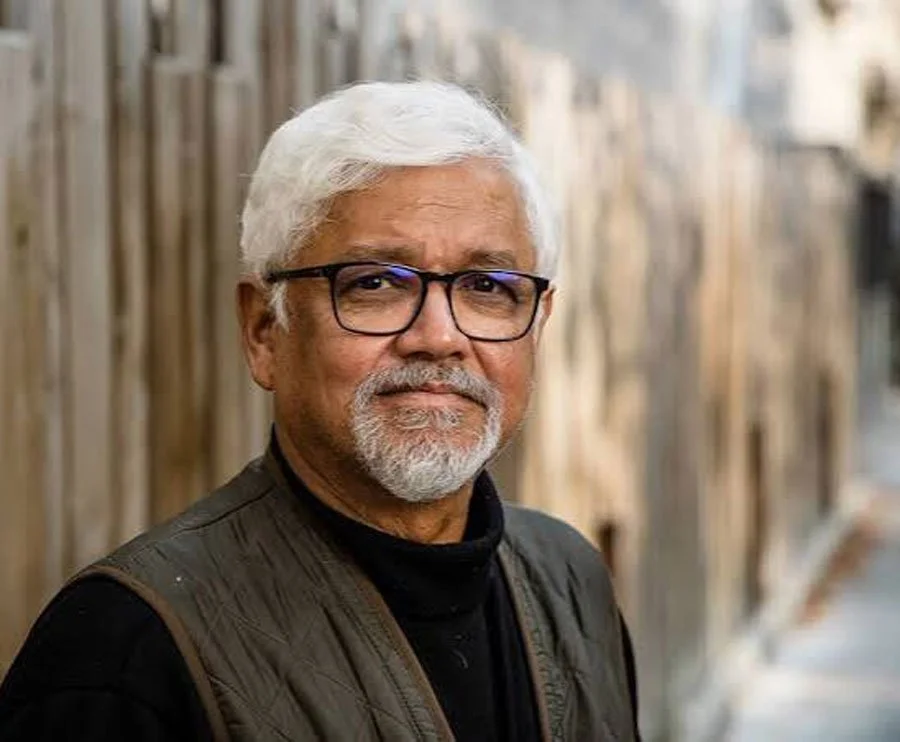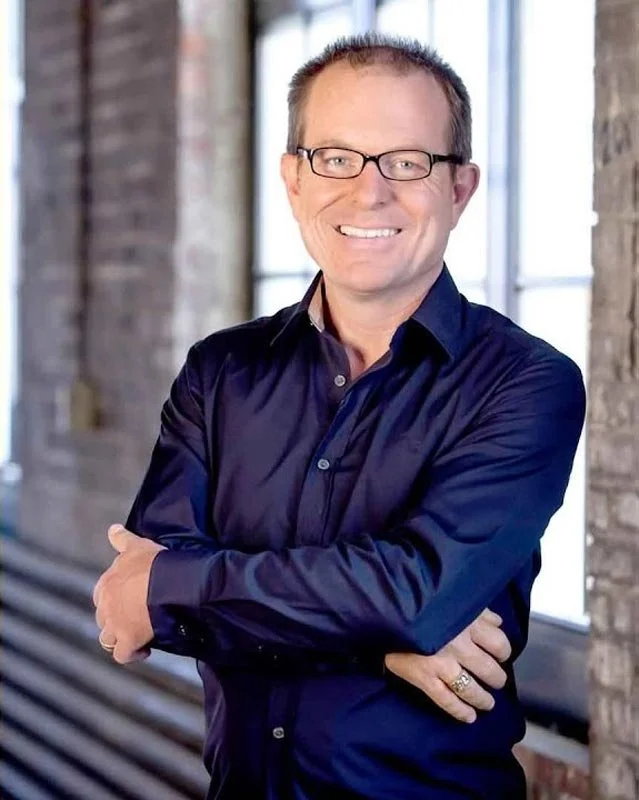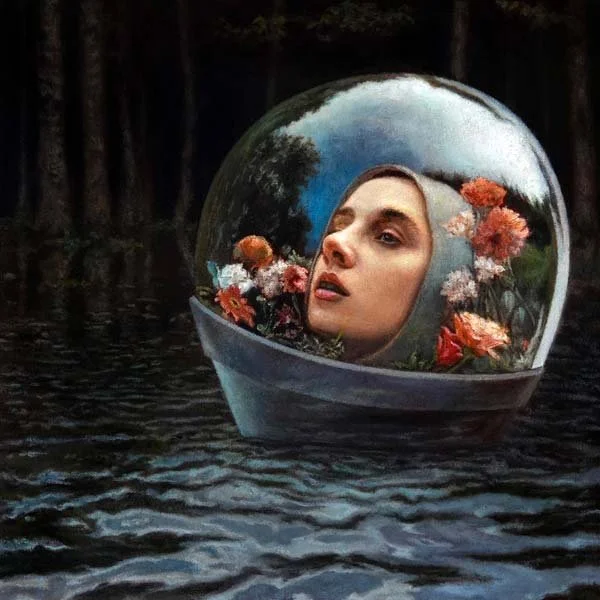


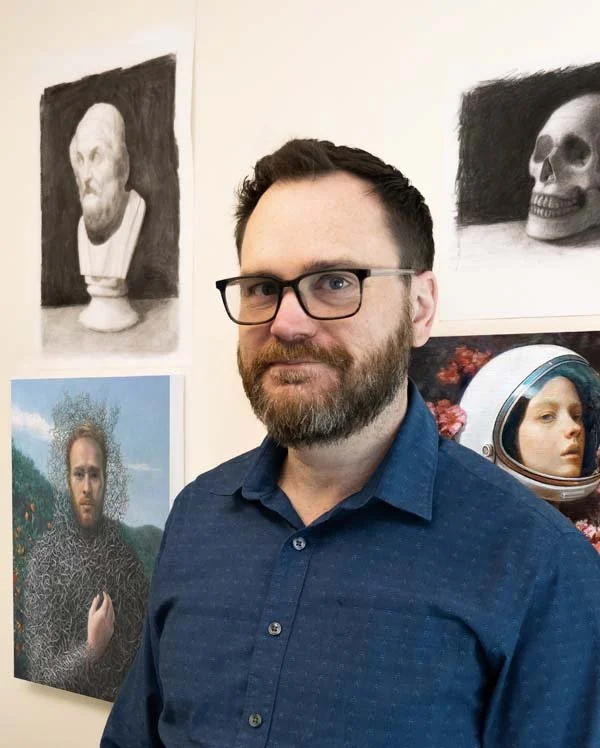
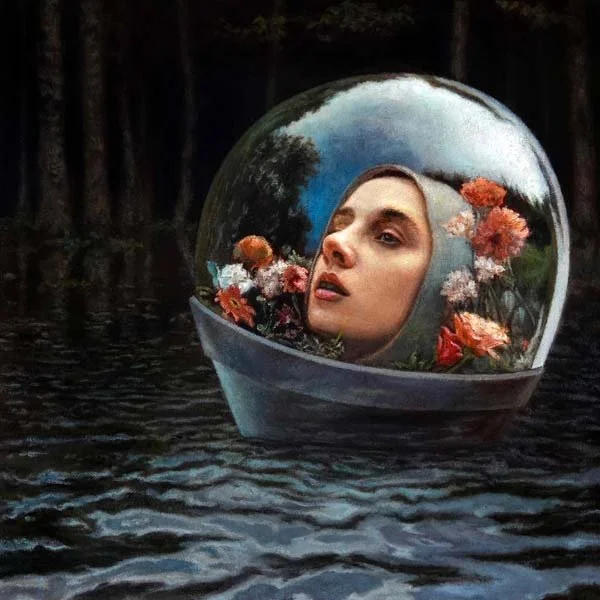
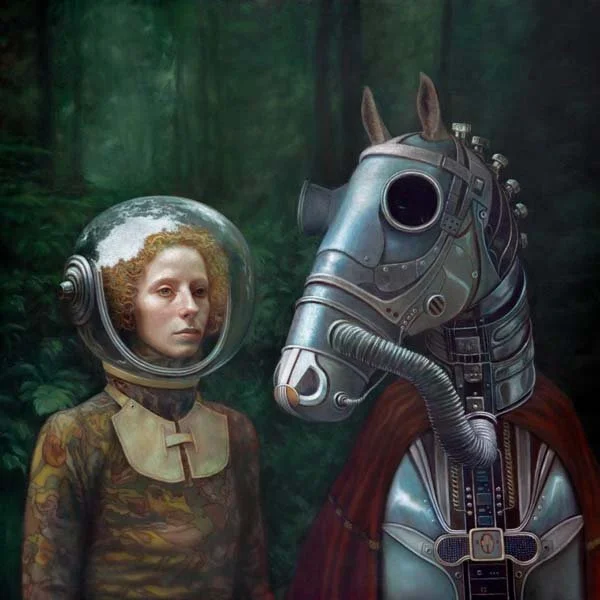
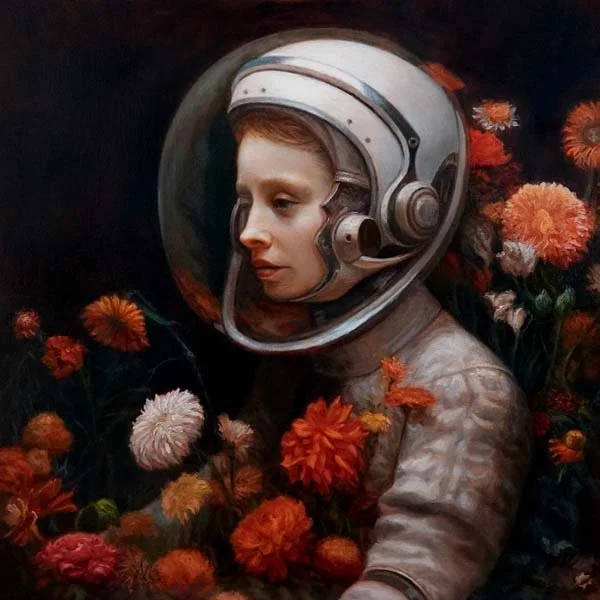
J. Adam McGalliard is a contemporary realist artist who blends traditional oil painting with modern technology to explore identity, myths, and the divides shaping today’s society. His artwork is rich in layers, weaving personal stories with archetypes and the intricate dynamics between humanity and nature. His latest series, Erewhon, captures unreal figures in surreal settings, envisioning potential futures amid societal polarization and climatic upheaval. Previous collections, like Personas, investigate the complex expressions and roles people adopt within our changing world.
Trained by notable artists Vincent Desiderio and Steven Assael at the New York Academy of Art, McGalliard honed his unique style and perspective during his MFA in Painting. He also spent nearly four years enhancing his skills behind the scenes as an artist assistant for the globally acclaimed Jeff Koons. McGalliard was recently selected as one of five artists whose work will be featured in a collaboration between the Art Renewal Center (ARC) Salon and Fashion Week San Diego and won the Enchanted Living Magazine Award in the 17th International Art Renewal Center Salon Competition.
His artworks have graced prestigious venues worldwide, including Context Art Miami, LA Art Show, Sotheby’s, and the Museo de la Ciudad de México, as well as prominent galleries like Arcadia Contemporary in New York and Stolen Space in London. Currently, he serves as Assistant Professor of Painting and Drawing at the University of North Florida and continues to push the boundaries of his craft in his Jacksonville studio. @adammcgalliard
Where were you born and raised? How did it influence your art and your thinking about the world? I was born in North Carolina and grew up in the South, where place, memory, and myth were always present. That mix of beauty and contradiction shaped how I see the world and shows up in my interest in figures, storytelling, and the push and pull between people and nature.
When did you realize that you wanted to devote your life to art? For you, what is the importance of the arts? I’ve always been drawn to art—even before I knew what being an artist meant, I knew that’s what I wanted. It helped me make sense of the world before I could put things into words. I knew I was all in once I saw how painting could connect personal experience with something bigger. Art makes room for empathy and imagination, especially when things feel divided.
What does your typical day in the studio look like? What grounds you when you begin working in the studio? I split my time between teaching, meeting with students, and painting in my office or studio. I’m usually working on more than one painting at a time, so a typical day in the studio generally starts with figuring out which piece to focus on, what it needs, and where it needs to go. My process blends classical oil techniques, both direct and indirect methods, with modern tools like Photoshop, Procreate, and AI programs like Midjourney for ideation and reference. I usually work on stretched linen or panel, using a mix of natural and synthetic brushes and a traditional palette.
Your work embraces realism and unreal elements. What projects are you at work on at the moment? I'm working on a series titled Erewhon, which imagines a post-collapse society where unreal figures navigate ambiguous, symbolic environments. The work explores nature’s resurgence, climate anxiety, and spiritual fragmentation. I’m currently working on several pieces for Arcadia Contemporary’s Under 5 exhibition in NYC.
When your work is encountered, what do you hope resonates most with people? I want people to feel unsettled but enchanted. My work aims to express a tension between hope and decay, between intimacy and isolation. The figures often wear armor or environmental suits—not to suggest strength, but fragility.
Are there artists you feel an affinity with and would love to engage in conversation with? I’d love to talk with Will St. John, Jenny Morgan, and Odd Nerdrum. Each of them approaches the figure with such intention—myth, psychology, and symbolism all woven into the paint. Will St. John’s use of classical technique with surreal undertones, Jenny Morgan’s raw, emotional layering, and Odd Nerdrum’s timeless, allegorical worlds have all shaped how I think about storytelling through the body. I’d be curious to hear how they think about narrative, and how they navigate tradition and invention in their work.
Are there forms of art or experience beyond the visual that influence how you think about image-making? Yes. Music, literature, and science fiction are huge influences—especially speculative fiction that challenges our assumptions about society and identity.
A great thing about living in Jacksonville is…
our growing arts scene with strong community support, and close access to nature—both of which feed my practice.
Has there been a project that pushed you to work through something difficult—emotionally or creatively? One of the most challenging projects has been my Erewhon series. It pushed me to rethink how I use reference, especially with AI tools, and how to stay true to the emotional core of the work without losing it in the tech. There was a lot of trial and error—compositions that felt too artificial or ideas that didn’t land. What helped was staying rooted in the painting process itself—letting the materials guide the work and being willing to scrap pieces that weren’t working. The challenge became part of the content, which made the series stronger.
Tell us about important teachers and mentors who helped shape your creative path. I’m grateful to the mentors who trained me in traditional techniques at the New York Academy of Art—especially Vincent Desiderio and Steven Assael, who both had a big impact on how I think about painting. I’ve also been lucky to collaborate with my wife, Jenny Lee Corvo, whose work at the intersection of AI and art constantly pushes me to rethink what creative labor can look like. Her perspective has been a huge influence, especially as I’ve integrated tech into my own process.
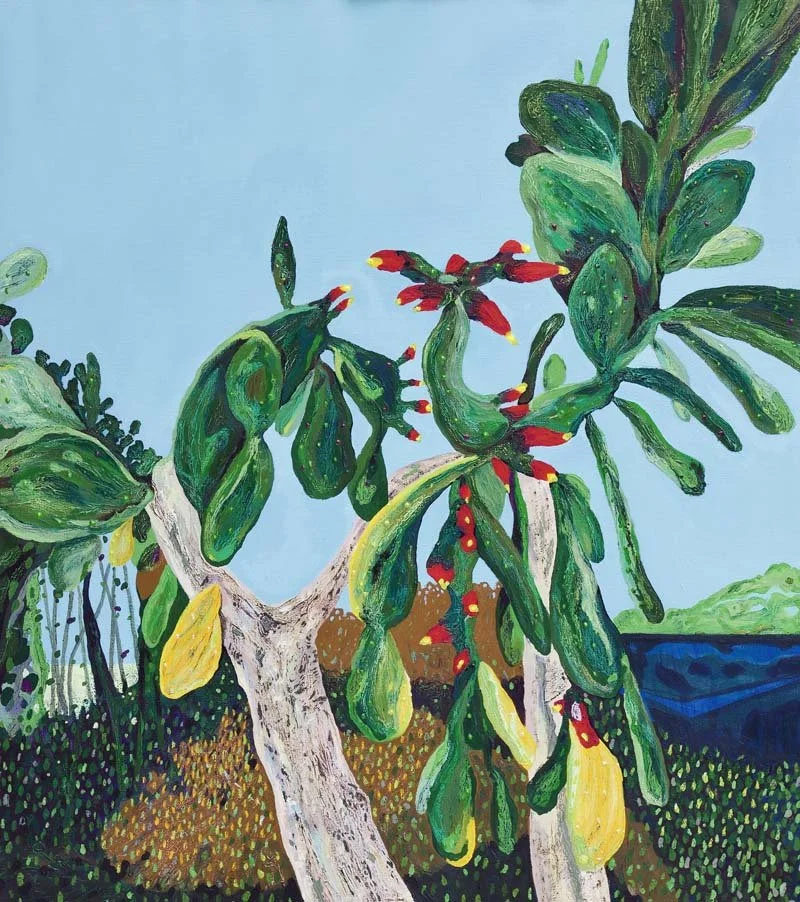
Sustainability in the art world is an important issue. Can you share a memory or reflection about the beauty and wonder of the natural world? Does being in nature inspire your art or your process? How do you draw inspiration from the natural world and how has it influence your visual language? Absolutely. I often incorporate botanical elements or environmental symbolism into my work. I find inspiration in the Florida landscape—its lush, unruly, and often haunted quality mirrors the emotional terrain I explore in my paintings.
With AI and technology changing how images are made and shared, what keeps you connected to the handmade in your practice? AI tools have become part of my reference-generation process, but I see them as collaborators, not creators. Human-made art retains a sense of intention, imperfection, and presence that’s irreplaceable. My work interrogates how technology affects our imagination, but I remain committed to the handmade.
Exploring ideas, art and the creative process connects me to…
the deeper, often hidden stories we carry as individuals and cultures.