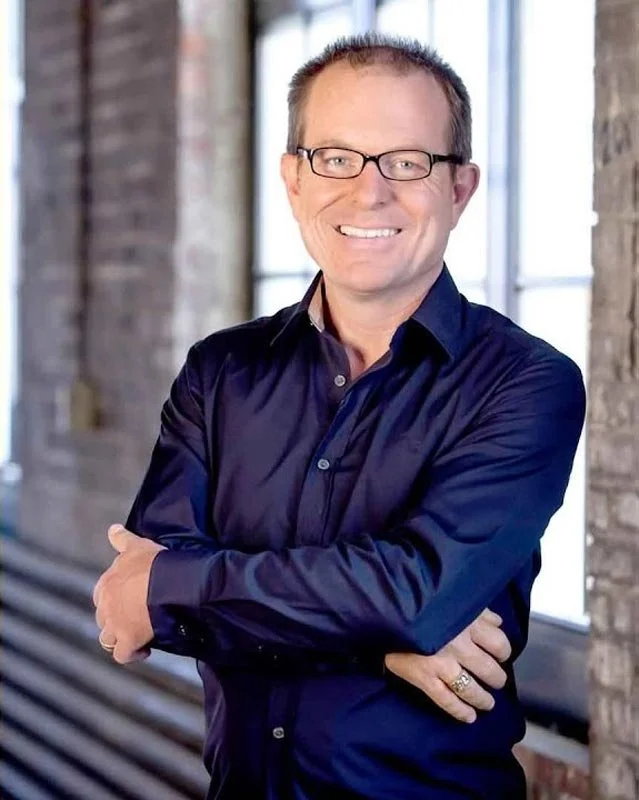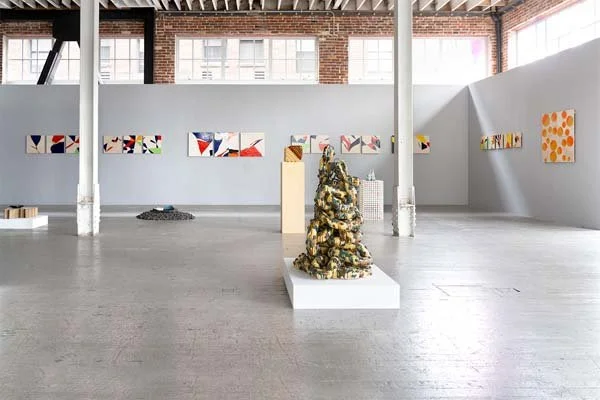


A Conversation with Griff Williams · Founder of Gallery 16
501 Third Street, San Francisco, CA 94107
@gallery16
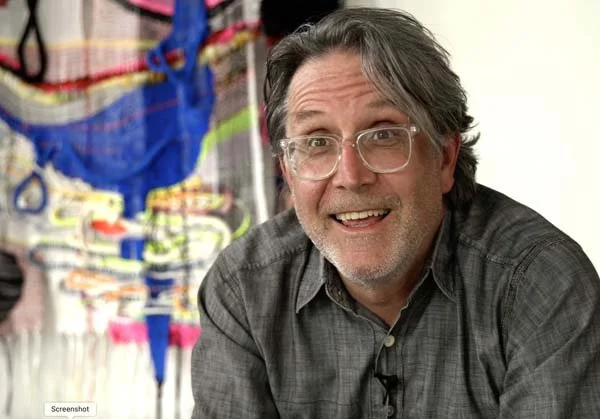
You’ve made painting, curating, publishing, and filmmaking all part of your creative life. Can you remember a moment when you knew you would enter the world of art?
I’ve made art my entire life. My painting practice is parallel to my work as a gallerist, publisher, and filmmaker. It was my first obsession as a child and motivated me to start Gallery 16 32 years ago. In those years, I’ve confirmed that the best thing human beings have ever done with our time on earth is to make music, art, and culture. Culture is at the heart of what makes us human. Some things are, at their core, ethical frameworks. The transfer of knowledge from one generation to another is one of them. Art is a gift to the future.
As someone who’s spent over three decades running a gallery, working with artists, and making work yourself, what keeps you engaged day-to-day? One of the great parts of gallery life is that there is no typical day. Art is a living thing, and it changes with us. I’m thankful to have the good fortune of living in a world of ideas, arm in arm with other artists, writers, musicians.

What exhibitions or projects are you working on at the moment?
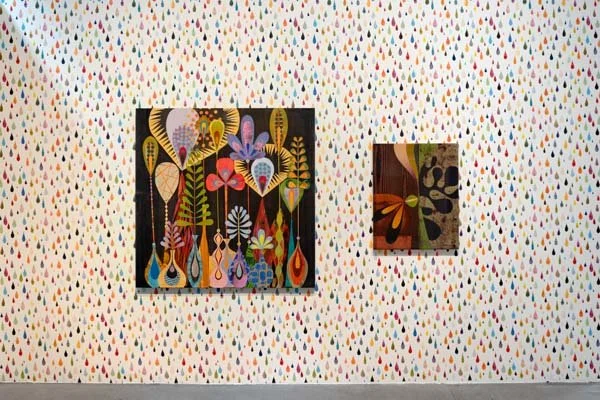
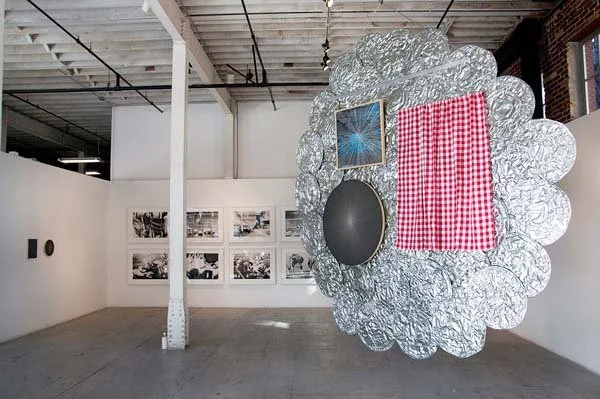
I’m working on a major show with artist Tucker Nichols for July. I’m also curating a retrospective exhibition of the late Jim Melchert (1930-2023). Jim Melchert: Where The Boundaries Are is the first Museum retrospective of Melchert’s career. It starts at the DiRosa Center for Contemporary Art. A monograph of the same name will accompany the exhibition.
The work of art most important for me is… I don’t think in terms of favorites, best, or most important. I think that is reductive. Art is meaningful in different ways. We don’t get everything we need from one friend, one type of food, one book, so too in art.
Which artist, alive or dead, would you like to meet? There are too many to mention.
How do you approach the decision of which artists to represent at Gallery 16—especially given how saturated and inequitable the art world has become? We are looking at new artists' work constantly, but have the capacity to work with only a few. This is a challenge for young artists. They’ve been fed this notion that there is a place for them in the market. There are too many artists, too few galleries, and way too few collectors. Thankfully, artists are beginning to work outside the gallery system, which is an inequitable model.
You’ve described San Francisco as a place that long supported artists outside the pressures of the market. What does it mean to be part of that legacy—and how did your film Tell Them We Were Here grow out of that commitment? A great thing about living in San Francisco is that, until very recently, it was an incredible city for artists because it was a vibrant community of artists living outside the pressures of the market. It has been home to an incredible list of contemporary artists. San Francisco was always an anomaly among American cities. It doesn’t want to be NY or LA. That’s exactly what made it great.
I made an award-winning documentary film about the Bay Area art community titled Tell Them We Were Here. The film chronicles artists living and working in the San Francisco Bay Area and how they extend the historical legacy of Bay Area activism. In an age of hypercapitalism, these artists represent an empowering alternative worldview, one that emphasizes creativity and community over capital.
The title, Tell Them We Were Here, is a statement made to me by legendary poet and author Bill Berkson. It reminds me that we are the Archive and champions of our own history. The stories we choose to tell are the ones that live on in history. Some things are, at their core, ethical frameworks. The transfer of knowledge from one generation to another is one of them.
You’ve been outspoken about the difference between the art market and the art community. How do you see the gallery’s role when it comes to shaping public conversations—especially around social issues? Galleries should be public squares, third spaces, places that build community. They are the greatest engine for new art the world has ever known. But, the art market is NOT the art community. The art market doesn’t make communities stronger any more than the stock market reflects the economies of Main Street. Unfortunately, consumer markets are not terribly good at considering important social issues until they are pressured into to it, or see a profit in doing so. Perhaps recent social pressures will begin to change this. I believe that art and culture have profound effects on their communities. And those effects havent a thing to do with what is bought and sold.
Can you describe a mentor or influential figure and the impact they had on your professional development? How have artists shaped your approach to running a gallery—and what wisdom would you share with someone hoping to do the same today? My mentors have been artists, not gallerists. I’ve been blessed to have a number of intergenerational friends and mentors. Carlos Villa, Juane Quick To See Smith, Rudy Autio. But, Jim Melchert was perhaps the most influential because of his relentless curiosity and kindness. My advice to aspiring gallerists is to choose artists over art! Art is the precious product of human experience, not a commodity. And, artists should be our focus, they are keepers of an elusive fire.
What are your thoughts on sustainability within the art world? The advent of art fairs creates larger carbon footprints. How does your gallery approach environmental considerations? Gallery 16 participated in the art fair circuit for many, many years, starting in the 1990’s. Our last being 2017.
I have felt for many years that much of our participation in Art Fairs was based on largely on fear. Fear of not being involved, fear of being outside looking in. This drives a lot of involvement. Despite the staggering amount of money galleries need to allocate to participate, most find it hard to break even. If truth be told, the costs amortized over time probably have us, like many galleries, in the red. But still they prevail, because it doesn’t matter if we are there, someone else will happily take our place. I wish success for everyone who participates, artists and galleries alike. But, I’m afraid what we are losing in all of this is healthy, local brick and mortar art communities. I met so many collectors in Miami who lived near our gallery, but bought our work at the art fair rather than visiting us at home.
There are, of course, good things that come out of these fairs. But we couldn’t help but feel that we were contributing to the demise of the brick-and-mortar gallery. I know the Miami fair represents an absurd carbon footprint, a playground for the uber-wealthy, and how art is smashed together largely without context…but all that is low-hanging fruit.
What I wish we were talking about is how art is needed in local communities, shared in wider circles, and where wealth isn’t the barrier to entry.
With the rise of digital platforms, virtual exhibitions, and AI-generated content, how do you think galleries can hold on to the human element in art-making and appreciation? AI is inhuman. And therefore Anti Art. As Miyazaki said, “Humans are losing faith in themselves”. Technology benefits us in a myriad of ways, but if we lose sight of what makes art important, we will have lost our way. Art is a living organism, it evolves as we evolve. But it is made with human hands as an expression of what it means to be human.
I was reflecting on the concept of labor and how rarely Artistic labor is considered as such. We’ve seen the entire music economy irrevocably changed with streaming services that are singularly hostile to the interests of working musicians. Now, the world gets all their music basically for free?! Can you imagine if the legal profession or wealth manager’s livelihoods were suddenly rendered valueless? The Labor involved in making a life in the arts is rarely discussed and often not even considered labor. I would welcome frank discussions of what this labor entails, the sacrifices, the challenges, and the benefits.