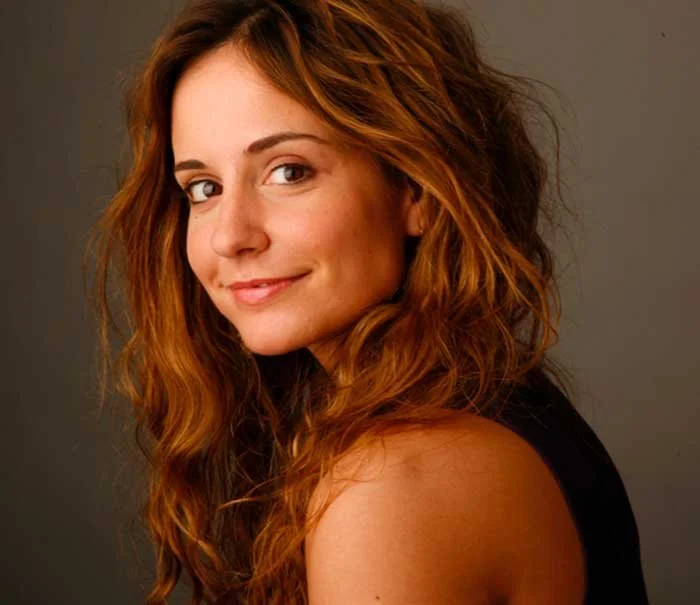


Minneapolis-based artist Sara Suppan on endurance, humor, and the Midwest.
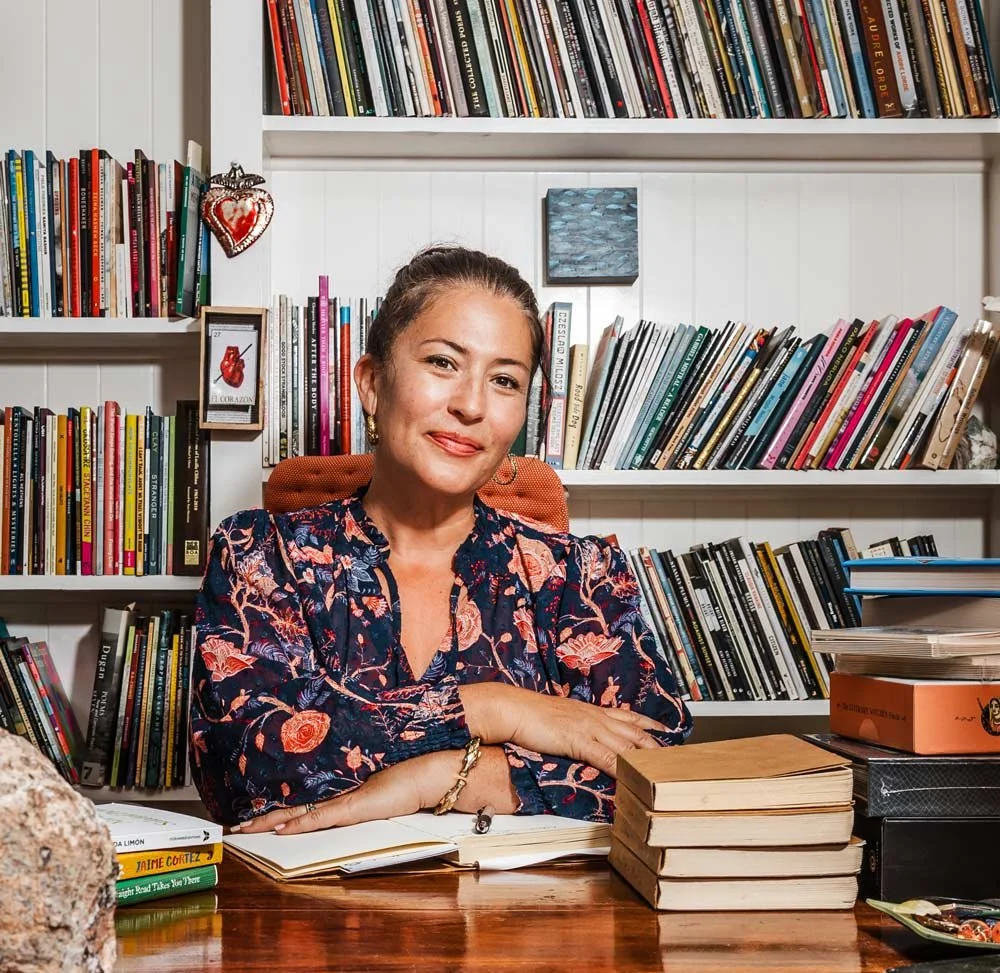
Sara Suppan (b. 1994) is a painter living in Minneapolis. She has recently had solo shows with Primary (Miami), Micki Meng (San Francisco), Moosey (United Kingdom), and Weinstein Hammons (Minneapolis). She has participated in group exhibitions with Hashimoto Contemporary (New York, Los Angeles, San Francisco), Kutlesa (Switzerland), and Huxley-Parlour (London), among others. Sara has displayed at the NADA Miami, Untitled Miami, and CAN Ibiza art fairs with Micki Meng, Huxley-Parlour, and Moosey, respectively. She was a resident artist at Salzburger Kunstverein (Austria, 2019) and Moosey (United Kingdom, 2023), has been published twice in New American Paintings magazine (no. 155 and 173), and has received multiple grants for her work. Sara received her BFA in painting from the Minneapolis College of Art and Design in 2015. @sarasuppan
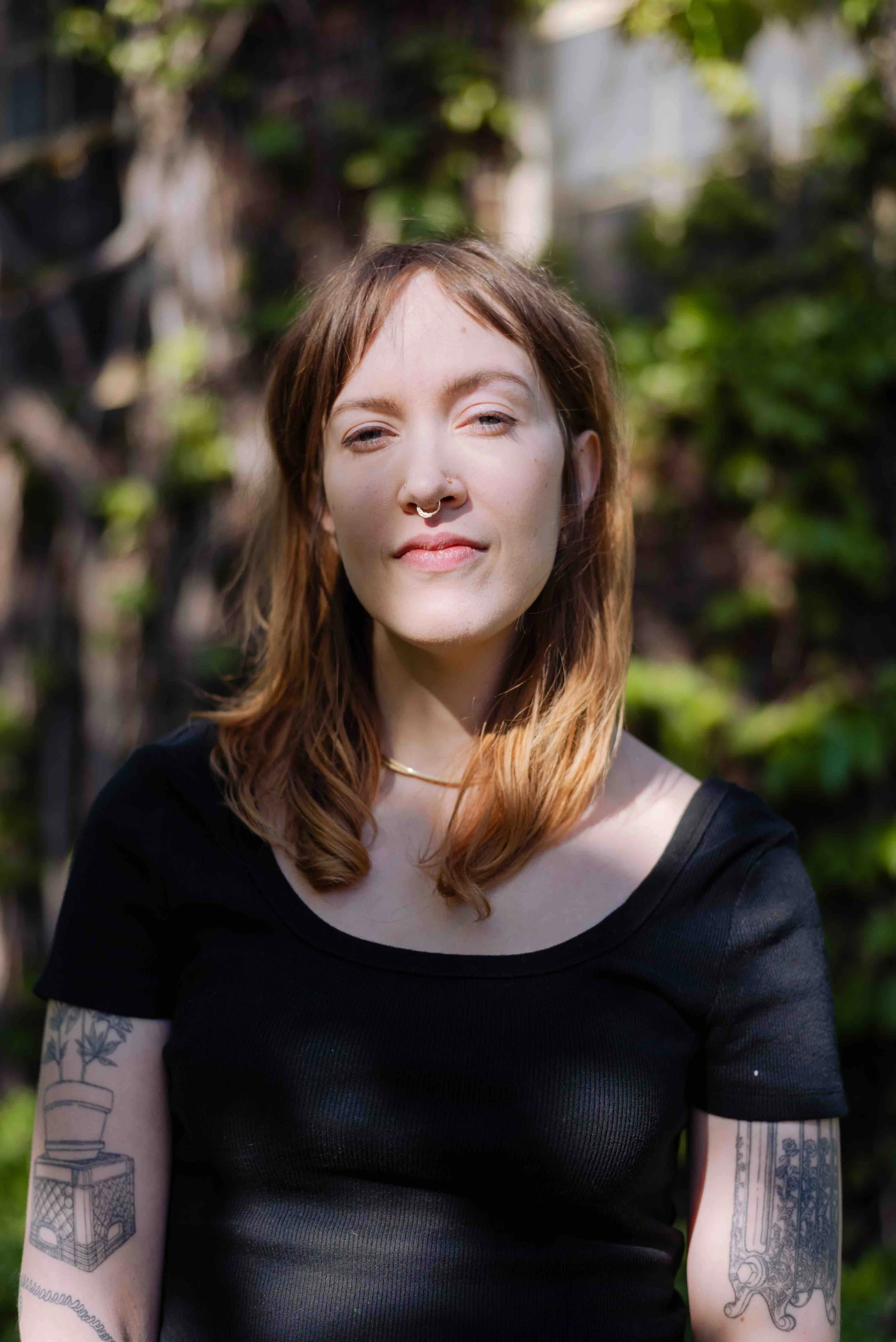
Where were you born and raised? How did it influence your art and your thinking about the world?
I grew up where I still live, in Minneapolis; a mid-sized, mid-western, and wonderfully livable city. The people here are known for being nice and our winters are known for being very harsh. Everything slows down for more than half of the year, when the temperatures can dip into sub-zeros and the snow stops traffic. That seasonality has become important to me--it forms the rhythm of my life. From November until May, I work extra long hours in the studio, preferring to stay indoors with the warm radiators and my cats. It's a time of reflection and interiority. In the summer I am outside on my bicycle almost as much as I am painting.
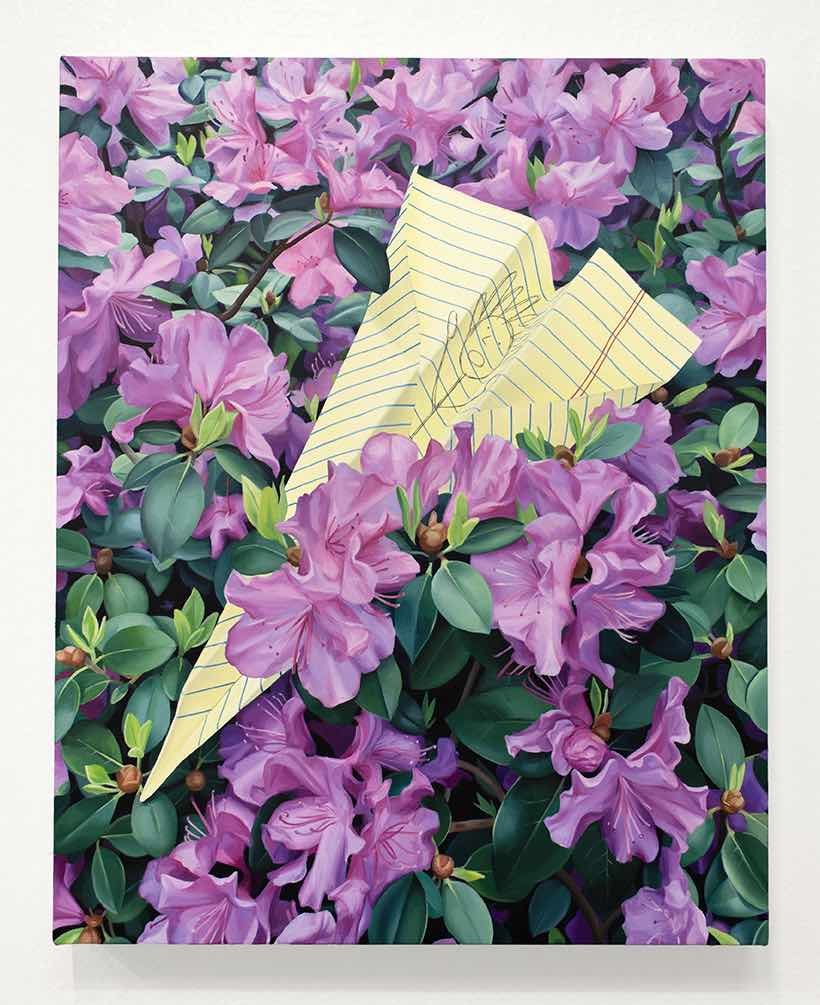
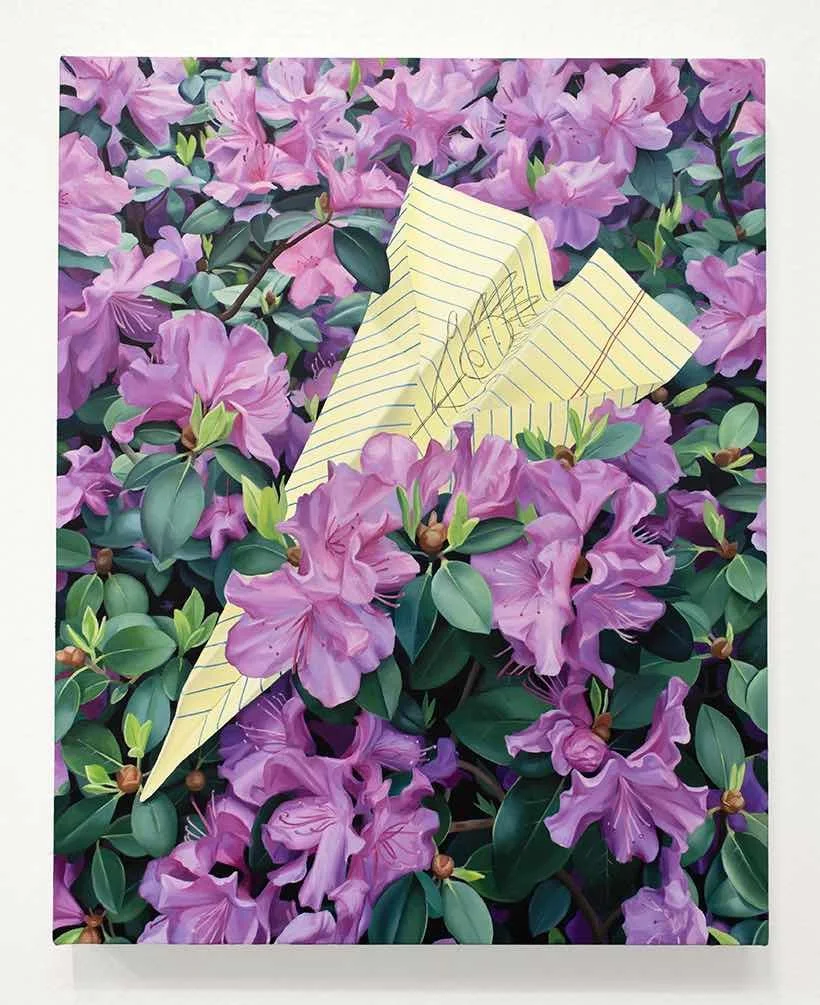
I've always thought that my artwork has a real midwestern quality. I have never been able to find inspiration when I travel to exciting places, although I always look for it. I'm not very attracted to flashy things. Much of my subject matter is modest and small: a banana, a paper airplane, a glass of water. These are the stuff of my life, made beautiful and silly by my painting them. Maybe it's easier for me to find these inspirations at home in Minneapolis because everywhere else there is just too much that's new to me; too much visual noise.
When did you first fall in love with art and realize you wanted to be an artist? For you, what is the importance of the arts?
Probably most kids love to draw, but it became an obsession for me when I was a teenager. I am an only child and was left to myself a lot growing up. Making art is something I could always do on my own, and I filled sketchbooks with images of wolves and flowers and hands. What distinguishes hobby from vocation, however, is the artist's inability to stop. I realized sometime in high school that I couldn't -not- paint. If I don't have a project I become anxious and miserable. The creation of an image is, I think, always an effort to reach out into the world and connect with at least one other person. There is something primal and uniquely human about it. I think I would only stop painting if I were the last person left on Earth.
How do you approach starting a new piece in your studio?
At my busiest, I treat painting as an endurance sport. My studio is in my apartment so that I can get in there right after breakfast, often 8AM. I am a manic keeper of to-do lists, and so I always start by writing a rough schedule of my day on whatever scrap of paper I can find. I mark hour-by-hour what I will do: background painting for three and a half hours, then lunch, then two hours working on this or that. Usually in the afternoon, after five or six hours of studio work, I will stop for a long bike ride or to lift weights. I really loved reading Haruki Murakami's Novelist as Vocation, in which he writes emphatically about the importance of physical exercise to one's ability to make art. After my break I will continue to paint until 8, 9, or 10 in the evening, so that in total I will have worked between eight and eleven hours over the day.
My studio is small because it is supposed to be a bedroom. The space is maximized by tall shelves for my tools and paints. I have a drafting table that doubles as a desk. All medium and small paintings are stored in a closet, and I work on my canvases hanging directly on the walls rather than on easels. I try to keep clutter minimal or the space will feel crowded; every material has a home, and every box has a label. I've painted the walls super-bright-white so that the tone of the walls won't affect my perception of color, and the floors are covered in gym mat to protect the hardwood, as well as to make standing for long hours more comfortable. My favorite feature of the studio is the large, moody, ivy-covered window, where my cats sleep.
What projects are you at work on at the moment? And what themes or ideas are currently driving your work?
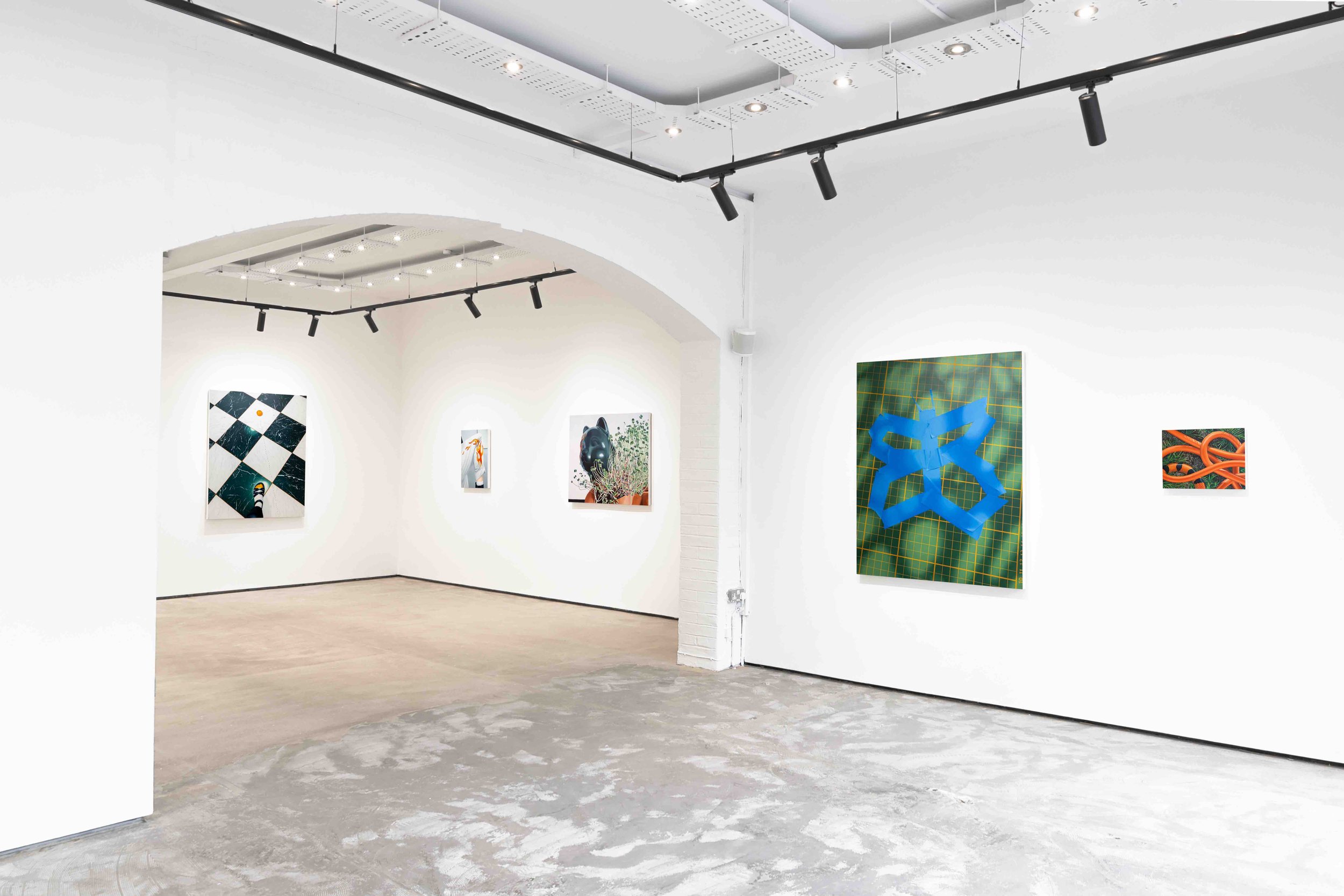
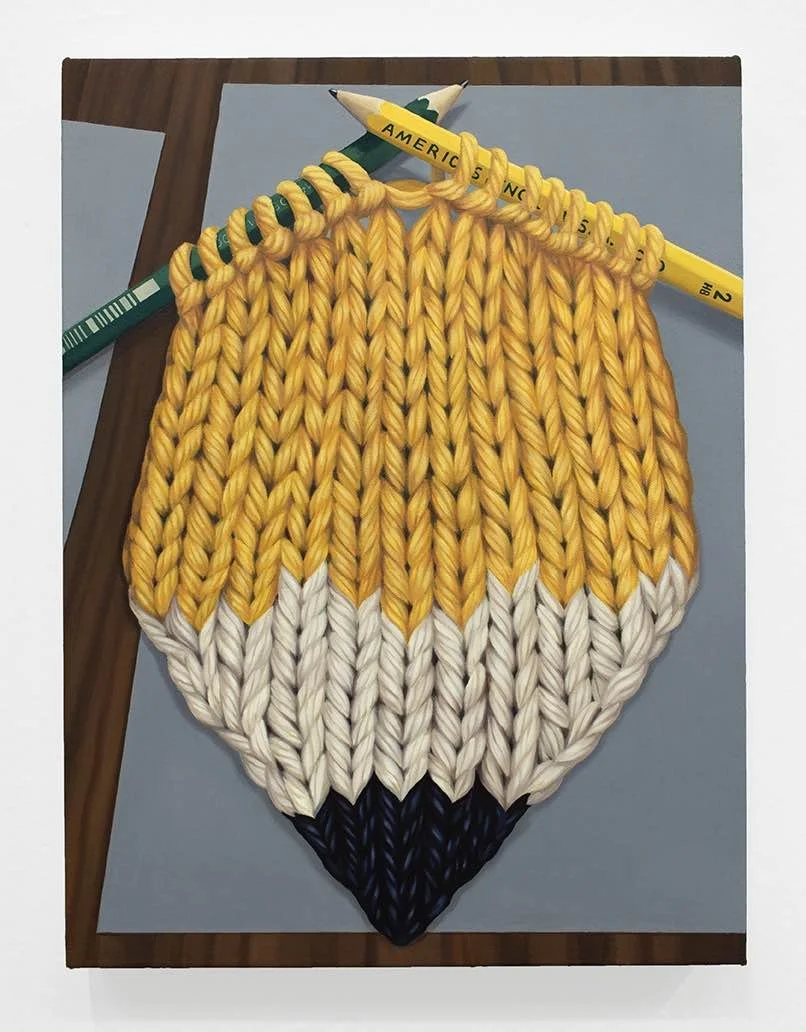
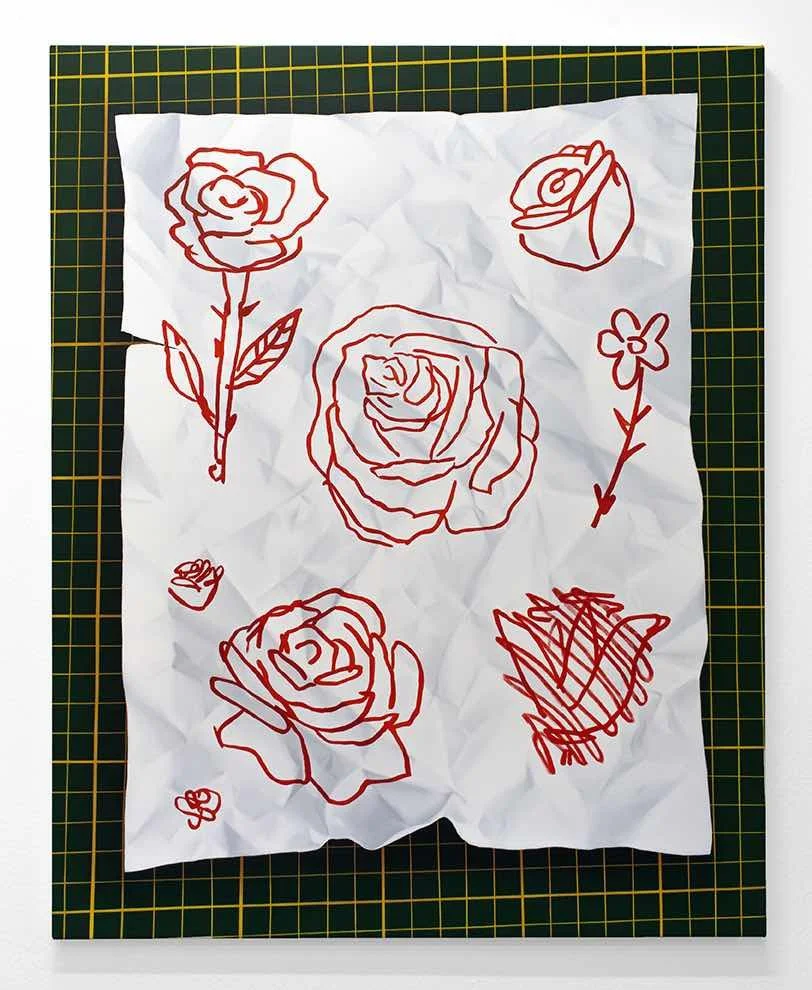
I actually can’t discuss my current project because of an NDA! You’ll find out at the end of 2026. But I most recently finished my latest solo exhibition at Primary in Miami. That show focused on "good paintings of bad drawings", which has been one idea I've returned to now and then for a couple of years-- the contrast between a beautiful oil painting and a weird, clumsy doodle. The body of work is titled "Precision Machine", and is about the act of making itself. It considers the artist as a machine whose function is to try and be precise about things which fundamentally cannot be precise. That effort, and that failure, is exemplified by a painting of crumpled paper with scribbled-out drawings, or one of a homemade compass sketching circles into a smiling snowman. The show was also about time; the time it takes to make, and using the things one has made as an artist's way of remembering time. There are a number of time-keepers: a sundial, an hourglass, a cat clock. The literal subject matter of my paintings is always changing, although there are some objects and motifs I seem drawn to: paintings of drawings, smiley faces, butterflies, ants, strong patterns, houseplants. The thing it always comes back to is beauty undercut by goofiness.
What do you hope people feel when they experience your art? What are you trying to express?
By paintings ultra-specific, sort of goofy objects, such as a bird clock or Jazz cup, a car that's been keyed or a typewriter typing out a drawing of a person painting, I hope to connect with a viewer through shared cultural references and time. The world of my paintings is a funny world, and also a largely pre-digital world.
I value slowness, humor, close attention, skill, solitude, ordinariness, and analogue tools. My paintings take a lot of concentration and patience to make, and I want them to live outside the buzzy, loud, shallow, and attention-addled moment that they were made in (and which some of us are getting sick of). I hope that, by painting each blade of grass or spot on a banana, within a painting that is punchy and, basically, fun, I'm showing the viewer that the humble and the familiar may be worthy of their re-consideration.
In what ways do cross-disciplinary inspirations show up in your art?
I take huge inspiration from books and from stand-up comedy. When I read something excellent, I get this vision of someone skiing gracefully down a slope. Mastery. I've read every issue of The New Yorker for ten years and I listen to a lot of audiobooks when I paint. Last year I listened to over fifty! My longtime boyfriend is an English teacher, and we are running out of space for books in the apartment. Some of my all-time favorite authors include Lydia Davis, Raymond Carver, John Updike, and John Cheever--great chroniclers of daily life and small-town or suburban America. Not flashy.
Both Stephen King's On Writing and Haruki Murakami's Novelist as a Vocation resonated for me in regards to the habits one must keep to sustain a creative career, and the delusion necessary to even try.
Regarding standup; obviously I think some of my paintings are a little funny, but it's more than that. I just think comedy is so difficult to do well, and requires a willingness to be extremely vulnerable and specific. My favorite comedic style is narrative observations of the ordinary. I notice that comedians tend to get worse as they get more rich and famous; harder to relate to, farther from everyday stuff. It's that granular examination of the small that I most relate to as a painter.
A great thing about living in my city/town is...
The bicycle infrastructure! I have managed to make it 31 years without ever owning a car. Life is better on two wheels, and easier to see things when you’re going under 25 miles per hour. Minneapolis has all of these excellent bike paths and trails that can take you many miles out into woods and marshes and farmland. I joined a cycling club last summer and quickly made a lot of non-art friends, which feels good.
Can you describe a project that challenged you creatively or emotionally—and how you worked through it?
I recently had to figure out how to design a book of my paintings, in collaboration with a friend and former classmate, Isaac Ruder. This project was very open-ended; it could be organized however I want, it could involve sketches or collages or images of my studio. It could be straight-forward, or have a complex layout. No particular deadline. I thrive on structure and due dates. By now I feel comfortable with the whole process of painting, but I had absolutely no idea where to begin making a book. I started by just physically just stapling some pages together and drawing some stuff out. Even that was so intimidating to me that I found all kinds of ways to avoid it. We began talking about the book almost nine months before I started...
But it turned out amazing. The book is titled Good Painting Bad Drawing and is available through my friend’s new small press, Corporate Earth. It’s a collection of sixteen recent paintings that include some sort of “bad drawing”. The whole book was made by hand with Isaac’s risograph printer, so each book is unique and has some of the grainy textured characteristics of screen-print. It’s zine-like. Mostly I love the idea of offering something that can be reproduced and sold affordably.
Tell us about important teachers/mentors/collaborators in your life.
My friend Sarah Wieben is equally a friend and art mentor to me. Her paintings are nothing like mine; they're abstract and thick and intuitive, smelling strongly of oil paint for years after they’re finished. She's hugely inspirational to me. Sarah got into painting relatively late in life, and has been fighting for it ever since. She has painted through really difficult times, without the financial stability that supports other artists, and is driven by this pure internal fire. She lives frugally with the exception of some wonderful characteristic splurges: her home and studio are full of artist monographs, she expends enormous (expensive) blobs of paint from her tubes, she hosts extravagant dinner parties, and she goes to Rome or Paris whenever she can. When Sarah teaches, she doesn’t show her students any slides on a screen, but instead flips through heavy painting books, and she plays classical music from a radio during work time. She loves beauty and charms everything in her life with it.
Sustainability in the art world is an important issue. Can you share a memory or reflection about the beauty and wonder of the natural world? Does being in nature inspire your art or your process?
During the half of the year in which Minneapolis isn't frozen-over, I try to get outside almost every day. Part of the reason I go for a mid-afternoon bike ride is for exercise, but more so it's to think. I need to see green. On the weekends, I'll do a fifty or sixty mile trip so that I'm really far out there, sometimes riding past horse pastures or around lakes. Occasionally I will have a breakthrough on a painting or an idea for a painting, and then the crucial thing is that I still need another thirty or forty minutes to get home to the studio.
And then of course, some of the most special moments of my life have happened in nature, completely divorced from any identity I have as an artist or as someone who works: fireflies rising up around, shooting starts overhead.
AI is changing everything - the way we see the world, creativity, art, our ideas of beauty and the way we communicate with each other and our imaginations. What is your relationship with technology, specifically AI, as a creative tool?
Thinking about AI makes me hopeful, and makes me want to walk into traffic. The enormity of its possibilities, its implications, is really just too much. I've been philosophically interested in the technology since high school, when I read Nick Bostrom's book Superintelligence about the dangers of misaligned runaway AI or AGI. Now that it's here, it's being developed in public and for applications that not many people anticipated.
I prefer to live in the gray zones of things, and AI seems a prime example of mixed-bag, good and bad. I hope it will open us to new and faster medical cures, I hope it will relieve us of unnecessary menial labor, I hope it will create here-to-fore unimagined industries and collaborations. I also fear it will destroy our very ability to think, write, create music and art by cheapening these skills; by accelerating our terrible tendency towards ever-more convenient and frictionless everything. Why bother to learn piano when any ten year-old will be able to produce infinite artificially-composed tracks? Why struggle through the effort to write an original essay if you can Chat-GPT it? What if we stop caring? What if we literally stop being able to even philosophize about these questions, because we've completely stopped reading and we don't remember how to reason anymore?
I'm most disturbed by surveys of teenagers who don't see the difference in value between an excellent love letter written by an LLM and a clumsy one actually written by a crush. Teenagers who don't seem to appreciate what they're losing by cheating at school, avoiding the very tasks that were supposed to make them learn and grow and discover. Images are so powerful. Now that you can Studio Ghibi-ify anything, how does that possibly not de-value Miyazaki? If you can have an always-available sycophantic friend/lover/servant in your pocket, how does that not de-value messy human relationships? I worry that future generations will just feel this hollowness inside and not know what's missing.
I haven't actually used any of these Chat or image-generating models myself; I'm constitutionally an analog person, and I'm wary of their seductions. I feel we're on this precipice, and I'd just like to remain on whichever side of it still has bookstores.
Exploring ideas, art and the creative process connects me to...
other people. I really think we only make things to show them. I most seek congratulations from the painters I admire, nerd-to-nerd. Talking with other artisans about process and craft is a little of what I imagine having a sibling would be like: so much that you don't have to explain. And regarding the viewers who don't make things, I just love seeing through their eyes.