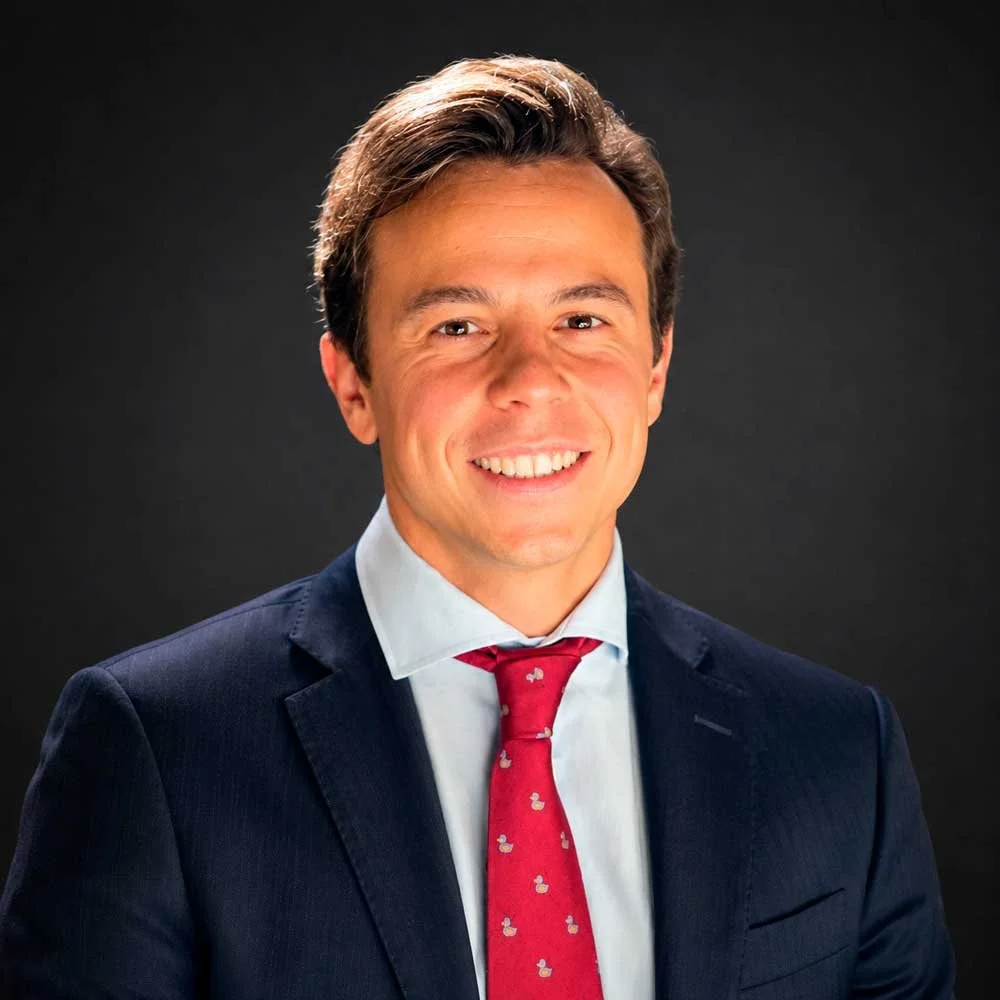


Artist Enric Oliver on conversations through art and Dungeons & Dragons.
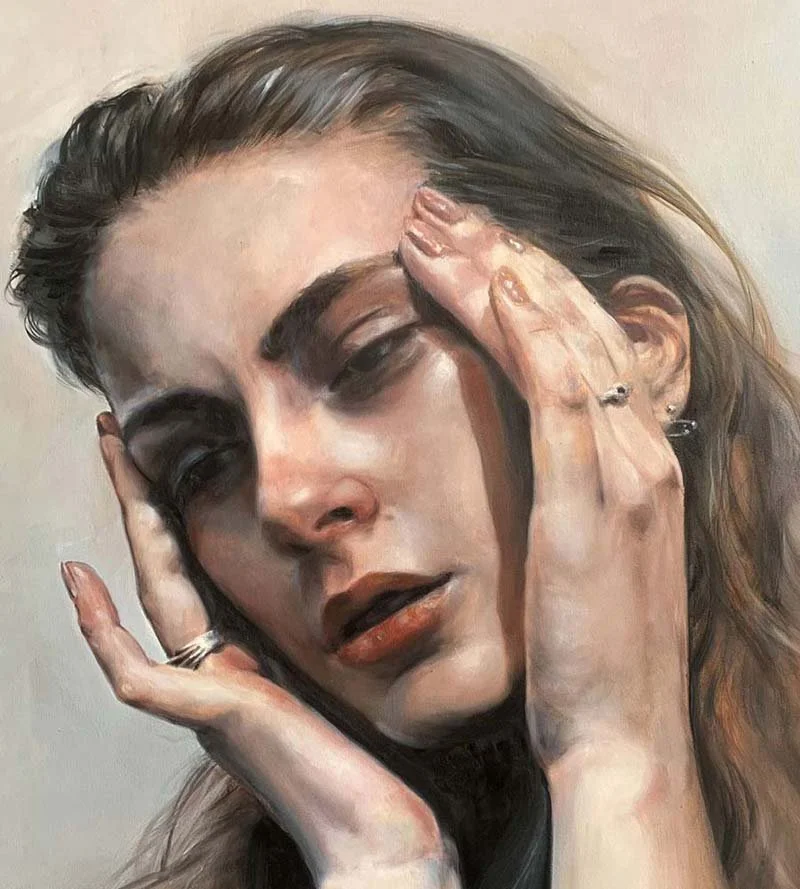
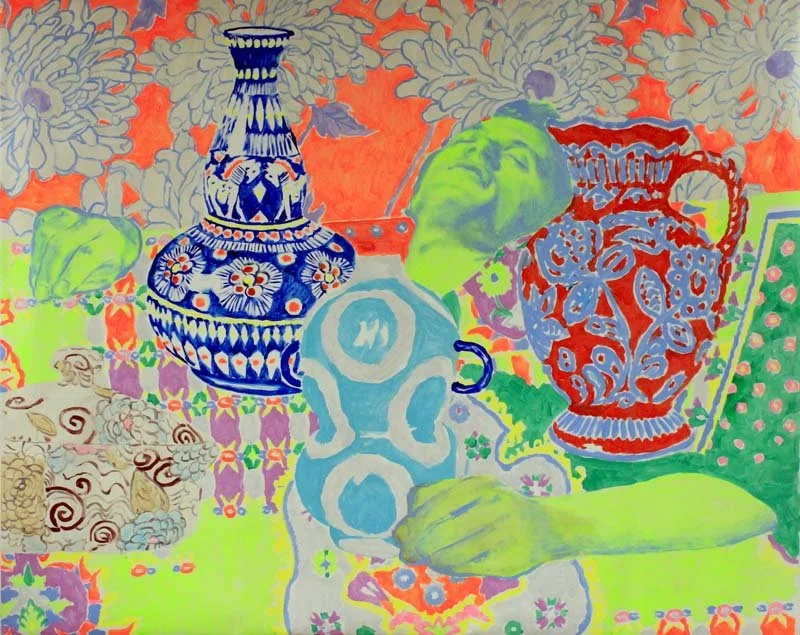
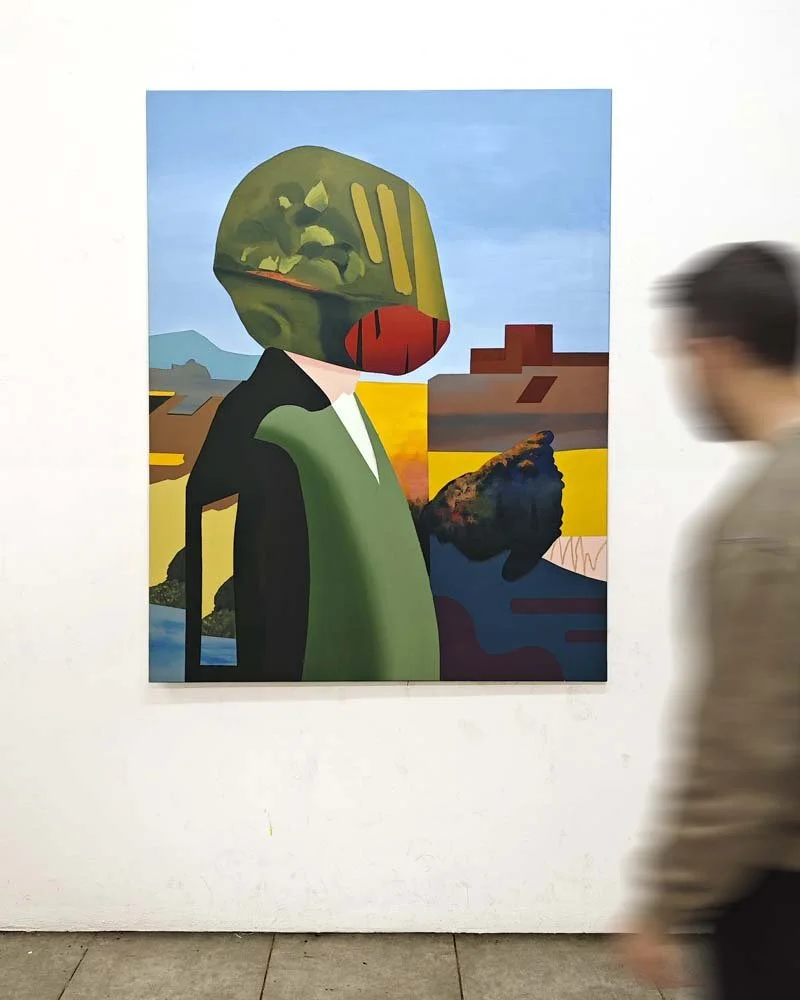
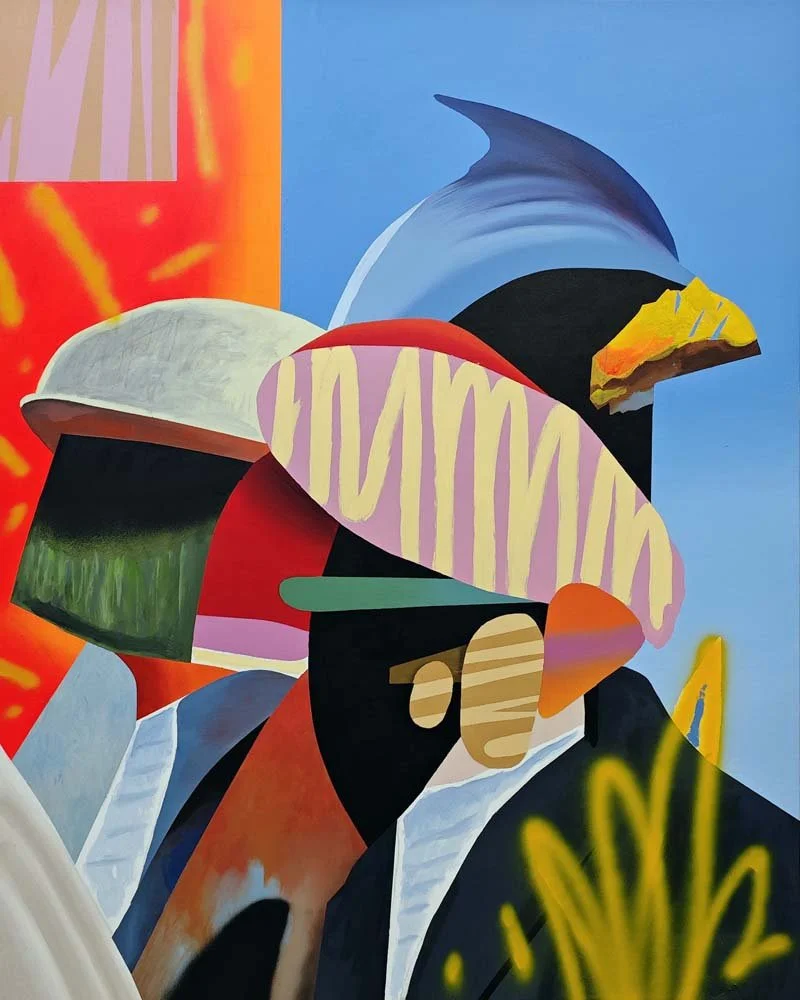
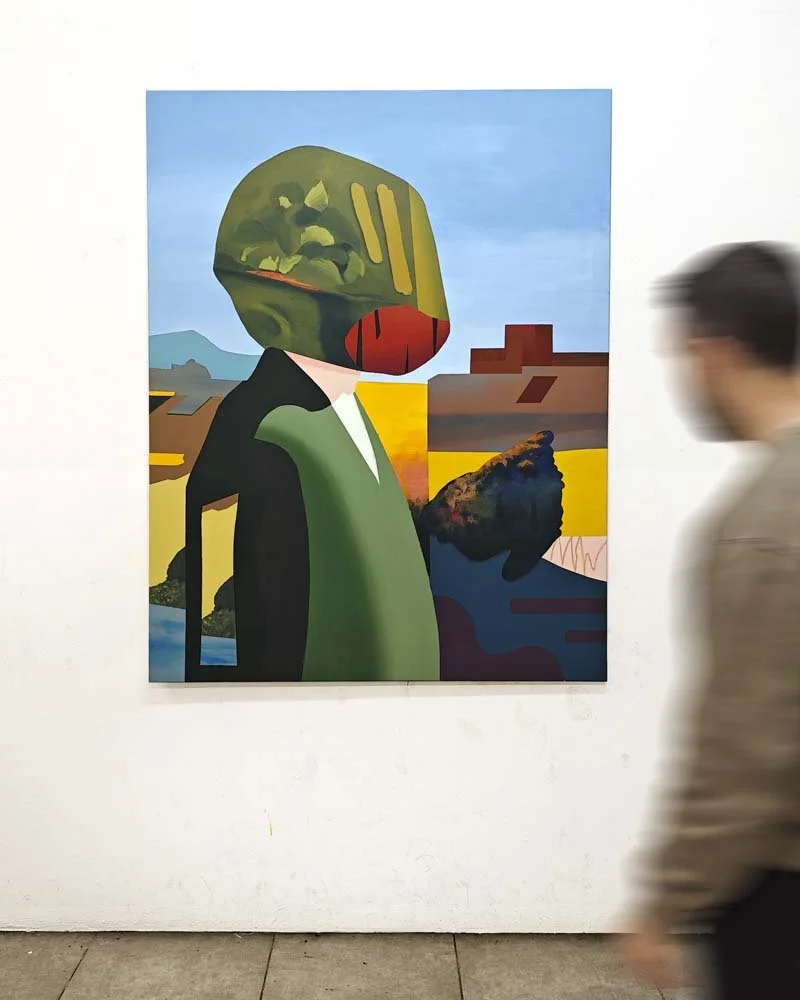
Enric Oliver, whose training began in concept art for video games, has evolved into a deeply personal pictorial practice. His work unfolds at the intersection of color, line, and figurative abstraction, exploring the tension between the recognizable and the dreamlike. Starting from digital sketches that allow him to experiment with composition, the artist transfers his ideas onto canvas through diverse techniques. At the core of his proposal lies a reflection on solitude in the digital age: complementary colors in tension and lines that connect figures suggest fleeting encounters, evoking the paradox of contemporary hyperconnectivity. @enric.oliver
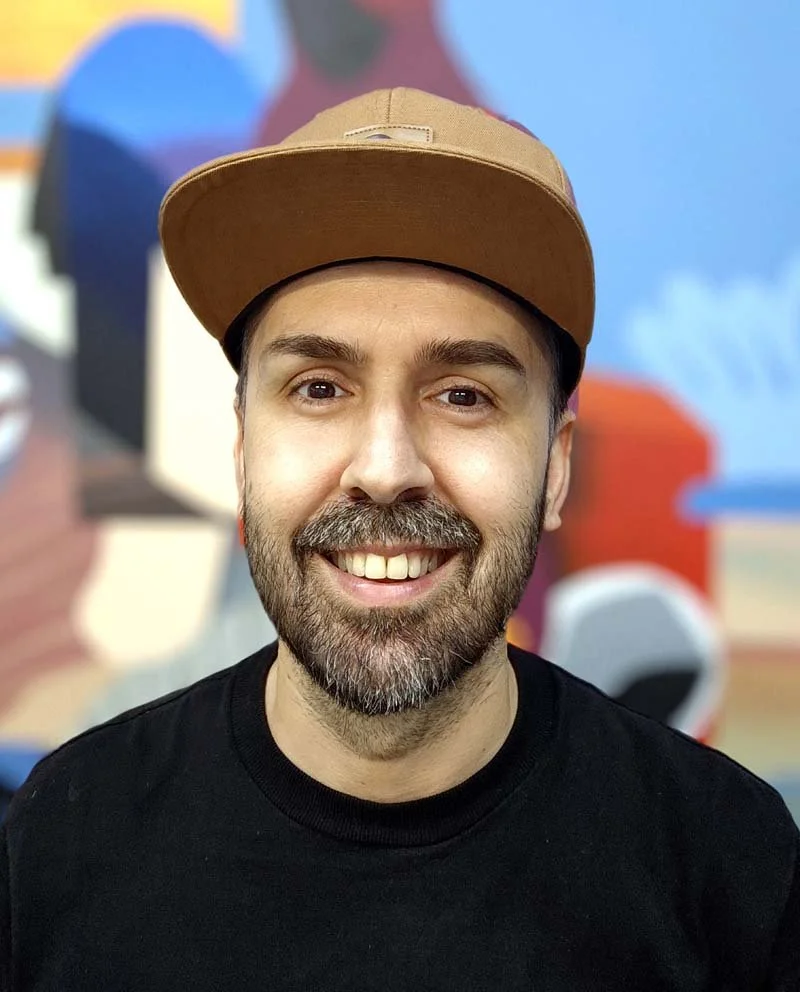
How did being born in Valencia influence your art and your thinking about the world?
I was born in Valencia (Spain) and spent my entire childhood in Puerto de Sagunto, the town where I grew up. I have always been surrounded by brushes and colors, since my father’s greatest passion has been art in all its forms. My parents always gave me the freedom to pursue this path and never placed obstacles in my way. Growing up in such an open-minded family allowed me to nurture a sense of freedom and develop my own way of thinking about the world.
When did you first fall in love with art and realize you wanted to be an artist? For you, what is the importance of the arts?
Since before I could walk, I always had a pencil in my hand. Later, that pencil was joined by a ball, but my love for art has always been innate. Art feels like the very air I breathe, an essential part of my existence. Each day, I feel the need to create, no matter how small the gesture, in order to remain at peace with myself. For me, creating is not just an act of expression, but a way of staying connected to who I truly am.
What does your typical day in the studio look like? Walk us through your studio and your most used materials and tools.
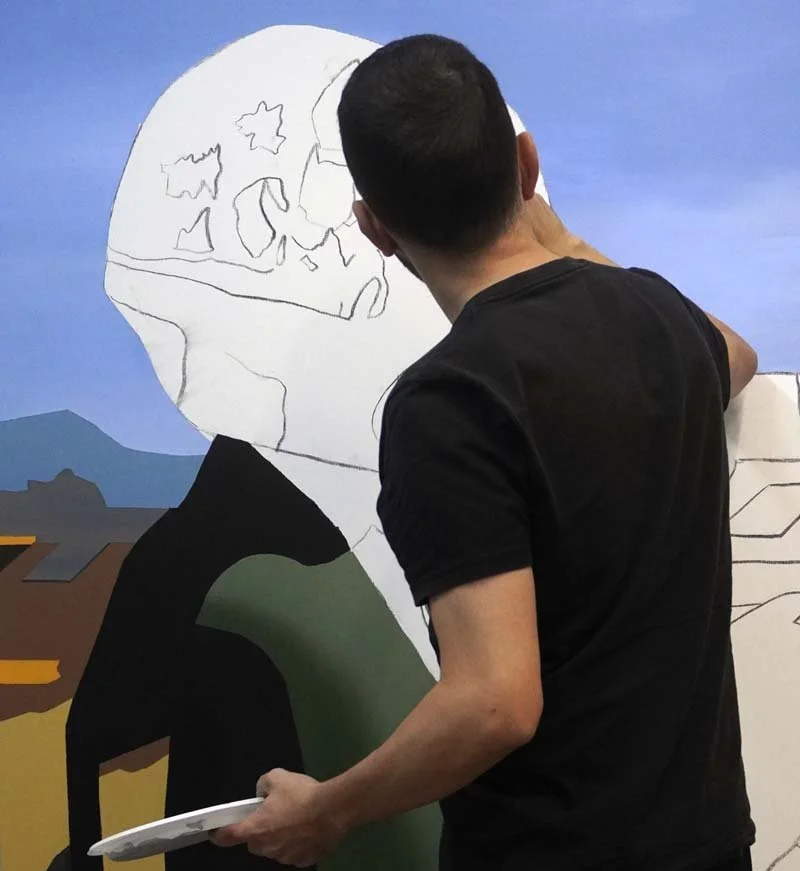
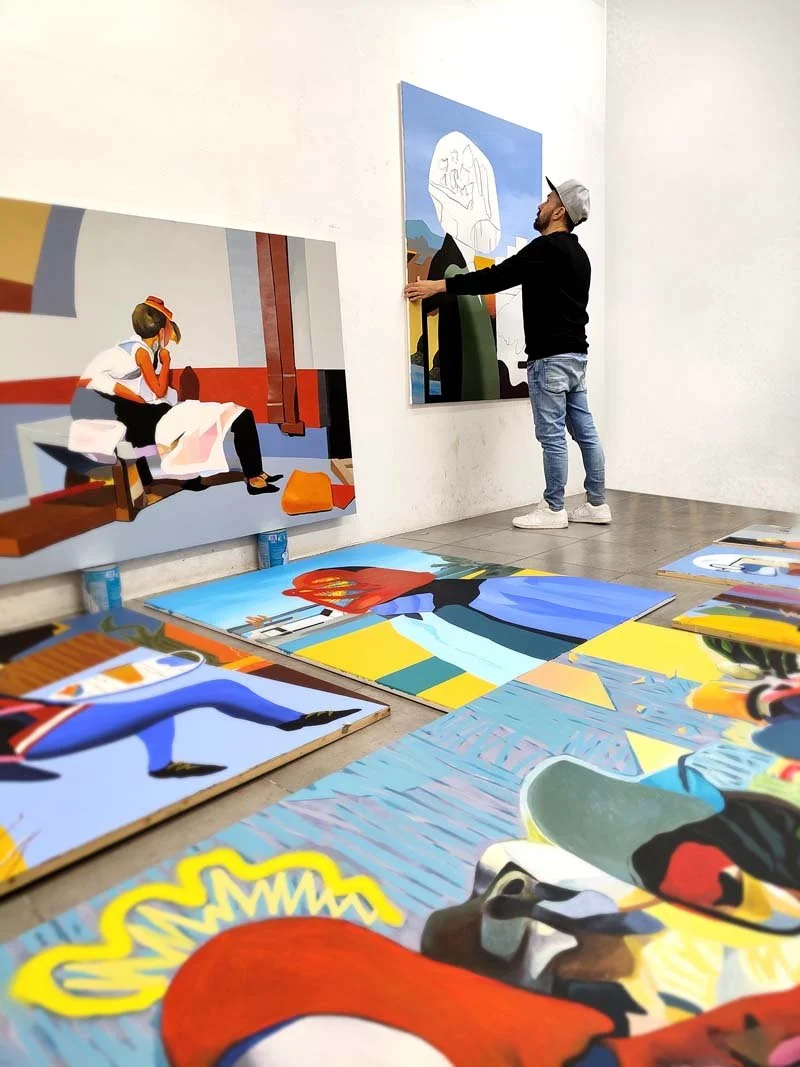
I usually arrive at the studio around 9 a.m., after dropping my children off at school. I tend to work straight through until about 2 p.m. In the afternoons, some days I teach art classes for both children and adults, and once they finish, I return to painting, often until around 8:30 p.m. Music is always playing in the studio, and my friends often stop by, though I’m so focused that I often can’t follow the conversation. I started working with oil paints, but now my practice has expanded to include acrylics, oil sticks, spray paint, and more. I like to experiment with different media depending on the project I’m working on at the moment.
What projects are you at work on at the moment? And what themes or ideas are currently driving your work?
I am currently preparing for a solo exhibition set to open in 2026, and I am collaborating with the Toxic Art Gallery in London. My work is always influenced by my life experiences as well as the imagery that shaped my upbringing. I often draw inspiration from pop culture and entertainment, exploring themes that resonate with both personal memory and collective imagination. Each piece reflects a dialogue between my past and present, merging nostalgia with contemporary visual language.
What do you hope people feel when they experience your art? What are you trying to express?
I believe that art should be provocative, yet in the stage I am currently at, my work aims to inspire wonder, joy, and even laughter. I would feel truly fulfilled if people approached my art and experienced the memory of something that once made them happy. For me, art is not only a means of expression but a way to reconnect with those fleeting moments of happiness that linger in our memories. It’s about creating a space where viewers can feel lightness, nostalgia, and a genuine emotional connection.
Which artists, past or present, would you like to meet? And why?
If I could meet an artist from the past, I would love to have a conversation with Goya. He might not have much patience to talk with me, but I would want to tell him that, in my view, he was the most groundbreaking artist of his time, especially considering the era he lived in. As for a contemporary artist, I would be thrilled to meet James Jean, whose art and personality have had a profound influence on my own work. Both of them inspire me in different ways one through revolutionary vision, the other through contemporary imagination and sensitivity.
Do you draw inspiration from music, art, or other disciplines?
Obviously, my greatest inspiration is visual, and there are many artists whose work I look up to. Beyond the realm of art, however, my greatest passion is cinema, which serves as another major source of inspiration for my creative practice. Films influence not only the way I approach composition and color, but also the narratives and emotions I strive to evoke in my work, providing a constant dialogue between visual art and storytelling.
A great thing about living in Puerto de Sagunto is…
Having my family and friends close by, and being able to take a walk along the beach whenever I need fresh air and a break from daily life.
A great thing about living in my city/town is the combination of a close-knit community and easy access to nature, where the sea and open spaces offer both inspiration and tranquility.
Can you describe a project that challenged you creatively or emotionally—and how you worked through it?
When I was fully dedicated to Concept art and illustration, I was commissioned to illustrate an expansion for the role-playing game Dungeons & Dragons. The project was so complex that it pushed me to grow in terms of organization, precision, and commitment. Skills that have since proven invaluable in my painting practice. It taught me to think carefully before executing each piece, approaching my canvases with a structured yet creative mindset, balancing planning with spontaneity in order to achieve the results i envision.
Tell us about important mentors in your life.
If I were to name a mentor, it would be my father. He never had the patience to formally teach me how to paint, as we share very similar temperaments, but spending countless afternoons by his side in his studio watching him model his sculptures or paint his canvases has left the deepest mark on me. Those moments fueled my desire to dedicate myself to art. The passion he conveyed through his work has taught me more than a thousand art books ever could, inspiring me to pursue my own creative path with the same intensity and love.
Sustainability in the art world is an important issue. Can you share a memory or reflection about the beauty and wonder of the natural world? Does being in nature inspire your art or your process?
For me, nature is like a silent teacher. Always present, yet we only truly notice it when we pause. The disconnection between humans and nature is the first step that leads us to lose ourselves as individuals, and in many ways, my art explores these very complexities.
AI is changing everything - the way we see the world, creativity, art, our ideas of beauty and the way we communicate with each other and our imaginations. What are your reflections about AI and technology? What is the importance of human art and handmade creative works over industrialized creative practices?
At first, the introduction of AI unsettled me somewhat. You realize that technological advances can, in a short time, seem to replace your creativity and output especially in the field of digital art. However, I believe we must approach it as a tool, something we can use to our advantage to streamline certain stages of the creative process. For instance, it can help generate initial sketches that we can later refine by hand. There’s no point in swimming against the current; AI is here to stay, and it is up to us as artists to learn how to ride the wave.
Exploring ideas, art and the creative process connects me to…
the person I have been, the person I am, and the person I will become.