

Braunschweig-based artist Andreas Liss on identity, intimacy, and the melancholy of beauty.
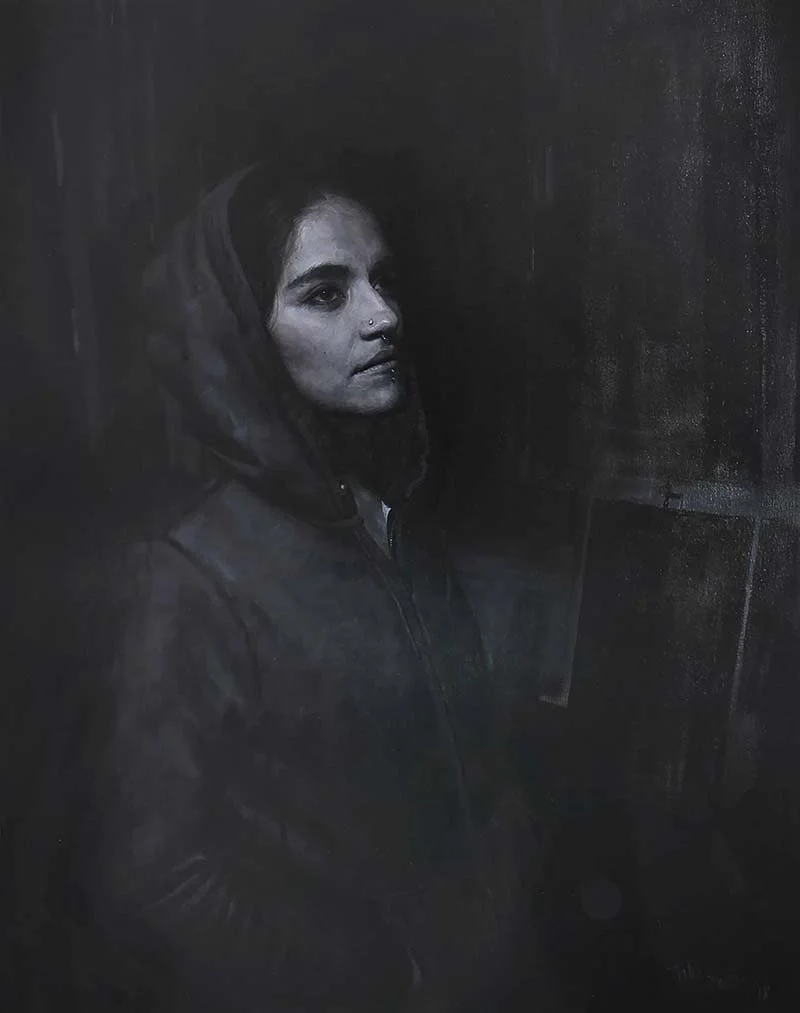
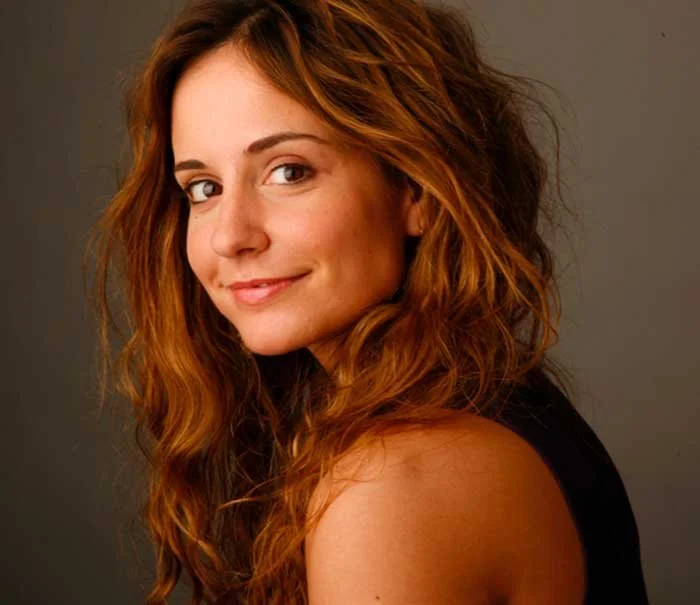
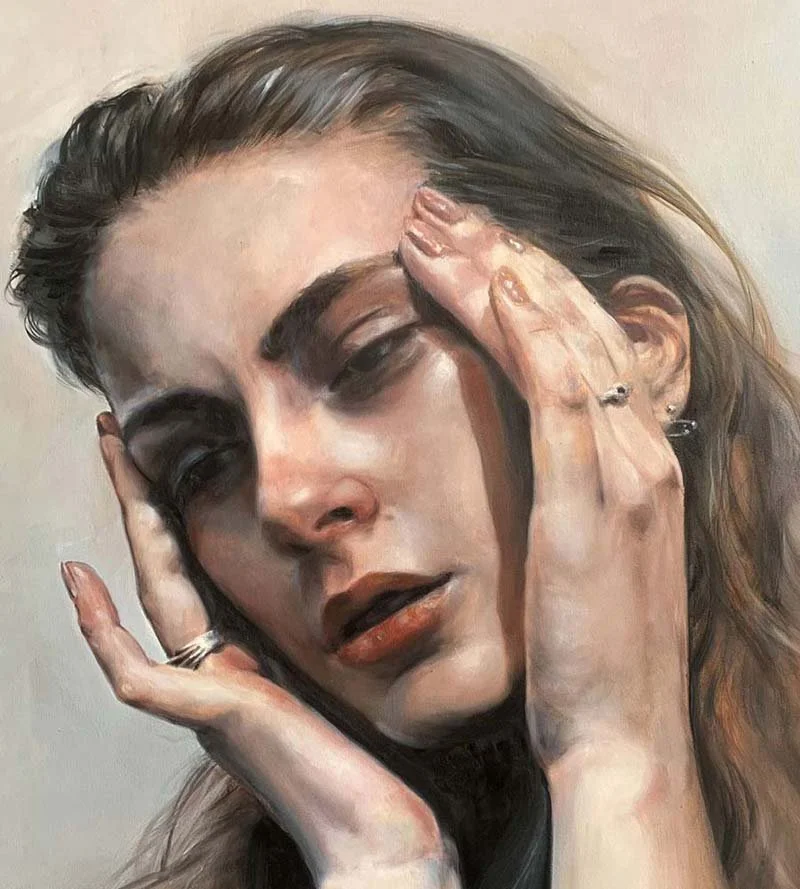
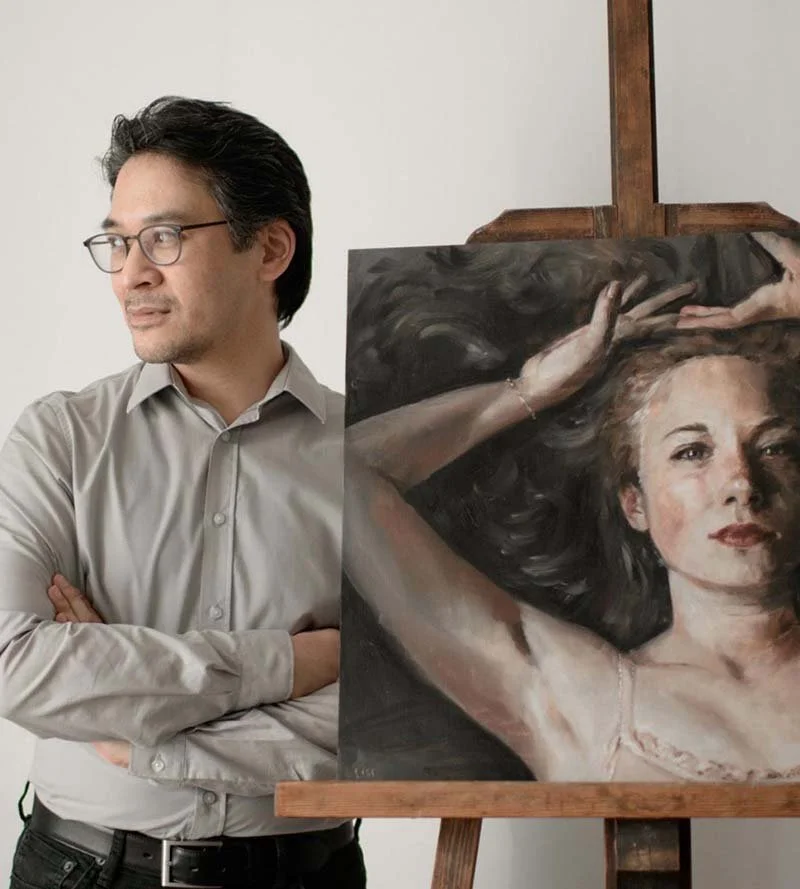
Andreas Liss is a painter and designer based in Braunschweig. His passion for art and design led him to study illustration at the University of Fine Arts Braunschweig (HBK). After graduating, he began working in advertising and now serves as managing director at the agency Logoform GmbH. Alongside his design career, he focuses on figurative oil painting, especially portraits. He works primarily in the Alla Prima technique – spontaneously and in a single session. Between 2021 and 2024, he painted over 1,000 portraits, mostly of female faces, capturing their expression, individuality, and beauty in a direct and emotional way. @andreasliss
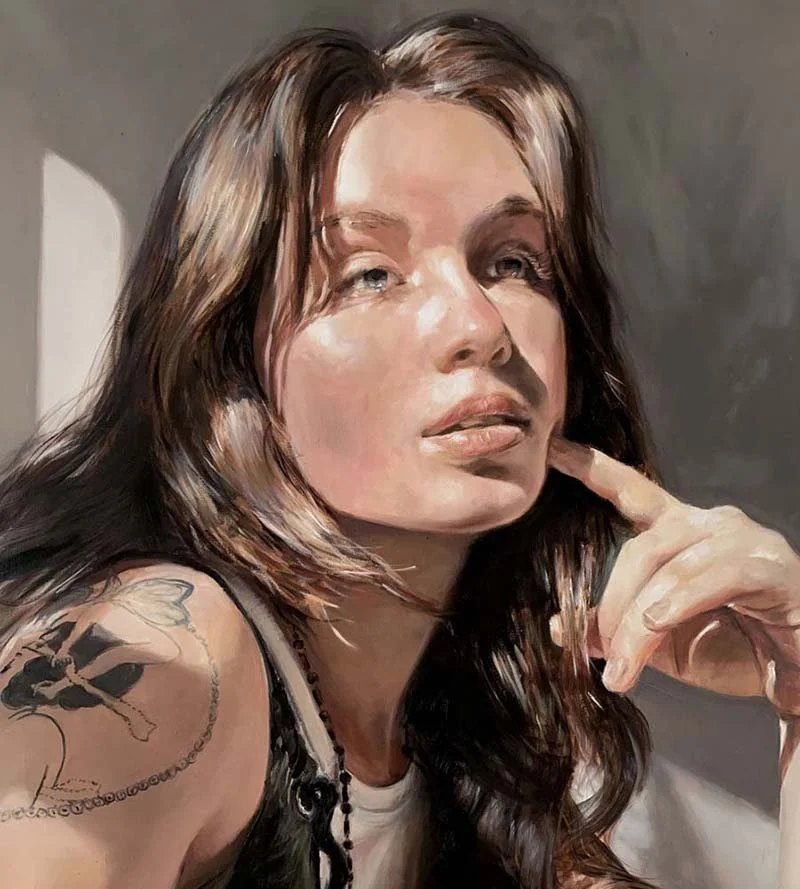
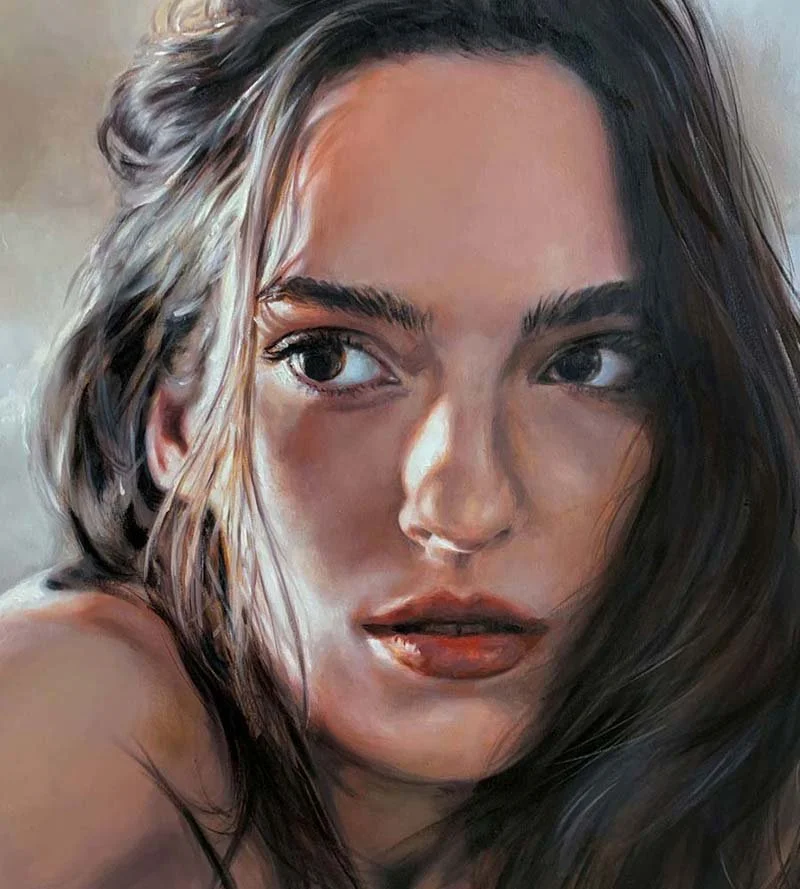
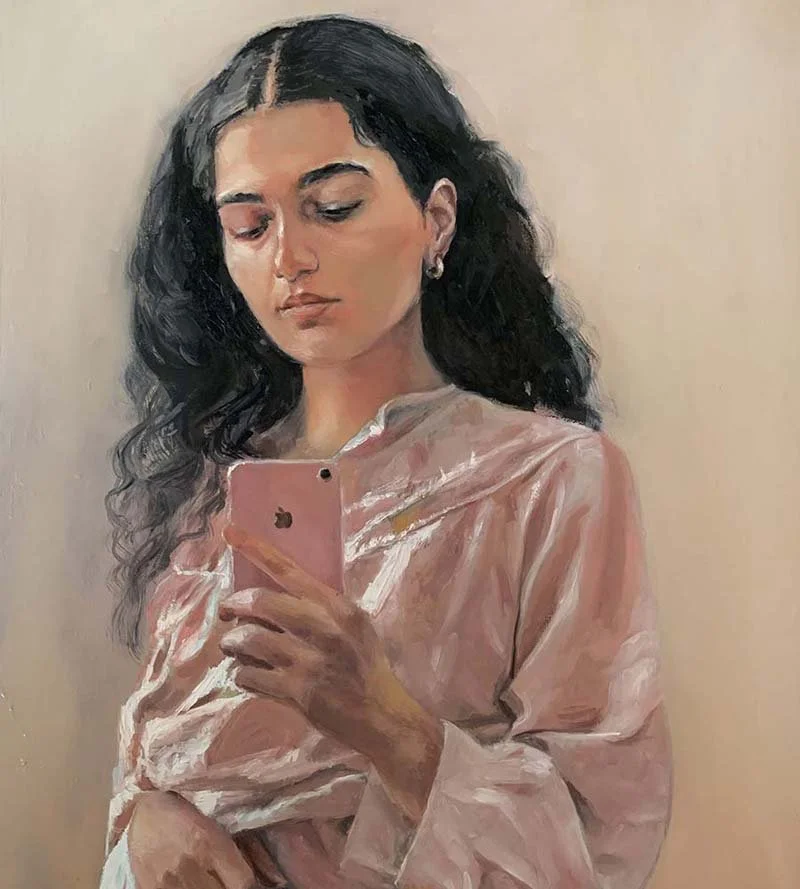
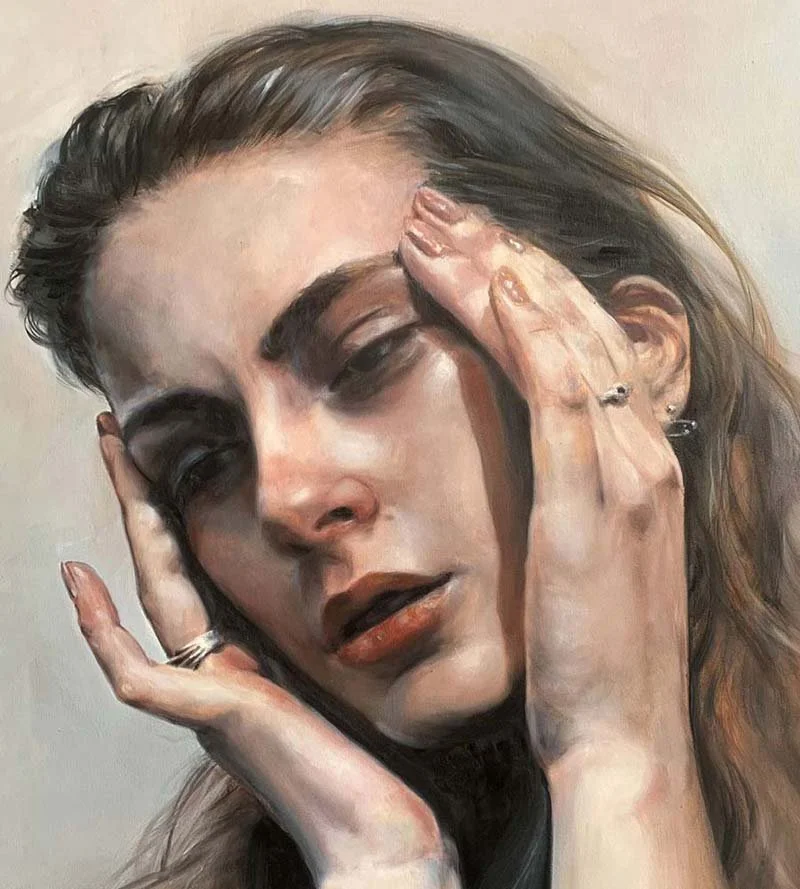
You were born and raised in northern Germany. How did your upbringing there influence your artistic perspective?
I was born and raised in Löningen, a small town in northern Germany – a quiet, remote place surrounded by farmland, back in the days with little industry or urban influence. My family has Asian roots, and at the time, we often felt like we were the only foreigners in the area. That sense of otherness deeply shaped how I see myself and how I relate to the world around me. I was also a very shy teenager – I observed a lot, but spoke very little. I think those early experiences still flow into my work today: in how I approach beauty standards, intimacy, identity, belonging, and feelings of foreignness.
When did you first fall in love with art and realize you wanted to be an artist? For you, what is the importance of the arts?
Even as a child, drawing was a place of retreat for me – a space where I could express myself and get lost between music and daydreams. As I got older, art became a kind of language – one that helped me better understand myself, question the world around me, and also find recognition. It offered me a niche I could claim for myself, and a way to give expression to my fascination and longing for beauty. I would like to quote Albert Camus, as it appears on the back of Scott Walker’s fourth album: "A man's work is nothing but this slow trek to rediscover, through the detours of art, those two or three great and simple images in whose presence his heart first opened." What has always mattered more to me is making art, not necessarily being an artist. For me, art is a way of having an ongoing inner dialogue – with myself, and with the world I move through. It's a tool for searching, questioning, and sometimes even healing.
Describe a typical day in your home studio.
I don’t really have a typical day in the studio – I mostly paint on weekends. My “studio” is actually my home office, which I’ve set up with several easels, oil paints, brushes, and my iPad for reference images. I use an app on my iPhone that provides photos of amateur models, from which I choose most of my references. Sometimes I do paintings of Instagram followers. I rarely paint people I know personally. I also use my iPhone to document the painting process because, for me, the process is at least as important as the final result. The room where I paint isn't particularly large, but it has enough space for two work tables and enough room to dance a little if I feel like it. One wall is covered with shelves where I keep my sketchbooks to dry. Since I paint with oil, this takes a long time, and I paint in about 20 sketchbooks at the same time. In addition to my painting supplies, there is of course a record player and somewhere, no doubt, a cup of coffee that has gone cold. Before I start painting, I often pick music that sets a particular mood. Even though the atmosphere while painting with my life partner, who works at her desk next to me, is often lively and full of laughter – we sing loudly and off-key – my work still carries a melancholy that fascinates and accompanies me.
Tell us about your current portrait series and the themes driving your work.
At the moment, I am working on expanding my portrait series. At the same time, I am experimenting with subtle changes in color and texture. I spend a lot of time working in sketchbooks, but soon I want to create larger works on canvas again, which are planned for an exhibition next year. A theme that currently occupies me especially is the idea of reduction. Although I always aim to capture the likeness to the reference photo and the spontaneous expression of the moment in my portraits, I am increasingly drawn to working with deliberate simplification. In doing so, I want to focus more on individual details and intentionally leave other areas at a certain level of abstraction.
When viewers see your work, what emotions do you hope they experience?
I think I create my paintings for just two people – the person I’m portraying and myself. It’s a strange kind of conversation. I paint strangers in the hope that they’ll recognize themselves in the work, while at the same time knowing that I only have an imagined idea of who they really are. In a way, I’m painting an idealized version of a person. I want to emphasize that these images do not arise from desire, but from longing. I don’t set out to express something specific intentionally; rather, I aim to simply capture and depict. What I truly hope for when people see my work is that it sparks in them a desire to paint themselves. I always love when people tell me I inspired them.
Which artists, past or present, would you like to meet?
The artists I would like to meet are Torsten Wolber, A.J. Alper, and Margaret Chen. All three have influenced my portrait work, each in their own way. I know all three of them from social media, and I value not only their outstanding art but also the way they present themselves – friendly, generous, and encouraging.
How does the rhythm or tone of music feed into your creative process?
That’s for sure! Music has always come first in my understanding of art. It’s the medium that can trigger emotions in me directly and immediately. I’m quite the music nerd: I have an extensive vinyl collection and enjoy obscure, deeply melancholic albums. I also made a bit of music myself. In my youth, there were some band projects, but most of my songs I created on my own at home. They are small, somewhat sentimental but very honest pieces, in which I reveal much more of myself than through my paintings. Perhaps for that reason, they have remained a purely private pleasure. Only two tracks have been released on a local sampler.
Living in Braunschweig, what do you find most creatively nourishing?
Braunschweig, with its 250,000 inhabitants, feels like a big city to me, since I originally come from a small town. I enjoy the anonymity and the cultural scene, which I am gradually becoming a part of with my own work. I like that almost everything is within walking distance and that the city offers both wonderful historic corners and beautiful parks. I moved here in 1994 to study, and it has been my home ever since.
Can you describe a project that challenged you creatively or emotionally—and how you worked through it?
My portrait project – if you can call it that – emerged during the COVID period. After months of working from home, I, like many others, experienced something of a life crisis. In the spring of 2021, I discovered an app where people could upload their private photos to be painted by artists. That was the moment I thought: I’ve always wanted to paint with oil – if not now, when? I have always enjoyed painting faces; I find it to be one of the most intimate forms of art, and also one of the most demanding and unforgiving. Every millimeter matters, deciding success or failure. Achieving visual likeness is very important to me – so this is purely a technical challenge. Between spring 2021 and the end of 2024, I painted over 1,000 portraits. In the beginning, I was so obsessed that I would set an alarm at night to paint before work. Fortunately, it’s not quite like that anymore. Painting, however, is still my happy place.
Tell us about the important teachers and mentors in your life.
I was always my art teacher’s favorite. During my later school years, Henrike Riedel-Lückmann mentored and supported me – constantly encouraging me and giving me complete freedom in my work, which was incredibly beneficial. At university, it was my professor Ute Helmbold, a fantastic and successful illustrator, who guided me. From her, I learned to search for expression beyond mere representation. My illustration projects are correspondingly influenced by her. I owe both of them a great deal and am very grateful to them. And right now, it is my life partner Ricarda Lott who accompanies me on my creative journey. We paint together a lot. Her presence and her shared enthusiasm for painting enrich my life.
Does nature inspire your art or your process?
In fact, nature itself does not play a role in my artistic work. I have always been fascinated by feminine beauty, but I have never seen it as part of nature – rather, as something almost mystical. I know that the beauty of nature can be equally overwhelming, but as a young person, it never affected me the way the presence of a beautiful face did.
What are your reflections about AI and technology?
I find AI in the art world deeply troubling. It feels fundamentally opposed to what I consider art. In my work, the people I paint are often highly abstracted in concept – I do not know them personally and what I depict is largely a product of my imagination. Yet, despite this abstraction, it is essential that these individuals exist in the real world. There is an authenticity and reality to the subjects that grounds my work; they are not invented by an algorithm, but real people whose essence I interpret and imagine. Human-made art carries a presence, a subtlety, and a connection that industrialized or AI-generated processes cannot replicate. For me, the importance of art lies in this human engagement – the dialogue between imagination and reality, between artist and subject, that gives every piece life and meaning.
Exploring ideas, art and the creative process connects me to…
myself. I once heard that, as a portrait painter, we are ultimately always painting ourselves. While I always measure my work against reference photos, a certain handwriting inevitably emerges in my paintings – one that is entirely unintentional, yet uniquely mine. When I paint, I am fully and authentically myself – not the grown-up I am now, but the shy child who still hides within me, full of wonder.