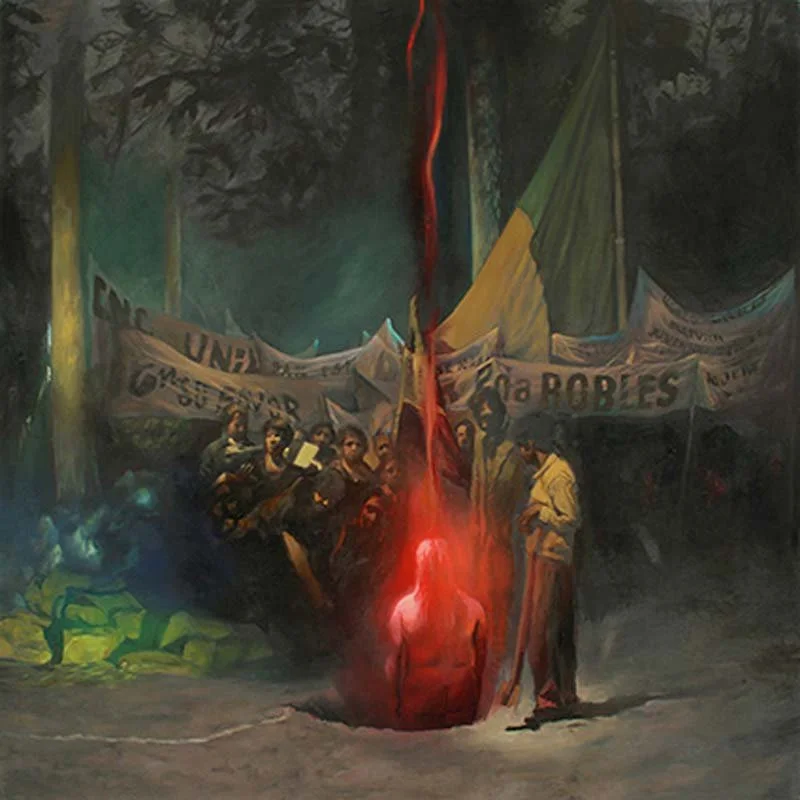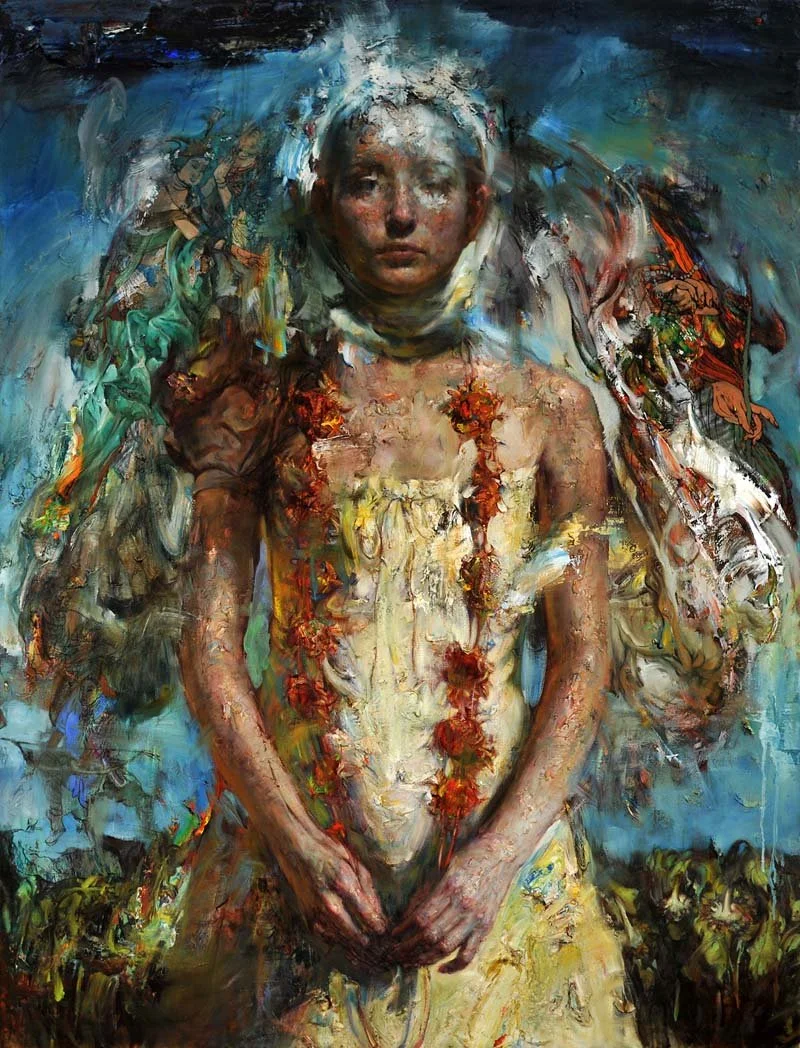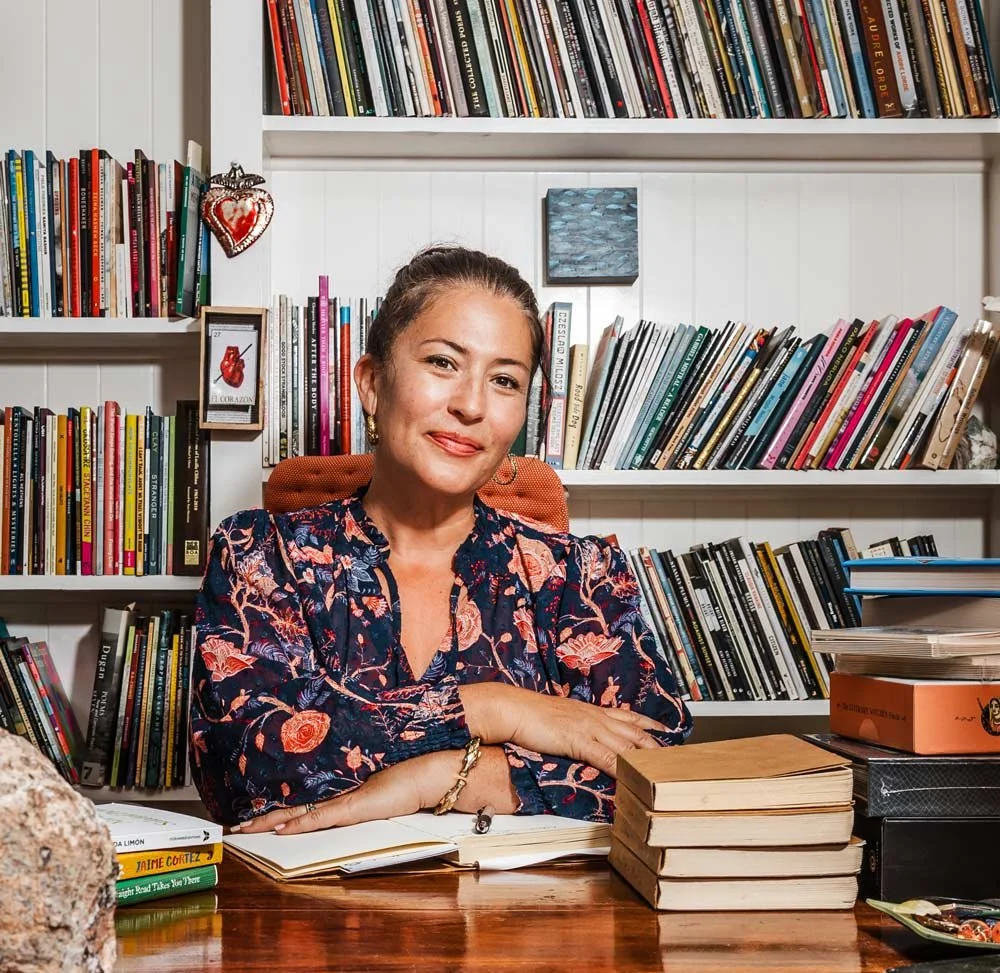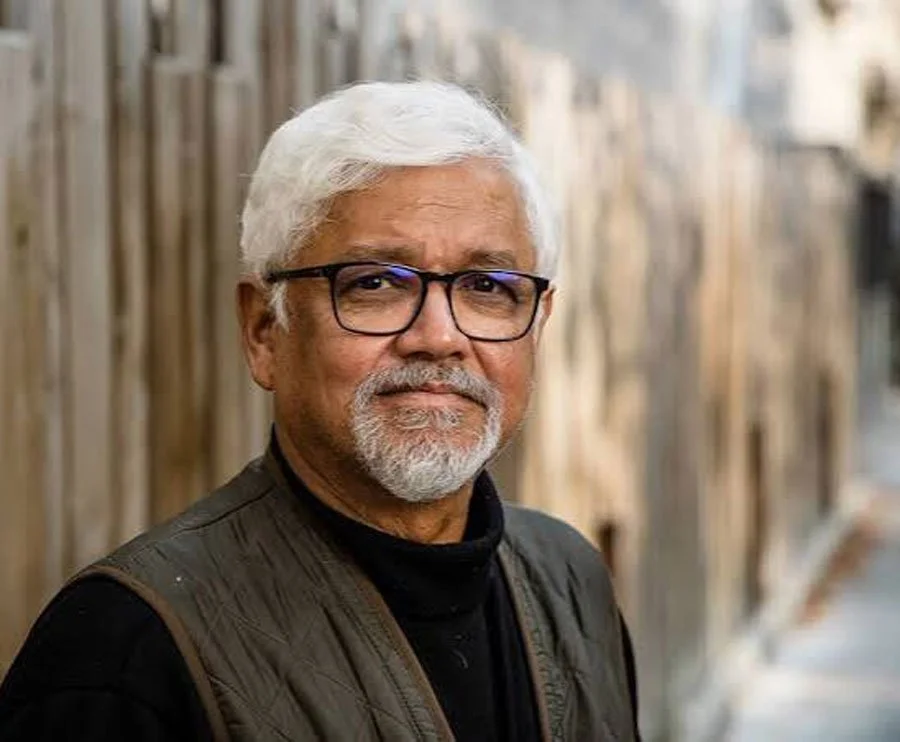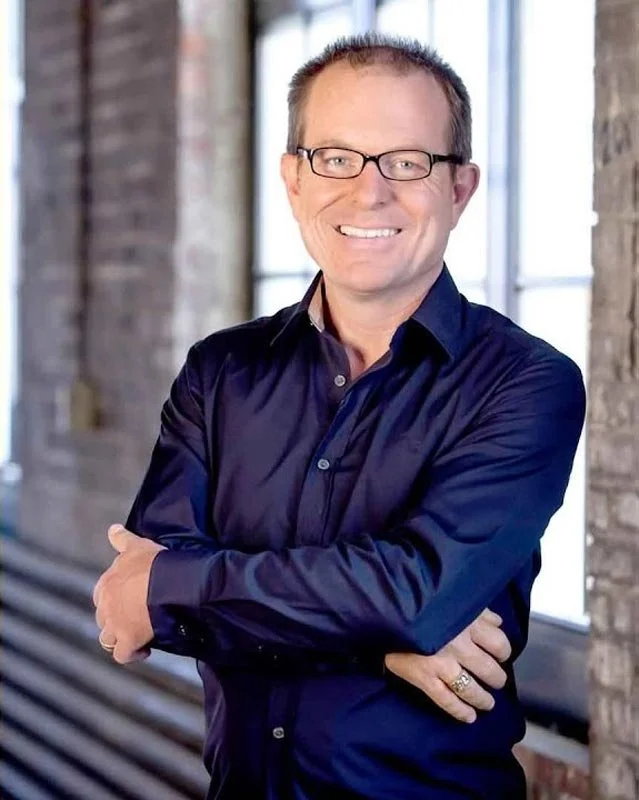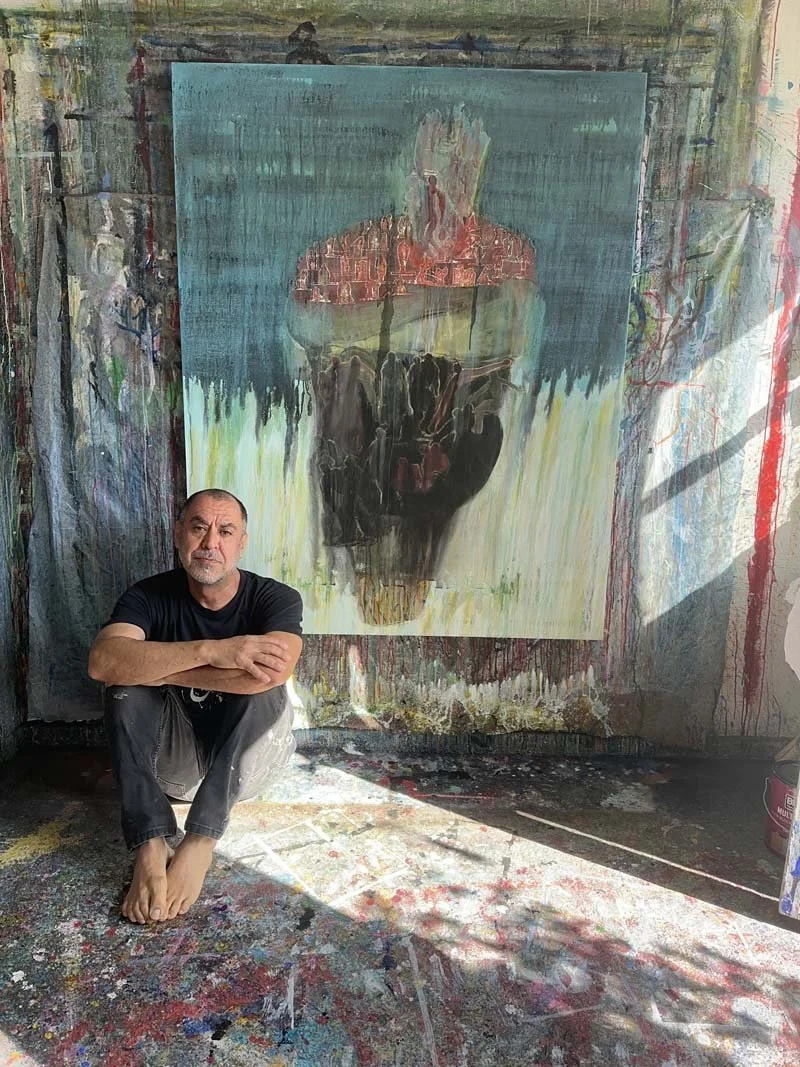


Farzad Kohan is a Los Angeles–based contemporary artist whose work explores themes of migration, love, and memory through painting, collage, and sculpture. Using found materials and layered text, his art transforms fragments of life into poetic reflections on belonging and resilience. Kohan’s work is part of LACMA’s permanent collection and has been exhibited internationally, including at Christie’s and Bonhams. @farzadkohan
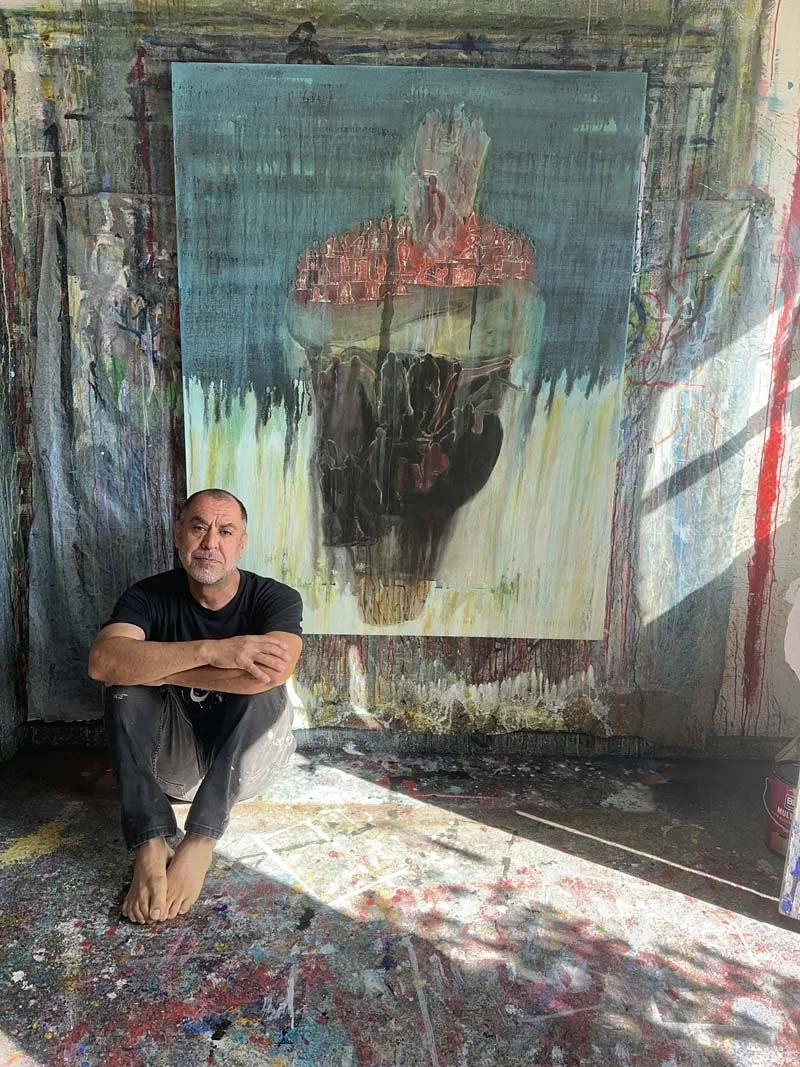

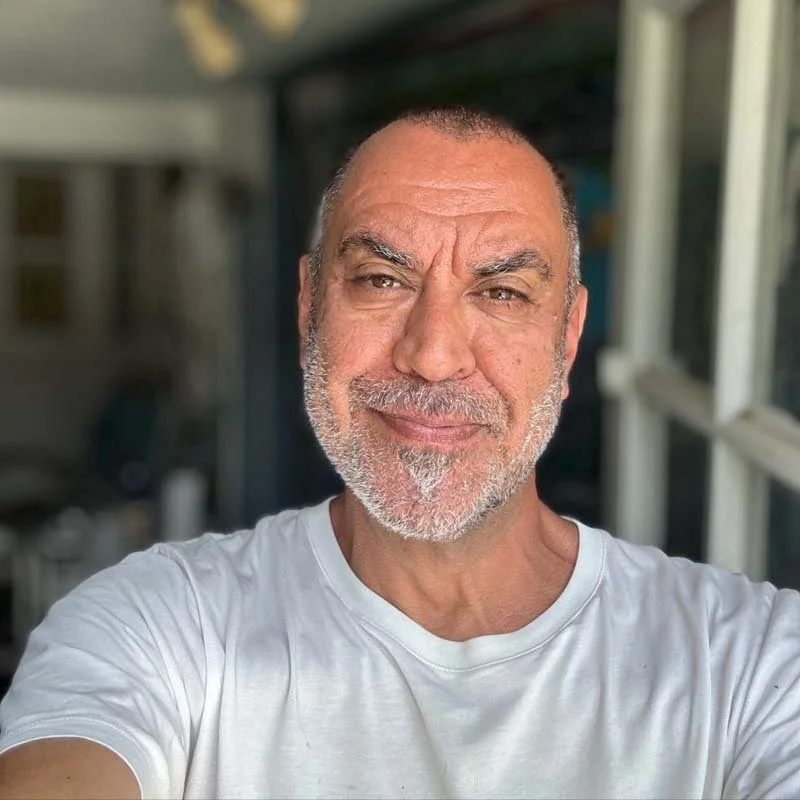


You were born in Tehran. How has your upbringing there influenced your artistic perspective?
I was born in Tehran and raised between cultures, which has deeply shaped how I see and create. That experience of movement, of living between places and languages, taught me to find beauty in fragments and meaning in transition. It made me aware of how identity is layered, how memory travels with us. My art often reflects that sense of displacement and belonging, turning personal history into a visual language that speaks about migration, resilience, and the ways we rebuild home wherever we are.
Was there a particular moment or event in your youth that solidified your desire to become an artist?
I sold my first painting on the day of the Iranian Revolution in 1979, when I was just 12. Witnessing the world changing around me, I took my paintings to a street corner and displayed them there. Within half an hour, I sold one. That small moment gave me the confidence to trust myself and believe in my vision; it was the beginning of following my own path and pursuing art on my own terms.
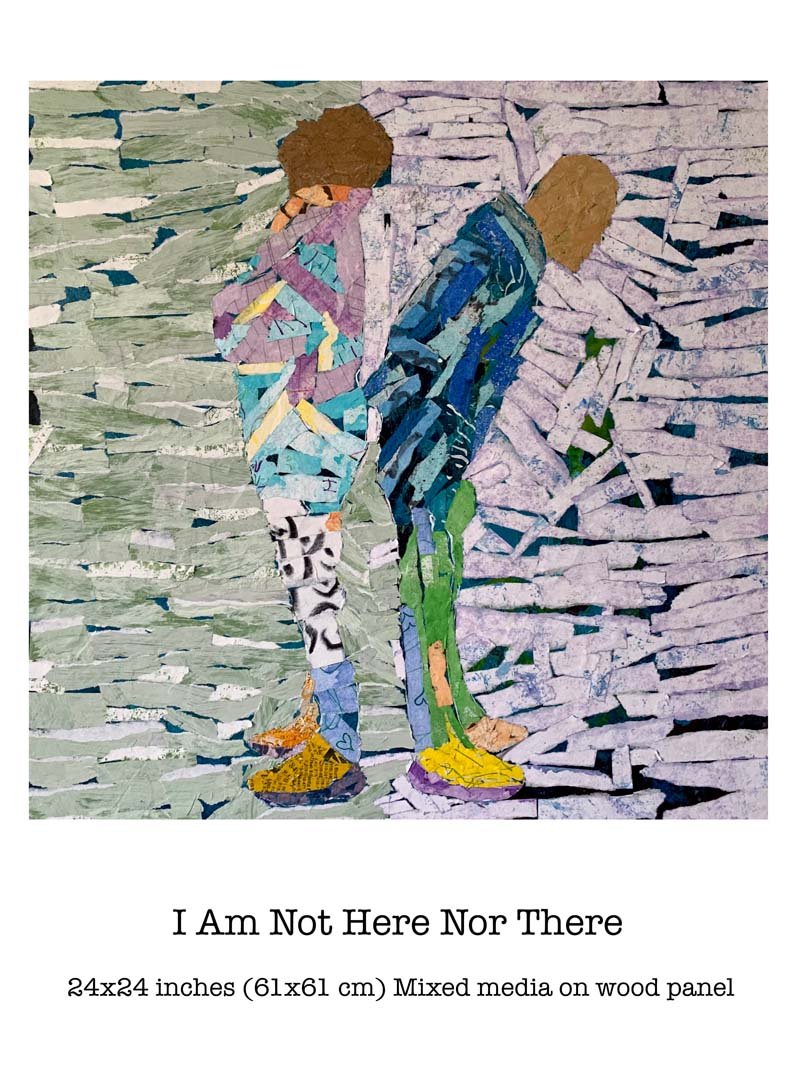
Describe a typical day in your studio. Each day carries its own rhythm, moving between tasks like preparing and executing paintings, researching, cutting pieces into fragments, and reusing them. Every step, no matter how small, feeds into the next, and the process itself becomes part of the work. That daily flow, with its shifts and repetitions, is how the art comes to life.
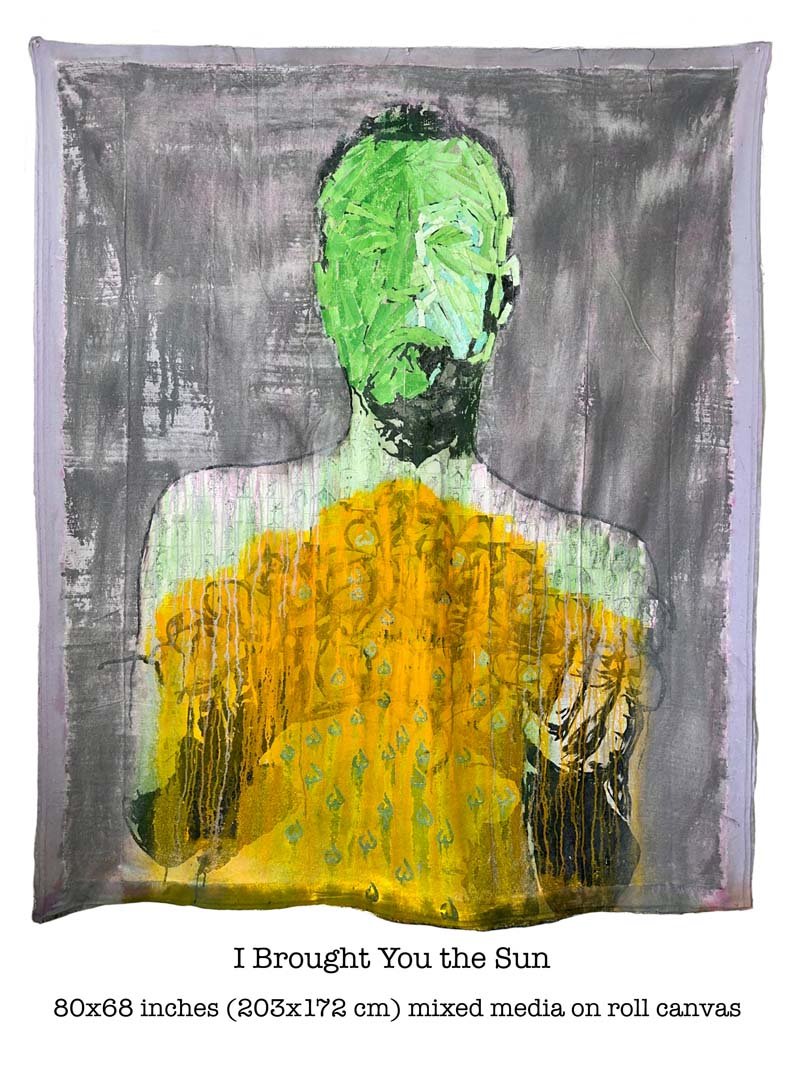
Tell us about your current project and its central themes. Right now, I’m working on a new series that continues to explore migration and memory, but with a stronger focus on transformation, how we rebuild ourselves in new places. I’m using found materials, layered text, and fragments of personal writing to reflect on time, loss, and renewal. The work has become more introspective, almost like mapping emotional landscapes. I’m interested in how objects and words carry the traces of our journeys, and how art can turn those traces into something hopeful, something that connects us across distance and experience.
When viewers see your work, what emotions do you hope they experience? I hope people feel a sense of connection, something deeply personal yet universal. My work often comes from memory, displacement, and love, but it’s not just about my story; it’s about all of us. I try to express the quiet strength of migration, the poetry of belonging, and how beauty can emerge from what’s been lost or found again. If someone pauses and feels both the fragility and resilience of being human, then the work has done its job.
If you could sit down with any artist from history or today, who would it be—and what would you ask them? I would like to meet any artist, great or a beginner... you never know what you learn.
Do you draw inspiration from music, literature, or other disciplines? I don't rely on inspiration, I show up and do the work at the studio instead. That’s how I work.
Living in Los Angeles, what do you find most creatively nourishing? A great thing about living in Los Angeles is the constant sense of possibility. The city is a collage of cultures, languages, and stories—there’s always something new to discover. You can feel both grounded and in motion here, surrounded by people who are creating, rebuilding, and dreaming. The light, the energy, the mix of beauty and chaos—it all feeds into the art.
Can you describe a project that challenged you creatively or emotionally—and how you worked through it? Each project comes with its own limitations and challenges, but to me, that’s exactly where creativity lives. Finding solutions, troubleshooting, and navigating obstacles aren’t setbacks; they’re integral parts of the creative journey.
Tell us about the teachers or mentors who influenced the artist you are today. I’ve been fortunate to learn from many people, not always in formal settings. Some of my most important teachers have been fellow artists, poets, and friends, people who live with honesty and create with purpose. Early on, I was guided by artists who taught me to trust process over outcome, to let materials speak. Collaboration has also been key; working with communities and other creatives has shown me how art grows through shared experience. Every exchange, every conversation, has shaped how I see the world and what I make from it.
What role does the natural environment play in your work? Nature has always been a quiet teacher for me. I’m drawn to the way it transforms, how things decay, renew, and find balance again. I often collect found materials from my surroundings, and in that act, I feel a connection to the cycles of nature—nothing is truly lost, everything becomes something else. Being in nature reminds me to slow down, to observe, and to trust the process of change. That rhythm, of growth, erosion, and renewal, deeply influences how I approach my art and the materials I choose to work with.
As AI and technology shift our ideas of beauty and creativity, how do you see your practice navigating these changes? The only true way to see the world is from within, because that’s where everything begins and unfolds. Our inner world shapes how we perceive and create. I’m genuinely excited about the potential of AI and what it can bring to art and life, but I also believe balance is essential. Technology can expand our vision, but it shouldn’t replace lived experience. Finding a harmony between AI and real, human presence could lead to a richer, more connected way of being, where innovation and authenticity move together.
Exploring ideas, art and the creative process connects me to the deeper rhythm of being, to people, memories, and the unseen threads that tie our experiences together. It’s a way of understanding myself and the world, one layer at a time.