

Madison-raised artist John Born on ceramics, perfectionism, and the magic of making.
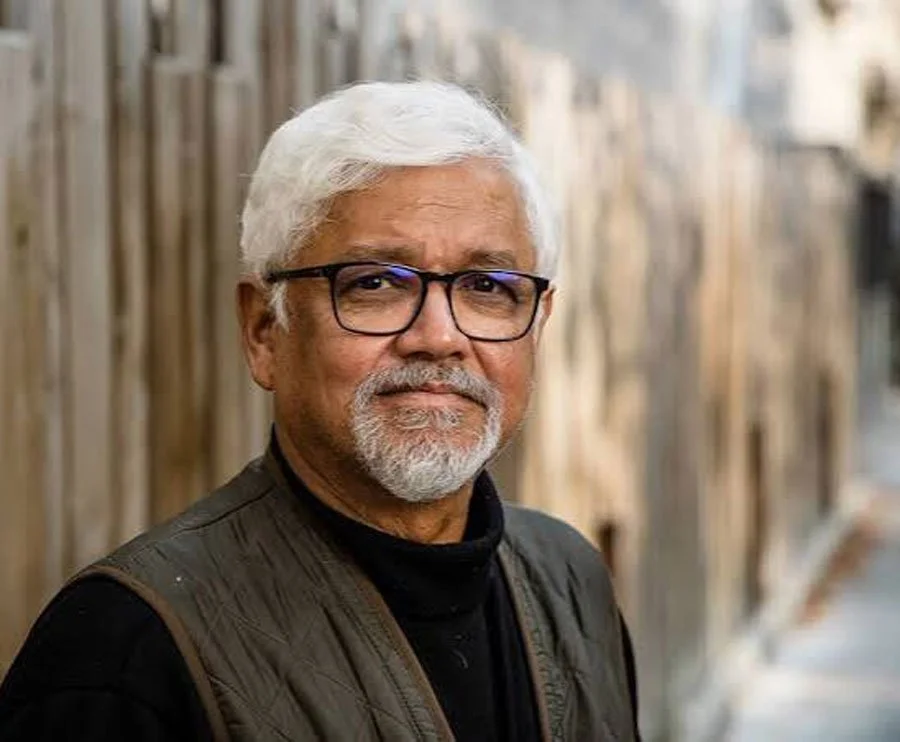
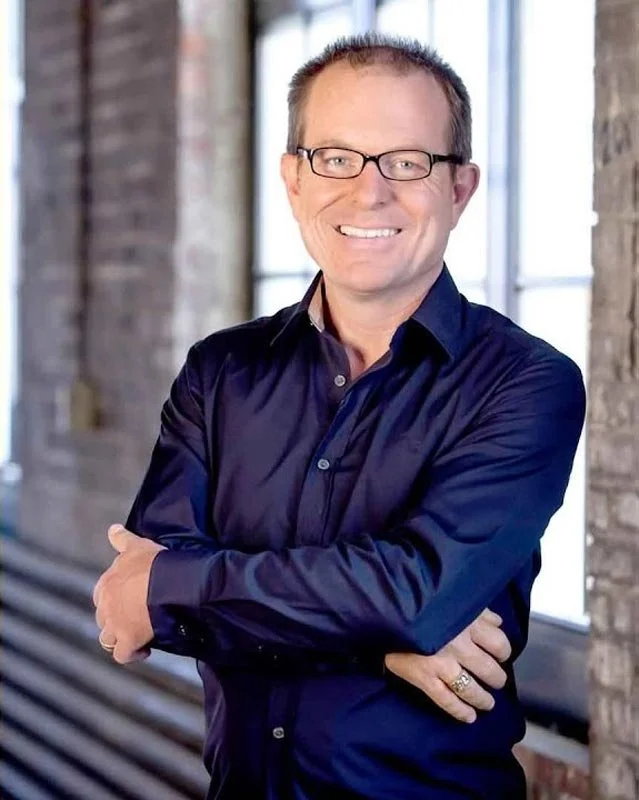
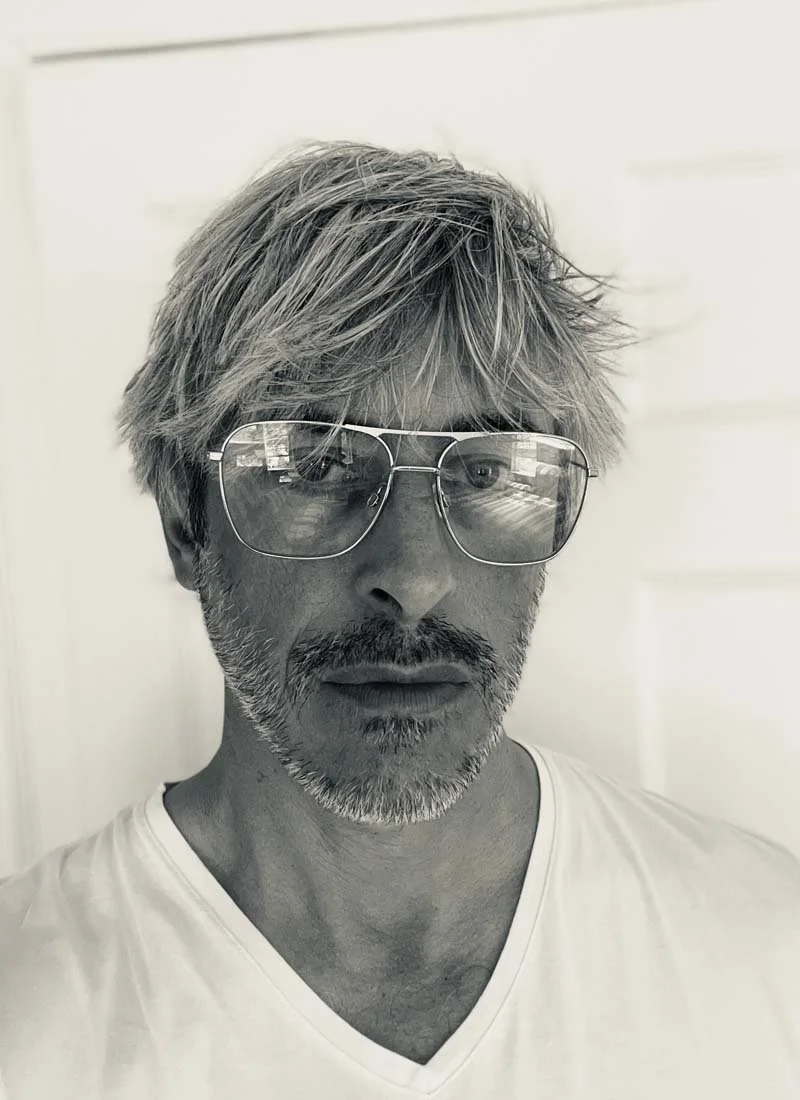
John Born is an artist living and working in New York. Originally from Madison, Wisconsin, he transitioned from a career in advertising to a full-time artistic practice focused on ceramics. His work, often created under the name Humble Matter, explores architectural forms and the balance between geometric precision and organic irregularity. He has exhibited with Modern Shapes Gallery in Antwerp and Han Feng Artspace. @humblematter
You were born in Menomonee Falls, Wisconsin. How has your upbringing there influenced your artistic perspective?
I was born in Menomonee Falls, Wisconsin, and grew up in Madison, Wisconsin with one brother in a middle class, devoutly Lutheran family. Both my parents were grade school teachers. I went to Lutheran schools up until my junior year of college. I wouldn't say that it really influenced my art, per se. I would say that it literally gave me a "Protestant work ethic", and made me kind of a perfectionist, which has continued to this day, and which is definitely part of my work. In terms of how I think about the world, it gave me a very strong moral compass. There are so many shades of grey in the world, but I believe there is also definitive right and wrong. I think a lot about what "the right thing is" and whether I'm doing it. Could I be doing better? Why aren't I?
When did you first fall in love with art and realize you wanted to be an artist?
I've been doing some form of "art" for as long as I can remember. I had a real facility for drawing as a kid, which my parents did a lot to encourage. I don't think I ever really considered whether I liked it or not in and of itself. It more like I liked that I was good at it. And that just kind of continued through college. So, I'm not sure I can pinpoint a moment when I fell in love with art. I remember reading The Agony and the Ecstasy by Irving Stone at some point, and then really getting into Michelangelo. I was obsessed with The Last Judgment for quite awhile. So much so that I tried to do this huge Michelangelo-esque drawing of everyone in my family (appropriately covered of course) in my freshman drawing class. Luckily, I gave up on that pretty quickly. Now that I have more self-awareness, I really struggle with being an artist. There is already so much art, so many THINGS in general, and so much more being churned out every day. So much energy and so many raw materials being used, and to what end? Do we really need another painting or another sculpture? Some days I feel good about it. Some days I feel like my time could and should be better spent in other ways. At the same time, I do love art--really all the arts: painting, drawing, sculpture, design, furniture, literature, poetry, music, dance, movies, theater. Great art is a truly wonderful gift, and depending on the form, can do amazing things. For me, as a viewer, they can life-changing. They can influence your brain chemistry. They can change your view of one tiny thing or the entire universe. For me as a practitioner, I have my own vision of things, and it's very satisfying when I can make that vision a reality in the world. I've brought something into existence that did not exist before, and that is very powerful. I've taken all my thoughts and feelings and energy and I've put them into this thing. They have transformed some material and have been transformed themselves. It's like practicing real magic.
Describe a typical day in your studio and your process.
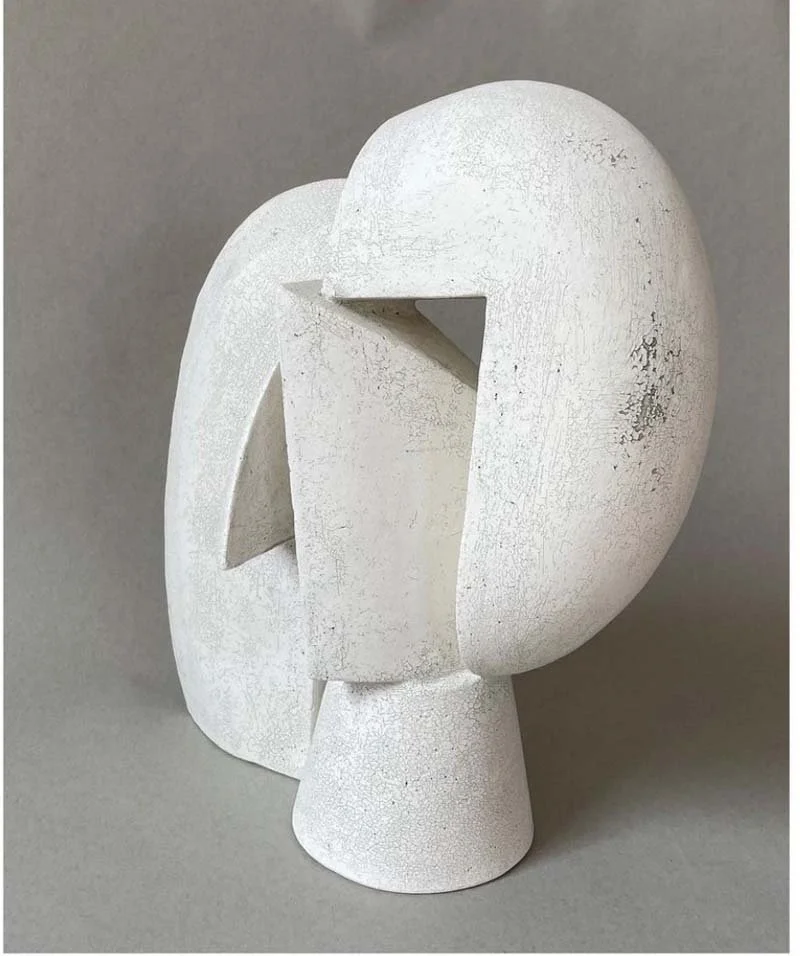
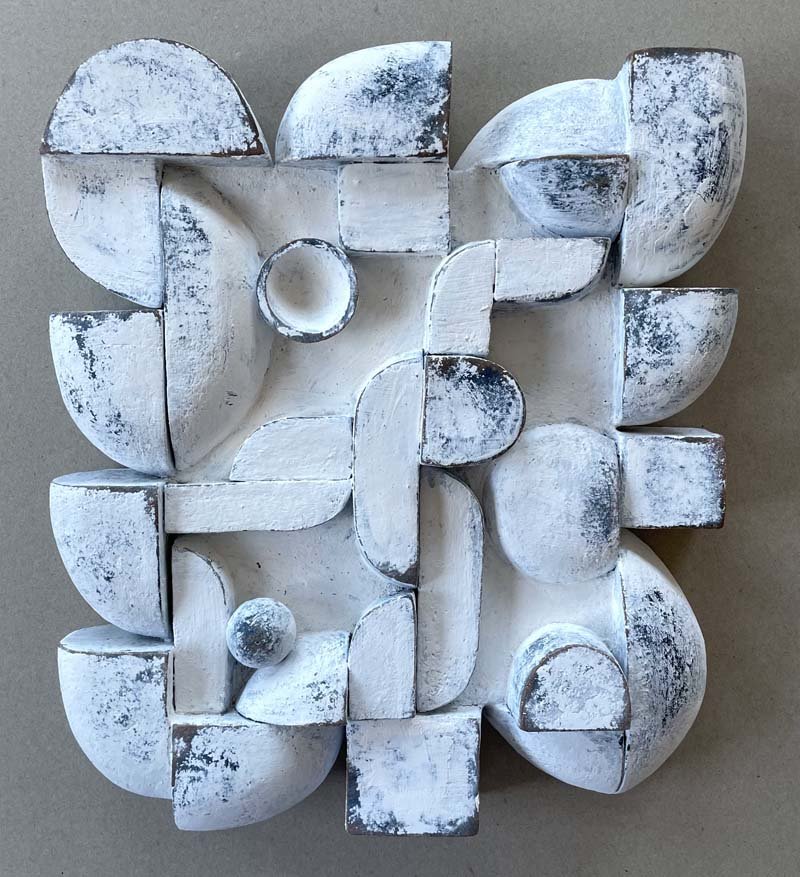
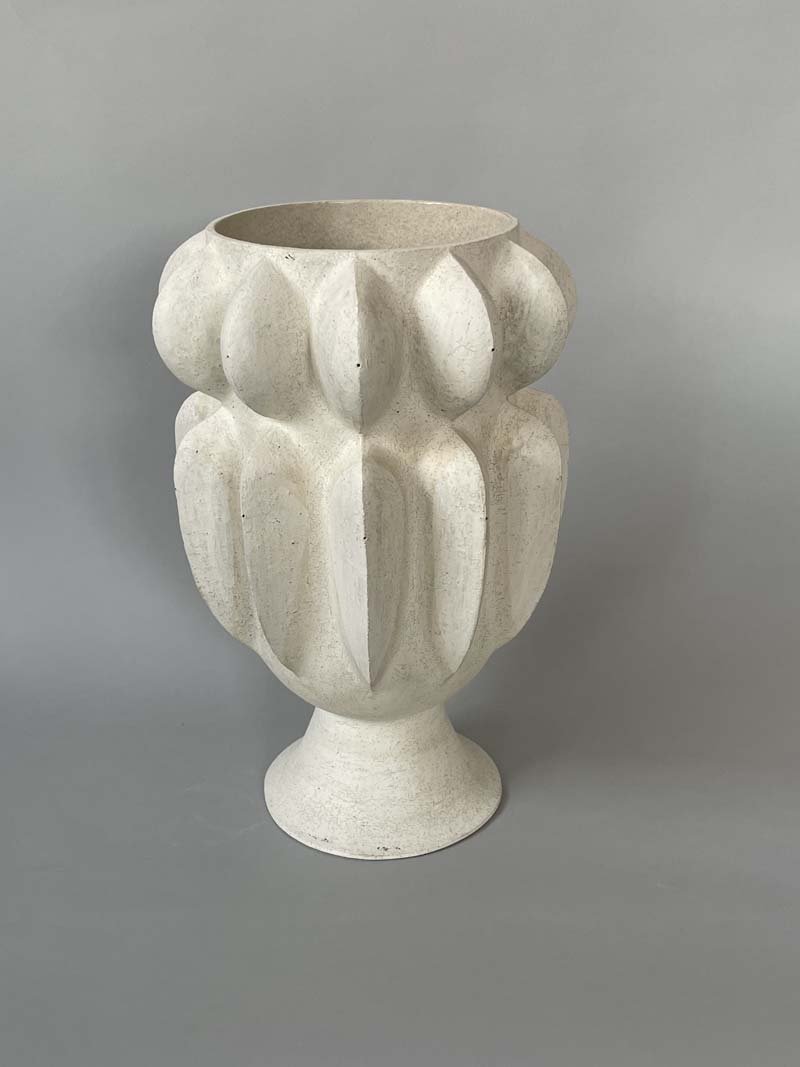
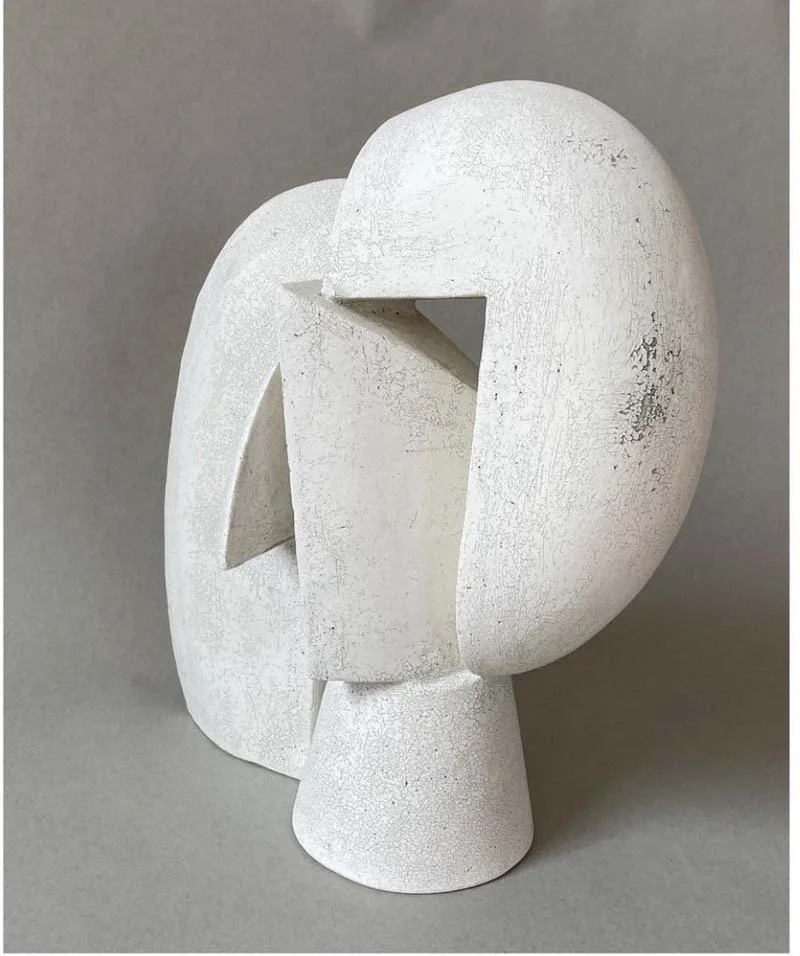
I usually get to the studio sometime between 10 and 11am. And then I just work. It's either a project for somebody or something that I've decided is worthwhile for me to explore. My studio is fairly large and has a lot of windows. It's a great studio, and I'm very fortunate to have it, especially in New York. Although I do some painting and drawing, I work mostly in clay. My process is that I will have sketched out whatever the idea is. Maybe once. Maybe hundreds of times. It doesn't follow the sketch exactly. The repetitive drawing is there to "get me in the frame of mind" of whatever the piece is. So I kind of know what it is but don't know exactly what it is. I want there to be some space for discovery in the process of making, some room for accidents to happen, some mystery that my subconscious mind will solve. I use ordinary dishes as press molds for slabs of clay. So, I roll out slabs using a slab roller, and then press a slab into a bowl or a cup or whatever to create a component. I'll let that harden up, and then combine it with another component by scoring and slipping the edges and sticking them together. Then I'll smooth the seam out with a rubber rib. The technique is very basic. I usually say that I do "5th grade ceramics". That process continues until the piece is finished. The piece dries and I decided what kind of surface treatment it will have and then it's usually fired twice: one bisque and one glaze firing.
Tell us about your current projects, including Heaven's River, and the themes driving your work.
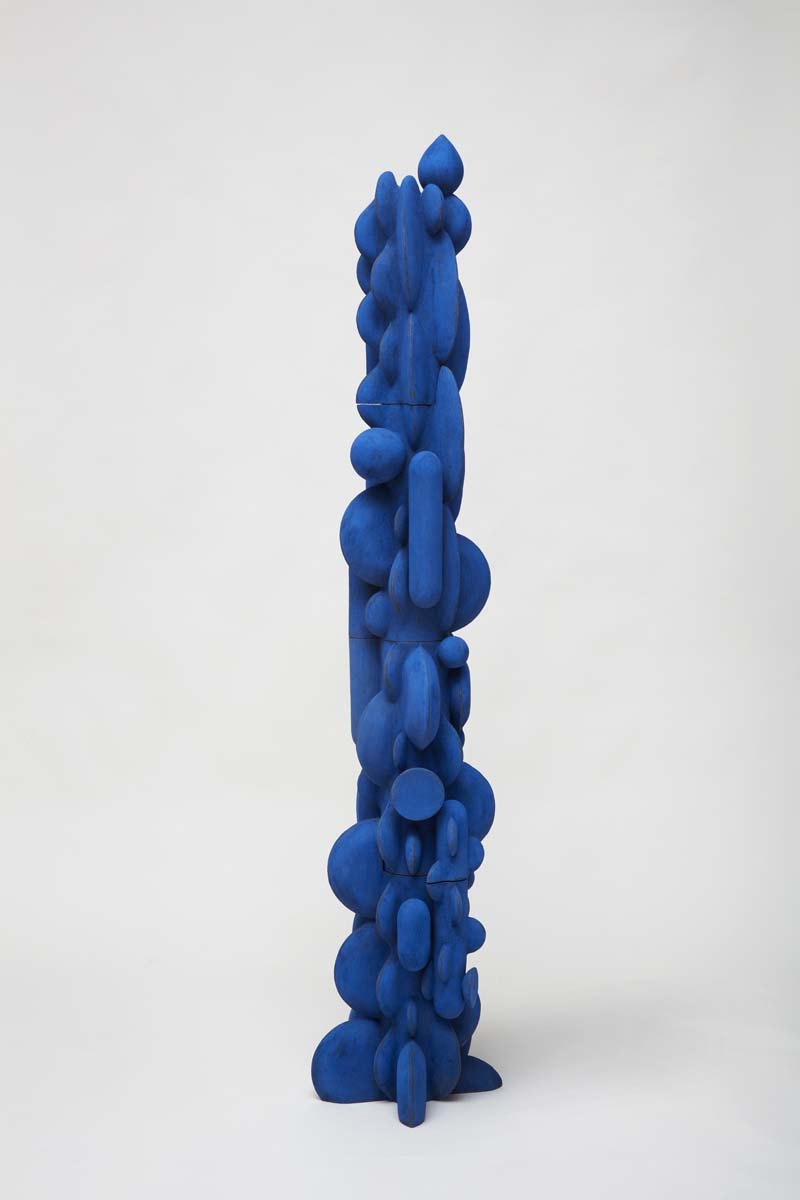
I just finished a large sculpture commissioned through Modern Shapes Gallery in Antwerp. It was called Heaven's River, and meant to represent a column of water. I'd made a piece similar to it two years ago called The Shape of Water. I liked it because it embodied so many contradictions. Stone used to represent water. A flow that's not flowing. Shapes that are absolutely abstract and random on their own, which come together to somehow make sense in totality. This fall, I'm starting a series of sculptural vases based on work I've done before for Han Feng Artspace. They're all going to be kind of architectural (or maybe not--we'll see!) based on a pod-like shape.
When viewers see your work, what emotions do you hope they experience?
I don't really think about what the viewer is going to experience. I'm much more focused on what I'm thinking and/or feeling when I'm working on something. First and foremost, I'm trying to create something I'll be happy with. If that's the outcome, then it doesn't really matter what someone else feels. I mean I want people to "like" the work or even better, really connect with it, so ultimately they'll want to buy it. But maybe they'll hate it, and then what? Have I failed? You just can't control any of that. Sometimes a title will hint at what I'm trying to express--or maybe more than hint--but sometimes not. I can really be an over thinker, and in my experience, that never helps my work. So, I try not to be too overt in terms of my thinking or expressing "this is supposed to mean this".
Which artists, past or present, would you like to meet?
Everybody says you shouldn't meet your heroes. But I'd make an exception for Jack Whitten. The "why" is tricky. What could I hope to gain? I'm not sure. I guess it would depend on where the conversation went. Presently, I'm always happy to meet anyone. Usually, it's just to let them know that I really admire their work. And I feel like it's more meaningful that ever to have actual human interactions with people.
Do you draw inspiration from music, art, or other disciplines?
I'm inspired by so many things. But not in a way that's a direct line to the work I make. I listen to a lot of music in studio, and sometimes I hope that a piece will make someone feel the way a particular song makes me feel, as impossible as that is. But mostly, it's that I think seeing or hearing great art makes you want to do things. Great things, if you have the capability. If you're an artist, I think it makes you want to try to make great art. If you're not, then maybe it reminds you of a hobby you enjoy. Or it reminds you of how much you miss someone or love someone. Or it changes how you thought of something earlier in the day or the week or last year. Great art--of any medium--is an activator. It fills you up.
What do you find most creatively nourishing about living in New York?
Only one great thing about New York? It's still the New York I dreamed it would be when I moved here from Madison, WI. Even after every single reason anyone could have to be disappointed and disgusted by it, and there are as many reasons as there are people, it's still going. You'll still see things you wouldn't see anywhere else. It's still a cultural engine driven by people's dreams. It's still magical. It still offers moments of transcendent grace and kindness. It still surprises. It's still the place you come to to make it.
Can you describe a project that challenged you creatively or emotionally—and how you worked through it?
There have been a couple. The details aren't that important. I can get very anxious when things "are going according to plan". Usually, my wife reminds me that things will work out, which I try to actually take in and believe, although I may not be able to. And then, the "protestant work ethic" kicks in. I just put my nose down and push through. Because what else can you do? Usually, that includes spending more time or money or both on it than you planned and/or wanted to. And then I come out the other side. And the next time, I try to become less dysregulated if things aren't working. I don't think there's a magic bullet. If it's a commission, hopefully who you're working for has some understanding and empathy. I've found that the people I'm working for usually want me to succeed. So that's important to remember. Also, you can only do what you can do. Finally, as Cher says, "If it's not going to be important in 5 years, it's not that important."
Tell us about the important teachers and mentors in your life.
I've had some influential teachers, and worked with some staggeringly talented and wonderful people. I've received an incredible amount of support from gallerists, store owners, and the online community. I have the most loving and supportive children. But the most important person in my life is my wife, Cecilia Clarke. I wouldn't be where I am without her--both artistically and in life. She gave me the class that got me interested in ceramics as a gift one Christmas. She took a specific job, so I could quit working in advertising full-time and focus on my art. She's enthusiastic about (almost) everything I do. I owe her everything.
Does being in nature inspire your art or your process?
As human beings, we are inextricably connected to the earth--the actual earth, not the abstract idea of it. There's a reason why people who garden are so happy and tend to live a long time. There's a reason it "feels good" to take off your shoes and walk barefoot in the grass. It's easy to wax poetic about the natural world, but it's more than just poetry. It's science and chemistry. It's not just awe amping you up, it's vitamin D and serotonin. There are few things more important and more health-giving for human beings than interacting with nature, in some way. Just go outside, walk around the block. You'll feel better. Apart from that, I was recently in Big Sur, which is one of the most naturally beautiful places I have ever been. It was one of the best trips we've ever taken. It's both breath-taking, but also breath-giving, in that, it recharges you. It reminds you of the power of nature and the earth and how it is just there, with or without you, alive with soaring trees, impossible cliffs, dense foliage, flowing rivers, crashing surf, an endless horizon. All of that energy in a constant state of flow and flux, just waiting to be appreciated, taken in, transformed and returned to the world. As rejuvenating and inspiring and as much as I enjoy nature, it does not inspire my art--at least not consciously!--or my process.
AI is changing everything - the way we see the world, creativity, art, our ideas of beauty and the way we communicate with each other and our imaginations. What are your reflections on AI and technology?
Is AI changing everything? AI doesn't work in a vacuum. People are changing things. There are so many tools. We choose which ones to prioritize. We usually do this, as with most things, based on a very short-term, limited view of how we can "profit". The U.S. especially is enamored with the idea of "progress" in a general, generic, deeply un-explored sense. "Moving forward" is always good. Monetize it now. Worry about (or maybe just ignore) the consequences later. We've been here before since the founding of this country through to social media and now AI. It's the new bright shiny thing that we haven't really thought through that we're trying to make as much money off as possible. What worries me about it more than any impact on art is its impact on the environment. That's what's going to be truly disastrous. When we suddenly need to figure out what's more important: water for AI computing that's been woven into every aspect of daily life, water for crops that are basically grown in deserts that we've decided to irrigate, water for cities that shouldn't have been built where they are, water for drinking. As far as I'm concerned everything right now is still human art. As far as how it's created... I don't really care which tools someone uses. It depends on what you're trying to accomplish and what the best tool is to accomplish that. Some handmade things are wonderful, some are garbage. Some industrial things are soulless, some are design favorites of mine.
Exploring ideas, art and the creative process connects me to…
myself. Regardless of "being an artist", exploration connects me to who I am as a person--someone who's interested in ideas, and the world and how we inhabit it and what we can do to help each other. I feel myself come alive when my curiosity is activated: what is that? why are we doing this? how did you do that? how can we solve this? A lot of my work simply begins with the question of "what would happen if I cut one thing in half and attached it to another?" They also connect me to other human beings. Hopefully, to like-minded people who have the same questions and maybe different answers. Or maybe different questions and same answers. Or maybe, no answers at all. Just questing minds. Just searching for ways to connect, contribute, and hopefully make the world a better place, even in some small way.