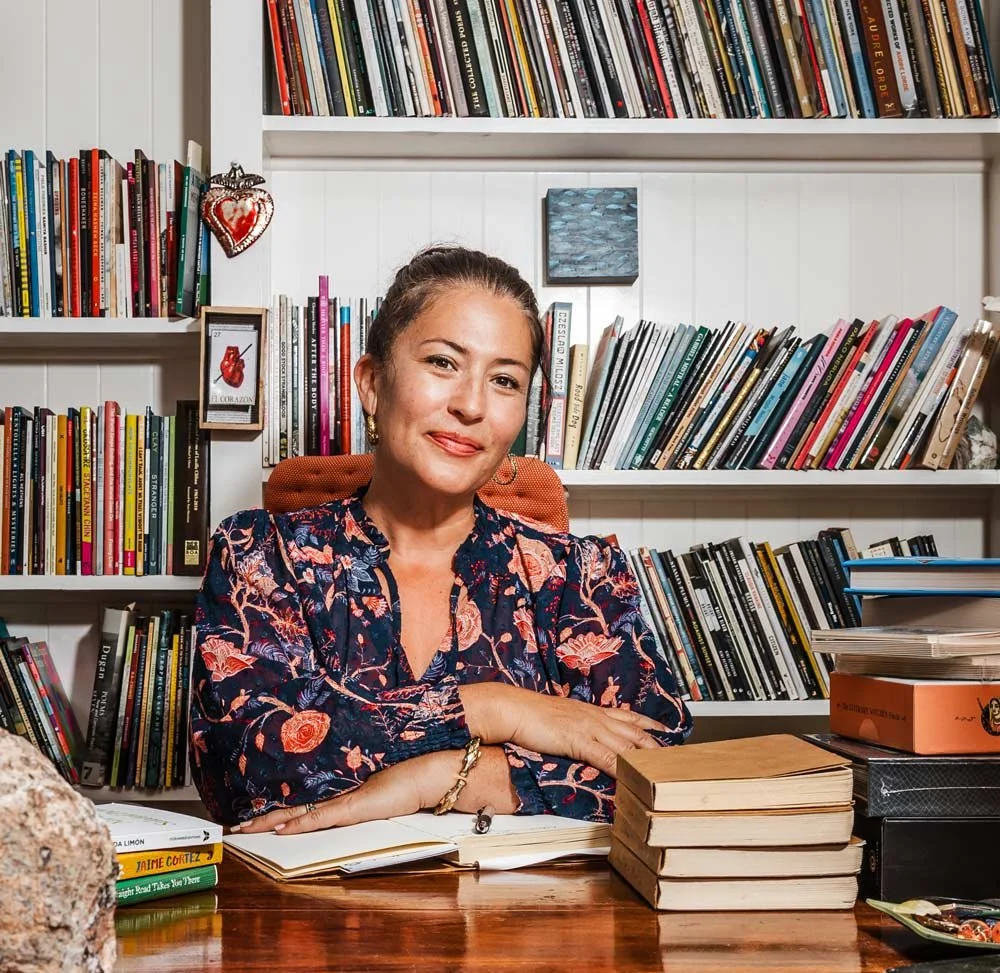


Artist Gianna Commito on clay, marble, and friendship bracelets.
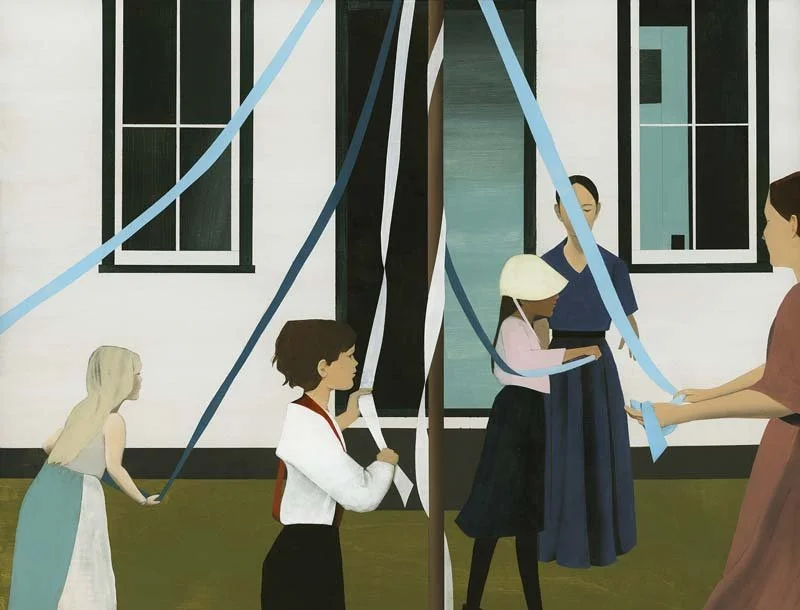
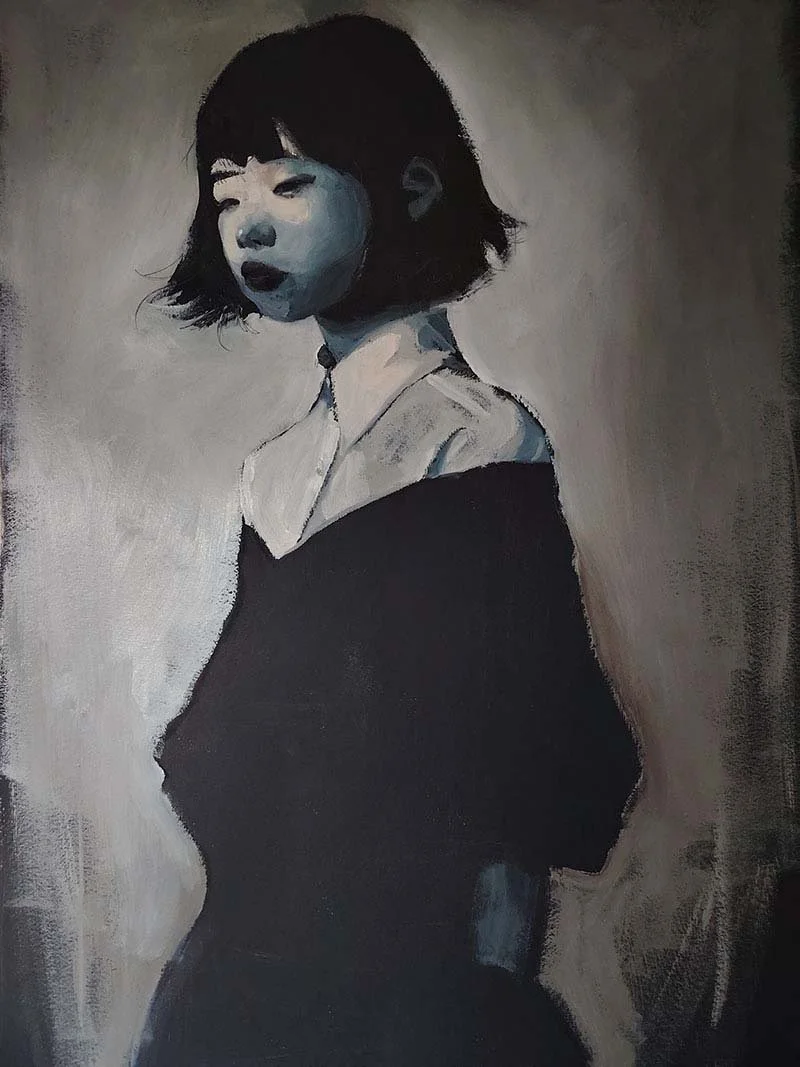
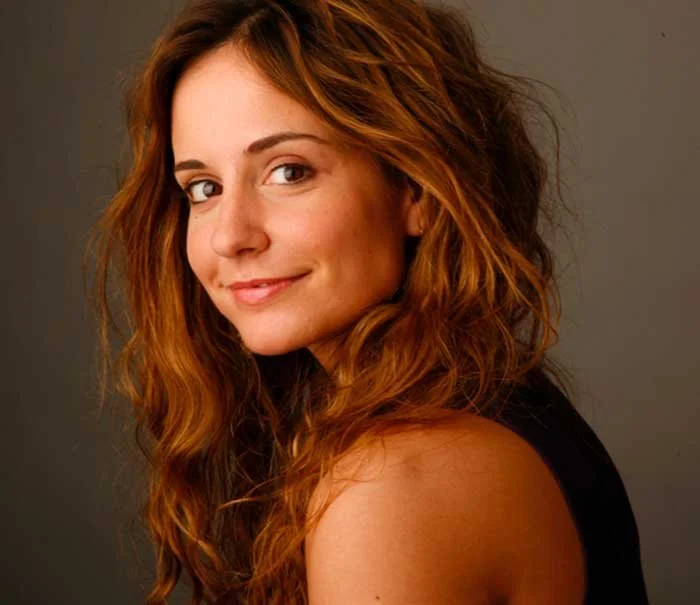
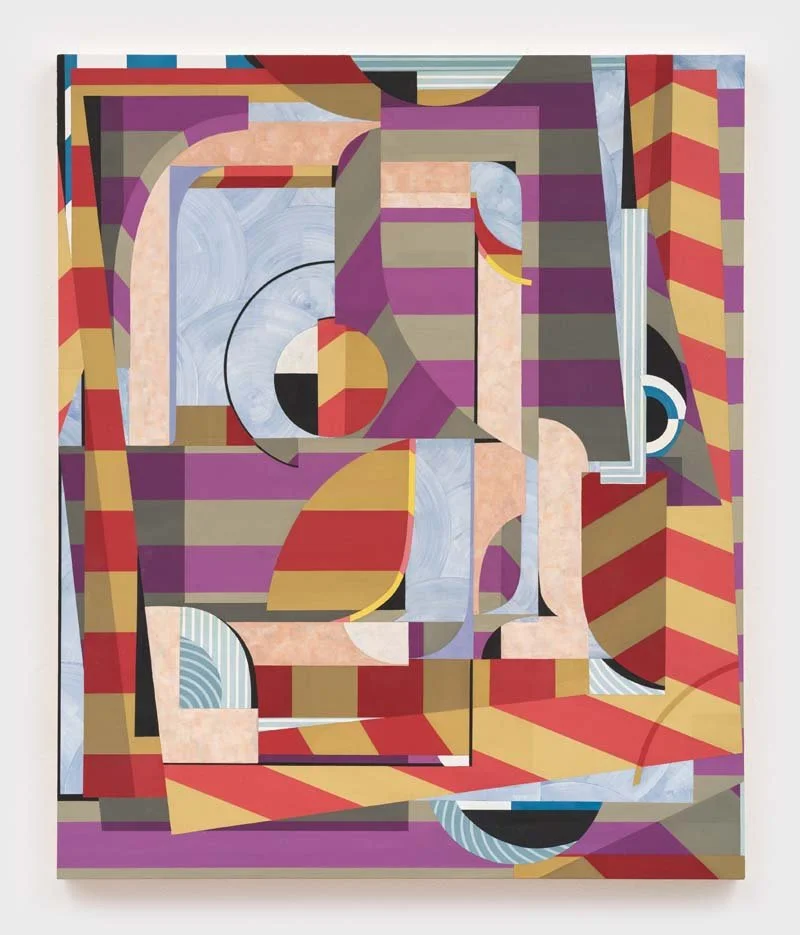
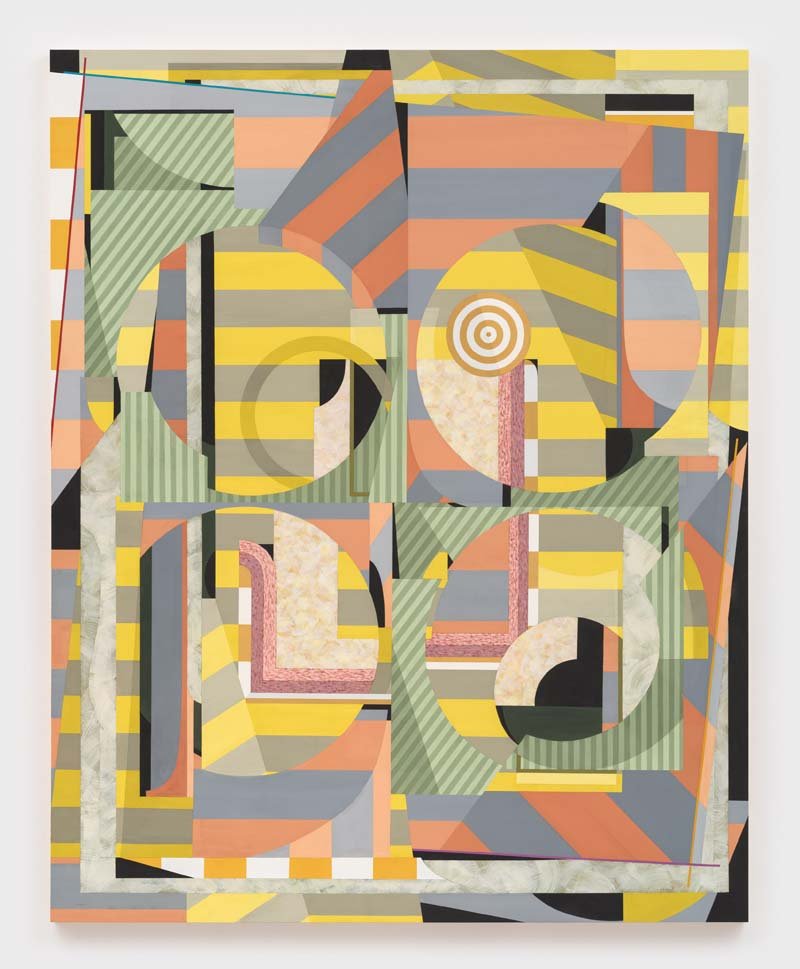
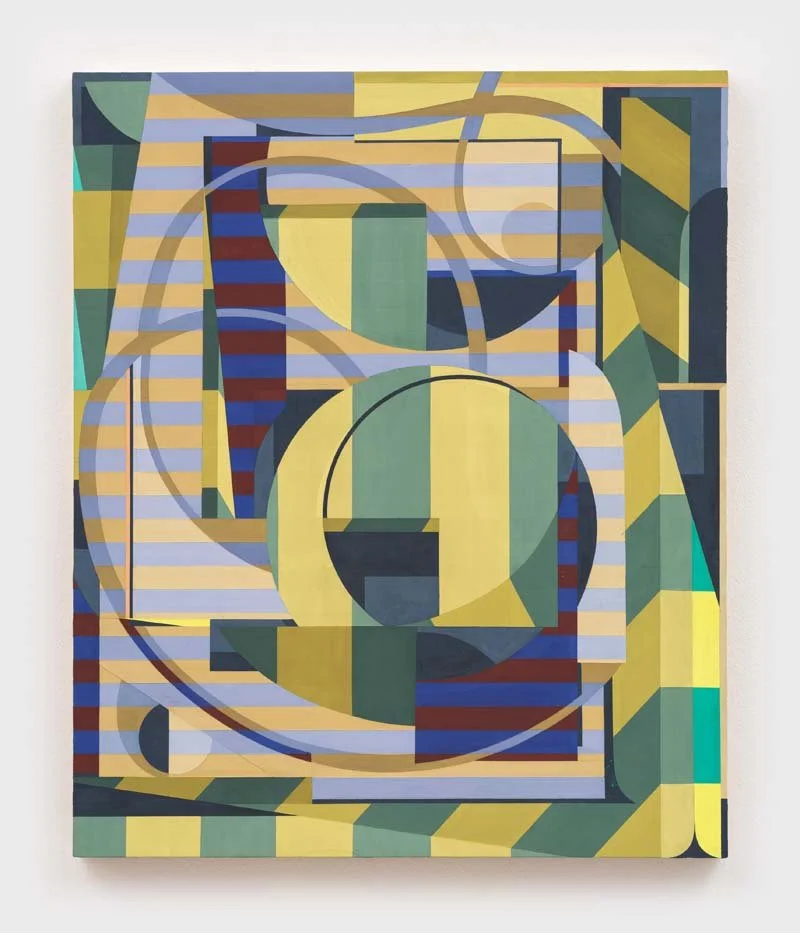
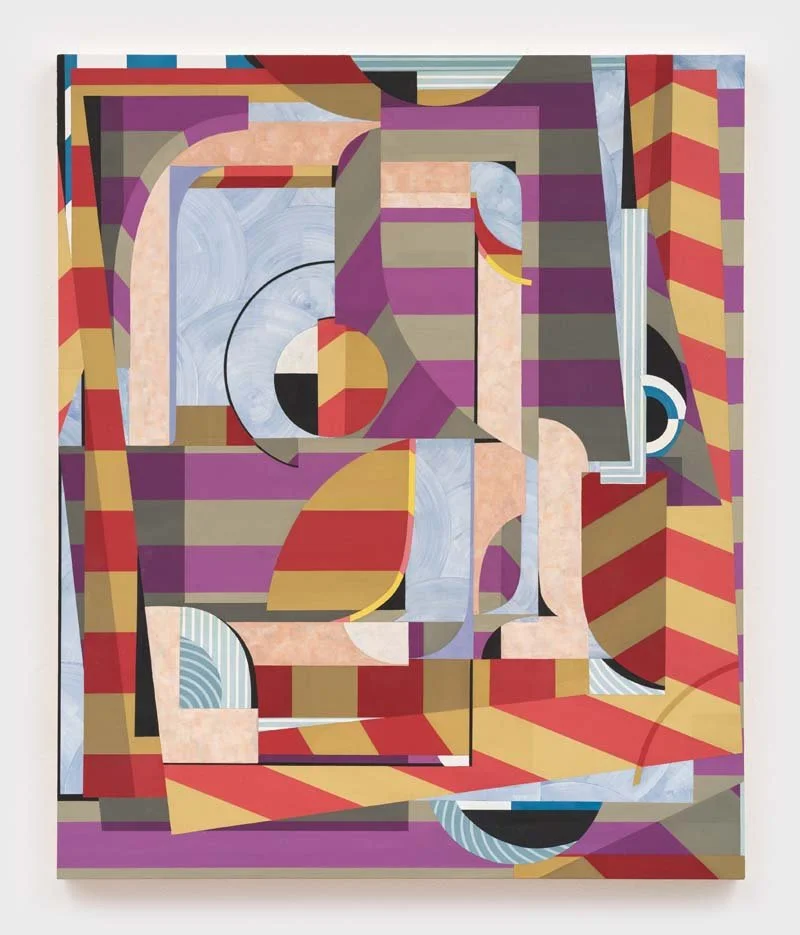
Gianna Commito (1976) earned a BFA from The New York State College of Ceramics at Alfred University, Alfred, NY, and an MFA from the University of Iowa, Iowa City, IA. She paints with casein on marble dust or clay ground to reflect her interest in architecture, building materials, and, by extension, a continuing exploration of public versus private space and the development and collapse of the built environment. Her recent body of work studies the intimacy of her home and the people in it. Commito aesthetically interprets the behavioral loop of tension and concession between family members moving within a tight domestic radius.
Represented by Rachel Uffner Gallery and Abattoir, her work has been featured in major institutions including MOCA Cleveland, the National Academy, and The FRONT Triennial. She is the recipient of a Pollock-Krasner Foundation Grant and fellowships from MacDowell and Yaddo, and currently lives and teaches in Kent, Ohio, where her work is held in several prominent museum collections. @gianna_commito
What elements of Maine from your upbringing are evident in your work?
I was born in Sea Level, NC, but was soon moved to Machias, Maine, where I lived until I was four. My father's first teaching position was in Downeast Maine, and, as a marine biologist, he returned frequently to research at his study sites to study invertebrates in the mudflats. My parents have a small cabin there, and we still spend a good part of the summer driving to Maine from wherever we live. I grew up predominantly in Frederick, MD, which is much fancier now than it was in the 80s and 90s, when we referred to it as "Fredneck." In hindsight, though, its proximity to DC and Baltimore made it a prime location for music and skate culture, which was in full grunge/punk force at the time. I wasn't cool enough to be affiliated with the skater boys, but I did see lots of shows that really impressed my own kids now, haha. We traveled a lot as a family, not only to Maine but on sabbaticals to Norway, New Zealand, for extended periods, and visits to Europe and Australia. I was 8 when we lived in Norway for a year, and I believe that's when my childhood memory really begins. Getting away, for the summer, for a year, was a respite from a pretty John Hughes-esque middle and high school experience. I couldn't wait to leave my hometown. I realize now what a privilege this was, especially working with so many first-generation college students. I loved traveling and the possibility for reinvention. I loved noticing specific things in specific places, like the fossilized nautilus shells in the marble sidewalks of Verona when I was 8, and how that turned on a "seeker" mentality to notice things and tuck them away to use later. It also meant that my sister and I were on our own, and hours in the car meant hours of making things. Without the internet, I had to figure things out on my own-- I know it sounds silly, but I attribute a lot of my studio work ethic to friendship bracelets. I got really obsessed and developed really ambitious, complex patterns that came out of trying, failing, reworking, troubleshooting, and everything I rely on today.
When did you first fall in love with art and realize you wanted to be an artist? For you, what is the importance of the arts?
There was a lot of art in my house, and both of my parents are very creative, so I didn't have to convince anyone that it was a worthy pursuit (another privilege, for sure). I used to think I wanted to be an archeologist, but once I realized that you couldn't keep the treasures you found, I figured I would just make my own. (My sister is an archaeologist now!) They are similar, of course-- what do you do when you go to another country? You visit museums, where art and artifacts are a record of that place's history. and culture. So in that way, I think I always knew I would go into the arts in some form. I had the ability to draw fairly well, which shunted me in the direction of making things, but of course, it doesn't necessarily make one an artist. As a kid, those skills were rewarded, but as an adult, I think my lifelong tendency to notice things, fuss over things, experiment with and respond to materials, problem solve in ridiculous, meandering, iterative ways, is really the throughline that made me realize I was an artist. These skills, of course, show up in lots of professions, but focusing them on art and creative practice is such an unpredictable and exciting way to record the world around us-- we become scribes, historians, innovators, adding to the visual vocabulary of the world.
What does your typical day in the studio look like? Walk us through your studio and your most used materials and tools.
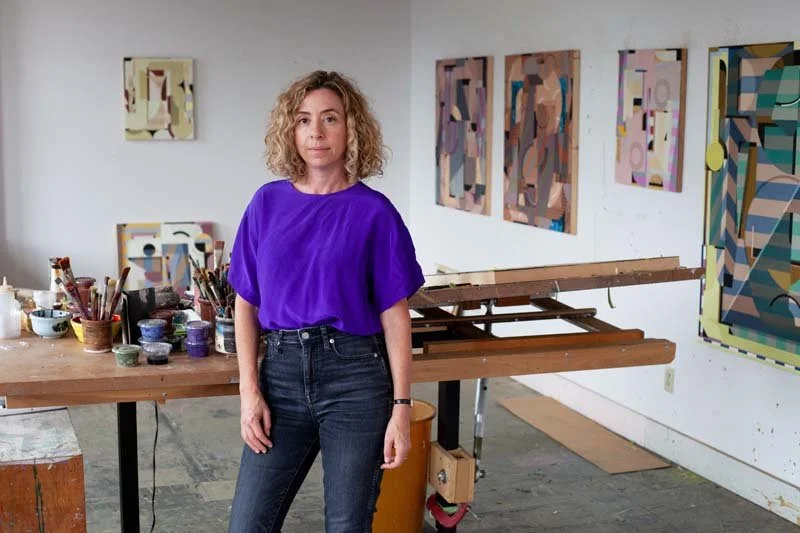
I live in a small college town in Ohio, which is not where I imagined myself 20 years ago, but which has been very good for me. A major upside is that I have a very large studio right downtown, midway between my home and my university. I usually walk from home to the studio and then sit around screen-sucking for half an hour over a cup of coffee. I always try to leave the studio with the next day in mind. It's hard for me to get started, so I've developed methods to kick myself into action. I leave each day with an unresolved problem or task, so that first thing, highly caffeinated, I know exactly what job needs to be done, what challenge needs to be solved. It may be as basic as taping up an area to paint or mixing colors, or it may be a complex image that I've drawn out and need to be painted. Once I'm in, I'm in-- really locked-- to the puzzle of my image. I work with casein paint on panels primed with marble dust or clay ground. My background is in both painting and ceramics, and despite landing predominantly as a painter, I still love the touch of ceramics and their immediate reference to architecture and the built environment. Casein, which is a milk-protein-based paint, and panel with traditional gesso, feels a lot like underglaze, slip, and unfired clay. This synthesis has created a really rewarding feedback loop where the materials present challenges that inform the image (see: friendship bracelets) as much as my conceptual motivation to use stripes, planes, and other architectural references is made possible by using a paint that dries quickly, can be taped, scraped, sanded, and layered the way a ceramic sculpture could be crafted. My work is mid-scale, anywhere from 16" X 20" to 60" X 48", in large part because I am shrimpy at only 5'2" and need to maneuver the panels from the slightly angled table where they are made to the wall and back. I use a lot of masking tape, compasses, rulers, and other drafting materials, but the paint keeps things from getting too clean and tidy as it drips, leaks, and peels up between layers. I try not to eliminate the previous efforts in my work but rather build on top of old layers and edits. I find that these scars soften the final image-- what looks very crisp and clean in a photograph is actually a very dense, cruddy surface that undermines the orderliness of the top layer.
What projects are you at work on at the moment? And what themes or ideas are currently driving your work?
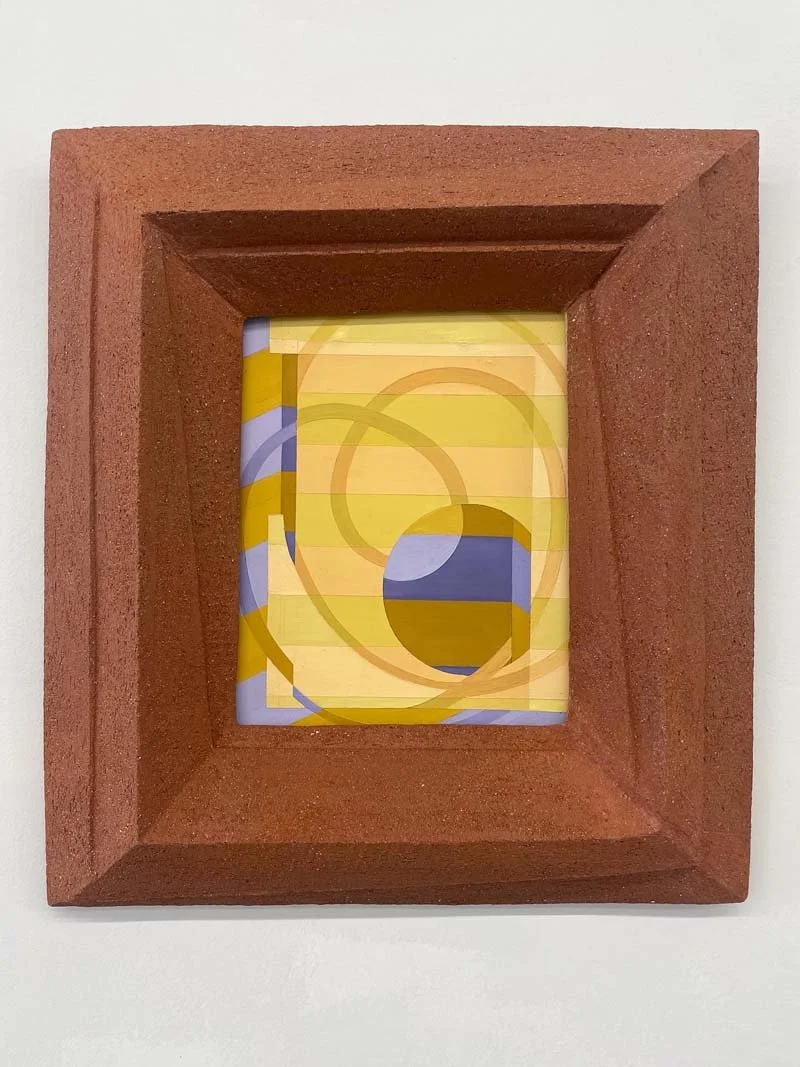
Well, you got me at a good time because I started something very different this summer. Coming off two solo shows last spring, I was a little burnt out in the studio. I was invited to take part in a group show that is a response to time spent at a residency in Italy a few years ago, and I took advantage of the empty summer studios at school to use the ceramic space (with both blessing and guidance from my two good friends and colleagues who run it!). I stumbled around in there after not using clay for 25 years and made some frames for small paintings. I wanted to create little works that drew upon the experience of walking-- my favorite pastime--in a tiny, ancient, walled city. The unglazed clay frames use architectural motifs pulled from the buildings there, while the paintings, simpler than previous work, are a softer, more meandering counterpoint. I thought this would be a one-off project, but I left myself with so many problems to solve (shrinkage, cracks, unexpected colors and textures) that I couldn't help but try to make more. It's really healthy to get uncomfortable again!
What do you hope people feel when they experience your art? What are you trying to express?
I want people to feel compelled by the surface and materials I use, because they are seductive and unusual, but also to feel a little unnerved or unsettled by the image that the materials build towards. My paintings usually have some sort of central axis and internal compass that keeps them righted, but my job is to upset that just a little so that the viewers' footing is a little uncertain, like standing on a boat or stepping off an escalator. The paintings are so rooted in design language and the history of modernist painting, but I try to humanize them or impart a bit of psychology by making them just a little bit uncomfortable. There is a LOT of information going on, not just what you see immediately, but in the many layers underneath that cast their own shadows and disrupt the surface. While my primary influences are architecture and the built environment, more and more I'm interested in capturing the way people move through and occupy spaces-- domestically, institutionally, and as a way of recording how towns and cities respond to the needs of their population. The scale of the space and the way people jockey for position is not that different, whether you're talking about a city park or the room in my house that has the TV in it. I want the viewer to feel that motion.
Which artists, past or present, would you like to meet? And why?
I'd like to meet Sonia Delaunay, who drew from so many creative sources (sound, color, vibration) and used so many materials to filter those inspirations into her own work. I adore Charles Burchfield, who was born in Ohio and spent much of his time in Western NY (where I went to college) and Maine, and devoted his practice to capturing the landscape-- rural and rust belt-- in increasingly surreal and magical form. I'd like to meet Jane Jacobs, who isn't an artist but whose thoughts about what makes public space successful are so nuanced and particular that she may as well be describing paintings (a city park, for example, should embody "enclosure, centrality, intricacy, and sunshine"). And I'd like to meet some of my contemporaries like Loie Hollowell and Angela Heisch, who are also using the space between abstraction and figuration (literally or in the psychological sense) to not only draw upon abstraction's complex history but to connect to the experience of being a person with a family, sharing space with others. This is on me, though, I really just need to DM them lol.
Do you draw inspiration from music, art, or other disciplines?
Other art, of course. But also ephemera, found objects, graphic and industrial design. I love things, and I love thinking about what things look like! I also read a lot of fiction and try to reach the same flow state when painting as happens when lost in a good story.
A great thing about living in my city/town is…
I feel very strongly about this! I moved to Kent, OH, to teach at the university when I was 29. I assumed that, after a few years of experience, I'd get a "better" position back in the northeast. That didn't happen, and I'm so grateful for that. I love this little town, where I have the time, space, and resources to be in the studio, raise a family, and have lots of friends who either grew up here or moved here to teach, but who either way are experts at what they do and what they bring the the community. I am represented by a great gallery in NY and an equally great gallery in Cleveland, and it's easy to travel from here to more exotic locations, but it's nice to come home to a house I own (by myself!). Living in a red state is challenging, but Kent, which of course has its own complex political history, is a place where many voices can be heard. My kids can run around town with their friends like it's the 80s, I am able to serve on our public art board and get to know those voices as a volunteer for the town, while at the university I've been able to help build a team of really incredible colleagues who make, write, and teach about art in thoughtful and challenging ways.
Can you describe a project that challenged you creatively or emotionally—and how you worked through it?
My most recent show at Uffner Liu was a challenge. I hadn't had a solo show with the gallery in seven years, and I was nervous. I am well aware that my work, which is largely driven by formal and material inspiration, has been out of sync with the (very necessary) identity-based, figurative work of the last decade or so. I was asked to do the show about 6 months in advance, and with some other projects in the pipeline. Fortunately, I was on a research leave from teaching, but this still put a strain on my position at school and on my home life. I made some work that was physically larger and more complex than in the past, which required some engineering of both my space and my body. I am so confident in the work I made, but it's still a difficult market, and it's been a slower, more deliberate unfolding compared to earlier shows. So this has been a little hard on my sense of self, but it has also propelled me to get back into ceramics and other materials and remember why I love seeking, discovering, and making in the first place.
Tell us about important teachers/mentors/collaborators in your life.
Oh gosh, I've had so many. Ann Pibal was one of my first painting professors at Alfred University, and she was so young and sassy and badass. She also put me in my place when I was being too young and sassy and badassed. Susan White at the University of Iowa, where I got my MFA, is an incredible painter, but actually modeled a life that I admired-- I babysat her kids over the summer and saw her "do it all". Now that I'm in her position, I often want to tell her how helpful it was to see her dash here and there with two pairs of glasses in her hair, giving me instructions while feeding the dog before heading to the studio. Nothing is more precious than studio time when you are paying a sitter. In Iowa, I worked as a studio assistant for Will Mentor, whose work was meticulously crafted. I had to gesso and sand 15 layers per 6-foot painting and scrape with a razor blade. He would say, "Don't be stingy, get a new blade as soon as it starts to dull!" and I thought, man, I am being so careful and thoughtful in here, I really owe it to myself to bring these practices into my own studio.
Sustainability in the art world is an important issue. Can you share a memory or reflection about the beauty and wonder of the natural world? Does being in nature inspire your art or your process?
Yes, of course. As I mentioned before, my family (growing up and now) spends a lot of time in Maine. As a kid, I would (reluctantly) help my dad measure tiny clams in the mudflats, racing against the tide. He taught marine biology and started the environmental studies program at his college, so these issues were built into my childhood. But my specific process is again that idea of seeking and noticing. I am probably more drawn to the micro than the macro in nature-- to the stripe of quartz in a polished beach rock or the detailed, fractal patterns on a pine cone or sea shell. Repetition, pattern, and texture all find their way into my work.
AI is changing everything - the way we see the world, creativity, art, our ideas of beauty and the way we communicate with each other and our imaginations. What are your reflections about AI and technology? What is the importance of human art and handmade creative works over industrialized creative practices?
Well, I am oldish, so I don't like it! But I realize I probably use it more than I even know. Artists have always responded to technology, in defiance, with an embrace, or simply to record the world around them. The Industrial Revolution and television were perceived threats that led to Futurism and Pop Art. So we shall see. I am much more concerned with how AI manipulates media and the consequences of misinformation on elections, politics, what my kids see and believe online, etc.
Exploring ideas, art and the creative process connects me to…
walking the same paths many others have walked, but choosing to pick up different treasures along the way. To getting lost, dirty, and frustrated, but wrestling those familiar challenges into something unexpected. To everyone else who keeps at it.