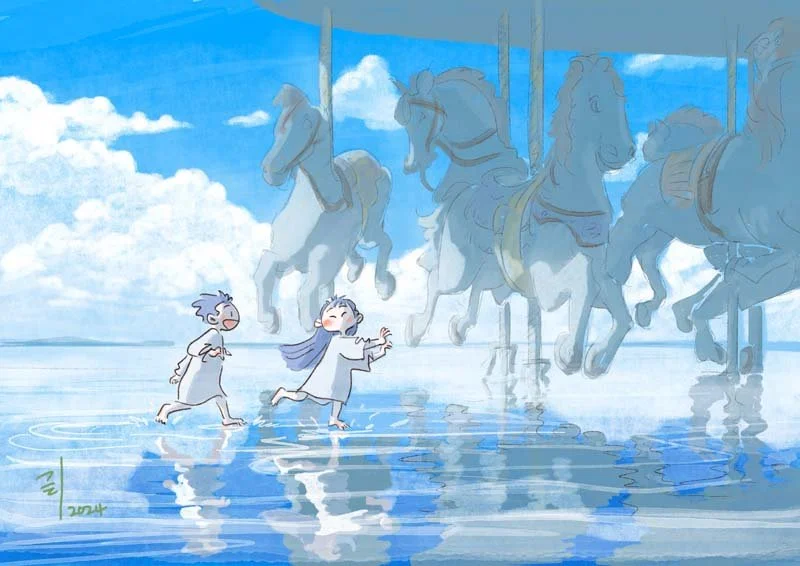


Korea-based artist Hello Gitii on childhood innocence, the warmth of Taiwan, and preserving humanity.
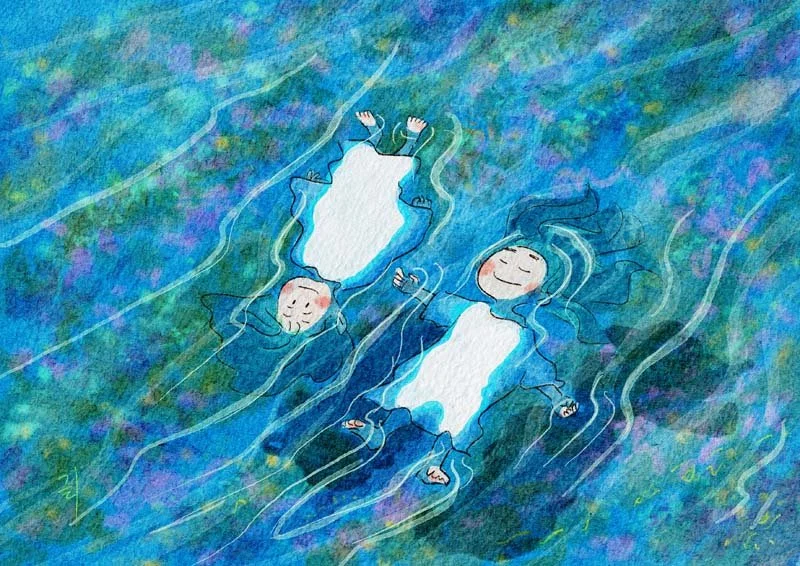
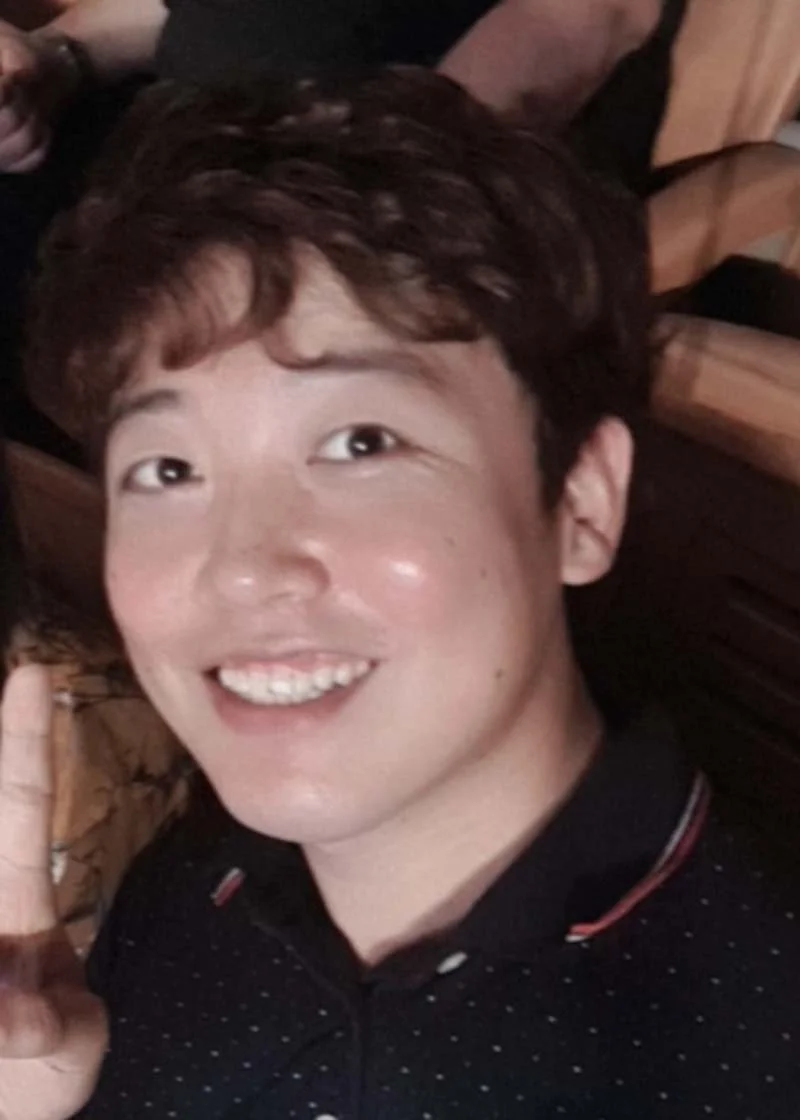
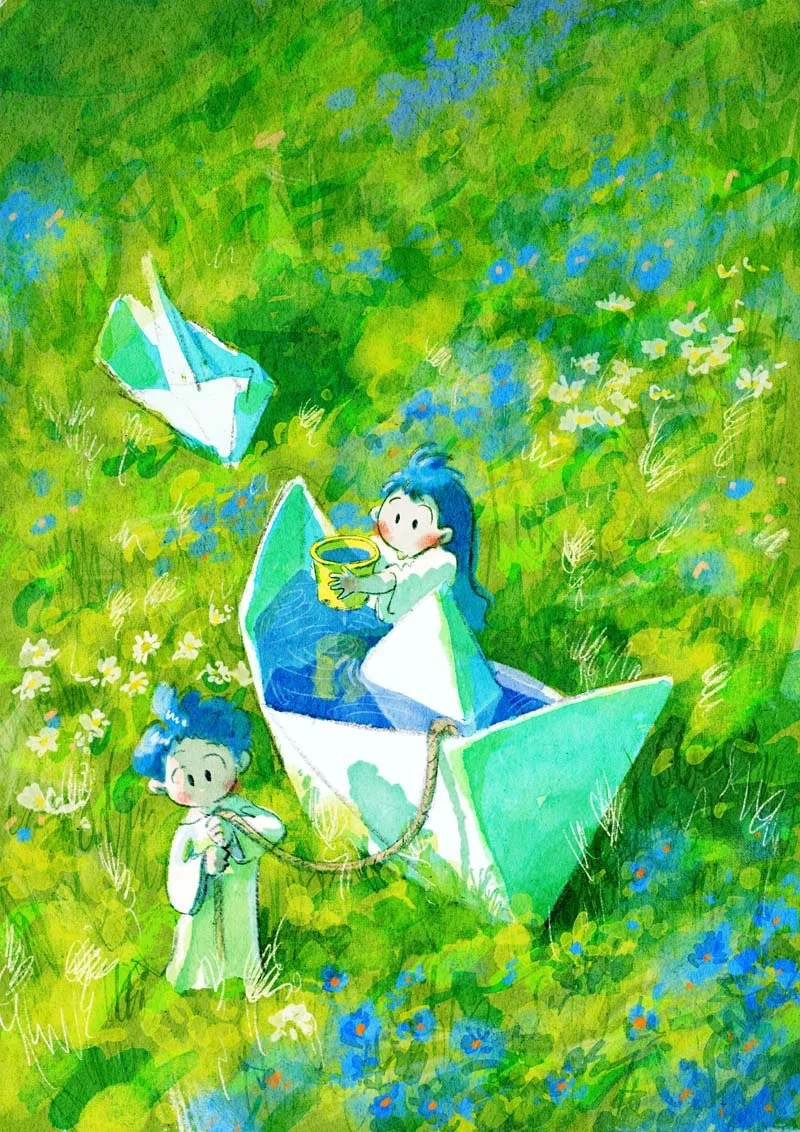
Hello Gitii (Kim Gi Sung) is an illustrator based in Korea and active across Asia. His work draws inspiration from water, urban landscapes, and childhood memories, creating a lyrical and philosophical world. Through delicate depictions of ordinary moments, he hopes to convey the warmth hidden in daily life and invite viewers to reconnect with forgotten innocence and the quiet resonance of their inner selves. @hellogitii
How has your upbringing in Daegu influenced your artistic perspective?
I was born in Daegu, a regional city in Korea. During my childhood, I often stayed at my grandmother’s house because my parents were both working. Unlike the typical image of the city, her home provided me with a different environment, and the time I spent with my grandparents shaped much of my artistic sensibility. Playing in the mountains and climbing trees were brief experiences, but they remain vivid and powerful memories. Whenever I recall those moments, I feel deeply that I was raised in love. Now, as an adult, I often find that the strength of that love helps me endure difficult times in life. Perhaps these memories make up only a small part of my artistic world, but my work is ultimately built within the larger theme of “love.” In that sense, those early experiences are the most important foundation of my artistic journey.
When did you first fall in love with art and realize you wanted to be an artist?
One of my earliest memories is drawing after reading the fairy tale The Ugly Duckling. The image of the young swan soaring into the sky left a deep impression on me as a child. From then on, I felt joy in observing what I found beautiful, drawing it, and trying to render it as vividly as possible. I never really considered doing anything other than art, but as life went on—with the need to earn a living and build a family—I found myself drifting further from the artistic path. While teaching students in Korea, I witnessed the injustices, flaws, and pressures of an overly competitive education system, and I saw how children were being worn down by it. In those moments, I realized that what I could offer was to express “love” through art—planting it in the hearts of those exhausted by life. And I understood that the best way for me to do this was through drawing, the medium I know most intimately. For me, the essence of art is empathy. Through empathy, I explore what people long for and what they seek within the realm of art. It is through this shared empathy that I can convey the energy of love I feel and express, and I believe that sharing this with others is the most important part of my artistic practice.
Describe a typical day in your studio and your most used materials.
My studio is actually my home. At the moment, it’s still difficult for me to maintain a separate studio, so the living room has become my working space. Since I mainly work in digital drawing while also creating watercolor originals, I don’t require a very large space for my materials. The tools I use most are Procreate for digital work and Schmincke supplies for my watercolor paintings.
Tell us about your current watercolor series, Love of Taipei, and the themes driving your work.
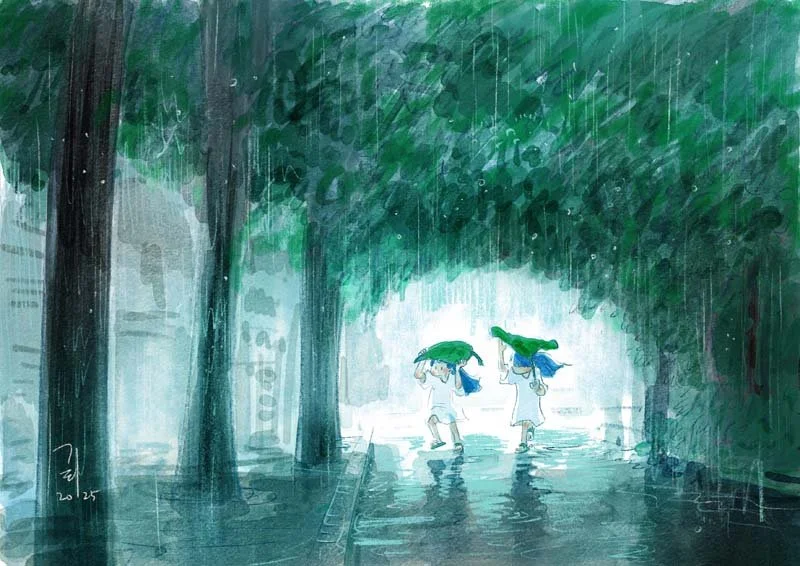
Recently, I have been trying to expand my work to Taiwan. Through several experiences there, I was reminded of feelings I had lost along the way—such as longing for people, love, and a sense of community. Taiwan struck me as a country full of kindness, calmness, and generosity, where impatience is rarely seen in people’s daily lives. It gave me the same warmth I felt in my grandmother’s home when I was a child. Because of this, I am currently working on a watercolor series under the theme Love of Taipei. I am creating an art book that interprets and reimagines the many forms of love I experienced in Taiwan from my own perspective.
When viewers see your work, what emotions do you hope they experience?
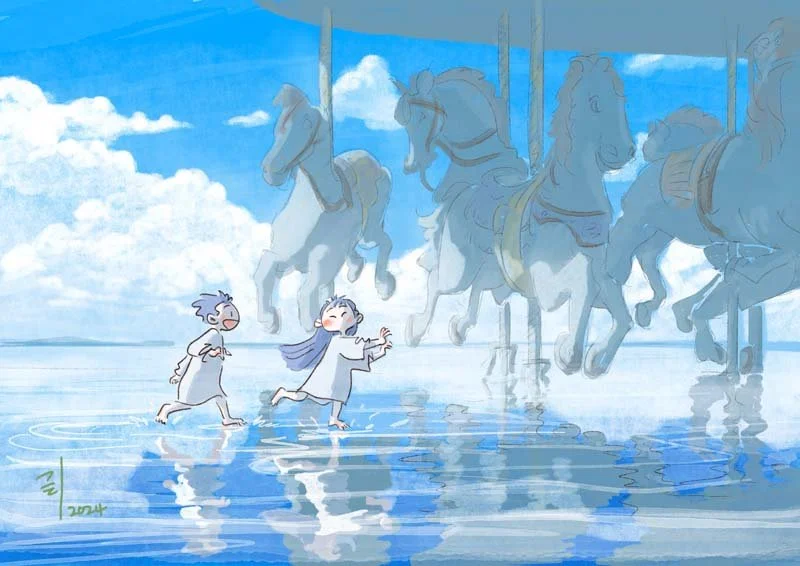
I hope that when people see my work, they can revisit emotions they may have lost or kept hidden in their hearts. While no one’s childhood was filled only with joy, simply returning to that pure state of mind, even for a moment, can give us the strength to overcome present hardships and challenges. Ultimately, I wish for such experiences to open their eyes to the importance of loving themselves.
Which artists, past or present, would you like to meet?
I have long admired Giorgio de Chirico’s Melancholy and Mystery of a Street. The composition, where something beyond the wall seems to quietly gaze at the young girl, evoked in me a profound curiosity about the unseen world beyond. Within the infinite space, objects from entirely different times and places coexist in uneasy tension, creating a strange yet compelling atmosphere. De Chirico arranged these incompatible elements with remarkable subtlety, and I have always admired how his paintings reveal the fragile tension that lies within the seemingly perfect yet unsettling boundaries.
Do you draw inspiration from music, theater, or other disciplines?
I have not yet drawn direct artistic inspiration from fields such as music or dance. However, I have often felt deep emotional resonance through theater. Watching actors deliver their lines with passion, focus, and persistence has given me strength, and I strive to learn from the energy they embody on stage.
What is a great thing about living in Seoul?
Seoul is a city where everything moves quickly. People are dynamic and highly trendy—except for me. I’m someone who prefers a slower pace. While some find it hard to endure the constant rush of change, I see it differently. From a slight distance, these rapid shifts reveal a culture full of excitement and countless things to enjoy.
Can you describe a project that challenged you creatively or emotionally—and how you worked through it?
One of the most challenging projects for me has been my Love of Taipei series. I wanted to capture the warmth and sense of community I experienced in Taiwan, but it was not easy to go beyond simply depicting the scenery and instead express the emotions and the essence of “love” within it. Throughout the process, I had to constantly confront my own inner self, and at times, my emotions even got in the way of the work. Yet, through this struggle, I came to realize once again that the theme of love lies at the heart of my artistic world, and the project ultimately allowed me to understand myself more deeply.
Tell us about the important teachers and mentors in your life.
Throughout my journey as an illustrator, my wife has always been by my side. She is my teacher, my mentor, and my closest collaborator. When I lost my job and went through a period of uncertainty, she gave me strength and kept me motivated, ensuring that the flame within me never went out—through both difficult times and joyful moments. To me, she is not only the greatest reason I continue to live and create, but life itself. Sometimes I think I might be the luckiest man in the world to have married her.
Does being in nature inspire your art or your process?
I believe that experiences in nature, though not always immediately visible, lead to profound and lasting values. Nature itself holds immense power. Many people leave the complexity of the city to seek the quiet of nearby landscapes because, deep down, they are searching for something essential that we have begun to lose. Even something as simple as the sound of rain can become a deep inner journey when you sit alone in the countryside and listen for hours. Though it is only the sound of rain, it allows you to travel inward without disturbance. Watching petals slowly bloom and fall teaches us the truth that growth comes through countless winds and rains. At the same time, seeing plants broken by nature’s harshness reminds us that our own efforts can sometimes be undone by storms beyond our control. Yet within this cycle, the sight of new life emerging offers us an undeniable sense of hope. Ultimately, the more we experience nature, the more we learn empathy, compassion, and the patience to wait. These lessons naturally shape the way we live and practice our daily lives.
What are your reflections on AI and the importance of human agency in creativity?
Many people feel that one of humanity’s most essential domains—the ability to think and act independently—has already been significantly encroached upon by AI. I believe that now is the time to reflect on how we should fill this expanded space of thought, as more of our processes and ways of reasoning are being replaced. History has shown us that technological convenience does not necessarily lead to humanistic progress. The smartphone, among other modern inventions, has already proven this. The vast flood of accessible information can easily become a dangerous tool that discourages deep thinking. What concerns me most is the possibility that people may stop reflecting, cease to share emotions, and lose the very joy of creating something of their own. Humanity has endured because we have never stopped taking steps toward a better future. For this reason, I believe it is essential that we continue to recognize ourselves as the true agents of our actions and dedicate effort to shaping our own lives. And above all, I see the very act of creating—of making something with one’s own hands and mind—as the most vital way to preserve the essence of being human, ensuring we are not overtaken by the advancement of AI. Even if the outcome falls short compared to what AI can produce, we must never lose respect for the act itself and the importance of the creative process.
Exploring ideas, art and the creative process connects me to…
the innocence of my childhood and allows me to share love and empathy with people living in the present.