

How does one find and define contradictions?
Ángela Leyva (b. 1987) is a painter whose practice explores altered bodies through clinical archives and artificial intelligence. Working primarily with oil on linen, she investigates the intersection of technology and tradition, generating spectral portraits that question identity, corporeality, and presence. Her projects include “Bilis Negra,” a long-term series on melancholia and medical imagery, and “Máquinas que sueñan niños,” which merges pediatric clinical datasets with GANs to create hybrid beings “incompatible with human life.” Leyva has exhibited internationally in Mexico, the United States, and Europe, and is co-founder of CROMA, a hybrid art space in Mexico City. @angelaleyvago
How did your formative years contribute to your artistic development?
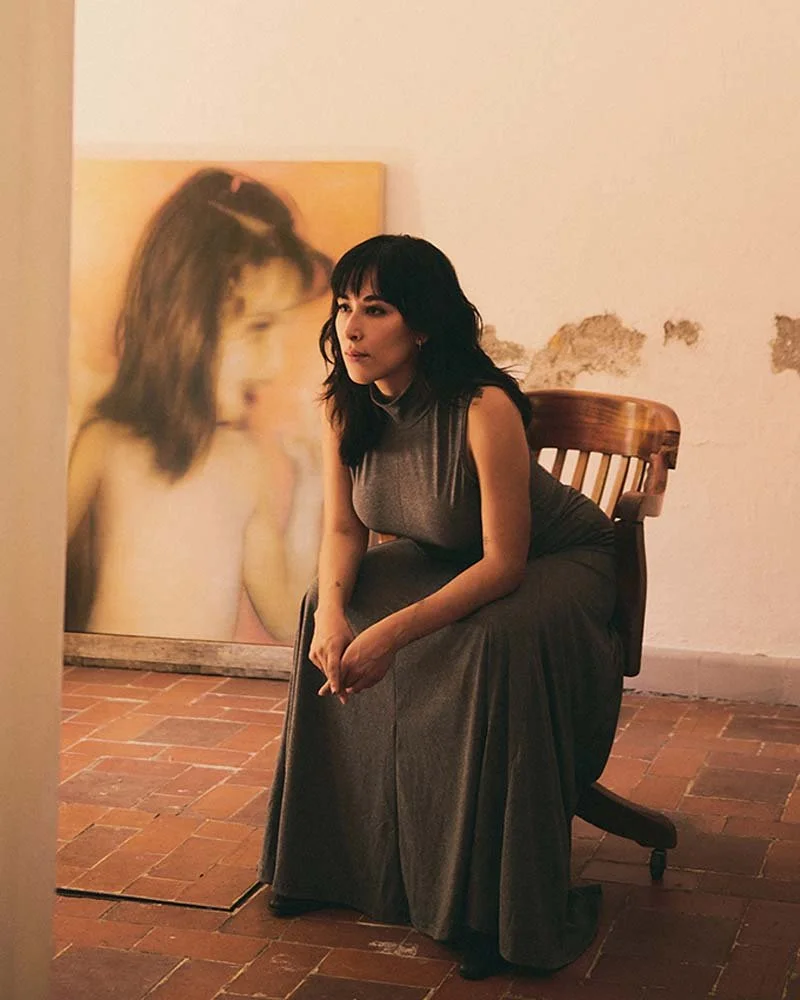
I was born in Mexico City, and spent my early years between Culiacán and the State of Mexico, until in my adolescence I settled permanently in the capital—a place where intensity, chaos, and beauty coexist in every corner. Growing up in such contrasting places—between tradition and modernity, fragility and excess—shaped the way I see the world. However, it was not those tensions that became central to my artistic practice, but rather the experience of growing up with a doctor at home, which instilled in me the impulse to explore altered bodies and the spectral presence of the absence of certain beings.
When did you first fall in love with art and realize you wanted to be an artist? For you, what is the importance of the arts?
I first fell in love with art as a child, when painting became a way to process emotions and make sense of the world around me. Very early on, I realized that creating images allowed me to enter into a different kind of dialogue—one that was not only visual but also emotional and symbolic. Over time, this practice grew into a deeper commitment, and I understood that being an artist was not just a choice but a way of living.
For me, the importance of the arts lies in their ability to reveal what often remains invisible: the fractures, the silences, and the presences that cannot always be expressed through words. Art creates spaces of connection, reflection, and transformation, both for the artist and for the viewer.
What does your typical day in the studio look like? Walk us through your studio and your most-used materials and tools.
A typical day in my studio begins with silence and observation. I spend time looking at the works in progress, allowing them to “speak” before I touch the canvas. My process is slow and meditative, moving between research, sketching, and painting. I work primarily with oil on linen, a medium that allows me to build depth through layers, glazes, and subtle textures.
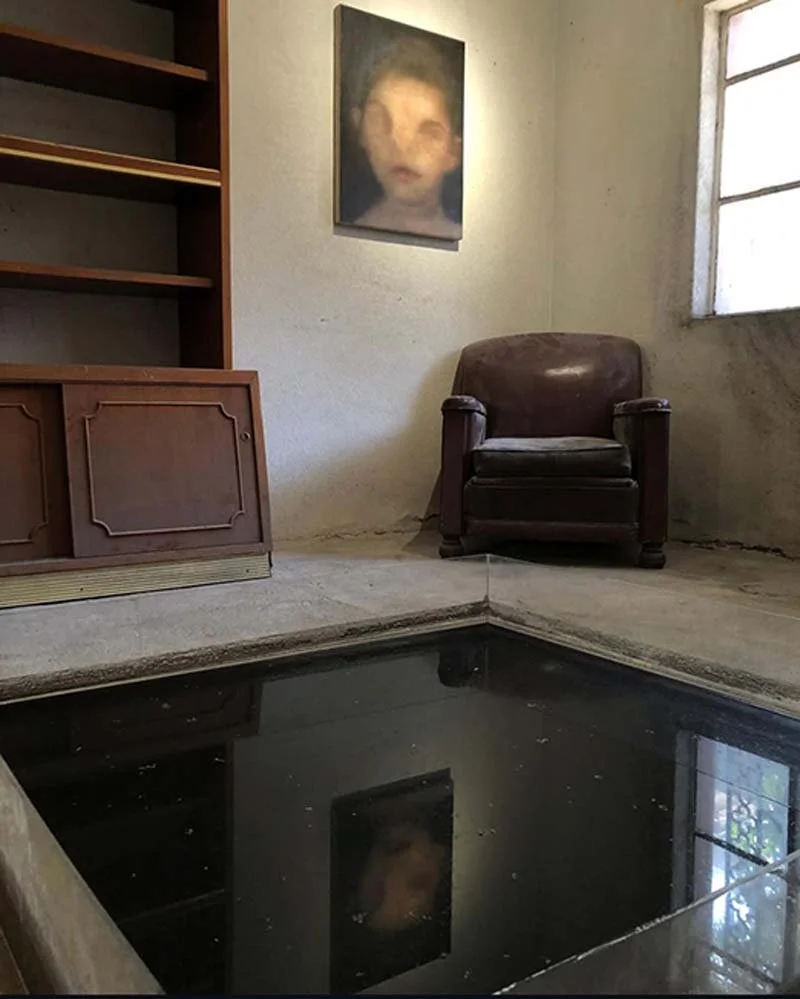
My studio is both a laboratory and a sanctuary: on one side, canvases and pigments; on the other, books, clinical archives, and notes that nourish my research. Brushes, palette knives, and handmade wooden frames are among my most essential tools. It is a space where the technical and the poetic coexist, and where painting becomes an invocation.
Can you share details about your latest artistic endeavors?
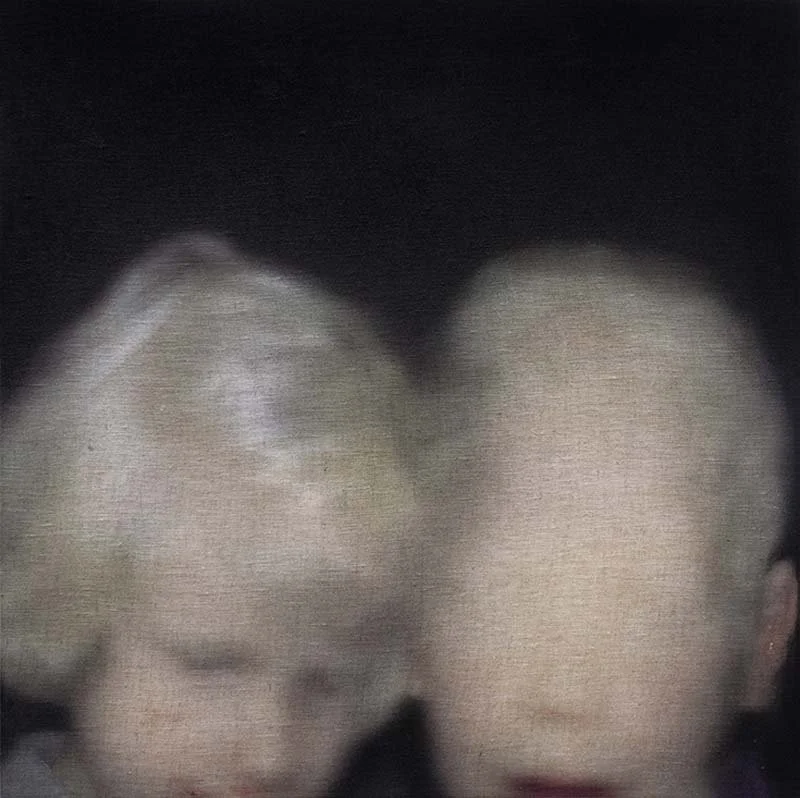
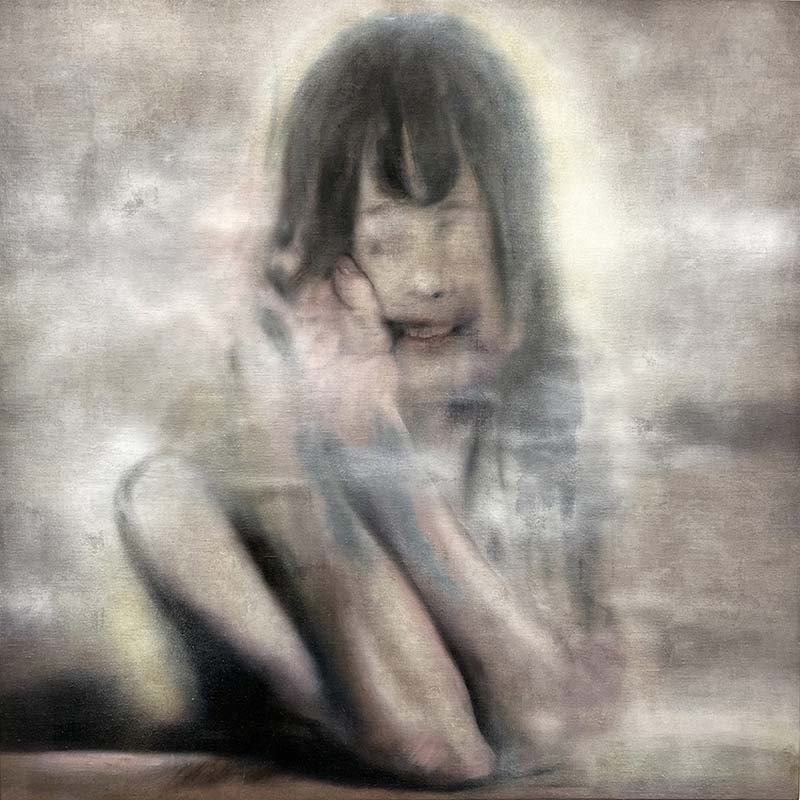
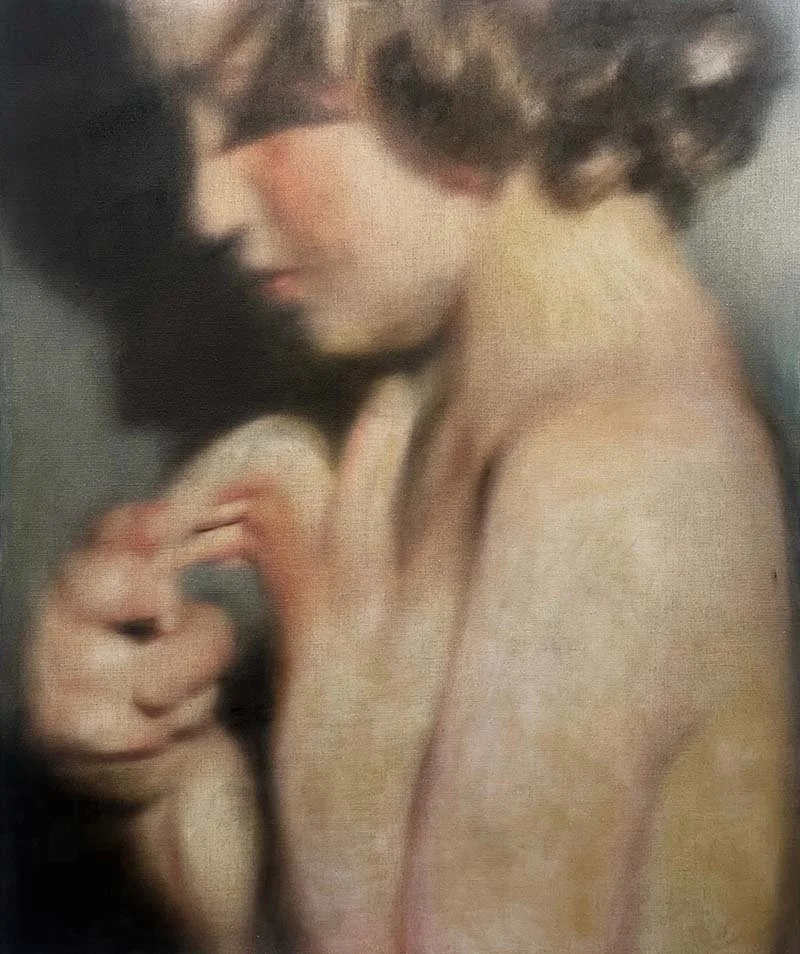
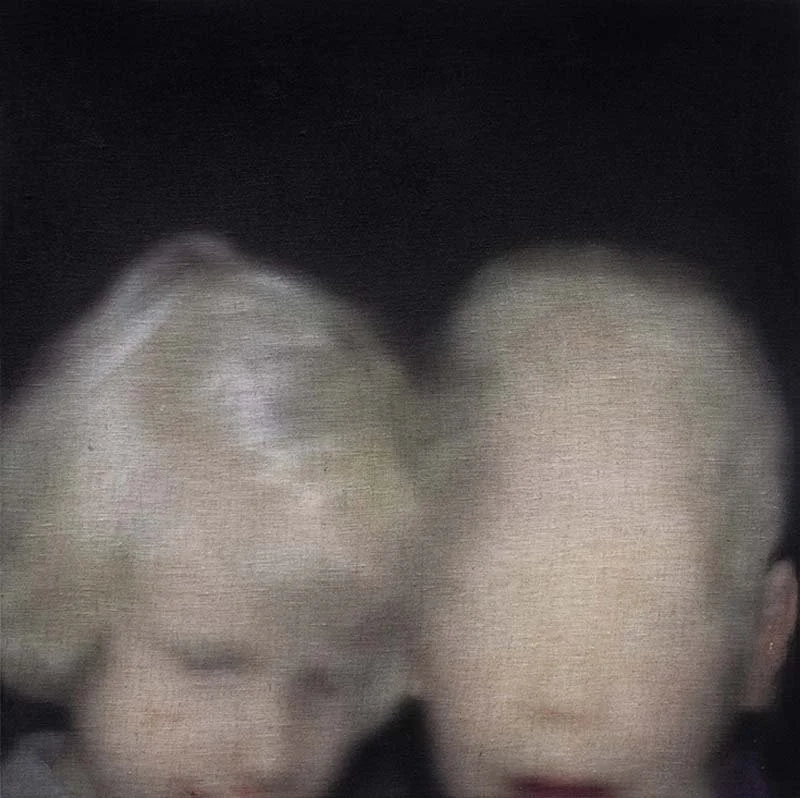
At the moment, I am working on a project titled “Máquinas que sueñan niños (Machines That Dream Children),” which emerged as an evolution of my earlier series Bilis Negra (Black Bile). While “Bilis Negra” explored melancholia and clinical portraiture through oil painting, “Máquinas que sueñan niños” expands this research by incorporating artificial intelligence. For this project, GANs were trained with two archives: one of clinical portraits of pediatric patients with congenital conditions and another of my own painted portraits.
The machine generated a series of hybrid beings “incompatible with human life,” which I have been using as sketches and, in many cases, translating into oil on linen. The themes driving this work are presence and absence, the spectral traces of bodies, and the tension between technology and painting as a way of questioning identity, fragility, and the incorporeal.
What do you hope people feel when they experience your art? What are you trying to express?
When people experience my work, I hope they feel a sense of presence that goes beyond the visible image—an encounter with something fragile, spectral, and incorporeal. My paintings are not about restoring identities or offering fixed portraits, but about evoking what is absent, fragmented, or impossible.
What I try to express is the tension between life and non-life, the liminal space where technology and painting overlap. I want the viewer to sense both the intimacy of the human body and the impossibility of fully grasping it, as if standing before a trace or apparition that resists being contained.
If you could sit down with any artist from history or today, who would it be? Why?
From the past, I would like to meet Francisco de Goya, because of the way he confronted the human condition through painting, revealing its darkness, fragility, and contradictions. His work resonates deeply with my own interest in altered bodies and the spectral presence of absence.
From the present, I would like to meet Marlene Dumas, whose portraits transform intimacy and vulnerability into powerful images that blur the line between figuration and abstraction. I admire how her work reveals psychological depth and ambiguity, something I also seek in my own exploration of painting.
Do you draw inspiration from music, art, or other disciplines?
Yes, I often draw inspiration from other disciplines. Literature and philosophy are especially important to my work—writers like Philip K. Dick, Georges Didi-Huberman, or Donna Haraway have influenced the way I think about presence, absence, and the relationship between humans and technology. I also look to medical archives and scientific research, which I reinterpret through painting, transforming clinical documentation into spectral imagery.
Music plays a role too, often as an atmosphere that accompanies my long hours in the studio, helping me to sustain the rhythm of painting. These interdisciplinary sources expand my practice beyond the visual and anchor it in broader cultural and existential questions.
A great thing about living in Mexico City is…
A great thing about living in Mexico City is the intensity and diversity that coexist here. The city is full of contrasts that constantly feed my imagination… and also my cortisol, haha. There is also a vibrant artistic community that creates opportunities for dialogue, collaboration, and growth. Living here means being surrounded by layered histories and energies that inevitably filter into my work.
Can you describe a project that challenged you creatively or emotionally—and how you worked through it?
One of the most challenging projects for me has been “Máquinas que sueñan niños (Machines That Dream Children).” It demanded a lot from me, both creatively and emotionally, because it forced me to rethink the way I approach portraiture. Training GANs with clinical and pictorial archives produced images that were fragmented, spectral, and often unsettling. Translating these results into painting led me to abandon certain habits and discover new ways of representing the body.
The process was also technically demanding: I tried to learn programming, but didn’t really succeed, and at first it felt intimidating. That is why I am very grateful to the artist Fabiola Larios, who supported me with the technical aspects of training the models. Thanks to this collaboration, the project became not only a creative breakthrough but also an expansion of my practice into territories I had never imagined
Tell us about important teachers/mentors/collaborators in your life.
Throughout my trajectory as a student and artist, I have been fortunate to learn from many inspiring teachers and mentors. During my formative years, figures such as Gilberto Acebes Navarro, Patricia Soriano, and González Casanova played an important role in shaping my artistic sensibility and discipline. Their guidance not only gave me technical foundations but also encouraged me to question, reflect, and build my own voice.
Equally important are my peers—both the older generation and the younger artists I collaborate with today. I believe that dialogue with colleagues is an ongoing form of mentorship. They are constantly teaching me through their perspectives, practices, and ways of inhabiting the world. For me, community and collaboration have always been as essential as formal education in sustaining an artistic life.
Sustainability in the art world is an important issue. Can you share a memory or reflection about the beauty and wonder of the natural world? Does being in nature inspire your art or your process?
Sustainability is, without a doubt, an important issue, and for me, the natural world has always been a source of beauty and reflection. I remember spending time in vacant lots, which, although not exactly “nature” in the strict sense, represented an in-between state within the city. There, the grasses, the crickets, and the smell of weeds gave me a sense of freedom and a childhood-like reverie. These encounters with what I call the intermediate natural remind me of the constant transformation of spaces.
Although my practice does not directly deal with landscapes, living with these environments somehow inspires my process, showing me cycles and the coexistence of life and decay. I see painting as a way of translating those lessons into another kind of presence—one that speaks of impermanence and resilience.
AI is changing everything - the way we see the world, creativity, art, our ideas of beauty and the way we communicate with each other and our imaginations. What are your reflections about AI and technology? What is the importance of human art and handmade creative works over industrialized creative practices?
Artificial intelligence is transforming the way we create and imagine, and in my work, I do not see it as a replacement for human creativity, but as a tool that can expand it. Training GANs has allowed me to generate hybrid beings that could not exist otherwise at the level of the image, opening a space for new questions about identity, fragility, and what it means to be human. Technology challenges us to rethink beauty, presence, and representation, but it also confronts us with ethical questions—especially when working with clinical archives or sensitive materials.
For me, the importance of human art and handmade creative works lies in their embodied presence. A painting, with its materiality and the traces of gesture, carries something irreducible that no industrialized practice can replicate. The hand introduces vulnerability, error, and emotion—qualities that anchor art in human experience. Technology can open new possibilities, but it is in the dialogue between the machine and the human hand where I find the meaning of my practice.
Exploring ideas, art and the creative process connects me to…
the invisible layers of existence—to absence, fragility, and the spectral presences that inhabit the human condition. It also connects me to others, creating spaces of dialogue and resonance where painting becomes a shared threshold between the intimate and the collective.