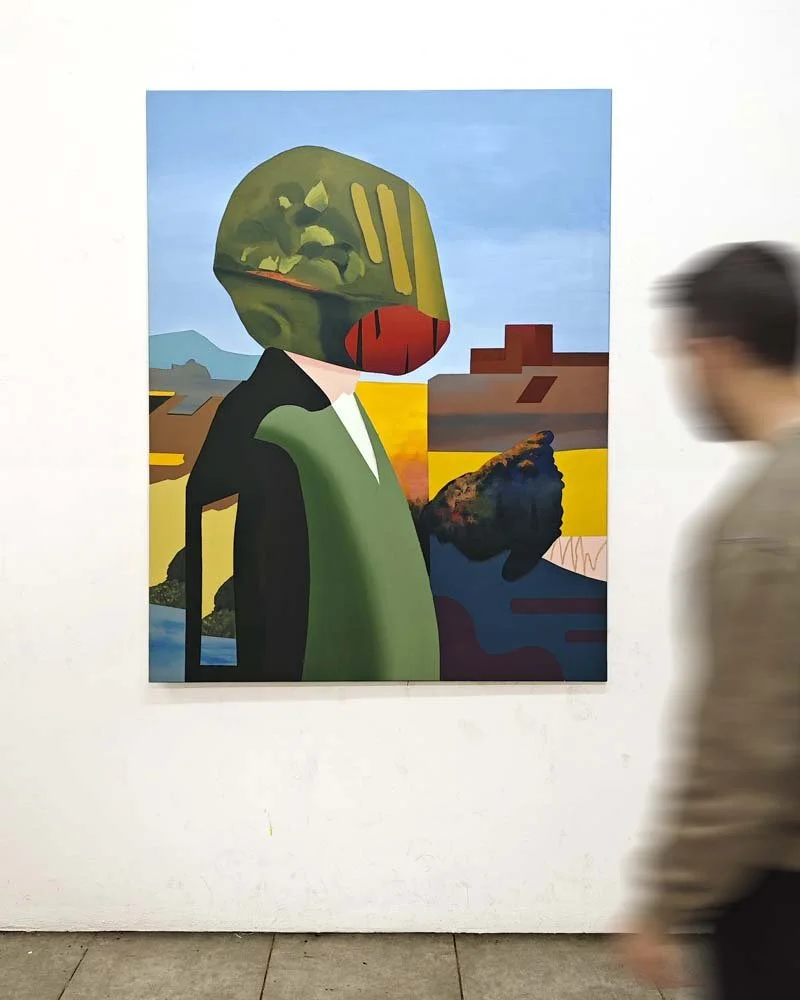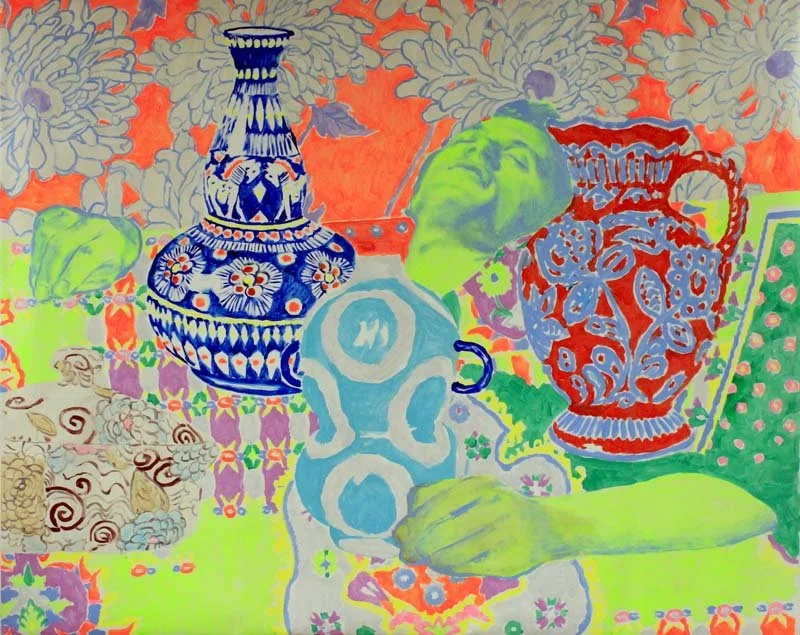


Rhineland-based artist Martin Stommel on the context of art.
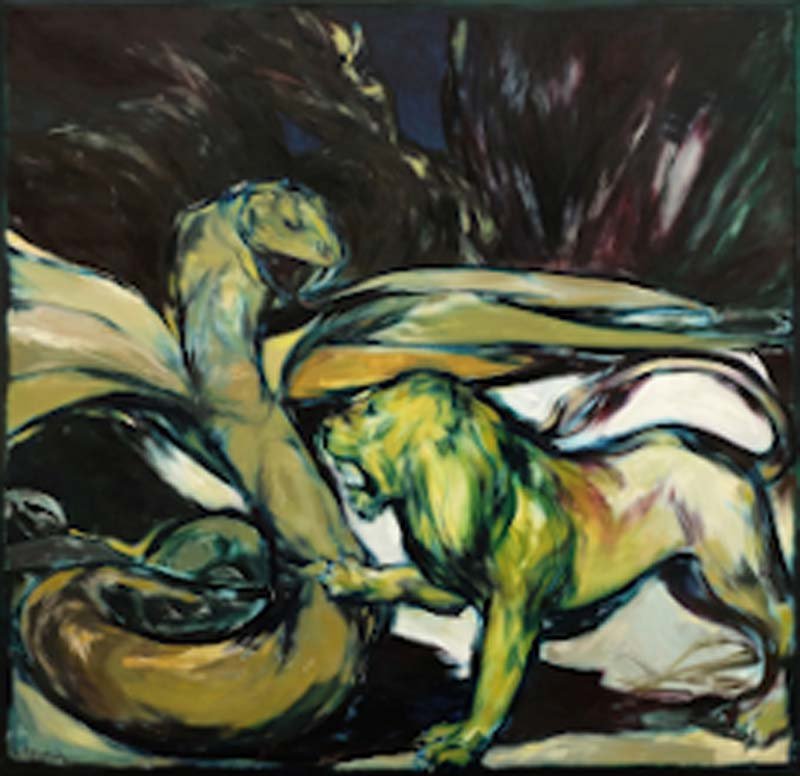
Martin Stommel is a painter from Rhineland, who studied at the Academies of Munich and Berlin (UdK) in the 90s and began soon to take up mythological motifs, illustrated Dante and, especially in
the 2000s, occupied himself intensively with ancient writings and modern art theory. His works have been featured in exhibitions mainly in Germany, but also in Austria, France, Italy, Albania, and Mexico. @martinstommel
Where were you born and raised? How did it influence your art and your thinking about the world?
I was born in Bonn, the former capital of Germany. This is where the romantic district of the river Rhine begins, a rich landscape of forests and little mountains. I think this place, right in the middle of Europe, and its history has formed my joy for the visual, and likewise that for philosophy and literature.
When did you first fall in love with art and realize you wanted to be an artist? For you, what is the importance of the arts?
I doubt if it's possible to fall in love with the arts. Art is an expression of life, and we can only "fall" in love with something that wasn't always there. So, in case it happened to me, it must have happened over a long period and unconsciously.
To see the very special or important in the arts, I'd rather start with the very special of life. Which is, plainly speaking, the incredible fact that one day we'll all be gone. All of our dearest wishes and interest is to let something remain, and to look after the remaining signs of life of those who lived. Now I think everything that we do leaves these signs. But the more practical, useful context they have, the less personal they might be. In an artwork, you could probably get to the very core of a human being, not only the full energy of his longing for expression, but eventually even the capacity to fulfill it.
What does your typical day in the studio look like? Walk us through your studio and your most-used materials and tools.
My studio is actually like a tower, you remember that pejorative word of the ivory tower... honestly, I'm in it. Sometimes I work from morning till night, but it also happens that I do nothing. This second version seems to me even more productive. My tools, my paints, for example, are a bit like good friends and I love to see them doing and talking what they are accustomed to. But there are other days I'd like to throw them out of the window.
What projects are you at work on at the moment? And what themes or ideas are currently driving your work?
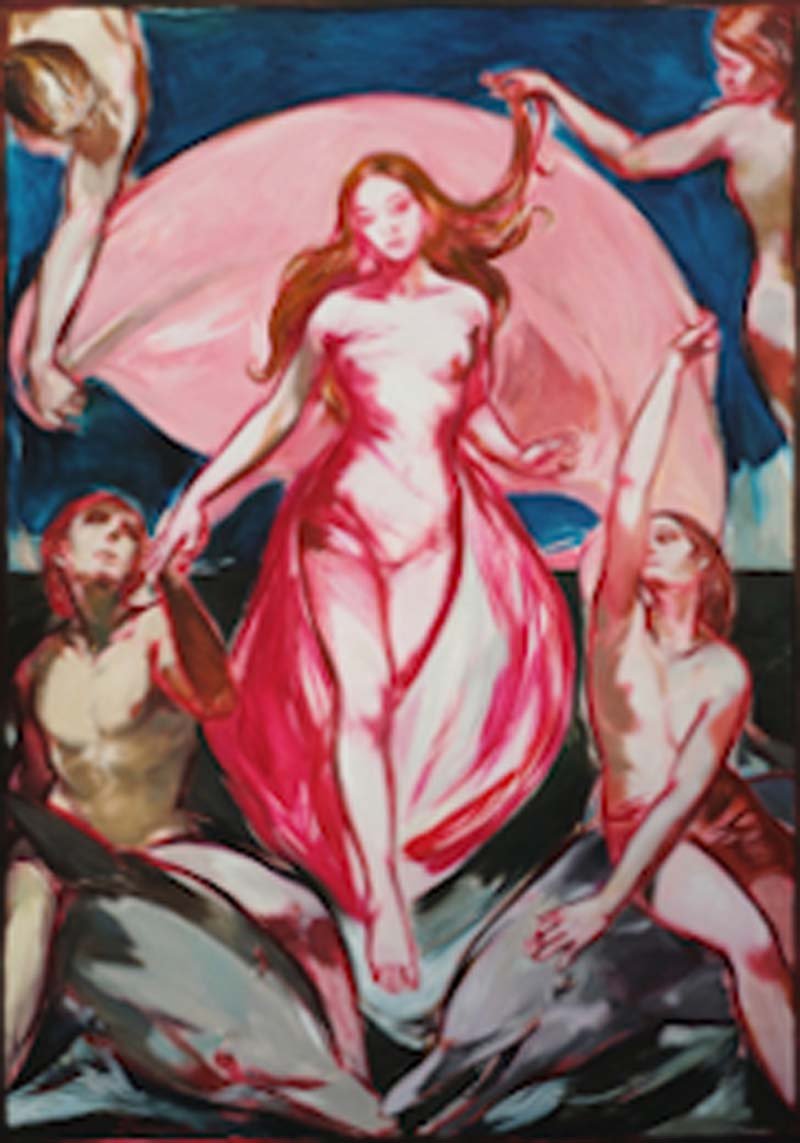
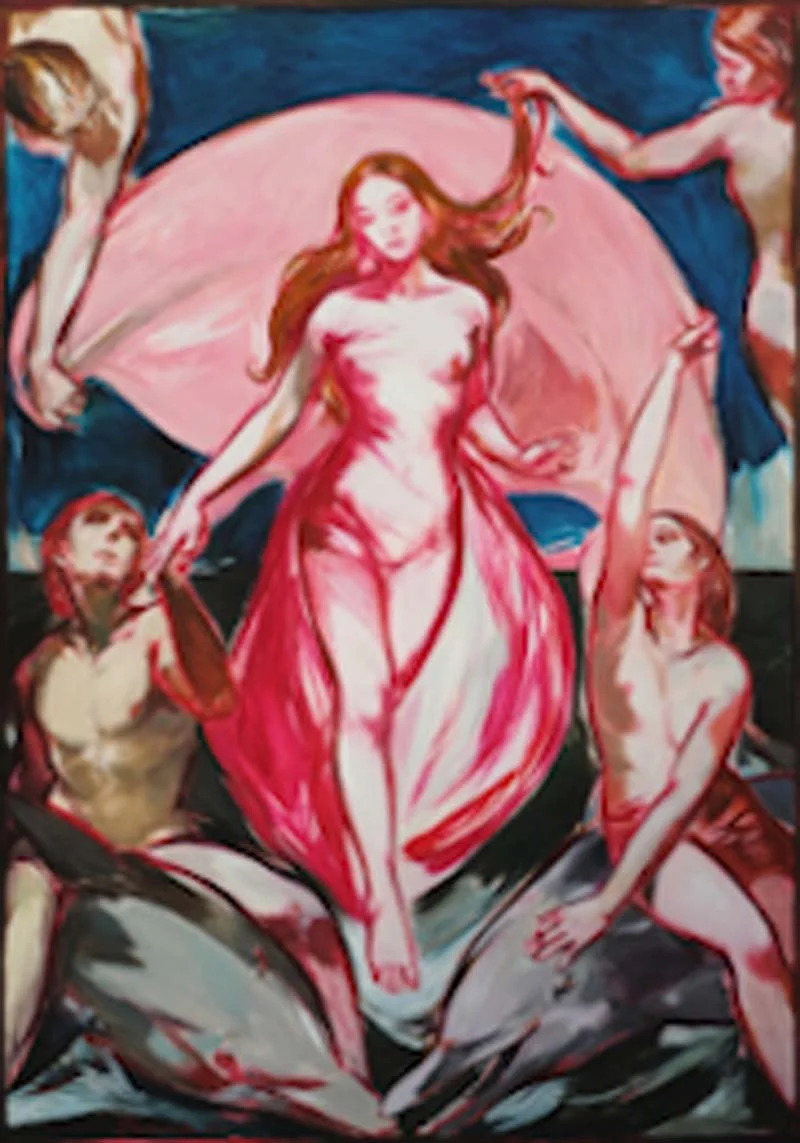
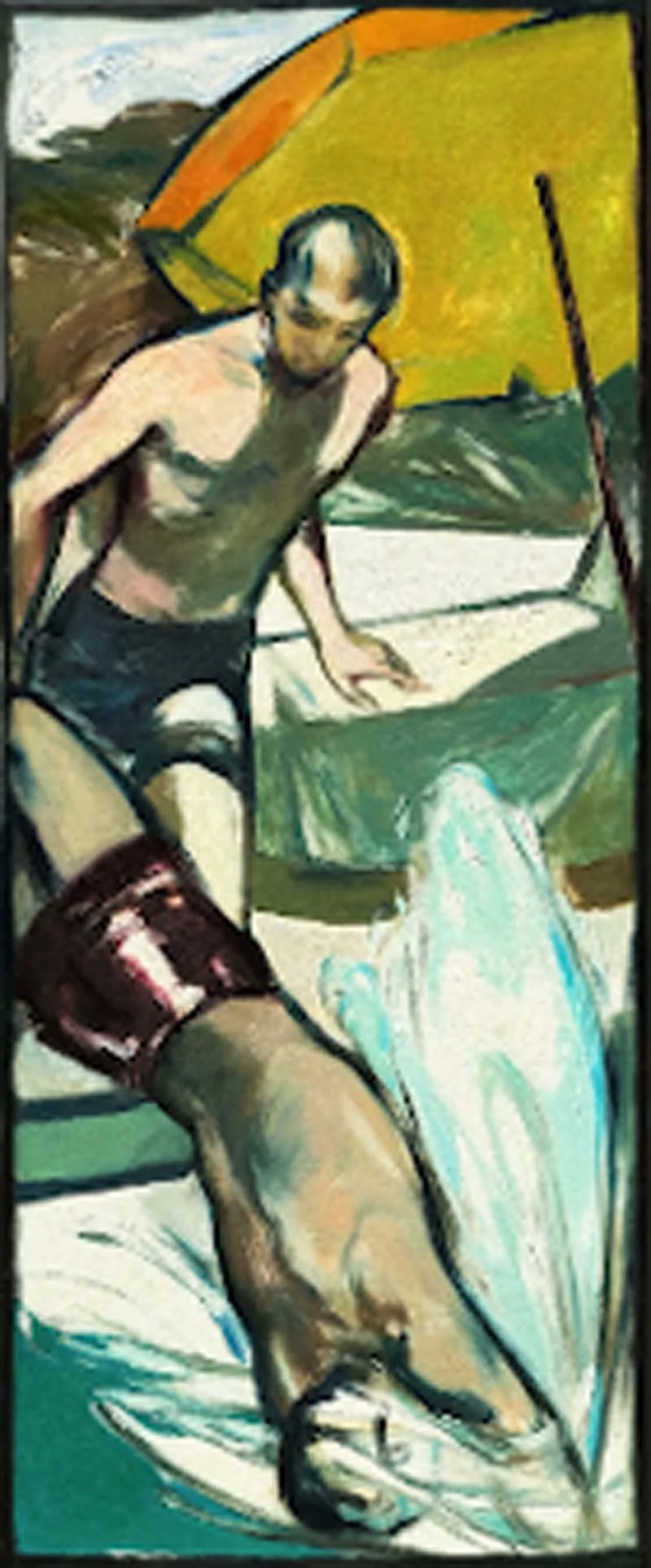
In my work, there are always about 20 or 30 projects, I guess. They mix up in various forms. A project may end for some years and suddenly returns into the general process. So I already painted works that took me 20 years and a lot of studies and other paintings to get to it. Every painting is bound to others; nobody's alone. At the moment, I work frequently on the theme of water and bathers. This refers to nature itself, to regeneration, conquest, and loss, yet to mythological and biblical ideas.
What do you hope people feel when they experience your art? What are you trying to express?
What is expressed and why, this is a very natural question, but also a general one, in the sense that everybody, the visitors, the critic, and the artist himself consider this over and over. In the hours of creation, all considerations are like little springs that enter a river, which flows for a long time. So I, as an artist, cannot answer but only sit and watch and try to understand, the same way, like everybody else.
With respect to the viewer, I hope that she (or he) recognizes that the work was done for her. Not in a general meaning - actually for her alone, for all that is singular in her.
Which artists, past or present, would you like to meet? And why?
Makes me smile, so many I'd like to meet, I love to meet colleagues. If the question aims at my adoration, it's also far too many to tell. Picking out one at least, I say Jacopo Robusti, "Tintoretto".
Do you draw inspiration from music, art, or other disciplines?
A lot. Especially from opera! It has always been a dim, hard-to-rationalize vision for me to make painting like opera.
A great thing about living in my city/town is…
I live in a little suburban part of Bonn, a medium-sized town, which is one of the oldest in Germany. I already mentioned the natural surroundings, the river Rhine, and so on. I appreciate Goethes word of the rather little places that give you a clearer perspective on what you really need.
Can you describe a project that challenged you creatively or emotionally—and how you worked through it?
Once I worked on a big wall painting, don't know exactly, but it was huge. One owner of the house frequently questioned and discussed critically any detail of my progress. We have, in German, the expression for someone who is annoyed by little things; we say he's bothered by a fly on the wall. So I painted in one part a little realistic fly just for him. He found it immediately.
Tell us about important teachers/mentors/collaborators in your life.
My most important teacher was the Russian painter Boris Birger. His wonderful eyes were light and incorrupt, and I wished he were still alive. A woman who taught me a lot and impressed me with her courageous and straight energy was the well-known gallerist and collector Charlotte Zander. And I should add the famous Ernst Gombrich, whom I got acquainted with when he was aged, and whose works have often led my own thoughts.
Sustainability in the art world is an important issue. Can you share a memory or reflection about the beauty and wonder of the natural world? Does being in nature inspire your art or your process?
We are a part of nature and, at the same time, we can encounter her. I'm sure she's full of need and ambition, but she's friendly. The more we're in contact with nature, the friendlier we become. If an artist has in any form the idea of his work being a process of learning, he gonna find no other source for that than in nature.
AI is changing everything - the way we see the world, creativity, art, our ideas of beauty and the way we communicate with each other and our imaginations. What are your reflections about AI and technology? What is the importance of human art and handmade creative works over industrialized creative practices?
As for AI, all that I already said certainly gives an idea of my opinion. A machine cannot contribute anything to the expression of life, as it cannot live, grow, or die. Every time we use machines for our expression, it diminishes their completeness. The true thing of an expression is not the content of the expression, but the message about the living and feeling person who gives it. So, AI doesn't change anything in my point of view. When a race is not interesting, it doesn't get more interesting when it's faster.
Exploring ideas, art, and the creative process connects me to…
everything.