

New York-based artist Shangkai Kevin Yu on reflection, connection, and isolation.
Shangkai Kevin Yu is an artist living and working in New York. Yu earned his BFA at Parsons School of Design and MFA at New York Academy of Art. He has participated in residencies with the Leipzig International Art Programme in Germany. His work has been exhibited throughout the US, as well as Germany and Denmark. @shangkaikevinyu
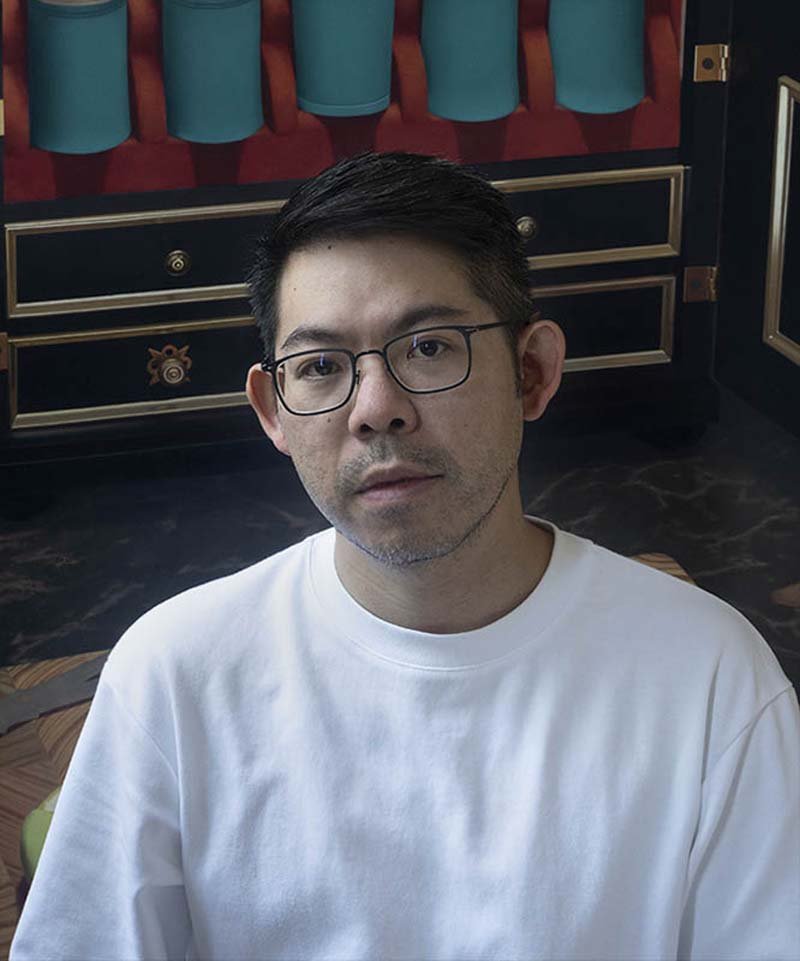
You were born and raised in Taiwan. How did your upbringing there influence your artistic perspective?
I was born and raised in Taiwan. Even though I didn't know why at the time, I knew I had to leave home and go abroad. And when the idea was floated around when I was 15, I decided as soon as I heard it that I was going to leave. Taiwan felt small to me, and there were things I wanted to learn that weren't available to me. My thinking about the world and the influence on my work come from my core and mentality of being a traveler - to have any thoughts about the world I had to leave and go to the world.
How did your early experiences with painting and drawing ignite your passion for art?
I am not sure if I would use the word "love" on my relationship with art, it’s more of a necessity to me. When I was a kid, I experienced painting, drawing, multimedia in extra curricular lessons; art felt boundless to me when it comes to the things I could learn and explore. I knew I wanted to be an artist, especially a painter, by the time I was 14. My problem was that I was not naturally good at drawing; I had in my head what I wanted to achieve, but because there was nowhere to acquire the necessary skills in Taiwan, I attempted to teach myself - it didn't work, so I knew then I had to leave home to pursue an art education. The importance of art to me is the exploration of endless strategies, to convey essentially the same things we have been trying to communicate and relate to each other since the very beginning - the kaleidoscopic feelings and stories of our lives, our views of love, hatred, sex, violence, betrayal, happiness, loneliness etc. And every great work of art adds to the texture of these things we all experience. As a painter myself, what fascinates me the most is specifically those strategies artists have discovered - strategies that come from their critical minds to communicate their thoughts, that could potentially be used elsewhere.
Describe a typical day in your studio and the materials you use.
A typical studio day for me is just that, pretty typical - sitting in the studio with tea or coffee in the morning for a little bit to think about which painting and what area to work on for the day, and then I get to work. My medium is oil paint, and depending on the needs of the particular paintings, I would sometimes mix in alkyd mediums, cold wax, and marble dust to the paint. In terms of brushes, I go for quantity not quality - I’ve found that most of the time low end brushes meet my painting needs perfectly well.
Can you discuss the ideas behind your upcoming solo show with Future Gallery in Berlin?
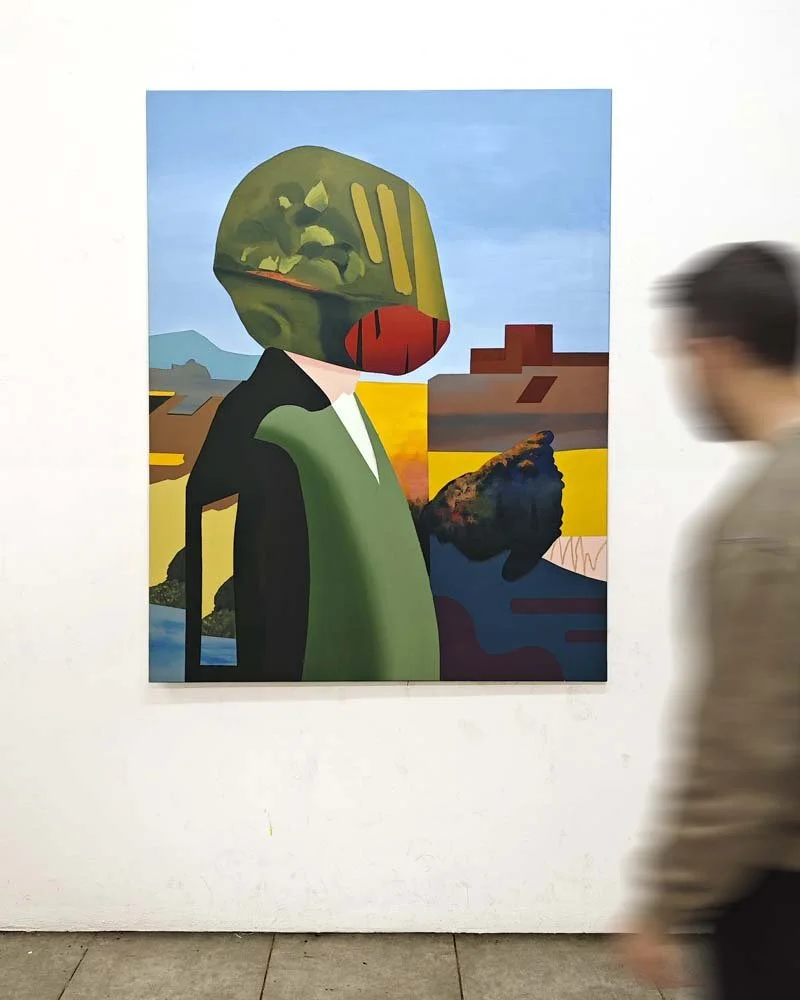
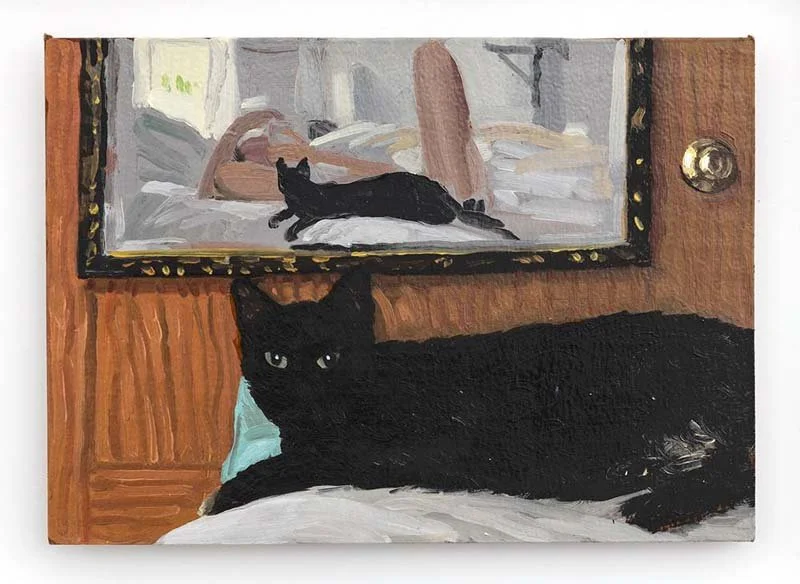
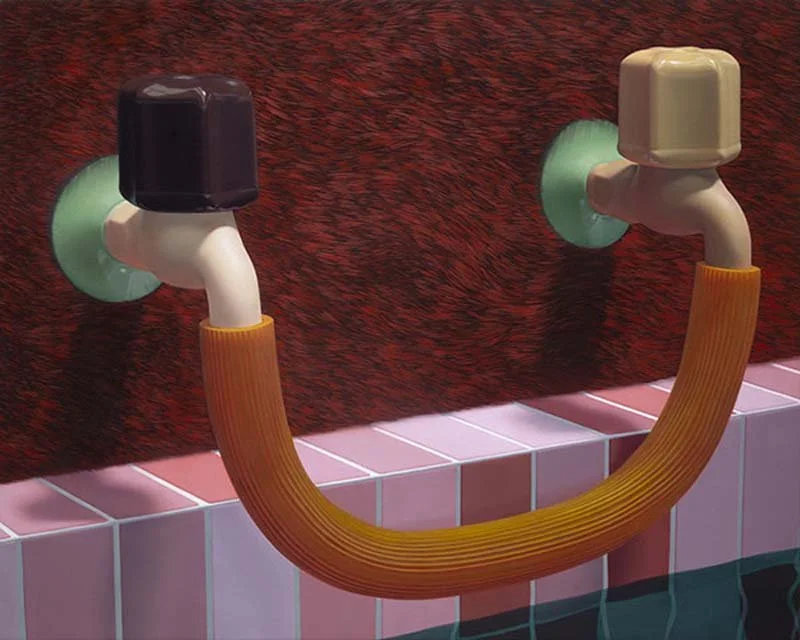
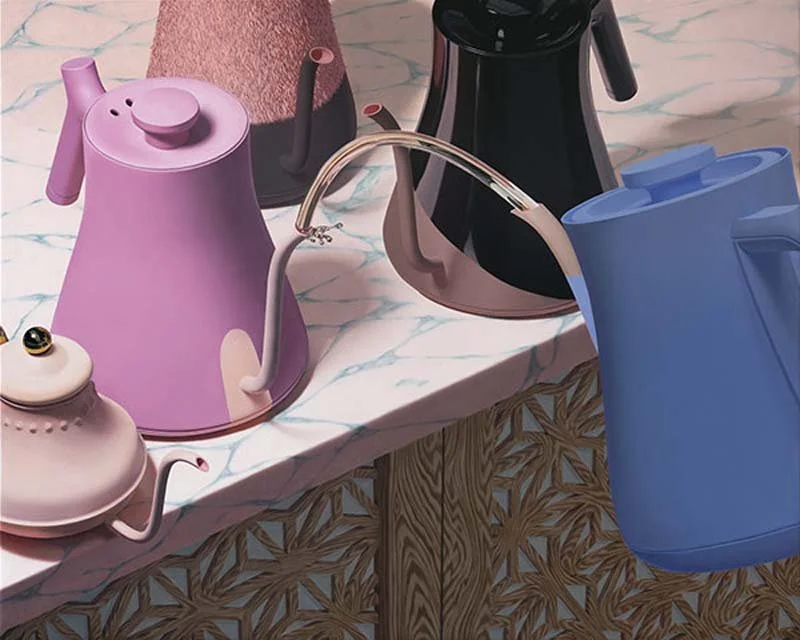
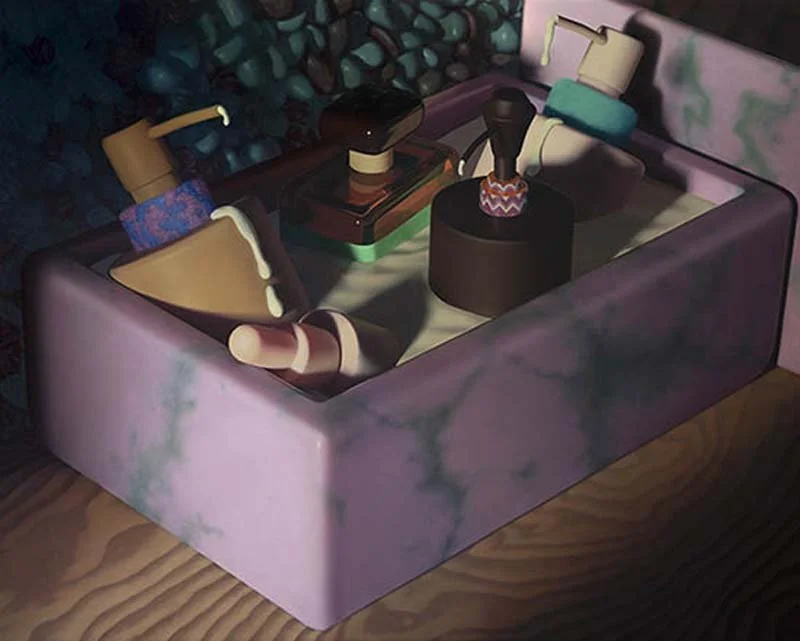
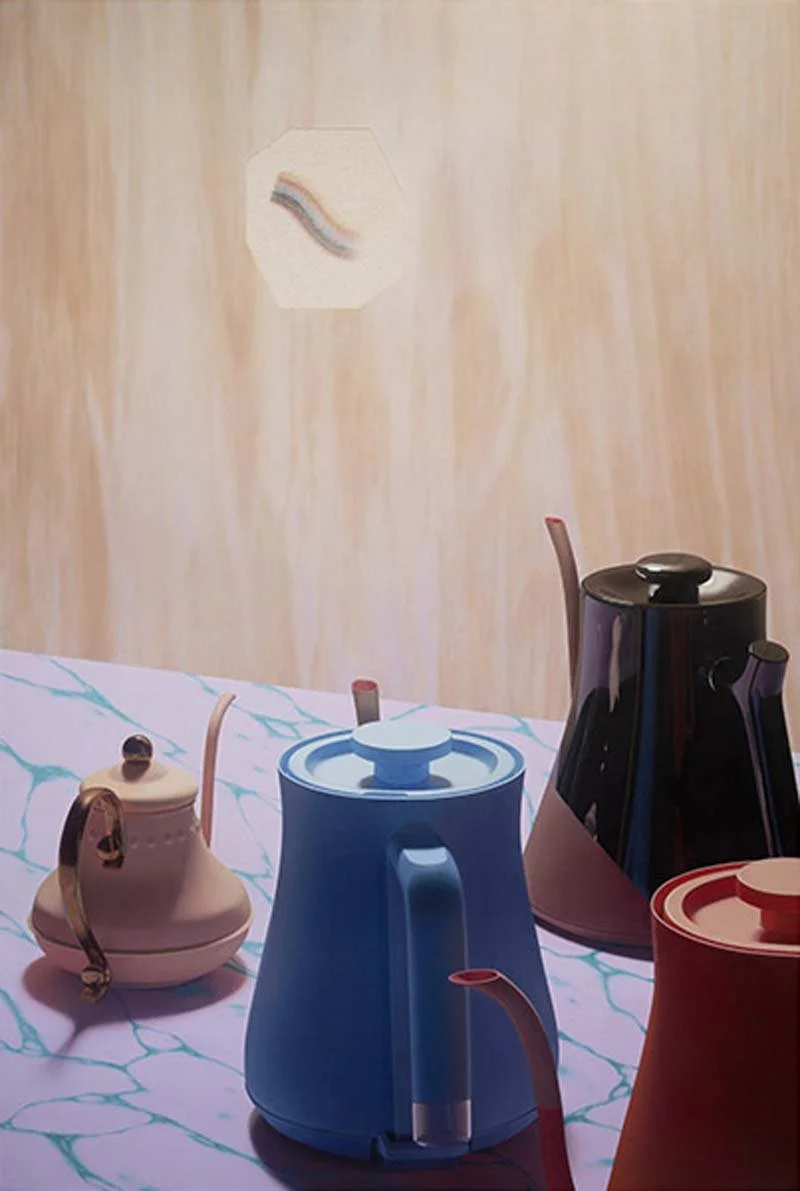
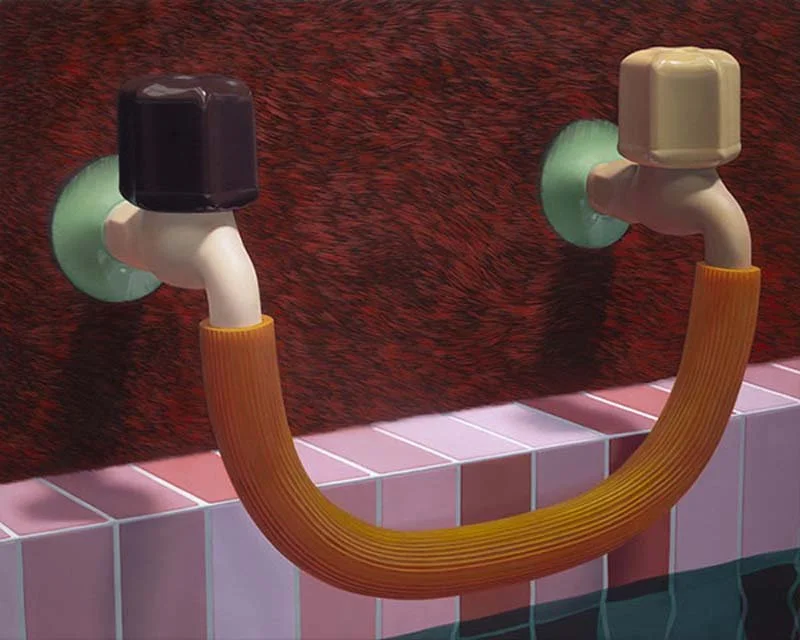
I am currently working on my third solo show with Future Gallery in Berlin that’s scheduled for next year. I prefer the freedom of forming a group of work naturally, instead of having a clear project fleshed out in the beginning, which is too rigid a frame to make work under. The core idea that has been central to my work for the past couple years is reflection, of the world, of ourselves, through the use of objects as stand-ins for the figures, for us. Though I am just in the beginning stages of this particular solo project, I could already see that the main theme is about connection and isolation.
When viewers experience your work, what message or emotion are you aiming to evoke?
I would hope people spend enough time with the work in person, to enjoy the haptics of paint handling, and beyond that, to see the humor and humanity in the work. I usually don’t like to be too specific when asked what my work is about. An important part of the work is actually the interactions it has with whoever views it, which completes the work - this part is one where I believe is beyond the artists’ control. I feel that an artist explaining in too great a detail about how their work should be read could potentially taint the real and authentic reactions viewers have with the work. Viewers should have the opportunity to form their opinions and thoughts first, before any supplemental texts or ideas are provided to them.
Is there an artist whose work you find especially instructive or meaningful?
This is a hard question to me. I am not sure there’s any artists I would particularly like to meet, past or present. I believe the work is a crystalized form of the artist’s thoughts and goals, and it is revealing enough if we know how to read it. While this is impossible when it comes to artists in the past, I would say I love meeting any artists working right now when our paths cross naturally somehow. There is always something to exchange with any artist on a technical level regardless of the material, and of course on a mental and human level.
How does your appreciation for religious paintings or historical strategies influence your practice?
I draw most of my inspiration from other artwork and the objects in my surroundings. I really enjoy exploring how much of the content hinges on the more invisible formal structure and strategies, which I love to analyze in works by artists of any discipline past and present, rather than the overt representation of the work. One example of such direct pictorial strategy I’ve drawn on is from the religious paintings by Jan van Eyck. The objects in my daily life, often with their accidental placements, become the protagonists in my work.
What does the environment of New York offer that fuels your art?
I think the word ‘accessibility’ best describes what living in New York is like. It is a city where the history and identity are made up of the multiplicity of cultures. To an artist, it’s akin to living in the biggest library in the world, where no matter how seemingly unique and scarce the subject matter you’re interested in, there are always at least a few books written about it.
How have your various teachers and mentors influenced your development as an artist?
In terms of teachers and mentors, there are simply too many to name, and I don’t think it would be fair if I forgot anyone while attempting to list all of them! I have at least one or more mentors/teachers on all the little facets of my artistic practice. I have one for drawing fundamentals, a couple for sculpting, quite a few for painting, and a ton on theories and how to approach creating and viewing work, and almost all of them have helped me understand what it takes to continue to make work and how to navigate the art world by generously sharing their own stories and experiences. I’m pretty sure there are quite a few of my teachers and mentors who are quite unaware how much they’ve influenced and helped me.
Can you share a reflection about the beauty of the natural world and how it relates to your work?
It is a very important issue, but I would say there is no direct link between ideas of sustainability in a literal sense and my work, which is more about the exploration of human interactions and thoughts. My work is mostly about seeing the human in the things we make, and my experience and love of nature is about the feeling of connection to all the living things around me that have their own purpose and goals. One of my favorite experiences in nature was simply laying down on a gentle hill covered in moss, looking at the Icelandic landscape bathed in half light, as the sun hovered just beneath the horizon for a couple of hours before it decided to rise up again. Personally, nature is too big and awesome to be described directly in painting, so I keep it for myself. I do not often share my experience of nature with my work.
What does the advent of AI reveal to you about the nature of image generation and kitsch?
AI…that’s a big topic. I’m going to stick with image generation. AI is trained on images we have created, and when it’s pushed by prompts it naturally picks the middle of the road when generating images. Kitsch as an idea is an old one, and instead of us creating kitsch, now AI is the new perfect kitsch generator. It would be very different if instead of using a readily trained AI, an artist has the resources to train a model themselves. I could see that as an important and potentially fascinating exploration. As far as painting is concerned, the image is only one component. The content of a painting in itself is a combination of the imagery and the tactility of paint. There is certainly a lot to explore there when it comes to the relationship between an AI generated or assisted imagery and the meanings intrinsic in the haptic qualities of different painting application - if the imagery of the painting is generated by AI, and the artist is essentially copying it into painting form. I am not sure what the result is of that exploration. Other artists are making really interesting work in that direction, but I am not one of them, at least not yet.
Exploring ideas, art and the creative process connects me to…
other creative people, particularly painters throughout history. I love seeing flashes of other paintings I’ve seen from the past in my own painting while I work - it’s like you’re walking in the wilderness and the path you choose suddenly overlaps someone else’s for a brief moment before you move on. Because you’ve taken on the wandering yourself, you can learn a lot about what the person might have been thinking when they left the track. It’s an intimate connection I don’t think I could understand if I didn’t work in the medium myself.