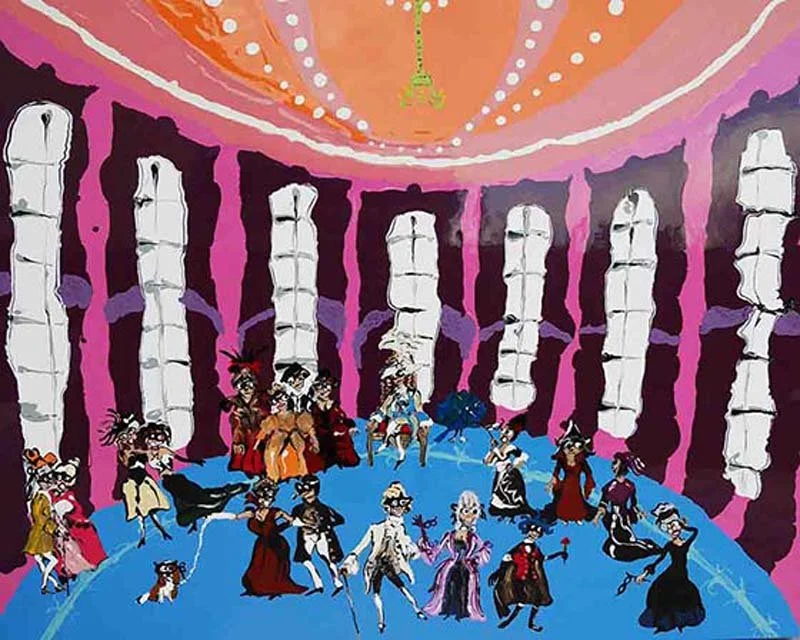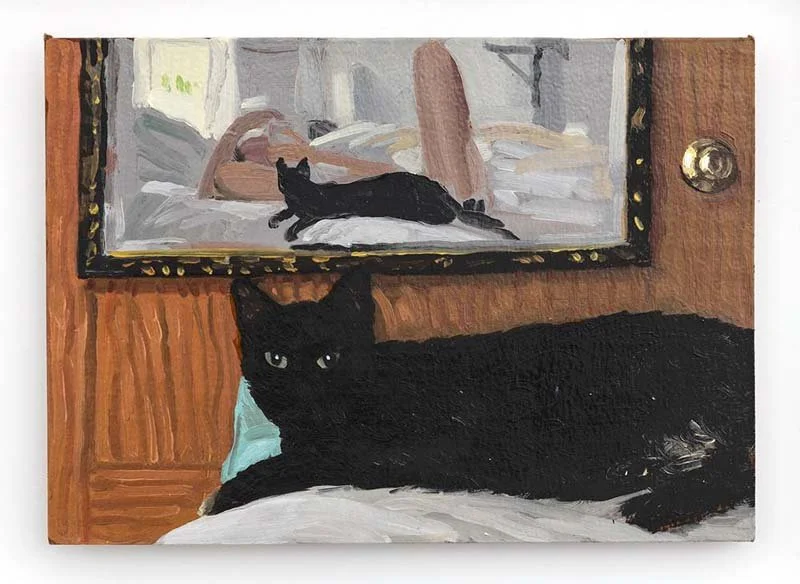


How does one best convert their work to the biggest canvas?
Peter Burns is a painter who lives and works in the west of Ireland. Recent exhibitions include: "Forests of the Night", Hill House, Simchowitz Gallery L.A., 2024, "Dunamis", A Series of Biblical Paintings, RHA Gallery, Dublin, 2023. Group shows include: "SUN", Althuis Hofland, Amsterdam, 2025, "Long Dreams", Moss Portland, Maine, 2024 & "Emotional Rescue", Galleria Annarumma, Naples, 2022. His work has featured in the Sunday Times, Artforum & Irish Arts Review. He is a recipient of the Pollock Krasner Foundation grant. He was awarded a BA in Sculpture and an MFA in Painting from the NCAD (National College of Art & Design, Dublin) @peterburnsart
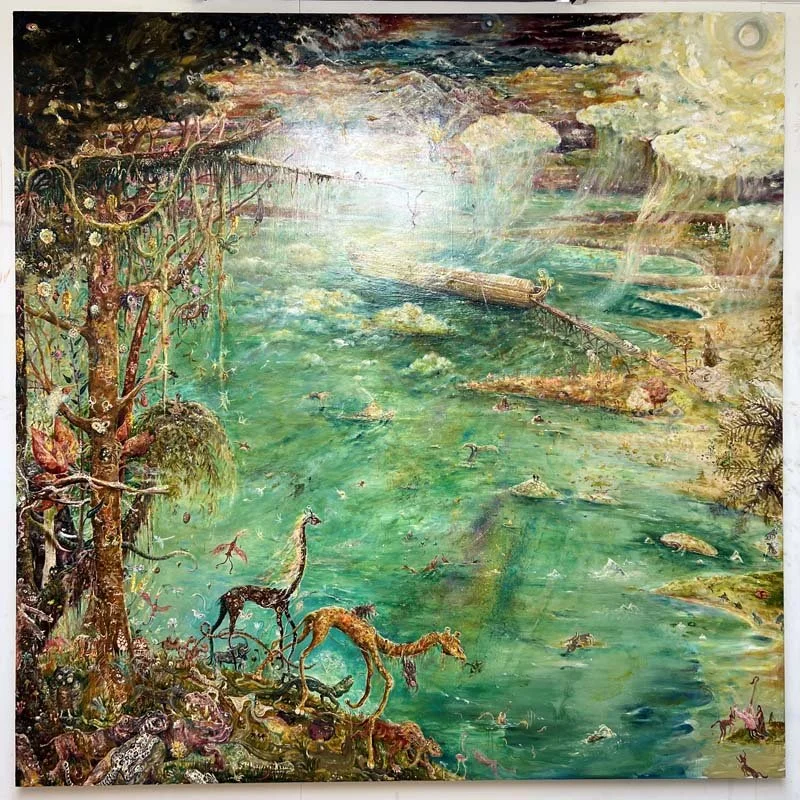
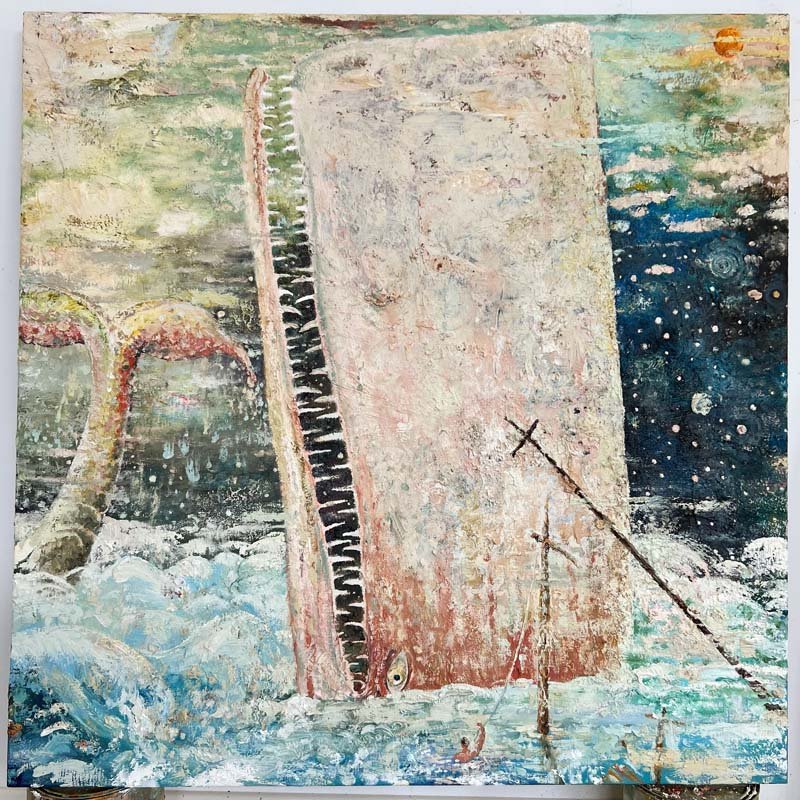
Where were you born and raised? How did it influence your art and your thinking about the world?
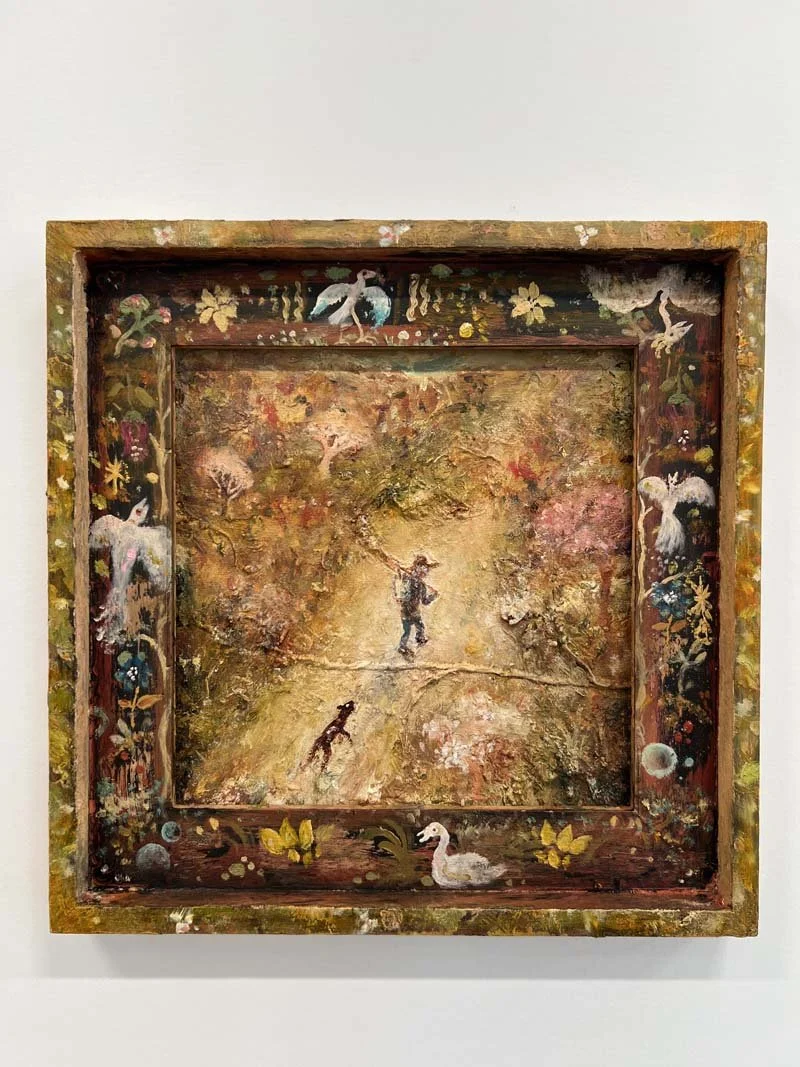
I was born and raised in Dublin, Ireland. We lived on the Dublin mountains overlooking the city and Dublin Bay. Our back garden gave onto the mountain & it was ideal for exploring, climbing, and having adventures. We had a dog who was my companion & would show me secret places.
I learned to use my imagination and loved to play with small plastic figures of animals and dinosaurs in a cleft granite rock in the garden. It would fill with water and create a whole primeval world in miniature. I would also make my own figures of animals and birds out of plasticine. It gave me great pleasure to make these, and I would offer them as presents to my grandparents. If they were accepted and placed in the glass cabinet with the perfect ceramic figurines, that was the highest honour. These are the first things I remember making.
My family is Catholic, and I was immersed in the sacredness and rituals of the church and its beauty. I remember the smell of incense being intoxicating and exotic, the jewel-like beauty of the illuminated stained glass windows of saints and angels & the glow of votive candles beside the altar. The church was a numinous place.
I try to make my work as beautiful as I can without concealing human frailty, evil and doubt. This is very much the fruit of my upbringing.
When did you first fall in love with art and realize you wanted to be an artist? For you, what is the importance of the arts?
In the house I was raised in there was art on the walls. Several of my aunts were amateur painters and would paint landscapes and still lives in watercolours. My grandmother and great-grandmother also painted in oils on canvas. My mother had studied textiles in art college and worked as a carpet designer. She made pastel drawings of landscapes and loved the Impressionists and Van Gogh. There is a wonderful Monet painting of glowing autumn trees reflected in water in the National Gallery of Ireland in Dublin and I remember my Mum bringing me to see it as a child. This environment gave me the sense that art was something to be lived with in a domestic setting as well as something very special, sacred, even belonging to no one or to everyone that could be visited in a Gallery. I must have got the idea that I could be an artist then and remember feeling this conviction even as a child. I lost it for a while in secondary school but found it again and have held to it ever since come hell or high water!
What does your typical day in the studio look like? Walk us through your studio and your most used materials and tools.
My studio is connected to our house. We have two young children, so my day revolves around the school run and other activities. You have to be adaptable! Usually, after leaving the children at school, I will go for a walk or a run, pick up a coffee and bring it into the studio to get me going. My hours after that vary. I will work late into the evening sometimes. I find that when the work is going well, you lose track of time and become immersed in it. I paint in oils on canvas or occasionally on wood panel. I love the smell and feel of the oil paints and mediums: linseed oil, turpentine and wax. I use various brushes, my hands and rags to paint with. I often cut up sketches or use the tops of paint tubes and other detritus from the studio floor in my work. It gives the work a playful and experimental feel and stops it from becoming formulaic.
What projects are you at work on at the moment? And what themes or ideas are currently driving your work?
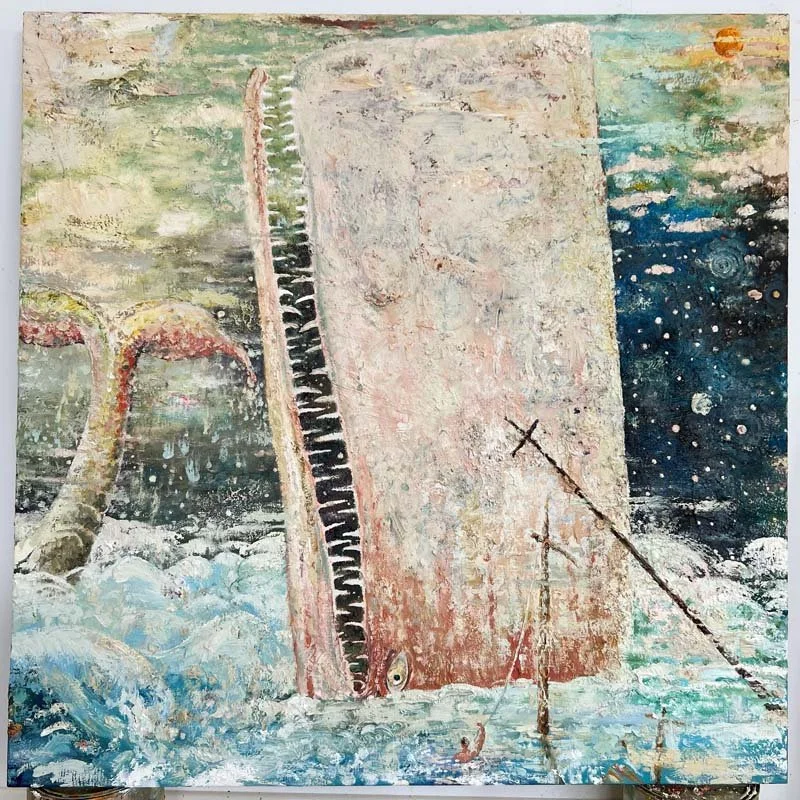
I don't tend to work on projects. Sometimes themes emerge. I have been painting a lot of shipwrecks and whales recently, as well as UFO encounters. I never view the work as a series, though and try to make each piece a unique variation. The whales may have emerged from ruminations on Jonah or Moby Dick, I also just love maritime painting as a genre, Turner and Albert Pinkham Ryder and the shipwrecks of Gericault and Winslow Homer. Growing up in the 80s with movies like E.T. and Star Wars, everything was about space. I see the UFOs with their beams as a yearning for a modern-day religious experience, like ascensions or transfigurations. They echo the shafts of light in Renaissance paintings. Humour is also very important to me. It is more direct & can convey more profound truth than po-faced "seriousness". The next exhibition I am working towards will be of large paintings at Simchowitz Gallery (dates TBC).
What do you hope people feel when they experience your art? What are you trying to express?
I hope they feel joy, surprise, and delight in encountering the work. If it engenders a sense of awe and wonder in our shared human experience in the universe, I would be very happy. I hope that the work can be seen as a labour of love and received as a gift. That is how I intend it.
Which artists, past or present, would you like to meet? And why?
Delacroix. His diaries are a touchstone for me. They give an insight into his day-to-day life and his friends; Chopin, George Sand, Baudelaire and his most loyal companion till the end, Jenny le Guillou. He was an exceptionally deep thinker about all forms of art, painting, literature, and music. He was also very generous in his appreciation of other artists like Meissonier & Parkes-Bonnington, whose watercolours he described as "like jewels that beguile the eye". He was worldly wise but never succumbed to cynicism. He guarded his sensitivity. You have to reach back at least as far as Delacroix to reconnect with the ancient traditions of painting, which have been largely lost in modern times. His painting of Jacob Wrestling with the Angel in Saint Sulpice is the best summation and epitaph for a painter's life that I know of. That he chose this most enigmatic passage from the bible is very appropriate, as he is a painter who cannot be pinned down.
Do you draw inspiration from music, art, or other disciplines?
I often listen to music in the studio, anything from Van Morrison to Vikingur Olafsson playing Bach to the Killers, Eagles of Death Metal or Mark Knopfler. I take inspiration from everywhere; it could be a post on Instagram, a series I'm watching on TV, a podcast, a song or a conversation. I recently posted an image on my Instagram of a painting I made while listening to a podcast about a murder in an exotic location. The painting will never be that exact story. I will interpret it and make it more universal.
A great thing about living in my city/town is…
I live in the countryside at the edge of a small village. It is great to be surrounded by nature and I hope to make a garden and plant trees.
Can you describe a project that challenged you creatively or emotionally—and how you worked through it?
Around the time of the lockdowns and the pandemic, I began work on a series of large paintings on Biblical themes. These were far bigger canvases than I had ever worked on before. I discussed the themes with the collector who commissioned the work and we communicated throughout the process. I struggled more with some themes than others but it was a great opportunity for me to work on a bigger scale. I never could have afforded to do this on my own. It was a difficult time and having the work to focus on was a lifeline. It has since led to more opportunities. The Gallery I am now working with (Simchowitz Gallery, L.A.) has supported me to make more large-scale paintings and to exhibit these in America.
Tell us about important teachers/mentors/collaborators in your life.
Eduardo Burillo, who commissioned the Biblical Series of paintings, challenged me to work on a larger scale and gave me a life-changing opportunity that is still revealing new possibilities in my work. Stefan Simchowitz and Lisa Pomares (Simchowitz Galley) have given me the great privilege of exhibiting in Hill House, and I would not be able to make the work I am making at the rate I am making it without their ongoing support, for which I am very grateful. I look forward to continuing to work with Stefan as he has built something truly unique and beautiful. The Galleries at Hill House are warm spaces surrounded by beautiful plants and trees, and show how you can live with the work in a domestic setting. There are comfortable seats, and you can spend time listening to music while viewing the art.
Sustainability in the art world is an important issue. Can you share a memory or reflection about the beauty and wonder of the natural world? Does being in nature inspire your art or your process?
I love being in nature and it is at the core of my artistic practice, the sense of wonder, awe or terror you feel in the face of the immensity of nature and the universe. it's infinite nature and superabundance can be overwhelming but you can also feel immersed and completely a part of it, never alone. We live close to the wild Atlantic Ocean and some awe-inspiring sea cliffs and blow holes. It's an incredibly beautiful and rugged landscape that puts the fear of God into you. When you look out, there's nothing between you and North America, only the vastness of the Atlantic Ocean.
AI is changing everything - the way we see the world, creativity, art, our ideas of beauty and the way we communicate with each other and our imaginations. What are your reflections about AI and technology? What is the importance of human art and handmade creative works over industrialized creative practices?
I have heard some of the fever dreams of the tech bros. Although the applications of new technologies in military and surveillance use are truly terrifying, the idea that the thing will come alive is far-fetched. There is no real intelligence in AI, which simply trawls the internet for information, nor is it sentient. Could it experience love? Human beings are not machines. Nothing will ever replace the unique nature of the handmade art object. In fact, it will only come to be seen as more invaluable. Something unique that can't be replicated is born of a particular individual's life and circumstances. Think of Van Gogh, that direct and electrifying experience. People make pilgrimages to experience unique works of art. I have done so many times. Machines are tools, two different things.
Exploring ideas, art, and the creative process connects me to…
artists who have gone before and those who will come after.