

Brooklyn-based painter Drea Cofield on perception and people.
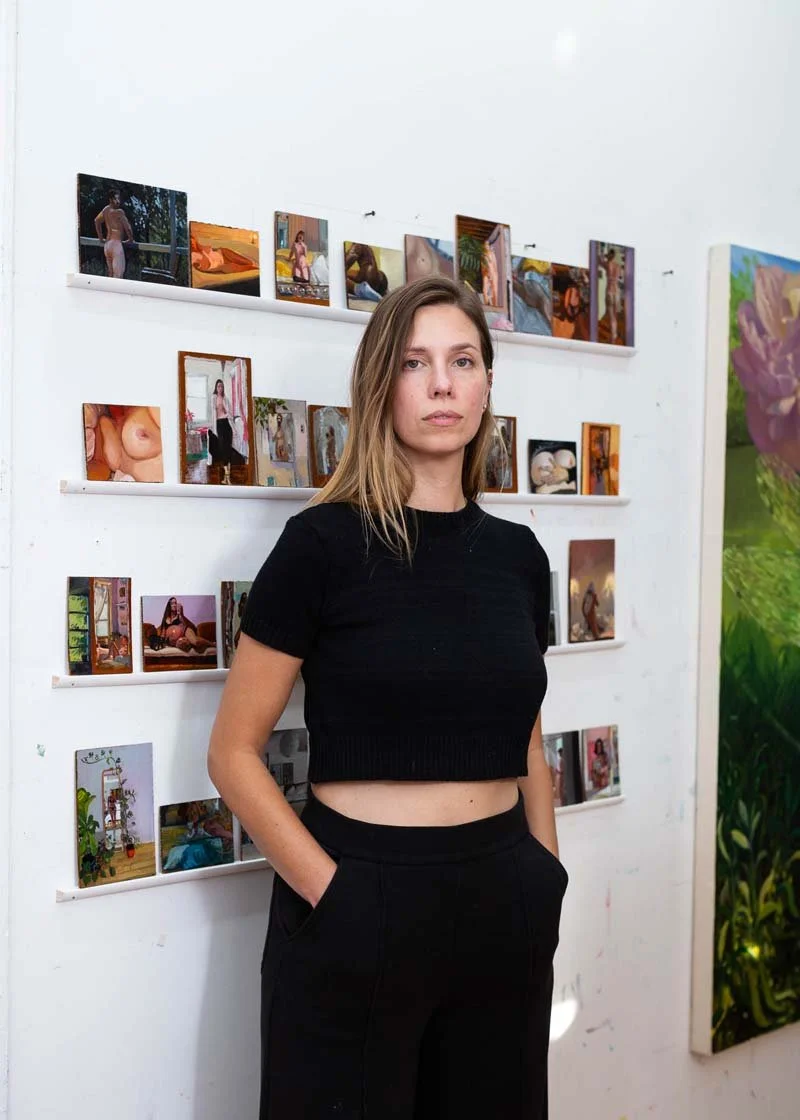
Drea Cofield (b. 1986) is a Brooklyn-based painter whose practice spans many painting genres. She is best known for her ongoing Selfie Project, which merges art-historical portraiture with contemporary questions of self-imaging and looking in a digital world, and runs tandem with her plein air landscape practice. Cofield has exhibited widely, with solo shows at Kravets Wehby Gallery, Future Fair (NYC), and forthcoming exhibitions at Soho Revue (London) and Galleri Urbane (Dallas). Her work has been featured in CULTURED, The Wall Street Journal, and Dazed. She is a recipient of the Elizabeth Greenshields Grant and has attended residencies at Yaddo and La Napoule Art Foundation. @dreacofield
Where were you born and raised? How did it influence your art and your thinking about the world?
I was born in Connecticut, but grew up and attended college in central Indiana. I wasn't exposed to much art growing up, and knew almost no artists beyond my professors. I developed a unique dialect of my own within a very closed context - a critical humor veiled by beauty, symbolism, and allegory that let me examine my conservative religious situation, and my feelings about many things. I really had no concept of what it meant to be an artist outside of teaching, but I quickly learned painting was an essential part of how I processed my experiences and communicated with the world around me. I also believe my upbringing corresponds with my commitment to observation and representational as inclusive modes of art and meaning-making.
When did you first fall in love with art and realize you wanted to be an artist? For you, what is the importance of the arts?
I always loved drawing which is pretty typical for kids, but I fell in love with painting in college. It was a very isolating and deeply rewarding experience making my first fully-realized paintings. The first abstract painting I fell in love with a single Joan Mitchell Sunflower painting at the Indianapolis Museum of Art and it taught me a lot about the power of painting beyond image. I was also so, so lucky to be at DePauw my final year when the Rubell Collection's Leipzig show was brought to our University by our badass Gallery Director, Kaytie Johnson. It was the first cohesive show of contemporary paintings I'd ever seen and it was like walking into St. Peter's for the first time. I was blown away, my faith affirmed. The gallery was just below my studio and I went over and over and over again, just totally in awe of Neo Rauch's massive compositions. The arts are important for so many reasons, but to try to be succinct, to me, art is pure horizon, it's utopia; it communicates and connects across time, dances within the light and darkness of humanity, and is essential to understanding the truth of who we are and the hope of what we can be. It's magic and faith. I really believe in it.
What does your typical day in the studio look like?
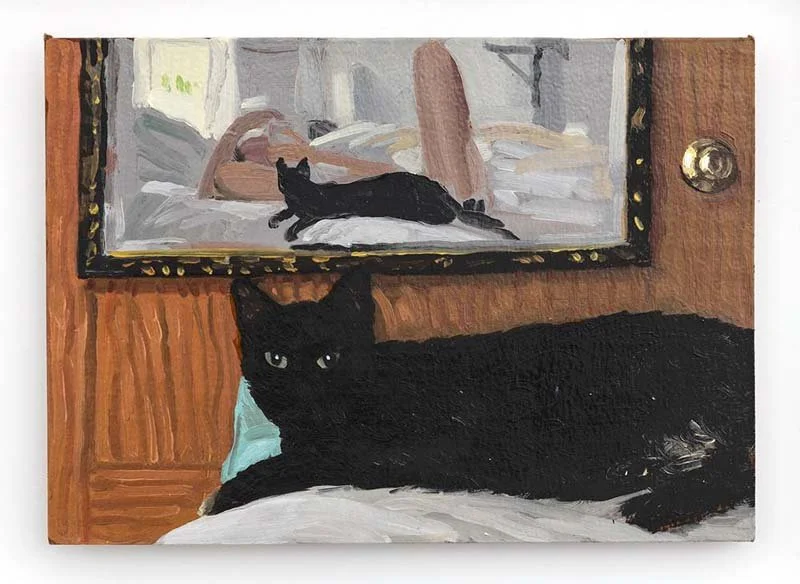
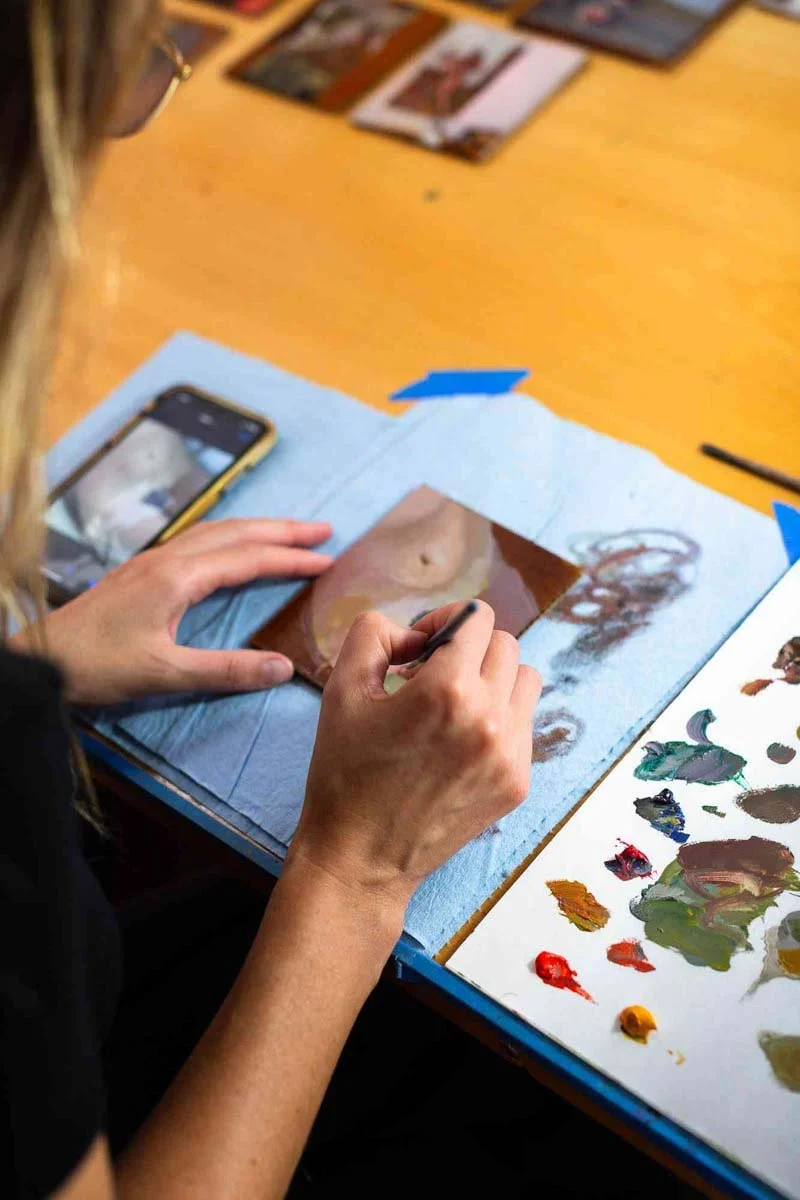
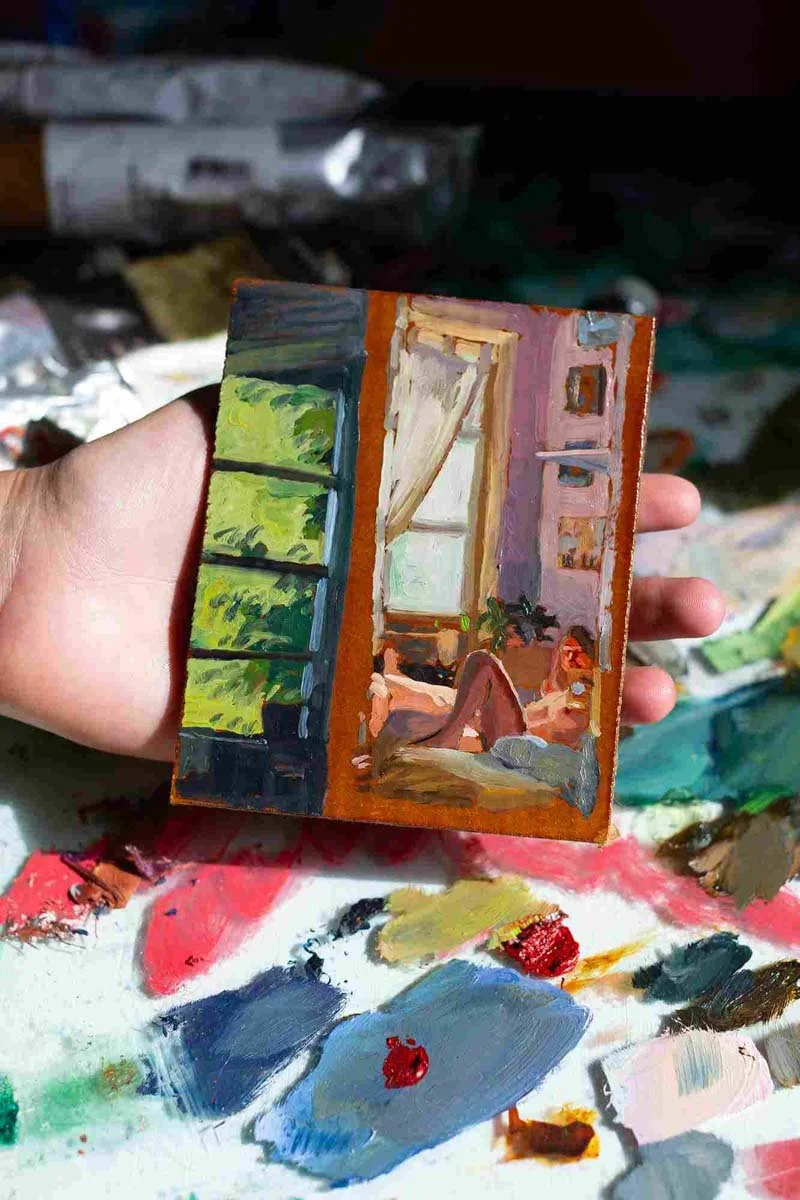
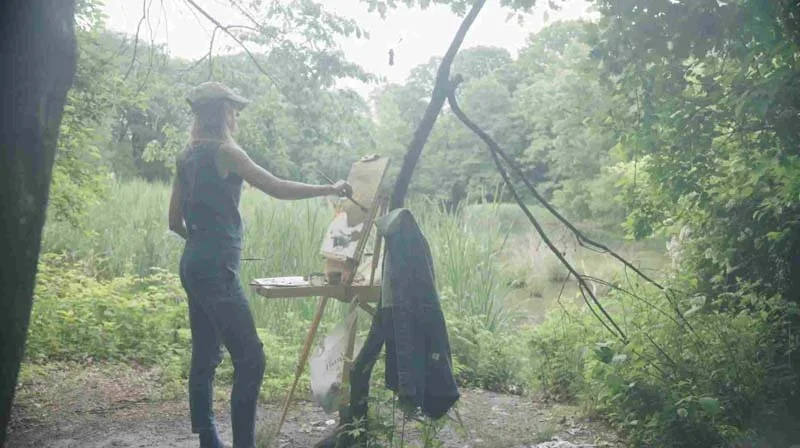
A typical full day in the studio sees me heading outside to paint on a pond in Queens around 9 or 10am. I'll return home for lunch, do some admin/social media/make plans with friends. Then I'll do a selfie painting in the late afternoon or evening. If I'm also working on larger studio compositions I will rotate with those as well. For the last few months, I've been displaced from my studio, so I'm usually painting on small shellcaked cardboard panels or paper. I use a plein air easel or pochade box. My paints and medium are almost always in zipper bags to throw in my backpack and go.
What projects are you at work on at the moment? And what themes or ideas are currently driving your work?
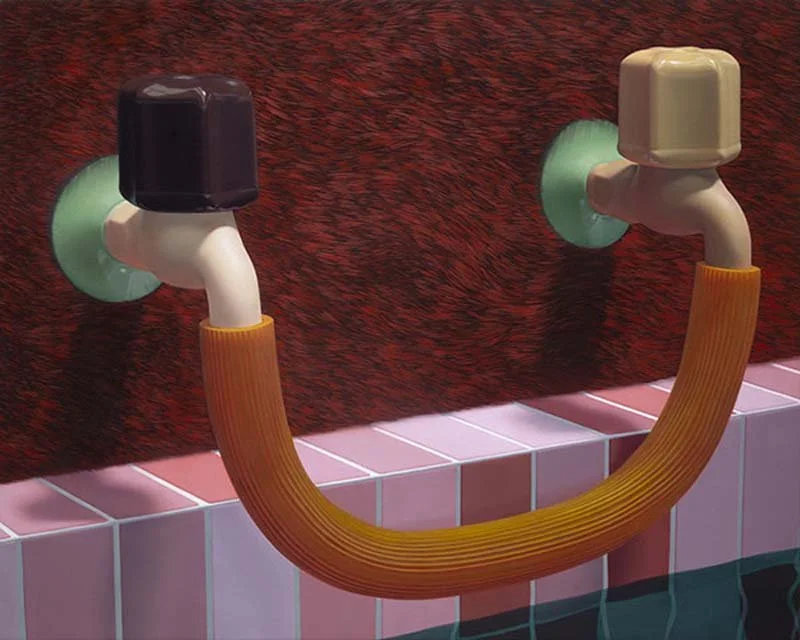
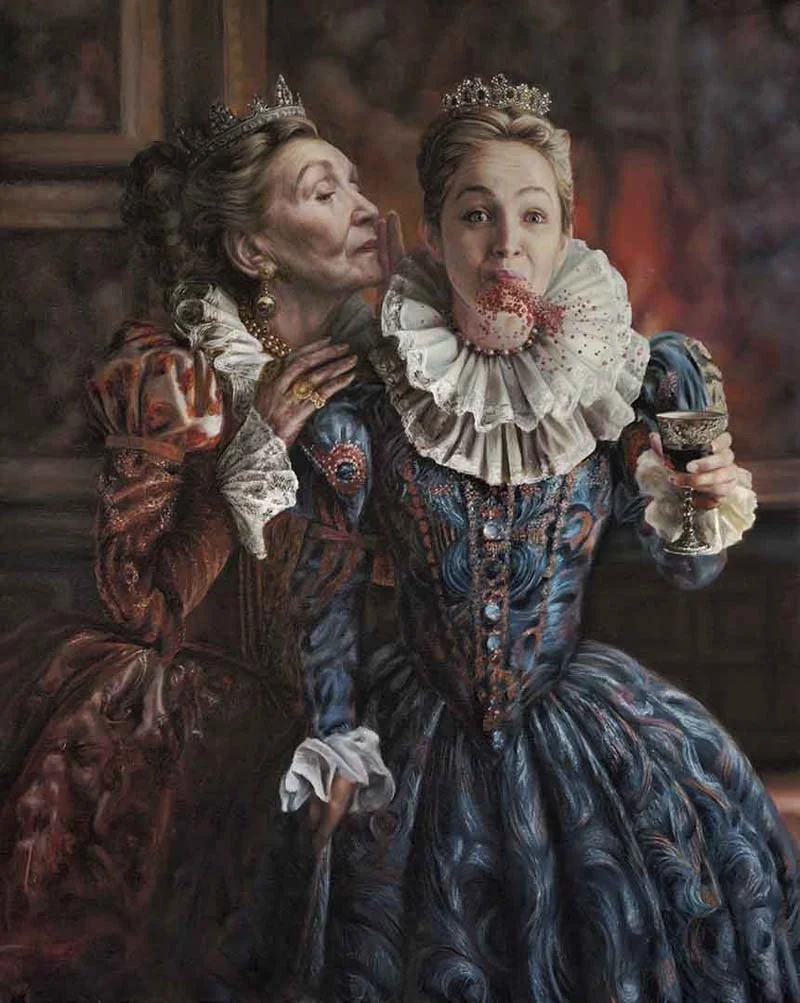
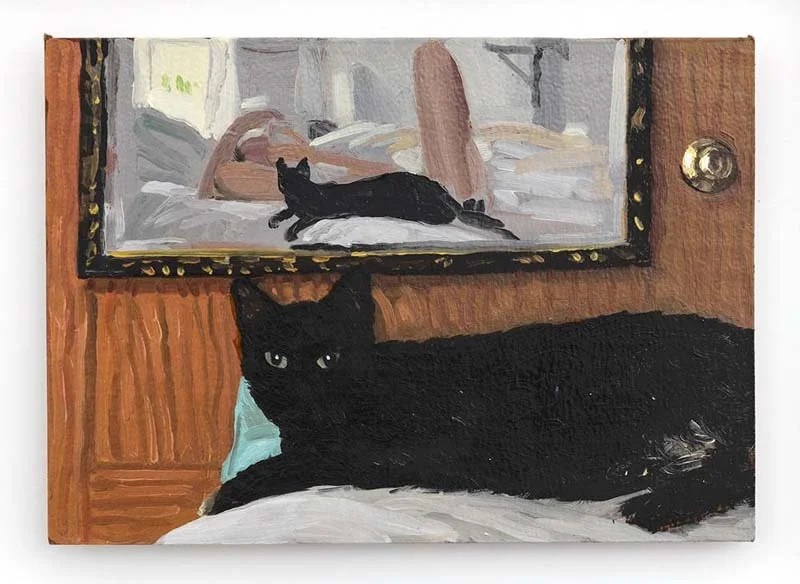
I currently make plein air landscape paintings, observational self-portraits, and translate lo-res images of self portraits I receive from people on the internet into small-scale oil paintings. I'm very interested in narratives of looking, the thresholds between bodies and environments, and questions about embodiment, consent, and agency.
What do you hope people feel when they experience your art? What are you trying to express?
I hope people feel a thrill, an authentic desire to be seen, implicated, familiarity, implication in looking, the complexity and differences between materials and thingness and subject and image and time and touch.
Which artists, past or present, would you like to meet? And why?
Lois Dodd, Georgia O'Keeffe, Goya, Titian, Piero della Francesca; because I admire their art, their tenacity, their humor, and their faith in what they are/were doing, it is so evident in their work.
Do you draw inspiration from music, art, or other disciplines?
Of course. Music and literature mostly.
A great thing about living in Brooklyn is…
I live in a place that values art and culture makers. It's a very difficult place to be, especially if you are at all lost, but it is worth it to me. I know what it's like to live somewhere where art is not valued.
Can you describe a project that challenged you creatively or emotionally—and how you worked through it?
The Selfie Project has challenged me in many ways. It is a conceptual painting portraiture project that examines many things, and people tend to love it or belittle it immediately. I was deleted from Instagram in 2023 by AI censorship and the flagging of an unstable curator. Recently, I experienced a criminal invasion of privacy by someone close to me that made my relationship to the project extremely tenuous. I suddenly did not want to be seen, and it put a lot of pressure on parts of the project I was aware of, but hadn't experienced regarding the proximity of gaze, agency, and consent to violence.
Tell us about important teachers/mentors/collaborators in your life.
Robert Kingsley was my painting professor in college and my most important teacher. Rochelle Feinstein and Sam Messer kept me from dropping out of Yale when I couldn't shake my depression and Imposter Syndrome. Sean Landers has been a major friend and supporter in NYC. Gaby Collins-Fernandez and Jonah Parzen-Johnson have been friends and collaborators for years with BombPop!Up.
Sustainability in the art world is an important issue. Can you share a memory or reflection about the beauty and wonder of the natural world? Does being in nature inspire your art or your process? I grew up across the street from a ravine that descended to a flood plane. I thought it was the most beautiful, magical place on earth. I've been a wrangler in Wyoming, watched Scorpio pull the Milky Way through the sky in the Gila Wilderness, and this year I've painted a glacier in Alaska, the sunrise from Oahu, and the Sea in the South of France. There is nothing as memorable as communing with nature and my body through painting. There are so many places and things I haven't seen, but this is a integral part of my process; moving through the world, really looking and studying the light and temperament of a place. I can never adequately render what I see, but I can remember what I feel - that awe and respect - because I try.
AI is changing everything - the way we see the world, creativity, art, our ideas of beauty and the way we communicate with each other and our imaginations. What are your reflections about AI and technology? What is the importance of human art and handmade creative works over industrialized creative practices?
I think there are ways AI is genuinely useful to creatives and educators in capacities that support their art practice and teaching goals. I've already said why I think the arts are important to me, and not to be offensive, I find the dichotomous nature of the question to be both obvious and uninteresting, although dialogue about AI cannibalizing human art is certainly important and timely; as is the lack of physical/material literacy.
Exploring ideas, art and the creative process connects me to… meaning and community.