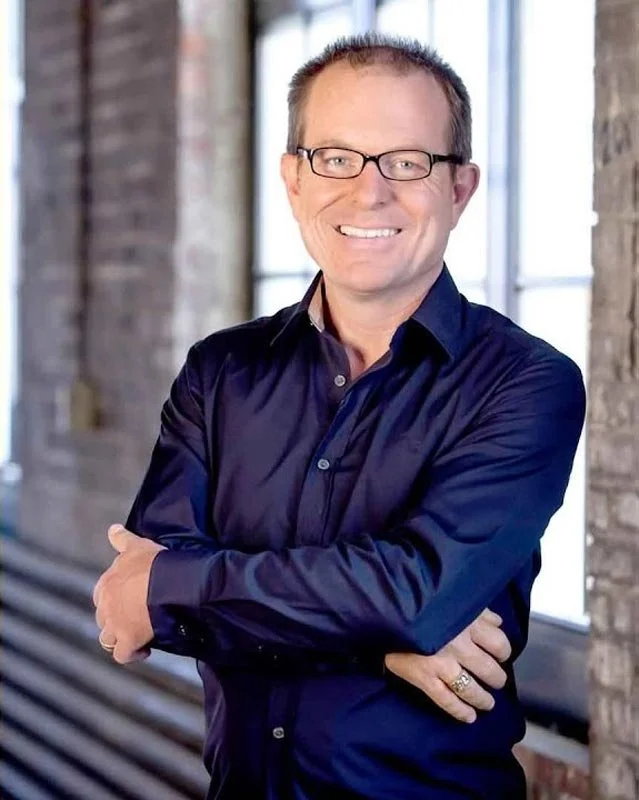


Philadelphia-based artist Seth Ellison on class, memory and America.
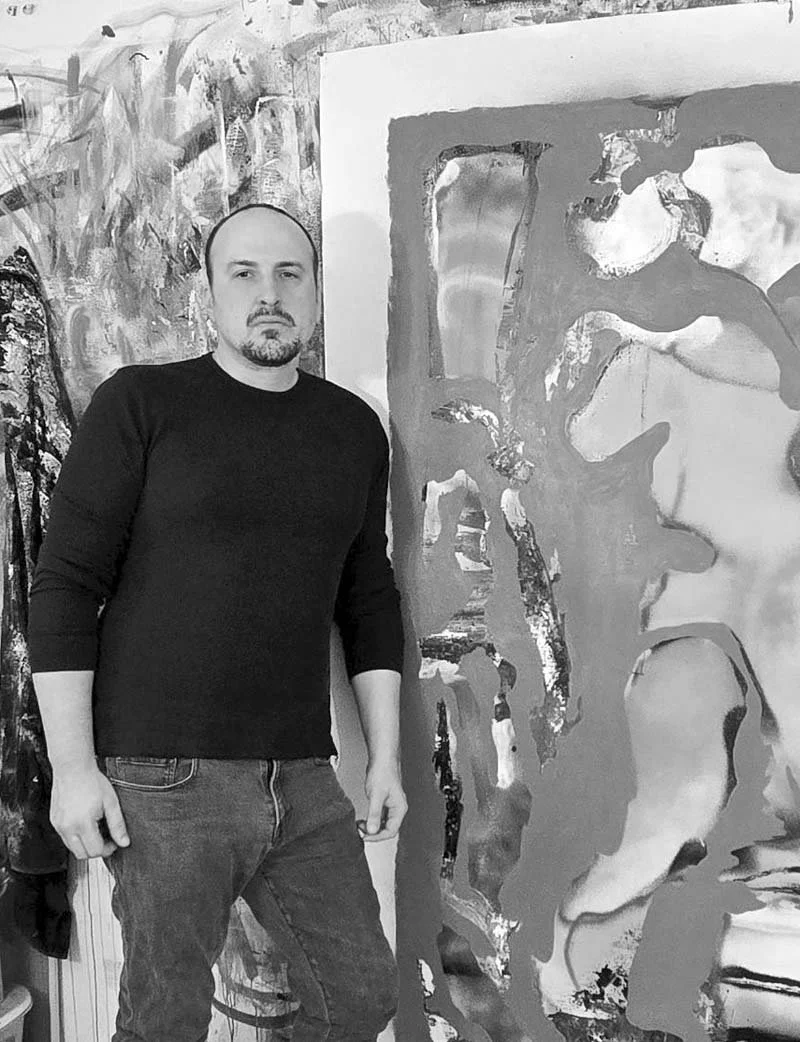
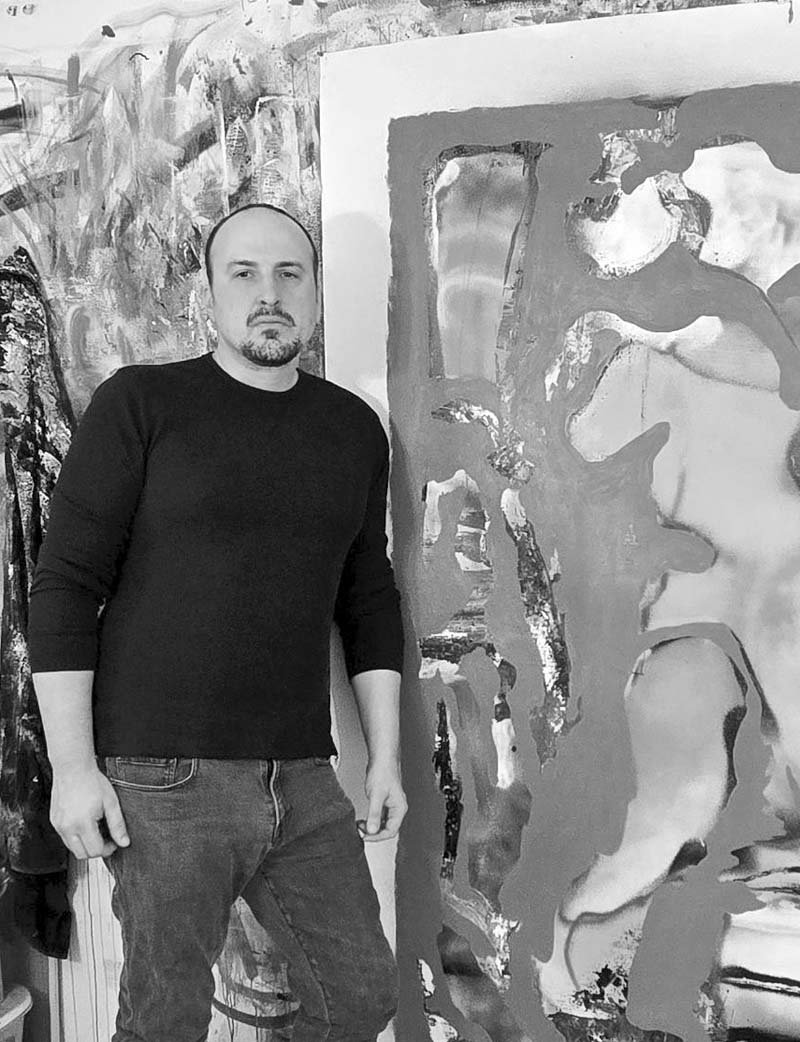
Seth Ellison is a Philadelphia-based painter and multimedia artist. Born in Beckley, West Virginia, he lived mainly in the southern United States before moving to attend grad school. His formative years were spent compulsively drawing in preparation for a future career as a Walt Disney animator, a period that deeply impacted the paintings he creates today. He received his BFA from the Savannah College of Art and Design and an MFA from the University of the Arts.
You were born in the heart of Appalachia, in southern West Virginia. How has your upbringing there influenced your art and your thinking about the world?
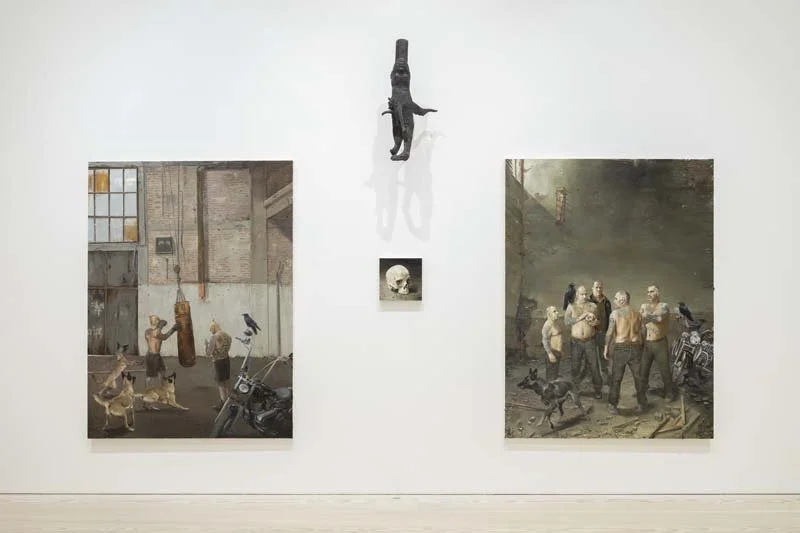
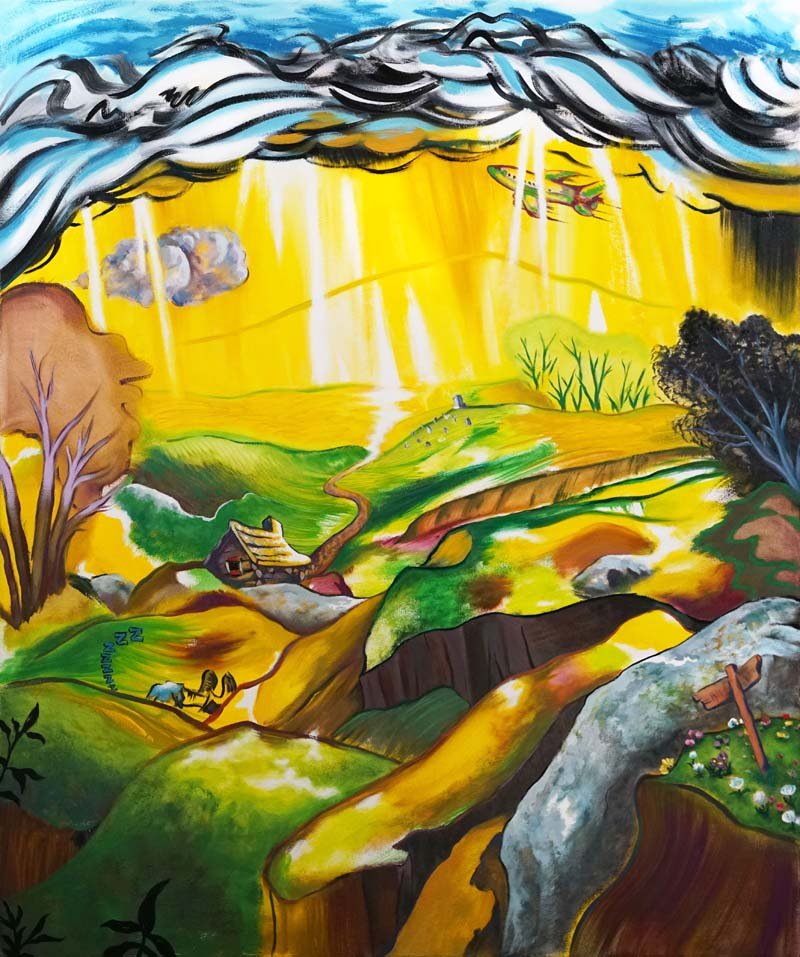
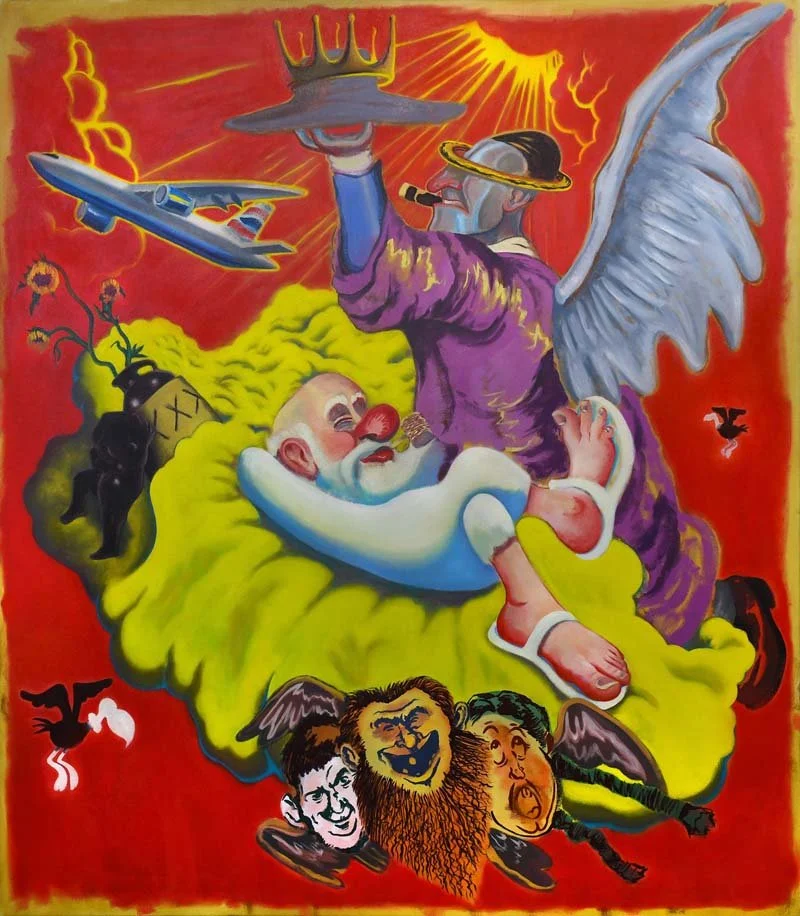
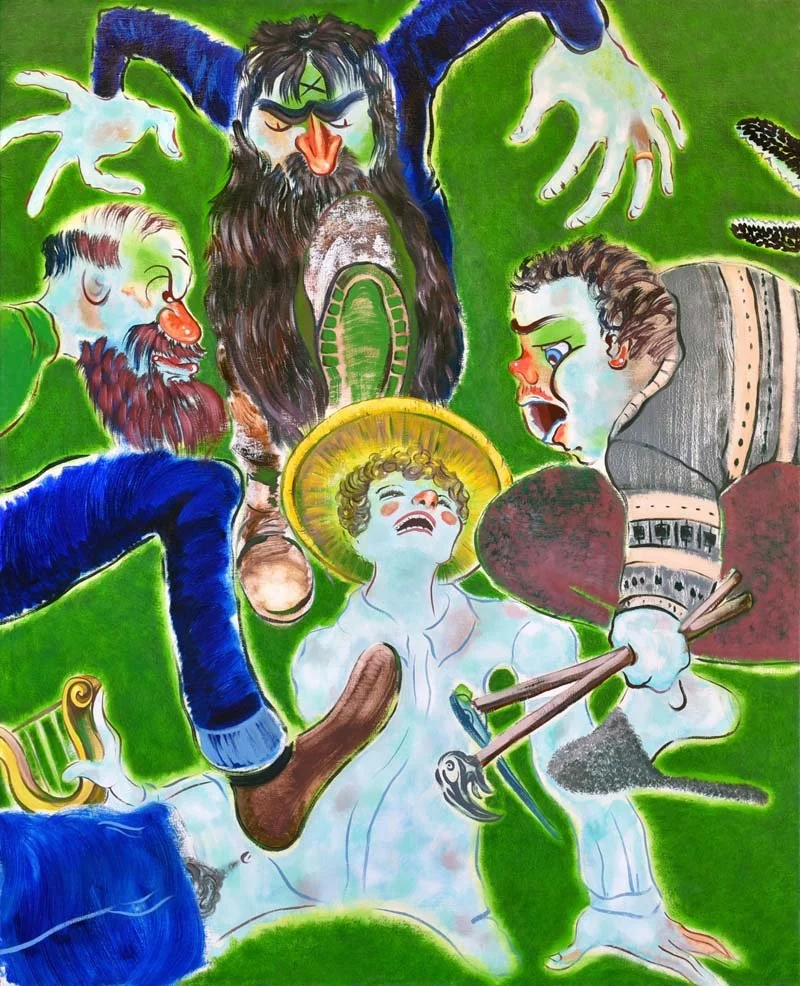
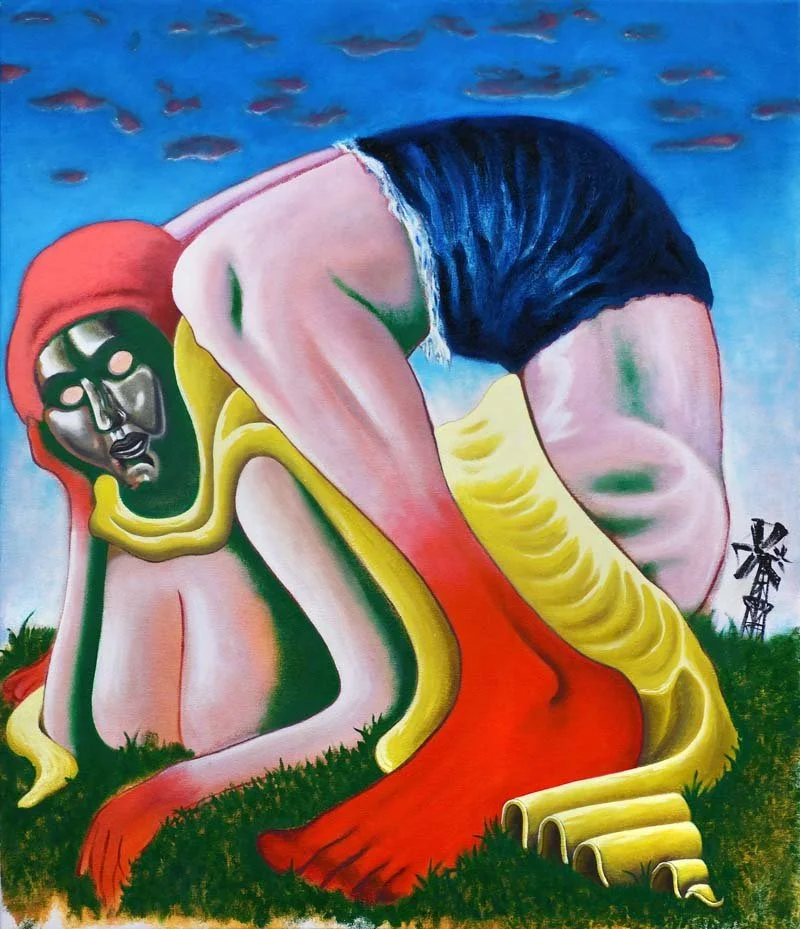
I was born in the heart of Appalachia, in southern West Virginia. The small town where I grew up was rural, with a few hundred residents—many impoverished, deeply conservative, and intensely religious. My parents were industrious and ambitious, and over the years our family oscillated between different economic classes. That constant flux gave me a rich, eclectic, and sometimes contradictory understanding of friendship, community, and what it means to be a citizen of the United States. My art reflects these experiences, focusing on class, religion, bigotry, and personal identity as they relate to America. At its core, however, my work longs for transcendence beyond these forces. In many ways, the place I’m from feels like a microcosm of today’s political and social landscape.
How did your early obsession with Disney and animation ignite your passion for art?
Though it may sound a little too romantic, I can’t remember a time when I didn’t want to make art. From the very beginning, I wanted to create, and the people around me were more than willing to fan the flames, fueling my passion throughout my formative years. Disney was an all-encompassing obsession from an early age, and I practiced relentlessly for years in the hope of becoming one of their animators. At nine or ten, you could usually find me bent over my drawing table, surrounded by piles of paper covered with duck bills, lumpy shoes, and gloved hands. As a child, the importance of being an artist never occurred to me. I didn’t think about audience, legacy, or even what I wanted to say. There was only a primal urge to pull the images from my mind into the physical world, whatever the result. As an adult, returning to that way of working has become the goal. For me, “channeling” matters more than “expression.” I believe the unconscious holds forces far stronger than anything the conscious mind can devise, and in my work I am always trying to let them through.
Describe a typical day in your studio and your unique mental preparation.
It’s a lot of pacing and a lot of talking to myself. I’m surprised a circle hasn’t been worn into the floor and that my family hasn’t had me involuntarily admitted. Honestly, it’s a lot of strenuous looking, seemingly pointless mental preparation, and energy gathering, which I consider integral. Many times I feel as though I am stalking a great beast, waiting with spear in hand for the right moment to strike. When it comes and I enter the state of manifestation, I feed it with whatever is necessary, for as long as possible, until it tapers out. Then begins the long, contemplative process of looking back and dissecting what I’ve just done. My tools of choice are simply whatever gets the job done: oil, acrylic, spray paint, charcoal, gesso. I no longer pledge allegiance to any single medium.
Tell us about your current projects, including the shift away from your Appalachian series.
At present, I have two solo shows running close together, each with a different intent. The one on view now feels like a kind of wake for the ideas I’ve explored over the past decade, especially in my Appalachian series. It marks the last stage — the comedown before burnout. I find myself returning to places I thought I had left behind, reconsidering what was discarded, and giving it one more look. I feel I’ve said what I needed to about my past and the place I grew up. Now it seems necessary to move toward something new, much in the spirit of Philip Guston, an artist I admire. My upcoming solo takes a different direction, one where process itself drives the work. I’m moving toward something more abstract and pareidolic, less tied to narrative. I suspect the next series will continue along this line.
When viewers experience your art, what emotions do you hope they feel?
I’ve always thought of certain kinds of art as a window, an attempt to let others glimpse what the artist saw and felt, if only for a moment. In this way, the content is less important than the format of painting itself. It can be a powerful way to broaden someone’s perspective. Each painting I make captures a different point on the spectrum of emotions I experienced during its creation. My hope is that the viewer feels something of that, whatever it may be, even if it’s not the exact feeling I had at the time. If there is one emotion that threads through all my work, however, it is yearning, a reaching for something beyond the ordinary, towards both the uncanny and unfamiliar — to bring someone out of their own skin. And if, in the process, someone else feels a little less alone in their own sense of being an outsider, then the work has done something of worth.
Which artists, past or present, would you like to meet?
I’ve said it before in other interviews, but my view hasn’t changed. Philip Guston, to me, embodies what an artist should be and strive to live up to. Even though my style has moved beyond his influence, my admiration for his spirit has not. From first-string Abstract Expressionist to the vanguard of Neo-Expressionism, he always charted his own course, even when the wind was against him and he risked annihilation. If we met, I would expect nothing from him. I would only want to sit quietly in the corner of his studio and watch him paint, even though I know that arrangement would likely be the opposite of what he would find enjoyable or productive.
How does your relationship with music and external influences shape your creative process?
I used to listen to music while working, but I found it brought too much energy and not enough presence. I would get caught up in deciphering lyrics when I should have been making my next move. If I listen to anything now, it’s ambient, drone, or even just white noise — something that doesn’t step on my toes. And, of course, I’m on Instagram every day checking out what my contemporaries are doing, for better or worse. These days, I try to limit what I let into my awareness. My wife says I’m “sticky.” For example, if I watch a movie with a strong character, I’ll find myself imitating that character for the next couple of days. One of my professors once told me I should only look at dead artists. While I don’t fully agree, I do think there’s value in putting space between yourself and your influences so you have room to develop your own voice.
What is something about the places you have lived—Philadelphia or West Virginia—that you find uniquely inspiring?
If you’re referring to the town where I draw most of my inspiration, I would have to say it’s the quirky strangeness. I have never lived anywhere since that has captured my imagination more — not in another small town, not in a big city, not in the United States or abroad. Part of it may be tied to coming of age there as a child and adolescent, but I don’t think that explains it all. Some places struggle with gang violence, like where I live now in Philadelphia. In West Virginia, however, not far from where I lived, a family of rednecks in the woods would attack your car with a potato gun. Weird, but true.
Can you describe the continuous cycle of creativity that challenges you?
It’s not so much about one project. What feels truly transformational is the continuous cycle of seizing an idea, riding it until the wheels fall off, and then letting the whole thing start over again. The emotional rollercoaster that comes with the anxiety of uncertainty is exhausting, yet also completely absorbing and exhilarating. To make it through, you need nothing less than the will of the devil.
Tell us about the important teachers and mentors who impacted your growth.
I wouldn’t say I had mentors in the traditional sense, like Rubens was to Van Dyck, but many of the things my professors said cut straight to the bone and left me reeling. The harsher the criticism, the better. I remember one professor thought I was slacking and told me, “Seth, I don’t know what you think this is, but in this day and age you need to either go all in or throw the whole thing away. Because, in case you haven’t noticed, there’s no reason to paint right now.” Ouch! Another time, when I was playing it far too safe, a professor looked at me and said, “What are you scared of? It’s only pigment and fabric. Don’t delude yourself.”
How has your relationship with the natural world, particularly in West Virginia, shaped your vision?
I come from a place where natural beauty is its most valuable export, even as those same resources have been decimated by industries like coal. Much of my childhood was spent wandering the wooded mountains and exploring the abandoned machinery left behind by those industries, often on my own. Every time I had a bad day at school or just needed to work out my ideas aloud with no one around to judge, I would go there. Nature has always been integral to my work, and it continues to shape everything I create.
What are your reflections on AI and the importance of the process over the destination?
Have you ever heard the old cliché, “It’s not the destination, it’s the journey?” For me, the process of making art is just as important, if not more so, than the final result or even the idea that sparked it. The process is greater than the artist and often leads them to places they could never have dreamed of. A.I. skips all of that. It gives you the destination with nothing in between — no blood, no detours, no anxiety, and no resolution. No questions, only answers. It serves everything up, ready for consumption, but in the end it’s as empty and unnutritious as a Happy Meal.
Exploring ideas, art and the creative process connects me to…
what I lost, what I am, and what I have yet to become.