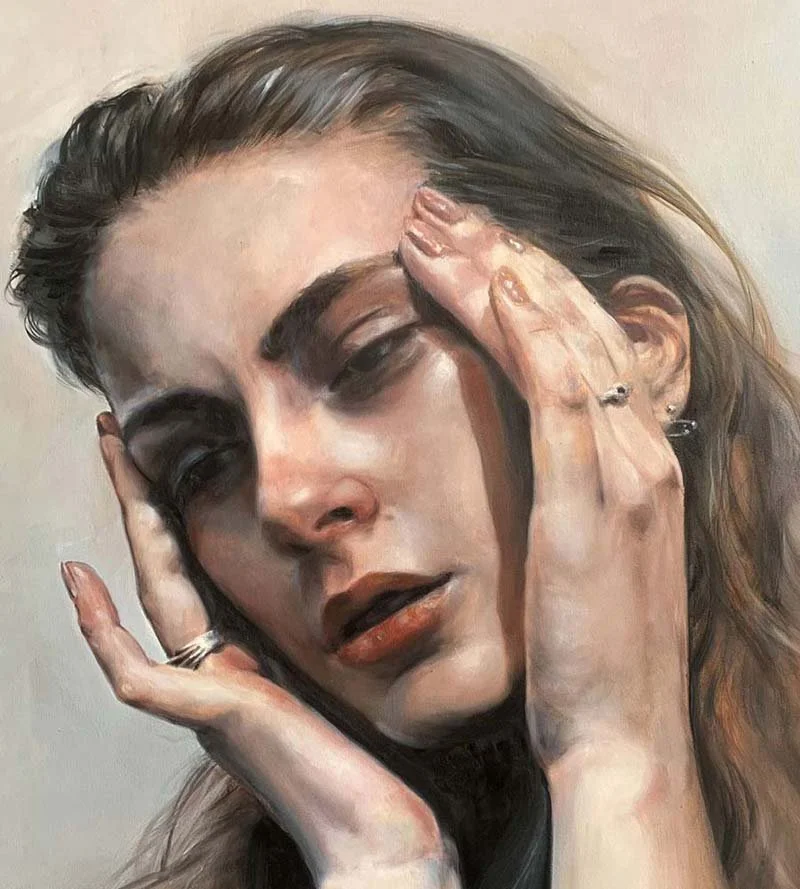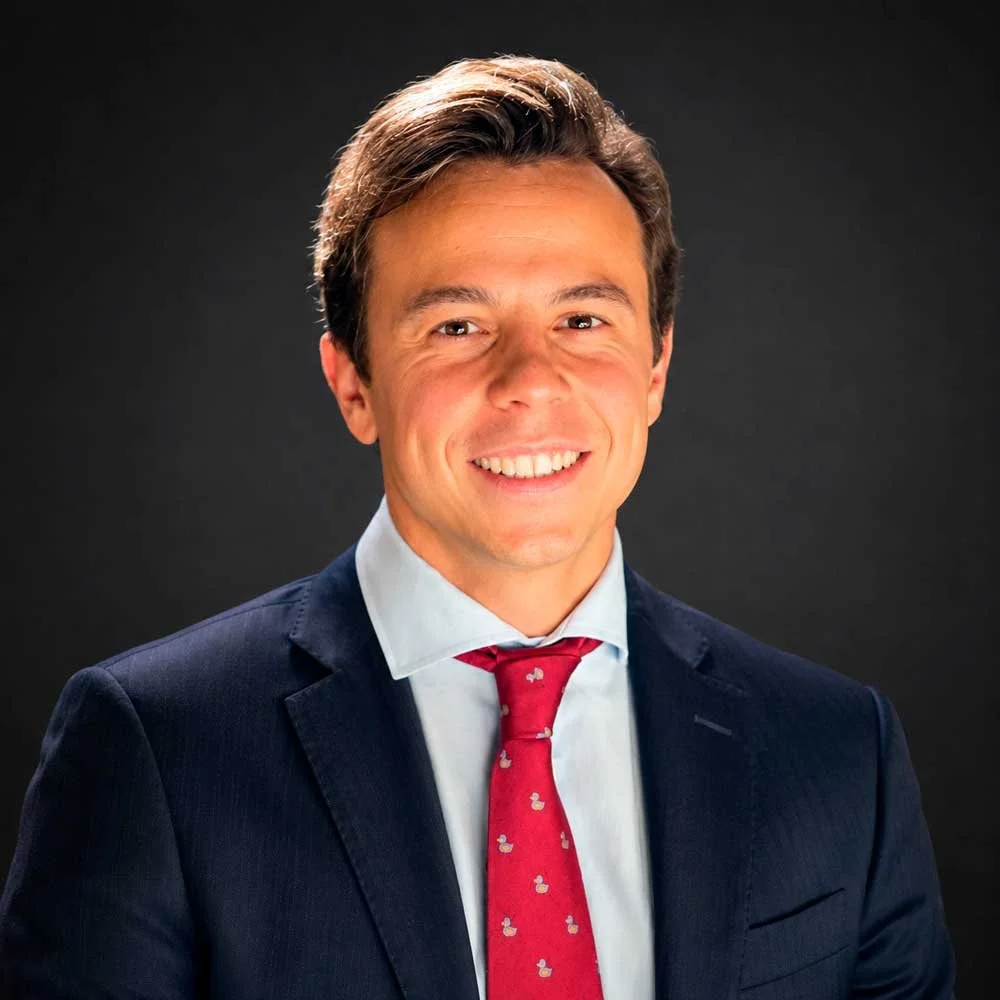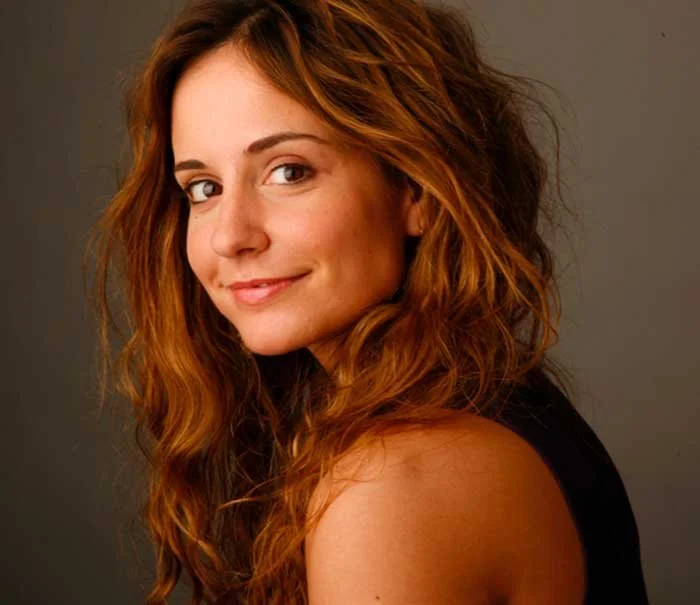


Artist Talia Yáñez on sharing experiences and self expression.
Talia Yáñez did her licentiate degree In Visual Arts at the Escuela Nacional de Artes Plásticas, today known as the Faculty of Arts and Design at the Universidad Nacional Autónoma de México and she formed part of the Visual Arts Teaching and Research Program at that university. Later she completed workshops and certificate courses in film honing her interest in artistic design. She participated in production design and art direction in cinematographic projects. She intervened in the restoration of two mural paintings by master muralist David Alfaro Siqueiros. She has participated in numerous collective exhibitions throughout México and one in Dublin. Her solo exhibition Los desinhibidos was presented in the Museo del Pueblo de Guanajuato in 2015.
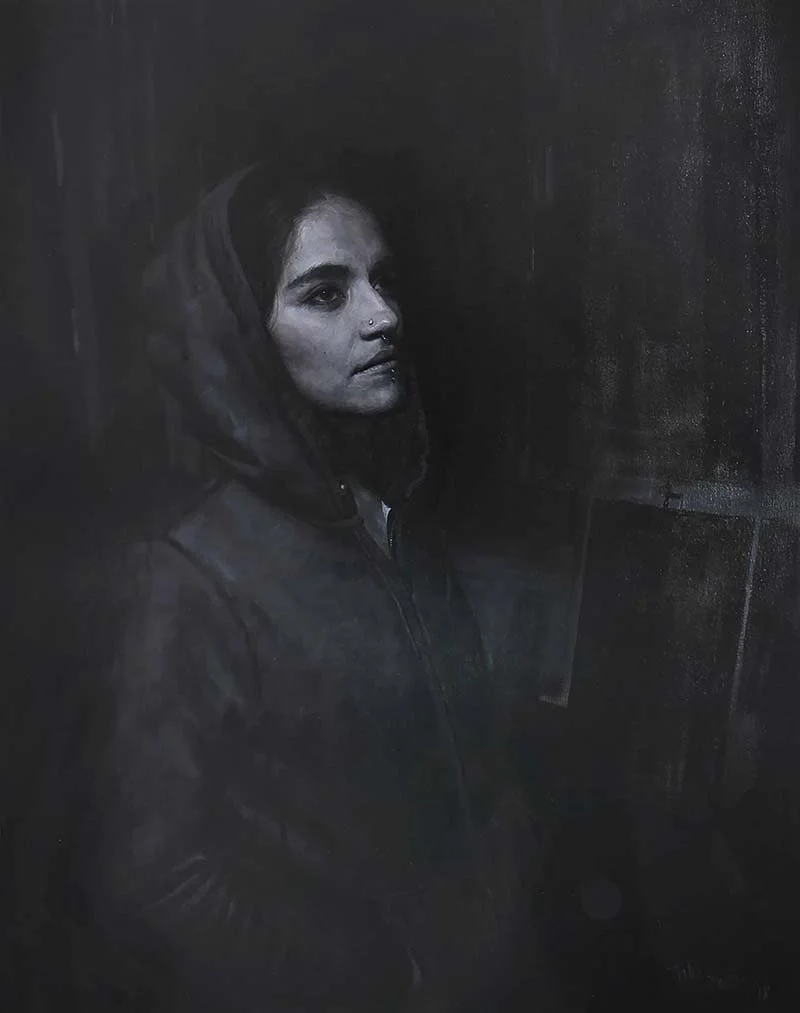
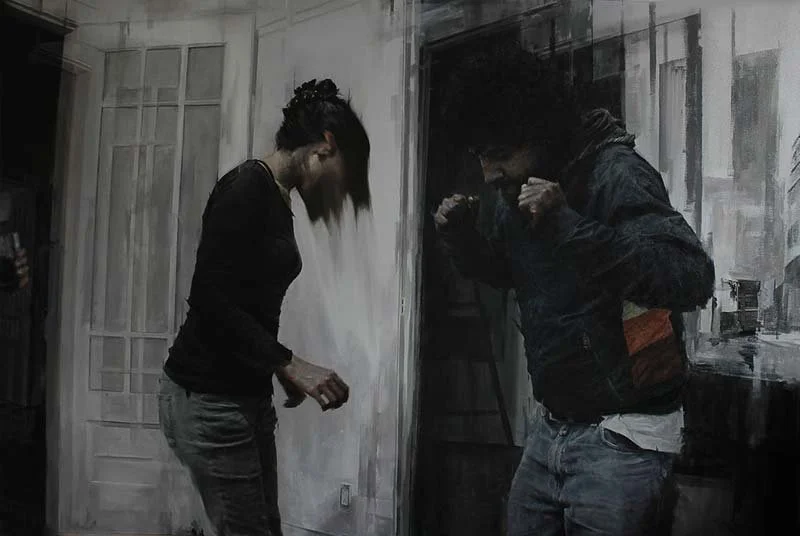
She has received different distinctions for her work in México, in 2015 she was selected and formed part of the Masters of Figuration Workshop at the Universidad de Navarra, Spain, coordinated by Master Antonio López García. She took part in the 2nd Online International Contemporary Painting Congress, "Paint in Progress," organized from Spain. Currently, she pursues her work in painting, exploring and reflecting from a figurative approach. @tal_ynz
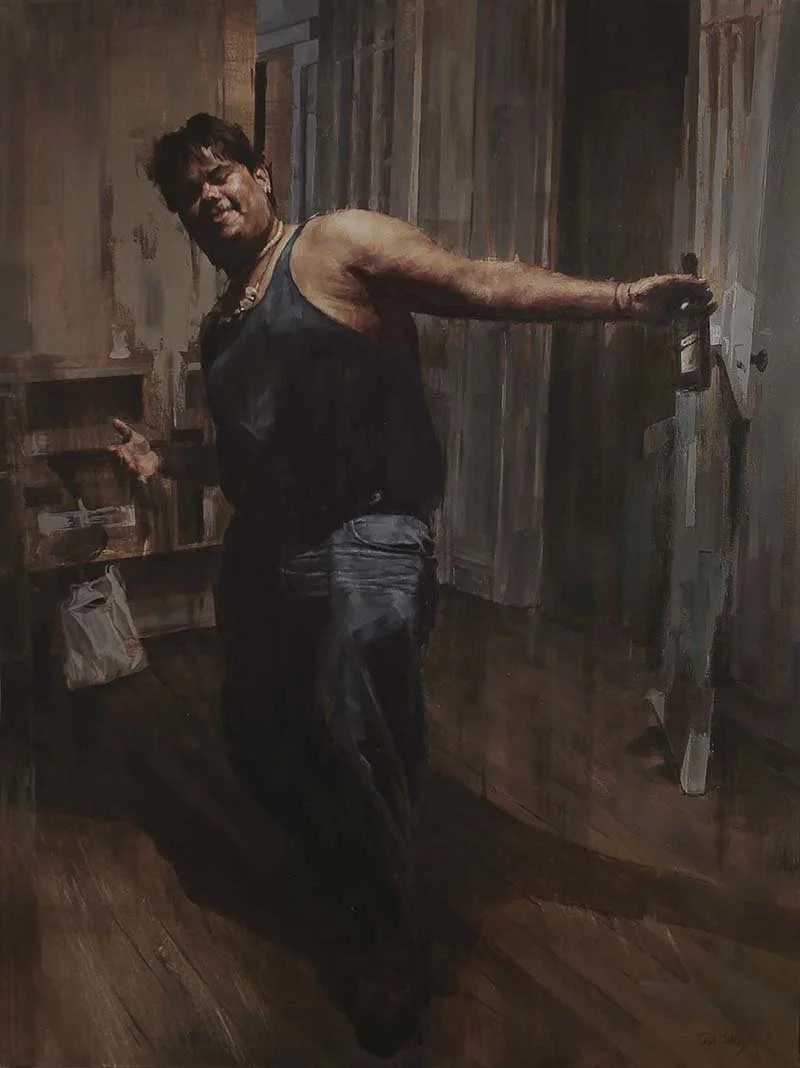
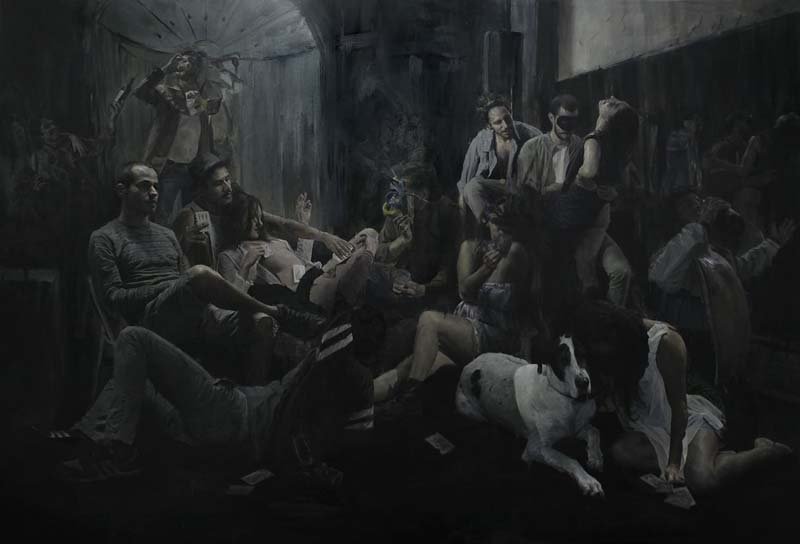
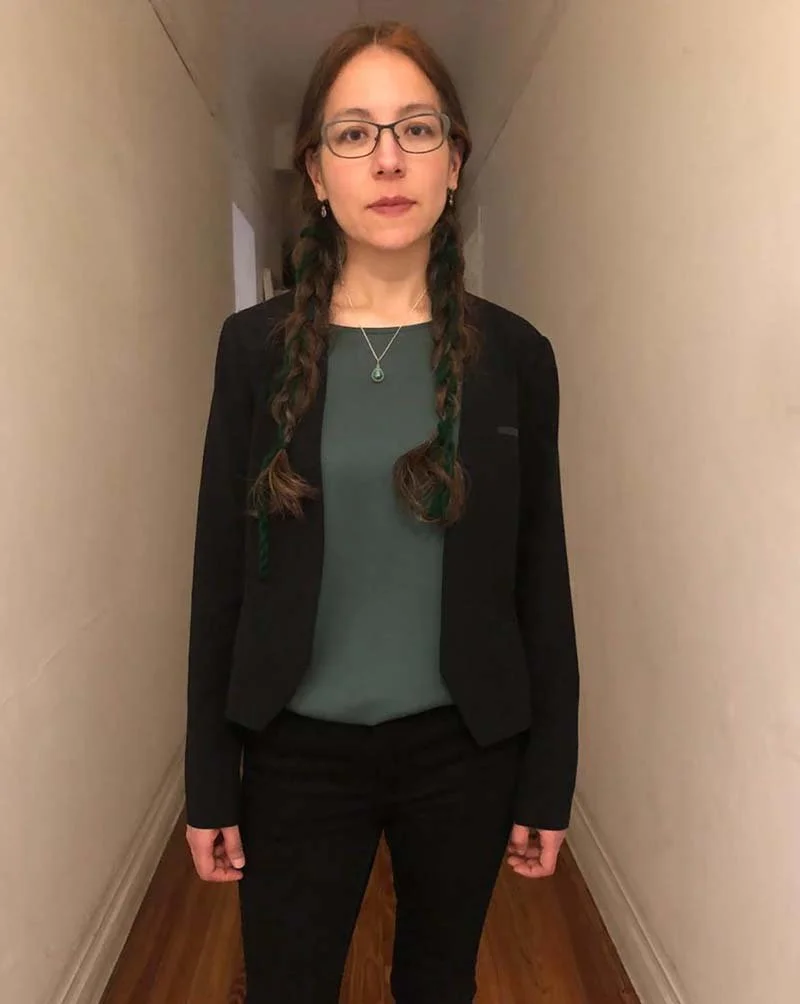
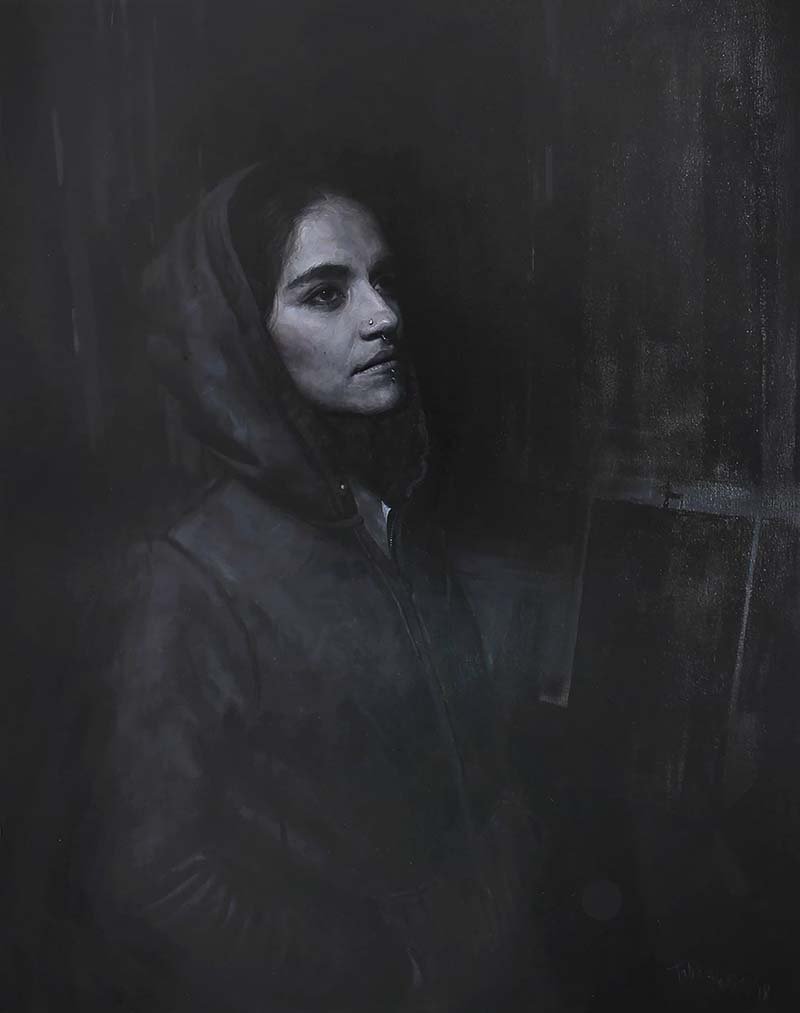
You were born in Mexico City. How did it influence your art and your thinking about the world?
I was born and raised in Mexico City.
I can't say I've thought much about the influence that has had on my work, maybe in a negative way because I didn't find the kind of art I was interested in in this culture, much less an academic training. So, I consider myself a kind of self-taught painter.
On the other hand, this can be seen as a positive thing because I have managed to develop and live off my painting despite the limited training I received.
Perhaps one impact on my life and work is that I can't always dedicate all my energy and attention to my work because the reality in a country like this absorbs time and energy due to insecurity, injustice, corruption, etc.
When did you first fall in love with art and realize you wanted to be an artist? For you, what is the importance of the arts?
I can't pinpoint an exact moment. I think I started developing a love for the arts since I was a kid because of my parents' profession. They were both actors, so, from childhood, I was exposed to theater, poetry, cinema… Although I wasn't sure what to study when it was time to choose a career, I became curious when I discovered Visual Arts and decided to give it a try. It was during that process that I discovered Rembrandt, and I think that's when I truly fell in love with painting.
I think the importance of art is immense. It nourishes the human part of us; it invites reflection, emotion, contemplation, and catharsis. It can make you feel humble, it can help you heal, it teaches you to observe and pay attention, and it connects you to other spirits, as a creator and as an spectator of course.
What does your typical day in the studio look like? Walk us through your studio and your most used materials and tools.
On a typical day in my studio, I put on my apron, prepare my medium (which I make by mixing turpentine with walnut alkyd oil), and turn on my iPad (where I view my reference image). I adjust the light and color if necessary, and then I start painting on my canvas. I mostly use flat synthetic brushes. My palette depends on what I’m working on, so it’s not always the same; the must-have colors for me are raw umber, ultramarine blue, titanium white, zinc white, and alizarin crimson. Besides brushes, I also use palette knives. Oh, and I always work while listening to music, a podcast, or an audiobook.
What projects are you at work on at the moment? And what themes or ideas are currently driving your work?
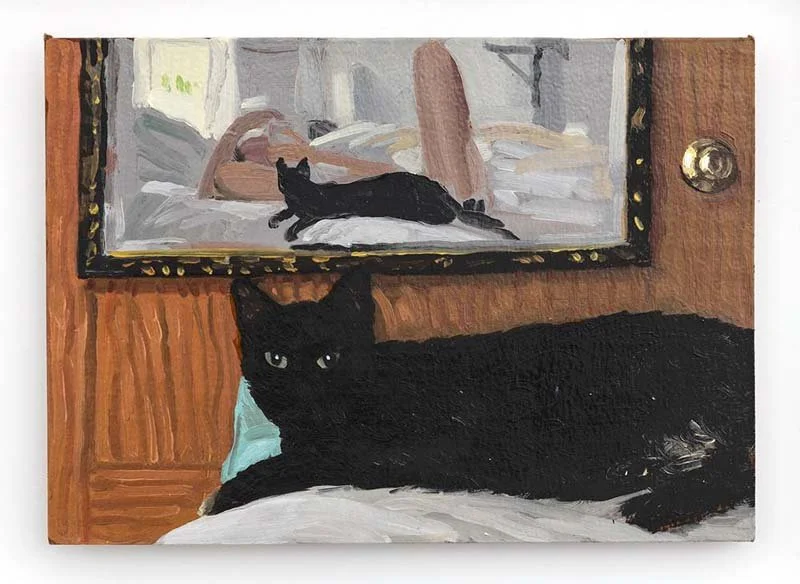
I just finish a commission and at this moment I’m right in between projects, I’m in that stage where a lot of the work happens in notes, maybe some sketches, reading, and so on. The themes I’m interested in are basically the same, mostly I think, emotions, human psyche, sometimes it’s just someone or something I find interesting or appealing, I think basically the themes and ideas that form my work come to me in a very natural, unconscious, or subconscious way, so I don’t necessarily work on a specific subject matter or theme. Right now I’m thinking of changing my motifs a little bit. I guess I’ll never get tired of the human figure and portraiture, but right now I’ve been feeling drawn to animals. So, I don’t know, maybe I’ll start incorporating that a bit more in my new production.
What do you hope people feel when they experience your art? What are you trying to express?
I just hope my work connects with the spectator in some way. I believe it’s important to allow the viewer to establish a natural and spontaneous relationship with the art piece. I subscribe to the notion that the meaning of a painting is constructed through a mixture of subjectivities: that of the creator and that of the viewer. The fact that the work in front of you takes on a meaning independent of the one that gave it form is part of the enriching aspect of art.
To be honest, I can’t say I’m trying to express anything in particular. I find it difficult to talk about my painting and describe in words the motives, meaning, findings, experiences, or the relationship I have with my work, simply because I feel so comfortable and am so used to practicing the language of painting. For me, painting is a language, and what you express with paint cannot be fully expressed with words. Ultimately, I just see painting as a way of sharing my experiences and my self.
Which artists, past or present, would you like to meet? And why?
I would love to be able to travel back in time and meet Rembrandt. He is one of my heroes, and it would be a absolute miracle to learn from him.
Do you draw inspiration from music, art, or other disciplines?
Yes, I think from all arts, but perhaps the discipline I've drawn the most inspiration from has been film. I was greatly attracted to it from a very young age, and since I started painting, it has been a key reference for me in many ways.
A great thing about living in my city/town is…
The food and the weather.
Can you describe a project that challenged you creatively or emotionally—and how you worked through it?
I can think of two, one challenged me creatively, and the other emotionally, which was much more difficult.
The first was a commission involving a scene with a lot of people, kind of a bacchanal. I got really into it. One of the most important elements for me was the light, so I studied my options, getting inspired, by the way, by a scene in a TV series I like. I rented a place, hired a lighting specialist, and invited a lot of people, even a dog. I remember at some point I felt like a movie director. At first I was scared, but I managed to control and direct everything in a good way, and ultimately, it turned out to be a very rewarding experience. The process of painting it is another story; it took me nearly a year, and I felt like it would never end, but I think I was satisfied with the result.
The second was a very emotionally challenging experience. It was a painting I did shortly after my father died, so I was in profound grief. In a way, I didn’t want to paint at all, but a part of me needed it. There was also the memory of my father, who was my biggest fan, that kept pushing me toward my work. So, I started a painting whose theme related to my father. It was inspired by a poem that he introduced me to at a very young age. Painting that piece was the hardest thing in my working experience, but I think it helped me go through the grief.
Tell us about important teachers/mentors/collaborators in your life.
I never had a traditional academic training in painting. The school where I studied art focused more on theory and some material techniques. It's difficult to speak of a strong pictorial tradition in a country like this, so I never learned the classic methodology of drawing and painting. However, one teacher did show me his drawing method. He was also very generous and a magnificent artist. And there was another teacher who showed me a painting method that I believe greatly helped me understand the materiality of the technique. So, as you can see, it was rare to find someone in university who taught drawing or painting, and that's why those two teachers were so influential to me.
More recently, I had the wonderful opportunity to meet and learn from the master Antonio López García, an experience that truly impacted me. He is a painter I have admired and followed since I was a student, and getting to know his work and philosophy on art and life up close was tremendously enriching. From my perspective, he is a man who genuinely loves his work, finds beauty in the most 'insignificant' or mundane things, is incredibly generous with his students, and whose commitment to his artistic practice is truly inspiring.
Sustainability in the art world is an important issue. Can you share a memory or reflection about the beauty and wonder of the natural world? Does being in nature inspire your art or your process?
Well, I live in a big, overpopulated, and polluted city, so I’m always yearning for contact with nature. Unfortunately, that is not something I get the chance to do very often. So, maybe this will sound funny, but I think I get super inspired when I see a video or a movie of someone experiencing nature directly, and I imagine myself being there.
I hold hope for having the opportunity of living someday in a nicer place surrounded by nature. I do have some beautiful memories from my childhood of spectacular places I got the chance to know, and those are images that I’ll keep in my mind forever. I think that inspires me as a stimulus to be better at what I do, so that one day I have the means to live in a nicer area. I also hope we can ensure that beautiful natural places are preserved for the near future.
AI is changing everything - the way we see the world, creativity, art, our ideas of beauty and the way we communicate with each other and our imaginations. What are your reflections about AI and technology? What is the importance of human art and handmade creative works over industrialized creative practices?
I believe that "traditional" art, made by hand, carries an essential imprint of the person who created it—the process, the temperament, or what is often called "the hand" of the creator. I think this is something that is inevitably visible in the final work.
It's like what happens when working with a live model versus working from a photograph. I don't mean to diminish the value of working from a photo; I do it almost all the time. However, when you work with a live model, a relationship is generated with the person you are portraying that doesn't happen when working from a photo. I believe that in the process of working in a more traditional way, experiences are generated that might be diluted as we increasingly use sophisticated technologies. And yet, photography, for instance, has become an essential tool for many painters. So, I don't doubt the benefit that tools like AI can offer in terms of making the work more fluid and practical for some. I'm not a fan of art completely generated by AI, but perhaps it's just a matter of time before we feel more comfortable with it. That said, I will always prefer traditional painting over digital or AI-generated art. For me, nothing can replace physical painting.
Exploring ideas, art and the creative process connects me to…
myself, to the world around me, to experiences I wouldn't have any other way, and to others and their ways of seeing.