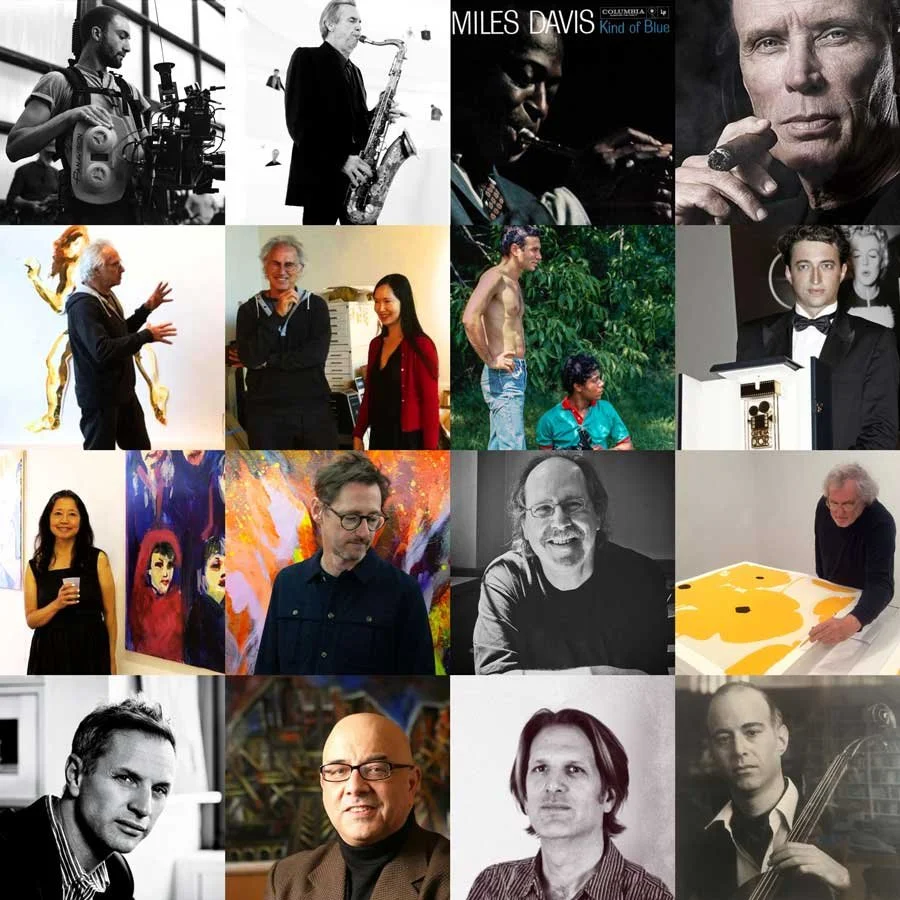
I think that, based on the fact that both Brazil and China are tied to my own roots, I understand a little more about the culture and history of both countries. About 15 to 20 years ago, I felt that I didn’t want to work just for income or to gain more fame. I felt I should do something meaningful for the rest of my life. Very few people from Brazil have ever been to China. This is why I brought a few Chinese artists from China to Brazil and from Brazil to China. That was my first experience doing some form of residency, but it was more than a residency. It was really for the Brazilian artists to learn more about China and its culture, and for some of the Chinese artists to learn more about Brazilian art and culture.
I think that the Chinese view of everything is very long-term. The Chinese don't think about what's going to happen tomorrow or next year. They think about what will happen in 10 years. Most Westerners, especially in the Americas, whether it's the US or Brazil, tend to think very short-term, focusing on what's happening tomorrow or the day after. I remember an American saying to me, "Why are the Chinese focused on some kind of political event that happened a hundred years ago?" I said that for them, a hundred years ago is like yesterday; it still has consequences today. They are conscious of history from that long ago, projected to now, and into the future. It was hard for an American to understand that history is not just in the past; history is still present. This is something that is also reflected in Chinese contemporary art. I see many contemporary artists in China refer to or at least infer things that happened a hundred, 200, or 500 years ago, which is almost incomprehensible to people in the Americas.
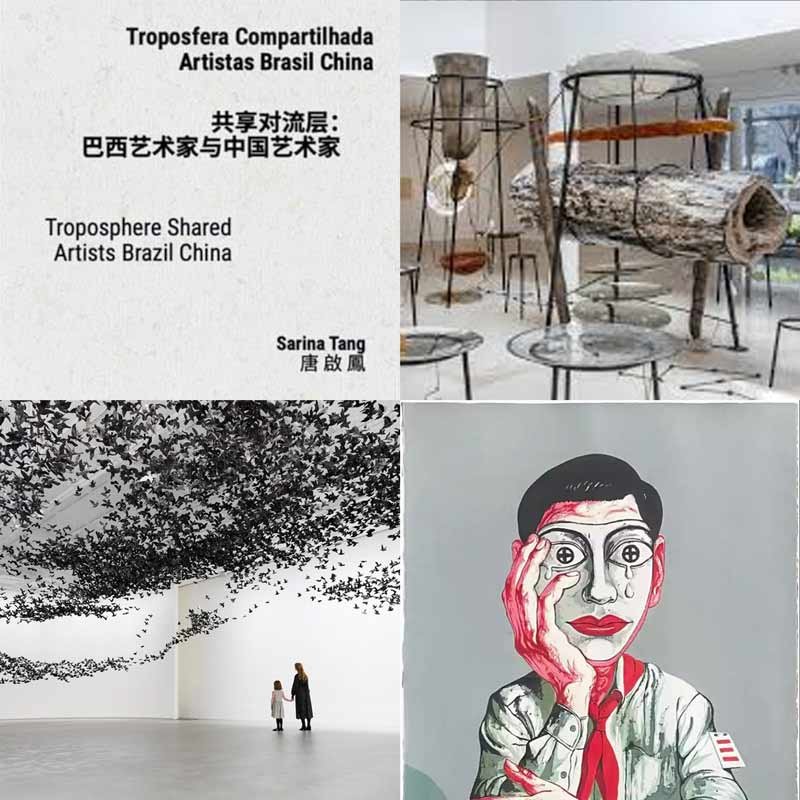
Sarina Tang has built a remarkable career connecting disparate worlds through art. She's a curator, a philanthropist, and a collector whose own life story spans continents – from her childhood in Shanghai and São Paulo, to her art education in Paris, and her long residency in New York. Tang is the founder of Currents Art and Music, a foundation dedicated to fostering artistic dialogue between China and Brazil, two countries deeply personal to her. We'll talk about her fascinating journey, the evolving world of art collecting, and how she's worked to bridge cultural divides through ambitious projects. From commissioning monumental sculptures by Roy Lichtenstein to orchestrating deeply personal exhibitions with artists like Song Dong, operas at Lincoln Center, and the first-ever institutional Brazilian artists group exhibition in China, her influence extends far beyond the traditional roles of a collector or philanthropist. She’s the author of Troposphere Shared: Artists Brazil China, which brings together works by 42 Brazilian and Chinese visual artists
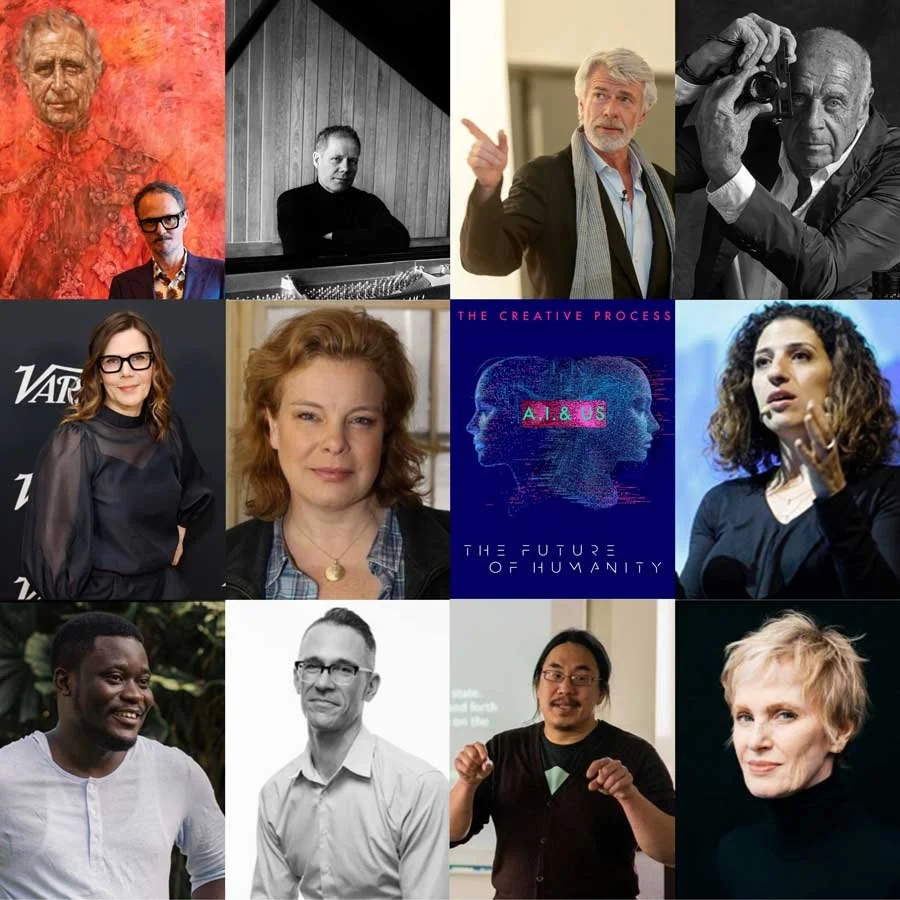
THE CREATIVE PROCESS
Before we began the recording, we were talking about the importance of happiness and a sense of well-being that you gain from visiting museum exhibitions. Art really does have a way of bringing people together diplomatically and bridging divides. Following your trajectory from Shanghai to São Paulo, Paris, New York, and now in Paris after just coming from Italy, you are constantly working on projects between China and Brazil. It feels like a living map of this global cultural exchange. In fact, you often use environmental metaphors, currents, and trophosphere, reflecting your deep immersion in diverse ecologies. Could you speak to the untapped potential you see in the dialogues between the global South and East Asia, beyond the established Western roots? How are current arts and music activating these less visible currents?
SARINA TANG
I think that based on the fact that both Brazil and China are tied to my own roots, I understand a little more about the culture and history of both countries. About 15 to 20 years ago, I felt that I didn’t want to work just for income or to gain more fame. I felt I should do something meaningful for the rest of my life. Fortunately, I felt comfortable enough financially that I didn’t have to worry about a living necessarily.
I thought I would perform a role that perhaps no one else might. I don’t know if anyone else has the knowledge of culture, history, language, but more importantly, the contemporary art of two such distant and diverse countries as Brazil and China. I thought I could make a difference where nobody else can play that role, and that's when I deliberately focused on that.
One of the things that was important for me was my encounter with an artist called Tunga in Brazil, who told me that when he was very young, he went to China to stay with his father, who was a journalist and a diplomat, and how that completely changed his life. His stay in China opened up his perspective, both for his personal life and for every work of art he created. He became someone with a universal knowledge and feeling about the world in life and work.
That’s amazing because very few people from Brazil have ever been to China. This is why I brought a few Chinese artists from China to Brazil and from Brazil to China. That was my first experience doing some form of residency, but it was more than a residency. It was really for the Brazilian artists to learn more about China and its culture, and for some of the Chinese artists to learn more about Brazilian art and culture.
There is a lot in common between China and Brazil, especially for the artists. One of the Brazilian artists who came to China to create new installations felt very much at home, aside from the language issue. Both China and Brazil are considered developing countries, and the lack of resources in those developing countries may make artists more inventive.
In both Brazil and China, many artists take discarded objects, or what people would consider junk, and make art out of it. That's why many artists can address environmental issues. They are more in tune with nature and appreciate it in ways that the wealthier, more developed countries kind of discard. I think that's something enriching rather than impoverishing in the art world.
THE CREATIVE PROCESS
Yes, art is truly a vehicle. It allows for cultural cohesion and longstanding relationships. I didn’t realize the depth of the relationship between Brazil and China. It’s not just since the establishment of BRICS. I saw in the introduction of your book Troposphere Shared: Artists Brazil China that the shared artist relations between Brazil and China span five decades.
TANG
Yes, absolutely. The 50 years of diplomatic relations between Brazil and China were celebrated this year, 2025.
THE CREATIVE PROCESS
That’s really important. Of course, the relationship has strengthened since the development of BRICS. Many people don’t understand or don’t see those connections. But you’re helping to illuminate that. Now they are allies, with their own complex histories of colonization and engagement with Western countries. We’ve seen, in totality, the population of BRICS rise significantly, currently at 52.5% of the world population. A lot of people are seeing the advantages of becoming allies with a broader group and recognizing the economic power and cultural significance of finding their voices. I've been really happy to see that as a counterpoint to American dominance, which can have both good and bad effects.
TANG
In the words of Ambassador Marcos Caramuru, who was the Brazilian ambassador in Beijing when I did the exhibition Troposphere in 2017-2018, Ambassador Caramuru always said that soft power is much more influential. He felt that the exhibition opened so much more than just one performance by a major musician, dance group, or orchestra. Those are often fleeting moments; if you miss that event, it’s such a short time that it’s available, while an exhibition that lasts for three or four months allows you to go any day, any time.
It reaches a much larger audience. I was pleased that many of the artists in China who attended that exhibition said, "We didn’t know the kind of art production that happens on the other side of the world." That was significant for us to hear. We made a tremendous effort to do an exhibition that covered 2,700 square meters with 200 works of art, including ten new installations—five from Brazilian artists who came to China to create installations and five Chinese artists who made new installations specifically for the exhibition.
THE CREATIVE PROCESS
In your book, there are 21 artists from Brazil and 21 artists from China. Were all of them in the exhibition?
TANG
Very few of them were in the exhibition because the purpose of this book is quite different from the purpose of that exhibition. In the exhibition, I found a thread connecting each work by a Chinese artist to a work by a Brazilian artist because I felt that dialogue existed. This exhibition is all related to nature and technology, and the reason there are 21 artists from each country is a reference to the 21st century.
The premise of the book I came up with is that throughout the industrial revolution, the world made incredible technological advances but, in the process, really harmed the environment. In the 21st century, our goal must be to repair the environment. It is through the lens and perspective of the creative artists from the two most important countries, China and Brazil in the global South. There’s no other country in the Southern Hemisphere that is as consequential, but importantly, none has such an incredibly talented pool of artists as Brazil.
We are talking about these two superpowers of creative minds and perspectives that they can express for us, for all human beings in the troposphere, to connect to and help repair the environment.
The cultures of China and Brazil are so incredibly different, yet I find it fascinating that China has such a rich history with so many treasures from its 5,000 years. I’ve visited many archaeological sites in China because I find them fascinating and beautiful. In Brazil, although it’s a newer country, I find the Brazilian mind to be very creative, partly because of the influx of different cultures over 500 years, which has influenced current Brazilian culture.
Brazil has seen an influx of significant populations from Italy, Japan, and between World Wars I and II, many populations from Arabic countries and Jewish populations from different parts of Europe came to Brazil. It’s mixed with the indigenous culture and the original Northeast Brazilian culture, which reflects a blend of the native populations and the influx from Europe, Asia, and Africa. The slave trade in Brazil was much more extensive and longer-lasting than in the US, so all that influx of different cultures contributed to the creativity that exists in Brazil.
THE CREATIVE PROCESS
Yes, and it’s amazing. A lot of people don’t realize that. When you look at their artworks as you brought them together in exhibitions, what are some common iconographies, symbolism, or treatments? Even in music, how do you find that they are in dialogue or inspired by each other with contemporary art?
TANG
I would say that the Chinese are astonished at the novelty of Brazilian contemporary art and Brazilian culture, while the Brazilians are completely flabbergasted by the long and very rich history of Chinese culture. The fact that there are 5,000 years of antiquities and knowledge contrasts strongly with the 500-year history of Brazil.
These two contrasting ideas can mesh in contemporary art. From my point of view, artists are tuned into every single current surrounding us at every moment, almost like visionaries of this moment. This is seen in art, music, and literature. When you think of Proust or James Joyce, nobody appreciated them during their time. Same with Beethoven and some Russian composers; they were not appreciated in their time. They are now appreciated, a hundred to two hundred years later.
I think it’s the same with contemporary art. Some artists seem bizarre and completely unexplainable to those who have never looked at contemporary art. On the other hand, if you look at art around the world and let yourself feel any reaction, even if it’s disgust or repulsion, that elicits an important feeling. The function of art is not just to show a picture of an animal, a landscape, or a scene; it’s really to elicit feelings or experiences that awaken you. I think that’s what’s important in art.
THE CREATIVE PROCESS
Yes, you also speak to the role of the curator, the cultural translator. Some of these artists in their time weren’t fully appreciated or were misunderstood and forgotten, and that's the role of curators, cultural translators, critics, or art historians—to unearth, explain, and make those connections that aren’t immediately visible to everyone.
TANG
Yes, I feel that the role of curators is very important. I have been on the board of ICI (Independent Curators International) in New York for 25 years, and this year we are celebrating 50 years with a big gala on October 6th in New York. The role of curators has become that of agents of social change in some ways because the communication to the audience is so crucial, especially now when there’s so much uncertainty and conflict in various parts of the world. Curators are bringing to light many issues that artists are concerned about, and more than what the diplomatic world or news media can elicit and show. I think artists are very tuned into what’s happening and can demonstrate some of the issues that concern us now.
THE CREATIVE PROCESS
Because of all your travels between Brazil, China, and elsewhere, and your devotion to environmental projects and art, could you share some of your memories of the beauty and wonder of the natural world?
TANG
It's not so much a specific landscape that impresses me, but the feeling of being in a place. For example, when I went to the caves and saw the incredible sculptures and paintings created by human beings under difficult circumstances, or in Ajanta and Ellora caves in India, or Angkor Wat. The wonder of these works made in such environments is astounding. I went to Machu Picchu in Peru, but aside from that, I remember going to Kolkata and picturing images of dwellings inside the rocks, built with enormous stones. I am very impressed by ancient civilizations. I don’t visit places just for their landscape; they need to inspire me emotionally. Last year, I went to the Galapagos with my family to celebrate a birthday, and it was such an amazing experience to see all the animals around us. If you don't disturb them, they don't disturb you, whether they are iguanas, seals, or turtles. It felt like living with nature, where neither side is threatened. The landscape in the Galapagos, where Earth began, is incredible. When I think of the research done there, it’s a significant place. I recall a place in India called Hampi, which has huge boulders treated as temples, but they are natural. They existed long before any of my ancestors were born.
Nature is so imposing, and we must respect the fact that it has been around forever. It's criminal for us to neglect our responsibility to preserve it. We depend on nature for our lives in every way. When I think about my grandchildren, who are nine and twelve, I worry about how they will survive amid all this climate change that is happening now. It’s very concerning.
THE CREATIVE PROCESS
It’s strange how artists and curators can tap into the significance of these issues on an emotional level. Even without realizing it, just by drawing on artists, curators can recognize these themes. Sometimes as a painter, we don’t realize what we’re tapping into. It’s a process of intuition, akin to gathering all we've absorbed unconsciously. Cultural translators are essential.
TANG
It’s your sensitivity that connects to something you don’t even have to explain. The way you explain it is through what you paint. If we can receive the messages you put out there, it illuminates our understanding of what’s happening.