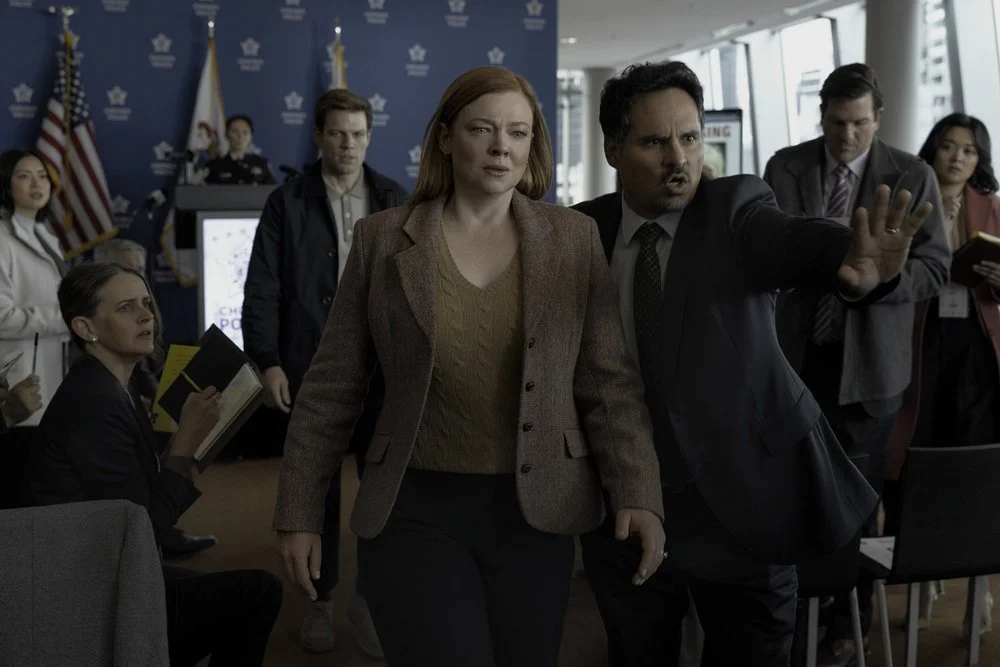


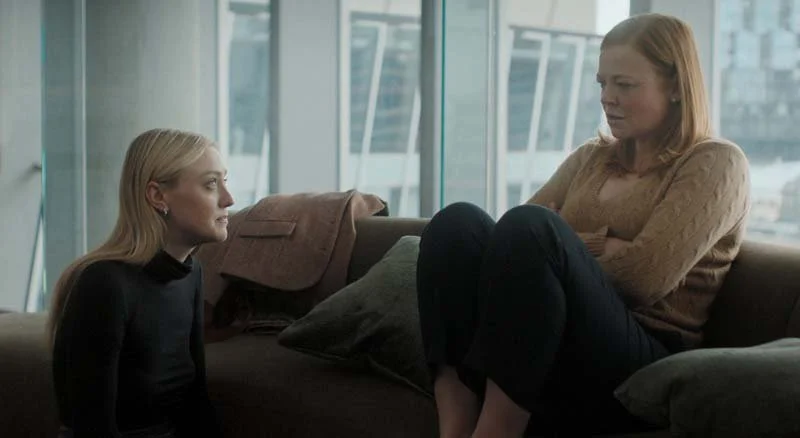
The people that we choose to love and the ones we choose to rely on and trust… Marissa and Jenny's relationship and that female friendship, that's what we watch happen in the series in real time. Whereas the marriages and the relationships that they're already in maybe aren't so perfect, the one we watch them choose is the one that's rewarding. It's so nice to listen to people's reactions to that relationship and how real that relationship feels. These two women, from a character perspective, have every reason to not get along or to hate each other or to yell at each other. That's the opposite of what each one of them does, and that just feels true and honest. I know a lot of women who I feel would act that way, be the best version of themselves in such an awful situation.
We're at times where a lot of the arts are really suffering in multiple countries with funding and cost of living. Understandably, people come for the arts, but our job is at times to hold a mirror to society. We can learn a huge amount. It can really change everyone's perspective. So look, it could be escapism, and we all need that at times, but it also can have something that fundamentally can't be enacted just through journalism at times. I think when you dramatize something, it can reach the very core of an audience.
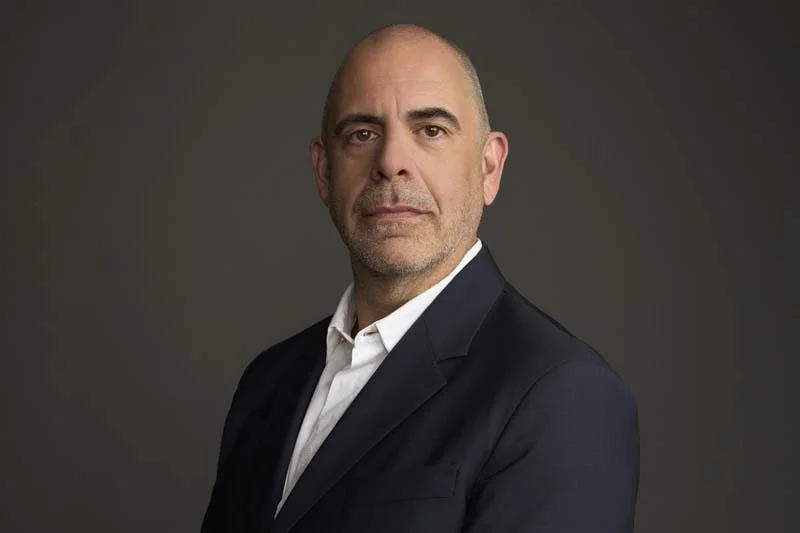
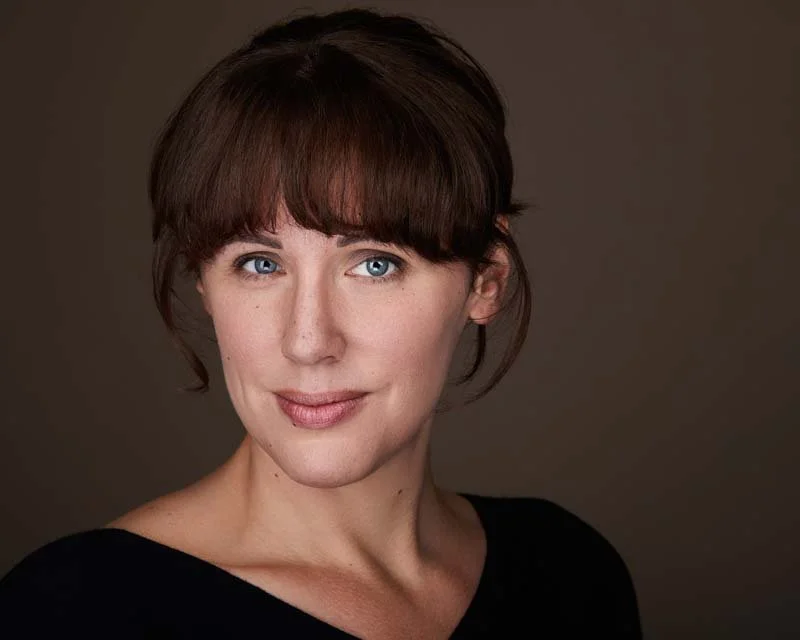
Today, we'll be talking about the intense emotional toll of modern life, and how the deepest secrets often hide behind the most polished facades. My guests have dedicated their careers to crafting psychological dramas. Nigel Marchant is the Managing Director and an Executive Producer at Carnival Films, the powerhouse behind some of television's most beloved and intricate dramas, from Downton Abbey to the television adaptation of The Day of Jackal. Megan Gallagher is a writer who understands the delicate mechanics of suspense and the human heart. She created and wrote the critically acclaimed series Borderliner, and most recently, the BBC thriller Wolf.
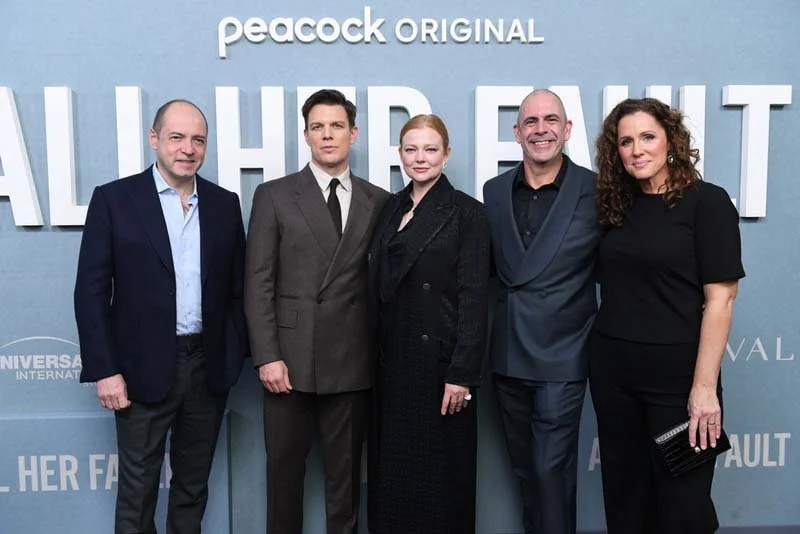
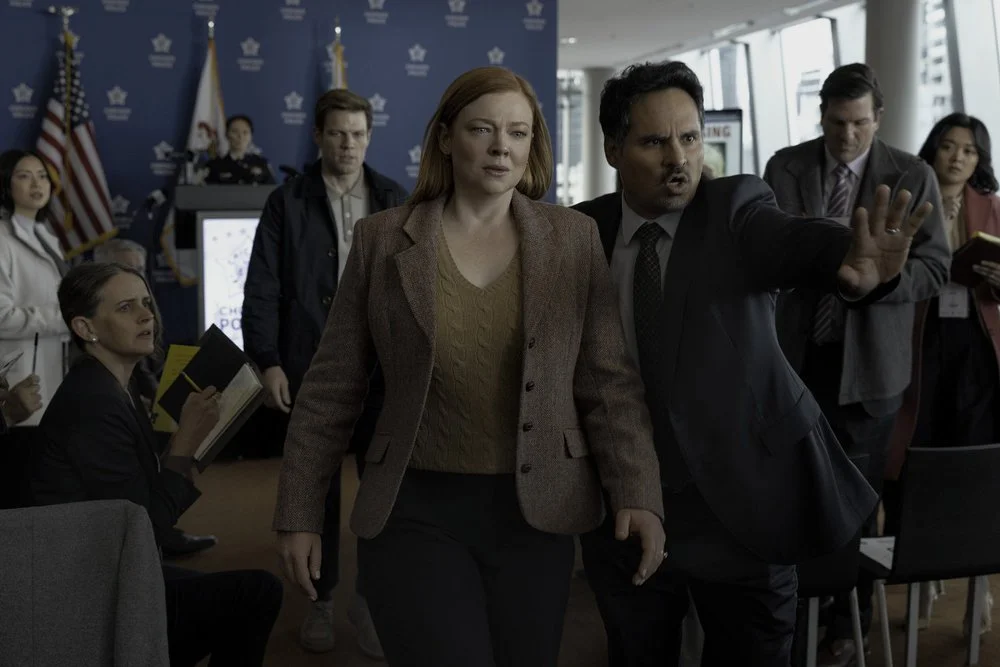
They’ve joined forces for the new limited series, All Her Fault (now streaming on Peacock). It’s an anxiety-inducing thriller adapted from Andrea Mara's novel and the show plunges us into the frantic world of a wealthy working mother, Marissa Irvine, after her five-year-old son disappears. Starring Sarah Snook in her first television role since Succession, the series starts with a rupture when Marissa’s son Milo is kidnapped and ripples into many lives, exploring momshaming, the guilt, blame, and sacrifice of motherhood. And what happens when domestic bliss turns to domestic misery.
THE CREATIVE PROCESS
I think that All Her Fault does ask those huge, difficult questions about love and sacrifice. I mean, marriage is messy enough, and then all the flaws and resentment emerge when things go wrong. It really lifted the veil on normalcy. Then it made me ask questions about who we choose to trust and love. Sometimes it's just accidental, the people that you form your long-term relationships with or the people who you choose to trust and love for your children. It made me a bit paranoid. I don't have children, but we've all been in these parenting roles, which you also address from many perspectives.
NIGEL MARCHANT
Yeah, it was really important to us to not pit the two women against each other. I think we often see that in television, and what we don't explore is that friendship. We really didn't want to put any shade on those characters at all and explore that friendship. There are many types of marriages in many ways, and they find strength from each other that they're not getting from their husbands.
THE CREATIVE PROCESS
Indeed, those friendships can sometimes be among the longest marriages, right? They can outlast our many marriages and divorces. At first, when I was watching, I thought, "Oh, this is so fast-paced. I could almost not keep up." But then, as I understood it, you were giving space to explore all these perspectives on parenting, whether it’s the exhaustion of working parents or what it feels like to raise a disabled child, or what happens when the eldest child steps in to be a parent to their younger siblings. What about these other in-between parents and nannies? You honor all these different roles, foster parents, and other caregivers. Even the determined Detective Alcaraz, played by Michael Peña, acts parentally towards the victims. He is not just trying to solve the crime; he wants to make sure that the victims are not traumatized themselves, and he has his own issues behind the scenes. Then we explore rescue fantasy. Without giving too much away, there’s a weird kind of Munchausen by proxy plot and what happens when love goes too far. I felt like everyone is kind of a parent in this story, even if they don't have children. At the same time, they all felt like parents who need parenting themselves.
MEGAN GALLAGHER
I really like that. I've heard it phrased that way before. It's always a huge balance to try to get enough plot to keep the thriller elements going, which I enjoy very much as a writer. I really enjoy developing with Nigel. We've developed a kind of thriller shorthand between us at this point, for sure. But we also need enough time for characterization. I think the first three episodes set a particular pace that's really breakneck, and then somewhere around four and five, we were able to slow it down just a teeny tiny bit and squeeze some emotional juice before we ramp it right back up again. It's always a balance; you know, do you do the right amount of this and the right amount of that? But that's also kind of the fun of it.
THE CREATIVE PROCESS
Nigel, as a producer, you’re no stranger to these complex dramas. What were the key elements that drew you to the story?
NIGEL MARCHANT
We'd read quite a few different thrillers. We were looking in this area for what we could find for Megan next. We were looking for something in this kind of genre. Finding something that has a brilliant opening premise that is very immediate; this novel really had that, and then a brilliant end as well. Something that felt satisfying to an audience who sat through eight hours of a show. We were looking for those two parts and then also finding something to say about the world we are living in at the moment. At the heart of the story, or certainly their friendship in that pilot episode, you can get cocooned into your world in a marriage and having children. At that stage in life, it's nice to explore that kind of new friendship coming together and that chance meeting with somebody that you really connect with. That felt really interesting to us.
THE CREATIVE PROCESS
Yeah, and at the same time it was being developed, I would also want to know why you felt that Sarah Snook, as executive producer, was having her first child at this time. Three years seems kind of short, compared to some projects in their development. How could you get that all done while she was having a baby?
NIGEL MARCHANT
We were probably lucky. As with all these things when the planets align, it's an Irish novel, so we adapted it for Dublin. We shared it with our colleagues over at Peacock, really looking at a co-production opportunity. They read it and loved it and were looking for something in this area. They asked, "Could you locate this in America for us? We think these themes are universal." It just so happened that Megan was writing it, who is indeed American, although she lives in Europe. It was serendipitous that those elements came together. The show got greenlit, and we were looking at casting. It's a really tough role. Marissa is in emotional crisis for eight hours. Who could take us through those complexities of emotion? Who do we want to watch for eight hours crying? That takes some kind of extraordinary actress. We love Sarah from Succession and had also seen her perform Dorian Gray on stage, which was just a remarkable performance. She played every part. So we approached her, and it was tough. She was doing eight shows a week, as you say, had a new child, and was extremely busy. Thankfully, her manager had a read of it and loved the pilot episode and was really supportive.
MEGAN GALLAGHER
We really, I mean, as Nigel said, it’s eight episodes of a woman in such despair and hysteria. I think an actress who wouldn't be as skilled as Sarah might come off as just eight episodes of being a victim. You know what I mean? Because she's so skilled, and she's so interesting to watch, she knows how to extract emotional juice and all different kinds of nuances, from crying to making a snide comment or recognizing the irony of something or engaging with a dynamic that existed prior to the kidnapping—all those kinds of things. Sarah Snook is capable of doing so much nuance and balancing so much in a scene. I mean, we were very lucky to have her and did cartwheels when she signed up.
THE CREATIVE PROCESS
Also, Jake Lacey, who plays Peter Irvine, kind of blindsided me there as well. I thought, I know what he's up to, but no, I had no idea. He walks this really uneasy line between the desire to protect and the need to control taking care of his sister and brother and family. How did you approach writing a man whose capacity for taking great care is wound up in his need for control and the maintenance of a lie?
MEGAN GALLAGHER
I was so excited—so often, Jake Lacey has some secrets that he's hiding. Diving into those secrets and the ways in which he's at fault for the mistakes he's made and his part of the story, I was so interested in diving into his character as a caretaker—somebody who is really, I think it's fair to say, obsessed with family and being needed, as you say, in the parental role. I was so excited to do that with a male character because we often see that in female characters who are portrayed as bad people in stories. You know, they are obsessed with relationships or obsessed with children or obsessed with family, and it drives them to madness. We often attribute the need for family or the need to take care of people to being a woman. We don't often associate it with a man. So, I was really excited to develop a male character that way. I was even more excited when Jake Lacey signed on because he's such a masculine guy. You know what I mean? He is such a strapping masculine guy, and I think he did a fabulous job of tapping into all that.
At one point, it's maybe my favorite turning point in the series. It's towards the end of, I think, episode five, and things are really coming to a boil. Peter says what he loves most about his son are when he has nightmares and needs to be comforted. I mean, that's just messed up.
MEGAN GALLAGHER
We went back and forth on that line, Nigel, if you recall.
NIGEL MARCHANT
I absolutely do. It is the most terrifying thing. It’s great you had that response. Megan had set herself a real task in that episode. She wanted to create a real chamber piece and set it all in the house, just keeping turning up the temperature, which I think is so much fun. It’s such discipline to do that as a writer. When you watch it, you don't feel, "Oh, we’re not going outside." It doesn't feel to the audience like we've set it all in the house, which is great for the actors. It was a really fun episode for Megan to write, and for us to film. You are exactly right; that line is utterly terrifying and says everything about that man. When we first got the script and Megan delivered it, it was really good fun.
MEGAN GALLAGHER
But we wondered if it was too much. Is it too little? I don’t know. It came down to Jake's performance. I think he delivered it, like what he thought he was saying was just a completely normal answer. That’s why it works. I think he made it work perfectly. So, credit to him.
THE CREATIVE PROCESS
You were talking about developing that thriller shorthand, developing your instincts or how you're choosing projects. Nigel, as a producer, you have a keen sense of what works, and I think you're very hands-on. I wonder how you feel you honed your instincts and came to understand picking the right people to make a project land, and how you develop that intuitive intelligence.
NIGEL MARCHANT
I think years of hard work is the honest answer. I came from production, so I was a freelancer for many years and did the nuts and bolts through every job in production. I started as a runner, worked my way through to production manager and line producer, and then I was really lucky. Executive producer Sally Head took a chance on me and made me a producer. It's quite hard, or certainly back then, to swap from being in production into the editorial and creative side. I really learned from people like Sally Head and then from Gareth Neame about that development side of the business, that kind of creative editorial. You hone your skills. I think you've got to rely on your instincts. Part of it is asking yourself, "What do I want to watch?" You've got to be really passionate about anything you are developing. It’s a really long process. Megan, I don’t know, what have we been, three years, probably, doing this from beginning to end.
MEGAN GALLAGHER
Yeah, honestly, if you don't love something, you’re going to really struggle partway through.
THE CREATIVE PROCESS
Could you speak a little to the differences between the American and the English model of making television?
NIGEL MARCHANT
The American model is much more structured. I always think it comes from network television, where you are producing 22 episodes a season. It was a real machine; the lead writer was the showrunner and was across everything on the show: the budget, the casting, the post-production, and the writing. To do those many episodes, you had a huge team of writers behind you. In England, we've always had much smaller commissions. The maximum used to be six episodes, so you would have a writer who was able to possibly write everything with a much more singular voice. I think those two models have merged with cable television in America and then, with the streamers, where there are a smaller number of episodes and normally smaller teams of writers behind it. It’s more collaborative. In the UK, writers would normally work across multiple shows, while producers would be the hands-on people, what Americans call non-writing executive producers, which is the production company. Gareth and I, in the UK, are very hands-on, and it would feel odd to me to develop a show for two years and then get it greenlit and hand the script and budget to somebody else to go off and make that show. That would be terribly dishonest of us to a writer not to be there throughout the process with them. I think the two models have become much closer. The UK now has writers involved in every aspect of production, and we work as a team. My job is really to find consensus between supporting our writers and directors, which can include numerous different voices, multiple executive producers, and different studios and broadcasters. My job is to keep that noise away and let our authors do the show they want to do.
THE CREATIVE PROCESS
So Nigel, earlier you touched on your ongoing partnership with Universal International Studios and how you're developing shows and your new lineup.
NIGEL MARCHANT
So Carnival still runs as a kind of independent outfit at heart. We're a small team; there are only 20 of us at Carnival. But we have this big studio behind us, which is really a huge benefit to us. This show brought all of those pieces together, and it was really the first time Carnival had done an American show that was set in America. We had made network television before, but this was America for America. It was a really important piece of business for us and was bolstered by all these different parts of the studio.
THE CREATIVE PROCESS
In closing, as you think about the future, the kind of world we're leaving for the next generation, and the importance of the arts today, how has it given your life meaning? What would you like young people to know, preserve, and remember?
NIGEL MARCHANT
We're at a time where a lot of the arts are really suffering in multiple countries with funding and cost of living. Understandably, people come for the arts, but our job, at times, is to hold a mirror to society. We can learn a huge amount. It can really change everyone's perspective. It could be escapism, and we all need that at times, but it can also have something that fundamentally can't be enacted just through journalism. I think when you dramatize something, it can reach the very core of an audience.