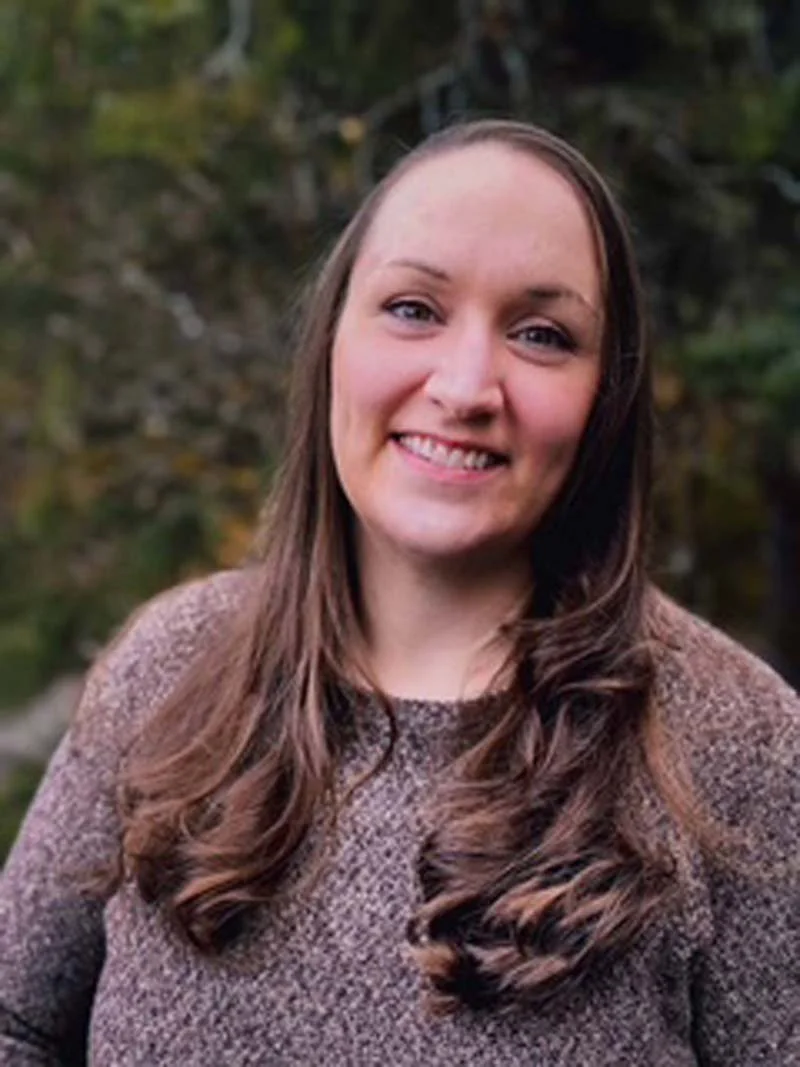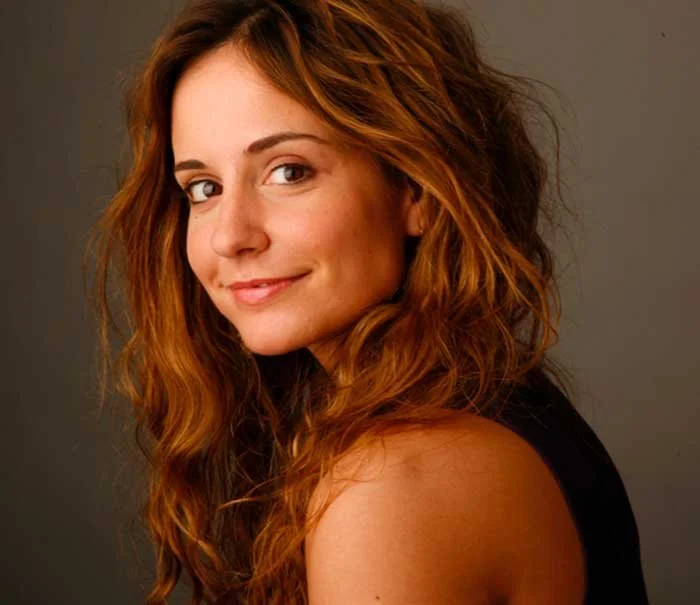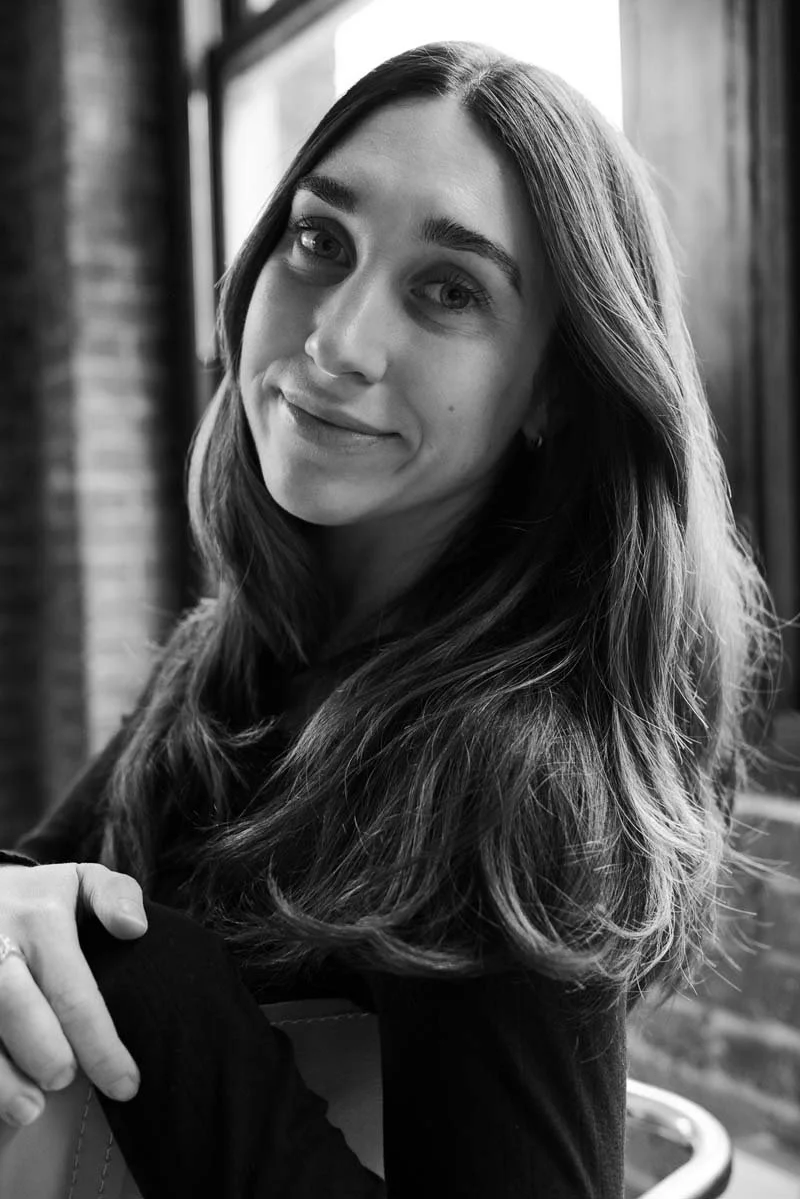


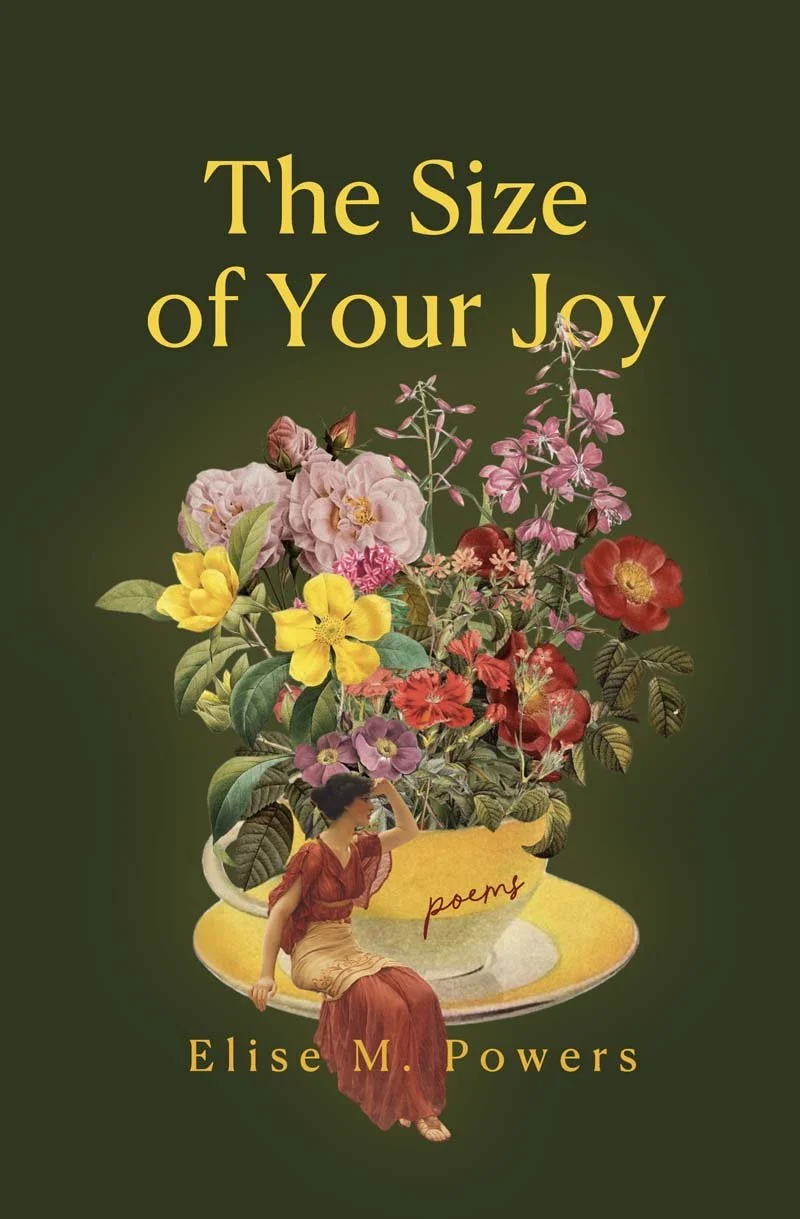
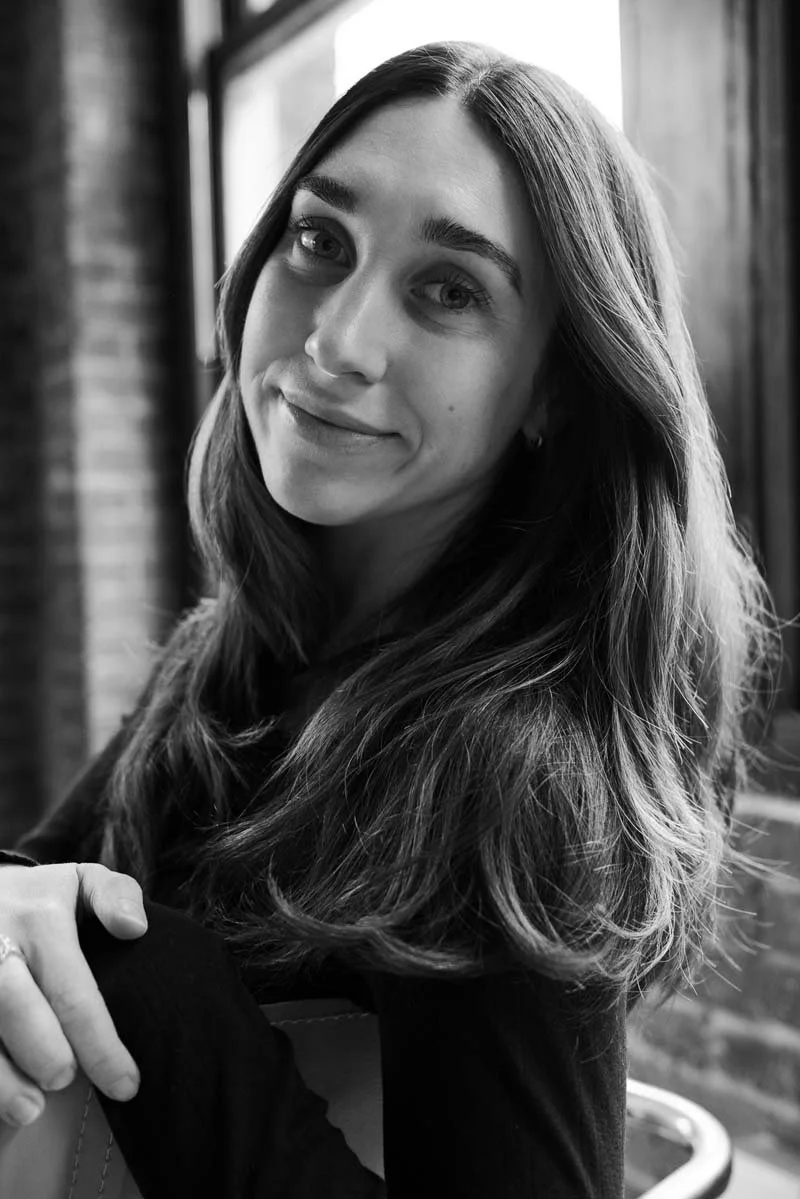
Elise Powers is a poet whose work explores the complexities of womanhood and the intersections of joy and sorrow. She holds a BA in English Literature with a minor in Writing Studies. Her poems have appeared in literary magazines including Gather and Only Poems, and her work has been recognized as a finalist for the Central Avenue Poetry Prize and second place in the Black Horse Review Poetry Contest. Her debut collection, The Size of Your Joy, is forthcoming from Central Avenue Publishing in spring 2026. She lives in Seattle with her husband and daughter, where she writes, collects sea glass, and savors life’s tender joys. @elisepowerspoet
Where were you born and raised? How moving influence your writing and your thinking about the world?
I was born in Fairbanks, Alaska, but I was raised all across the United States. We left Alaska when I was three years old and moved around every few years. We weren’t a military family, just loved a fresh start. I spent much of my childhood in Greybull, Wyoming, and Seattle, Washington (where I now live), but I also called Colorado, Montana, and Florida home, all before the age of thirteen.
All that moving around, as you can imagine, deeply impacted how I interacted with the world. Curiosity and open-mindedness were instilled in me at an extremely impressionable age when, after death and divorce, my family moved from Wyoming to Florida. I must have been around eleven or twelve, and I was thrust into a completely different world. I remember loving the novelty of it all and wanting to travel and explore the whole world.
That being said, I was also a really quiet kid who struggled in school and wasn’t the best at making friends, so being the perpetual “new girl” didn’t do me any favors. I kind of took on this attitude of, “It’s all temporary, so what’s the point in trying?” Now, of course, I know the exact opposite to be true: it’s all temporary, and that’s the whole point.
What kind of reader were you as a child? What books made you fall in love with reading as a child?
I’ve always been an avid reader. I wasn’t the happiest kid growing up, so reading became not only a form of escape but, more importantly, a kind of companionship that didn’t exist in my real life. I loved the Harry Potter books, Junie B. Jones, Amelia Bedelia, Magic Tree House, Matilda (gosh, I loved Matilda), and anything by Shel Silverstein, who I totally credit with sparking my love of poetry.
Describe your typical writing day.
I’m a stay-at-home mom, so my writing routine mostly looks like quickly typing lines into my Notes app before they slip away. I’m always writing, even when I’m not. A poem is constantly living in the back of my mind, and I love to turn it over like a stone throughout the day, adding lines as they come and polishing it up when I have a spare moment. People love to ask me about my writing routines and rituals, and my answer is always this: it’ll never be convenient or feel quite right, you just make it work.
Tell us about the creative process behind your most well-known work or your current writing project.
That would be my debut collection, The Size of Your Joy. Writing this book was unbelievably cathartic for me. For so much of my life, I was a “writer who didn’t write.” I’ve always considered myself a writer, but I did every type of writing you can imagine except the one I knew I was meant to be doing: poetry.
In school, I studied English literature and writing studies, then got into copyediting and copywriting after college, which eventually morphed into social media management. But when I had my daughter at twenty-nine, everything changed. Her birth flipped some switch in me I wasn’t even aware of until she came along. Instead of the fear of failure that had always held me back, I felt a deep sense of loss for all the time I’d spent not doing what I loved.
Suddenly, the floodgates opened. I wrote and wrote and wrote. I started an Instagram account to hold myself accountable. I couldn’t stop writing, editing, and reading poetry. I joined workshops. I made friends with other poets. I submitted to literary magazines. And just over a year into this new, ferocious chapter of my writing life, I was offered a book deal by an incredible independent publisher.
The poems in The Size of Your Joy are what came out when the floodgates opened. In many ways, the creative process behind this book felt like releasing a backlog of all the poems I should have been writing during the years I didn’t.
You mentioned your Notes app, but do you keep a journal or notebook? If so, what’s in it?
Yes, most definitely. I have one notebook that goes everywhere with me. It’s from Paper Republic, which is my favorite because you can fill it with separate small books. I use one insert for journaling, observations, and reflections; another for doodles (and for my daughter to draw in if we’re out and she needs an activity); and another for mini essays and poetry. I like to have a place to process, play around, or create, depending on the mood, and so much of my writing life is digital so it’s always a lovely reset to put pen to paper.
How do you research and what role does research play in your writing?
My research often looks like observation—listening, reading, and following a tiny seed of interest. I don’t do traditional research very often in my poetry, but I’m always collecting. Maybe it’s a phrase I overhear, a tiny detail that tugs at my attention, or a feeling I can’t shake. For me, research is less about information gathering and more about attunement to the world.
Which writer, living or dead, would you most like to have dinner with?
I’d have to say Ross Gay. His poetry and essays bring me an unbelievable amount of joy and remind me to notice the ordinary wonders of being alive. No one is doing it like Ross Gay. He completely makes his own rules with all his footnotes, tangents, and unexpected turns of thought, and every time I read his work, I’m reminded not to take myself so seriously and to just have fun with it. His writing constantly inspires me to lean into the most unique parts of myself and to write with both tenderness and truth.
Do you draw inspiration from music, art, or other disciplines?
My inspiration comes from anywhere and everywhere, and I’m a huge fan of the arts, so naturally I’m always soaking it all in. But I do have a special appreciation for music. I’m constantly listening to something—it helps me create a mood or atmosphere while I’m working on certain pieces. For example, I’ll put on Haim if I’m writing a feisty, feminist poem, or something softer and more nostalgic, like Norah Jones or Gregory Alan Isakov if I’m writing from a more tender place. Music definitely helps me tune into the emotional frequency of what I’m trying to say.
Do you have any questions for Mia Funk (artist, writer and founder of The Creative Process)? Or any reflections or creative responses to her paintings?
I absolutely adore Mia’s “Memory of Water” series. The sea has always been an important place to me. I often think of that Isak Dinesen quote, “The cure for anything is salt water—sweat, tears, or the sea,” because it feels so true in my own life. I live only a short walk from Seattle’s Sound, and I go to the ocean for every imaginable reason—almost the same way you’d go to an older sibling or a close friend: for comfort, for joy, for understanding. I deeply resonate with the way her paintings blend human forms with the seascape. To me, they seem to reveal the essential interconnectedness between us and the natural world— something that’s so easy to forget in this increasingly virtual (and disconnected) culture of ours.
AI and technology are changing the ways we write and receive stories. What are your reflections on AI, technology and the future of storytelling? And why is it important that humans remain at the center of the creative process?
I’m sure there are probably really useful places for AI, though the arts is not one of them. I believe art is distilled emotion, and therefore inherently human. Without feeling, there is no art, only imitation. It’s born from our imperfections, longings, and attempts to make sense the world and all its suffering and joy. I think it’s vital that humans remain at the center of the creative process because stories are how we better understand ourselves and each other. They remind us that we are, above all else, alive.
Tell us about some books you've recently enjoyed and your favorite books and writers of all time.
I recently read Pilgrim at Tinker Creek by Annie Dillard, and I have to say I was so sad when I turned the final page I didn’t want it to end! I love the way she observes the natural world. Her writing feels meditative but also fiercely alive in a way that felt different from other “nature” books. In fact, the closing poem in my book is titled “Annie Dillard Says ‘How We Spend Our Days Is, of Course, How We Spend Our Lives.’”
Another book I read recently that quickly became a favorite was Maggie O’Farrell’s incredible memoir I Am, I Am, I Am: Seventeen Brushes with Death. I love anything by Maggie O’Farrell. And when it comes to poetry, I am constantly returning to Danusha Laméris, Ada Limón, Ellen Bass, Joy Sullivan, and Mary Oliver—their work just hits something deep in me every time.
Exploring literature, the arts, and the creative process connects me to…
everything and everyone! (Including myself!)