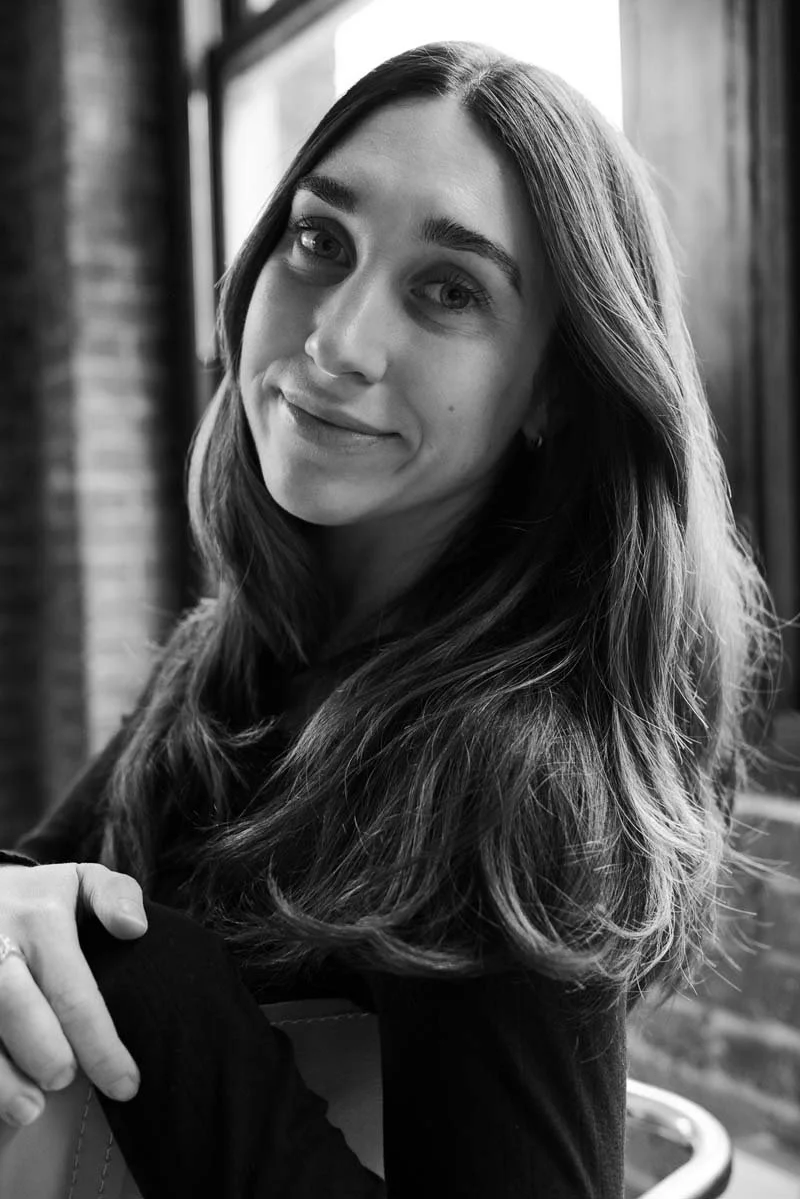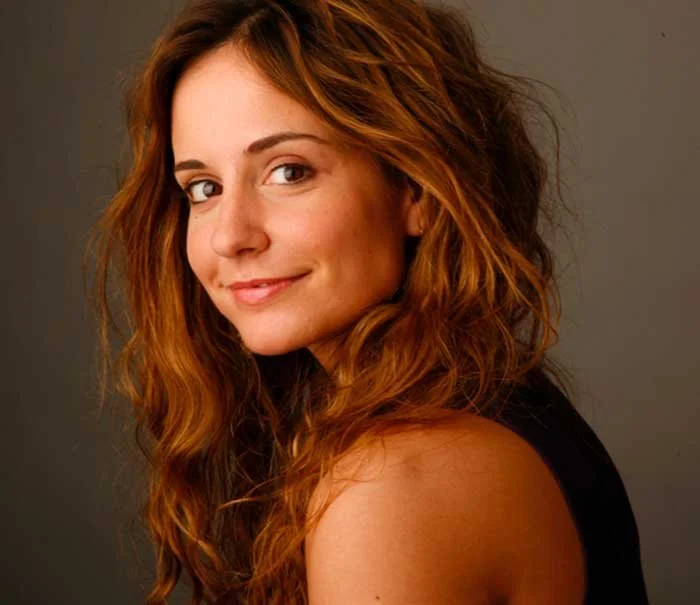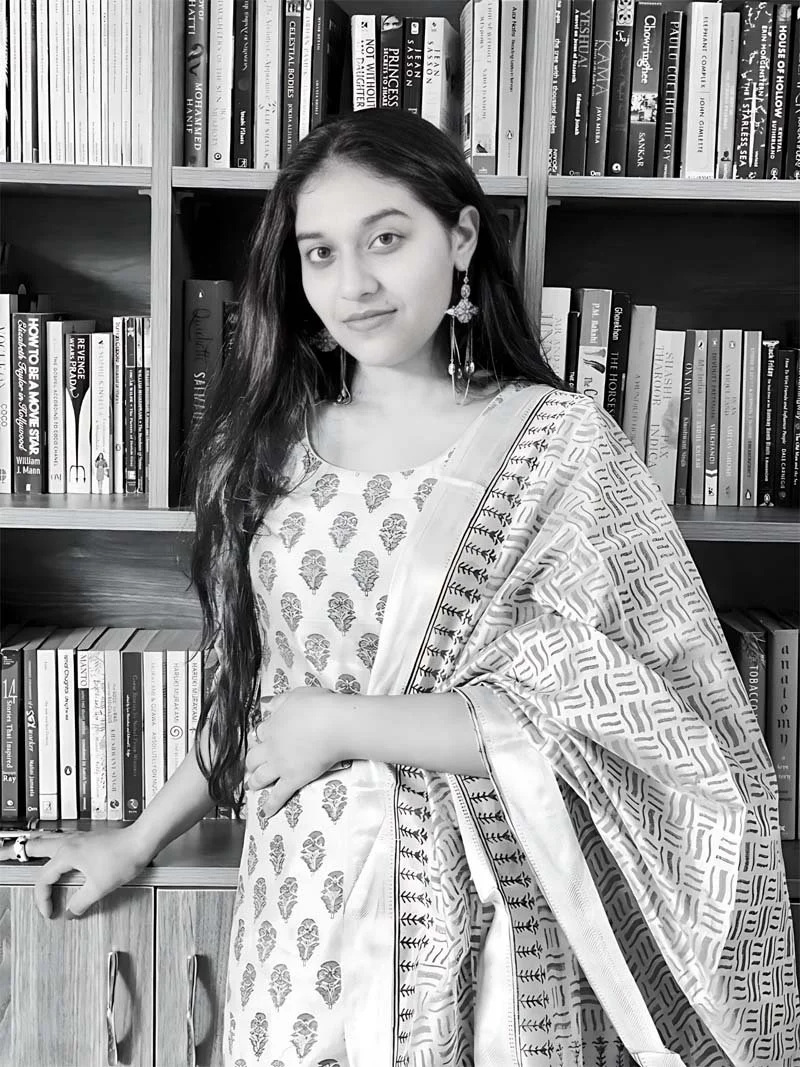


Yukti Narang is an Indian writer working across poetry, fiction, screenplays, theatre, and art writing. Her work has appeared or is forthcoming in Room, Mother Tongue, The Ex-Puritan, AAWW’s The Margins, Blaft Publications, Ekstasis, and elsewhere. Her debut poetry collection is There Is a Home in All of Us (2023). She’s a Rocaberti Writers’ Retreat scholar, SOA Author’s Foundation Grant winner, and an Oxbelly Fiction Writers Program and SLF’s A.C. Bose Grant finalist. Her writing has been nominated and listed for awards and prizes. Her book-in-progress, Baby Vulture, is a collection of short stories which she has recently workshopped with Tin House. Narang is also working on her screenplay to be presented at the Rocaberti Writers’ Retreat in mid-2026. @yuktinarang_thestorymahal
Where were you born and raised? How did it influence your writing and your thinking about the world?
I was born and raised in India—Delhi and Noida, to be exact. India has certainly influenced me and my writing. When I think about Delhi, in particular, its culture and the metropolitan nature, I immediately ponder its expanse and diversity, and the way it looks at the world as both a mirror and a compass. You just have to find it. I treasure Delhi. I still live in the city. It’s home, really. A lot of times, I must admit, it feels like I live in my head. (Laughs) My literary and cinematic views come first from India, though I believe in a global dominion of ideas and stories shaping me as a person.
I think I wanted to be an artist ever since I was a child, enamored by movies and books, and all kinds of stories. But my journey into the world of storytelling (as a writer) started when I joined the Shri Ram Center in Mandi House, which is a theater space. It gave me a lot. I found love. And a lot of newfound perspective. Then the journeys began. I understood what it is like to be an artist, because before that, I wasn’t a very open person. When my little beagle came into my life, he made me a much more open person, a freer person. And when I joined the theater soon after, I realized that you cannot be a closed person as an artist. I know now what it is to be open, and that expedition is ongoing. I always aspire to take my stories—my work—global. I’m deeply interested in exploring the world, physically, but also in terms of ideas. I am taken by New York and London for their literary prowess, and I’m happy that my work has been recognized there as well as in other reputable places. I want to discover the wonderful regions in the world that are filled with stories, art, history, and commerce. I think these ideas have influenced me profoundly. I have also been heavily guided by my country’s balance of its own identity and what it can borrow from global philosophies. The world has such brilliance to offer. It also has so much to learn.
What kind of reader were you as a child? What books made you fall in love with reading as a child?
As a child, I wasn’t particularly a reader, but it grew on me. I was mesmerized by cinema at first, and I think that’s where storytelling came in. A true ‘tinted-glasses’ moment. My parents also tell me that the only way to keep me calm on a train journey was to play a cassette with audio stories (fables, legends, animal tales), and I would listen for hours.
I remember a particular moment I can share. During a little vacation (with family and friends) in Agra, we had very nice hotel rooms. I was alone in the hotel room for an hour one evening—I was quite young—and I remember the weather was cool, the room dimly lit, and the wooden writing table looked beautiful. I sat at it and felt happy, playfully powerful. I don’t know if the book was courtesy of the hotel or if someone else had left it in the chest of drawers—it’s a faint memory, although the image of me sitting at the table is very clear. I took out a fat book, one from the Narnia series, and I started reading, becoming really engrossed in it. Even though I didn’t get to bring the book home, it left an impression on me. In a way, I started reading then. As a child, I was told by many to read. We had a stunning school library. And at Scholastic book fairs, we'd buy comics, stickers, chewing gum, and candy bars. We had those little torn, but also laminated, library cards that we could use to borrow books. I still remember how beautifully sunlit the senior school library used to look in the middle of the afternoon when I snuck into the adult section and read Chicken Soup for the Soul. One of my greatest literary influences as a child was the Goosebumps series by R.L. Stine. I think that’s where my passion for horror began. I started reading literary and contemporary fiction soon after. My other influences were Ruskin Bond’s short stories, Harry Potter, children’s books like Black Beauty, The Panchatantra books, as well as princess and Barbie stories.
Do you outline when writing?
Yes, I outline my books. And I believe this is a two-part explanation. I definitely outline to ascertain clarity of the plot, the characters, the themes that I want to explore, as well as the motivations of the story. There’s just so much to understand about the internal mechanisms of a story. I like to plan. Otherwise, prose goes completely haywire. I like to know where the story is going, at least when I begin. As I start following the outline, I often figure that the story and the character are the ones telling me where they want to go. So, outlining helps, yes, but essentially, when you’re writing, it’s you immersing yourself in the process. As an emerging writer, the process is not only a rite of passage or a refinement; it is a necessity. It’s crucial to balance emotional intensity, versatility, and technique in writing. The creative process is as rewarding as the outcome. Catharsis, if you will.
I like discovering elements. I borrow from different spaces, but I’m also a meticulous writer. At a recent Tin House workshop, I learned something that really stayed with me: sometimes you write toward the outline, and sometimes you write from it. And I feel I do both. I also edit as I go. I think writers can’t stop themselves from editing as they go. I do the same. I understand that every draft is going to bring your story closer to what it’s meant to be—and bring you closer to who you are meant to be as a writer. Editing as I go gives me a stronger first draft to work from. It motivates me to push further when the story already looks strong. I believe in revisiting and editing the manuscript multiple times. I think editors help with the process immensely, too, which is why every promising (or even great) draft needs a good editor. My typical writing day is filled with reading, watching, writing, and collecting motifs I find everywhere. Saved in some file, seen somewhere in life, noted from posts on social channels, art pieces, anecdotes, and different writing techniques. Writers don’t really switch off; writing happens in the lazy moments as well as in the most intense creative sessions, and all in between. We definitely have to sit and write for the writing to exist; that’s purely work. A lot goes into that.
Can you share some behind-the-scenes insight into how your recent work came together?
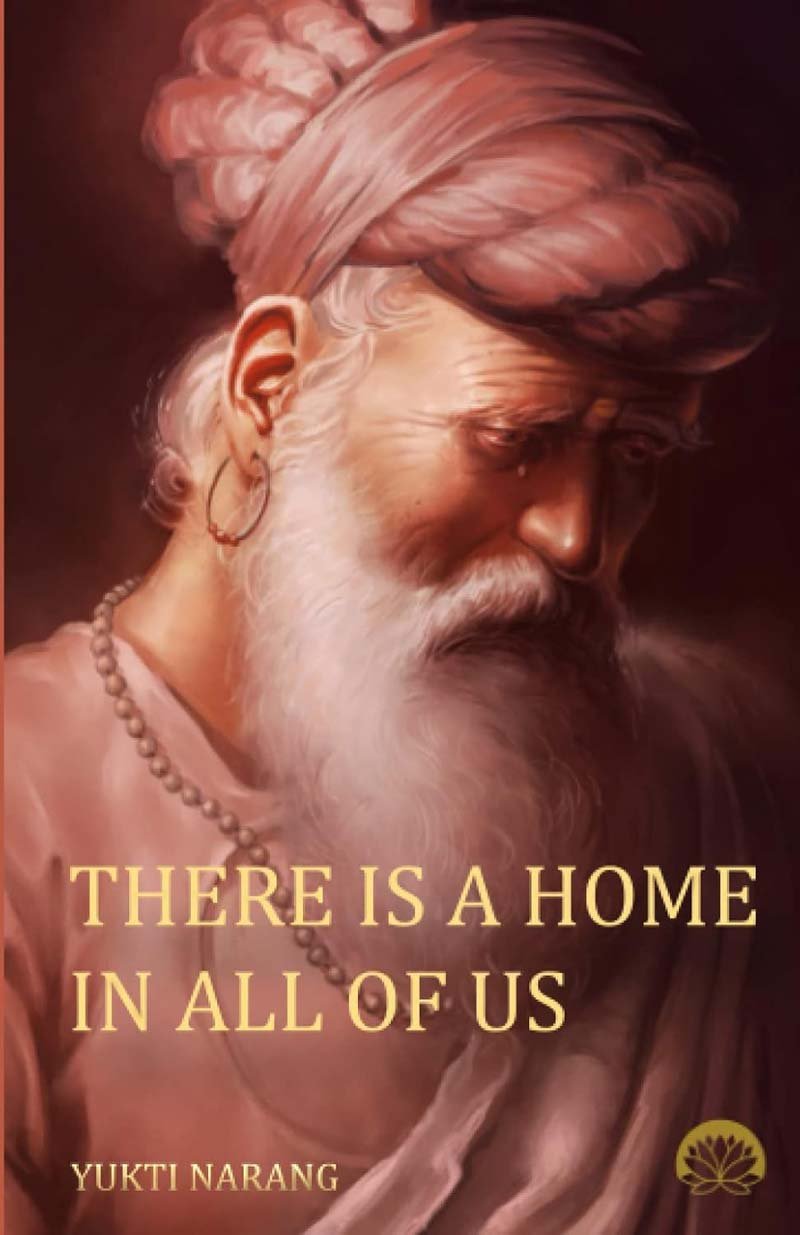
I’ve written extensively before, beginning with poetry. The early responses and acceptances I received were for poems. Magazine and anthology publications began this way. My first collection of poetry, There is a Home in All of Us, was published in 2023. I’ll always be a poet, and I continue writing poetry, though fiction (and screenwriting) is where my work leans. I do think poetry contributes to all forms of creation.
I will speak more intricately about my current writing project, since that’s where most of my energy lies right now. I’m writing my first collection of short stories, Baby Vulture. The creative process behind the book is extensive. The collection went through three major transformations early on during the outlining phase, as I was trying to formulate its vision. That was a whole learning curve. When the final outline with sixteen stories came to me, it instantly felt right. I write both on paper and on my laptop and often print out drafts of the stories I want to keep, along with plotlines, arcs, characters, motifs, and treatments. Craft is fundamental for me. The printed drafts become my working outline. I also keep a list of stories with a brief note on what each one means to me. It helps with submissions, too. Despite this process, I always leave room for the emotion to take over, for enchantment to take over. The collection blends literary and speculative fiction (horror, magical realism, and surrealism), and stories are set in domestic spaces. The themes explore feminism, art and philosophy, animal characters, society, dark humor, and the human condition, riding on tension, complexity, and some very bizarre elements. It’s an intricate book, which is deeply intriguing for me. I see this project as a breakthrough in many ways. Support from the SOA Authors’ Foundation grant has massively escalated my book’s progress. I’m grateful for the honor and the prestige they have given me. A story from my fiction collection features in the Fall Issue 09 of Mother Tongue, New York. I'm excited for readers to find upcoming stories and hope they will wait in anticipation for my book. I truly believe in my collection, and at this point in particular, I seriously rely on the support of grants, fellowships and residencies, workshops, my work’s publication in literary magazines, and the validation that comes from my readers, and from learning and creating intensely. I plan to find my agent next and embark on my traditional publication journey. I have been working with some incredible people in the industry, and I'm looking forward to more interactions and excellent associations. Along with the book, I’m working on my screenplay for a limited series drama, which I’ll be workshopping in 2026.
Is there a notebook, digital or analog, that you return to regularly?
Yes, I keep notebooks. Multiple. I guess I’m a modern writer with a traditional working style. I keep several journals filled with ideas, lists, dramatic motifs, and small everyday observations. I also save a lot of visual references like photographs, paintings, and poetry that I find in different digital folders, almost a mood board. Later, I sit down and write about them in my journal. One of my notebooks is a kind of calendar log, even though everything is already marked digitally. I still like writing it down on paper. I use my Notes app a lot, too, especially if I’ve dreamt something or an idea hits me in the middle of the night, or even while I’m scrolling. I’ll write it down, then sometimes transfer it to a notebook. I divide my notebooks into sections. Screenwriting, poetry, short fiction frameworks, long-form fiction outlines, little reflections, submission checklists, and even insights I get during Zoom calls. All of it lives there.
Recently, I’ve started using separate notebooks for specific projects: one for my short story collection, another for my screenplay plan, and one for everything else. I also annotate them constantly, notes on books I’ve read, films I’ve watched. There’s something magical about pen meeting paper. And when I transfer that onto the screen, I have prose to work with. That transition feels robust. And I’m really fond of my laptop. The relationship between my laptop and notebooks feels very intense and loving. Like matrimony. I think every writer’s process keeps evolving. I once wrote a full manuscript by hand and then typed it up later. I don’t exactly do that now, but I still like the shift from handwriting to screen. I use writing tools and apps as well, though software sparingly, but I like any kind of tech items or stationery that helps the writing happen. Romanticizing the writing life is essential, too, I guess. (Laughs)
How do you research and what role does research play in your writing?
Research is a very important part of my writing. I like detailing in my work and finding them in other work as well. I like rabbit holes, easter eggs, crazy theories that stem out later. Shows complexity of thought. It’s super fun, too. Research shows up in my writing in many ways. Every form and medium of writing demands its own kind of research. I do a lot of reading on themes, characters, cultures, emotional landscapes, and the internal lives of the characters I’m building. It’s about understanding the psyche of the story, but also about experimentation with form, and seeing what works. I think this truly helps refine a person as they create the work. I think everyone can become a greater version of themselves every day if they want to. This idea can mean several things at once, but essentially, I believe in being truthful and open in my thoughts, raising questions, absorbing what there is to learn about my dreams, and finding a worldview. I’ve always believed in writing everything—anything I want to write and everything I can imagine writing. Though when imitating real life, I must say, one has to resort to writing what they know, which is why I am always in the pursuit of knowledge. Imagination thrives, too, in this manner.
If you could spend an evening talking with any writer, who would you choose and why?
Oh gosh, this is such an interesting question. I have so many names, but okay, let’s divide them into two parts. I would like to have dinner with Ottessa Moshfegh. She’s such a compelling writer. I had to consciously move past the desire to write like her at some point, which I’m happy I did, obviously. I would ask her how she plans her projects, what reflects her choice of story and prose, or maybe even write in the same space someday. Just share a writing routine or a quiet moment. Having dinner with Tess Gunty would be very interesting, too. I'm obsessively waiting for her next book.
A writer who is no longer with us but whose mind I would like to step into is Ismat Chughtai. She was one of the greats—especially at a time when the literary world was dominated by male writers. She was a contemporary of Saadat Hasan Manto, who was brilliant, but to me, Chughtai was even greater. Her stories really changed the literary space and the world, in their own quiet way. I would be interested to know what kind of headspace she was in when she wrote those stories and why she never seemed to need to express herself outside of her stories. Also, I would have loved to have dinner with Yash Chopra. Oh my god. That would be something, right? His effect on me has been huge.
Do you draw inspiration from music, art, or other disciplines?
I’m thrilled you’ve asked me this. I am majorly drawn to influence from other artistic disciplines! I am a big fan of music. It brings me an unprecedented energy, a kind of trance that I just become a part of. I borrow atmosphere from both music and film. Culturally, music influences me a lot. I think Urdu and Hindi music affect me very deeply. Urdu dramas as well, their style of storytelling, the movement, the treatment, it’s all elegant and poetic.
I’m heavily influenced by art and painting. I’ve always been interested in visual art. I had the privilege of working at an art gallery and an art agency (based in Delhi and Goa), and the experiences helped me understand the technical side of creating art, the behind-the-scenes work, the exhibits, and also the many different viewpoints people hold, not just about art and artists, but about the art world itself. I have come across so many kinds of people, and honestly, some of them I now think of as characters. When I’m excited about writing, or even when I’m stuck, I often turn to paintings. They bring me clarity. I think that’s where my sense of imagery comes from. It’s also why my titles tend to be dramatic. This motivates me to see work in person at museums, galleries, and art shows. It is indeed a dreamy method. That is also why I care so much about book covers and posters, accompanying art and illustrations. They pull you into the world. That’s very, very important to me. And I love it. That is the creative process, too.
We share an interest in ekphrastic writing—the conversation between the word and the image. I’d be interested in hearing your reflections or creative responses to my art?
I’m really drawn to ekphrastic writing! I have a few questions, but mostly, a lot of admiration. Mia Funk’s work is incredibly dynamic and wholesome. I believe her purposeful intention to bring the many artists together is remarkable. I recently had the chance to explore her paintings. Some of my favorite series are River of Dreams and Nightscapes. Absolutely pensive. They are such different bodies of work, yet connected. I see how she understands artists across disciplines because she is one. A writer, too. She’s a remarkable artist and a graceful interviewer who has brought together artistic voices from around the world, sharing space and energy. Her colossal list of accolades is so inspiring. I would want to know if her work with the environment began because of the motifs in her paintings, or if they came in since she has always advocated for the environment. How have inspirations come through? I’d also want to hear how people from different parts of the world receive her work. Since she interviews so many people across creative fields, I wonder if anyone lends their way into her work. I’ll be watching closely! (Laughs)
I was truly honored to be invited to do this interview. The concept of discussing the creative process is so incisive. I am grateful to be part of this dialogue and to be featured.
AI and technology are changing the ways we write and receive stories. What are your reflections on AI, technology and the future of storytelling? And why is it important that humans remain at the center of the creative process?
This is such a pertinent question for the times we’re living in. AI and technology are absolutely changing the way we write and receive stories, and no matter how much we deny it, that reality isn’t going away. That said, I see technology as something fantastic that can support the creative process as a tool, subject to each writer, but not replace it. Personally, AI has helped with grammar and clarity, and it’s been a great educational tool that has assisted my understanding of language critically. But when it comes to the creative process, I don’t think AI can or even should take that role. It can help with structure, style references, or explaining something, searching for specific examples, but ultimately, the soul of storytelling comes from being human.
If you’ve ever asked AI to write a story for you, you’ll know why we don’t want it doing that! It’s self-explanatory. I really believe humans should remain the sole creators of their works. There’s so much we bring to storytelling that’s non-linear, emotional, chaotic, and deeply personal, even humorous. All information doesn’t equal creativity. In fact, sometimes it’s not knowing that generates the most compelling stories. The wondersome quality of art. The what-ifs. The buts. And I think readers sense that. They engage differently when they know the story was written by another person, someone who has felt strongly about the moments, even wriggled at some level. I also want us all to speak strongly about the use of our work in training AI and how that should be a choice, rather than an implication. Laws are created as technology progresses, so I guess we’re all learning how to evolve.
Tell us about some books you've recently enjoyed and your favorite books and writers of all time.
Some of my favorite writers of all time would definitely include Salman Rushdie, Italo Calvino, Ottessa Moshfegh, Mona Awad, Han Kang, and Gabriel García Márquez. I unflinchingly adore reading works by Rumi. They speak to me in a timeless, spiritual manner. I find myself drawn again and again to certain books I re-read: The Rabbit Hutch, Lifting the Veil, Invisible Cities, Eileen, Lolita, Carmilla, Desperate in Dubai. A good chunk of my reading, especially as a writer, comes from literary magazines, also. When it comes to books I’ve enjoyed recently, I name My Year of Rest and Relaxation, Vladimir, Before We Were Innocent, The Vegetarian, Big Swiss, Chouette, The Dangers of Smoking in Bed, My Dark Vanessa, Watching Women and Girls, and The Secret Lives of Church Ladies. I really regard Samanta Schweblin, Elif Shafak, Bora Chung, and Agustina Bazterrica’s work. I’m also drawn to Arab literature and historical novels, especially Mughal historical fiction, and grand Gothic tales. Books like In the Company of Strangers, The Feast of Roses, Asura, and The Mulberry Courtesan have stayed with me. I read across genres—poetry, fiction, even some non-fiction. I do relish Shakespearean classics and Satyajit Ray’s writing. There’s something wonderfully interesting about retellings as well, I think. And I absolutely love debuts. Finding an energy match with debut works and wanting to read everything by the author thereafter is such a thrill. I hope to see that happen with my writing. I genuinely wish that happens. Reading screenplays is also a significant and informative experience for me, especially after having watched the works translated on screen. Reads like Confessions of a Shopaholic and The Gospel According to Coco Chanel also draw me in. I regularly read issues of Vogue and enjoy interior and architecture magazines. Honestly, I could go on forever. I just love stories in all forms.
Exploring literature, the arts, and the creative process connects me to…
the self and the identities of the world and its thoughts. They also connect me to spiritual ideas. Some works really help me understand my own concepts, my personality traits, and connect me to the many philosophies that I didn’t know I would resonate with or become fond of, but ended up considering. I also think that, though the notion of entertainment is individualistic, some element of it should be part of every artistic work. The arts have numerous characteristics within themselves. It is refreshing to note fun and freedom as aspects of brilliance, alongside the seriousness. And I truly enjoy the commercial side of the arts, especially to take it all forward. The scale, the reach, the value of the artist, the fact that a story can travel, become a show, a collectable, something people carry with them, specifically if done well. It aids our contentment, our empathy, and the longevity of thought. I also love the drama.