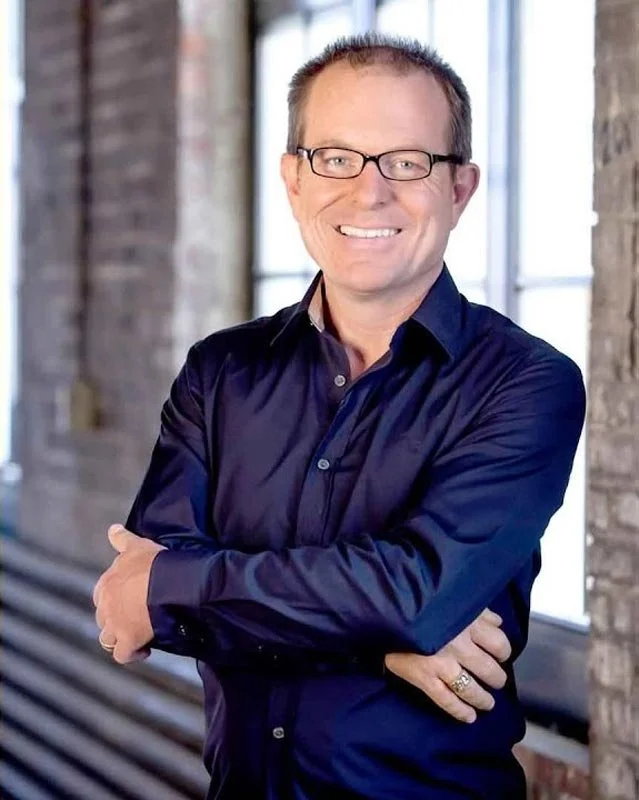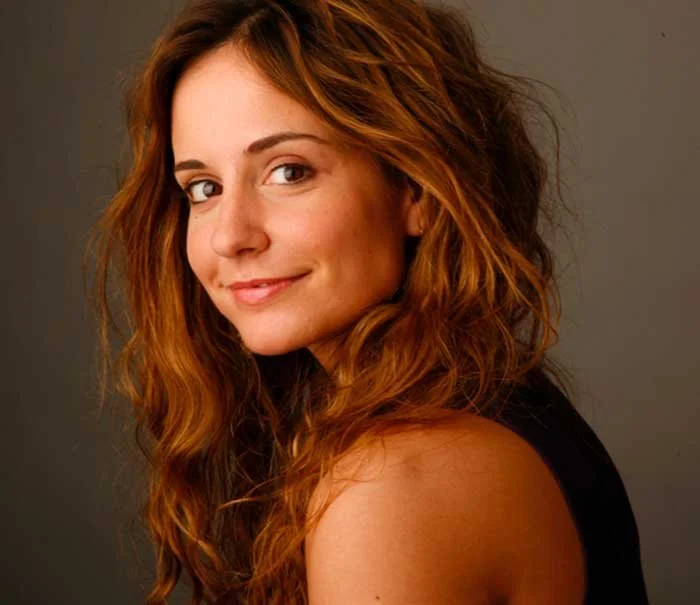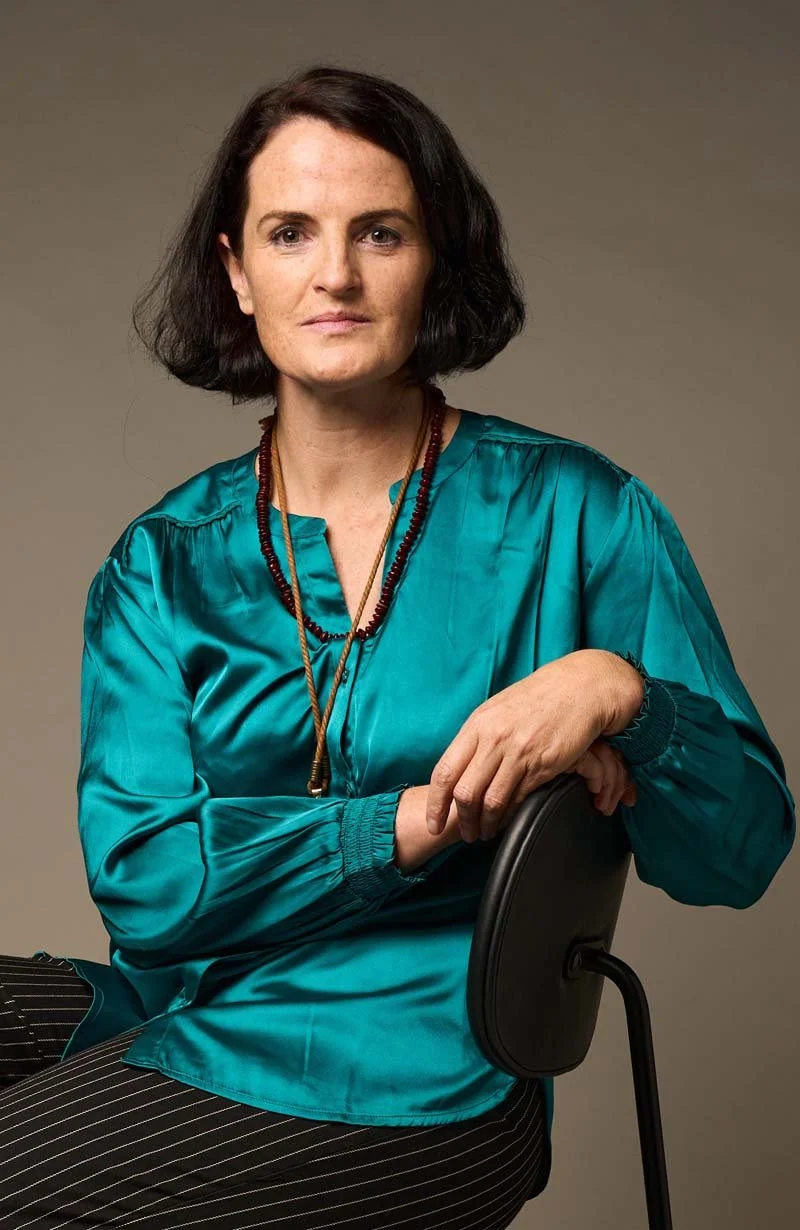


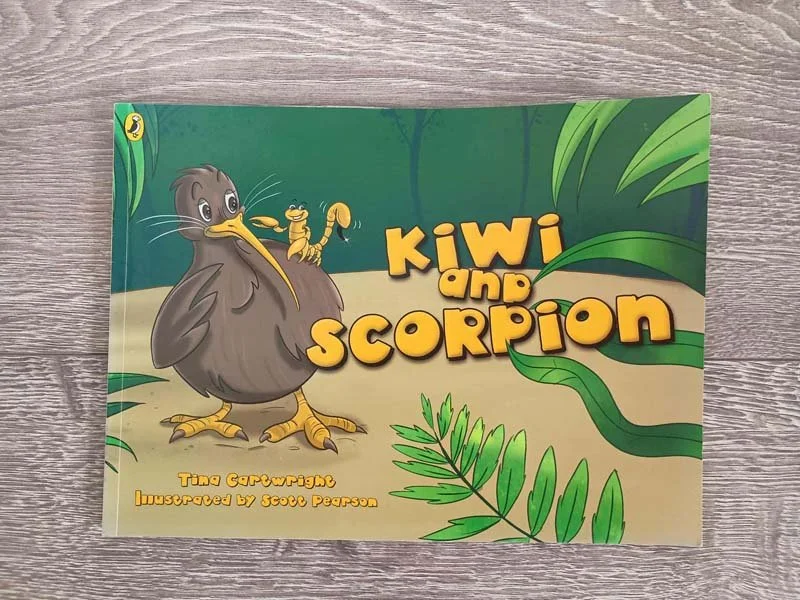
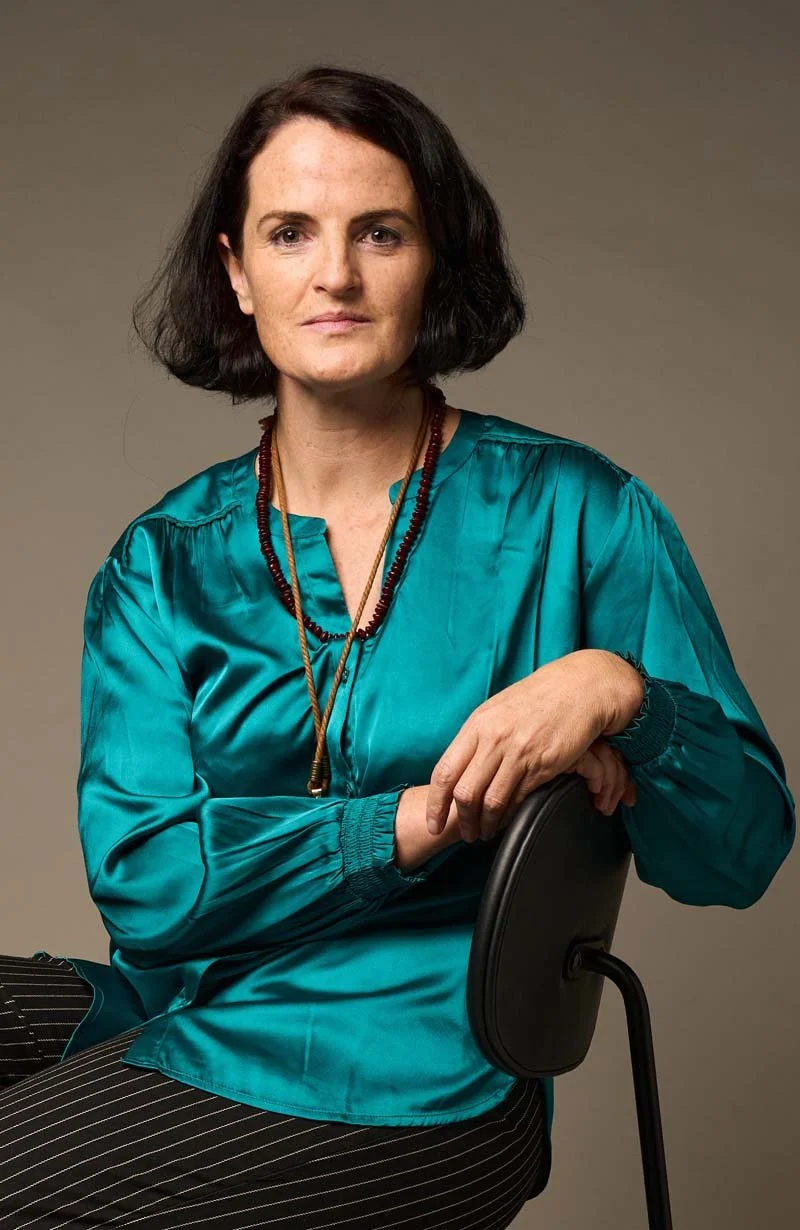
Tina Cartwright is a writer and language teacher living on Wurundjeri and Boon Wurrung lands in Melbourne’s west. She’s been a teacher in Mexico, Spain and New Zealand. Her manuscripts were longlisted for the Michael Gifkins Prize for an Unpublished Manuscript in 2023 and 2024. She was a 2024 KSP Writers’ Centre Fellow and shortlisted for the KSP Short Fiction Competition. In 2025 she was a finalist for the Tasmanian Writers’ Prize, longlisted for the Commonwealth Short Story Prize and Highly Commended in the Boroondara Literary Awards. She ran the panel Emerging Across the Generations at the 2025 Emerging Writers Festival. She studied Linguistics, draws, and is learning Greek. @humsentence
Where were you born and raised? How did it influence your writing and your thinking about the world?
I grew up in Ōamaru on the east coast of the South Island of Aotearoa, New Zealand. It's a conservative, arigultural-based town with a Victorian heritage old town centre where the statuesque buildings are made of local limestone. It's Ngāi Tahu land and they had traded there and used the stream as a water source for many years before the colonist's arrival.
I was born in the late 1970s and it was an interesting time in New Zealand since the government at the time instigated what became known as the 'Dawn Raids' where often Pacific Islanders who'd been living and working in New Zealand where woken in their beds forced to leave. They were often people who the government had welcomed to boost the labour market, but ousted in this time of economic downturn. In the early 80s there were incredible protests where protesters linked arms across Rugby Park to stop the Springboks (the South African team) play and to protest apartheid. In the mid 1980s the Waitangi Tribunal was formed to investigate historic breaches in Te Tiriti O Waitangi and in 1985 the Greenpeace ship The Rainbow Warrior was bombed by French spies, since it was trying to stop the French testing nuclear bombs in the Pacific. We also stopped American vessels carrying nuclear weapons coming into New Zealand waters. So, I do remember it was being a time where as New Zealanders we had a real sense of our separation from the rest of the world. To me, it felt as though we didn't have such a strong sense of some of those traditions, and so we could be more selective about those we took up, or left in the past. It was a time of real upheaval and change. Even as a very small child living next to the sea, I remember looking out and thinking how far away everything else was, and that we were fortunate in that, since we had this sort of unique distance with which to understand the rest of the world. I was always curious and had an absolute drive to understand things, myself included and I think that is why I wrote. There were also two phenomenal female writers, one that came from my hometown, Janet Frame, and another that wrote about Moeraki and the surrounding towns, the places where I'd grown up. I think reading their work and knowing that it was possible to capture the experience of living and growing up there with such breadth and wisdom, made it feel as though being a writer might be possible. Or at least trying was.
What kind of reader were you as a child? What books made you fall in love with reading as a child?
I actually remember when I first learnt to read. I think I had not long started school. My sisters were poring over this book, gushing about how much they loved it. I was so frustrated that I couldn't read it. I thought if they can do it and if I can talk, then these are words I already know, and I know all the letters, I just have to work out how to put them together. I took the whole weekend, word by word, but by the end of it I could read. The book was No Flying In The House by Betty Brock. The girl in the story is trying to work out who she is. She can fly and has a talking dog. I always needed a little sliver of magic in the books I was drawn to. I wanted books to speak about the things we were too afraid to say. I read a lot of Anne McCaffrey books and Enid Blyton before that. Fairly typically for a writer I didn't fit well in a sport obsessed town and family, I always wanted to really look at things and 'understand' them. Books were the one place I could find that. They also provided an answer to what it would be like to be someone else and I thought that was important for working out how you might fit in the world.
Describe your typical writing day.
I'll describe the typical writing day as if I didn't have to go to my paying job.
When I get an idea it feels like something I can see out my the corner of my eye. I know it's there but I can't properly see it yet. This 'idea' will keep surfacing, sometimes throughout many years, and I'll see something else and know that it belongs to that idea. For instance, it might be I watched a video online and began to wonder about the relationship between the three people in the video. Something about the way they were together seems to have something intriguing, something unknown, maybe even something to teach me. I'll keep thinking about them. I'll wonder if they have a particular problem. I might see a film or read an article and think maybe I can give this to them. For me it's accumulative and when I've accumulated enough I know because I keep thinking about the story and the characters all the time. For me, the process is almost always driven by something visual, a face, a way of standing, an seeming empty field that feels full of nostaglia.
Usually, I do sketch out rough character sheets. I like to give an attention to clothing and the way a character moves, to try and hear their voice. So this character sheet is a working out of who they are, what they want in the story. It's very loose. Once I've done it I almost never go back and look at it. Then I write a chapter outline. One line for each chapter. If I give too much detail here, I don't feel free enough when I write. I only write to discover something, so I have to leave enough space for that, but I like to have the outline since without it, it's petrifying.
I think you have to take a long time to work out how you work best and to be constantly adjusting that for who you are today.
I tidy up as I go. Tidying up is my way of getting into the story in the morning. I trick myself by saying 'I'll just fix this little bit' but of course, by the time I've 'fixed' it three hours have passed and I've written a new chapter.
Tell us about the creative process behind your most well-known work or your current writing project.
My current writing project is a novel about a girl digging a hole under her apartment, documenting it on social media, and her relationship with a friend who no one knows what happened to. While she posts she asks philosophical questions and her followers answer. There's a type of beautiful loop in the book where everyone's searching out connection but don't see that connection isn't something you get, it's something you give. There's a surprising twist at the end, that only the reader knows. It's been fun to write incorporating some of my favourite things: philosophy, narrative idenity, class trauma, joy and courage.
In terms of the process I usually write the first draft quickly, seek feedback around the third or fourth draft, but this one is only ready for feedback now. It's taken much longer than I anticipated.
Do you keep a journal or notebook? If so, what’s in it?
Yes, I keep a notebook. It's full of quotes, learnings and little ways of driving myself. e.g Process - have the tiny knot, kernel in your mind, take a walk, think about it, play it out in scenes, working out what works, creates tension - then go home and write it, so that it's more like remembering than writing.
Which writer, living or dead, would you most like to have dinner with?
Richard Powers. There are thousands of brilliant writers I'd love to have dinner with but having read a lot of Richard's work I have the sense that I could talk to him. I'd love to delve into the way he sees the world. I'd love to take a walk with him. I have a sense that talking with him would be like holding one of his books in your palm, being able to turn it around, and look at it from all angles. I am particularly enarmoured of the revervent attention to the world in his work.
Do you draw inspiration from music, art, or other disciplines?
Yes, definitely.
I used to paint and draw as a child more as a way of keeping myself calm. If I had an issue I would draw, mostly just patterns, while I thought it through. Recently, I walked a section of the Camino in Spain and decided rather than do things properly and collect sellos like other peregrinos I would do a drawing each day as a way of commemorating my journey. I decided afterwards to learn to draw more properly and then took a class. Since then I've become a bit obsessed with colour. I sometimes walk around looking at light sources, or shapes of things, how they fill in a landscape. It feels euphoric and as if I am filling myself with images, and in a way I am. I then later pull them up, and they enter into my writing. When I'm ready to write something it feels so clear in my mind, that how I explain it is - it's like something, an image, perhaps a face deep under water, and as I gather information preparing to write it becomes clearer, until finally I pull it and it looks like it comes up out of fast flowing water, and it's very bright, almost haloed by the time it enters my writing.
Do you have any questions for Mia Funk (artist, writer and founder of The Creative Process)? Or any reflections or creative responses to her paintings?
I'm interested in the way she sees the relationship between colour and form in her work.
AI and technology are changing the ways we write and receive stories. What are your reflections on AI, technology and the future of storytelling? And why is it important that humans remain at the center of the creative process?
I think that with all technology we should be asking ourselves 'who benefits from our use of this'. There are so many times when we're persuaded to some new technology with the threat that if we don't embrace it we're just old-fashioned techophobes, but why would we use something that ultimately is detrimental to us. There are no short cuts to thinking and there are no short cuts to becoming powerful in who you are.
Tell us about some books you've recently enjoyed and your favorite books and writers of all time.
Audition by Pip Adam. She's a New Zealand writer and podcaster. In Audition, giants are hurtling into space. They're squashed into the confines of the spaceship and if they stop talking they grow. The book is about bodies, carceral 'justice' who gets to belong and who is ostracised, as well as being a commentary on where and how we find meaning. It's an incredible book and reading it I felt like there were fresh, courageous, new worlds to discover in fiction. I found it inspirational, in that, it taught me, that absolutely anything is possible in a work of fiction.
Exploring literature, the arts, and the creative process connects me to…
possibility and to whole, entire worlds of meaning.