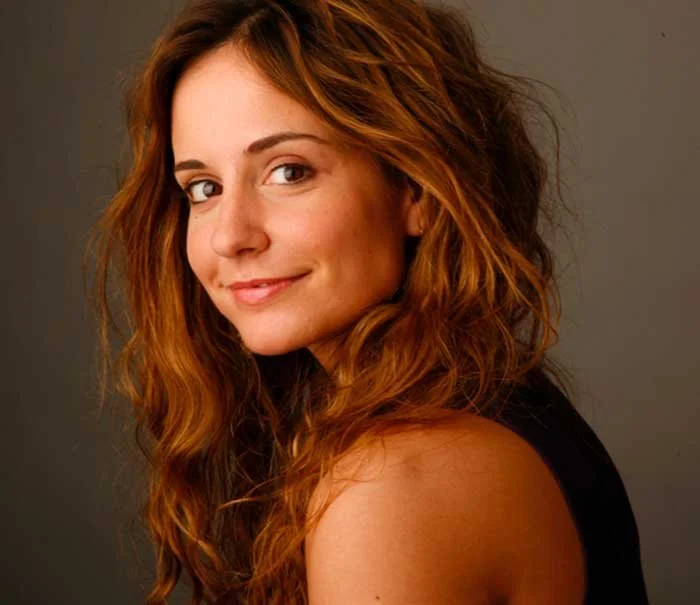


YVONNE CONZA is a Miami-based writer whose work appears in The Believer, INTERVIEW Magazine, Lit Hub, Longreads, Michigan Quarterly Review, Los Angeles Review of Books, and Chicago Review of Books. She is the coauthor of Training for Both Ends of the Leash (Penguin). For the Miami Book Fair, she hosted panels with Jonathan Escoffery, A.M. Homes, Patric Gagne, and Carvell Wallace. Her writing has been a finalist for the Annie Dillard, Tobias Wolff, Terry Tempest Williams, and Deborah Tall lyric essay prizes (Bellingham Review, North American Review, Seneca Review) and twice nominated for the Pushcart Prize. @yvonneconza


What role has your hometown—or homes—played in your development as a writer?
While I’ve written extensively on themes such as estrangement, family dynamics, and personal history, I’ve written less about where I was born and raised — a place that both challenged and shaped me. North Collins, NY, a rural landscape embedded in my soul, appears in my 2018 essay “Through the Cracks”, which explores heritage, identity, and erasure. The town’s official record-keeping silenced much of the history surrounding the 1966 Puerto Rican farmworker uprising that unfolded there. It was also a place that made outsiders of my family — Irish newcomers with no cousins down the street and no uncle who owned the grocery store or gas station.
At fifteen, I lost my eldest brother to suicide. His funeral engendered a complicated grief because, when I was 7, he molested me. Another time he locked me in a car trunk. Years later, I learned Nick was bipolar, though that never fully explained the riddle of who he was. Anne Carson’s Nox, her elegy for a troubled brother, gave me the tools to begin grappling with his life and my own. But violence in my family wasn’t confined to my brother’s actions. To stay alive, I resorted to wit and intuition, energizing my sensibilities while learning to make art from loss.
Yet, growing up in that farm community also offered grace. I worked the fields picking strawberries, beans, and potatoes, fed barn cats, and rode my pony through rows of sunlit corn stalks. Those rhythms of labor and land gave me a lasting love of nature and a work ethic rooted in endurance and observation — qualities that continue to inform my writing. Though I once dreamed of Manhattan, I carry the small town with me: its soil under my nails, its quiet insistence in my sentences. In my heart, I’ll always be that small-town girl, looking outward but grounded in where I began.
What kind of reader were you as a child? What books made you fall in love with reading as a child?
Competitive reader. Our elementary school librarian was remarkably hip. If she caught you lost in a book — eyes fixed, the world tuned out — then you earned an invitation to join her “speed read” club. For her, reading wasn’t a pastime. It was a way of life. And a sport.
Basketball was a game I loved and played well, but my small size often made team captains overlook me. Being passed over for reasons that had nothing to do with ability lit a fire in me. So with books, I found my court. I could slam-dunk one and fast-break into the next.
Through language, I found a way to give voice to what I couldn’t say. Words took me in the way my family should have — they held me, understood me, loved me. For that, I’m forever grateful.
Is there a particular time of day when your writing flows best?
4:40 a.m. The alarm goes off and multitasking begins. I preset everything the night before because I want to slam down coffee and hit the page while I’m still in that gorgeous, instinctual zone. I swallow my vitamins as I make a cappuccino (double espresso — and the only person who makes a better one is Christopher at the Lily Ann Hotel, connected to Rosemary’s House in Sithonia, Greece, where I attended the best writing workshop of my life).
By the time I’m at my desk, it’s still dark. No one needs anything from me. That quiet allows me to trip into the material that requires my full heart. Some days, I start with reading instead — it helps me become fluid and energetic with language.
Afternoons are for the business side of writing: pitching, reading new work, scrolling Instagram a little too long. I think a lot about community — who’s out there doing great work? What can I amplify? How can I make the world a bit more inhabitable for others?
Balancing all this with my husband, close friends, and our lovable Shih Tzu, Chuko, is an ongoing lesson in keeping things simple amid chaos.
As for process: outlining has never been my thing (I wish it were — it might make life easier). I discover the story as I go, revising constantly, through many drafts. My process is far from recommended, but it’s the one that’s mine.
Tell us about the creative process behind your most well-known work or your current writing project.
That’s a funny question. I’m always writing with the hope that the next published piece will be sharper, more muscular and able to hold a reader’s attention in a way that invites reflection or even action. I want to write what matters — work that illuminates, and feels hopeful.
I once co-authored a dog training book and the editor suggested removing the “anxious dog” from a chapter because, as she put it, “She’s too extreme. Reading about her made me anxious.” But wasn’t that the point? I’d fallen in love with that dog — her crimson coat, the tiny white thunderbolt on her chest, the feathery tufts beneath her tail. She was tattered and bruised, but not broken. Something had happened to her, and I couldn’t look away.
For me, the creative process always begins with passion. It’s about turning over every image, every detail of a subject or place until I find what shimmers beneath the surface. Whether I’m writing about a dog, my father (as in my Longreads essay, “Jack, Jacqueline, Dad”), or an overlooked moment in history, I find that if I just stop, look, and take in the complexity of it all, I’m searching for what’s ethereal yet right in front of me. And in uncovering what shimmers beneath the surface, I’m reminded that discovery itself is connection, that even in solitude, we’re part of a shared pulse.
Do you keep a journal or notebook? If so, what’s in it?
I think of myself as a word-keeper. I try to use my time as efficiently as possible, so keeping a journal sometimes feels like time away from the actual page. But I do keep a digital file filled with story ideas, marked-up articles, and pieces I want to revisit or finally read with full attention. In 2025, I started a gratitude journal. Once a day, I write down a single word to express appreciation. It’s brief, but it keeps me tethered to wonder.
How do you research and what role does research play in your writing?
A lived life is all research. Everything I see, read, overhear, or feel finds its way back into the work somehow. I’m curious, I have a compelling curiosity and a large appetite to learn more. Each time I dive into material, I take excursions into fabulous rabbit holes of knowledge.
Which writer, living or dead, would you most like to have dinner with, and why? What would you ask them?
Easy one: A.M. Homes.
Do you draw inspiration from music, art, or other disciplines?
Both music and art inspire me. So does movement: Pilates, yoga, biking. That said, when I write, I crave fertile quiet. My thoughts need space to surface; they fight their way up. I’ve learned, though, to stop being so precious about the process — a total game changer.
I also draw inspiration from animals, song lyrics, and those accidental interactions that remind me that my story is never just one. They make me think about how to live more intentionally because our time here really is brief.
And dandelions. I even have one tattooed on my left wrist. They grow anywhere. They’re survivors. That fact alone inspires me endlessly.
Do you have any questions for Mia Funk (artist, writer and founder of The Creative Process)? Or any reflections or creative responses to her paintings?
I do!!!! Dear Mia – Something we share is complex eyes. Every morning my condition leaves me with: “What will today look like?” And somehow, despite the blurriness, it’s always beautiful, a kind of clarity that reveals its own truth. How does your vision exist/partner with your creative process?
Reflections and creative response to Mia Funk's paintings: I love that when I look at Mia Funk’s paintings, I see and experience the intellect of her breathing into the work. She takes the canvas and gives it a life layered with the spontaneity of desire that still is on the move. Not staged or left stagnant.
In your view, what can machines never replicate about human storytelling?
Human hearts hold language in both predictable and unpredictable ways. The subtle juggling required to find exactly what one wishes to express is something AI cannot replicate. While AI can mimic patterns, the search engine of individual will, intuition, and lived experience will always outrank it. Human storytellers remain essential because we carry memory, empathy, and the unquantifiable depths of feeling — qualities that give language its resonance, its surprises, and its truth.
Tell us about some books you've recently enjoyed and your favorite books and writers of all time.
Writers can include novelists, playwrights, screenwriters, essayists, non-fiction authors, journalists, and poets.
H is for Hawk by Helen Macdonald. And Nox by Anne Carson. As for a playwright, my heart belongs to all of Sam Shepard.
Exploring literature, the arts, and the creative process connects me to… my bones.