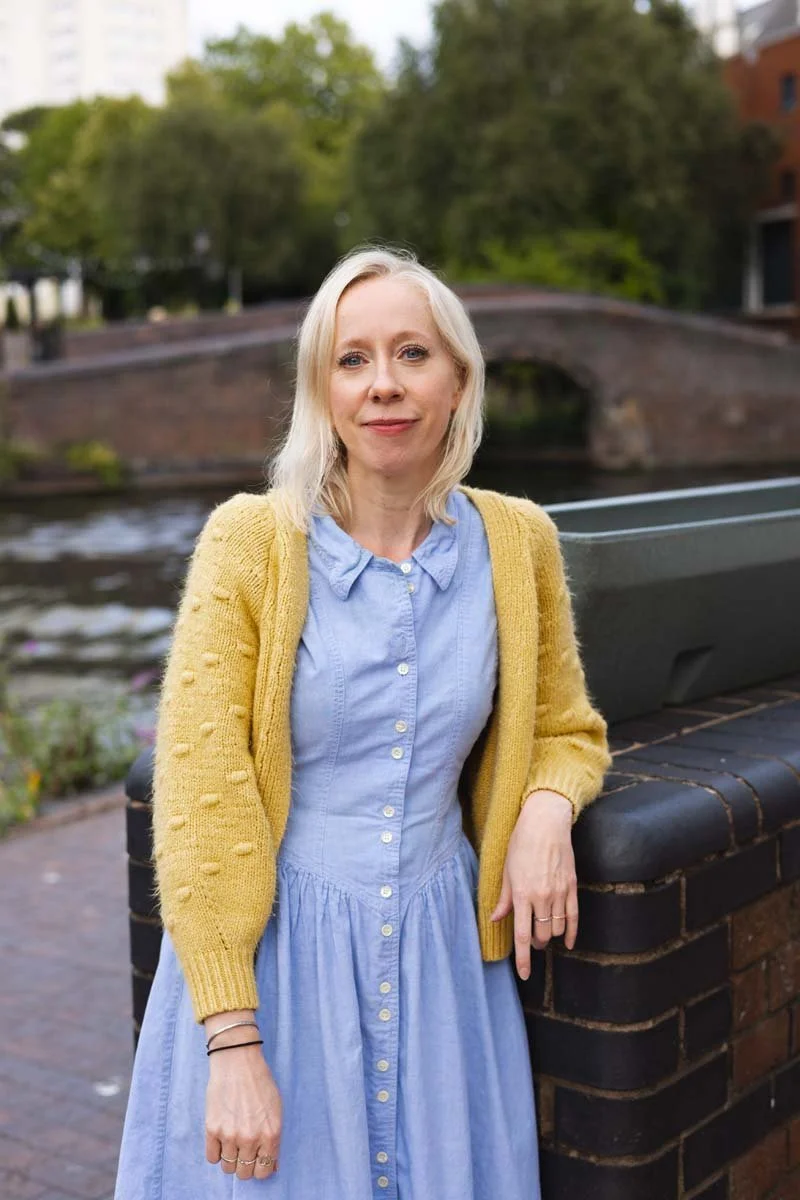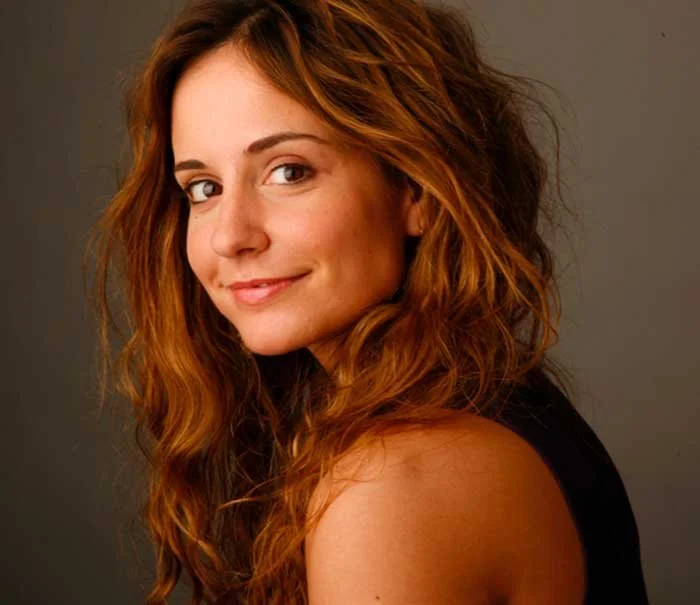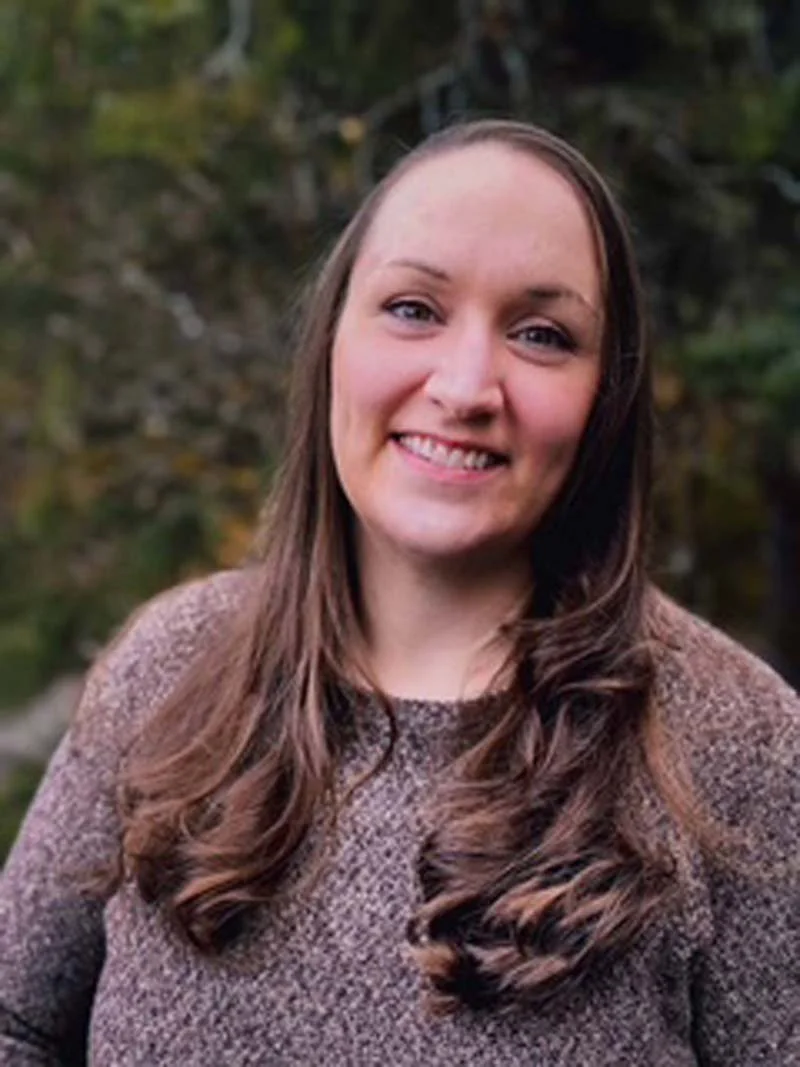


Maria L Mecham is a poet based in Juneau, Alaska. Her poetry explores integration, embracing struggle, uncovering light, and the oddities of this spinning globe. You can find her work in Prosetrics: The Literary Magazine, Humana Obscura, and the Upon Learning That anthology. She is currently compiling her first poetry collection. @ml.mecham
How did and does your time spent in Colorado impact your art today?
I experienced a lot of joy and connection growing up in Colorado. There was, of course, heartache as well. In eighth grade, a friend’s brother passed away to mental illness and my whole worldview shattered. Shortly after, the Columbine school shooting occurred 45 minutes from home and two years later, 9/11. The world felt a bit like a pressure cooker and it was a lot for a teenager to sort through. I learned to lean on writing as a way to process the complexities within and around me.
What was your favorite book or series as a child?
My favorite series was Anne of Green Gables. I much loved Anne’s mischief, her fire and spirit. The imagery in L M Montgomery’s work is vivid enough to make a poet out of anyone!
What is your daily writing process?
I used to write intentionally every day, often early in the morning before work. But I find that to be unnecessary now. It has become a habit, integrated all throughout my day. Ideas strike at any time!
I will typically write the first draft of a poem, then take roughly 50 passes on it, if not more. I find it helpful to take my time, step away from it, and come back with fresh eyes.
My editing process involves pairing down the language, sharpening metaphors and imagery. I call it the gauntlet. I cut a lot. I also share unfinished work with writing friends who always provide excellent feedback.
Tell us about the creative process behind your most well-known work or your current writing project.
I tend to write rather vulnerable poetry, but it’s difficult to release into the world. The poems I’ve held back for this collection are like that. I grapple with duality, grief and joy. How the world can be burning, but I can find my heartbeat in the Alaskan forest. I believe we must hold all truths. The working title is “Searching for Sky” from a line I wrote “Everywhere I go, I search for the sky.”
Do you keep a journal or notebook? Is it digital?
I often write best through typing, so my notes app is kind of extreme. I do have a physical journal and go through periods of jotting things in it, but my most prolific writing is digital. Much of my expression slips into poetry, so it’s difficult to keep a journal of events. Lately I’ve been writing gratitude in my journal.
How do you research and what role does research play in your writing?
I read a tremendous amount of poetry. I also attend a writers group with local poets that have decades and decades of experience on me. I learn so very much from them and take their suggestions seriously.
Which writer, living or dead, would you most like to have dinner with?
Living: Eowyn Ivey, an incredible Alaskan writer. L.E. Bowman, one of my favorite contemporary poets.
Dead: Mary Oliver or Andrea Gibson. I would do nothing but listen.
Do you draw inspiration from music, art, or other disciplines?
Music plays a big role in my poetry. I find myself feeling for similar dynamics you’d find in a song. Poetry rises and falls, ranges in movement. The effect comes from more than just a string of words, but how they are placed, the rhythm, the dynamics. It’s all very musical to me.
AI and technology are changing the ways we write and receive stories. What are your reflections on AI, technology and the future of storytelling? And why is it important that humans remain at the center of the creative process?
I struggle with AI writing because it feels soulless. There’s not much we can do to stop it from entering society at this point, but I can’t understand why one would want to use it for their art. How can a computer feel for you? Something important happens inside when you co-create with the creative forces. To deny yourself that is a robbery. I suppose it’s mostly a self harm, but I hope it doesn’t distill down the language as a culture. I hope we don’t lose our humanity in the process.
Tell us about some books you've recently enjoyed and your favorite books and writers of all time.
Black Woods Blue Sky by Eowyn Ivey, The Alchemist by Paulo Coelho, This Adobo Life by Noel Aquino, Shapeshifter by L.E. Bowman, Water, Water by Billy Collins, Devotions by Mary Oliver. There are so, so many beyond this. So many incredible wordsmiths.
Exploring literature, the arts, and the creative process connects me to…
myself and the world around me.