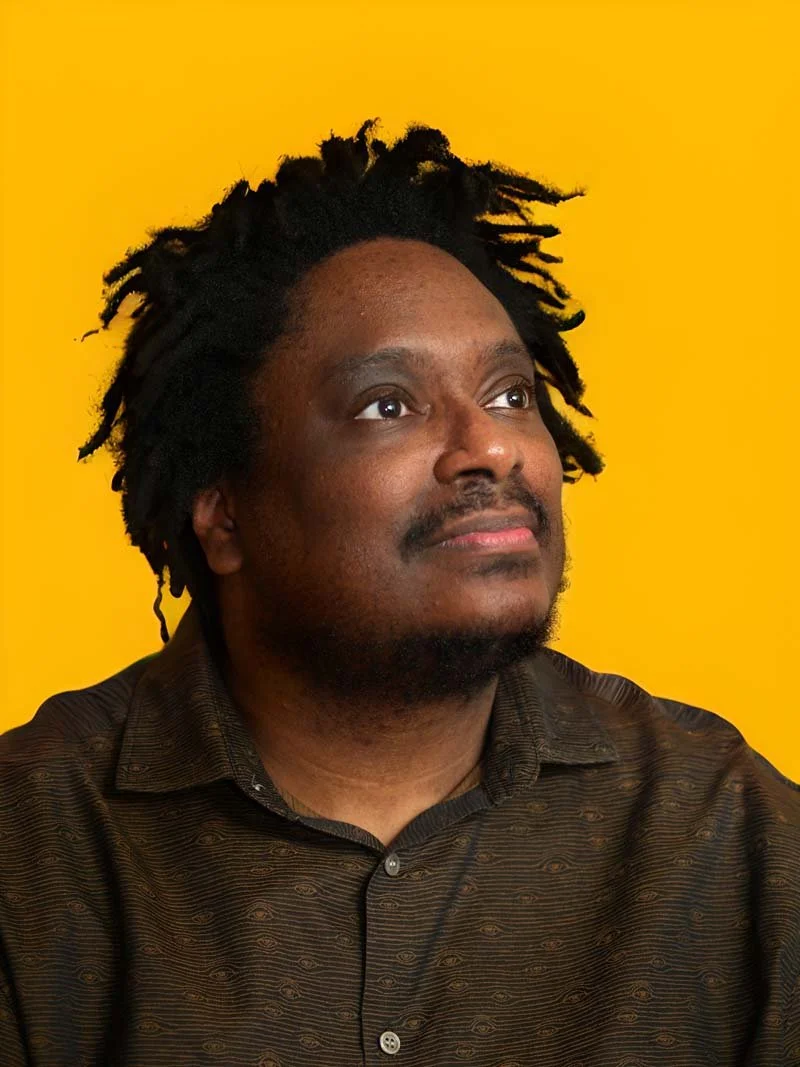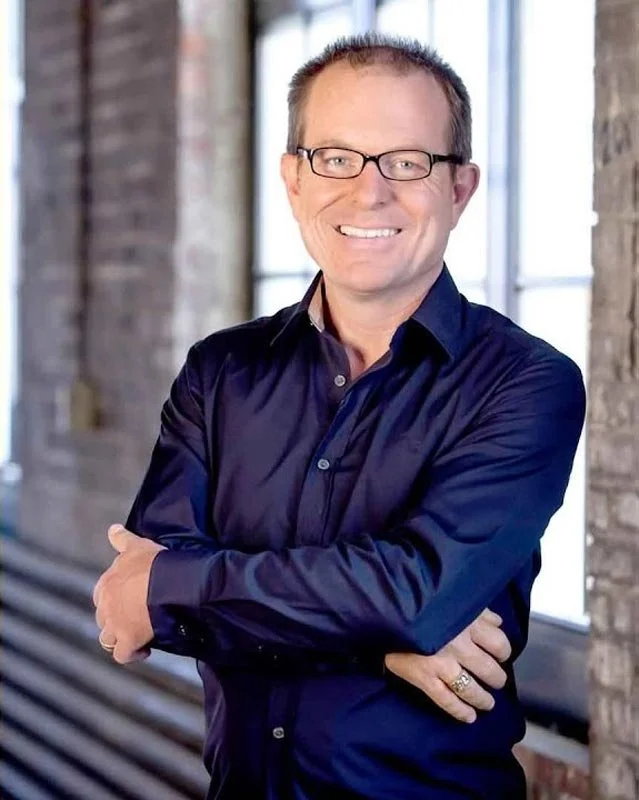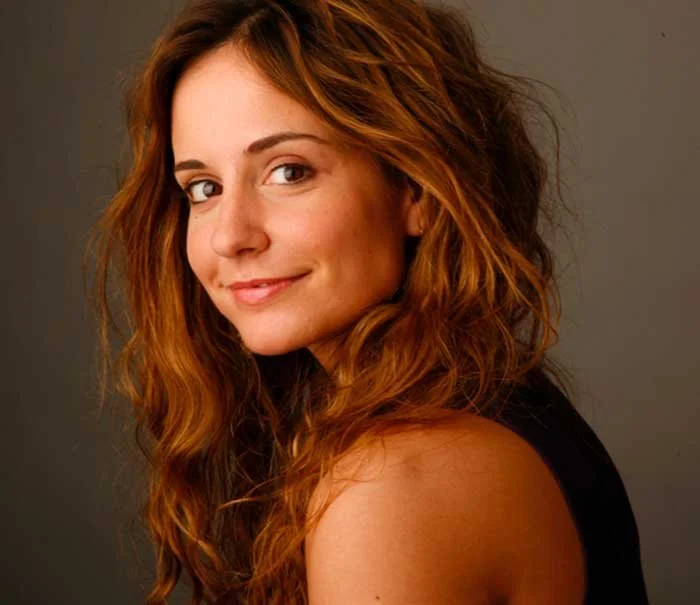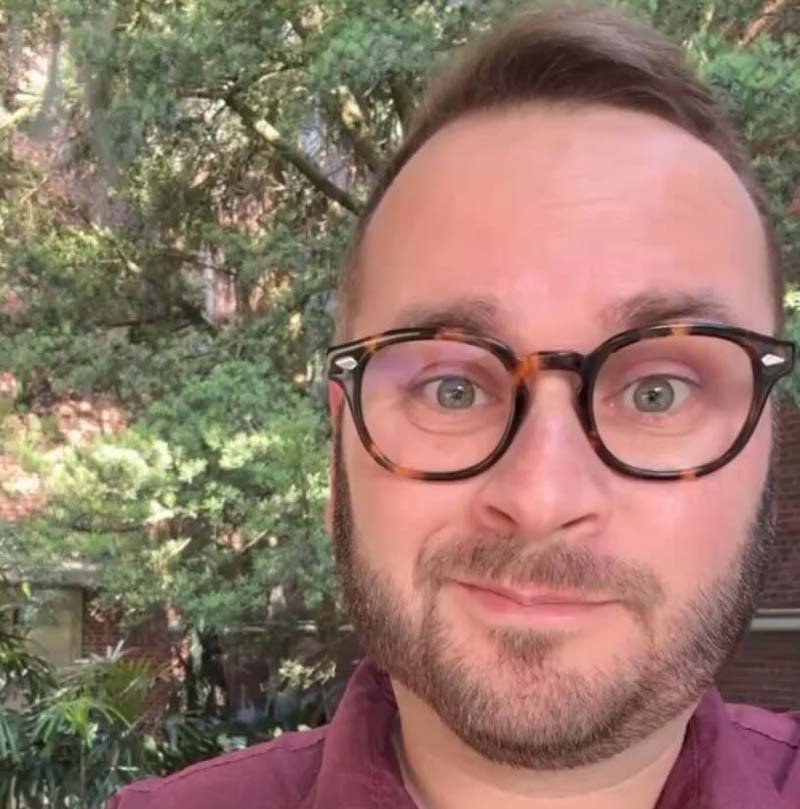


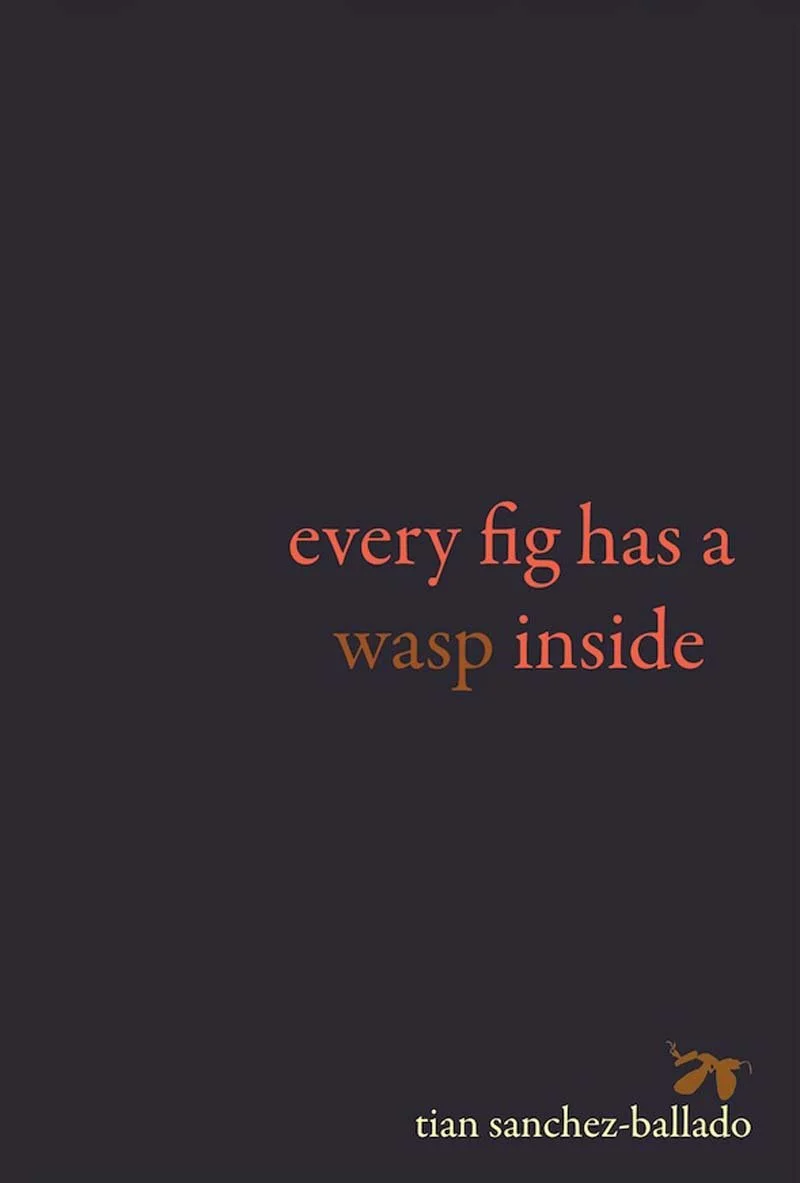
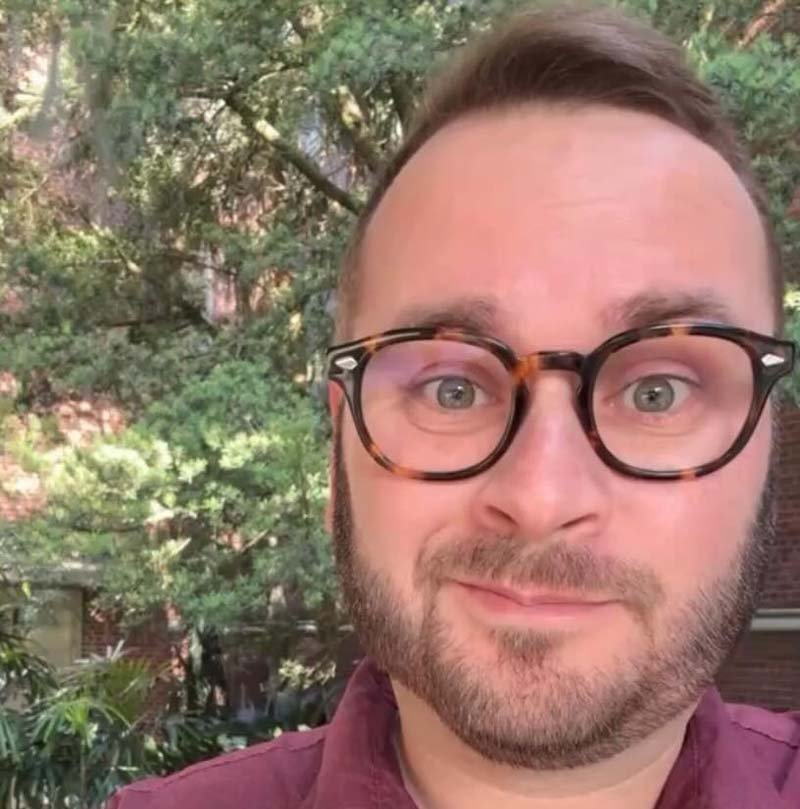
Tian Sanchez-Ballado is a CubaRican-American poet and author of his debut, Every Fig Has a Wasp Inside (2025). His Southern Gothic, post-lyric work examines how trauma, illness, and identity pass through families—what gets inherited in blood, silence, and ritual. Writing from Florida's queer margins, his poems bear witness to survival: living with chronic illness, navigating inheritance, and finding sweetness despite life's stings. A classically trained artist, educator, and scholar, he pursues his second doctorate—a PhD in String Music Education with orchestral conducting emphasis at Florida State University—and serves as Director of Education and Artistic Operations for Tallahassee Youth Orchestras, researching neuroscience, string pedagogy, and student-centered methods. @tianoutof10
Where were you born and raised? How did it influence your writing and your thinking about the world?
I grew up in South Tampa, Florida, where old money met new wealth. As a Cuban-Puerto Rican kid, I navigated neighborhoods where identity felt more like a challenge to manage than something to celebrate. I inherited a quiet awareness of what I needed to soften or edit to fit in, but I always felt like I wasn’t getting it right—neither "Latine" enough, nor "white" enough, not masculine enough, and not simple enough.
This in-between space shaped my perspective on the world. It made me attuned to code-switching, performance, and the subtle costs of belonging. I started writing poetry because it provided a space where I didn’t have to choose a single version of myself. I could be all of it at once—CubaRican, queer, sick, and complicated—without having to explain, justify, or diminish any part of myself. Poetry became the only language where I could stop translating; where queerness, cultural specificity, faith, and illness could coexist without needing permission.
I write from that intersection: between gratitude and interrogation, inheritance and refusal. My work is not about indictment; it is about exploring how assimilation, tenderness, and identity intertwine—and asking what sweetness remains after we have made ourselves palatable.
Would you say you were an active reader as a child? Can you recall any favorite books?
I was a voracious reader—the kind of kid who haunted secondhand bookstores and library aisles, always with a book tucked in my backpack. My mom, my aunt, and my cousins nurtured that hunger early on. They understood that books could serve as both escape routes and mirrors.
I fell in love with language through Shel Silverstein's Where the Sidewalk Ends and Maurice Sendak's Where the Wild Things Are—books that depicted childhood as wild and complicated, rather than innocent or simple. I devoured The Chronicles of Narnia, drawn to the worlds where misfits became heroes. In middle school, I encountered Stephen Chbosky's The Perks of Being a Wallflower and recognized myself in the story—a queer, sensitive kid trying to make sense of a world that didn't always make space for him.
Then came the poets: Emily Dickinson with her compressed grief, Langston Hughes with his radical tenderness, and Maya Angelou with her refusal to be diminished. Robert Louis Stevenson taught me about rhythm, while Shel Silverstein introduced me to irreverence. When I discovered Toni Morrison's Beloved, everything changed. Morrison revealed that language could hold both trauma and beauty in the same breath—that poetry could exist within prose, and that ghosts are not just metaphors, but the burdens we carry.
I had inspiring English teachers who recognized my drive and handed me the books that would shape my writing today: works that refuse to choose between beauty and honesty, that make room for both the complicated and the tender.
Describe your routine as a writer, or the ways you get bits of writing into your daily life.
I write for thirty to sixty minutes each day. I begin with a warm-up exercise to loosen my language and clear my mind, and then I dive into my writing. I've learned a great deal from Ariana Brown in her Poet's Garden, which has helped me understand how structure and craft can evoke emotional responses. Much of my writing is inspired by poets who challenge the traditional boundaries of poetry—like Chen Chen, Franny Choi, Danez Smith, and Ocean Vuong—who all approach their work with precision and heart.
Vuong discusses the concept of a “North Star” for a book—something that every piece points toward—and that idea resonates with me. I often start with a metaphor that captivates me, name the collection before I've written a single poem, and allow each piece to orbit that central idea. It’s similar to composing a piece of music: the architecture supports the concepts, but the ideas bring color and magic.
I let my drafts sit for weeks before revisiting them. Sometimes, an entire collection rests until I feel I’ve fully explored the metaphor—that’s when I know it’s complete. Other times, if I can’t produce enough poems to sustain the concept, I realize I’m asking the wrong question and need to rethink my approach. I never discard drafts; even the ones I put aside influence what ultimately remains.
Tell us about the creative process behind your most well-known work or your current writing project.
Every Fig Has a Wasp Inside began on a trip to our local nurseries with my husband. He's an avid gardener with a passion for native plants and permaculture. One day, I learned about fig wasps: the wasp must die inside the fruit for the fig to become sweet. That image lodged itself in me, feeling like the perfect vehicle for everything I'd been living and writing through.
I've always understood my chronic illness as inherited—my body carrying an ancestral echo. This diagnosis became a lens through which I could see everything else I'd inherited: my abuelo's laugh, my abuela's insomnia, my family's silence, and the way they loved me but couldn't always see me. The fig and the wasp became a metaphor for that paradox—how survival requires dissolution, how sweetness comes at a cost, and how inheritance isn't just genetic but also emotional and cultural. The page became the place where I could hold that complexity and work through the ache.
The collection moves through five arcs: childhood trauma and otherness, family and heritage, surviving Florida while finding chosen family, building a life with my husband and imagining a future child, and finally arriving at acceptance—understanding that what we inherit, those "wings torn but beautiful," includes both illness and resilience.
The title poem became the book's North Star, tying everything together. The collection isn't about bitterness or blame; it's about looking directly at what stings and discovering what endures.
Do you keep a journal or notebook? If so, what’s in it?
Yes, multiple! I keep one in every bag because ideas don't wait for convenient moments. Sometimes it's just an image, or something I overhear, or a line that lands in my brain. I'll jot it down wherever I am standing in line, sitting in my car, mid-conversation, if an idea hits hard enough.
More often than not, it's the rough skeleton of a poem—a few fragments, a rhythm, the seeds. But now and then, something arrives whole. I'll be transfixed wherever I am, writing until it's out. Those moments feel less like writing and more like taking dictation from some part of myself I didn't know was paying attention.
My notebooks are messy—half-finished thoughts, crossed-out lines, swear words in all caps. But that's the point. They're not meant to be tidy. They're where the raw material lives before it becomes something I can share.
How do you research and what role does research play in your writing?
Research for me is twofold. First, I read a ton. I study the structure and craft of poets I admire, paying attention to what pulls me in and what doesn't. That's how I learn how a poem operates, how the syntax grabs you.
I also enjoy researching the specifics. My poems are full of nature metaphors—figs, gardenias, milkweed, plátanos—and if I'm going to write about a plant, a place, or a person, I need to get it right. Not perfectly, but close enough to honor the truth. I want the details to be plausible, grounded, and accurate. If I'm writing about fig wasps, I need to understand the biology at least a little bit. If I'm invoking a place, I need to know what grows there, what it smells like, how light moves through it.
Hyper-specificity isn't just about accuracy—it's about respect. When I name something precisely, I'm saying it matters. That said, I make mistakes. Poetry isn't journalism, and there's room for lyric compression, for bending reality slightly to serve the atmosphere or emotional truth. However, my hope is that if I realize I've misrepresented something factual, I will acknowledge it and correct it where possible.
The research ensures that the metaphors do the work they're meant to do without collapsing under their own weight or lying to the reader.
Which writer, living or dead, would you most like to have dinner with?
Ocean Vuong for sure. His work has shown me that poetry can encompass queerness, diaspora, and survival without having to choose between beauty and honesty. I'm inspired by how he continues to evolve—his ability to move between forms while remaining true to himself and taking risks. Publishing a novel as a poet takes a lot of courage, and I think about that often.
I don’t have an MFA, and sometimes I feel pressured to write according to standards I’m not sure I fully understand—or worse, I feel I have to apologize for not having that credential. However, Vuong's work reminds me that the most compelling writing often stems from specific obsessions and lived experiences, rather than conforming to workshop conventions. I would love to ask him how he navigates the tension between craft and risk, and how he decides when to trust his instincts over prevailing forms.
His willingness to write across genres and allow his work to grow in unexpected directions permits me to do the same. I’m curious about what comes next for him and how he maintains his authenticity as his work continues to evolve.
Do you draw inspiration from music, art, or other disciplines?
Absolutely. As a classical musician, I spend most of my day thinking about music, so it shapes everything I write. Music teaches me about breath, pacing, and the importance of silence. When I'm working with music, I'm constantly thinking about where a phrase needs to breathe, where tension builds, and where it releases. That translates directly to the page—where line breaks fall, how much white space a poem needs, when to let a moment sit in silence before the next image arrives.
I'm also drawn to visual art, primarily how painters and photographers work with light. I think about what gets illuminated in a poem and what stays in shadow—how a single detail can glow against everything else.
Architecture fascinates me too—how spaces are structured, how rooms guide movement. I approach poems architecturally: what supports what, how sections connect, where the weight-bearing walls are versus the open spaces.
And my husband's gardening, as well as our hikes through native ecosystems—that hyper-specific attention to how things root and bloom — runs through the entire collection. The natural world isn't a backdrop; it's the vocabulary.
AI and technology are changing the ways we write and receive stories. What are your reflections on AI, technology and the future of storytelling? And why is it important that humans remain at the center of the creative process?
AI is a tool, and like any tool, it depends on how it is used. The danger isn't the technology itself—it's when we use it to replace human thought, connection, and creativity rather than support it. AI cannot think, feel, or create meaning. It can pattern-match, generate text, mimic style—but it cannot make art because art requires lived experience, embodied knowledge, and the risk of vulnerability.
When we outsource our thinking to AI—when we let it write our poems, make our arguments, or substitute for human connection—we atrophy the very capacities that make us human: synthesis, empathy, and emotional truth. Creativity requires mess, mistakes, and the friction of not knowing what comes next. AI removes that friction, and in doing so, removes the conditions that generate authentic work.
That said, AI can be useful when it serves human creativity rather than replaces it—as a research tool, a way to iterate on structure, a mirror to test ideas against, or even a friendly critic. But the ethics are complicated. These models are trained on the work of others, often without consent. The key is keeping humans at the center—as authors, not tools—and advocating for proper attribution and consent in the development of these systems. Art exists to connect us, to build empathy, to witness each other's aliveness. That can only happen when a human being has risked something to make it.
Tell us about some books you've recently enjoyed and your favorite books and writers of all time. I've been reading a lot of contemporary poets lately: Chen Chen's Your Emergency Contact Has Experienced an Emergency, Paul Tran's All the Flowers Kneeling, Ariana Brown's We Are Owed, Yesika Salgado's Tesoro, and Ocean Vuong's The Emperor of Gladness. What draws me to these poets is how they write about queerness, diaspora, and family without apology. They refuse to sanitize their experiences or make them palatable. Chen Chen writes about being queer and Chinese-American with honesty that feels like permission. Tran's work on trans identity and survival showed me new ways to navigate self-disclosure. Brown—whom I've learned from—taught me that witness and craft aren't opposites. Salgado's embodied attention to Latinx family and cultural memory feels like recognition. And Vuong's work on inheritance as both wound and gift shaped how I understand what gets passed down.
My forever writers include Toni Morrison, James Baldwin, Tolkien, and Emily Dickinson. Morrison showed me that language could hold trauma and beauty in the same breath, that ghosts aren't metaphors but what we carry. Baldwin taught me that writing about identity requires absolute honesty—no hedging, no performing for white comfort. Tolkien gave me escape as a kid, worlds where outcasts could be heroes. And Dickinson's compression and use of white space taught me that silence on the page can be as powerful as sound.
These writers permitted me to write from my specific intersections—CubaRican, queer, chronically ill—without justifying or explaining.
Exploring literature, the arts, and the creative process connects me to…
what survives. The parts of ourselves that persist despite everything trying to erase them, the laughter we inherit, the recipes we protect, the stories we refuse to let die. It connects me to my ancestors, my community, and the people I haven't met yet who will recognize themselves in these words. It's how I understand what it means to carry something forward, even when it's heavy, or even when it stings.