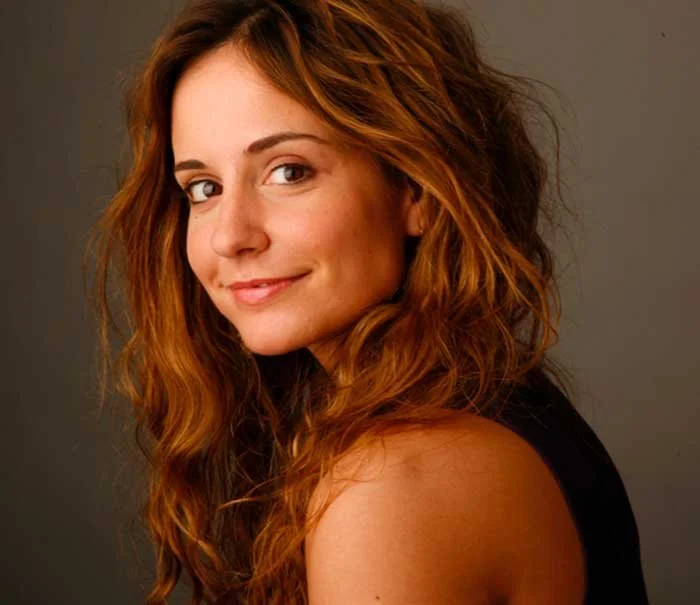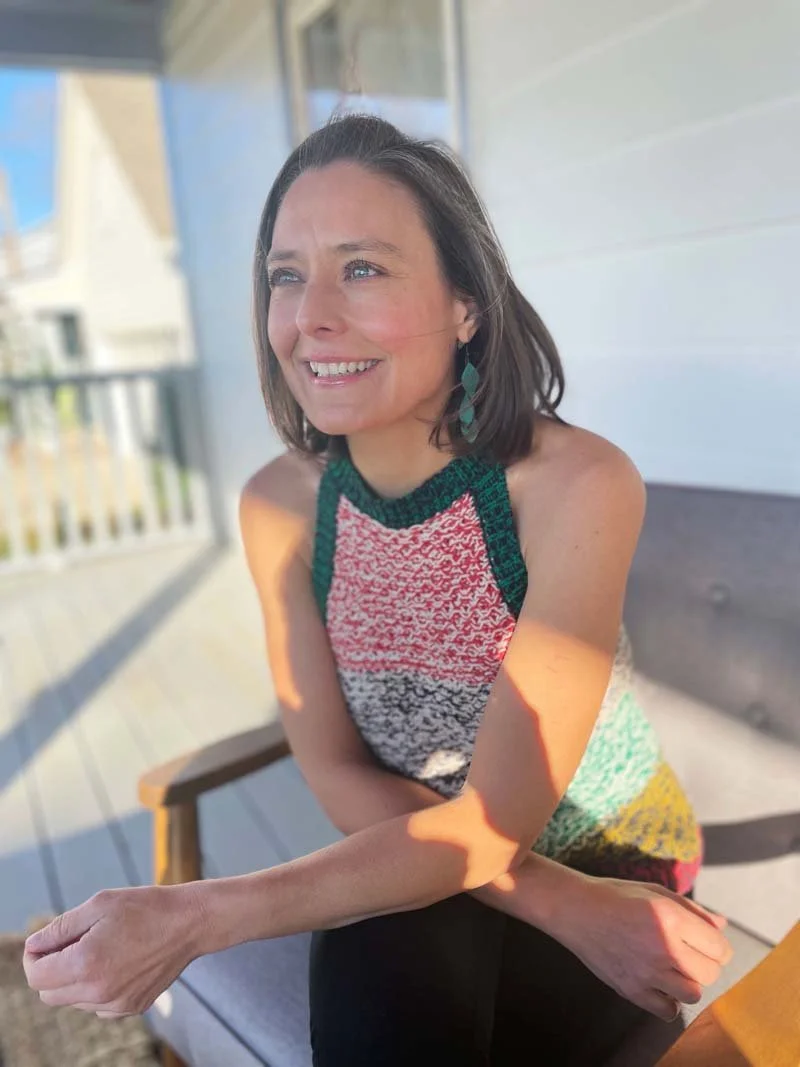


Brooke Shaffner’s novel COUNTRY OF UNDER won a Next Generation Indie Book Award Grand Prize, the Foreword Indies Silver Award for Literary Fiction, and the 1729 Book Prize, and was runner-up for the PEN/Bellwether Prize. Her work has appeared in THE RUMPUS, THE HUDSON REVIEW, MARIE CLAIRE, BOMB, and SCOUNDREL TIME. She’s received grants from United States Artists and the Arts & Science Council and residencies from MacDowell, Ucross, and Saltonstall. Brooke co-founded Freedom Tunnel Press and Listening Labs, directs Between the Lines, and is writing a memoir—an excerpt won the Lit/South Award and was nominated for a Pushcart. @brooke.shaffner
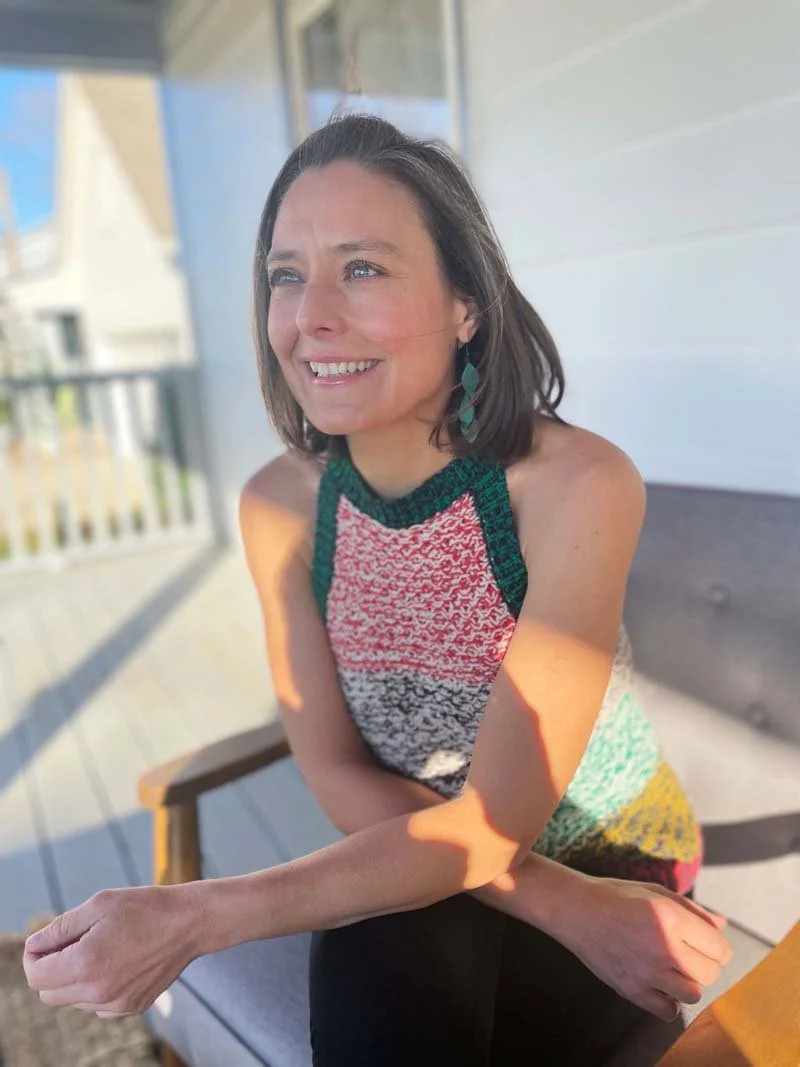
Where were you born and raised? How did it influence your writing and your thinking about the world?
My first real home was in the Rio Grande Valley, at the southernmost tip of Texas, a 15-minute drive from Mexico, where my novel COUNTRY OF UNDER begins. Throughout elementary school, we moved every year or half-year. All those moves, along with my parents’ divorce when I was nine, and, a year later, witnessing the accident that left my seemingly invincible father a quadriplegic, taught me that home is something you create inside yourself. I feel very little attachment to material objects or domestic trappings. Home is where I can immerse myself in writing. Only when my internal world sufficiently entangles itself with the physical world, does the physical world become home.
When I was 11, my mom married my stepfather, whose Mexican-American family was deeply rooted in the Rio Grande Valley. My Garza grandfather was an undocumented immigrant from Mexico who settled in Edinburg, Texas, and had nine children. We became part of a large, tight-knit, joyful Mexican-American family and community. That emphasis on the collective over the individual was a unique and beautiful inheritance that profoundly shaped my politics. My years of immigrant justice work in New York City, from which COUNTRY OF UNDER draws, were a way of staying connected to a home I remain deeply grateful for.
Middle and high school, my formative coming-of-age years, were in the Valley. Many of the novel’s scenes are built on those memories. The Valley’s wide-open fields and skies, the spaciousness of time before the internet exploded, created room for a vast internal life—for dreaming oneself into being.
I was such a shy, old-souled kid that it took me a while to find my way inside my Garza family’s big, loud joy. At my first Garza family party, my mom found me reading in my closet. In high school, I found freedom and joy in my town’s only gay bar, 10th Avenue, where I cheered on my friend Kara Juarez/Kara Foxx-Paris (@karafoxxparis), who was brave enough to perform drag in our small, heavily machismo, predominantly Catholic town in the 90s. Before I knew I was queer, I felt free and embraced in that space. Before I knew I wanted to write, I felt, witnessing the transfiguration of drag, what it was to be an artist—to throw open the borders of the known world.
That became the seed for COUNTRY OF UNDER, which centers the transformative friendship between two misfit young people—Pilar, raised by her undocumented father, and Carlos/Carla/Río, a genderfluid DREAMer—carving out their place in the world, first in their small Texican town and later in New York City.
Growing up on the Texas-Mexico border taught me to see beyond the binary and to hold multiple truths—a lens I try to bring to both writing and life. My partner, Niteesh Elias, who grew up as a Christian minority in India, and I often talk about how being minorities within a dominant culture made us passionate listeners, question-askers, and perceptive observers. At the start of this year, we founded Listening Labs (listeninglabs.co) to help organizations and individuals become more connected, collaborative, and creative through generative listening. That experience also made us comfortable moving between worlds, seeking out the common needs for meaning, purpose, and community that unite people. In this polarized time, we find ourselves leaning into bridge-building work, through Listening Labs and our artivist press, Freedom Tunnel Press.
What kind of reader were you as a child? What books made you fall in love with reading as a child?
I remember liking Judy Blume’s Superfudge series, Beverly Cleary’s Ramona Quimby novels, and The Baby-Sitters Club novels as a child. In adolescence, I was obsessed with the Anne of Green Gables series. I read all of LM Montgomery’s books. I would disappear for days with those stories of smart, imaginative, irrepressible girls growing up in Prince Edward Island, Canada in the late 1800s. From the flat, dry, treeless landscape of the Rio Grande Valley, Montgomery’s descriptions of silver birch forests, shining lakes, and rolling hills were magic.
Four years after my father became a quadriplegic, when I was 14 and my sister was eight, he told us that he wanted to take a family trip, our first since his accident, and asked where we wanted to go. Books being my primary form of travel, I suggested Prince Edward Island. So Dad drove us up the east coast in his wheelchair-accessible van, from his home in Fort Lauderdale to PEI. A support team of friends and hired nurses joined us at various points along the way to make the trip possible.
It was a long, arduous trip, for my father most of all, and I grew homesick for the familiar order of life with my mom and stepdad. Atlantic Canada was beautiful, but when we finally reached Prince Edward Island, it was tiny and highly commodified—the house that Green Gables was based on, Anne’s lake of shining waters and silvery white birches, all staked and labeled like a Candyland board.
The magical landscape in my mind was not in our destination, but one that Montgomery and I had imagined together across time.
Even as an adolescent, I understood how meaningful the trip was for my father. In a photograph, I smile and grip his curled hand with intensity. Four years after becoming a quadriplegic, my father drove us 2,000 miles on a great American (and Canadian) road trip. Remembering the trip recently, he said it showed him that adventures with us were still possible. It’s my father’s irrepressible spirit that interests me now.
That vibrating electric wire between LM, Anne, and me is still what I read for. In his essay “Why Bother?”, Jonathan Franzen references linguistic anthropologist Shirley Brice Heath who researched how people become lifelong, devoted readers. Heath found that most had a parent or authority figure who heavily modeled reading for them and began reading to connect with this authority figure. A smaller group, who felt like outsiders, read for a direct line of connection with authors—the intimacy of a shared imagined world. These readers were most likely to grow up to become authors. I fall into the second category, and I still read for pulsing, under-the-skin intimacy.
Describe your typical writing day.
As I work on a memoir that’s partly about living with chronic illness, and creating beauty within a broken body and world, I want to acknowledge variation in the idea of a “typical writing day.” Twenty-four years ago, I was diagnosed with Primary Sclerosing Cholangitis (PSC), a chronic, progressive liver disease that scars and narrows the bile ducts, choking off their ability to drain waste. This year, I received an additional diagnosis of Crohn’s disease.
I’ve been pushing through particularly debilitating fatigue and sickness over the past two years. Though recently starting an immunosuppressant injection helped me emerge from The TZZ (Total Zombie Zone), I still sometimes wake with heavy, flu-like fatigue that lingers until afternoon. Monday through Thursday and Sunday, I try to schedule my Between the Lines and Listening Labs work in the afternoons to accommodate both this reality—and the hope—that I’ll be well enough to write in the mornings. Niteesh and I devote Fridays to Listening Labs. If I have the energy, I work late into the evening to compensate for the slow start.
On the hardest days, writing might mean nothing more than wading into a sea of words and letting them wash over me—listening to an audiobook or an interview with a writer I love as I drink two pots of strong black tea and stare bleary-eyed into the distance. It might mean meeting a writer friend in the evening to talk about Joanna Macy’s “The Great Turning,” a story shaping both my writing and the way I’m moving through the world these days. Or it might mean this ex-marathoner ambling, heavy-bodied, through the park, noticing the way the light falls through the leaves, the jaunty ticktock of a dog’s tail, and jotting ideas in my iPhone notes app. For anyone writing through illness, anyone who may find themselves in something like The TZZ, I want to say: these things are writing, too.
A really good writing day is one where I’m well enough to wake by 8:30, meditate for 15 minutes, then begin to sink into the subterranean world of language and feeling by listening to a podcast like “Poetry Unbound”, “City Arts & Lectures”, or “The Creative Process”. I have a cup of kale miso soup, then a couple of giant mugs of strong black tea, the second of which I carry up to my office to write. I write for an hour and a half, eat a brunch of eggs and dosas, then write some more, until I need to switch over to client work. On these days, there’s something magical about the dream state my mind is still in after waking—the fragile world I’m building on the page shimmers with intensity before the outside world intrudes. I almost never experience two energetic days in a row. Most often, I work in the imperfect in-between. As an ex-marathoner who pushed through symptoms and fatigue, I know how to hang in for the long haul. I spent ten years writing COUNTRY OF UNDER and another two years submitting to publishers.
As a writer with ADD, movement is really important to my creative process. I try to get out before sunset for a run if I’m well enough, a walk if I’m not. Working late often means headlamp running in the dark—the closest I get to my NYC days of exploring the Freedom Tunnel, which became central to COUNTRY OF UNDER. My subconscious continues to process what I’m writing as I run to music. I record phrases and ideas in my iPhone notes app.
As for outlining versus discovery, my process is a back-and-forth dialogue between freewriting and structure. I want enough direction to hold me and keep me moving forward, but I leave space to stumble into an evolving story, motifs, and characters.
I’m a slow writer who edits as I go. The first things I wrote, in college, were narrative poems. I lacked sufficient interest in poetic forms to be a poet, but the music and architecture of language has always been as important to me as story. I’m also a slow reader and can’t bear to read a book if its sentences lack music. Likewise, I can’t write the next sentence if the one before it is flat, clunky, clichéd, or unevocative. The stories I tell unfurl sentence by sentence, so I can’t know whether a section contributes to the overall narrative or needs to be cut or reworked without first refining the language.
Tell us about the creative process behind your most well-known work or your current writing project.
COUNTRY OF UNDER began as a series of lyric scenes. I first thought I might write a more tightly structured lyric novel, like MADELEINE IS SLEEPING or WE THE ANIMALS, with short sections that function almost like prose poems, but the breadth of the story I wanted to tell outgrew that form.
Those early scenes, written in 2011, revolved around a handful of images and lines around which I slowly wove the story. My Garza family are beautiful storytellers. My cousin Jimmy Garza told me about a group of women crossing the Rio Grande at night, holding hands and praying the rosary. I imagined their linked arms like a line of crosses moving toward shore. That was the first scene I wrote. Luz, Pilar’s mother, was among them, though her role and reason for crossing shifted as I wrote. Rivers are threaded throughout the novel.
I became fascinated with, and interviewed, Julia Solis, a subterranean explorer, artist, and writer (see the article here) I originally envisioned Pilar as a performance artist creating work in subterranean spaces. I decided that her father was a miner, and wrote an early scene of her listening to—and imagining herself into—his stories of tunneling through the mines. He spoke of seeking the vein, meaning the vein of silver threaded through rock. “Seek the vein” became a refrain in the novel. His stories took root in Pilar’s psyche, and tunnels became part of her iconography. She ultimately emerged more as a poet than a performance artist, but tunnels remain a defining motif.
Also among those 2011 germinal scenes were:
• a transformation in a ropa usada that cements Pilar and Carlos/Carla’s friendship. I grew up shopping with friends in ropa usadas—used clothing warehouses common along the border—finding beauty in what the world discarded.
• Pilar and Carlos canoeing at night—something I also grew up doing.
• a drag queen acupuncturist. I briefly dated someone studying traditional Chinese medicine and was struck by how their terms were wholly free from a Western frame of reference. I wanted to get at what was underneath—inaccessible to language.
• an awakening among pigeons—though which character experienced it changed. I began COUNTRY OF UNDER in a tiny room in a Brooklyn sublet, just a mattress on the floor and a cardboard box for a nightstand. Pigeons lined the roof ledge outside my window and dove all day. I wrote to the whoosh of their wings.
These images became touchstones that I returned to and transformed as I moved outward into the world, engaging in activism and research. Both Honor Moore and Alan Michael Parker, writers I admire deeply, noted my recasting of imagery—tunnels, rivers, night—from classic myths.
In 2011, I began working with mostly Latine and some Asian students from the Rio Grande Valley on their college essays. Like my Garza family, they were immigrants or the children and grandchildren of immigrants. Their stories—both hopeful and heartbreaking—were with me throughout the writing of the novel. One student I stayed in touch with, whom I interviewed for the book, was undocumented and the valedictorian of his high school. When he returned from visiting colleges in 2012, he was detained in an underground ICE compound. If his teachers hadn’t rallied in his defense, he would have been deported. He attended Stanford on scholarship, and what he shared shaped Carlos’ story.
Obama was labeled “Deporter-in-Chief” by the immigrant rights community. Militarization of the border escalated after 9/11, which is also when Pilar and Carlos become friends. The novel ends in 2007. I got involved in immigrant justice work in 2014 through the Not One More Deportation campaign. I was especially drawn to how art could humanize politicized issues. I co-organized, with two CUNY DREAMers and CUNY Professor and Immigration Policy Fellow Dr. Shirley Leyro, an evening of artivist film, literature, theater, music, and immigrant testimonies at the Central Brooklyn Library. Collaborating with DREAMers and youth activists I met through Make the Road and student groups inspired the organizing scenes in COUNTRY OF UNDER.
In college, Pilar teaches writing workshops for immigrant children at a Carmelite convent and ends up helping Flor, a Mayan refugee from Guatemala and the mother of one of her students, apply for asylum. Volunteering with the New Sanctuary Coalition from 2014 to 2018, particularly accompanying immigrant families to court, was integral to writing Flor’s story. That work took on more urgency with Trump’s assaults on immigrants during his first term. The emotional highs and lows—and the Beloved Community I found through organizing, marches, and campaigns—live in Pilar and Río’s experiences of activism and artivism.
COUNTRY OF UNDER has now been out just over a year. Starting the book in 2011, I carried the hope that by now, our immigration policies would be more just, and our immigrant and queer communities treated with greater dignity and care. Instead, Trump’s waged a full-on assault on undocumented immigrants and heightened fear for permanent residents. As of 2025, there are approximately 987 anti-trans bills under consideration across the U.S., with 122 already passed. Nationalism is surging worldwide, scapegoating refugees, queer folxs, and other marginalized people. And the U.S. is again backing a genocide—this one livestreamed into our living rooms—just as it backed the Mayan genocide in Guatemala decades ago.
Immigrants and immigrant justice organizations need our solidarity more than ever. One of the characters in COUNTRY OF UNDER is a lawyer for Immigration Equality, which works to secure safe haven, freedom, and equality for LGBTQ+ and HIV-positive immigrants. If you’re able to donate, this organization deserves support.
With DACA under attack, the situation for DREAMers remains precarious. United We Dream, the largest youth-led immigrant rights group in the country, has chapters in 28 states.
I loved leading a writing workshop for immigrant youth at Make the Road—a joyful way for writers to get involved. Make the Road is doing incredible work in the Northeast and Nevada to build immigrant and working-class power. They’ve also organized an annual Trans Latine March in Queens for over a decade.
Sanctuary coalitions are active in many states, continuing to accompany immigrants through detention and court proceedings.
I believe every role in the Social Change Ecosystem Map is vital. My hope is that COUNTRY OF UNDER will encourage readers to find their place in that ecosystem—to get involved in ways that feel both necessary and meaningful to them.
My new project, EVERYTHING I LOVE IS OUT TO SEA, is a hybrid memoir that weaves together family history, my complex relationship with my quadriplegic father, my life with progressive illness, the loss of a love to cancer, and my decision to leave New York City after two decades to build a new life, love, and community in the South.
For many years after becoming a quadriplegic, my father, enraged at losing his physicality and independence, lashed out at everyone who loved and cared for him. After attempting to write the story of our relationship in my 20s, I believed I was done with it, only to realize, after finishing COUNTRY OF UNDER, that the need to tell that story—with more compassion, depth, and complexity than I could manage then—had deepened over these many years.
Though my father and I now share a palpable love, vast silences remain. In the absence of dialogue, I worked, through other means, toward healing and love with my father, who is far gentler at age 77 than he was even at 60. Somewhere in the gap between “Old Dad” and “New Dad” is healing, but there’s mystery around both his and my process of healing. This memoir is my attempt to inhabit and ask questions of these mysteries—to interrogate the complexities of family, love, anger, healing, gender, identity, disability, illness, death, memory, and creation. Eventually, I hope to incorporate conversations with my father, who has been open to therapy.
The process is as much existential as it is editorial. I’m working with more than a thousand pages—two manuscripts from my twenties, an autonovel I began while COUNTRY OF UNDER was under submission, and recent journals. My earliest manuscript is a 600-page fantastical memoir, later distilled into a 260-page straightforward one. What I seek now is something in between, a hybrid memoir that re-stories my old manuscripts in light of my current healing, midlife perspective, and transformed relationship with my father.
My task now is to pare this archive down and clear space for new material, which I envision as a quarter of the final book. This means revisiting old manuscripts not just to condense them but to liberate them from mythologies I once lived inside through stylistic innovation, hybridity, and lyric invention—so they can speak anew from the vantage of my present life of creation. That life of creation includes co-founding Listening Labs and Freedom Tunnel Press, which continue to shape how I imagine connection, dialogue, and possibility.
Ultimately, I hope to widen love’s wingspan. Could love mean seeing someone in all of their darkness and light, holding the whole of them with wonder, anger, gratitude, incomprehension, repulsion, compassion?
What might working against numbness and erasure to fully see loved ones and ourselves mean for how we see the world? Might the stretching we do to hold that complexity make us better able to hold the complexity of the world we live in—the truth of violence, domination, and devastation and the possibility of reparation, reciprocity, and re-creation—all of what we have been to and could be for one another?
Do you keep a journal or notebook? If so, what’s in it?
I’ve kept a journal since 2021, which serves as raw material for the quarter of my memoir that will focus on recent years and my present life.
I freewrite in a notebook to tap into more subconscious, impressionistic emotions and sensations. When I later transfer those passages to my laptop, my editorial mind takes over, shaping them into material I can work with.
How do you research and what role does research play in your writing?
I wrote and lived COUNTRY OF UNDER for ten years, engaging in activism and advocacy; attending talks, exhibits, and performances aligned with the world of the novel; researching and interviewing my Garza family, undocumented friends and students, immigration lawyers and judges, drag performers, subterranean explorers, activists, artists, priests, and nuns. You can read about the many people who helped make the book here.
After interviewing subterranean explorer Julia Solis, I was inspired to do my own urban exploring-for-beginners. I walked the Freedom Tunnel, a 3-mile active train tunnel that runs under Manhattan’s Riverside Park and once served as an underground gallery for New York City’s most famous graffiti artists, seven times. You can read about my first experience of walking the tunnel and escaping through a car garage here.
My early drafts were closer to Pilar’s perspective, but I wanted to develop Río with authenticity and sensitivity. My high school friend Kara shared her experiences with Texas drag, but Río mostly performs in New York. My incredible NYC drag advisor, Marcelle LaBrecque/Marilyn Monhoe (@marilynmonhoeny), a talented non-binary drag and musical theatre artist, helped me portray Río’s genderfluidity and drag community with care. I first met them late one night in a Brooklyn grocery store, where they were doing high kicks by the checkout counter while recounting how they once tied a corset too tightly and broke two ribs. I shyly approached them—towering over me at 6 foot 7 inches—and a couple of weeks later we sat down for a long conversation that became a touchstone for Río’s character. As I expanded Río’s narrative arc, they generously reviewed sections and answered questions. I had a blast partnering with Marcelle and documentary filmmaker Emily Branham at my Brooklyn book event last year.
Because Río is performing drag and exploring queer identity in the early 2000s, I needed to account for historical context. I researched and talked with friends about when they first encountered gender-neutral pronouns and queer terminology. My girlfriend at the time had taken her first “gay and lesbian history” class in 2006, the same year as Carlos’ class, and remembered gender-neutral pronouns being introduced. The path toward any identity that pushes against the grain of society is not a straight line, so Río’s understanding and expression of their identity evolves over the course of the novel. Those historic details helped me trace the evolving language of identity in step with Río’s journey.
During the pandemic, I overhauled the book in the Rio Grande Valley, overlooking the lake that inspired the resaca where Pilar and Río night canoe. Moving between Pilar finding community among nuns and Carlos finding community among drag queens became a way to explore false dichotomies—contemplation and engagement, masculine and feminine, existentialism and religion.
In constructing the stories of Pilar’s father, Marin, an undocumented immigrant from Bolivia, and Flor, a Mayan refugee of Guatemala’s Civil War whom Pilar helps apply for asylum, I interviewed an immigration judge, two immigration lawyers, and a Catholic priest who represented thousands of immigrants in New York’s immigration courts. I filled legal pads with notes as I worked to align personal histories with the shifting chronology of immigration law—a grueling logic puzzle. After I’d ensured historical accuracy, I worked, in many subsequent drafts, on paring back my research to bring the characters’ stories forward.
Which writer, living or dead, would you most like to have dinner with?
Virginia Woolf, whose books I return to when I’m between contemporary reads. I love how she intertwines the social and existential with a deep mining of her characters’ subconscious and creates emotional immediacy through lyricism. She confronts mortality with such depth, feeling, and beauty—showing how it interlaces with every moment of our lives. That’s the intimate space I want to be writing and living in now.
Do you draw inspiration from music, art, or other disciplines?
Music was central to the conception of COUNTRY OF UNDER and is inseparable from its characters and story. You can find a novel playlist here.
I made playlists for the characters at different points in their emotional journeys and ran to them. This not only immersed me in their emotions, but also helped me work out plot details when I was stuck. Scenes bloomed like movies in my mind as I ran to their soundtracks—their bodies and emotions moving inside mine. Phrases arrived as if from the air, and I jotted them down in my iPhone’s Notes app.
Patti Smith, especially, was a touchstone. (Sign up for my free newsletter if you want to read about my recent encounter with her on a Charleston street.) Like her lyrical memoir JUST KIDS, COUNTRY OF UNDER is a dual artist Bildungsroman. Pilar and Río’s becoming, like Smith’s and Robert Mapplethorpe’s, is intertwined. Their stories entangle, and in many ways they—as in my epigraph—"believe each other into being.” Carlos gives Pilar Smith’s first album HORSES, and she is mesmerized by the raw, hallucinatory poem that is “Birdland.” In a 1996 Fresh Air interview, Smith explained that HORSES was her attempt “to merge poetry and rock ’n’ roll but more humanistically, to reach out to other disenfranchised people.” She spoke of creating space for anyone who felt different—queer kids, artists, dreamers, outsiders. Her words echo in “Birdland’s” prophetic vision of a new generation who would no longer be presidents but prophets. COUNTRY OF UNDER is my answer to that telegram—an early-millennium bordertown-to-New York manifestation of “Birdland’s” vision.
I first encountered Smith through her intimate, transportive reading of JUST KIDS on night trains back to Brooklyn after teaching at Rutgers. When the book ended, I was bereft. Though I love HORSES, I balked when Río and Pilar insisted their stories encircle “Because the Night.” The melodramatic piano and crooning teenage poetry made me cringe. But Río and Pilar were adamant, and I came to embrace the song as a full-on drag ballad, with sweeping gestures and lip vibrato.
At the book launch for COUNTRY OF UNDER and IT’S SOULFUL AND IT’S SURVIVAL: A CONVERSATION WITH FOUR DRAG ARTIVISTS IN THE SOUTH, drag artists brought to life songs that appear in the novel. You can view photos. Nova Stella brought the house down with “Gloria,” Lolita Chanel closed with a show-stopping “Because the Night,” and Onya Nerves gave a powerful rendition of The Smashing Pumpkins’ “Tonight, Tonight.” Oso Chanel, who portrayed an immigrant detained by ICE in the performance that won him Charlotte Pride Drag King, moved the audience to tears with Cynthia Erivo’s “Stand Up”. It was a celebration and a revolution.
Beyond music, I drew inspiration from artists in many mediums—partnering with drag performers, documentary filmmakers, photographers, and activists during my book tour. They affirmed COUNTRY OF UNDER’s belief in art as a force for connection and transformation.
AI and technology are changing the ways we write and receive stories. What are your reflections on AI, technology and the future of storytelling? And why is it important that humans remain at the center of the creative process?
I’m less interested in books as products and more interested in them as existential marathons. For me, it’s about the big, stretch-you-to-the-limits, transformative journey, which is why I choose to wrestle with tangled, expansive, experiential book projects rather than polish and publish short pieces. I want to take on what scares, stretches, and changes me. In writing and living COUNTRY OF UNDER over the course of a decade, I became a braver, deeper, truer version of myself. AI can’t steal that.
As Allison Pugh argues, the “last human job” is connection. That’s the work I want to deepen and teach because it’s the work that will save us. Listening Labs is focused on generative listening—on the revelatory, unforeseen co-creations generated between people pulling for each other’s highest possibility. In collaboration, friendship, and love, I’ve experienced how something I could never have conceived alone was born out of connection.
Because I help executives, students, and artists craft stories, I’ve tested what AI can and cannot do. It can’t do the human work of intuiting what’s unspoken beneath a client’s story and asking the precise, tender questions that elicit a deeper, more nuanced narrative. Its attempts to write lyrically lean on sentimental clichés and clunky metaphors, losing the precise meaning. There’s no economic incentive for it to improve, since most people can’t discern the difference between a well-crafted lyrical sentence and its AI imposter. But a small contingent of us can. We’ll go on laboring over our sentences and savoring the labor of writers similarly obsessed with language because our tiny choir of sentences that sing makes us feel less alone and more alive.
Tell us about some books you've recently enjoyed and your favorite books and writers of all time.
I’ve been reading more memoirs as I work on my own. Lidia Yuknavitch’s THE CHRONOLOGY OF WATER and READING THE WAVES have been touchstones in writing a lyrical, non-linear, hybrid memoir that weaves and re-stories past traumas with my present life of creation. Through language and form, Yuknavitch cracks open and remakes her history. I’ve also returned to one of my favorites—Jeanette Winterson’s fiery, luminous, and darkly funny WHY BE HAPPY WHEN YOU COULD BE NORMAL?.
Honor Moore was my thesis advisor at Columbia and I’ve returned often to her memoir, A BISHOP’S DAUGHTER, its story deeply connected to the one I’m writing, to gather courage, vision, and voice. Both her latest lyric, associative memoir, A TERMINATION, and THE BISHOP’S DAUGHTER chronicle a woman coming into herself as an artist. Both insist, with vulnerability, courage, ambition, and style, on the trying and failing, motions and rituals, of that worthy subject matter. How lucky I was to find this mentor whose obsessions were so close to my own, whose books and life carved a desire line for mine.
Arundhati Roy’s MOTHER MARY COMES TO ME offers an astonishing portrait of her complex history with and love for her mother and of an artist’s determination to live on her own terms. Eiren Caffall’s THE MOURNER’S BESTIARY, a lyrical weaving of chronic illness, ecological crisis, grief, and hope, has also stayed with me. Other memoirs and essay collections I’ve read and loved recently include Carvell Wallace’s ANOTHER WORD FOR LOVE, Ta-Nehisi Coates’s THE MESSAGE, and Archie Matlow’s DEAD MOM WALKING.
One of the threads in my memoir is the story of my relationship with the writer Josh Goldfaden, who began to die of cancer soon after we fell in love. I published a bare-bones essay about that transformative experience of love, which I’m returning to in my memoir not only as an experience of personal transformation, but as a “deathbed creation story” that I believe holds social resonance. The defiant love that Josh and I created even as he died reminds me how to build the world we want, even as the one we don’t accelerates around us.
This commitment to building the world we want, even as the one we don’t accelerates around us, is what Joanna Macy called The Great Turning. Facing, feeling, and fully grieving our pain for, and implication in, the world’s suffering liberates our energy for the work of The Great Turning.
I’ve been seeking out “deathbed creation stories”—stories of defiant, transcendent creation in the face of illness and death, which insist that we are more than body and offer possibilities for how, in this time when so much is beyond saving, we might live and love. Kaveh Akbar’s MARTYR!, Virginia Woolf’s THE WAVES, Patti Smith’s JUST KIDS, Honor Moore’s THE BISHOP’S DAUGHTER, Marie Howe’s WHAT THE LIVING DO, and Eiren Caffall’s THE MOURNER’S BESTIARY are all powerful deathbed creation stories.
bell hooks’ THE WILL TO CHANGE helps me to understand my father, and the necessity of healing each other, through the larger structural lens of patriarchy.
Niteesh and I recently connected with a journalist and activist about contributing to Freedom Tunnel Press’s anthology SHAKTI: INDIAN ARTIVISTS RESIST FASCISM. Their remarkable writing and the grassroots peacebuilding they’re doing between Hindus and Muslims in India enlarged our goals for the anthology. We now want to include more diverse perspectives and delve more into the structural forces undergirding the nationalist divide in India. Rightwing state establishments around the world use the same political tactics to divide and conquer and erode democracy, and we’re now seeing in the U.S. what’s happened over the last decade in India.
In writing my memoir, the life I’m building with Niteesh in the South, and our work through Listening Labs and Freedom Tunnel Press, I increasingly find myself drawn into the work of bridge-building.
One final plug for some wildly funny and deeply moving audio memoirs, because we could all use some humor right now: I was lucky enough to have Micaela Blei in a workshop I taught in 2010—her audio memoir YOU WILL NOT RECOGNIZE YOUR LIFE is bravely real, revelatory, and riveting. Same for Jeff Hiller’s ACTRESS OF A CERTAIN AGE—love a 40-something breakthrough story—and Maria Bamford’s SURE, I’LL JOIN YOUR CULT.
Virginia Woolf, James Baldwin, and Jeanette Winterson are my favorite writers of all time.
Exploring literature, the arts, and the creative process connects me to…
the country of under—the submerged, shared dream life where everything powerful is born.