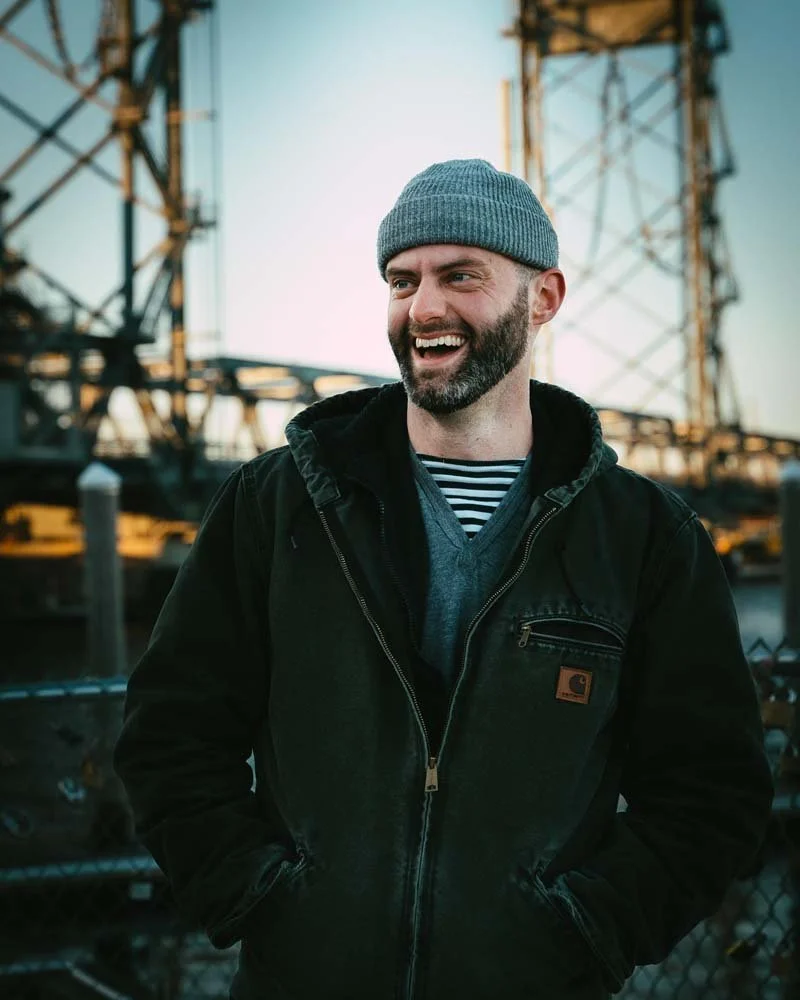


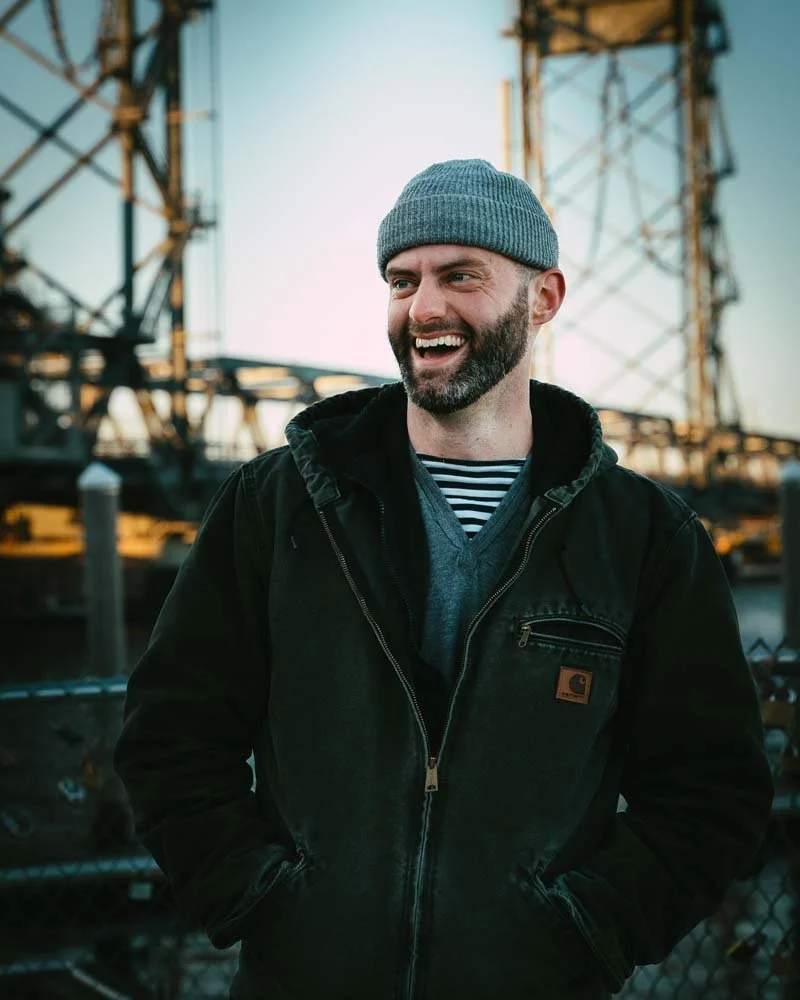
Michael Jerome Plunkett is a writer from Long Island, a Marine Corps veteran, and former EMT. He is the Co-founder and Executive Director of the Literature of War Foundation and host of The LitWar Podcast. His writing has appeared in The War Horse, The Wrath-Bearing Tree
Leatherneck Magazine, and other publications. Zone Rouge is his debut novel. @michaeljeromeplunkett/
How do you think your early life on Long Island helped cultivate the kind of writer you became? I was born and raised on Long Island in a town called Brookville where the ruins of Gold Coast mansions still litter the woods. Others have been repurposed as country clubs, event halls, and schools. I went to middle and high school in one. The ghosts, history–they are everywhere but Long Island (and New York in general) is such a fast-paced place that I think a lot of people miss them. It’s constantly changing and developing. The previous worlds are always on the brink of being torn down and built over. So I think I have this curiosity, maybe even a longing, for these disappearing worlds. I am always interested in what was there before the current thing. What might have happened here. How it might still be affecting us in our here and now. History, in a word. I am always writing about history in some form or another.
What kind of reader were you as a child? What books made you fall in love with reading as a child? The Great Illustrated Classics changed everything for me. I discovered those in the third grade and that was when I fell in love with books. But I have always loved stories. My happiest memories are typically at some type of family event where someone is telling a story. Then my dad gave me Stephen King when I was in the fifth grade and it was off to the races. I am not sure he realized what was in those novels, I think he thought they were just scary stories about monster clowns and reclusive vampires, but it definitely formed my earliest views of what a novel was supposed to be.
Can you walk us through your day when you’re deep into writing?It’s push and pull for me. I have moments where I outline and plan and other moments where I just need to write. Too much thinking and planning and I think myself right out of the story. That’s typically where all the self-doubt is, in the planning. So a little bit of it is okay but I can’t overdo it. For me, planning is like standing on the summit of one hill and looking out over a valley and the other summits that lay beyond. I can think about the next summit I want to get to all day long and it is probably useful to have that perspective. But at some point I need to put one foot in front of the other and go down into that valley. That’s the exploration part of writing that I love.
I prefer to write early in the morning, around 5 am. Routine helps me build momentum. I don’t set word counts, I don’t find them useful. One short, good sentence can carry the weight of a thousand bad words.
Can you share how Zone Rouge evolved from idea to finished draft?
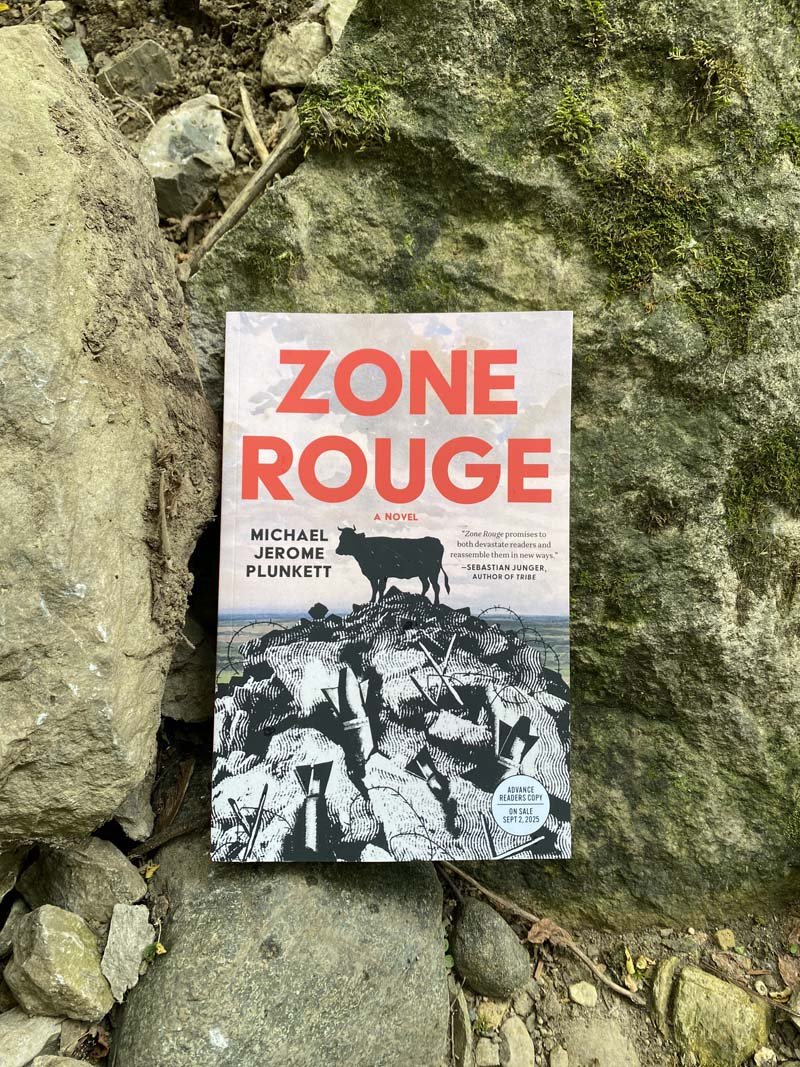
In 2012, I stopped off in a small French city a few hours outside of Paris named Verdun because I knew one of the biggest battles in World War 1 had happened there. I only stayed a few hours but the experience changed me. I found out they were still cleaning up unexploded artillery shells and other ordnance nearly a century after the war had ended. Some of these were still incredibly dangerous and people died every now and again. The government has teams of specialists to deal with it and they think the work will take another few centuries to complete. I could not get over this phenomenon. I knew it was something I had to write about. For years I tried to figure out a way into the story to no avail. It wasn't until I stopped thinking about it as a "story" and started thinking about the characters that I found the door. I began writing a series of "after action" reports that a bomb disposal specialist might file at the end of a shift. There wasn't really much of a plot at first. It was just voices. But those voices got louder and stronger and after several drafts of these reports, I started to see the story created by the conversations these voices were having. That was when I knew I had a novel.
Do you keep a journal or notebook? If so, what’s in it? I usually have one notebook going with all my notes and observations but I am the worst at sticking with it. It’s never right there when I need it. So my real notebook ends up being whatever piece of paper is within arms reach when I need to write something down. It takes some of the pressure off feeling the need to be profound or writerly. A notebook can feel so official. Scribbling on a grocery store receipt is liberating. The stakes feel lower.
How do you research and what role does research play in your writing? Research is essential. This goes back to writing as exploration and discovery. Even when I am writing something from my own experience, I find myself examining the world in a careful and thoughtful way. I end up with all these questions I have never considered before about things I thought I understood or believed. Writing forces me to interrogate these beliefs.
My latest novel, Zone Rouge, required tons of research about everything from World War 1 to terrariums. In this case, I actually held off on doing too much historical research. I didn’t want to overdo it and leave no space for my own imagination. You risk turning it into a dissertation or a glorified wikipedia article. I believe in the capacity for fiction to get at Truth without needing fact as a vehicle to get us there. So once I had the hard basics for my setting and characters, I allowed the story to take over.
Which writer, living or dead, would you most like to have dinner with? Living or dead, I have to swing for the fences here. Homer. Primarily just to see if he was a real person. I’ve read that “Homer” may have been a traditional name given to a number of different poets who collectively composed the poems. Imagine what that dinner would look like? Table for two and then a crowd of ancient, nameless poets walk into the room.
Do you draw inspiration from music, art, or other disciplines?Absolutely. Other disciplines help prevent tunnel vision. I think the worst thing I can do when I sit down to write is try to be a writer. What does that even mean? The most interesting literature is the kind that surprises the reader over and over. I have never been able to achieve that by trying. If I try too hard, if I try at all, it usually goes poorly. By remaining open and curious, I am able to channel something that feels more natural in my work.
AI and technology are changing the ways we write and receive stories. What are your reflections on AI, technology and the future of storytelling? And why is it important that humans remain at the center of the creative process? The toothpaste is out of the tube isn’t it? For my own wellbeing, I need to remain in a somewhat constant state of gratitude and positive thinking. I think these attitudes have become cliches broadly speaking but they have helped keep me sober and grounded even in times where it feels like the world is tipping over in slow motion. I think it is natural and understandable to feel averse to AI but I do not believe it will replace storytelling. It will have an impact on the way we do things. I’m no expert there but that’s what technology has always done. Harold Bloom has this great thing he said about what makes great literature. He said it has to do with the startling strangeness a reader experiences when encountering a work of great literature. I love that. AI technology, at least the way it is operating right now, won’t be able to replace that. That’s the human mind.
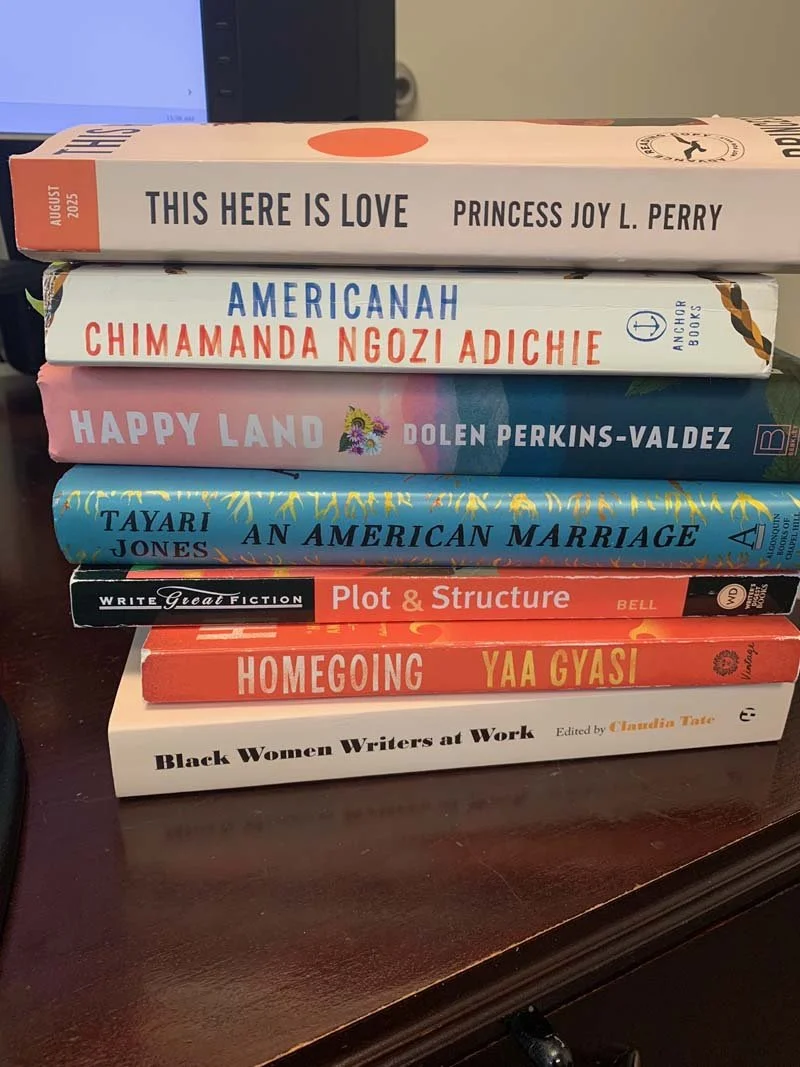
Tell us about some books you've recently enjoyed and your favorite books and writers of all time. I have two reading goals this year: Read Toni Morrison’s entire body of novels in chronological order and read the Bible. These are not related, at least in any intentional way, on my part. Toni Morrison only becomes more like Toni Morrison the deeper I get into her novels. I highly recommend this experience to everyone. It’s fascinating to experience an author’s voice develop page after page. Reading novels like this back to back, all of the themes, the techniques, the habits become so apparent and clear. It is a commitment (It will take me ten or eleven months in total) but a worthwhile endeavor.
Exploring literature, the arts, and the creative process connects me to…humanity.