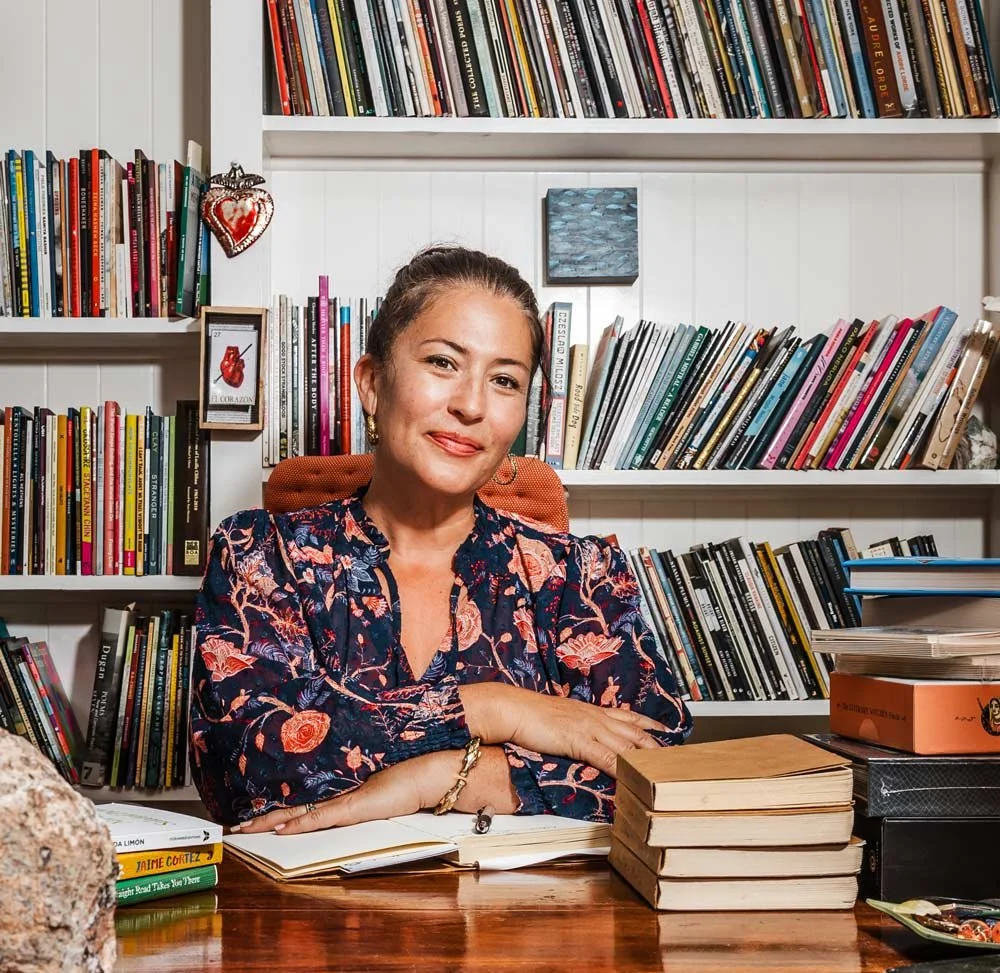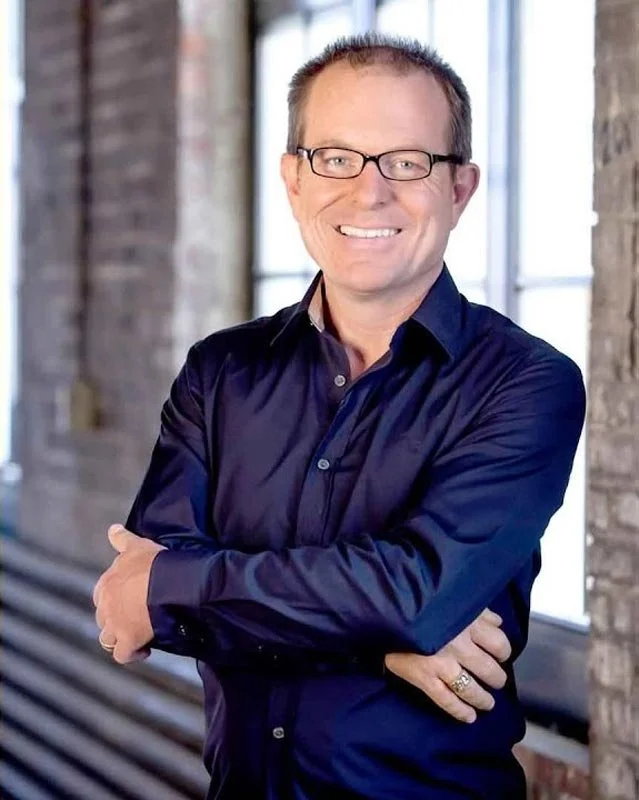


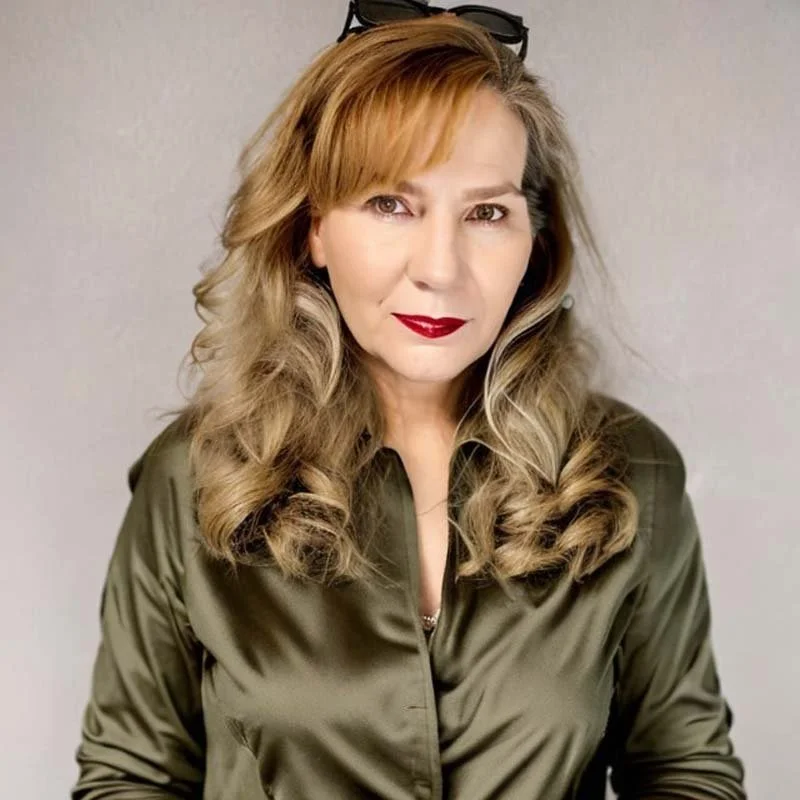
Lori Jakiela is the author of eight books, including the memoir Belief is Its Own Kind of Truth, Maybe (Autumn House), which received the Saroyan Prize for International Literature from Stanford University. Her most recent book, All Skate: True Stories from Middle Life, was published in 2025 (Roadside Press). Her work has been widely published in The New York Times/Modern Love, The Washington Post, Pittsburgh Magazine, Pittsburgh Post-Gazette, Vol. 1 Brooklyn, and more. She directs the undergraduate Creative & Professional Writing Program at The University of Pittsburgh-Greensburg and teaches in the doctoral creative writing program at Pittsburgh Theological Seminary. @lorijakiela
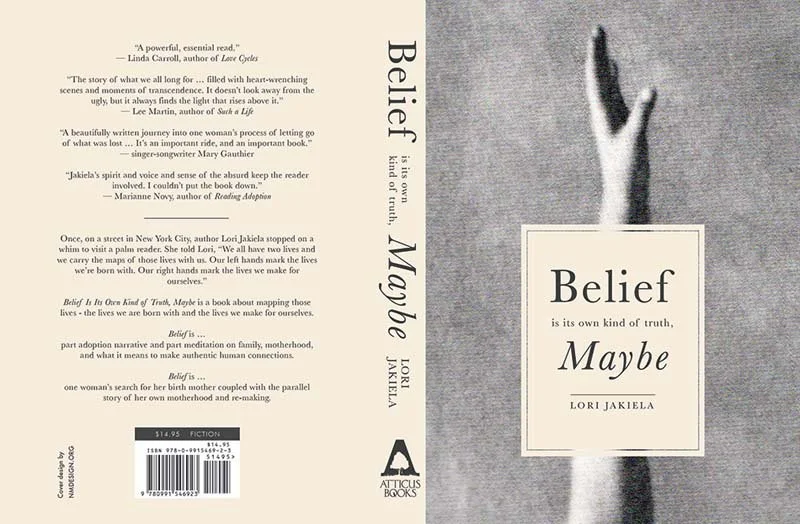
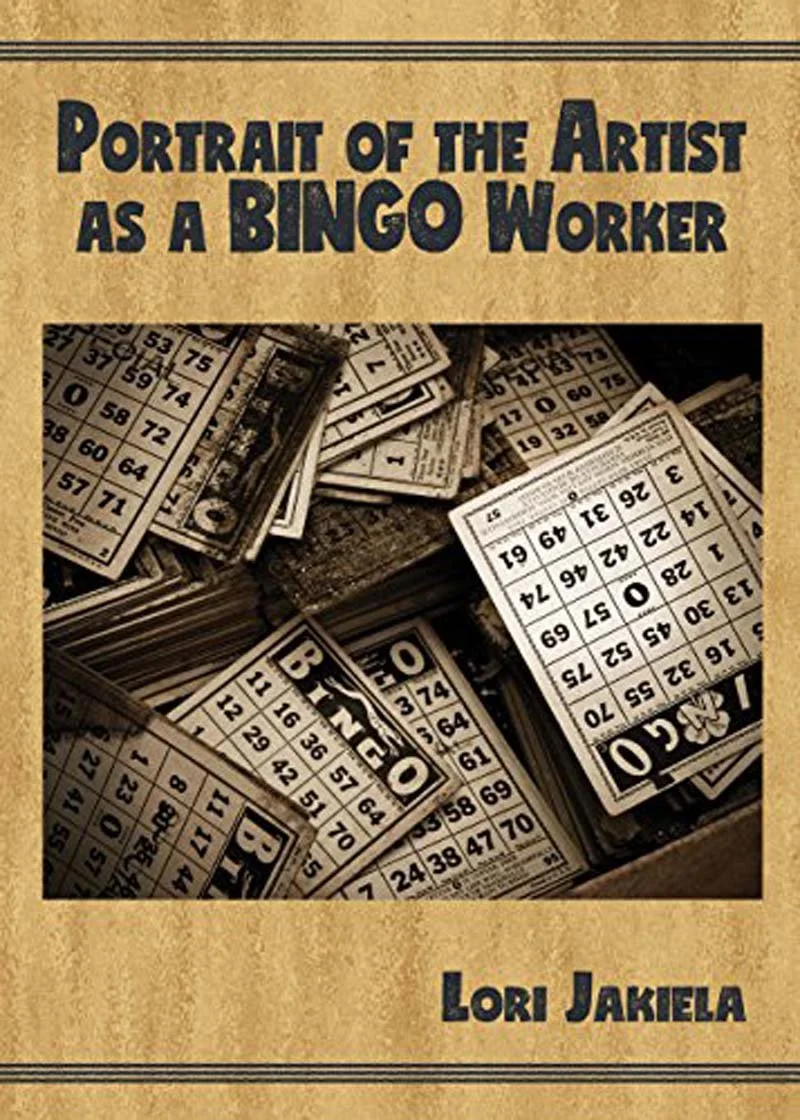
What was it about Pittsburgh that you feel most strongly shaped your voice or perspective? I was born in Roselia Home for Unwed Mothers in Pittsburgh, Pa. in the mid-1960s. The mid-1960s in the U.S. are called the "baby scoop" years. This was a time when unwed women were encouraged/coerced to give their children up for adoption. I was born with a defect--some things wrong with my legs--and so I remained in Roselia for a year until I was adopted. I like to joke I was a bargain-basement case, a blue-light special, a coupon kid. My parents who raised me were lovely, but considered too old to adopt a healthy baby, so in a way they were on sale, too. My mother was a nurse, and so we were a match--me with my bad legs, her with her medical skills and patience. All of this is to say I write about adoption a bit--what it's like to have essential gaps in a life, what it's like to come from a background grounded in loss and then gratitude. That sounds very sad-sacked, I know, but it's not necessarily sad. It's just something I'm interested in exploring in my work. I think that initial, primal experience has lead me to write a lot about family in general, and about how important it has been for me to find my own place in the world. I'm a mother, with two almost-grown children now. I write about them--with their permission and, mostly, blessing. My husband is a writer, too, and so our married life is totally fair game for both of us. Other subjects I'm interested in--friendship, health, genetics, womanhood in all its crazy-quilt forms--probably trace back to my origins, too. As for my thinking about the world, I'm very conscious of how everything is temporary in every way. I often quote E.B. White's Charlotte the Spider: "We're born. We live a while. We die." The terrible truth and humor of that. This is all probably something to unravel in therapy.
Who or what sparked your love of reading when you were growing up? I read absolutely everything, though I didn't grow up in a house of books. This meant I read the dictionary and cereal boxes and newspaper columns. Once when I was very young, an encyclopedia salesman came to our house and my father, because he loved me, bought a set of encyclopedias. The World Book of Knowledge. My father built a bookcase for the books. The bookcase had a glass front to keep the dust off the books, they were that precious. The whole thing was magic. I read my way through every volume, A to Z. Later, my mother would take me to G.C. Murphy, a five-and-dime store that had barrels of books up front near the checkouts. The books would have the covers torn off. The books were five for a dollar and my mother would give me money so I could load up. I often ended up with gold--books totally inappropriate for my age. Judy Blume's Wifey, her one adult read, was one of my treasures. I kept that one under my bed. Later, I'd find Stephen King, the Flowers in the Attic series, things like that. I was the kind of kid who kept a flashlight stashed under her pillow. I was the kind of kid who, after lights out, would pull the flashlight out, pull the covers over my head, and read until I couldn't keep my eyes open or until my parents would find me out. "You'll ruin your eyes," my mother said about my night reading. "You'll get ideas." I did. I still do.
Describe your typical writing day. I'm really a panic writer. When I have a moment, I take it. Butt in chair. Go. I also spend most weekends writing. This is often a hard thing to explain to my many sane friends and others who maybe don't spend their most precious off-hours moving words around on a page. I mean, what kind of crazy person does that? The world is wonderful and exciting and beautiful and beckoning. But writing demands that sometimes, most of the time, shutting that out. So instead I holing up in a basement room, no windows, no Vitamin D, and putz around. I would love to say I outline, but I don't. I just putz and play and hope for the best. I follow one thought to the next thought and then later, in revision and revision and revision, hope that maybe somehow I can weave those thoughts together in a way a reader might connect with somehow. I think I'm most interested in seeing how my mind puts together like things with like things, and how, maybe, I can find some meaning there. I'm always looking for a way to shape my experience, to learn something new, to discover some tiny thing I hadn't thought about before. And then I hope that maybe a reader might be interested in doing that with me. I like the idea of mapping what it means to be a person in a moment in a world that won't hold still.
Tell us about your creative process. I try to shape moments--things that happen to me, things I wonder about, things I find strange or moving or funny or heartbreaking or all those things. Then I try to map the connections I can find between those moments--say, an adoption search or a cancer diagnosis or just aging--and other moments in my life or in moments I witness in the world. I like to think about writing the way jewelry makers think about beading a necklace. One bead leads to the next bead and the next. Each bead is different, but there's some coherence there, a pattern maybe, a kind of unexpected beauty maybe when the whole thing comes together.
Do you keep a journal or notebook? If so, what’s in it? I love to eavesdrop. In restaurants, in bars, on the subway, everywhere. I write down snippets of conversation, observations. Recently I eavesdropped on a couple who were, maybe, in their 70s. They met online. They were on their first date. The man talked a lot about all the medications he was taking. High blood pressure, cholesterol, diabetes. He talked about his first wife, his second wife, his third wife and so on. The woman nibbled at her cheeseburger and didn't say much. "Things they don't tell you about gallbladders," the man said, and the woman dabbed her pink-lipsticked lips with her napkin. "No one knows how I suffer." It was something to witness, those two. I loved them.
What’s your approach to research—formal, instinctive, or a mix of both?I love research. I take a deep dive any time I get stuck in my writing. If, for example, I were to write about the man obsessed with his gallbladder, I'd try to learn everything I could about gallbladders. It might lead somewhere. It might lead nowhere. Still. Sometimes the world is magical and serves up perfect metaphors and similes whole cloth. So I just googled gallbladders. They give up bile, which is what the man seemed to feel for many of his ex-wives. Also, gall stones. Also, people can live without gallbladders and the woman with her burger seemed to be doing just fine without the man whose gallbladder caused him so much sorrow. So it goes.
Which writer, historical or contemporary, would you most like to have dinner with? Ernest Hemingway. Though I'd be terrified and would likely drink too much and say more than I should.
Do you draw inspiration from music, art, or other disciplines?: Music for sure. I've played the piano since I was 8 years old. It's such a part of me. I love art, too--visiting museums is one of my favorite things to do when I travel. I love cooking, too. Cooking feels like writing. You put all these disparate things together and if it goes well, you end up with something new. And maybe delicious.
AI and technology are changing the ways we write and receive stories. What are your reflections on AI, technology and the future of storytelling? And why is it important that humans remain at the center of the creative process? AI, at least for now, can't tell a decent joke. It doesn't laugh. It doesn't understand nuance. It can't make illogical connections, at least for now. Humans laughed together before we had language. We created language so that we could be together, work together, understand one another and build empathy. Humans are a story-telling species. "We tell ourselves stories in order to live," the great Joan Didion said. Stories, true human stories, written with empathy and heart, are vital to our survival. I have to believe that. I do believe that.
Tell us about some books you've recently enjoyed and your favorite books and writers of all time. Hemingway is my favorite writer of all time. The Sun Also Rises. Moveable Feast. To Have and Have Not. I love Lorrie Moore for her humor and playfulness (and human-ness). I love Margaret Atwood for her ability to show us a future to avoid. I love Annie Ernaux, who elevates the seemingly tiny moments of a singular life into art. I love the oral historian Studs Terkel, who said there is no such thing as an ordinary life.
Exploring literature, the arts, and the creative process connects me to…other people and makes the world less lonely even so.