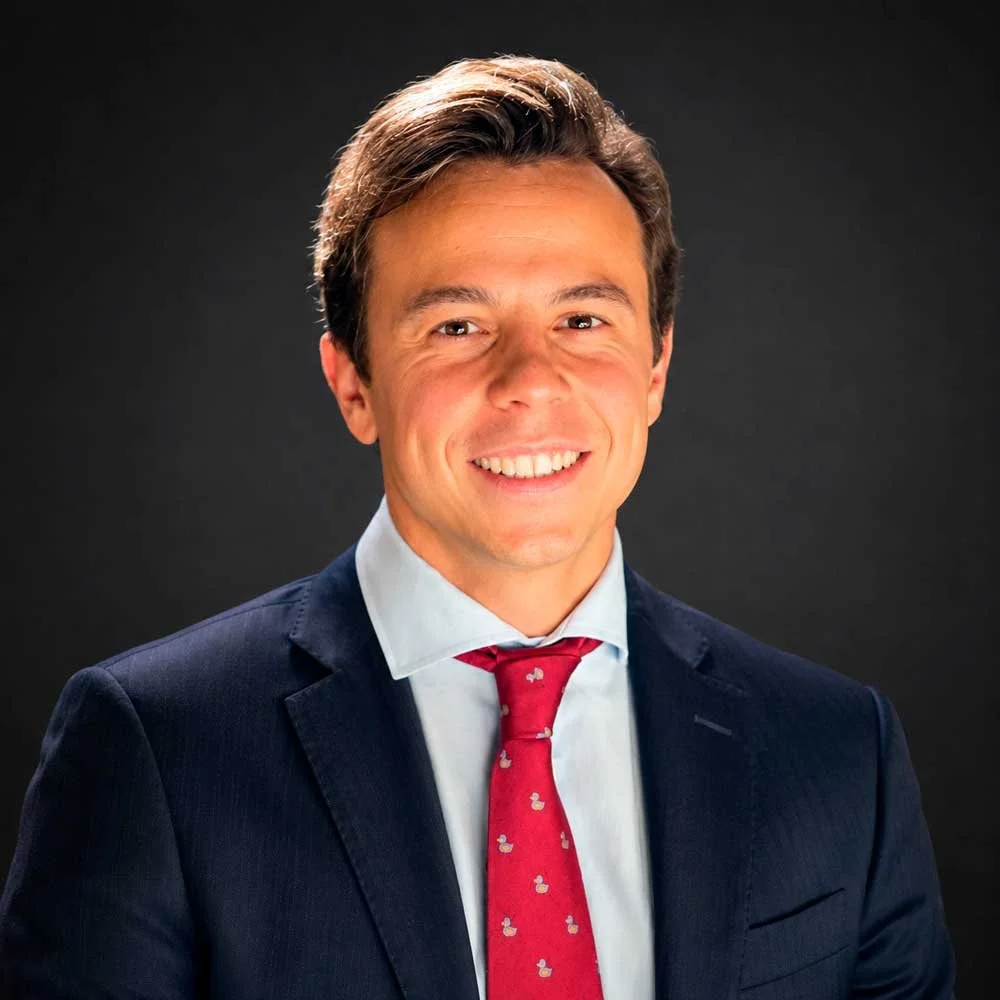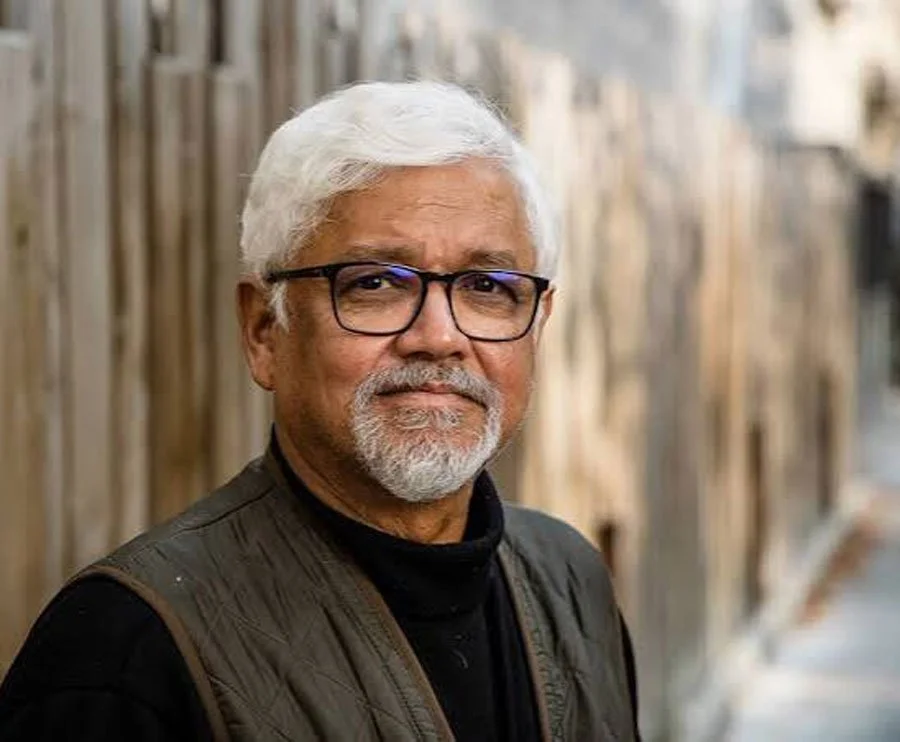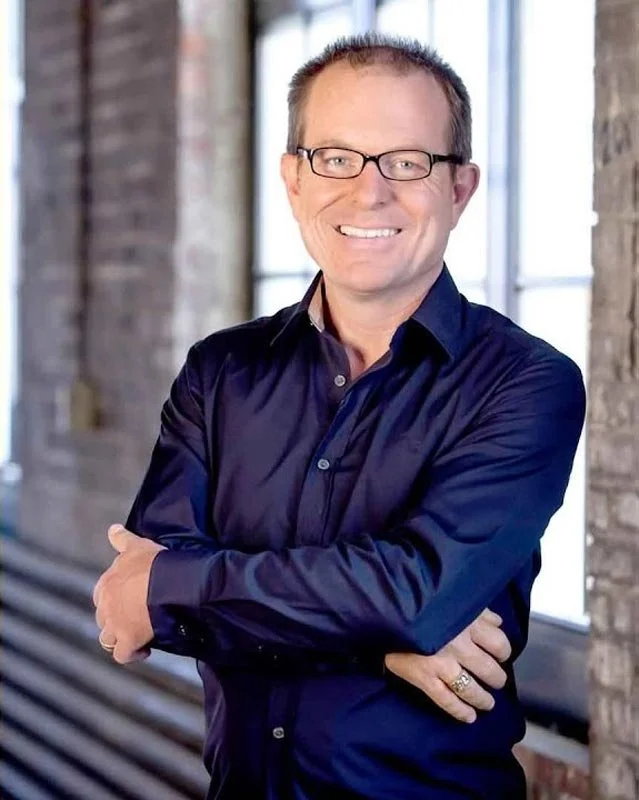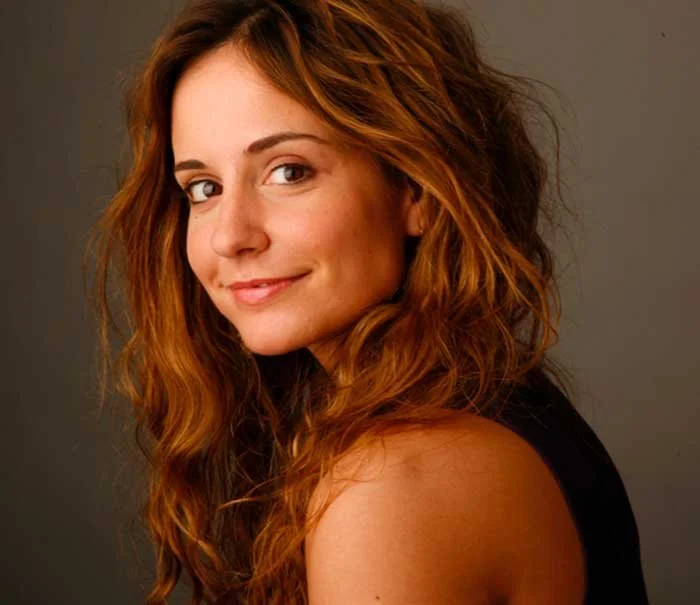


Anderson Santos is a figurative painter and researcher working between oil painting and digital art. Represented by Paulo Darzé Gallery, he is the artistic director of Ripensarte and the cross-media publishing project Eosliber, and editor of the online digital art magazine Magazzino. He was also part of the editorial collective behind Boardilla. He holds a master’s degree from the Graduate Program in Visual Arts at UFBA (2020) and is currently pursuing a PhD at the same university, with a research exchange at the Accademia di Brera in Milan. @andersonsantospainter
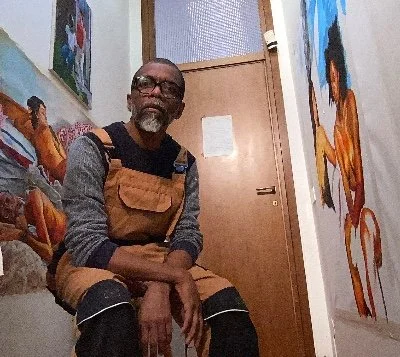
How has your background in Brazil and Europe influenced your creative life? I was born in Salvador, Brazil, and I have been living in Milan, Italy, for the past four years. However, I maintain a strong connection with Brazil, as I am currently completing a PhD in Visual Arts at the Federal University of Bahia. Living between these two very different contexts, Brazil and Europe, has been a deeply enriching experience. This state of transit allows me to clearly perceive the significant contrasts that separate these societies on cultural, social, and aesthetic levels.
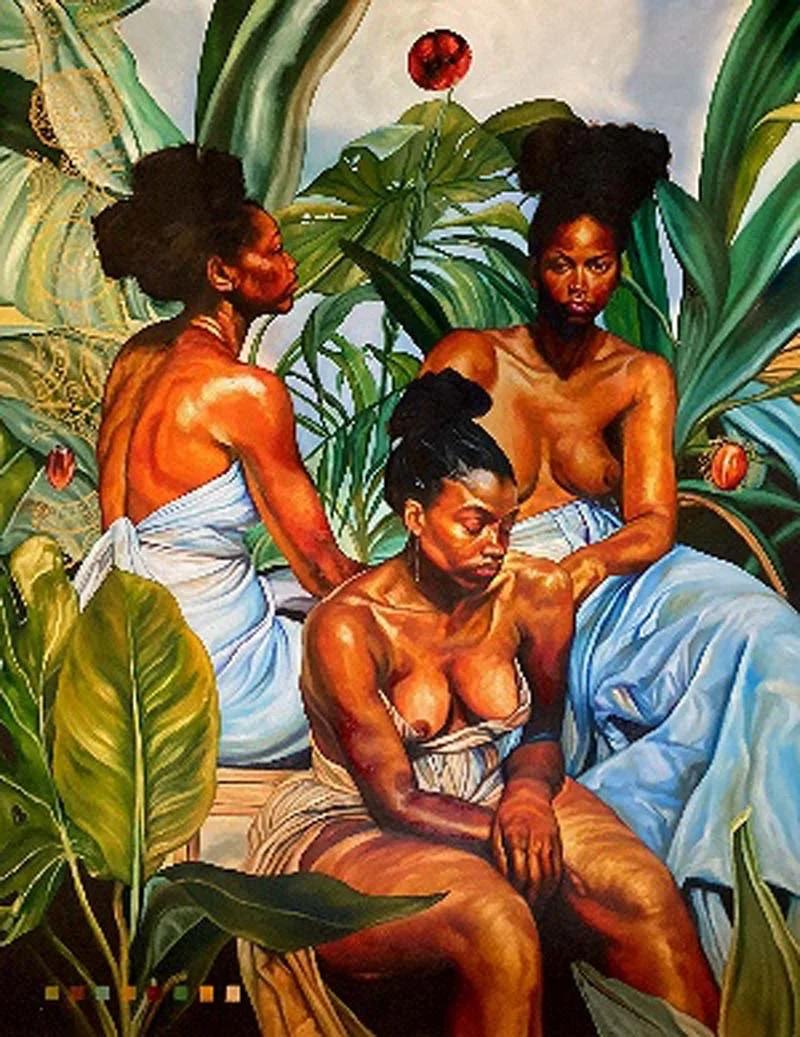
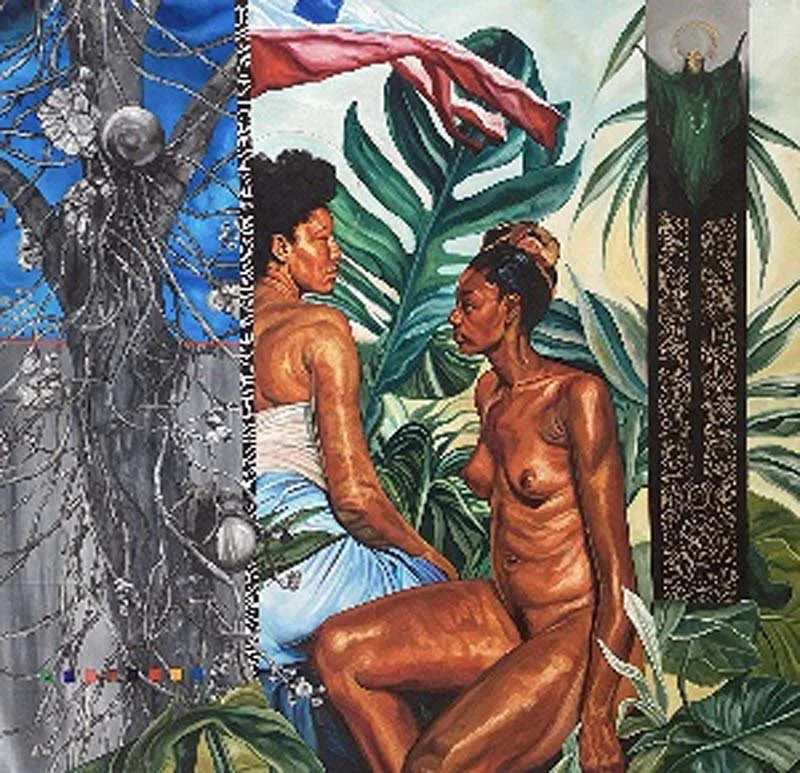
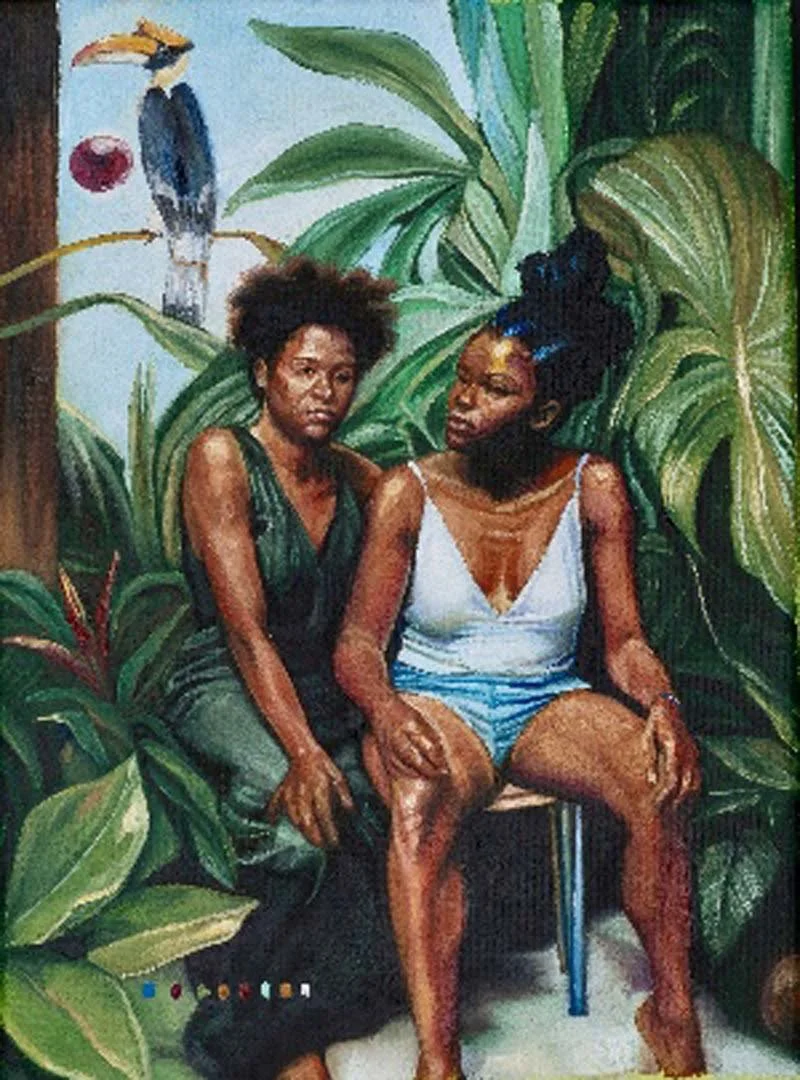
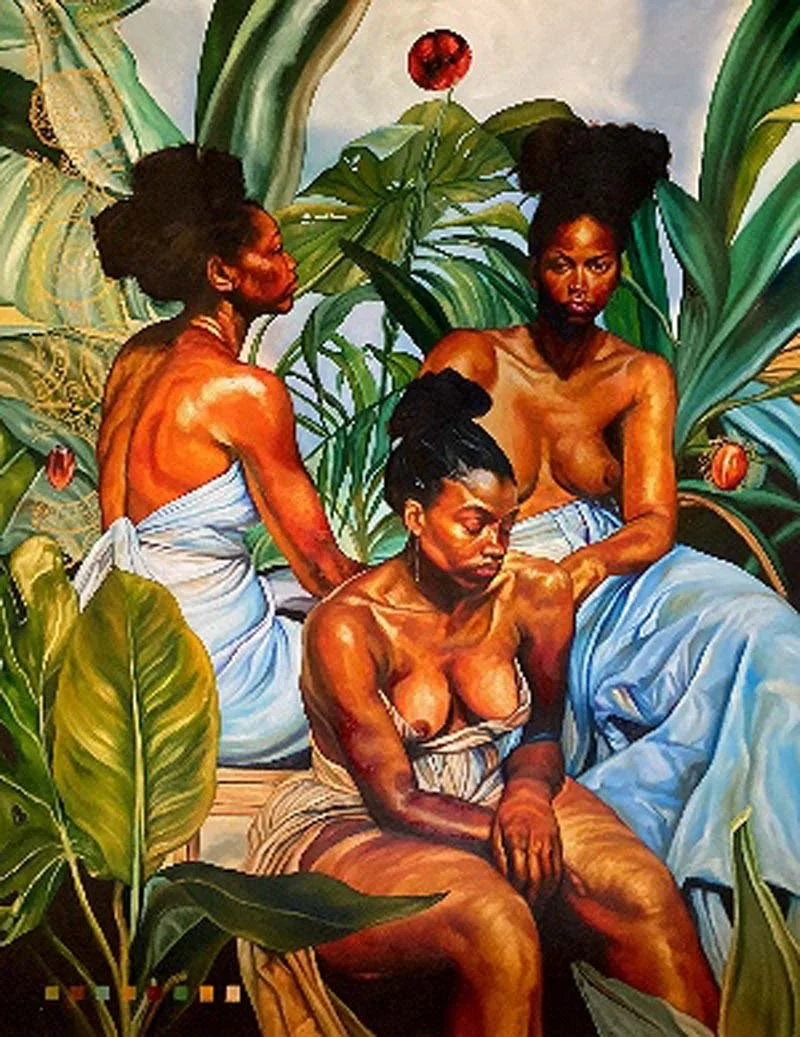
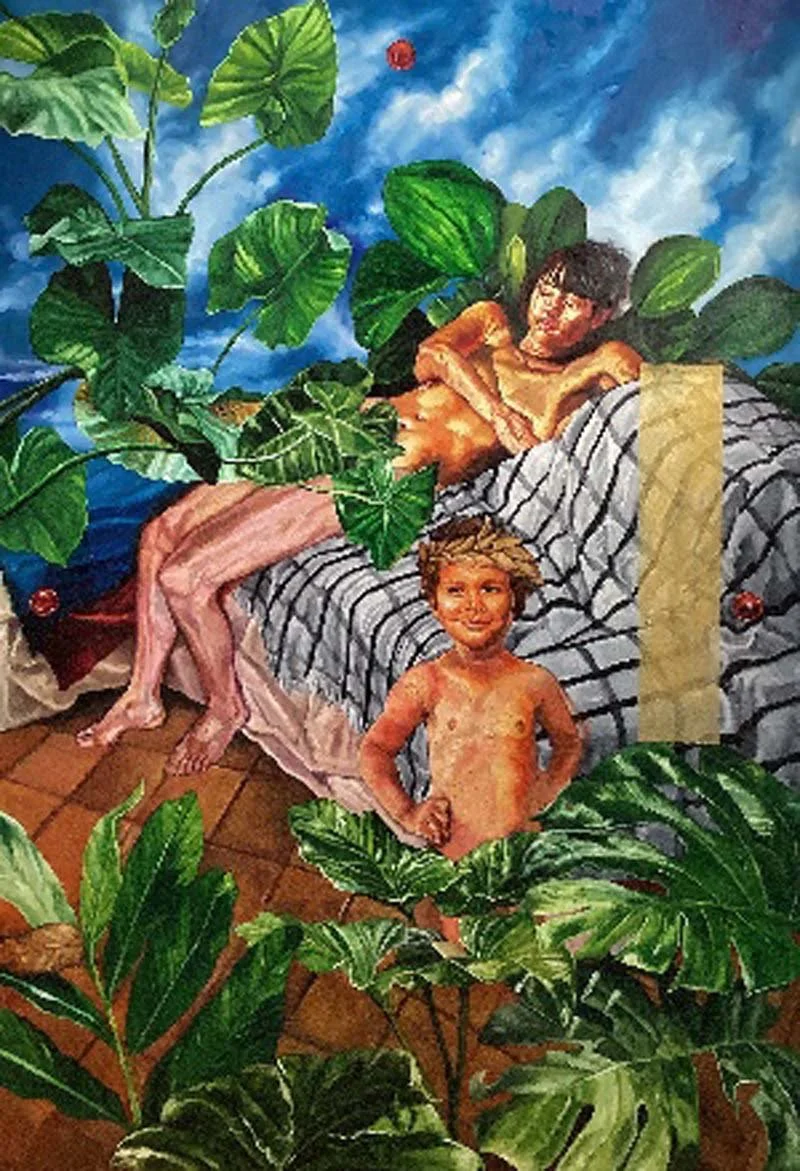
This experience of displacement is reflected in my painting practice, where the lushness of Brazilian flora and tropical light often coexist with elements from European pictorial traditions, such as the classical figure and academic composition. The tensions and intersections between these visual languages reveal a hybrid gaze shaped by a sense of in-betweenness. Being in transit, between geographies, affections, and visual references, has become not only a way of living but also the lens through which I perceive and articulate the world around me.
When did you first fall in love with art and realize you wanted to be an artist? For you, what is the importance of the arts? I never set out with the intention of “becoming an artist.” I’ve been drawing since I was very young, mainly because I always had access to materials. My father was a technical draftsman, so drawing was part of my daily life from early on. Over time, I began to realize that I had an unusual ability to draw and paint, and that the simple act of creating images brought me immense joy. That passion gradually took up more and more of my time.
Eventually, people around me began to recognize what I was doing as art. Invitations to participate in exhibitions followed, then gallery representation, and the gradual professionalization of my practice. Yet despite all that, what still drives me every day is the pleasure I find in the act of creating, the challenge of giving form to something that was once just an intuition or a feeling.
For me, art has the unique ability to open spaces of perception, to question the world, and also to create beauty, strangeness, and thought. It is both a form of personal expression and a way of being in the world, attentive, sensitive, and constantly inventing.
Describe a typical day in your studio, or wherever you work. I usually start working early in the day. As I am currently finishing my PhD dissertation, titled The Naked Life: remediation of painting and Afrofuturism in the burnout society, my mornings begin around 9 a.m., after my children go to school. I spend the first hours of the day reading, researching, and writing.
Until last month, my daily routine was different. I would start the day by painting. I organize my brushes and paints, put on my work overalls, and paint until around 4 p.m., when I go pick up my children from school. My primary medium is oil on canvas, which I prepare with layers of acrylic and vinyl resin. I aim for a surface that allows me to work with both transparent glazes and thick impastos.
Since 2015, I have also been working with digital painting. Whenever I’m not engaged in an oil painting, I return to the iPad, using the Procreate app. That usually happens at night, after my children are asleep. Painting, whether analog or digital, is deeply woven into my daily life and finds its place in different rhythms throughout the day.
What projects are you working on at the moment? What themes or ideas currently compel your work? In addition to the PhD thesis I am currently finishing, which I plan to defend by the end of this year, I am working on the exhibition The Naked Life, scheduled to open on August 14, 2025, at Paulo Darzé Galeria in Salvador, the gallery that represents me. The exhibition will feature around 30 oil paintings that I began in 2021, a period still heavily influenced by the Covid-19 pandemic and the escalating climate crisis.
These works also reflect a series of personal transitions that have deeply shaped my practice in recent years. These include the experience of migration, the reconfiguration of identity as a 50-year-old Black man living between two continents, and the urgent need to envision and build a viable future for my children. These themes run through the paintings in subtle and often symbolic ways, but they lie at the heart of what currently moves me, both as an artist and as a person navigating the world.
How do you hope your art speaks to its viewers? Much of what I create comes from a deep desire to understand what painting is still capable of today. I often ask myself if, in a world overwhelmed by images, a painting can still truly reach someone in a meaningful, singular way. What interests me most is this possibility: that a painting can make someone pause, slow down for a moment, and question what they are seeing, and whether it somehow shifts their perception of the world.
What I try to evoke in my work is not a definitive answer but an opening. I like to think of painting as a space of suspension, of subtle displacement, a sensitive interval where the gaze becomes both lost and found. I want the viewer to feel summoned by something that is not immediate or obvious, something that resists easy consumption.
I believe painting carries a quiet strength and that, precisely because of its stillness, it can operate on a deeper level. When I paint, I am trying to express something I cannot always name. It emerges in the tension between figure and background, in the choice of colors, in the way an image appears or begins to dissolve. I am speaking about affects, about ghosts, about memories, all the invisible forces that shape us without our full awareness. If someone feels moved, disturbed, or even just momentarily unsettled when they encounter one of my paintings, then perhaps I have managed to open up a space for encounter.
Which artists, past or present, would you like to meet? And why? My work is grounded, even if not immediately visible, in the painting of Francis Bacon and Lucian Freud. Their expressive intensity and psychological depth continue to challenge and inspire me. I also have great admiration for Diego Velázquez, whose technical mastery and ability to evoke presence through paint are, to me, inexhaustible. More recently, I’ve been deeply engaged with the work of Luiz Zerbini. His treatment of space, color, and landscape has expanded my perspective on Brazil and on the very act of painting.
That said, I’m not sure I would actually want to meet any of them. Every time I’ve met artists I admired, I was reminded that they are, in the end, men and women like anyone else, full of contradictions and vulnerabilities. What truly interests me is not the artist as a public figure, but what happens in the quiet of the studio, in the solitude of the creative process.
If it were possible, what I would really wish for is to become a small bird and secretly observe one of them working for a day. To witness in silence, without interfering, without being seen. To simply be present at that moment when an image begins to take shape. Because it is in that space between gesture and form where I believe the real mystery of art resides.
Do you engage with disciplines like dance, theater, or poetry in your work? Yes, music is a fundamental part of my creative process. I listen to music constantly, whether I'm working in the studio, researching, or writing. But beyond listening, I also compose the soundtracks for the short animations I create. Although I’m not a trained musician, I’ve learned to work with music editing software, which allows me to produce original scores both for my animations and for the videos and content I share on social media.
This sonic dimension expands my visual practice and helps me build atmospheres, rhythms, and sensations that go beyond what painting alone can convey. I’m deeply interested in the relationship between traditional painting and emerging technologies such as augmented reality. Much of my current research focuses on this intersection between different media. Exploring the boundaries between the visible and the audible, between analog and digital, has become a way for me to extend the field of painting and propose new modes of experience for the viewer.
What is it about the communities you’ve lived in that keeps you inspired? One of the great advantages of living in Milan is the direct and ongoing access to museums, private collections, and galleries that house works from across the history of art. Coming from Salvador, a city with a rich cultural life but still outside the international circuit of major exhibitions and with relatively few visual arts museums, being in Milan has profoundly changed my relationship with art.
Being able to see masterpieces by artists like Rembrandt and Leonardo da Vinci up close, at the Pinacoteca di Brera and the Biblioteca Ambrosiana, has been an extraordinary privilege. This close contact with the great names of European pictorial tradition deeply nourishes both my artistic practice and my academic research. At the same time, the presence of more contemporary works, such as those by Anselm Kiefer, which are regularly exhibited in Milanese institutions and galleries, helps expand my visual and critical vocabulary.
Living in Milan allows me to build bridges between past and present, between tradition and experimentation, which I see as essential to how I understand and engage with painting today.
Can you describe a project that challenged you creatively or emotionally—and how you worked through it? A project that has profoundly transformed the way I work as an artist is and continues to be Floresta Negra. This interactive exhibition arose from a desire to expand the boundaries of traditional painting by integrating digital technologies to create an immersive, multidimensional experience. I developed the project in partnership with curator Danillo Barata and the team behind the Eosliber app, which enables access to audiovisual content in augmented reality linked to the paintings on display.
The work began in 2020, just before the pandemic started, at the Paulo Darzé Gallery in Salvador. The global crisis posed many challenges but also heightened the urgency to find new ways to connect audiences with art, especially during times of social distancing. Floresta Negra then expanded into a namesake e-book, broadening its reach and deepening its content.
In 2023, we successfully presented the exhibition in Belém, Pará, on the doorstep of the Amazon rainforest. This location added new layers of meaning to the work, intertwining environmental, cultural, and political concerns. The project challenged not only my technical practice but also my ability to engage with diverse audiences and to rethink painting beyond its physical support as an open field for hybrid experiences.
For next year, we plan to bring the exhibition to other cities in Brazil and Italy, continuing to expand this dialogue between tradition and innovation, between local and global. This project taught me that the greatest creative challenges can also be the greatest opportunities for growth and reinvention.
Tell us about important teachers/mentors/collaborators in your life. Although I’ve had remarkable teachers throughout my education, two individuals have been especially important in shaping my artistic path.
The first is the visual artist Justino Marinho. From early on, he showed a generous and attentive interest in my work. Justino not only encouraged me to continue exploring painting, but also actively contributed to the visibility of my art. As a curator, he was responsible for including my work in significant exhibitions, such as Nova Mão Afro-Brasileira, held at the Afro Brazil Museum in 2013, curated by Emanoel Araújo. Being part of that exhibition was a pivotal moment for me. It helped me understand my place within an Afro-Brazilian artistic lineage while affirming the value of my personal visual language.
Another key figure in my journey is Danillo Barata, a visual artist, professor, and curator with whom I’ve developed an ongoing and dynamic collaboration. Together, we created Floresta Negra, a project that has become a platform for aesthetic and technological experimentation. More than a collaborator, Danillo is someone with whom I share deep reflections on the role of art today, especially within the Brazilian context, which is marked by inequality, erasure, and also by extraordinary creative vitality. Our conversations, exchanges, and shared projects have played a vital role in expanding both my artistic practice and critical thinking.
Sustainability in the art world is an important issue. Can you share a memory or reflection about the beauty and wonder of the natural world? Does being in nature inspire your art or your process? Sustainability is one of the core concerns in my work today. Through painting and other visual languages, I try to imagine ways of reconnecting humans to the complexity of the natural world and to the many beings with whom we share this planet. In the face of ecological crisis and the exhaustion of dominant ways of living, I believe that art can help activate new imaginaries and offer sensory experiences that resist utilitarian and destructive logic.
My exhibition Floresta Negra was born from this desire to bring together painting, technology, and nature. In it, I created fictional landscapes where tropical plants, birds, and human figures coexist in harmony, composing scenes that expand through the use of augmented reality. Emerging technologies are not used as decoration or spectacle, but as a way to renew the pictorial field and invite the viewer into a more immersive, poetic, and mindful experience.
In my paintings, vegetation is not a background element but a protagonist, a living presence charged with symbolic and emotional meaning. The act of painting a leaf, observing a root, following the growth of a plant becomes almost ritualistic. Being in contact with nature, even in fragments, changes the way I see and compose. That is what I try to offer the viewer: a pause, a moment of breath, an image that invites reflection and care for what is alive.
What concerns or hopes do you have about AI in the art world? How have you engaged with AI in your creative process, if at all? As a researcher engaged in the intersection between traditional painting techniques and emerging technologies, artificial intelligence has become one of the most important tools in my recent creative process. From the beginning of my career, I have worked from photographic references that I build carefully over time. These images come from photo sessions with live models, from encounters with friends and family, from animals close to me, and from plants and natural elements that visually attract me. Over the years, this personal archive has grown into an extensive image bank that serves as the foundation for my paintings.
Before I begin painting, whether digitally or in oil on canvas, I work with these materials using programs like Procreate, combining fragments from different photographs to create hybrid figures, almost like visual Frankensteins. These digital collages act as a kind of map, not as final images, but as starting points for pictorial construction.
Since 2022, with the widespread availability of AI tools that generate images from text prompts, I have also begun incorporating AI-generated visuals into my process. These images do not replace my personal references, but they enrich my visual repertoire and often lead to unexpected directions. However, I use these technologies with full awareness of the ethical issues involved, especially the fact that many AI models were trained on datasets using artists' works, like mine, collected without consent from social media or personal websites.
For that reason, I do not see artificial intelligence as a replacement for handmade creative work. Human-made art remains essential because it carries the trace of time, the body, imperfection, and intuition. Technology can expand imagination and offer new tools, but it is the human gaze, with its history, subjectivity, and emotional depth, that gives meaning to the image. The challenge is not to reject digital tools, but to use them critically, consciously, and sensitively, without losing sight of what makes us human.
Exploring ideas, art and the creative process connects me to… Life. It is when time expands, and everything, who I am, what I see, what I feel, finds form. Creating is my deepest way of being present in the world.