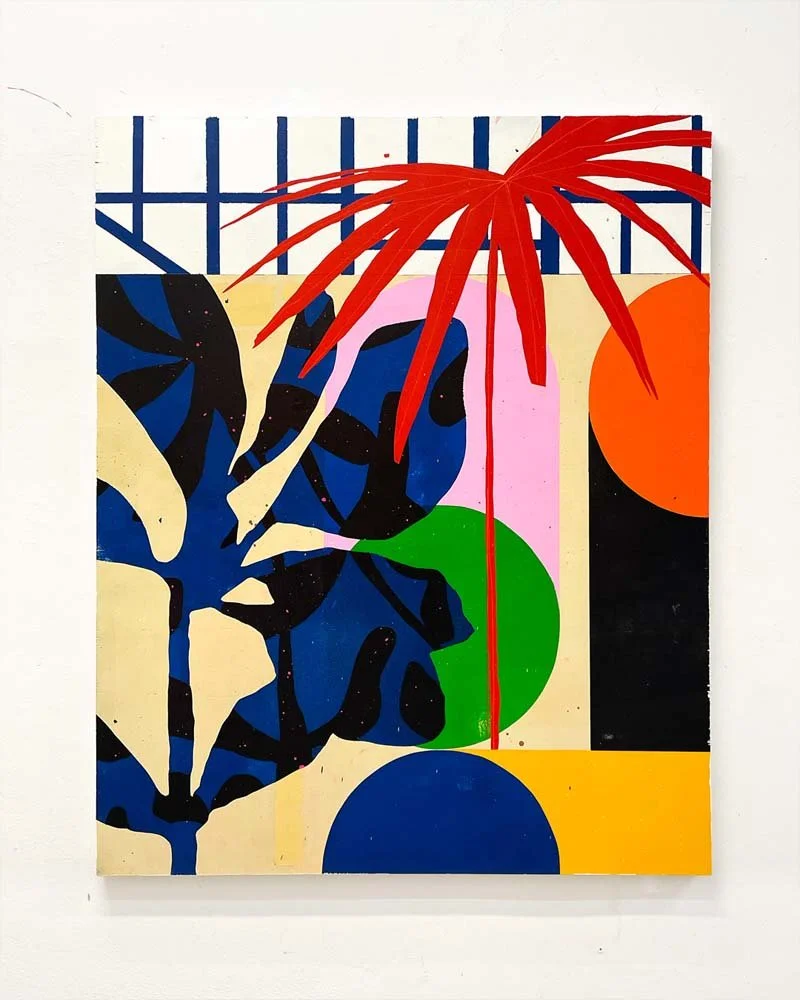


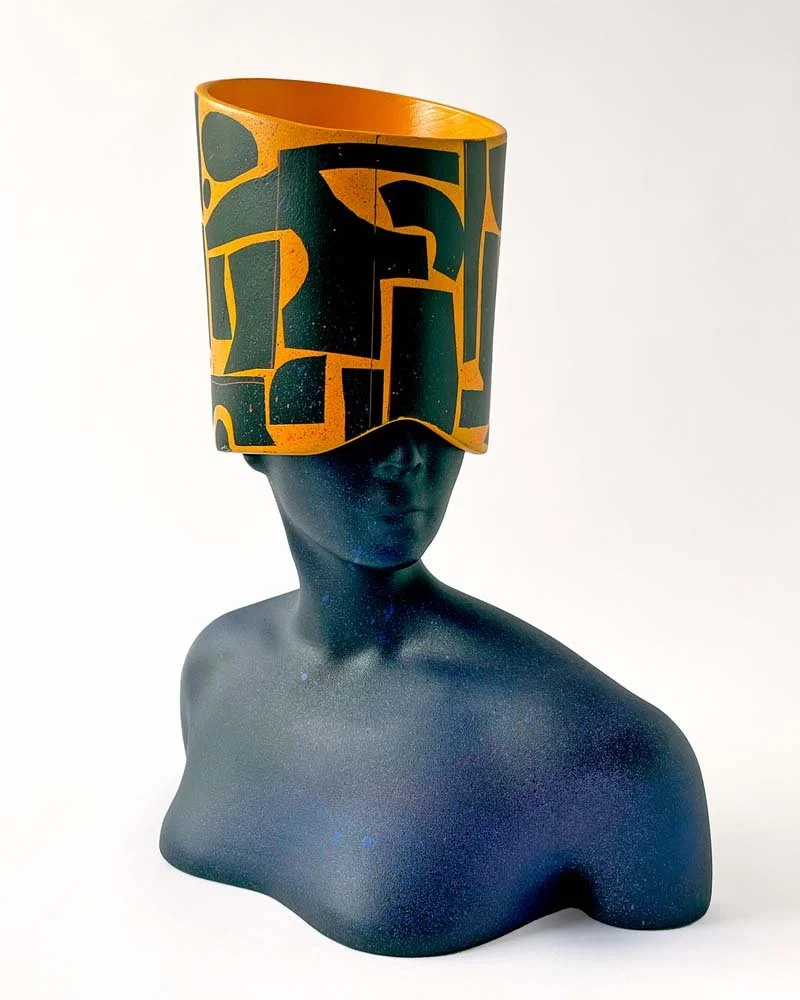
Identity, borders, and crossings portrayed through human figures; animals and abstractions; those are the structuring points of Luciano Cian's research. Since childhood, Cian has lived in several Brazilian cities and regions until he settled in Rio de Janeiro. Across mediums of sculpture, linocut, acrylic, and more, Cian thinks through his nomadic experiences towards ideas of belonging, mixing signs from Latin American cultures with contemporary graphic elements. His work develops diverse visualities of a single creative force, reflecting the collective ancestry of humanity. Particularly, Cian's figures bring into dialogue and confluence the diverse, powerful cultures and ethnicities that are part of Brazilian identity.
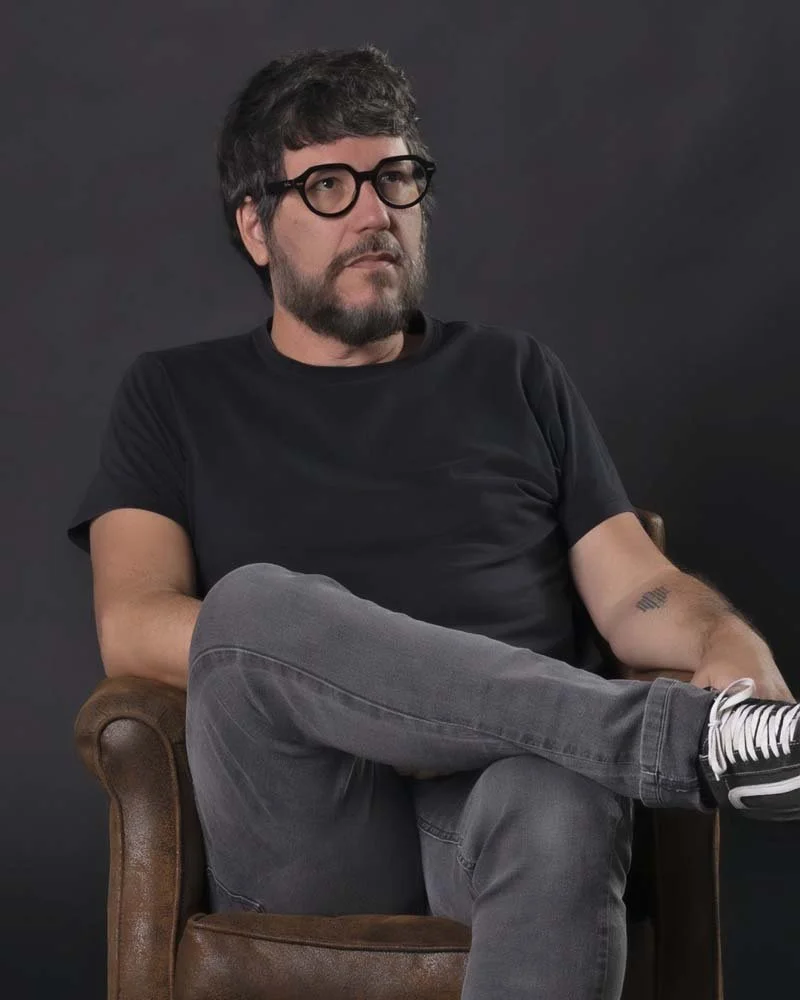
You’ve moved around a lot since you were a child. How did that kind of nomadic upbringing shape your artistic identity? I was born in the countryside of São Paulo state, Brazil, but moved to several cities as a child. I lived in Pará—on the border with the state of Amapá—a very wild region of the Amazon Rainforest. I also lived on the beach in the state of Espírito Santo. These constant changes, as well as having lived in regions outside the main cultural axis of my country, certainly influenced me greatly. Especially when I lived in the Amazon region, where everything seemed magical to a child (I lived there from ages 10 to 13). It was a childhood filled with close contact with nature, indigenous peoples, and different ethnicities. This certainly shaped much of my art.
When did you first fall in love with art and realize you wanted to be an artist? For you, what is the importance of the arts? I didn't fall in love; there wasn't a specific date or moment. I just went about doing things, drawing, and painting. It seems to me that there was always a need to express something that, to this day, I don't quite understand. Art is crucial for connecting people with their imagination, for sharpening their perception. The arts, in general, are a kind of remedy against the crushing daily grind.
What does your typical day in the studio look like? Walk us through your studio and your most used materials and tools. I usually work on two or three projects at a time. I always start with coffee. I stare at the medium for a long time, unsure of what to do... Sometimes I start from scratch, sometimes I start from something I've seen and absorbed in the last few days. I don't have a regular routine. Some days I don't go to the studio, other days I spend hours there. I think there's no time for art. Time is very relative when we're doing any artistic activity. This operation is complicated because you have to get used to a metric that defies reason.
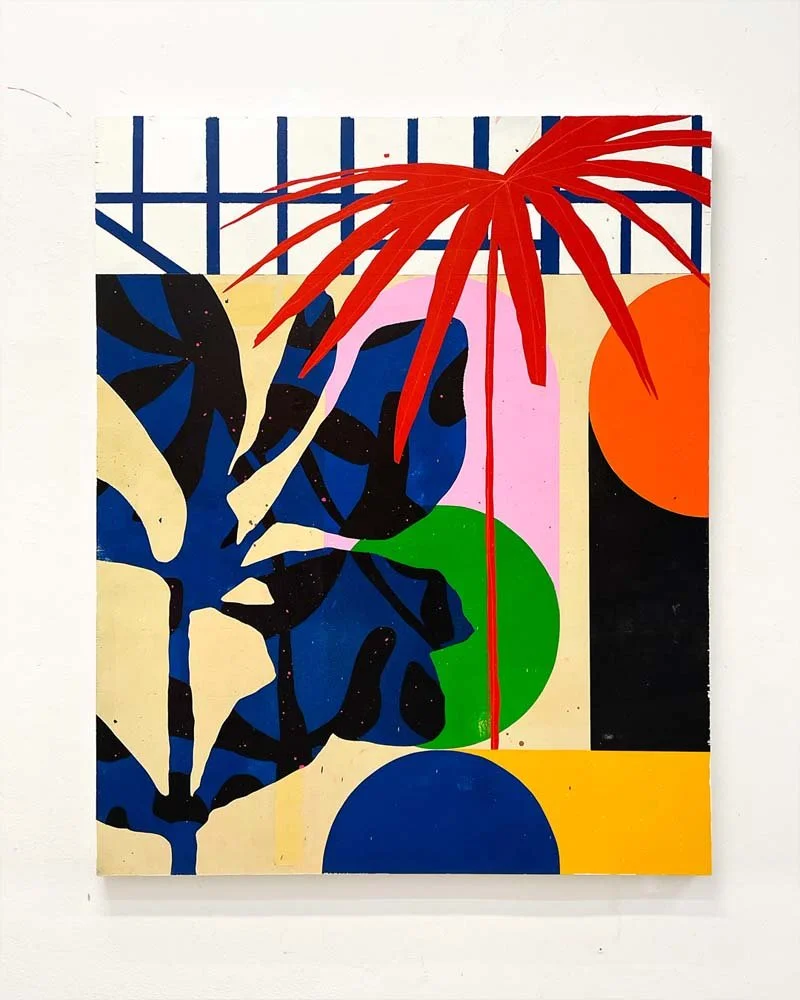
Can you share some details about your latest projects? And what themes or ideas are currently driving your work? I'm currently working on three different fronts. I'm painting two abstract canvases and painting wood, blending concrete and figurative elements. I'm also studying for a new series of sculptures, blending abstract and figurative elements. These are separate, distinct ideas, but they all lead to the same theme: creating parallel universes, reimaginings of everyday shapes and colors.
What do you hope people feel when they experience your art? I hope they seek some kind of emotion. It could be joy, it could be relief, I'm not sure... The most important thing is to make people stop and look, and feel moved in some way.
Are there figures in the art world—historical or contemporary—you’d consider mentors from afar? There are many artists whose work is a constant reference. I've always studied Andy Warhol, Juan Miró, Pablo Picasso, Athos Bulcão, and Burle Marx. These artists inspire me in different ways. I'm deeply curious about Brazilian modernism and neoconcretism. My country is very controversial, with a vast and rich identity. This mix attracts me because I never get bored; there's no standard. I was shaped by these differences, and I believe in the richness of this great confusion.
How does your music background intersect with your work? Do you draw inspiration from other art forms, too? Without a doubt. I've been playing in rock bands since I was 13, and music really helps me break out of my comfort zone. A melody can transport our emotions from one place to another, and this helps me a lot in deciding what to do, how to do it, and what colors to use. Cinema is also a constant source, especially from a narrative perspective. But it's not a literal influence; it's small nuances that move me.
How does the community and environment of Rio nourish your art? I've lived in Rio de Janeiro for a long time and have already absorbed much of this city's culture. Everything here is quite confusing and chaotic; we have lush nature and latent urban chaos. We have richness and poverty, beach and mountain, white people of European descent and black people of African descent. It's a very plural and controversial city. I believe this helps me a lot; it sways me in different directions.
Can you describe a project that challenged you creatively or emotionally—and how you worked through it? I've painted a few murals... These large-scale projects are very challenging because of their scale. Besides the dimension, I need to work with assistants, which is also a challenge since the artistic activity in the studio is very personal and isolated. Sculptures are also very challenging because the 3D universe is very different from a canvas; the materials are always new and different. It's always a challenge, requiring extensive research and study.
Who have been some of your most influential mentors or collaborators? As incredible as it may seem, one of the people who most influenced me to work with this was my mother. I'm not talking about techniques or anything like that, but she was the one who always encouraged me to continue. Working with art isn't easy; you have to let go of an operating system, both financially and rationally. And she always told me not to stop—and that's very important for a child. As an adult, I had some teachers who were also fundamental. And today, my wife also contributes greatly to my continued pursuit of this profession. Daily "pushes" in various forms help a lot; without encouragement, it's not easy. Working with art may seem rewarding, but it isn't. It's a daily battle to move things forward. This happens because the world has increasingly become an inhospitable place for reflection. We're living as slaves to practicality and the moment, and this is very counterproductive when it comes to art.
Sustainability in the art world is an important issue. Can you share a memory or reflection about the beauty and wonder of the natural world? Does being in nature inspire your art or your process? Yes. Having spent part of my childhood living in the Amazon Rainforest, I gained a rich experience with nature in its rawest and wildest form. Living on the beach also gave me an awareness of the sea, of the ocean. In other words, from the rivers of the Amazon to the beaches of my country, including the flora and fauna, I feel connected to the natural world. This relationship gave me political awareness, a stance. I'm not an activist, but I don't believe the current industrial and financial model is a reasonable path. In the name of economic growth, we are destroying everything, absolutely everything. And, to me, it makes no sense whatsoever to live within a system that will destroy everything, including ourselves. It's a simple and obvious thought.
AI is daily changing the way we communicate with each other, our imaginations, and the way we think of beauty and creativity. What are your reflections on AI and technology? There are many types of art. And now there's Artificial Intelligence. I believe it's another model, another possibility. I don't believe AI will eliminate manual art in the long run. What we're experiencing now is hysteria. Human art will never lose its purpose, its place. Of course, technologies will massify many things within this universe, but I think art in its purest sense—that which comes from the soul—will not die. Now, on the other hand, we need to regulate these tools; we need to be vigilant. One art is one thing and another is another. I think that's the way it is.
Exploring ideas, art and the creative process connects me to... Myself and the universe.