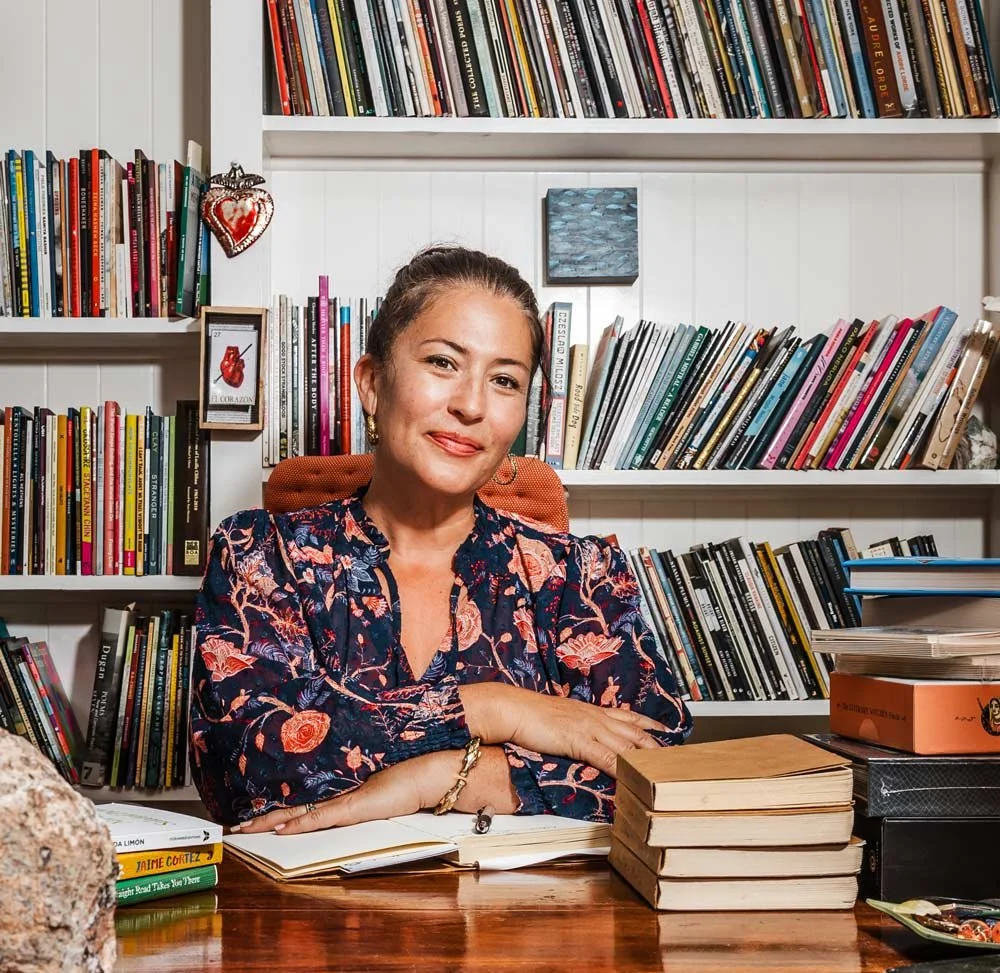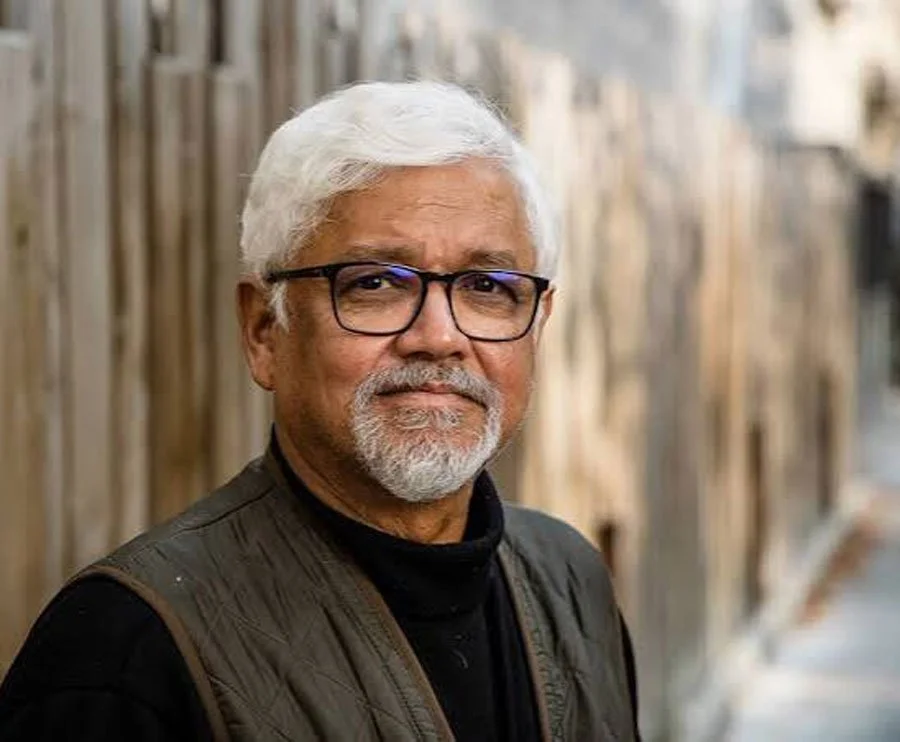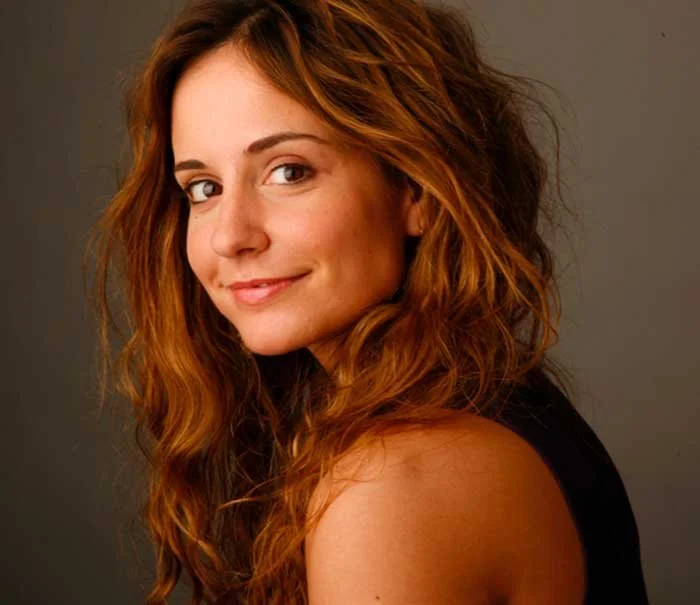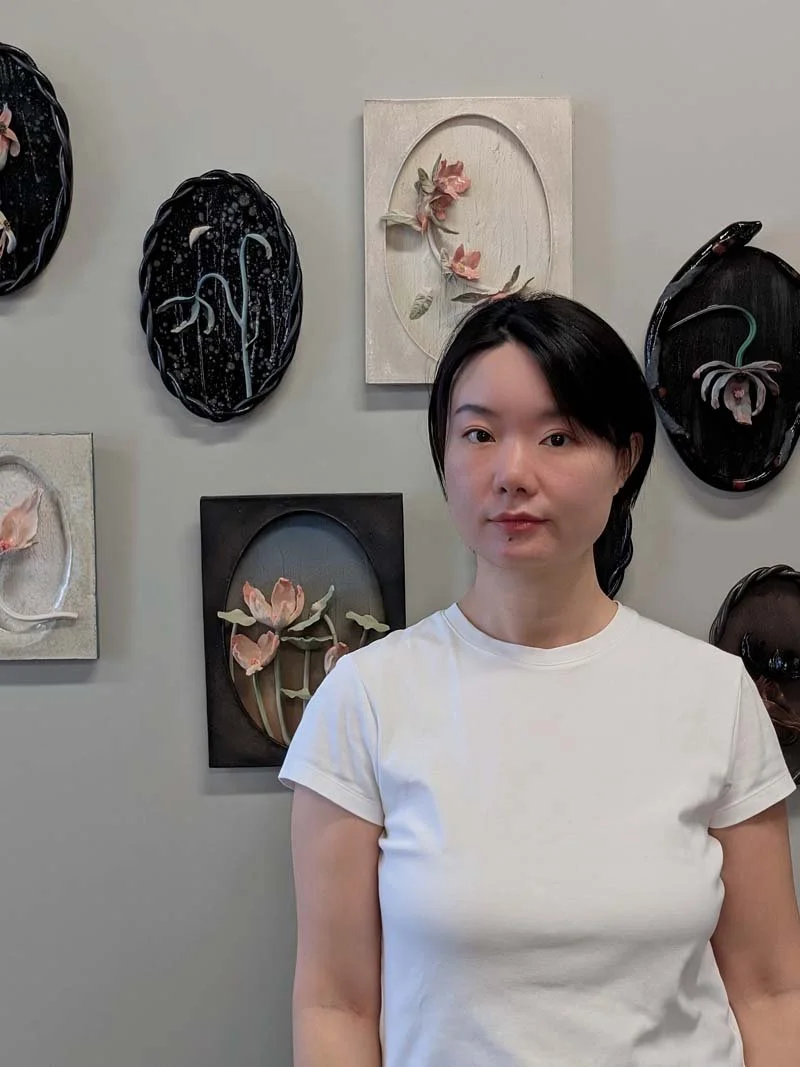


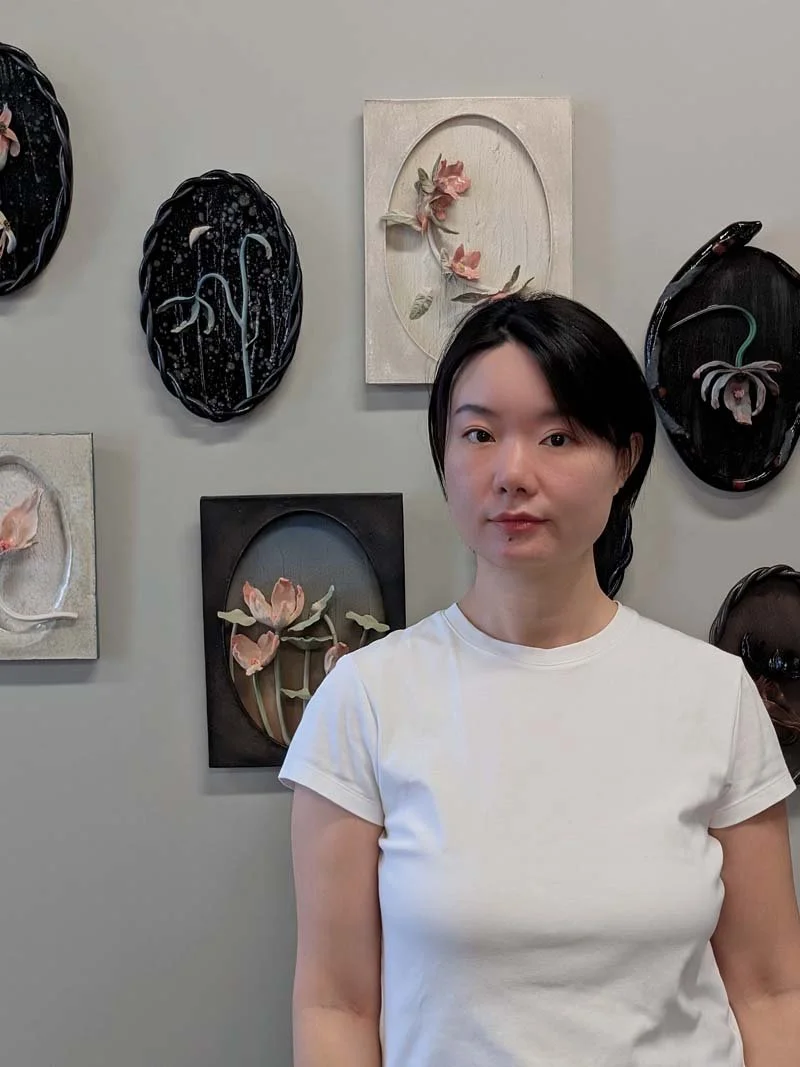
Michele Xiaoyun Fan grew up in China and received her graduate education in photography and art history in the United States. She has been working with clay for the past ten years and is currently an instructor at BKLYN Clay. She lives in Brooklyn with her family. @michelexiaoyunfan
How has your upbringing in China contributed to your artistic identity? I was born and raised in southern China. When I was six, my parents sent me to a boarding school in the countryside, where I stayed until I was nine. It was a frightening experience for a young child, but it also offered a tremendous sense of freedom. While most children were sheltered under their parents’ wings, I was free to wander through the campus gardens and explore the forest behind the school. I believe that time set my imagination free.
I remember hiking through the woods with our teachers, discovering wild mushrooms that looked suspiciously poisonous. I saw sunlight filtering through the trees, scattering dappled light across the forest floor. I watched the motion of a falling leaf and breathed in the scent of soil after a summer rain. These may seem like ordinary moments for many children, but for someone who grew up in an urban environment in China, they were rare and precious. It allowed me to notice the details in nature and how they were connected.
That childhood memory is etched into my mind. No matter how much the world changes, there remains a quiet, untouched place within me—a sanctuary of peace. I often return to it in adulthood, seeking a sense of comfort, and I intend to reflect that feeling in my art.
When did you first fall in love with art and realize you wanted to be an artist? For you, what is the importance of the arts? I began learning more about art in college, and visiting exhibitions soon became a regular part of my life. But it wasn’t until I completed a job as an artist’s assistant that I realized I wanted to become an artist myself. After graduate school, I was fortunate to work as a project assistant for one of my favorite artists, Cai Guo-Qiang. That experience gave me a firsthand look at how a leading artist works and lives. I was amazed that someone could make a living through their creativity and vision. After leaving the studio, I began my own journey as an artist and chose ceramics as my primary medium.
To me, the value of art lies in its ability to offer a break from daily routines and encourage us to see the world from a non-utilitarian perspective. Art can bring joy or provoke discomfort—it doesn’t have to serve a function. The world could continue without art, but it would be a much duller place.
Walk us through a typical day in your creative space and the materials most familiar to you. I'm a morning person, so I usually start my day early. The first thing I do is plan my to-do list for today and tomorrow. Working with ceramics is physically demanding and involves a lot of waiting time. So strategic planning is essential. I keep lunch quick and usually wrap up my studio work in the early afternoon. Since my kids are still young, my daily schedule often revolves around their needs.
I work in a semi-private space within a community studio called Powerhouse Arts, where equipment like kilns, slab rollers, and glazing rooms are shared. I primarily use porcelain, a clay that's not the easiest to handle but, once familiar, feels buttery and becomes beautifully translucent. Its qualities complement my style well.
My favorite tools include small sculpting tools for fine details, a soft brush to clean surfaces, a heat gun to speed up the drying process, and a shredder for smoothing. Each plays a role in helping me bring precision to my work.
What projects are you working on at the moment? What themes or ideas are currently driving your work? This year, I’ve been exploring a more poetic approach to interpret my work. I often draw inspiration from classical Chinese poetry, especially from the writings of Li Qingzhao—one of the most prominent poets in Chinese literary history, not just among women but also among men. Her poetry is tender, emotionally rich, and full of empathy, offering a rare female perspective in a literary tradition largely shaped by men.
In response to her poems, I begin by creating a clay frame, then compose an image within it inspired by the themes and emotions of the text.
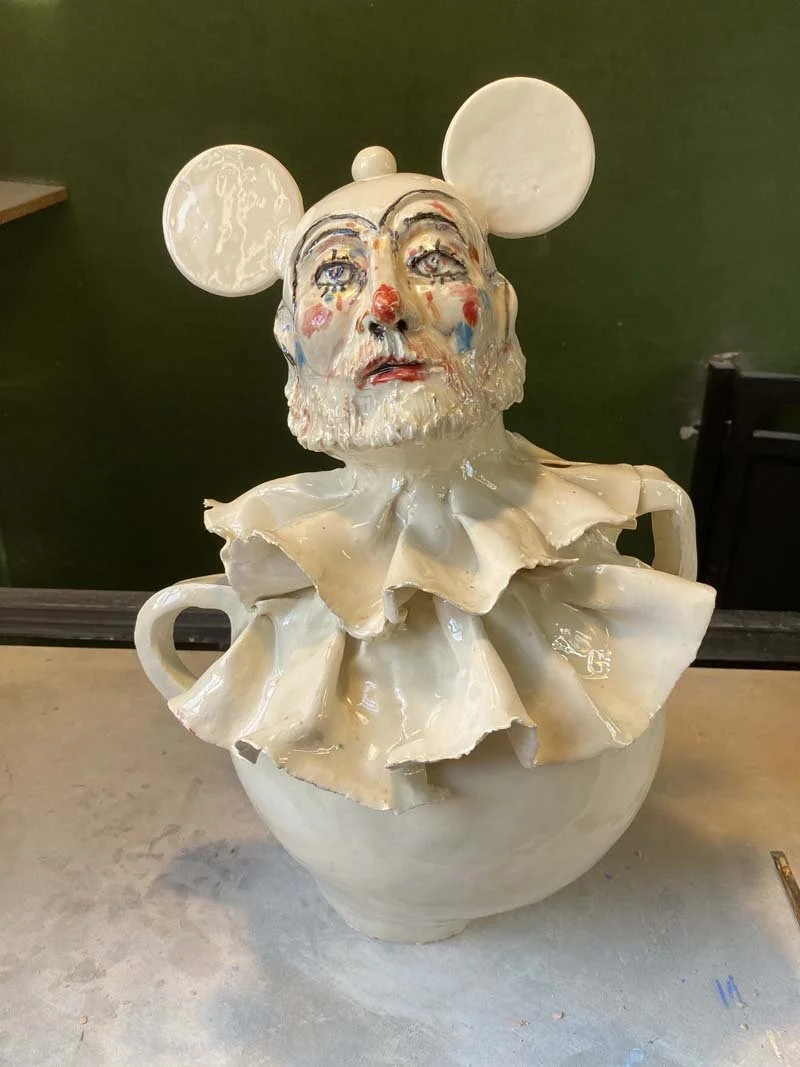
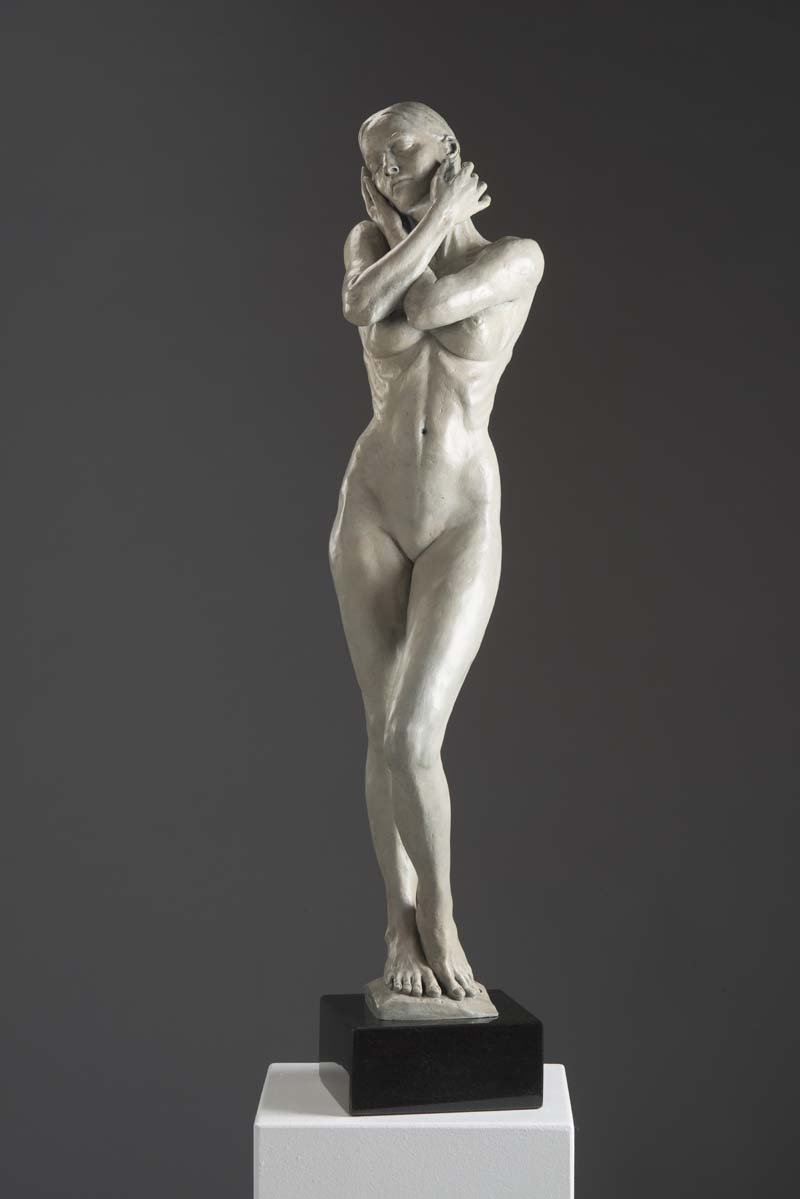
What do you want your audience to take away from your exploration of nature and its forces/ forms of vitality? The motifs in my work are inspired by forms in nature, such as jellyfish, flowers, and the human figure. My work seems very fragile as they are composed of intricate parts. But at the same time, they are very strong because the clay was fired to over 2000 degrees to reach a mature stage. I didn’t arrive at this style until the end of the COVID pandemic. During that time, I became aware of life’s fragility and unpredictability—but also its fierce will to thrive when given the chance. Through my work, I hope people can feel both tenderness and the quiet force of life. I want to capture that resilient, life-affirming spirit.
Which artists, past or present, would you like to meet? And why? If I could meet any artist from the past, I would choose Hilma af Klint—a pioneer of abstract painting in the early 20th century. She was an established Swedish painter known for her figurative work, but her abstract paintings were never shown publicly during her lifetime. Inspired by spiritualism, she developed a visual language that was considered far ahead of her time and difficult for others to understand.
I first saw her work at her solo exhibition at the Guggenheim Museum in 2019 and was captivated by her bold use of color and geometric forms. I would love to ask her how her spiritual practice led to the development of her abstract style, and what struggles she faced knowing the world wasn’t ready to receive her work. Some of her paintings are enormous—up to 8 by 10 feet—which makes me wonder: if she didn’t intend to exhibit them, why did she choose such monumental scales? I imagine the size must have been tied to her spiritual vision.
Hilma af Klint is such a fascinating artist, and I’m eager to continue exploring her life and work.
Do you draw inspiration from music, art, or other disciplines? My recent work is inspired by poetry, particularly ancient Chinese poems. Much traditional Chinese poetry often captures a moment in nature to express a mental state. These poems focus on subtle details—like mourning the fall of a single flower—rather than presenting a full narrative. By depicting just a small scene, they invite the reader’s imagination to wander and expand. I find this an incredibly poetic and intelligent way to draw the audience into the experience.
You live in New York City. In what ways has it impacted your artistic practice and identity? I’ve been living in New York City for almost 15 years and have finally settled in Brooklyn. I wouldn’t say I’m in love with the city, but at this stage of my life, it’s probably the only place I want to be. New York is fast-paced and thrilling, but also messy and overwhelming—dirty, loud, and sometimes even stinky. This love-hate relationship is strangely addictive. One of the best things about living here is the constant sensory stimulation—it keeps you moving, thinking, and never quite standing still.
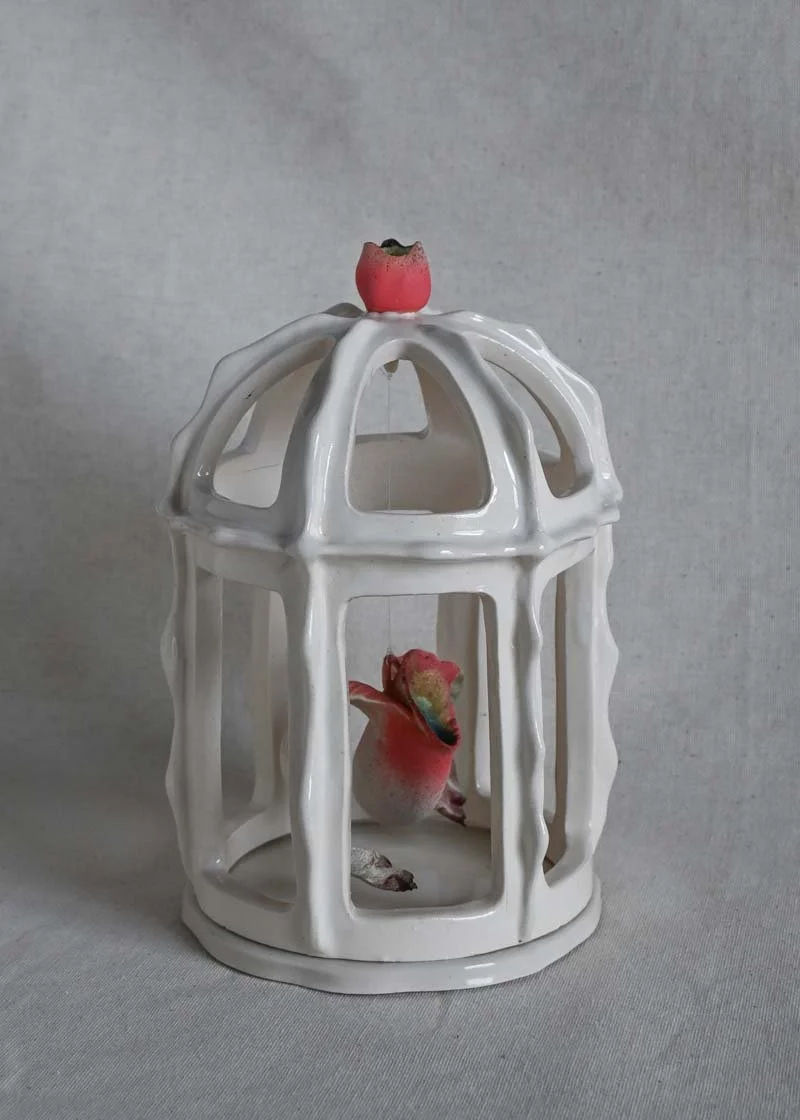
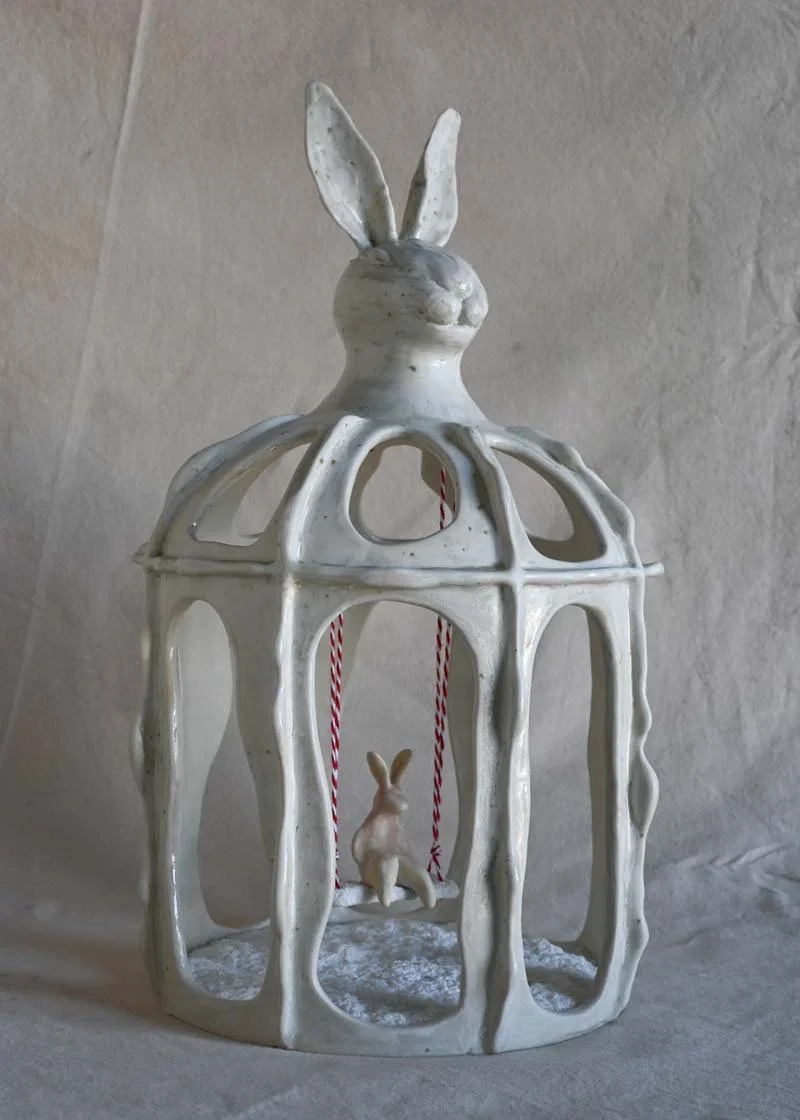
Can you describe a project that challenged you creatively or emotionally—and how you worked through it? One of my first challenging works was Bunny Landing, completed in 2023. Technically, it was among my first larger-scale sculptures made with porcelain. The piece is a clay birdcage topped with a rabbit head, with another smaller rabbit hanging inside. Porcelain is a notoriously difficult material—it cracks easily and tends to warp in high-temperature firings. When working at a large scale, those challenges are magnified. At the time, I wasn’t yet familiar with the material and made many mistakes. The sculpture developed cracks everywhere, and I didn’t think it would survive the firing. But eventually, I made it work, and the final piece turned out exactly as I had hoped.
Emotionally, Bunny Landing reflects the evolving relationship between me and my children. I was born in the Year of the Rabbit, so I often associate myself with that creature. After becoming a mother, I felt that my body no longer belonged solely to me. It became a kind of sanctuary—a soft, playful space where my children could grow. At the same time, motherhood felt like a slow unraveling of my old self. My former identity was stripped away piece by piece. The sculpture came to represent that fragile transformation: a structure on the verge of collapse, yet somehow held together by an invisible, persistent force.
Who was a mentor or collaborator who had a significant influence on your work? An important teacher in my life is Patricia, my first pottery instructor when I began learning ceramics at a community studio called Mud, Sweat and Tears in Hell’s Kitchen. I took her wheel-throwing class for two years. At the time, I was a complete beginner—I had no idea what I was doing, and quickly learned that throwing on the wheel is far more challenging than it looks. Patricia was incredibly patient and helped me overcome many technical barriers. It was during that period that I decided to pursue clay as my primary medium. I’m deeply grateful for her guidance, which opened an entirely new world for me.
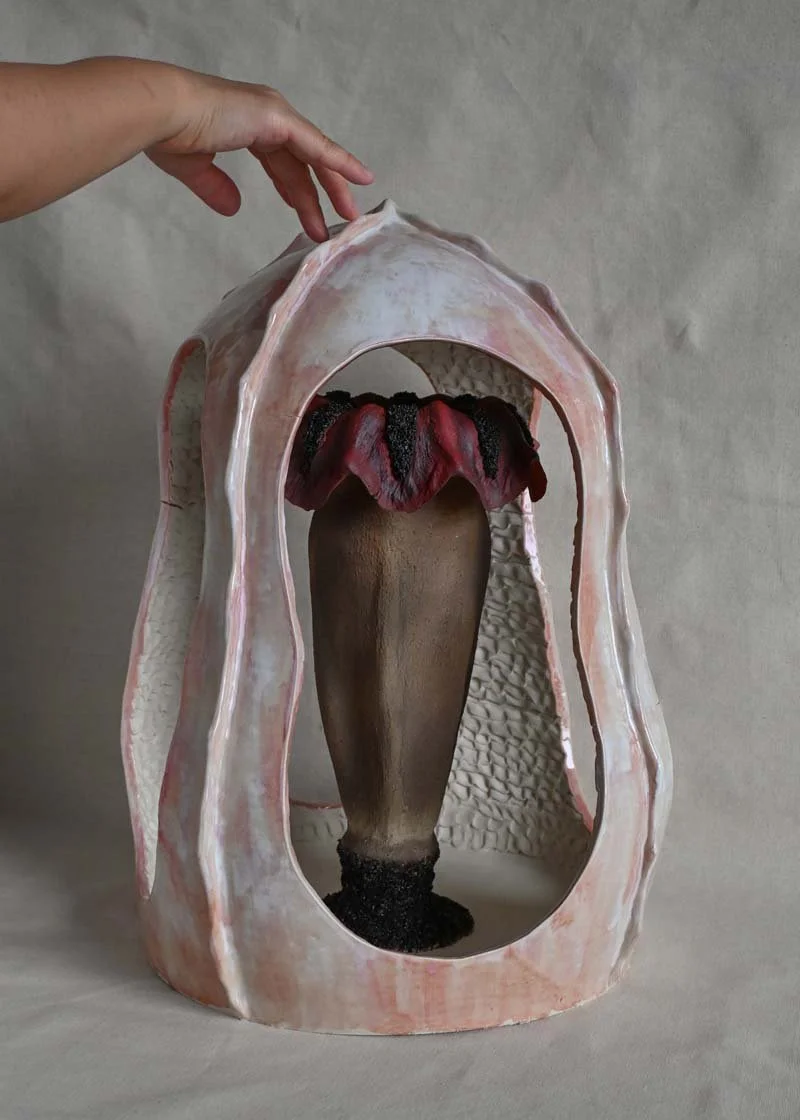
You’ve said that your work takes deep inspiration from nature. Can you share a memory or reflection about a time when you felt deeply connected to the natural world? Yes, my work is deeply inspired by nature. The Medusa series mimics the form of a jellyfish, with a central cord and an outer shell-like body. My recent Wallflowers collection incorporates petals and insects to create quiet, poetic scenes.
Although I grew up in the city, I’ve always felt a sense of peace and joy when surrounded by nature. One of the most magical experiences I’ve had was during my honeymoon in Iceland. My husband and I were driving along the island’s southern coast to see the icebergs. There’s only one road that circles the island, and as we drove, we slowly entered a thick mist—we could barely see 20 feet ahead. Moss stretched endlessly on both sides, and ours was the only car on the road. It felt like we were at the edge of the world.
Then, after about 20 minutes, the mist suddenly lifted, and sunlight poured in through the windows. In the distance, a waterfall clung to the edge of a mountain. I remember thinking, did I just die and end up in heaven? In that moment, I felt my ego dissolve. I could simply surrender to the vast, quiet power of nature.
How do you see the future of creativity evolving alongside AI or automation? What is the importance of human art and handmade creative works over industrialized creative practices? Technology will continue to evolve whether we like it or not. AI is a strong force that can be intimidating to a lot of people, but also tremendously helpful. It’s a useful tool in many fields, but I don’t believe it can completely replace human minds. The beauty of human-made art lies in its warmth—in the imperfections and emotional depth that only a person can bring. This quality will become precious when AI takes over the world.
Exploring ideas, art and the creative process connects me to… A path to self-realization.