

Interlude for James Fishkin
By Virginia Moscetti
As James Fishkin points out, today’s democratic institutions are in a precarious state – and it’s no secret. Since the late 2010s, we’ve been flooded with studies and reports warning us about a global crisis of faith in liberal democracy. As that crisis went unaddressed, we’ve watched it jump right off the page and into our backyards, fueling insurrections, waves of populist fervor, and the rise of a new technocracy. Now we’re like T.S. Eliot at the end of the first World War, “fishing for solutions with the arid plains” of a dying democracy behind us. Or like John Adams after the tumult of the French Revolution, quietly conceding that “There never was a democracy yet, that did not commit suicide.”
It’s tempting to side with Adams and let history take its course. Yet, by doing so, we’d be forfeiting our own agency in shaping that history. Democracy’s demise is not inevitable. Rather, as political agents, we determine whether it ultimately takes the plunge into oblivion or not. The trick, at the end of the day, is staying engaged enough to be ready to act when that choice needs to be made. Not just by perusing the news app, but by actively affirming our commitment to the possibility of realizing democracy’s promise. Sure, our institutions might be flawed, but they are nevertheless tied to the transcendent ideal of a self-governing collective will; the ideal of a governing structure created for the people and by the people. Participating in deliberative democracy and striving, through discourse, to form a collective political will means renewing that commitment – even if we ultimately fail to achieve it.
Because it’s not these one-time failures that murder democracy, nor is it through single successes that we resurrect it. In the end, it’s the strength of our faith in its ideals that matters. Just as we’ve seen skepticism nudge democracy towards Adams’ grim prediction of self-destruction, the inverse must also be true: we can secure the longevity of our democratic institutions by believing in their potential and, in the process, by motivating ourselves to undertake the ongoing, collaborative work of deliberation. If that’s true, then we should all be proclaiming, “I do believe in democracy! I do! I do!” And to those who balk at the idea of investing in a political ideal with little more reality than Tinkerbell (I’m being facetious), I raise you one “Pascal’s Wager”. Just as Pascal famously reasons that belief in God yields a better tradeoff than disbelief, so too does belief in democracy. By assuming its potential and working toward it, we stand to gain the many benefits of democratic self-governance; by giving up on it, we risk losing far more. The choice is clear, and it’s nothing short of a civic leap of faith.
So now we return to the state of affairs we started with. Looking back, like Eliot, upon the arid plains and standing, like Adams, on the brink of oblivion, we have to ask ourselves: what fragments of belief shall we “shore against our ruin?” Do we heed Fishkin’s call for the unglamorous, daily grind of deliberation and bet on democracy’s potential – or let skepticism snuff out its promise once and for all?
*
What experiences have you had through your collaboration with The Creative Process and One Planet Podcast? Collaborating with The Creative Process and One Planet Podcast was like tuning into a news outlet for all of my favorite topics. Each episode dropped me onto the frontlines of art, literature, and philosophy, with interviews ranging from the quirks of human perception to the strangeness of image culture in the twenty-first century. Beyond feeding my curiosity, these conversations nudged me into new research directions and pushed me to reflect more critically on what counts as legitimate philosophical inquiry. I look forward to carrying that same spirit of inquiry into my graduate studies.
What do you believe is the importance of the arts and humanities?
One of the things I value most about The Creative Process and One Planet Podcast is its ability to make ideas feel alive outside the academy. Rather than reducing complex research to something merely digestible, it creates spaces where depth and accessibility can coexist. Equally important to me is the way these projects foreground dialogue and storytelling as modes of thought in their own right. The conversations I took part in through The Creative Process recalled philosophy’s Socratic beginnings, when thinking was less about constructing systems and more about the generative movement of ideas between interlocutors. Experiencing that give-and-take showed me that inquiry doesn’t need a rigid argumentative structure, nor a definite conclusion. Rather, it can take shape in the open, unpredictable rhythm of exchange itself.
What do you believe is the importance of the arts and humanities?
For a career-hopeful in the humanities, this is an existential question, and I’m struggling to come up with an answer that doesn’t moralize or devolve into a treatise about instrumental value (shudder). So, I’ll limit myself to saying this: like the sciences, the arts and humanities are hermeneutic devices – they disclose our attempts to order, interpret, and represent the world around us. But unlike the sciences (which too often strive for a vocabulary that erases the trace of the interpreter) the humanities foreground the conditions of interpretation itself. They show us that every truth claim, every purchase on reality is colored by someone’s perspective and milieu. Even scientific truths, we learn, have very human fingerprints.
In setting up this comparison, I don’t mean to suggest that science is misleading, nor that scientific methodology is somehow lesser than that of the arts and humanities. What I want to emphasize is that, by engaging with the latter, we put ourselves in a position to more critically and reflectively engage with the former. Scientific knowledge can’t escape its own situatedness, and I think the arts and humanities help us to realize this. After all, it would be silly to think that lab reports are infallible capital “T” truth-generators just because they’ve eradicated the first person.
At this point, we might as well ask: if science amounts to a kind of interpretative act, are its outputs really so different from those of art and literature? Could lab reports be seen as a sort of story? If so, then we’ve simply forgotten to read them as ones. And without the arts and humanities to keep the texture of human interpretation in view, we won’t have anything to jog our memory.
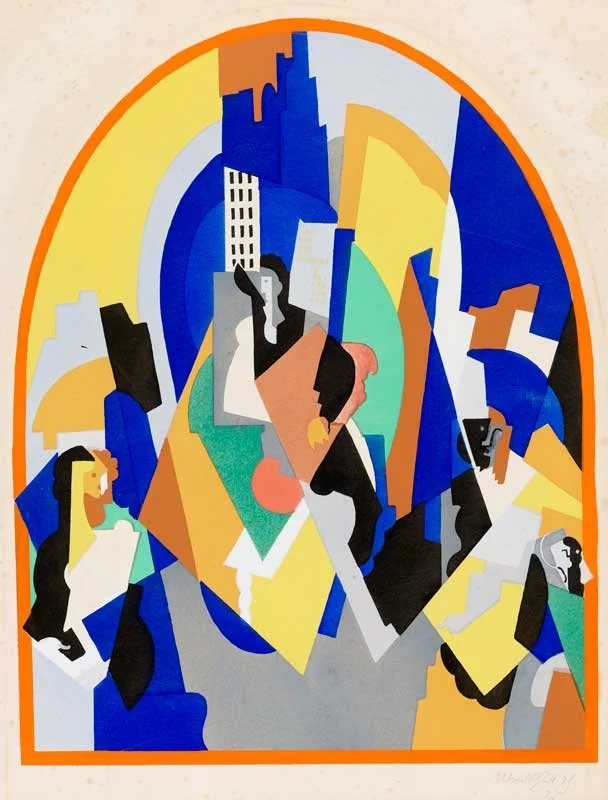
Image credit:
Albert Gleizes (National Gallery Ireland, Creative Commons)
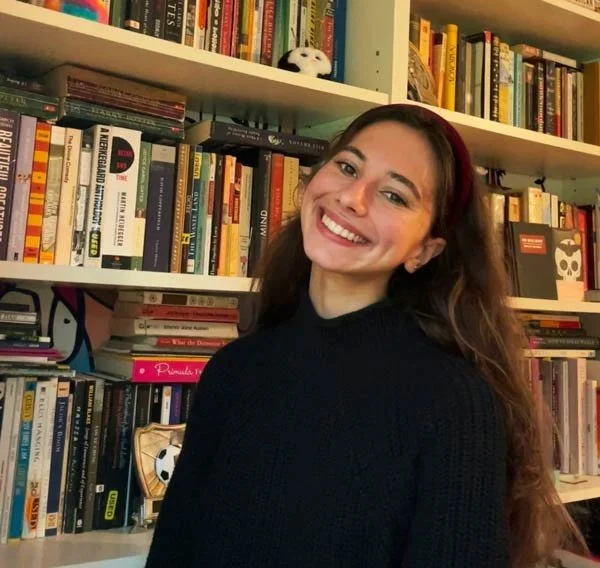
Virginia Moscetti is an incoming PhD student in philosophy at Northwestern University. She holds an MSc in Philosophy and Public Policy from the London School of Economics and a BA in Philosophy and English Literature from Swarthmore College. Beyond her work with The Creative Process, she edits the series “Current Events in Public Philosophy” for the Blog of the American Philosophical Association.