

By Virginia Moscetti
When Images See Us
Listening to Trevor Paglen discuss the ways in which image culture has evolved through artificial intelligence, I was struck by the idea that many of the images we encounter today aren’t static aesthetic objects, but sentient ones. Like Paglen indicates, images now read us as we read them, quietly dissecting our viewing preferences and mining them for capital.
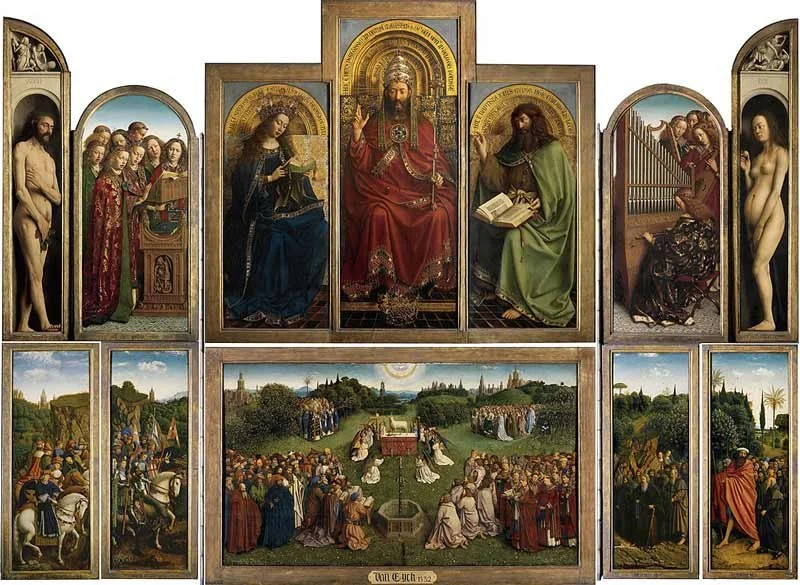
The sense that a black box with binoculars lies behind each post and each meme is disconcerting to say the least. But, given what Paglen says about the symbolic function of images throughout history, is it all that surprising? Religious imagery, like The Ghent Altarpiece by Jan van Eyck or Ciseri's Ecce Homo, tells us that the aesthetic object is transcendent, infused with a Divine presence that not only goes beyond the object’s material components – its colors, textures, use of chiaroscuro, et cetera – but claims to view (and judge) us in return. Other, non-religious images have a similar effect. Take the Mona Lisa, or Fantin-Latour’s Homage to Delacroix. In both cases, the image claims seeing power over its viewers, blurring the divide between the observed and the observer and transforming the aesthetic experience into a space of confrontation. Put differently, we see and are seen by the image. And, confronting it, we are compelled to return a gaze whose origins we can’t trace. What’s looking back at us through Mona Lisa’s eyes – Da Vinci? History? The Divine?
As much as these paintings feel miles away from the cat content that now crowds our feeds, I think there’s power in the precedent they’ve created. These images remind us that to be looked at is also an invitation to look back, to question, to respond even to refuse. That reciprocal dynamic is not just aesthetic; it’s political. hen an image confronts us with a gaze, whether it’s Christ in Ecce Homo, the enigmatic wink of the Mona Lisa, or the machine-learned stare of a content recommendation algorithm, it stages a relationship. And relationships, even asymmetrical ones, allow for negotiation. We can choose how we frame ourselves. We can subvert the gaze, parody it, deny it the clarity it seeks. We can meet its stare with irony, reverence, suspicion, or silence.
So when AI-generated images track our gaze and harvest our preferences, and feed them back to us in ever-narrowing loops, perhaps our task isn’t to look away, but to look more deliberately. To treat the image not as a window or a mirror, but a stage; a site of encounter where we can still assert our presence and reclaim the terms of visibility.
Image credit: The Ghent Altarpiece, Jan van Eyck
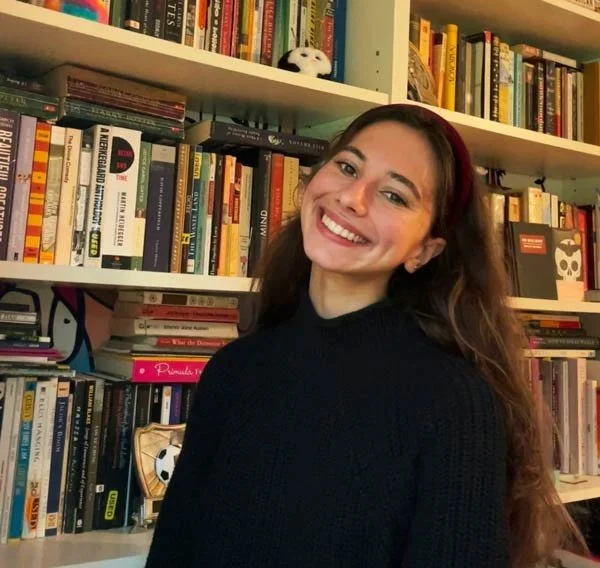
Virginia Moscetti was born in Rome. She is an incoming PhD candidate in Philosophy at Northwestern University, specializing in ethics, public policy, and the philosophy of justice. A Distinction graduate of the London School of Economics (MSc, Philosophy & Public Policy) and Swarthmore College (BA, Highest Honors), she co-edits the APA’s Current Events in Public Philosophy series and co-hosts selected episodes of The Creative Process podcast. Her work spans criminal justice reform with the Pennsylvania Innocence Project, refugee advocacy with Jesuit Refugee Service, and interdisciplinary research on moral and religious thought. Moscetti investigates how philosophical inquiry can illuminate pressing moral and social challenges.