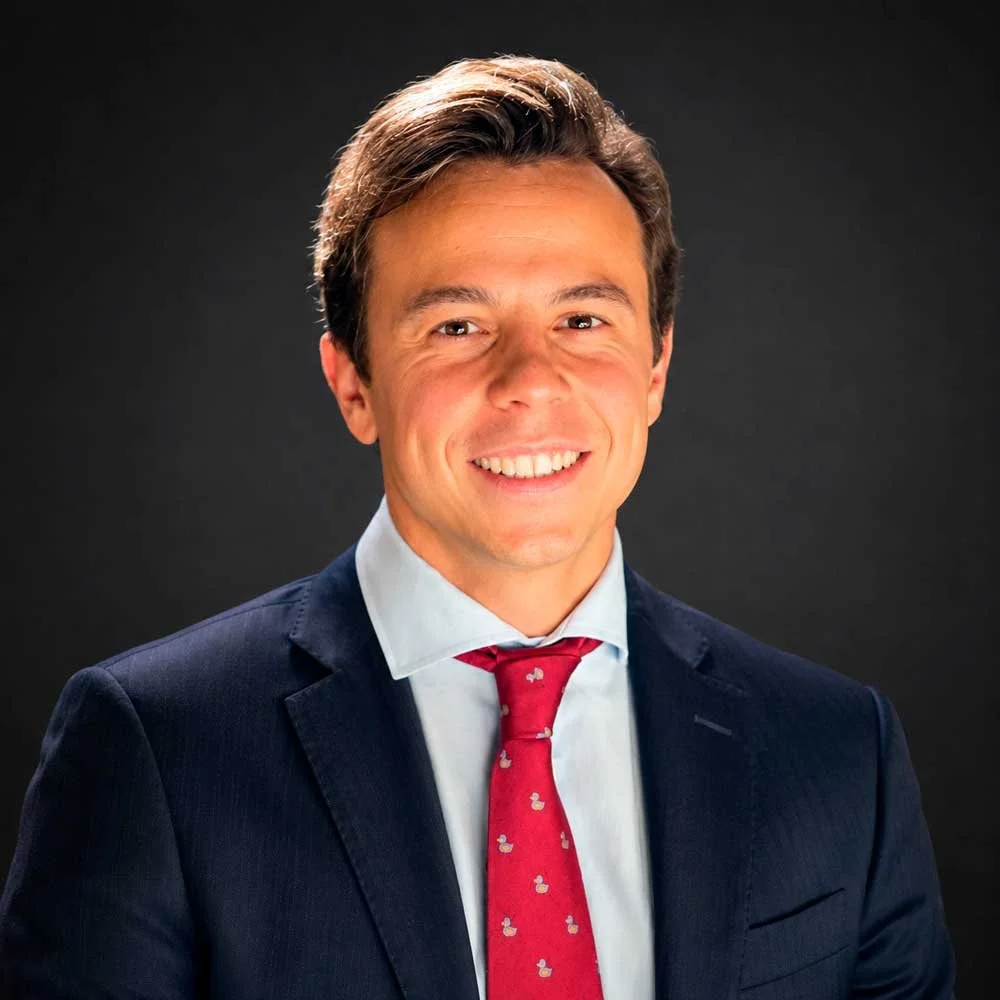


Mexico City-based artist Alexis Mata on landscapes, error, and contemplation.
Alexis Mata began his artistic exploration with interventions in public and urban spaces, focusing on generating social criticism and dialogue among spectators in a country plagued by inequalities, violence, and simulations. The ephemeral nature of these manifestations led him to migrate to techniques such as collage, painting, drawing, and installation, thinking about the importance of preserving the formats, which led to the work and preservation of images from digital formats. From this moment on, his work begins to move between digital and analog. Using tools such as scanners, manipulation, or digital editing, he reflects on the information that is lost, transformed, and generated by migrating formats, building different dialogues to those that were initially raised.
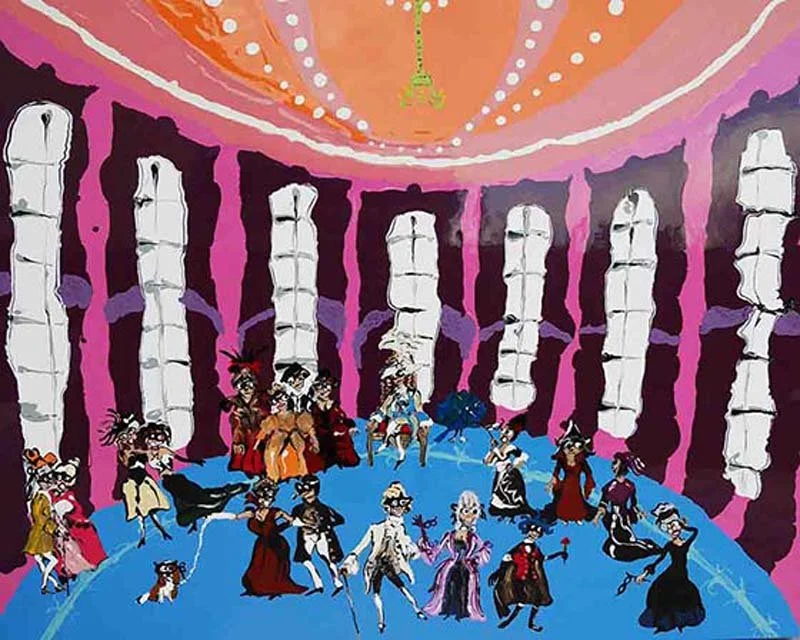
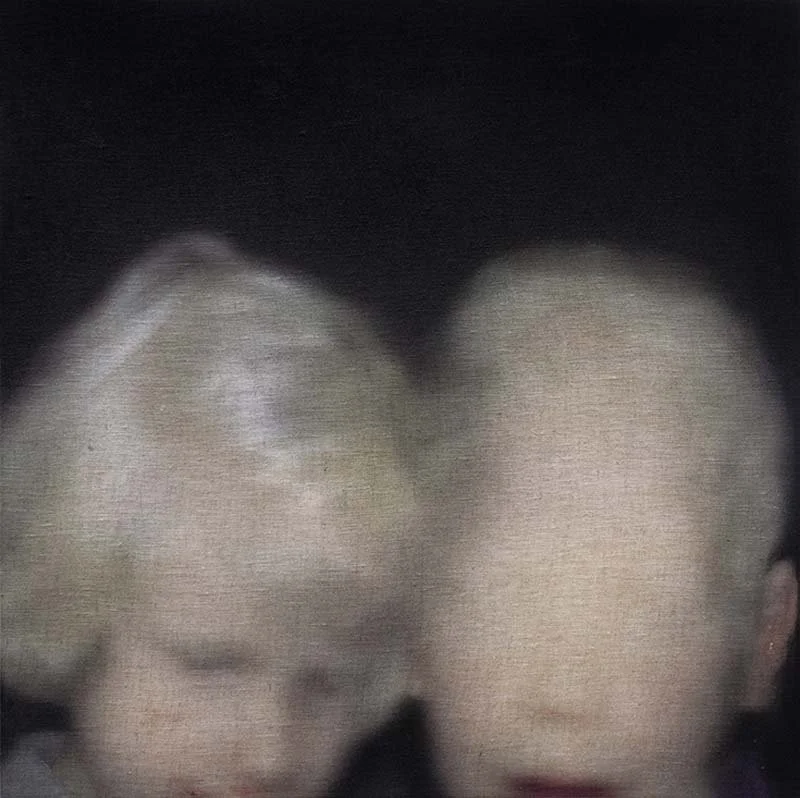
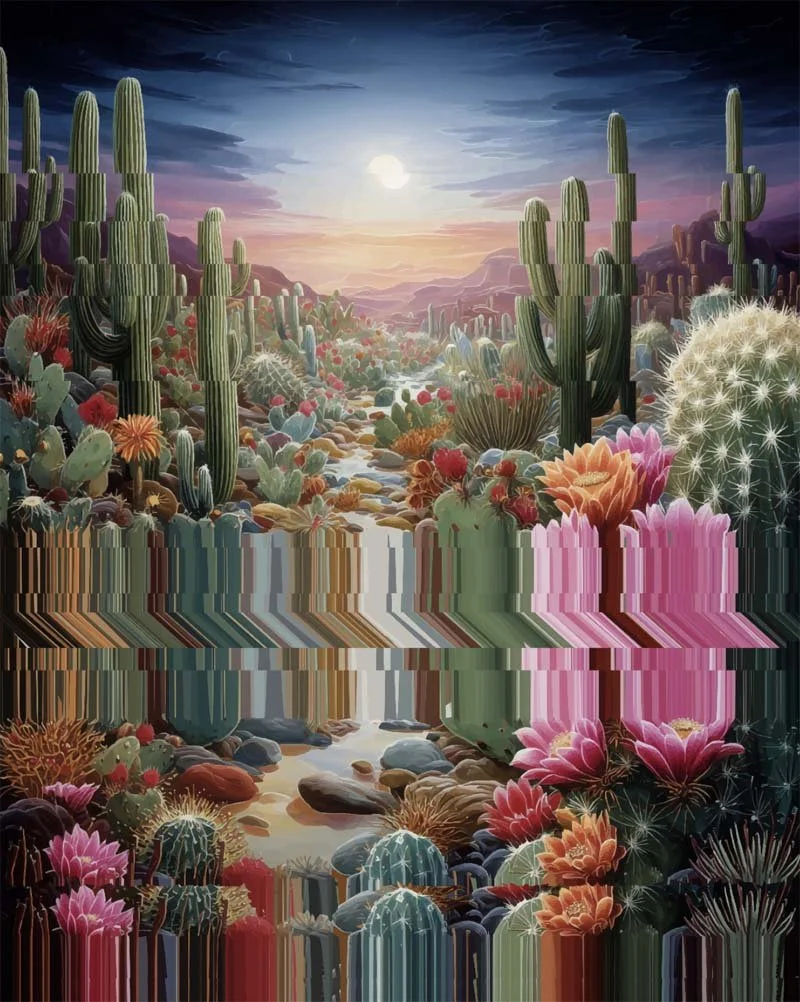
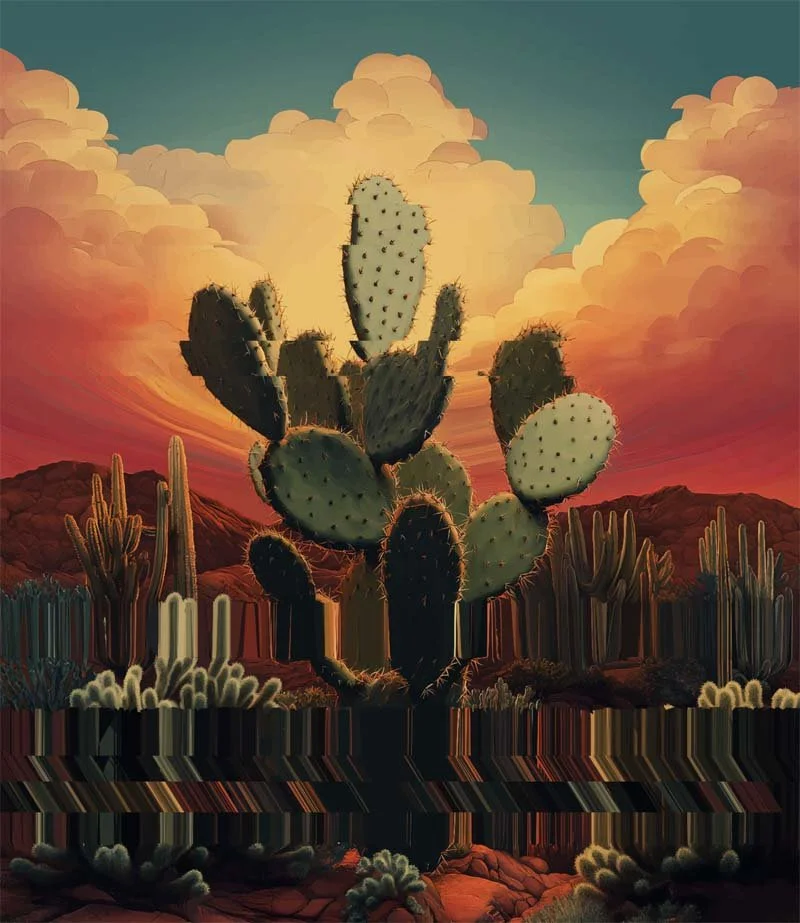
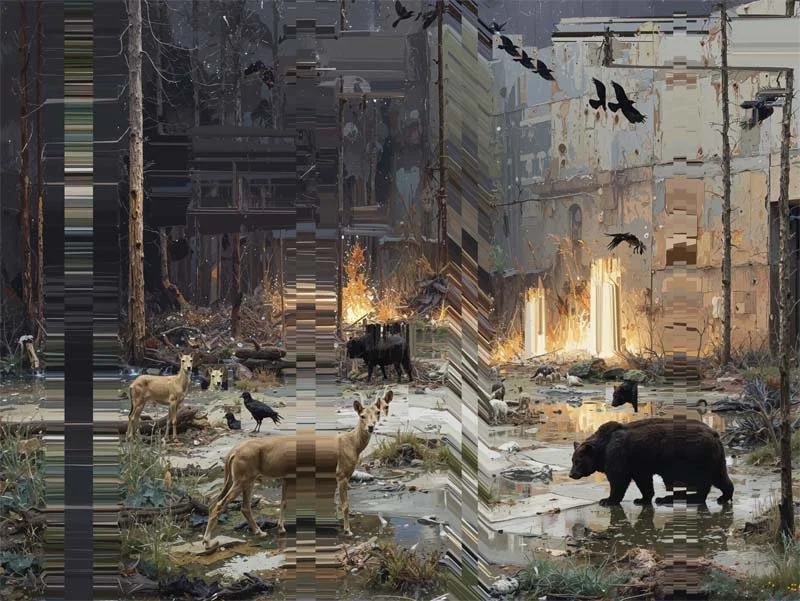
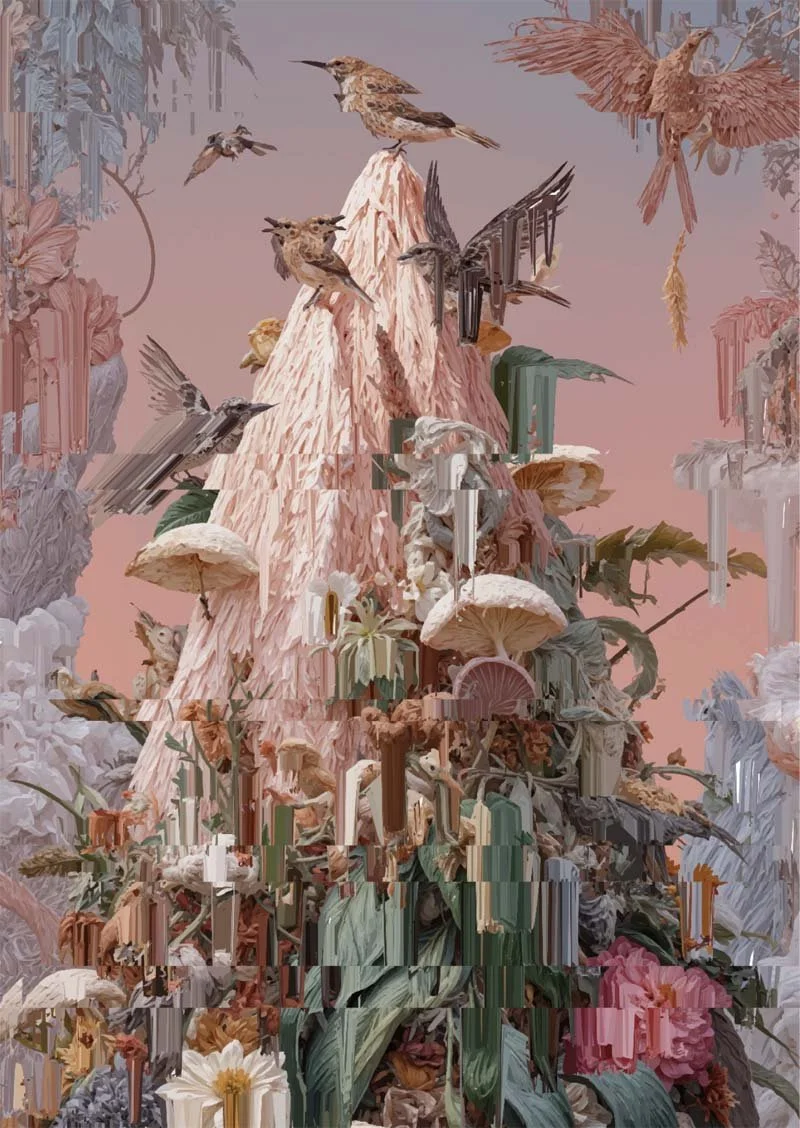
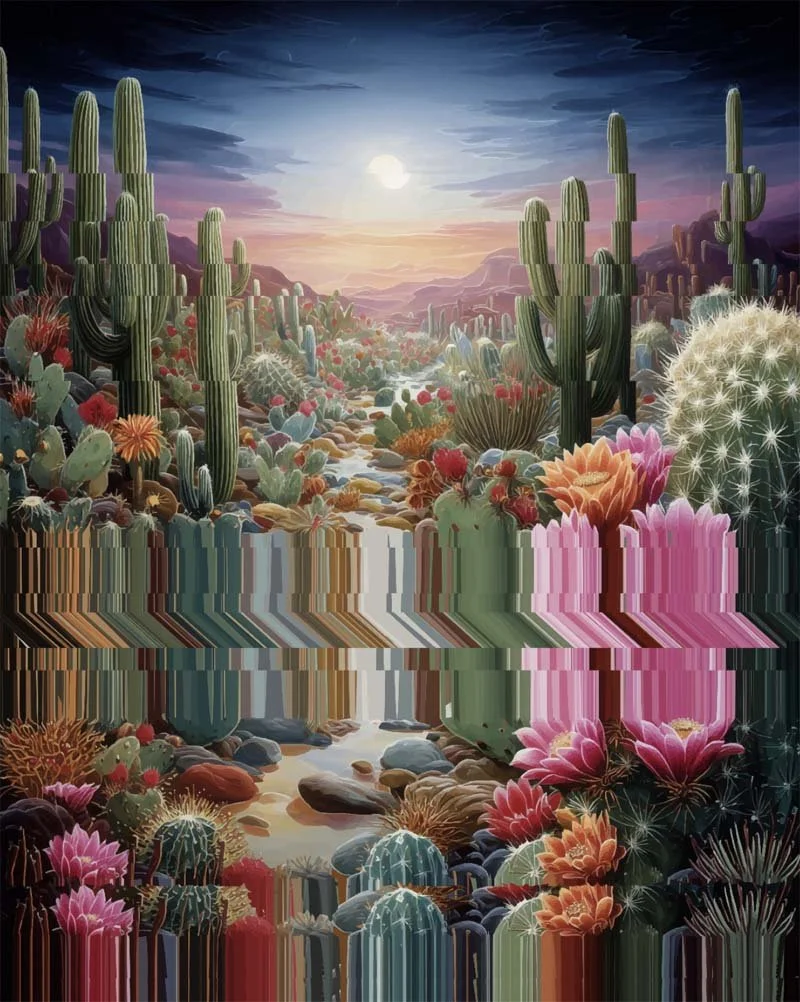
In recent years, he has focused his research on the questioning of standards and ideas generated or imposed collectively and their acceptance; for example, the idea of beauty, success, prosperity, among others, working from there and appropriating classic images belonging to the common domain. These reflections allow him to delve into the aesthetics of signs, symbols, and archetypes, to analyze, synthesize, deconstruct, and generate new images, taking as a basis for construction the error (pixelated, glitch, cuts).
His recent work makes contemplation the central axis from which visual experimentation is developed; starting from this exercise, he meticulously documents dreams, sensations, and experiences related to landscapes, either in the form of texts, ideas, poems, haikus, photographs, drawings, etc. Once the information has been compiled, he generates a dialogue with the artificial intelligence in which he seeks to share and explain situations and self-referential experiences in a limited way. The information is processed by the artificial intelligence, which follows the conversation from the return of an image that concentrates not only on my references, but all the data that, as a human entity, we deposit in the tool, functioning as an analogy of the collective unconscious. The images generated by the artificial intelligence are later edited and reworked by Mata, functioning as a reference for the creation of my work, as well as linking and giving coherence to the subconscious dream world, generating and perpetually regenerating imagined scenarios.
His work has been exhibited individually and collectively nationally and internationally, highlighting exhibitions such as “México: Pintura Reactiva" at the Carrillo Gil Art Museum, "Persistencia de la Memoria" at MUCA Roma, "La Raíz de mi Falla" at Sala de exposiciones de Bellas Artes, Puebla, "Antes de que nos despierten" at MAIA Contemporary, Mexico City, "Error" at Soze Gallery, Los Angeles, "Distorting Views" at Brick Lane Gallery, London, among others. He was a founding member, as well as director and curator of the “Independent Space USSR - A Space About Revolution” between 2019 and 2022, generating spaces for experimentation, dialogue, and exhibition for artists such as Enrique Jezik, Alejandra España, Ernesto Solana, Melanie McLain, Marcos Castro, among others. @alexismaaaata
Where were you born and raised? How did it influence your art and your thinking about the world?
I was born and raised in Mexico City, and I’ve lived here my whole life. Mexico is a magical place, often feeling unreal, where all kinds of things happen. This sense of magic has deeply influenced the way I understand the world, which is why my work has developed in a somewhat surreal direction. In the latest stage of my career, I’ve been creating landscapes from this perspective. Much of this part of my work involves going to deserts and forests and capturing the essence of those places—it’s a process of contemplation. Mexico has a tremendous variety of landscapes and ecosystems, and I believe this richness has nourished my artistic practice.
When did you first fall in love with art and realize you wanted to be an artist? For you, what is the importance of the arts?
I think the moment I first fell in love with art was through my father’s record covers and the world of European comics he had. I began my career doing urban interventions, graffiti, and the moment I felt I wanted to become an artist was when I discovered art in museums. I remember seeing a news segment on a local channel about a piece by a Catalan artist who hung children on a tree—these were sculptures, but I was fascinated by the conceptual approach they were discussing. That moment led me to start reading more about contemporary art and all its variations. I think that experience, along with street art and installations I came across, is what truly made me fall in love with art and decide to dedicate myself to it.
What does your typical day in the studio look like? Walk us through your studio and your most used materials and tools.
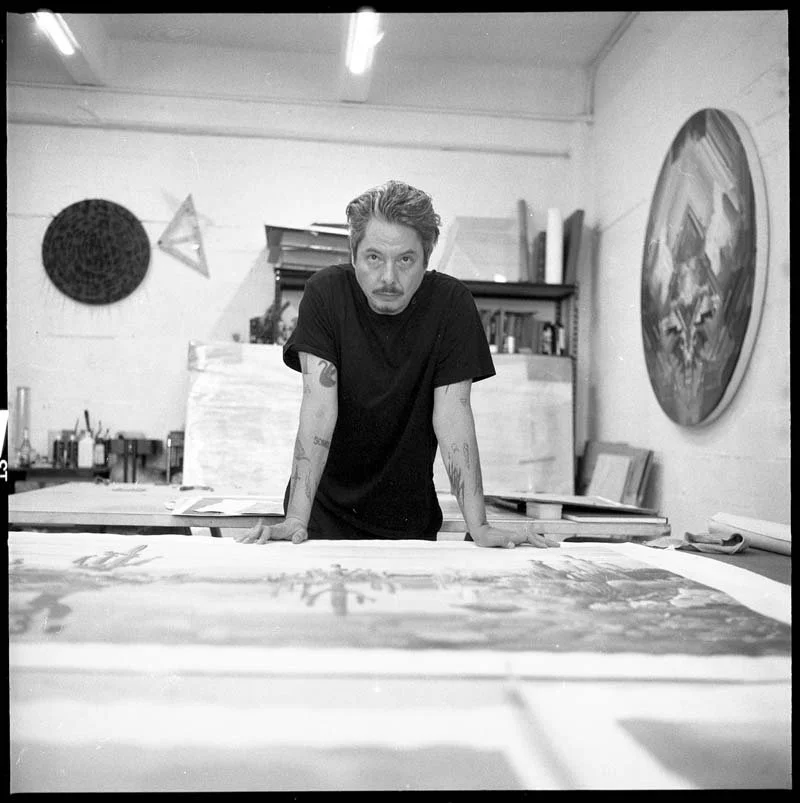
My day begins with a good cup of coffee. I usually go for a run with my dog or simply take a quiet walk—that helps me organize my day. I have two spaces where I work: the creative part happens in a studio at my home, where I keep my record collection. When it comes to execution, I work in a workshop located in a former high school in a neighborhood of Mexico City. There I focus on the plastic side of my practice, which I combine in different formats, both pictorial and sculptural. Right now, for example, I’m painting ceramics for my next show here in Mexico City.
The tool I use the most is my computer, since all my sketches are born digitally. From there, the translation takes shape in painting, oil, drawings. I really enjoy experimenting with different media, and currently I’m also working with video.
What projects are you at work on at the moment? And what themes or ideas are currently driving your work?
At the moment, I’m producing my next solo show in Mexico City. This exhibition explores something very surreal, inspired by a painting by Bosch, and I’m developing a theme of magical landscapes. I’m also working on what will be my first book, a compilation of five series spanning from 2020 to 2025. In addition, I’m participating in a group show at the MOAH Museum in Los Angeles, where we created the entrance wall that welcomes the public.
What do you hope people feel when they experience your art? What are you trying to express?
Right now, I like to think that viewers take a moment to look at my work calmly, since the pieces carry information about contemplation—like a sunset, for example. What I hope is that the viewer can feel as if they are stepping into my world. I also want them to connect with a sense of magic and surrealism, to perceive layers of emotion and narrative behind the images. For me, it’s important that my work opens a door to reflection, where people can find their own interpretations while still sensing the personal stories and landscapes that inspire me. In these moments of chaos in the world, I feel we need these windows to step away from the constant focus on wars and violence. I want my work to offer a pause, a space for breathing and imagination, where viewers can experience beauty, contemplation, and a sense of wonder—creating an alternative landscape that contrasts with the harsh realities and invites people to connect with something more hopeful and poetic.
Which artists, past or present, would you like to meet? And why?
I would love to meet all kinds of artists, including musicians and writers. It would be very interesting to talk with Francis Bacon, Leonardo da Vinci, William Blake, Hilma af Klint, Mozart, Beethoven, and even John Lennon. Among contemporary artists, I would like to speak with Banksy, Thom Yorke, and Maurizio Cattelan.
Do you draw inspiration from music, art, or other disciplines?
I’m a music fanatic—a frustrated musician, haha! I’m also an avid vinyl collector. Music is an integral part of my work; there’s always something playing in my studio.
A great thing about living in my city/town is…
I live in a chaotic city, but in the end, it’s like any contemporary city. At the same time, you can escape to the forest in half an hour or reach the beach in three hours, which allows you to experience different ecosystems. We have a rich pre-Hispanic culture that you can see in many parts of the city. I love visiting the pyramids, exploring the numerous museums, and enjoying the fantastic food. In Mexico City, you can never get bored.
Can you describe a project that challenged you creatively or emotionally—and how you worked through it?
At the beginning of my career, I started a series called Vague Thoughts, where I documented people living on the streets and then turned them into life-size paintings on cut wood. At one point, I was invited to the Tijuana Museum to document people living on the streets of that city. This experience was very intense—spending months with them and hearing their stories led me into a deep depression, as I became aware of many realities that we often forget and the privileges we hold. Through therapy and completely changing my approach to my work, I was able to process it. Even today, when I look back at the series, I still feel a strong connection to it. It was a confrontation with a very harsh social reality.
Tell us about important teachers/mentors/collaborators in your life.
I often say that the first mentors in my life were my grandmother and my father, both of whom have passed away. I still carry many of their lessons with me. The streets have also been a great teacher—growing up, I learned a lot from my friends and from life on the streets, and it was there that I learned to paint in public spaces, which is where my career began. I also consider my friends and colleagues fundamental mentors; they continue to teach me in countless ways.
Sustainability in the art world is an important issue. Can you share a memory or reflection about the beauty and wonder of the natural world? Does being in nature inspire your art or your process?
For the past five years, I’ve been exploring nature, flowers, and landscapes in their many variations. I feel that, at this moment, nature speaks to me deeply. I draw a lot of inspiration from what I see and contemplate. Nowadays, I take the time to observe a sunrise or a sunset, and that inspires me immensely. It influences the color palette I use and serves as a driving force for my creative process.
AI is changing everything - the way we see the world, creativity, art, our ideas of beauty and the way we communicate with each other and our imaginations. What are your reflections about AI and technology? What is the importance of human art and handmade creative works over industrialized creative practices?
The way I use all these technologies, AI has opened up a new way of working for me—it’s just another tool, like a brush that helps me achieve what I want. But it is never the final result. In my research on this subject, I’ve always tried to ensure that the work doesn’t stay on the machine. For example, I created pieces based on my dreams, which I wrote down in the form of haikus or poems. The output from the AI prompt served as a skeleton for what I ultimately made, which ended up as a handmade tapestry crafted by artisans who helped me realize it.
So, in the way I see it, AI is simply another tool. At the same time, I feel it’s still evolving, and I hope we learn to use it correctly. I’m not worried about the arts being replaced, but in other social areas, I think we need to quickly understand how much and in what ways we should use it.
Exploring ideas, art and the creative process connects me to…
the world around me, to my own emotions and imagination, and to a deeper understanding of human experience and nature.