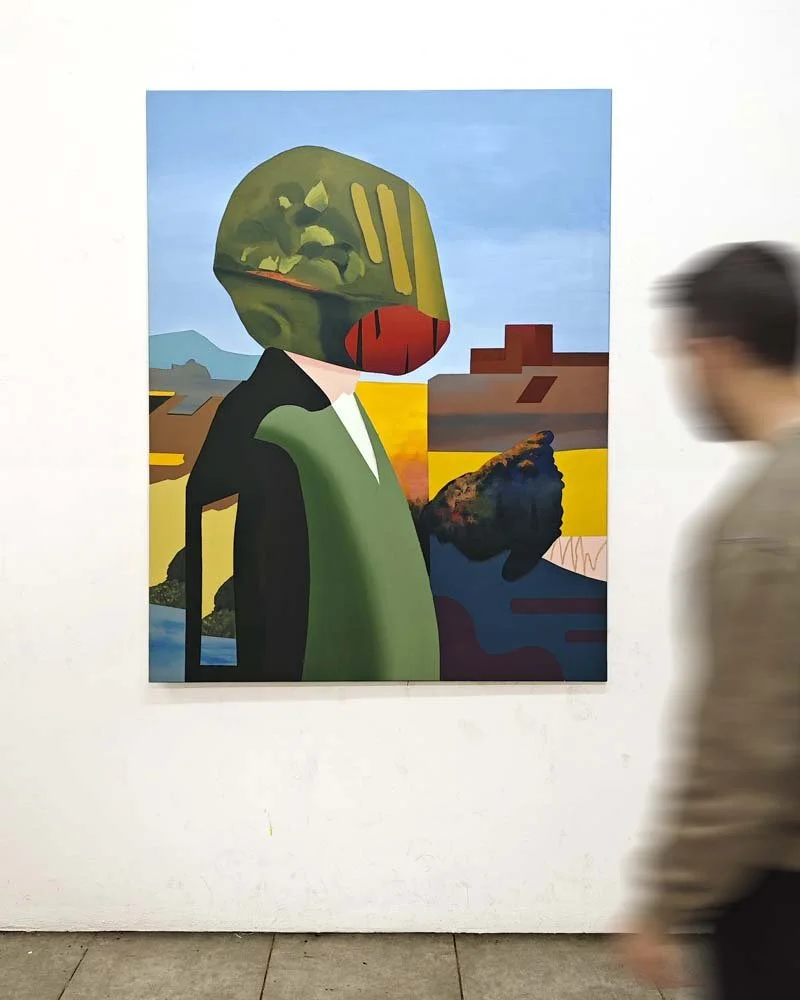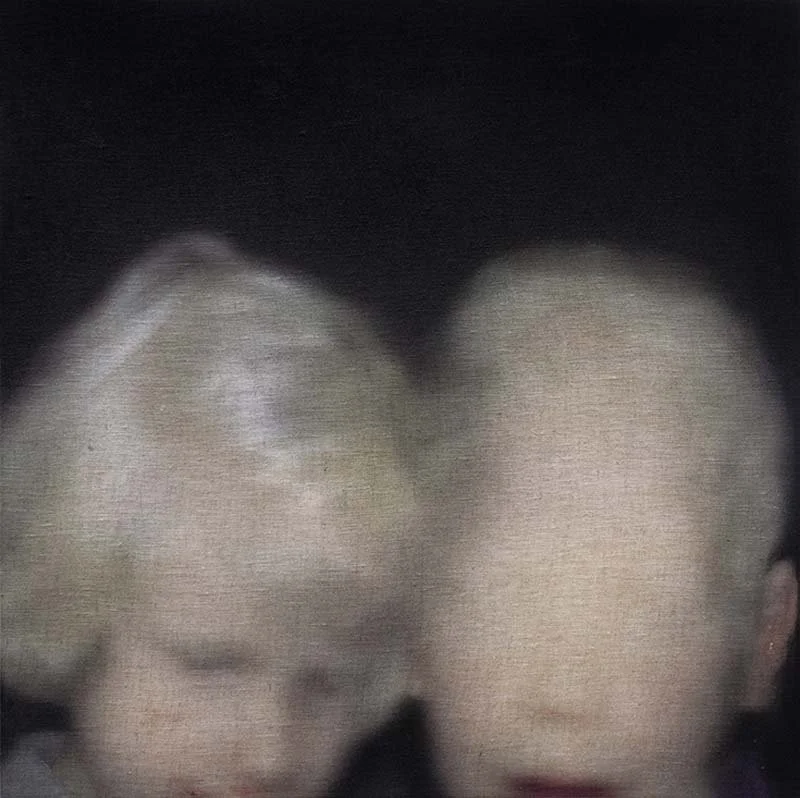


Brussels-based artist Kevin Douillez on the gaze and reflection.
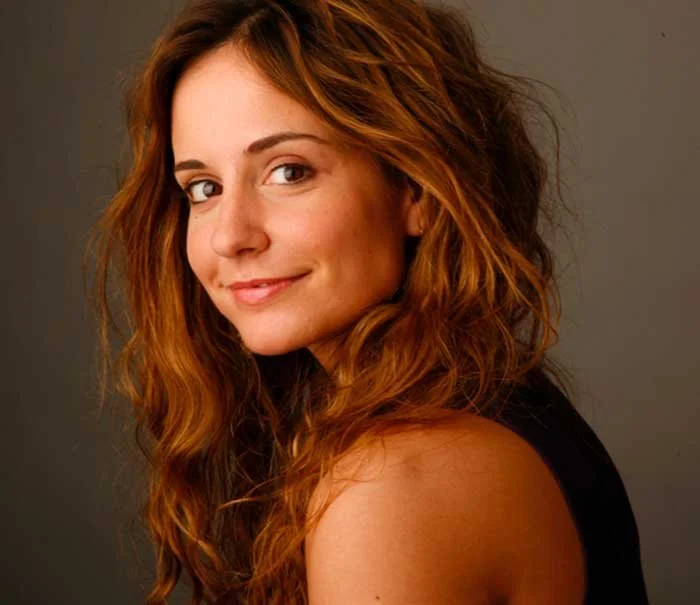
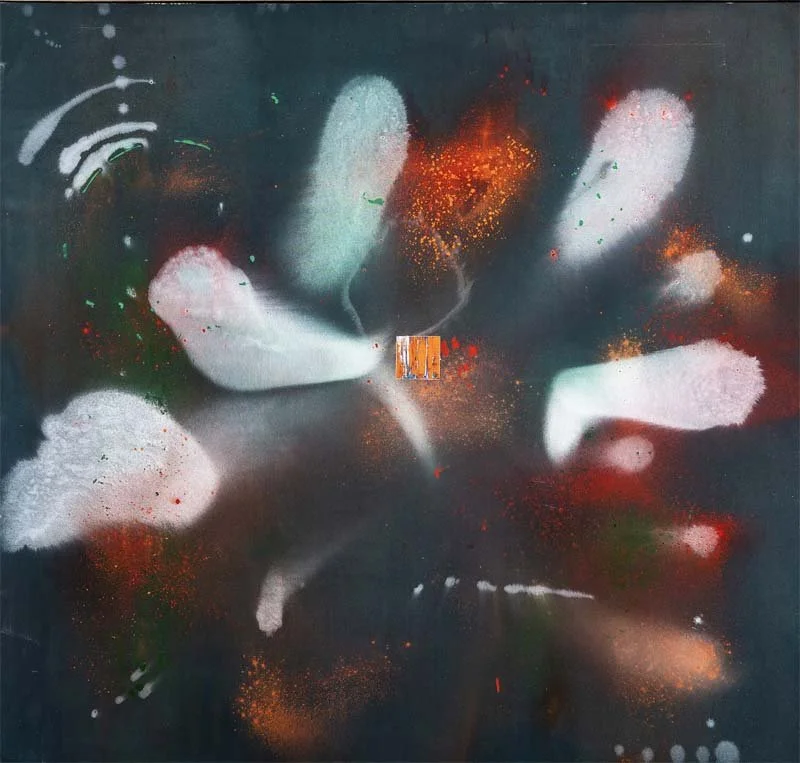
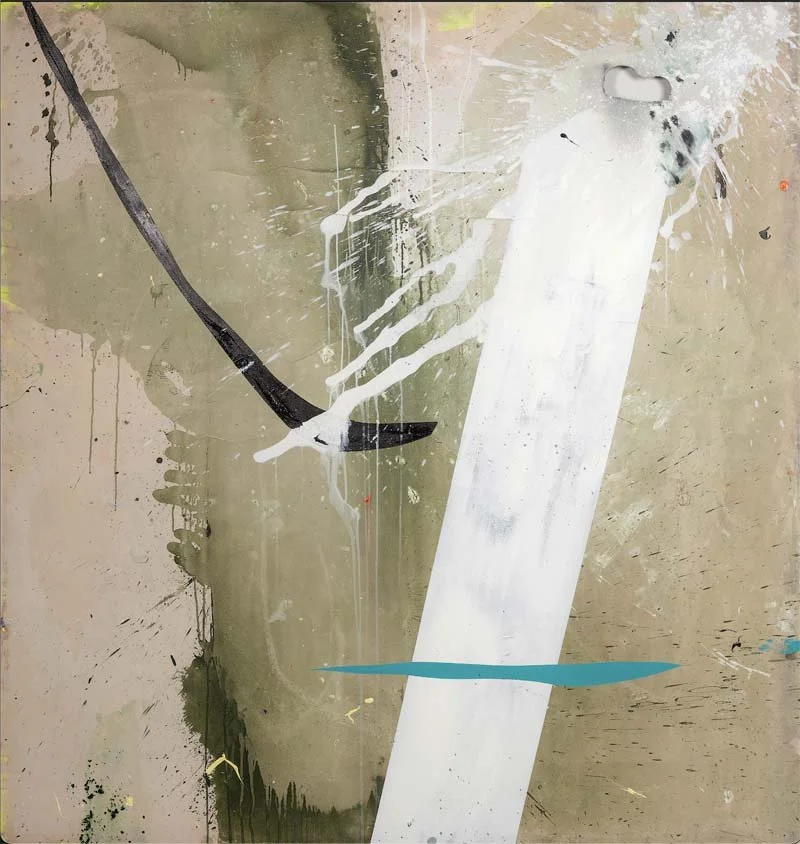
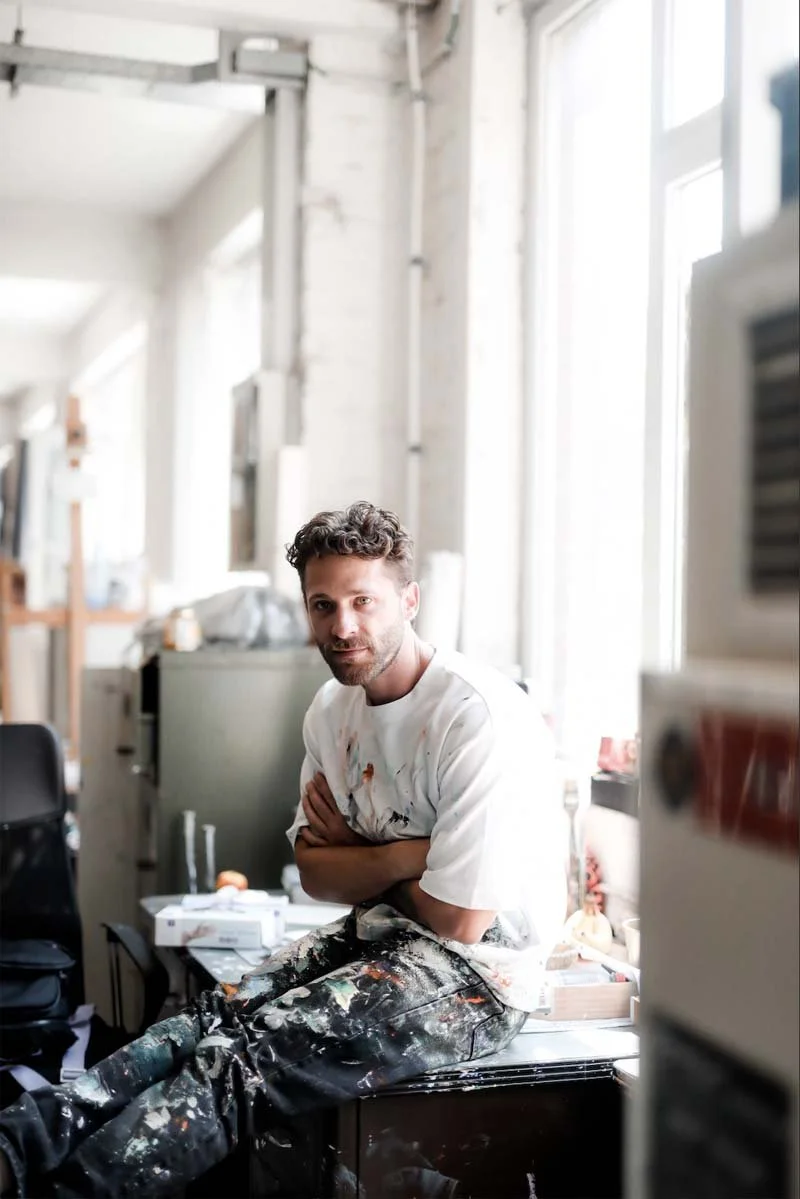
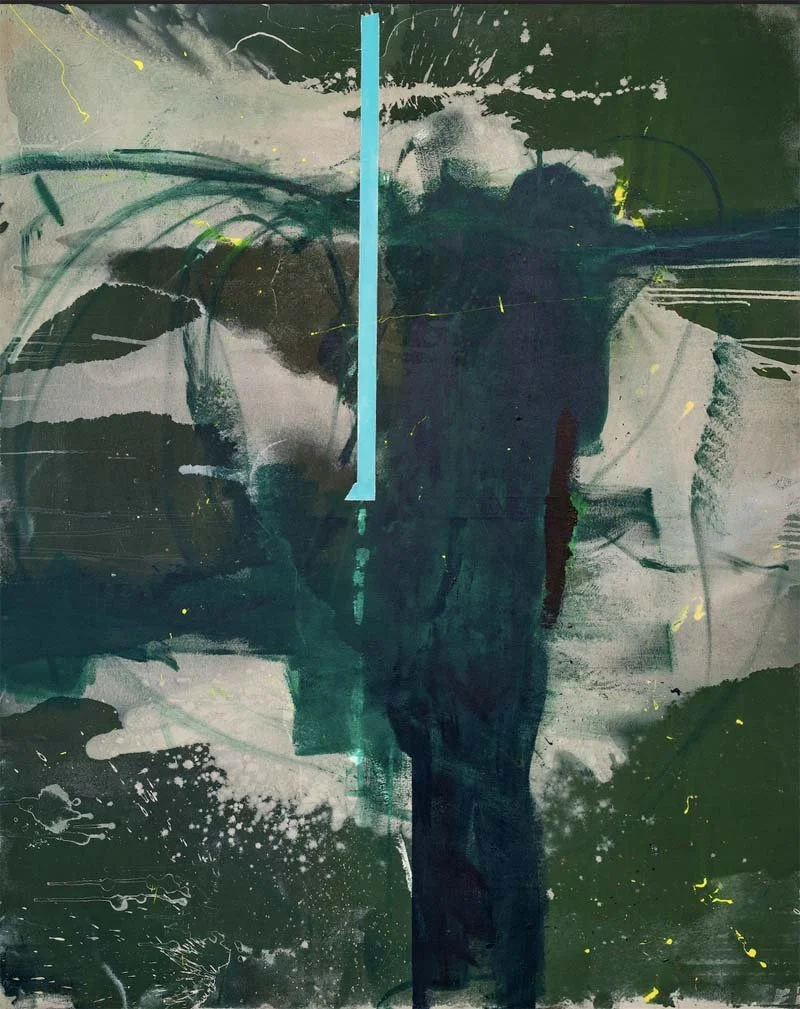
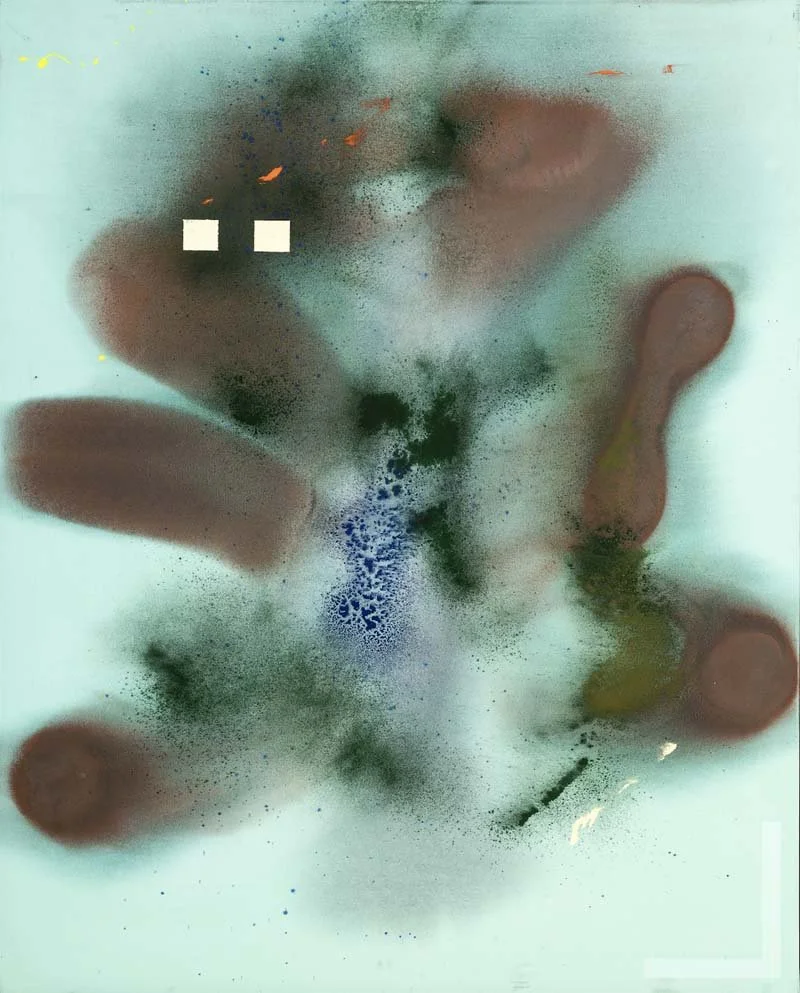
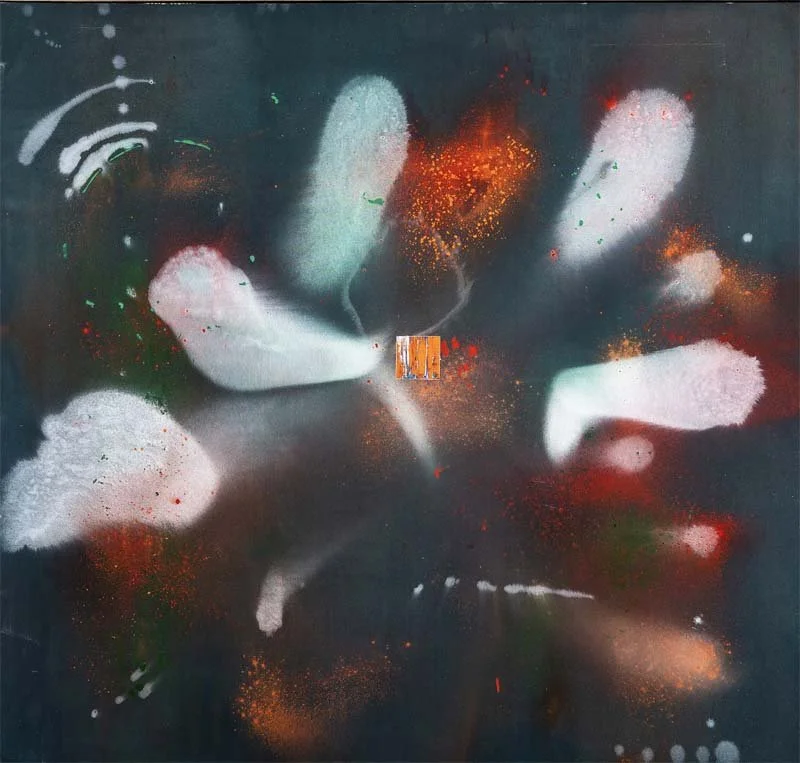
Kevin Douillez (born in 1990) is a self-taught visual artist who lives and works in the south of Brussels. Exhibited in Brussels, Los Angeles, and Madrid, he develops a gestural form of painting where matter becomes a space for inner dialogue. Through the force of his gestures and the layering of paint, he transforms tension into light and balance. Between abandonment and introspection, his work explores the boundary between chaos and serenity. Each raw, vibrant canvas becomes a space of catharsis, where the artist seeks peace within disorder and harmony within fracture. @kevindouillez_
Where were you born and raised? How did it influence your art and your thinking about the world?
I was born and raised in Belgium, surrounded by nature and far from big cities. This sense of isolation deeply shaped the way I see the world. Nature — in its strength and fragility — is infused throughout my work; it becomes both material and rhythm.
I love working with water and natural pigments, allowing the materials to react, transform, and sometimes escape my control. This instinctive, organic process helps me reconnect with something essential — a dialogue between gesture, earth, and the living.
When did you first fall in love with art and realize you wanted to be an artist? For you, what is the importance of the arts?
I started painting and working with ceramics when I was twelve. Very early on, I realized that it was possible to elevate matter with my hands, to transform a simple form into something alive.
That’s when I understood that my power resided in my fingers, in this ability to shape and to create.
Since then, the need to give form to emotion and energy has never left me. Creating has become a way to understand the world and, above all, to understand myself.
What does your typical day in the studio look like? Walk us through your studio and your most-used materials and tools.
Over time, I’ve learned that creating requires patience and that there’s no need to rush. I like to work in a clean, open space where every gesture can unfold freely. It’s essential for me to feel the right moment, to listen to that inner spark before I begin.
My studio is a living space, sometimes silent, sometimes chaotic. I spend days there experimenting, observing the materials, letting them speak. There are also weeks when I go to the studio without creating anything — or when I destroy everything. That, too, is part of the process: accepting emptiness to begin again.
What projects are you at work on at the moment? And what themes or ideas are currently driving your work?
I’ve just finished preparing my first museum exhibition, titled The Journey of a Gesture, presented at the Museum of Fine Arts in Mons, alongside David Hockney’s “The Song of the Earth.” It’s a major milestone — the result of many months of work and reflection.
Through this project, I explore the idea of the gesture as an extension of the body and memory. Each trace, each imprint becomes a way of expressing what words cannot. My work questions the relationship between matter, movement, and silence, between presence and disappearance.
I aim to create spaces where the gaze can breathe — where the viewer can feel the vibration of the gesture, and perhaps discover their own inner journey within it.
What do you hope people feel when they experience your art? What are you trying to express?
Through my work, I want people to understand that we can elevate our wounds just as much as our light. Pain can be transformed into strength, into something that speaks and carries meaning.
I’m not trying to create something “beautiful” in the traditional sense — I paint to release, to let go of what lives inside me.
My pieces are born from that inner tension, from the search for calm after the storm. If they resonate with others, it’s because they come from a place that is raw, real, and sincere.
Which artists, past or present, would you like to meet? And why?
I have to admit that I’m a great admirer of Julian Schnabel. His approach fascinates me — the freedom in his work, the way he lets material and emotion speak to each other.
He deeply inspires me through his gestural power, his instinctive relationship with painting, and his ability to combine fragility with monumentality.
I’d love to meet him to talk about that visceral connection to creation — about how art can be both a cry and a prayer.
Do you draw inspiration from music, art, or other disciplines?
I always listen to classical music when I work. Certain frequencies help me reach an almost trance-like state, allowing me to let go and be guided by something deeper that inhabits my gestures.
Music becomes a thread that carries me — it surrounds me until thought disappears and the movement becomes purely instinctive.
In those moments, I’m no longer in control; I simply let myself be moved. That’s often when the most sincere and powerful pieces are born.
A great thing about living in Brussels is…
One great thing about living in Brussels is its balance — a city that’s vibrant yet calm. It offers the freedom to create, the space to breathe, and the feeling of being close to nature while staying connected to a rich artistic community.
Can you describe a project that challenged you creatively or emotionally—and how you worked through it?
The publication of my first book, which retraces five years of my paintings, was one of the most emotionally and creatively challenging projects I’ve ever done.
I really wanted to open my personal journal, to share the hidden side of my work — the doubts, the impulses, the moments of silence that shape each piece.
It was a vulnerable process, exposing what usually stays unseen, but it allowed me to look back, to understand my own evolution, and to accept that fragility is also part of creation.
Tell us about important teachers/mentors/collaborators in your life.
Several people and influences have played an important role in my journey.
Antonio, a colleague from the studio and an art historian, has been a true mentor — his sensitivity and perspective have helped me better understand my own practice.
My gallerist, the Brachot family, has also been essential. Their history and legacy, having supported great painters such as René Magritte, deeply inspire me.
Beyond these encounters, reading and stoicism guide me every day — they teach me to stay grounded, patient, and to find strength in silence and discipline.
Sustainability in the art world is an important issue. Can you share a memory or reflection about the beauty and wonder of the natural world? Does being in nature inspire your art or your process?
Nature is at the heart of my process. I grew up surrounded by forests and silence, and that closeness taught me to see the world differently — to find beauty in slowness, imperfection, and transformation.
Being in nature always brings me back to what’s essential: to matter, to breath, to gesture.
It inspires me not only through its forms and textures but also through its fragile balance and its constant ability to be reborn.
In my work, I try to capture that same vital energy — a dialogue between strength, vulnerability, and regeneration.
AI is changing everything - the way we see the world, creativity, art, our ideas of beauty and the way we communicate with each other and our imaginations. What are your reflections about AI and technology? What is the importance of human art and handmade creative works over industrialized creative practices?
Artificial intelligence is profoundly transforming the way we see the world and create. I see it as a fascinating tool, one that opens new perspectives but also acts as a mirror to our own limitations.
What it will never replace is the fragility of the human gesture — the trembling hand, the doubt, the raw emotion that emerges through the process.
Handmade art carries a vital energy, a living presence that no machine can simulate.
For me, creating is an act of body and soul — a way to reconnect with oneself, with matter, with life.
Technology can accompany us, but it can never replace that intimate dialogue between the human and their work.
Exploring ideas, art and the creative process connects me to…
something greater than myself, to an energy, a collective memory, and to my own humanity.
Creating allows me to recenter, to understand what lives within me, and to transform emotions into matter.
It is a constant dialogue between the visible and the invisible, between what I feel and what I try to bring into existence.
In that space, I feel both free and deeply connected to the world, to others, and to myself.