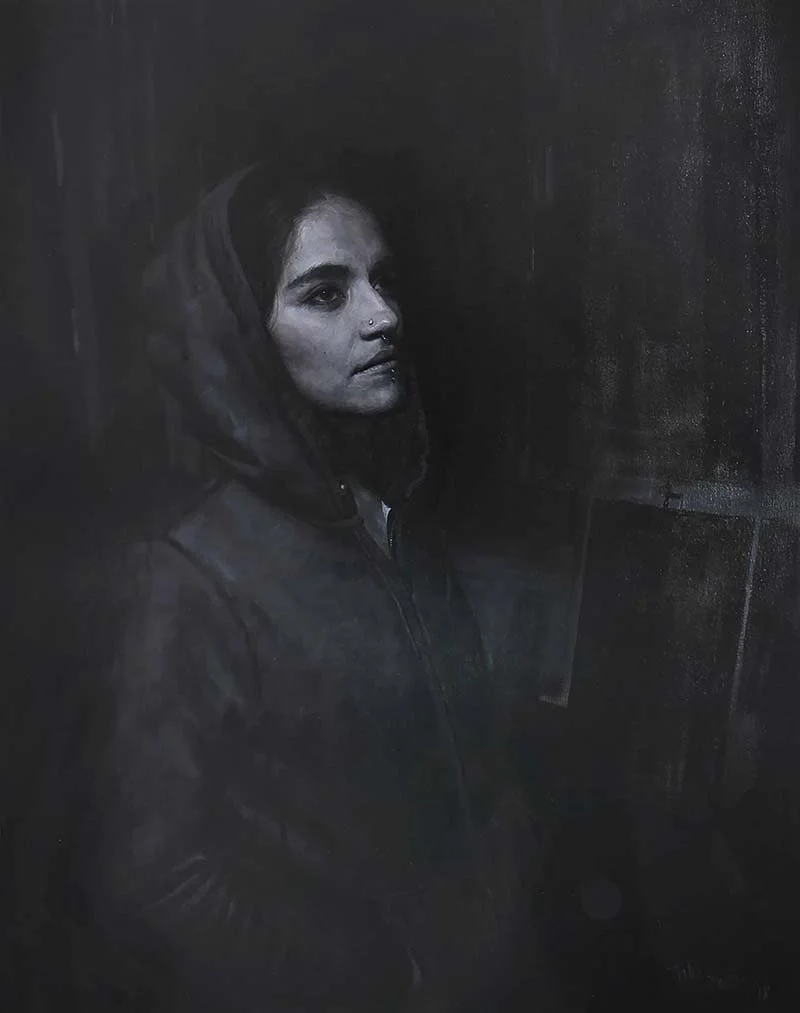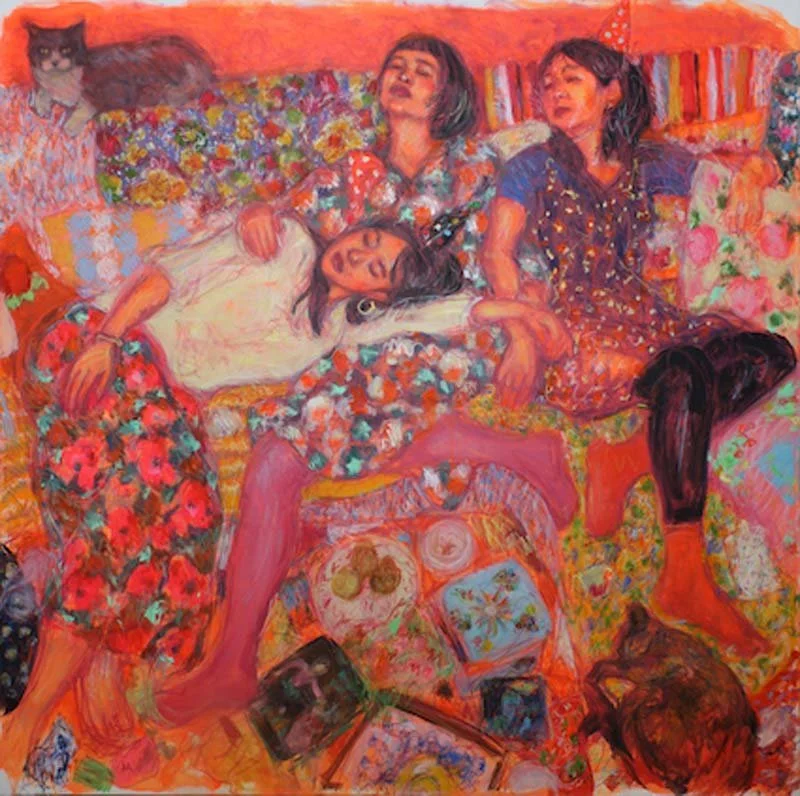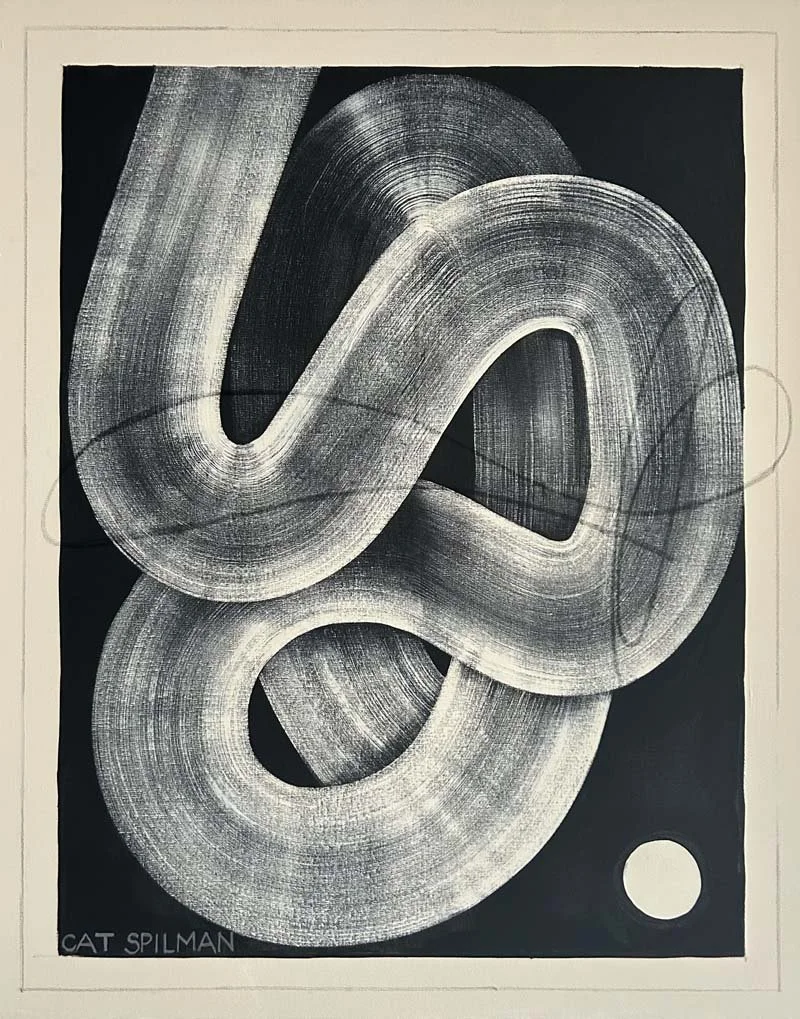


London-based artist Cat Spilman on identity, feminism, and motherhood.
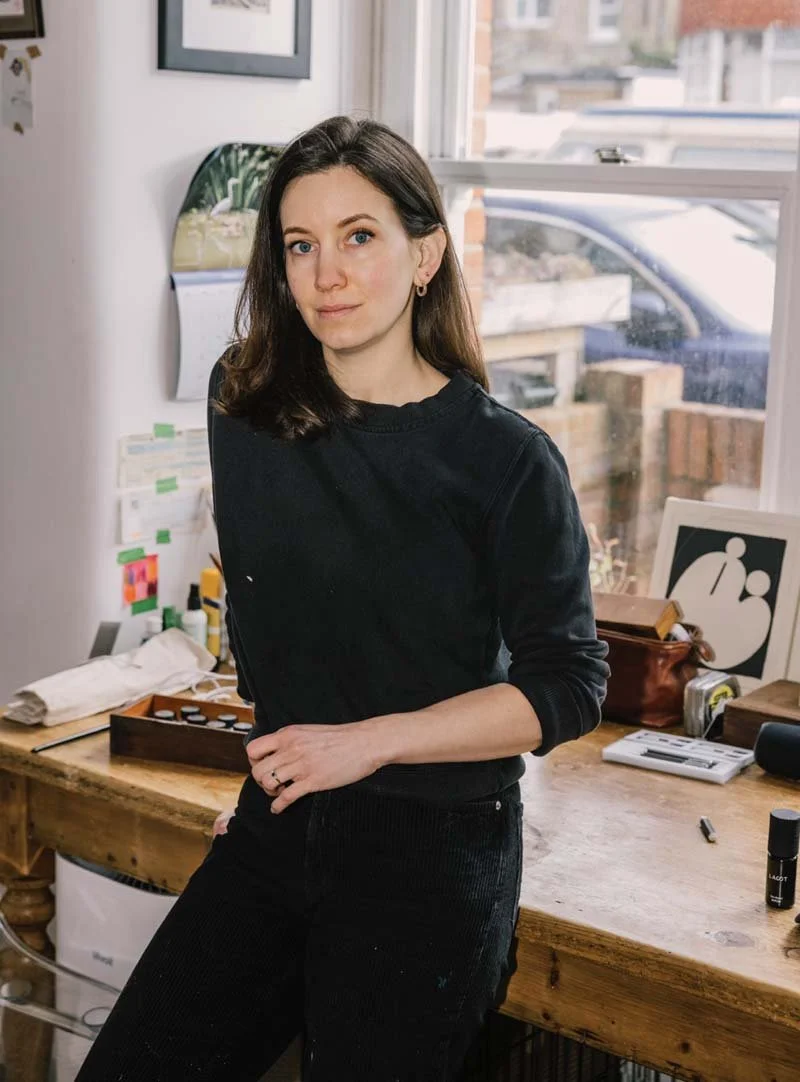
Cat Spilman is an American born artist living and working in London. She received her BFA with honours from the School of Visual Arts in Manhattan, then went on to work as a scenic painter for film and television. After relocating to the UK, she dedicated herself full time to her own artistic practice which deals with themes of identity, belonging, feminism and motherhood. @catannedunlea
You were born in Cleveland. How has your upbringing there influenced your artistic perspective?
I was born in a very small town south of Cleveland. My mom was (and is) a liberal, free-minded artist, and was definitely a bit of an outsider in our small conservative town. Because of her I always knew being an artist was a real option; it was something someone could do and be and make a living. I grew up wanting to escape the confines of the little town and surround myself with more people like my mom really, and that’s what I did.
Can you describe how your early life in your mother’s studio has been a source of inspiration?
I grew up in my mom’s studio. She had everything we could possibly want to play with - clay, paint, a printing press - and I think I identified with being an artist before I ever consciously decided I wanted to be one. Art and creativity were engrained in my childhood and regarded as important and worthy explorations, something I’m so grateful for.
Describe a typical day in your studio.
I’m very lucky because my studio is a five minute walk from my house, so often I’ll make coffee at home and then walk over. I always have more than one painting on the go at once, so I jump in to wherever I’ve left off, whether that’s stretching new canvas, getting into the middle of a piece or adding finishing touches.
Tell us about your current projects, including your solo exhibition in London, and the themes driving your work.
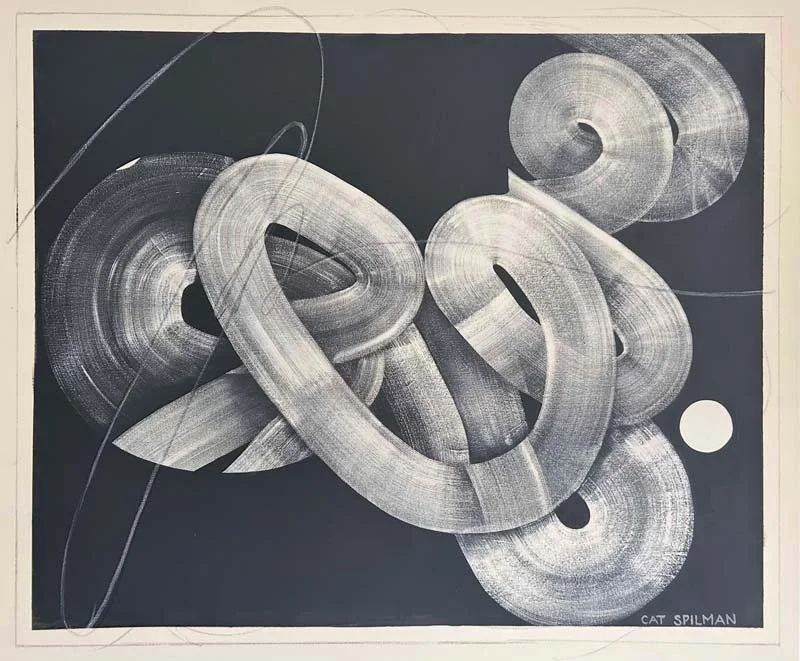
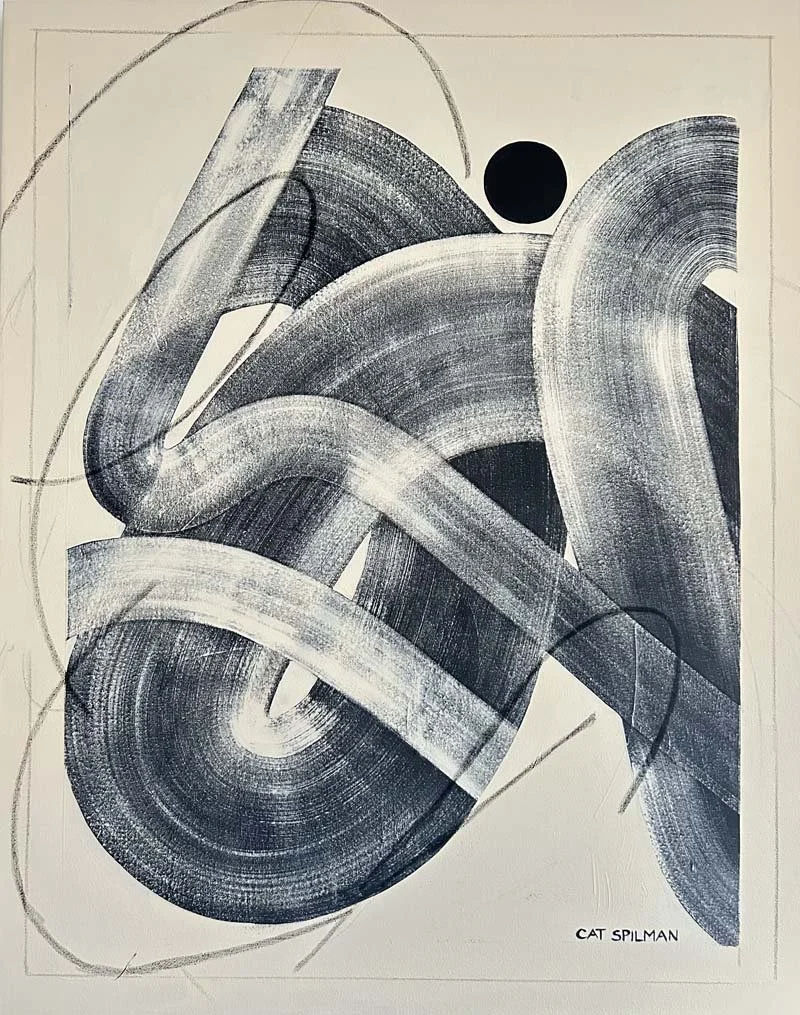
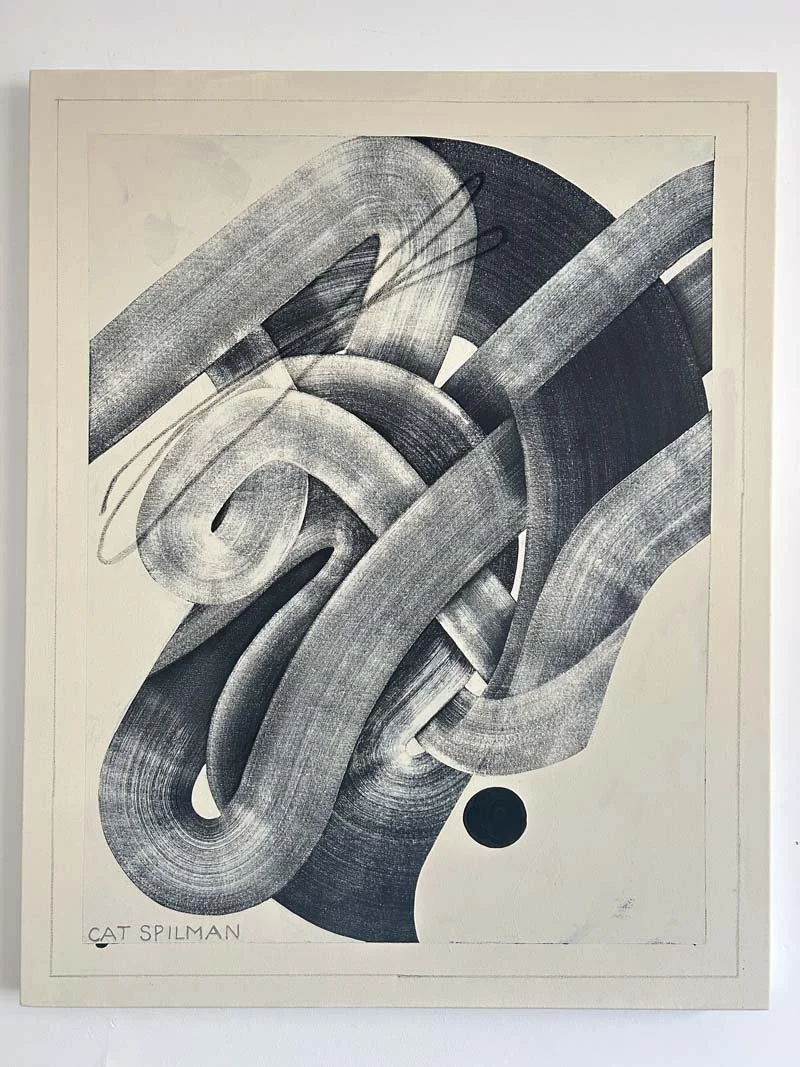
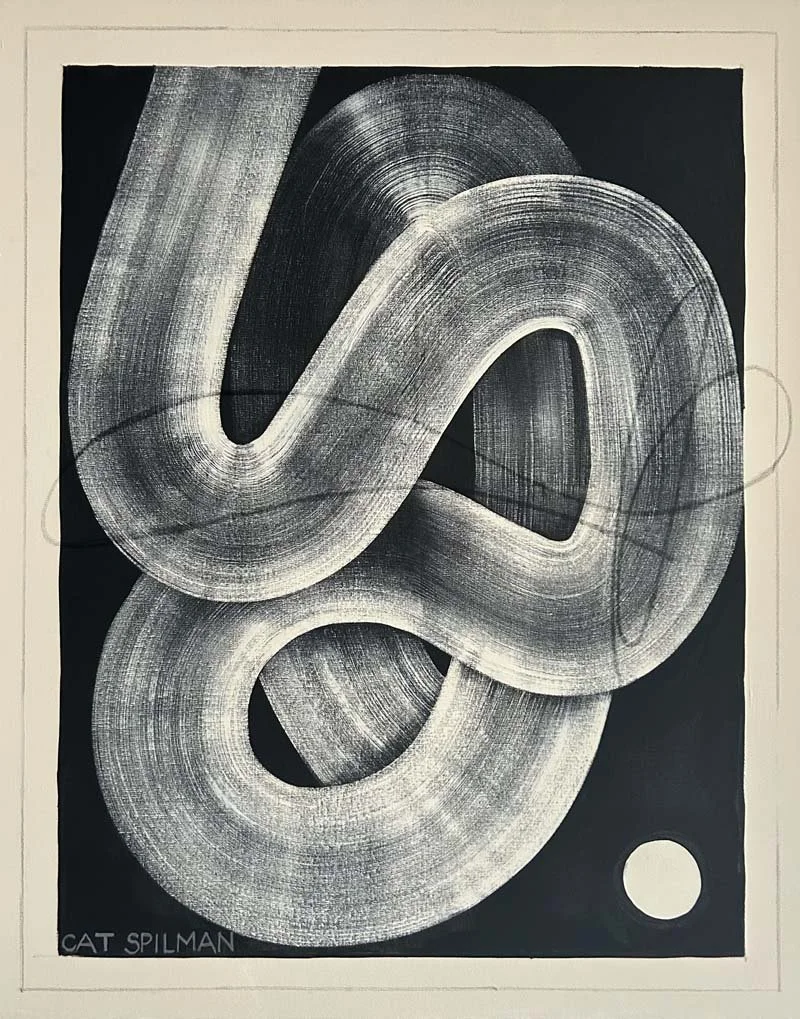
I have a solo exhibition opening in London in a couple weeks and a group show opening in NYC in December, so I took a week off. The work for those shows was all about my pregnancy and early postpartum period this year - the physical and emotional changes. I’m heading back into the studio this week to start work for a solo show in NYC in May.
When viewers see your paintings, what emotions do you hope they experience?
I think all art is about connection of some kind. My paintings are the bits of myself I’d like to share but am too shy to say with words, so when people see them I hope they recognise a bit of themselves or their stories. I hope there’s something human and warm.
Which artists, past or present, would you like to meet, and why?
The first person who came to mind was Sister Corita. I grew up with her work in our house and I think she and her energy would be inspiring. I’d also love to meet Barbara Hepworth. I’m so interested in female artists and especially those who were or are mothers.
Do you draw inspiration from music, cinema, or other disciplines?
I’m inspired by lots of things including design, classic cinema, dance, music, art and people. People are horrible and wonderful and ugly and beautiful and it’s all very interesting.
What is it about the community in London that keeps you inspired?
A great thing about living in London is the immediate access to so many exciting galleries and artists. I’m very lucky to be able to go out to openings Thursday evenings and remind myself of the world outside my studio and that the effort of creation is wide and ongoing and worthwhile.
Can you describe a project that challenged you creatively or emotionally—and how you worked through it?
My upcoming exhibition in London is with Rhodes Contemporary Art and we first discussed the show in January. I was only six weeks pregnant, but before the meeting that morning I’d started bleeding and thought I might be miscarrying. I was very lucky to end up with a healthy pregnancy, but because of that day my feelings about the baby and the show were intrinsically linked. I spent nine months painting my feelings about my body changing, my anxiety, my hope and my joys. It’s the most personal, revealing and cathartic collection I’ve ever made.
Tell us about the important teachers and mentors in your life.
My mom was my earliest teacher and creative influence. She taught me about form and shadow, but she also taught me the merit of creativity. Since her, I’ve had a lot of teachers, at Maryland Institute College of Art, at SVA, at Central St Martin’s - they’ve all taught me perspective and breadth and history.
Does being in nature inspire your art or your process?
I have many memories of the beauty of the natural world but I can’t say it’s something I paint about.
In a world of infinite, digital imagery, what is the importance of the physical, handmade act of creation?
I have a real reluctance to interact with AI and I’m afraid I can’t see any good coming from it in terms of human creativity. We’re losing our patience, our self reliance and our ability to communicate. Art made my humans is more important than ever, not just to make but to experience. It takes time and intention and craft l and reminds us who we were before we had screens in our faces all day.
Exploring ideas, art and the creative process connects me to…
both to myself and to anyone who takes the time to experience or interact with my work. Art is a conversation shaped between the maker and the viewer and it’s something new every time.