

Correggio-based artist Giulio Zanet on the cognitive practice of painting, the necessity of a distant horizon, and the deliberate relinquishment of control.
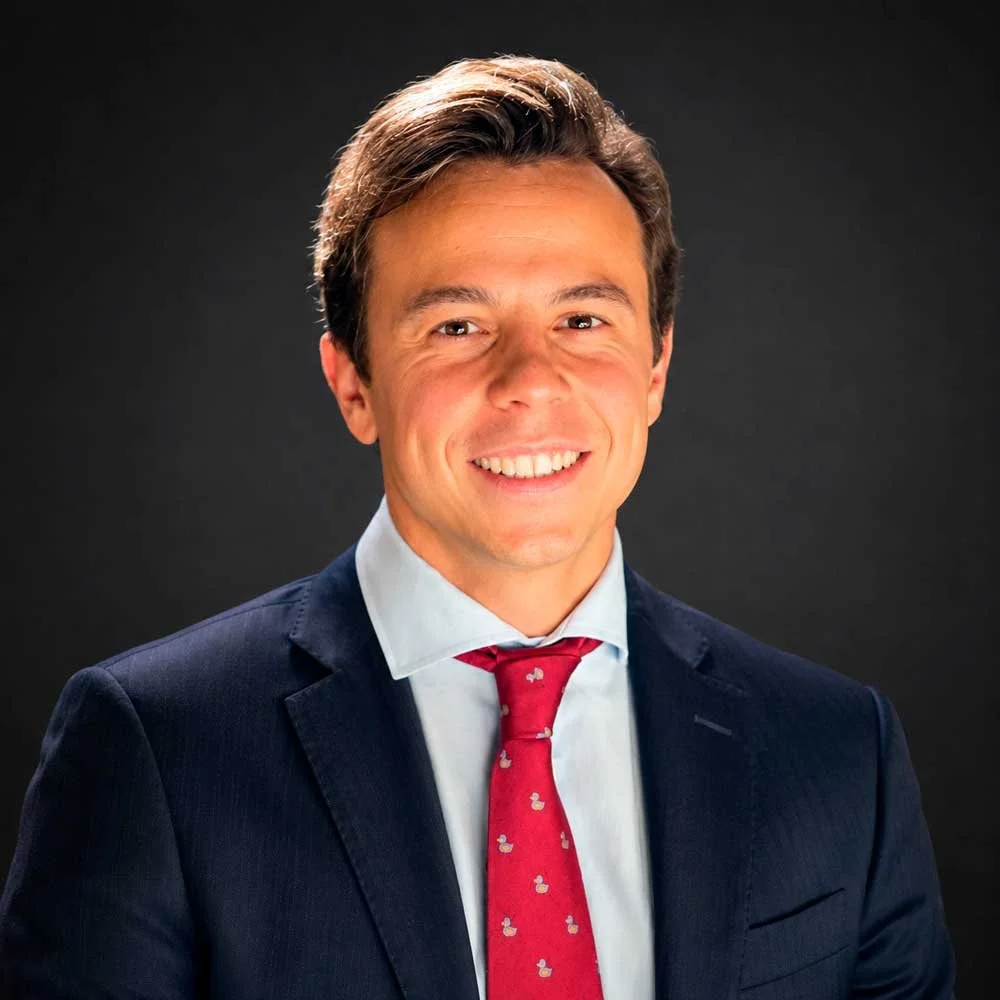
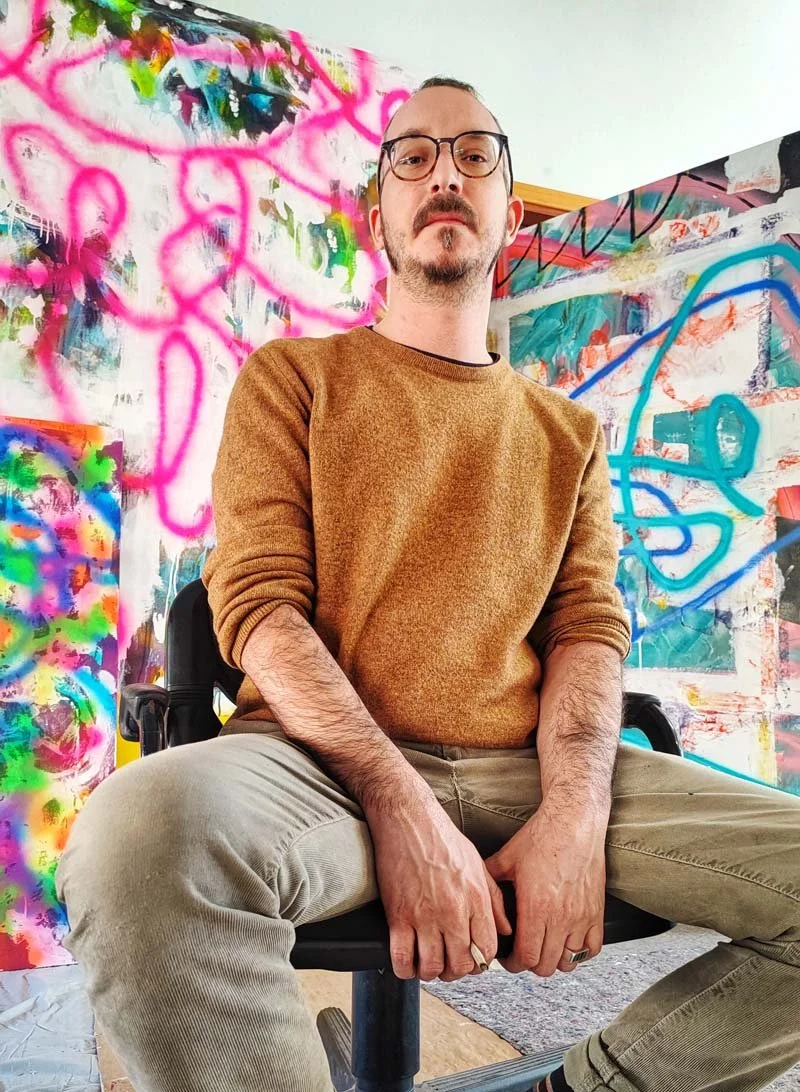
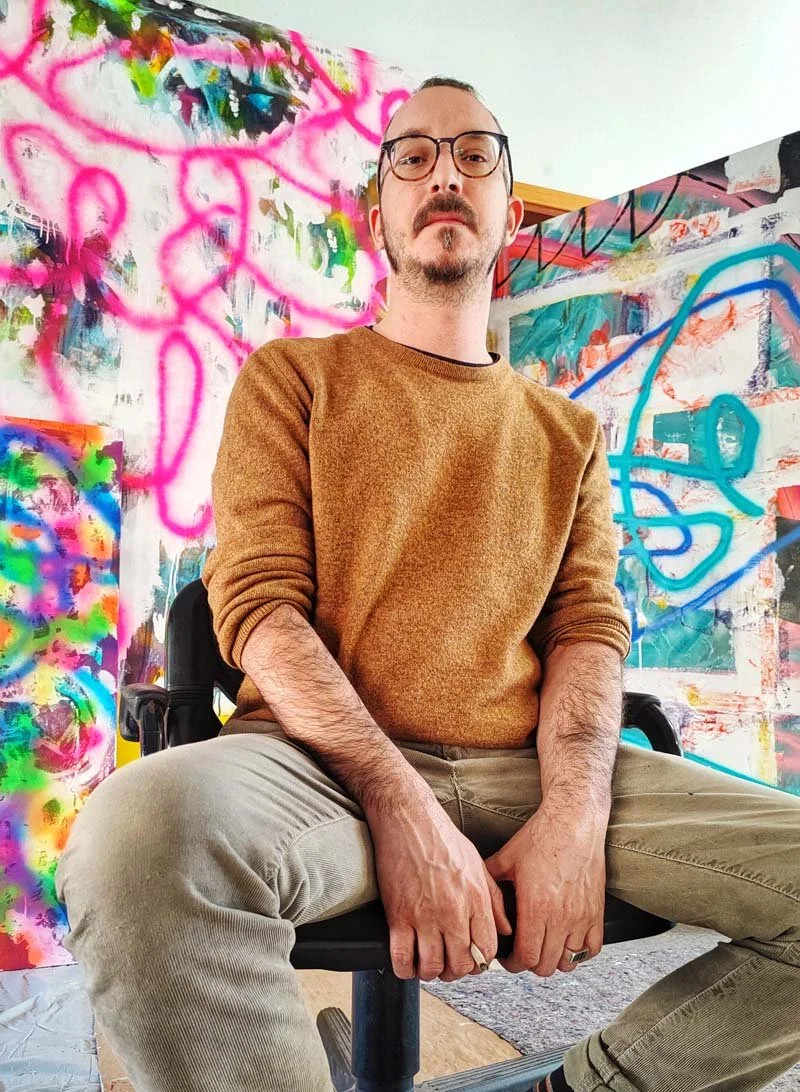
Giulio Zanet (b. 1984, Colleretto Castelnuovo) is an Italian artist whose research explores the boundaries of aniconic painting, sculpture, and environmental installations. After a formative decade in Milan, he now lives and works in Correggio. Zanet has exhibited extensively in major institutions across Europe and China, including the Liu Hiusus Art Museum in Shanghai and Riso-Museo d’Arte Contemporanea della Sicilia. His practice is characterized by a "voracious" intake of literature and human sentiment, translated into abstract gestures that prioritize the visceral struggle of the material over recognizable form. @giulio_zanet
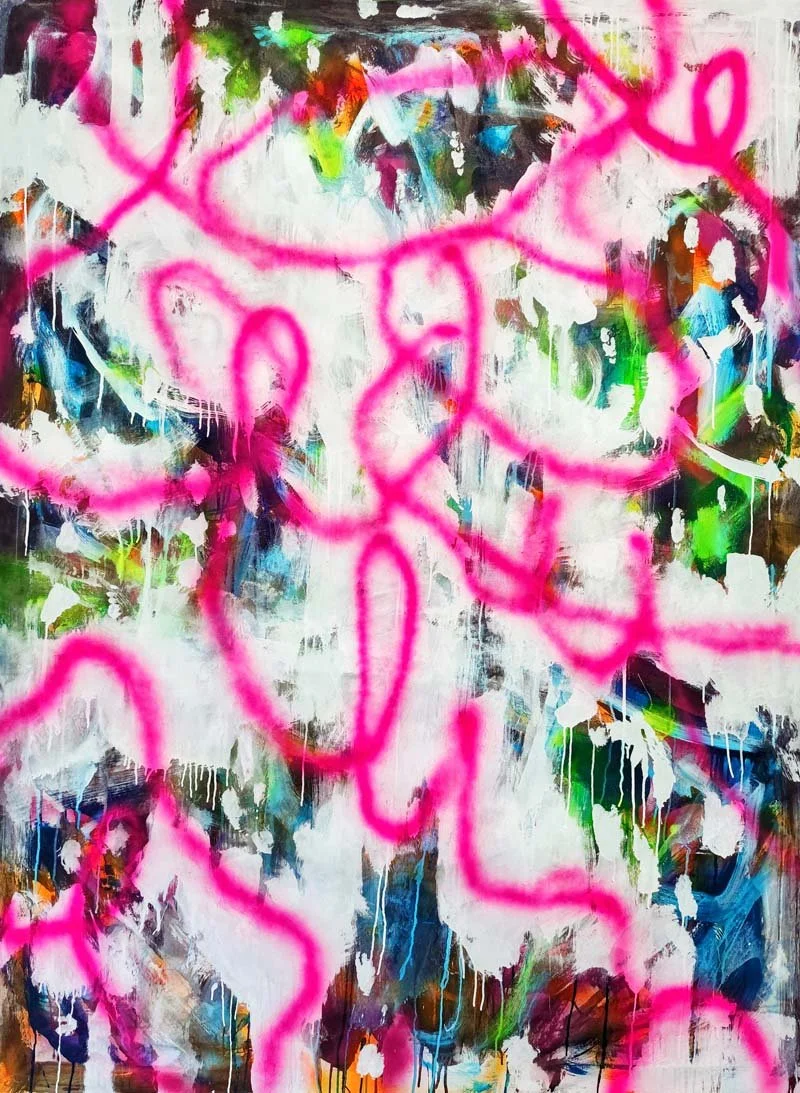
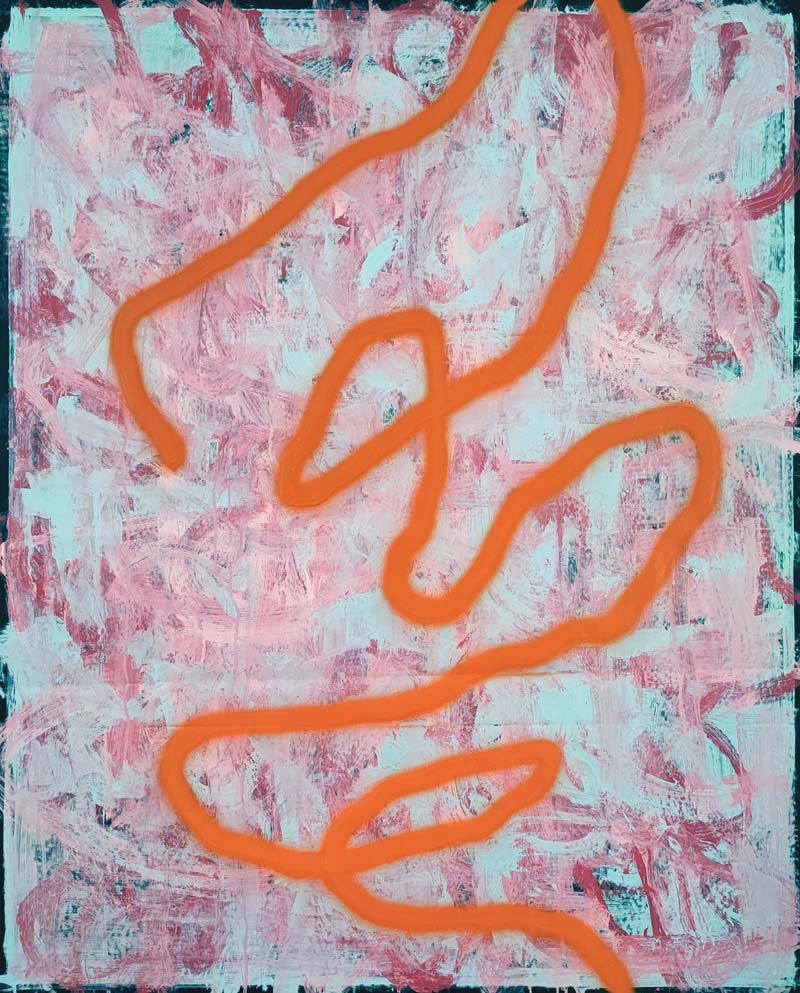
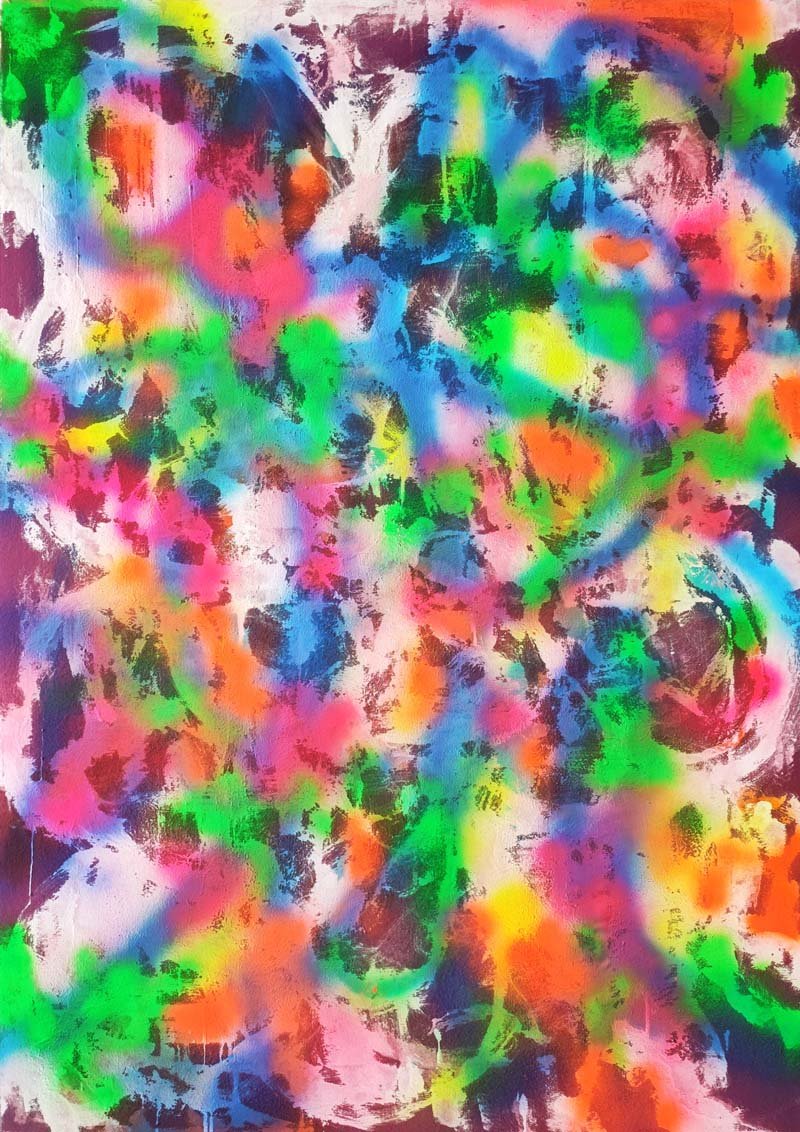
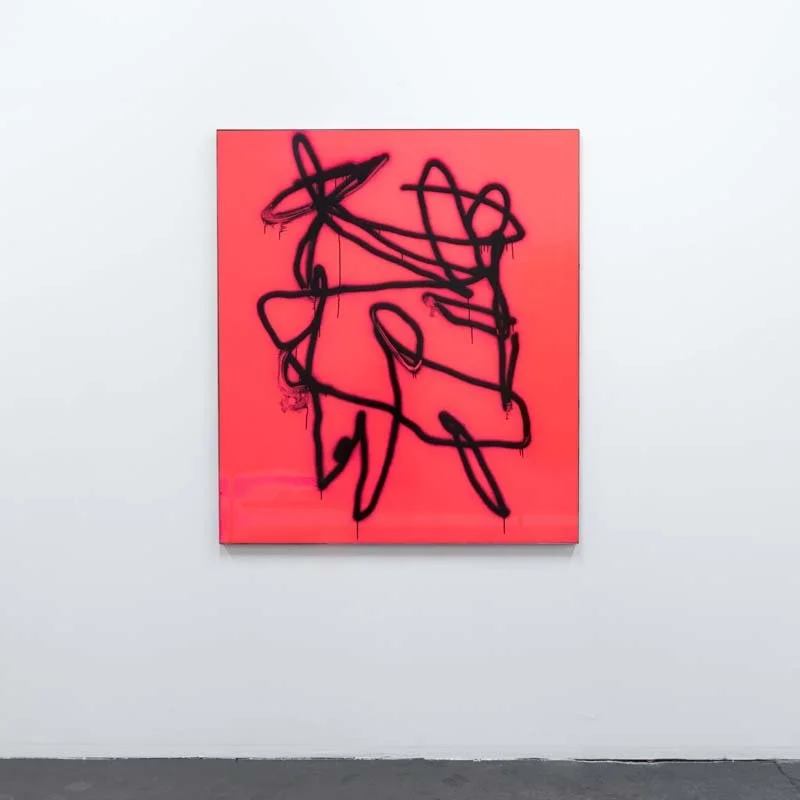
How did your upbringing in Piedmont at the foot of the mountains shape your imagination and your approach to art?
I was born and raised in a small town at the foot of the mountains, in Piedmont. I had a happy childhood surrounded by nature and a growing desire to escape as I grew older. At 18, I moved to Milan to satisfy my desire for the city, and ten years ago I returned to a smaller town, in Emilia-Romagna. Nature certainly has a profound influence on me; I need it; I need to have a horizon at my fingertips.
Can you recall a moment when you recognized art as your chosen path?
I started painting during high school, around 15 or 16, and soon realized I couldn't do without it. I had found a way to express what was inside me. And then I decided I wanted to be an artist during my years at the Academy of Fine Arts. Over time, art, besides being a way to express what was inside me, also became a cognitive practice, a way to discover myself and the world. Artistic practice has become a way of being in the world.
Describe a typical day in your studio.
I go to the studio almost every day; I spend time there, and I don't always work. But it's a place where I feel good. I'm surrounded by my friends (my paintings) and isolated from the rest of the world. To get there, I take a twenty-minute walk in the park with my dog. After years of having a tiny, dark studio, I finally have an open-plan space that's large and bright enough. I work on every material I have available: paper, canvas, PVC, metal, wood, fabrics... I love changing the medium and experimenting with how the material, and especially my gestures and movements, change and adapt. Every time I begin a new work, it's almost as if it were the first time.
Tell us about your current projects and the themes of abstraction driving your work.
I'm not working on a specific project right now, and these are the most beautiful and challenging times for me. I feel extremely free from any goal or purpose, so I experiment and wander without any real direction or destination. I try to distance myself from the figurative as much as possible, so in my abstraction I try to destroy any recognizable form. What guides me are ideas and suggestions relating to the human being, to human feelings. Sentiments and sensations. I try, through images, to explore the complexity, ambiguity, contradictions, and multitudes of the human being.
When viewers experience your work, what emotions or ideas do you hope they connect with?
I think art should give you a moment of pause, allow you to think or ask yourself new questions, look from a different perspective, shift your gaze. Pause and wait. In some way, give you a break from the world. To help you re-enter the world with ever-new and more trained eyes. Art, indeed, should be a tool to help you read and understand the world. So when people look at my work, I hope something similar happens. Because another thing I hope comes across in my work is the joy and enjoyment I get from making it.
Which artists, past or present, would you like to meet, and what would you like to discuss with them?
The artists who have been important to my career over time include Schiele, Bacon, Schifano, Kippenberger, Hockney, Sarah Cain, Accardi, and De Kooning. There are many more, of course. I'm very voracious, I store a lot of stuff and let it settle inside me, only to release it again after I've digested it.
Do you draw inspiration from literature, music, or other disciplines?
Literature inspires me a lot, because I read a lot, especially fiction. Stories, like painting, are another way to explore the human soul. Here too, it's about inspiration; it's not that my reading translates into painting, but everything I read, listen to, watch, and experience certainly inspires what I then produce in the studio.
What is the significance of the sense of history in Correggio to your creative practice?
One of my favorite things about where I live is the proximity to both the countryside and the city. I walk through the park every day, and it's a refreshing change of pace, and I can reach several cities in just over an hour. I really like the daily routine here; it has a slow, relaxed pace that allows me to focus on my work with few distractions. The downside is that there's less opportunity to interact with other artists, so my partner and I decided to launch a small residency program last year, where we invite an artist to live with us and work in my studio.
Can you describe a project that challenged you creatively or emotionally—and how you worked through it?
A very intense project was LA BOTANICA DELLA PIETRA. I was involved in a festival on the sacred and nature taking place in the Tuscan-Emilian Apennines, and I decided to create a sort of herbarium of plants that grow in that area. It was difficult to approach the figurative dimension, because I haven't practiced it in a long time. I also created giant prints of photographs of snow falling on those same lands, digitally reworked. The entire project was also the fruit of extensive meetings and workshops with the local community, who shared valuable information and stories with us.
Tell us about the teachers or mentors who influenced the artist you are today.
Unfortunately, I struggle to answer this question because I haven't had the fortune of meeting true masters. Certainly, some teachers, both in high school and at the academy, have left me with fond memories, and many encounters with other artists have shaped me, but I couldn't identify a true mentor.
Sustainability in the art world is an important issue. Does being in nature inspire your art or your process?
As I've already said, nature is a great source of inspiration for me. For me, a walk in the woods or in the mountains is incredibly rejuvenating. It makes me feel good. And the wonder of having the opportunity to let my gaze wander across a wide, distant horizon changes not only the way we see things, but also our thoughts. In my own small way, the theme of sustainability is linked to recycling, tending to use recycled materials as a support for my works—materials that would often be thrown away, but which I instead give new life to.
In an era where digital tools like AI are redefining reality, what is the importance of the physical, handmade act of creation?
I must admit I'm not very tech-savvy, but AI can replicate aesthetics while being incapable of replicating the soul and intention behind a work. Human art is the crystallization of a story, of an irrational emotion, and this authenticity creates an irreplaceable empathic resonance. Furthermore, manual labor reaffirms our connection to the physical world. Imperfection, the human touch on the canvas or material, attests to the effort and presence of the creator. In a digital-dominated future, slow, intentional, and tangible work will become the true cultural luxury.
Exploring ideas, art and the creative process connects me to a constant search for loss—a deliberate relinquishment of control, a surrender and indulgence of one's deepest nature. Each layer, each mark, is a step in this creative disorientation that always leads to something unpredictable and authentic. For me, painting is a continuous investigation of representation, or rather, its absence. My painting explores how an image can exist without explicitly representing something, becoming a mirror for the projections, sensations, and thoughts of the viewer.