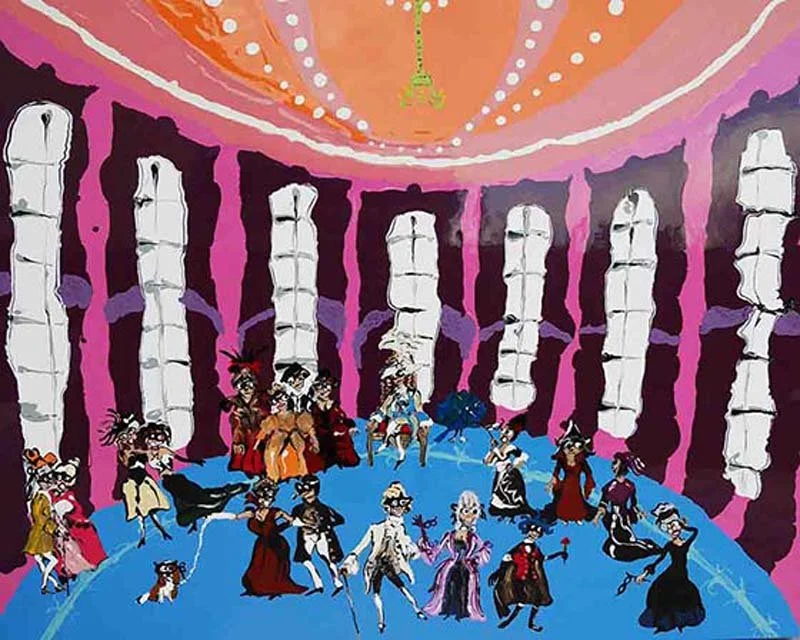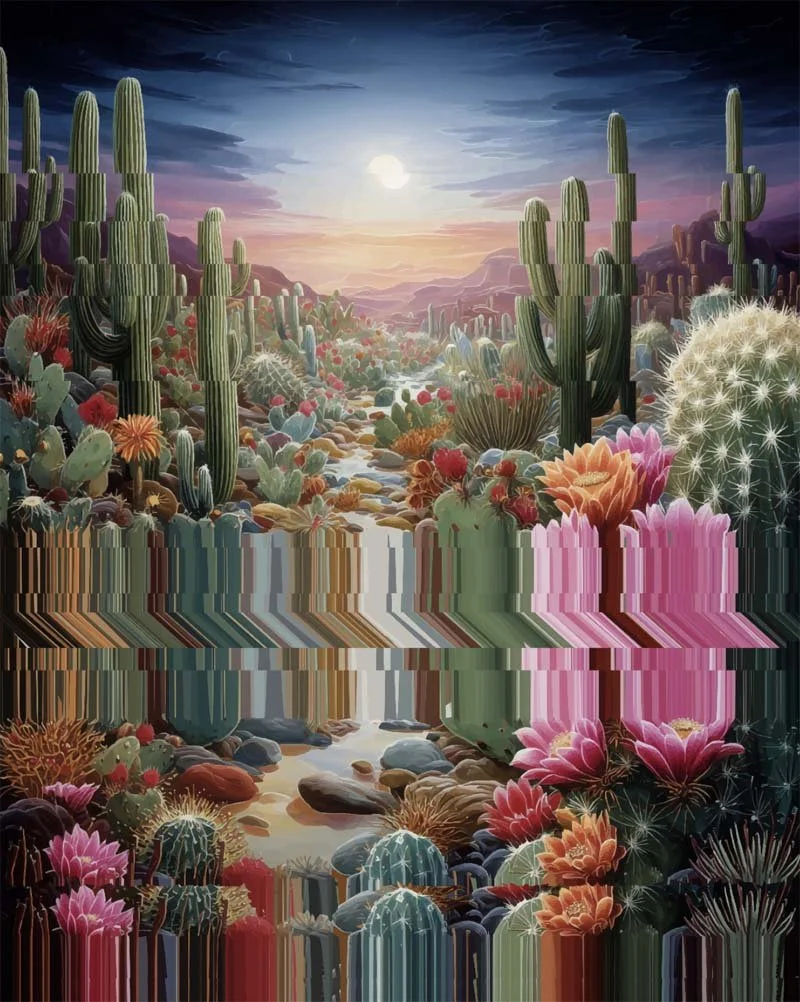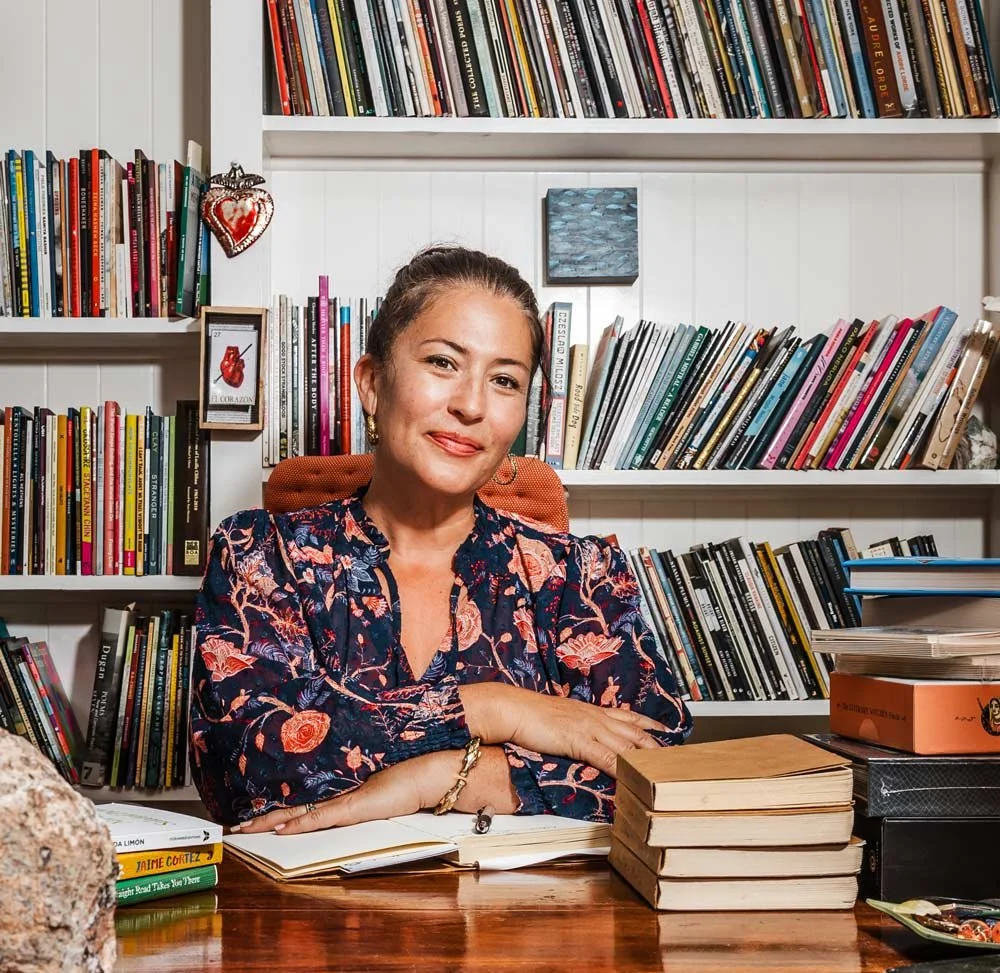


Artist Giuseppe Di Leo discusses four decades of drawing, the Italian diaspora of Montreal, and the Buddhist principle of mono-no-aware.
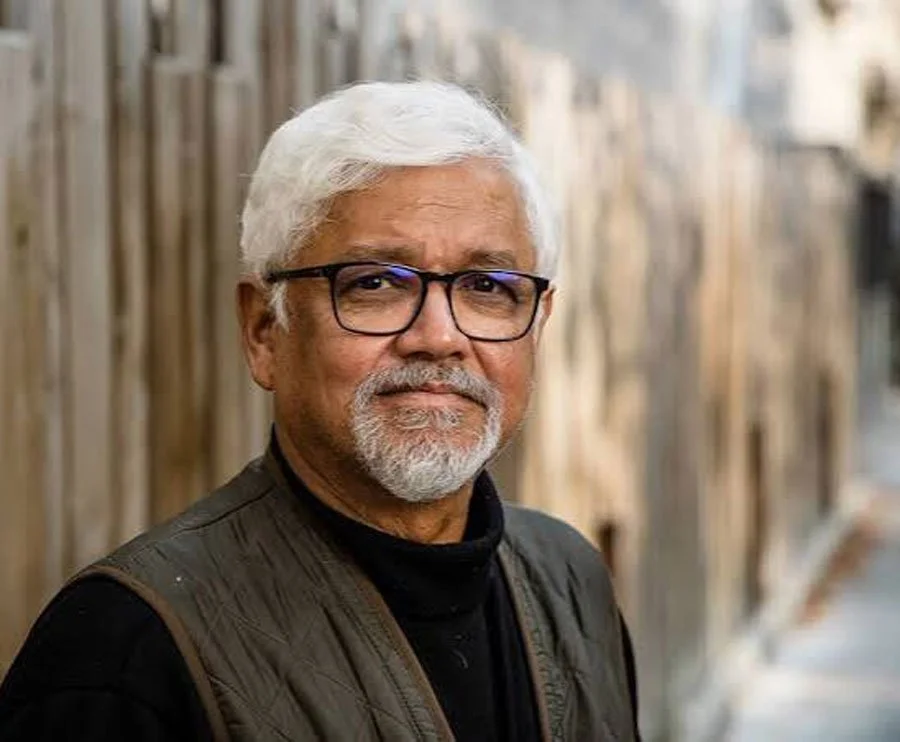
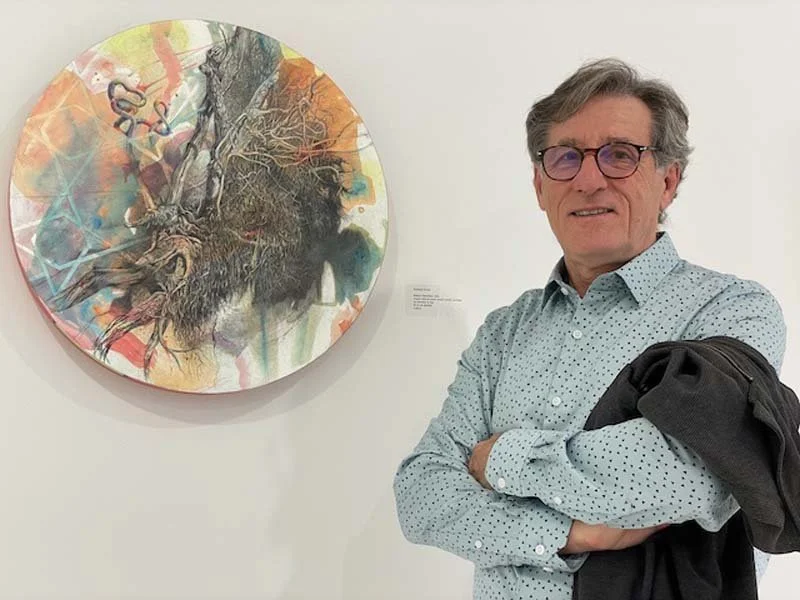
Giuseppe Di Leo is a Montreal-based visual artist whose practice in drawing and watercolour spans over four decades. Born in Foggia, Italy, and raised within the Italian diaspora of Montreal, his work is deeply informed by themes of displacement, family mythologies, and the natural environment. A former professor at Dawson College and Concordia University, Di Leo co-founded the Warren G. Flowers Art Gallery. His recent work investigations the Buddhist principle of mono-no-aware, exploring the aesthetic value of change and the transient nature of the environment through complex, labour-intensive graphite and mixed-media drawings. @giuseppe.dileo.drawing
How did your upbringing in the Italian diaspora of Montreal influence your art and your thinking about the world?
I was born in Foggia, Italy. At the age of three, my family, following my grandparents, immigrated to Canada in the late 1950s. They settled in a predominately Italian diaspora in East-end Montreal where their values were respected and felt welcomed among their own. Like the majority of Southern Italian immigrants they were overwhelmed with challenges that come with adapting to a foreign world. They resolved to hold onto their social customs and religious beliefs as the means to protect and preserve their cultural identity. Frequent correspondence with the relatives we left behind was emotionally uplifting and by virtue helped to sustain our heritage and language. Anecdotes about hardships and endurance, as well as fabulous folktales recounted by my nostalgic grandparents about their life in Italy vividly coloured my imagination and fostered a deepened appreciation of not only their sacrifices but of their longing of their native country.
In the years that followed my mom with only a fifth-grade education and skilled as a seamstress earned a frugal living sewing dresses for clients from our home basement. I watch her create: modify patterns for size, cut cloth, match fabric colours, sew it all together and display it on a mannequin until the client arrived to try it on. She produced something grand out of mere parts that made the wearer comfortable and appear successful. The dress, like everything she went on to make later—party dresses, formal gowns, communion dresses, Mod-Squad shirt and vests for me and my kid brother to the superbly elegant wedding dress fashioned for my sister—all of it went out into the world for everyone’s eyes. This narrative charged with social and political drama and veiled in romantic idealism was the foundation which inspired me to cultivate a work ethic and a creative direction.
As a first-generation Italo-Canadian, I benefited from growing up and being educated amidst both anglophones and francophones that populated the Montreal region. I‘ve learned to be proud of my heritage but privileged to be living harmoniously in both worlds weaving in and out, learning, integrating, and pulling from each perspective. Such experiences have made me confident, deeply influenced my thinking, and fueled my creative work conceptually. Autobiographical themes including religion and family mythologies, issues concerning displacement, loss and assimilation, references to lessons of Italian art, food sovereignty, and the natural environment, have been significantly influential subjects dominating my drawings and watercolours over four decades.
Can you recall a moment when you recognized art as your chosen path?
At a very young age, drawing was my way of recording an imaginary world and by virtue a manner of self-actualizing. This “talent” as many around me referred to while I was growing up positioned me as being special in that my ability to draw from life was an extraordinary gift. It was confidence-building and made me feel present and special and thus motivated me to excel in that domain. This ability was really useful in high school because I wasn’t much enamored with the rigors of playing sports nor with the maths. It was in my senior year in high school when I decided to pursue a life as an artist. Although at first I considered becoming an illustrator because I believed it would have been easier to sustain a living, but after having taken art correspondence courses for several years in the commercial field I realized it was too limiting. So, despite the uncertainties that come with the territory I made the plunge to go all in into the “arts plastiques” as it was called then when I was accepted into the Fine Arts program at Dawson College. The visual arts grounded me in my world. It was the best way I knew how to be relative and to contribute to the visual culture of my society. As a form of communication and communion, I wish to share my visual voice and hopefully leave a lasting impression about who we are and what we can do to enrich our world. Art can help, among many other things, to building bridges with each other.
Describe a typical day in your studio.
Now that I have retired from teaching after 36 years, I am free to maintain an uninterrupted and consistent studio practice. Having a home studio affords me the luxury of going in at any time of the day even for brief moments to contemplate on my days production or continue working on research-based work. I like to begin early, at 8:00 am, turn the radio on to classical music, and aim to work for 6 hours, (and occasionally 8 or 9 hours) solely dedicated to drawing. Given my drawings are labour intensive I need to work at least 4 days a week to sustain a production of new work to fulfill exhibition requirements. On other days, depending on the state of progress, I may sketch out new ideas, read contemporary and historical art journals, write up artistic statements for grant applications and exhibition proposals, or answer interview questions like I’m doing now. I work for 4.5 hours in the morning followed by 2 more hours after a lunch break in my garden weather permitting. This gives me time later in the afternoon to deal with prosaic activities such as gardening, house maintenance, exercising, etc.
As a practice, admittedly somewhat quirky, I continue to log my daily studio hours to keep track of how long each work takes to produce. It is a motivating incentive that keeps me on track and helps when asked by viewers and students pointing to a drawing on display “How long (hours) did it take you to create your drawing? I pause and answer: “All my life!” But then kidding aside, I do tell them the number of hours anyway. Overall graphite on paper has been predominantly my drawing medium. However colour pencils, dry pastel, charcoal and liquid charcoal as well as acrylic wash and watercolours have been introduced into the mix over the years. Found or crafted three-dimensional objects have occasionally found their way into the work when thematically pertinent.
Tell us about your recent "Rottura" series and the themes of impermanence driving your work.
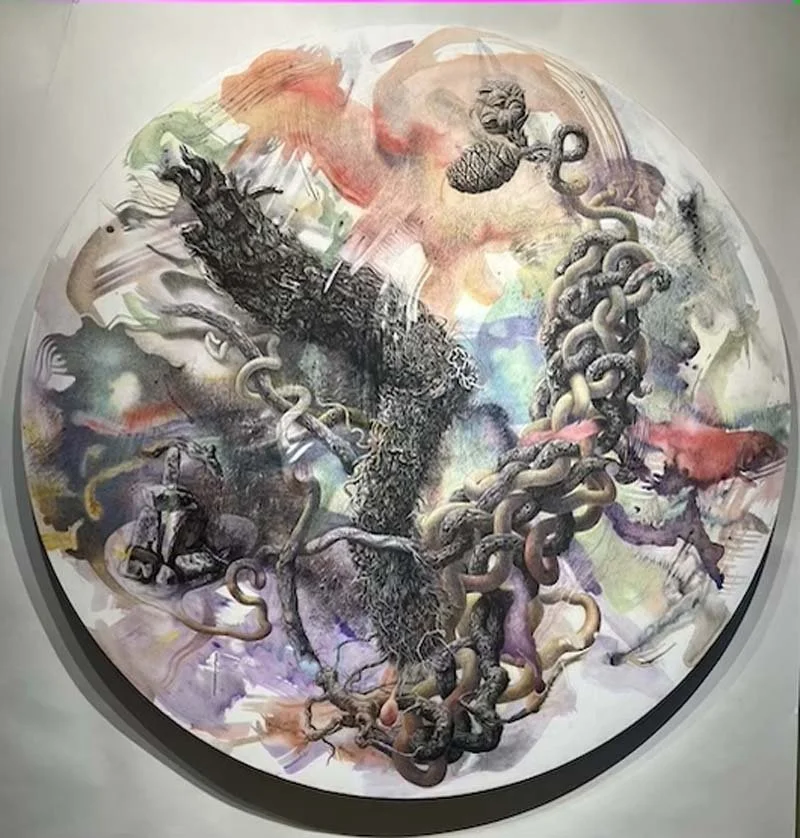
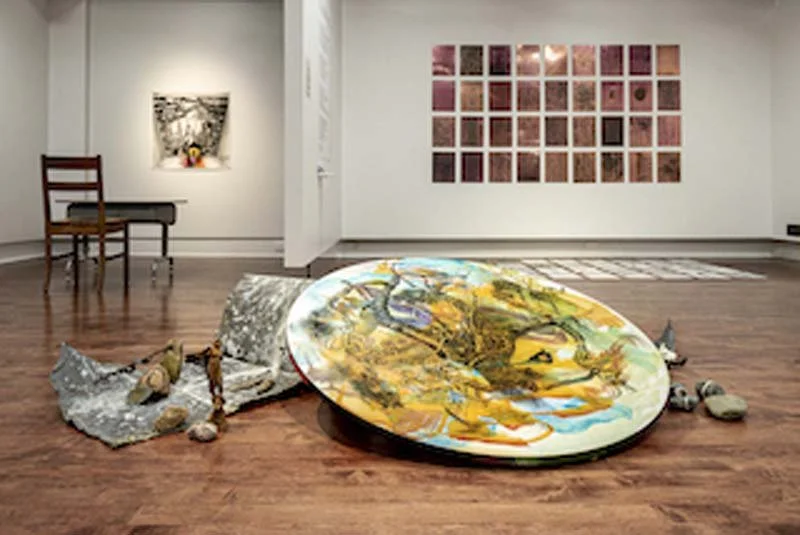
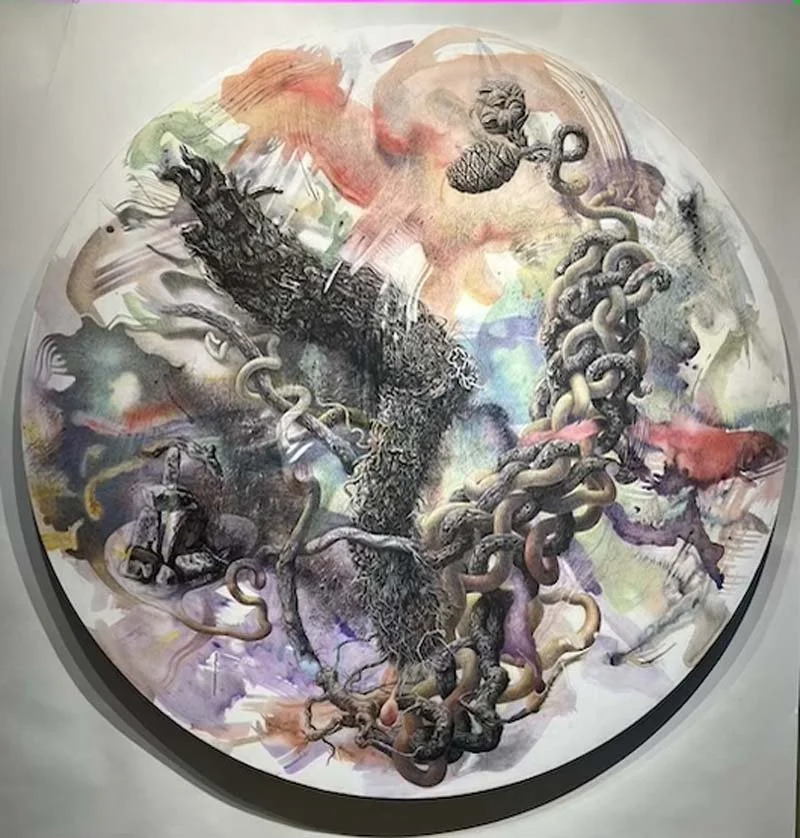
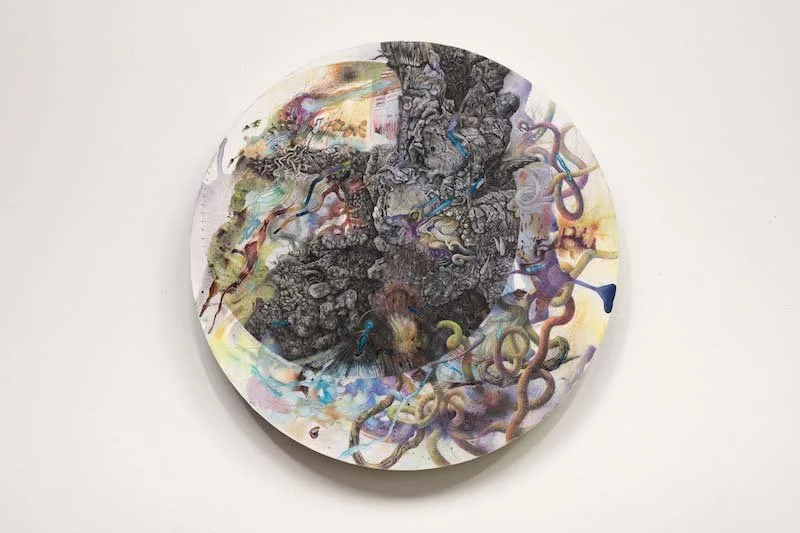
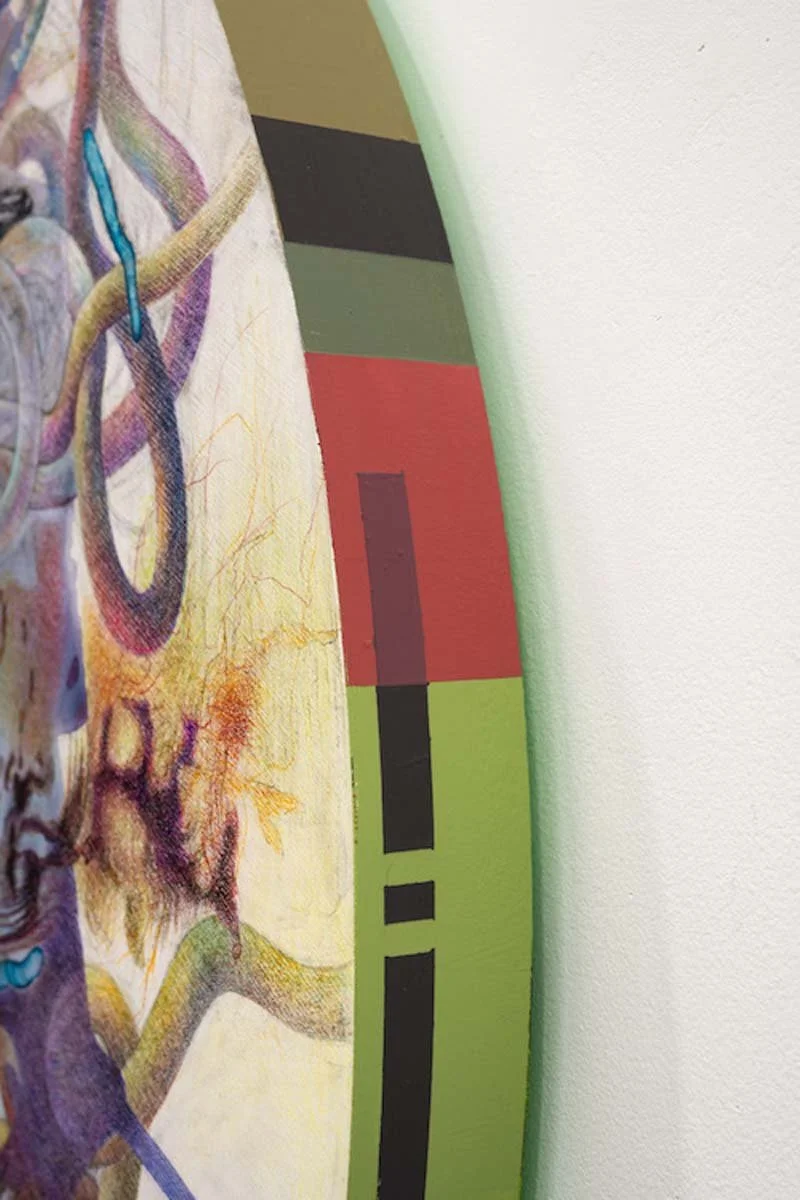
Aligning with my interest in observing the temporal aspects of the natural environment while hiking in sensitive forested areas—in southern Quebec and at the bio-diverse hills within the Alhaurín el Grande region in southern Spain—my drawings allude to aspects of ephemerality. Accordingly, in the Buddhist principle of mono-no-aware, degeneration is a condition of impermanence that acknowledges and appreciates the aesthetic value of change over time and the transient nature of the environment and everything existing in it. Nature’s regenerative magnitude as reflected in plant life and other living organisms can teach us about our fallible nature and adaptive potential. The new drawings attempt to characterize this sentiment. Rottura is a serie of drawings depicting degenerated upturned roots of collapsed trees co-habiting with enigmatic forms in a transient and vivid pictorial space. Rottura (breakage), an Italian term, conveys separation such as in fracture or collapse. In Rottura this notion aspires to a breaking away from the confinement of antiquated status and opens a transitional space to enable a regeneration of imaginative possibilities and an enlightened state of being. Through both representation and abstraction, I create tumultuous environments from observation, memory, and imagination where natural organisms and objects appear displaced or entangled but share a contextual space with one another. Combined with applied materiality – graphite, colour pencils, pastel, charcoals, liquid charcoal, acrylic paint, lead sheets and found objects – the effect speaks to art’s capacity to generate reactions that are sensorial, evocative, and enabling.
When viewers experience your art, what emotions or ideas do you hope they connect with?
It is my hope that the drawings together will provoke conversations and engage viewers to consider questions about human complexities and their inter-relationship to the natural environment and everything existing in it.
Which artists, past or present, would you like to meet, and what would you like to discuss with them?
Artemisia Gentileschi, Michelangelo, John Singer Sargent, Winslow Homer, William Kentridge, Giotto, Caravaggio, John Chambers, Richard Diebenkorn, Francis Bacon, Courbet, Constable, Frida Kahlo, Camille Claudel, Kerry James Marshall, Kara Walker, Julie Mehretu. I would not necessarily ask questions. I would prefer to sit in their studio and watch them work. I know I would have a greater insight and undoubtedly learn considerably more this way.
Do you draw inspiration from photography, literature, or other disciplines?
Definitely from the visual arts both historical and current. From photography, literature, lectures, and the natural sciences, as well as from ethnographic woven material and culture of Central Asia. I am inspired by the depth of diverse creative forms and their impact to illicit emotional and intellectual aspirations that transcends apathy but acknowledge the value of harmonious co-existence.
What is the significance of the cultural landscape of Montreal to your creative practice?
Montreal is a major city situated in the predominately Francophone Province of Quebec, Canada. Its history is steeped in explorations and exploitations between European French, British and indigenous peoples and has been the earliest significant settlement in Canada. Although French is politically the established language spoken by the majority, English institutions have socially maintained their place. Up until the late 1960s Montreal was established as the commercial and cultural capital of Canada. Its francophone heritage likened to European temperament is the only sort of its kind in North America. Immigrants, especially from French-speaking countries, have been attracted to Montreal because of its vibrant multiculturalism. Despite differences in attitude, Montreal’s diverse ethnic mosaic enhances cultural development. Montreal Museum of Fine Arts, founded in early 19thc. is the oldest in the country while private galleries followed soon after well into the 20thc. The Museum of Contemporary Art, the first museum to show case national and international contemporary art opened its doors the mid 60s. As well most of the Montreal boroughs and outlying districts have exhibition galleries connected to a theatre and library called Maison de la culture that are funded completely by the city as well as the province. These non-commercial and professionally organized centers offer a space for emerging and established artists to make their work readily available to communities free of charge. Art schools in either languages are abundant while nationally reputable colleges and universities offer the most affordable Fine Arts degrees in the country. It is no wonder the artistic community is animated despite commercial setbacks. The same is true with the performing arts and the contemporary music scene such as the international Jazz Festival of Montreal, and Film Festival. Indeed, Montreal may have lost its commercial edge due to political strife, but its rich cultural base is still regarded as Canada's cultural hub.
Can you describe a project that challenged you creatively or emotionally—and how you worked through it?
I can't think of any in particular. All my projects are challenging and sometimes, excruciatingly demanding. This is why I love working on them and through them. Otherwise what's the point? It is a self-actualizing process with a purpose. Sitting to observe the work critically after having made something is not unlike having a dialogue with the work. I find myself engaged in a communicable visual experience with the work that over time and with patience, the work responds with evocative and creative possibilities. It tells me to trust the uncertainties, to accept doubt, and resist conformity. This is mutually life affirming and once it has a life of its own, when I am empty and it is full, then that’s the moment to move on to the next challenge.
Tell us about important teachers/mentors/collaborators in your life.
I have had several, in college (post university level) and in university. Their advice and encouragement sustained me during my formative years and still resonates today. Each professor's background and teaching attitudes were different and that made it all the more striking. Their methods professed a formidable work ethic attitude as a critical path and left the emotional component out of the equation; tough love. This meant working consistently hard at experimentation and exploring new territories, honing technical skills with bravura, learning from your predecessors, being critical of your work, and remaining vigilant and responsible for what you have created. To believe in what you are creating and forge through regardless of trends, was your responsibility alone, no one else's.
Sustainability in the art world is an important issue. Does being in nature inspire your art or your process?
Knowing oneself through a connection with nature is a realization of an unspoken belonging, simultaneously familiar and unknown. An interaction with the natural environment through peregrination – while walking, collecting carrying, digging, planting, and recording, while climbing and observing – can be transformative; it can result in therapeutic benefits and compassionate encounters with other sentient beings. Akin to a performance, being attentive to and experiencing natural phenomena suggests a reciprocal process. While it highlights the interconnectedness of caring for the non-human and human, it also can empower us through a deeper knowledge of our natural environment. It can provoke a deeper awareness of our responsibility to and stewardship of the natural world, as well as of the transience and fragility of life, the pathos of death. My new work is directly inspired by natures forces. During the Covid lockdown period I took comfort in hiking and observing natural phenomena in a wooded region near my home. The exposed boulders entangled in the root system of a multitude of uprooted trees I observed along the trails become a metaphor for the shocking discoveries of unmarked graves of indigenous children unearthed during the Covid period on the grounds of residential schools throughout several Canadian provinces. Rottura / Autopsy of Unnatural Forces was inspired by this sobering revelation. I was struck by the pathological commonality of the potential brute force of root systems and the scandalous disclosure of our failed humanity.
In an era where digital tools like AI are redefining reality, what is the importance of the physical, handmade act of creation?
I do not use AI nor have I experimented with it. We have come to accept there is significant benefit in its functionality and technological applications in many domains and at the same time we are also aware of the dangers of its misuse. It cannot think or create for me nor will I ever allow it to. I do not see how it can produce a genuine and authentic visual work with soul embracing the diverse range of emotional experiences and aspects of personal forms of aesthetic within the human dimension. Human-made art is organic. It is physical as it is intellectual as it is emotional. It grants the creator a space to consider their relational place in the world and react emphatically to conditions of survival, living, and beauty. Embodied language as a result of the practice of carving a thought-provoking space is experiential and never the same twice. Usually unpredictable, the “hand crafted” object can come across as an existential portrait, an aesthetic probe to record, or an act to conger vivid expressions of the imagined and fantastical world of our dreams. In so far as I am concerned, I embrace drawing as the lens par excellence that enables me to see profoundly and relate intimately to the conditions of the human ordeal. In practice I am centered in acknowledging this very notion and in so doing I honor the work of my predecessors and pay respect to the sympathetic viewers who resonate with my work. I don’t see how AI can manifest any of this.
Exploring ideas, art and the creative process connects me to…
a space where the conscience and subconsciousness world are reconciled. It is a romantic endeavor; a form of escape that is transcendental in nature. Once I am confined within its parameters I am lost within that world. Drawing affords me a space to wander intuitively, to be curious, to question and challenge what I see and understand and create a visual response. Drawing takes time. Time is duration. Duration is intimacy. Intimacy is Drawing. It is a means of disclosure and a reminder of what it means to be human. And it allows me not to forget this.