

Madrid-based artist Marcos Lozano Merchán on existential tragedy, the necessity of silence, and beauty as resistance
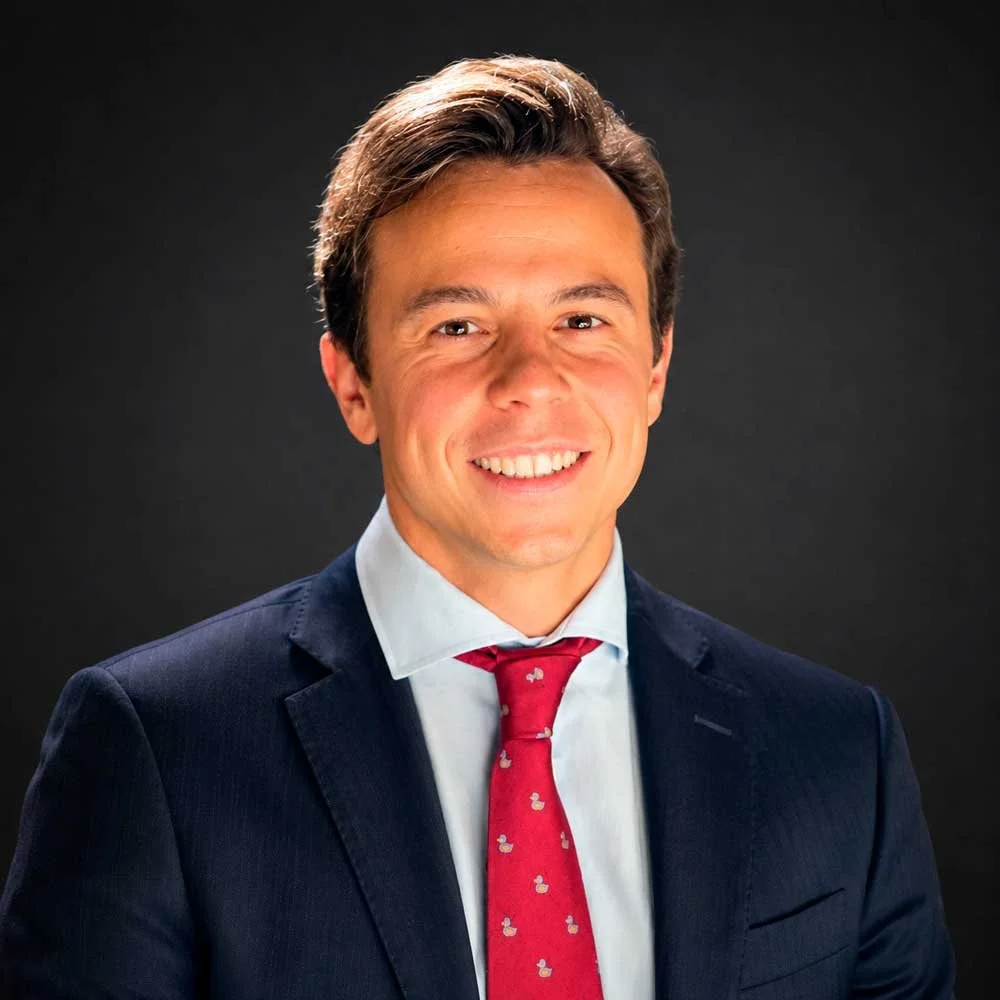
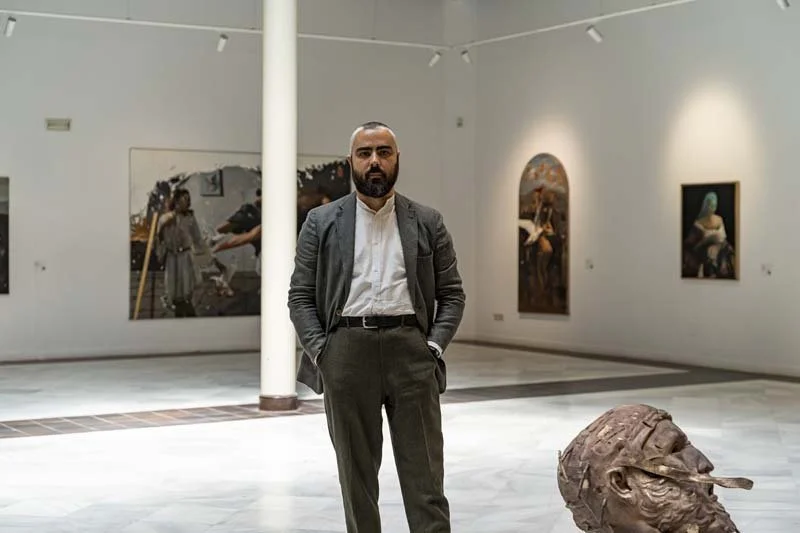
Born in Madrid and currently working on the French Riviera, Marcos Lozano Merchán is a multidisciplinary artist whose work bridges the gap between classical European tradition and contemporary sensibility. Having collaborated with leadership at the Louvre and the National Gallery, his practice explores the intersection of the sacred and the human through painting and large-scale sculpture. @marcos_lozano_merchan
How has the cultural landscape of Madrid shaped your creative vision?
I was born and raised in the city of Madrid in 1990, and this has undoubtedly had a decisive influence on the way I understand both art and the world — perhaps always from a tragic perspective, as has often been the Spanish way of seeing existence since time immemorial, but especially embodied in painters such as Velázquez, Goya, or Picasso, and today in expressions like flamenco or bullfighting. This, combined with the stark sobriety of the Castilian artist, has always led me to understand both life and art as a direct confrontation between feeling alive and facing death.
Can you recall a moment when you recognized art as your chosen path?
Well, I don’t really remember when I first wanted to become an artist — I think I was simply born with it. In any case, my mother’s love for detail and everything my father taught me about drawing from a very young age have always been a reference for me. I believe it grew within me naturally, alongside my family, my brothers, and my parents. That said, I had a very profound encounter with Michelangelo’s frescoes in the Sistine Chapel when I was ten years old. That moment was a true turning point in my life. For me, the importance of the arts is fundamental, because I see the artist as someone capable of seeing beyond death — and who has the duty to tell others what he has seen.
Describe a typical day in your studio and your daily studio practice?
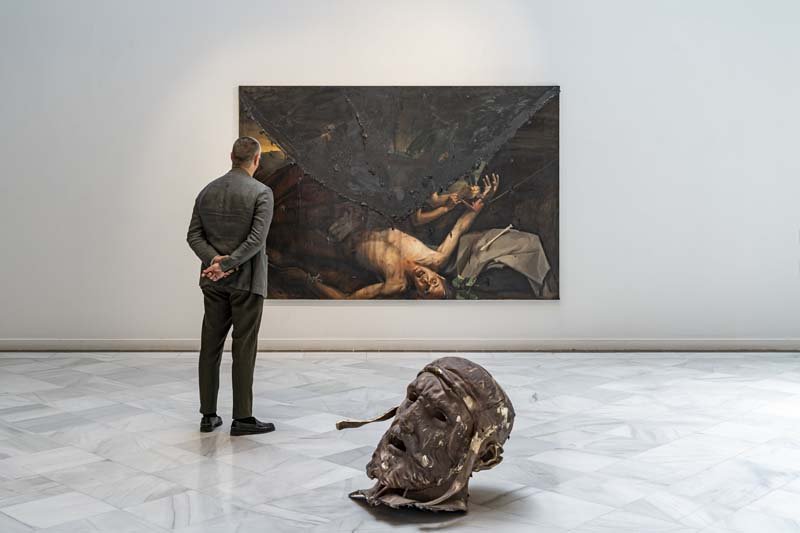
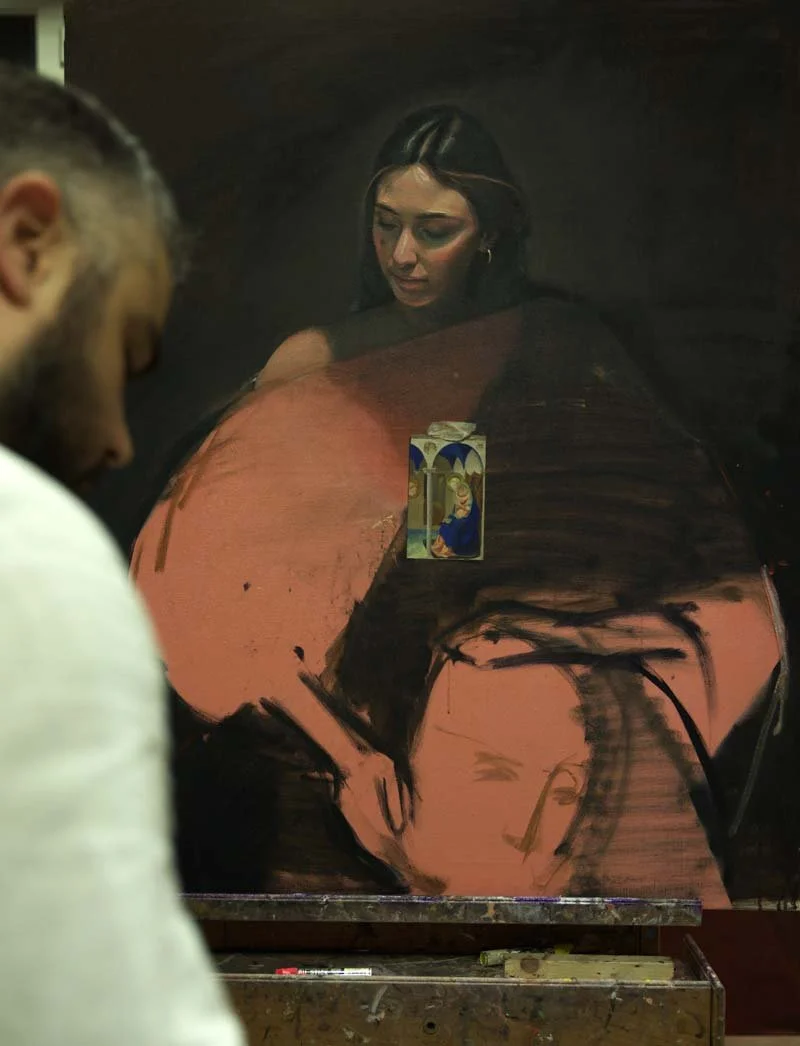
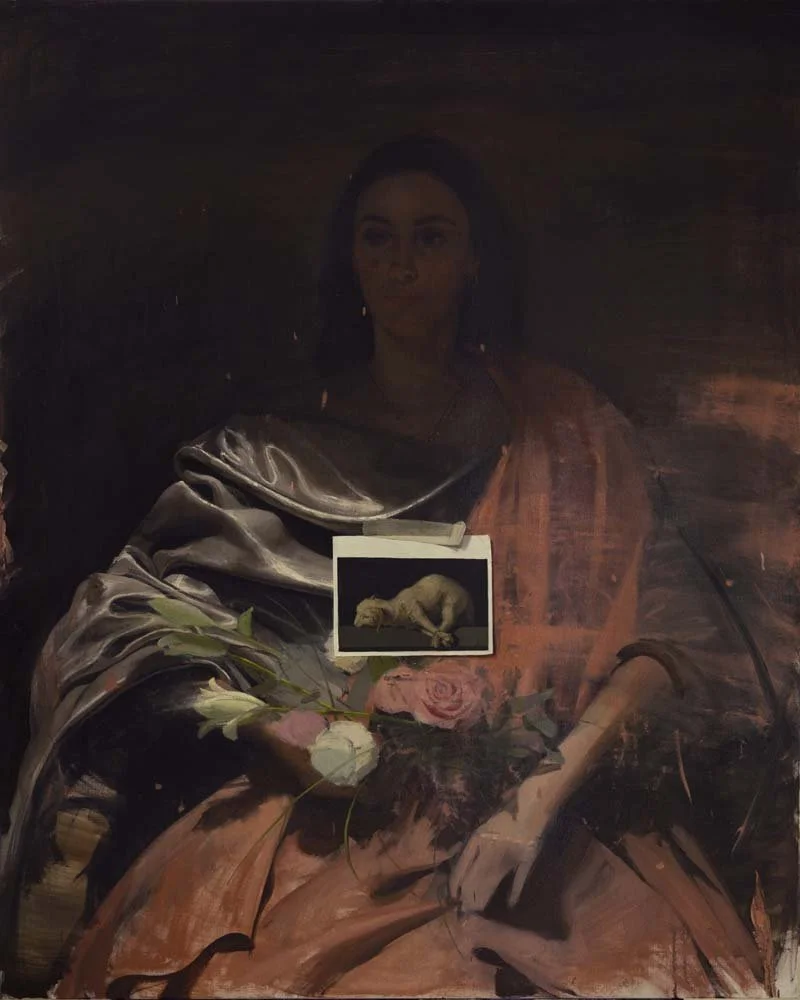
A typical day in my studio begins early in the morning. I help my children, prepare breakfast, and after spending that quiet moment with my family, I go to the studio — where I usually spend much of the day in silence. Silence is part of my work, and also part of my temperament. I need it in order to create, to forget myself a little, and to set aside technological distractions. I try to work with my models directly in the studio, and when that isn’t possible, I use photographs. I dedicate some time to drawing, some to painting, and at times to sculpture or reliefs. My painting is rooted in tradition, yet it also embraces contemporary materials such as spray paint, pigments, acids, together with more classical elements like oils, brushes, linen, and wood. I intervene quite violently on my works, so I also use industrial tools or carpentry machinery as part of the creative process.
Tell us about your current projects at Tang Contemporary Gallery and the MEAM Museum, and the central themes driving them.
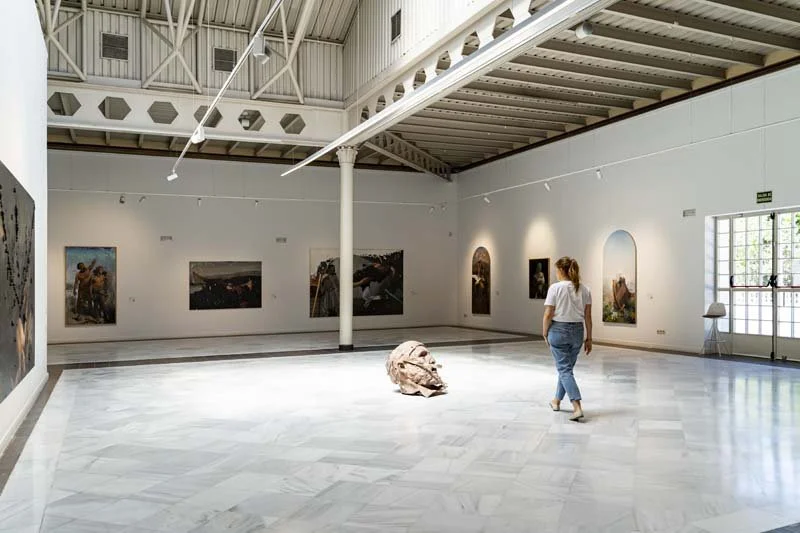
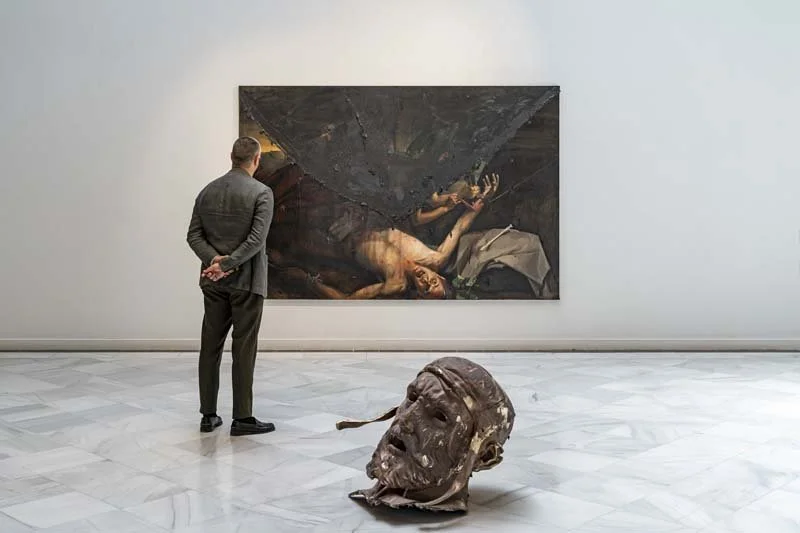
At the moment, I’m exhibiting at Tang Contemporary Gallery in Hong Kong — without doubt one of the most important galleries in Asia, and in the world. It has been a major milestone for me, giving me great confidence in my work and opening new horizons. In November 2025, I will also present a solo exhibition at the MEAM Museum in Barcelona. For the coming year, I intend to continue along the same line of research I’m following now, exploring themes such as the Song of Songs, mythology, and other subjects that lead man to question himself — to ask the essential, existential questions: where do we come from, where are we going, and why do we exist?
What feelings are you aiming to evoke through your work?
It’s a complex question, but I don’t try to express anything that belongs solely to my personal vision of things. Of course, it inevitably passes through me, but my intention is not to fall into that — rather, to convey universal ideas that can reach deeply into each person’s soul. What I seek is for people to experience an apparition of beauty. Beauty is the only force capable of transforming the human heart.
If you could sit down with any artist from history or today, who would it be—and what would you ask them?
Well, artists are, on average, quite unbearable and egocentric. So I’m not sure I’d be too interested in having a very long conversation with some of the artists I admire. But without a doubt, Velázquez or Lucian Freud would be among those I’d choose — at least for five minutes, until we started arguing.
How does the rhythm or tone of classical music feed into your creative process?
Without a doubt, I draw a great deal of nourishment from my readings, especially in the fields of art and philosophy. I’m deeply interested in both contemporary and classical philosophy — Plato and Aristotle give me a solid foundation for thought. I also find inspiration in classical music, which I usually listen to while working.
Living on the French Riviera, what do you find most creatively nourishing?
I live in a small city on the French Riviera, and one of the great things about it is precisely its size — it allows me not to get lost in the noise and distractions of big cities.
How did working on your commission for the Louvre Museum push you outside your comfort zone?
Perhaps the work that has pushed me the furthest — both emotionally and technically — was the piece I created for the Louvre Museum, a commission for a large sculpture that was meant to be installed in the Tuileries Garden in Paris. The main challenge, beyond all the engineering and architectural aspects — since it was a large-scale project involving hydraulic systems, among others — was overcoming the immense technical difficulties of creating a five-meter bronze sculpture. I had to learn several trades and techniques, and in a relatively short time I managed to complete it almost entirely on my own (except for the casting). That experience gave me a strong technical background and a great sense of confidence in future projects, which continues to give me the strength to face new challenges.
How did your father and mother, as your early mentors, impact your growth as an artist?
As I mentioned earlier, my main mentor in life has been my father — and without a doubt, my mother as well, with her extreme sensitivity. Then, of course, I’ve had several teachers. My encounter with the painter Antonio López in the halls of the University of Madrid helped me a great deal; he also encouraged me by telling me that I was a very good draftsman. And, surely, many of my greatest teachers are found in books: above all, Velázquez and Goya — the Spanish masters — and, among contemporary artists, figures such as Peter Doig and Anselm Kiefer.
In what ways does your focus on the human figure shape your creative vision of the natural world?
Of course, nature lies at the center of my creative world, because my work is sustained by the human figure. I’m deeply interested in man as a being capable of reflection and the creation of concepts — something that, as far as we know, no other creature can do. Therefore, I find in the human soul an infinite field of possibilities that opens me to a conception of beauty that transcends everything visible to the eyes.
As AI begins to mirror human output, what do you believe remains the 'irreplaceable core' of human creativity?
It’s a very fashionable question, but I don’t think we should give it excessive importance, in the sense that art deals with entirely different realms than technology does. Technology operates on the technical dimension of the world, while art acts on the aesthetic one. In other words, art is capable of entering systems that artificial intelligence will never be able to access — not because it lacks immense capacity, but because its field of influence is simply different. For example, artificial intelligence will never be able to answer the questions “Why do I suffer?” or “Where do I come from, and where am I going?” These are questions that belong solely to the realm of philosophy, and even more profoundly, to the realm of art — because beauty can respond not only on a technical level, but in the deepest regions of human beings.
Exploring ideas, art and the creative process connects me…
with the mystery that surrounds things and that I can never fully grasp.