

Oxford-based artist James Mortimer on the escapism of a home library, the primal nature of human interaction, and the creative power of limitations.
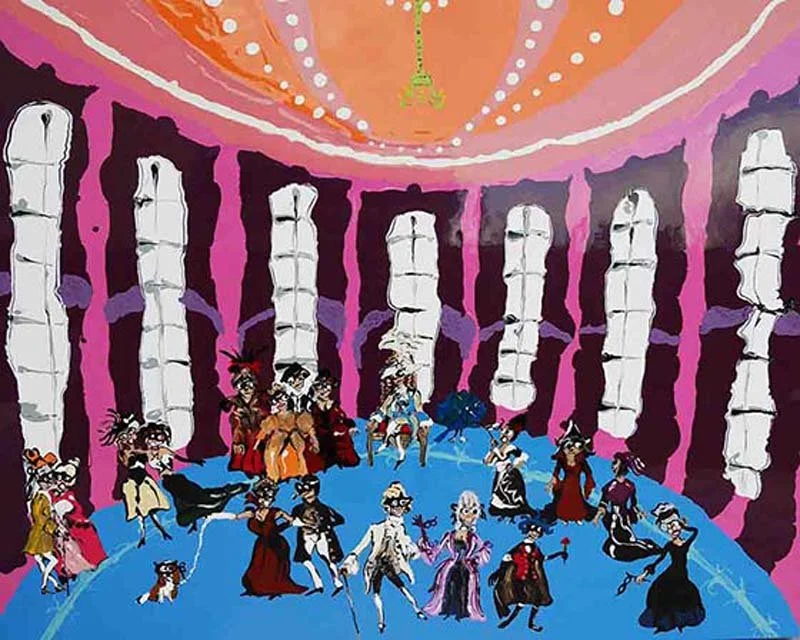
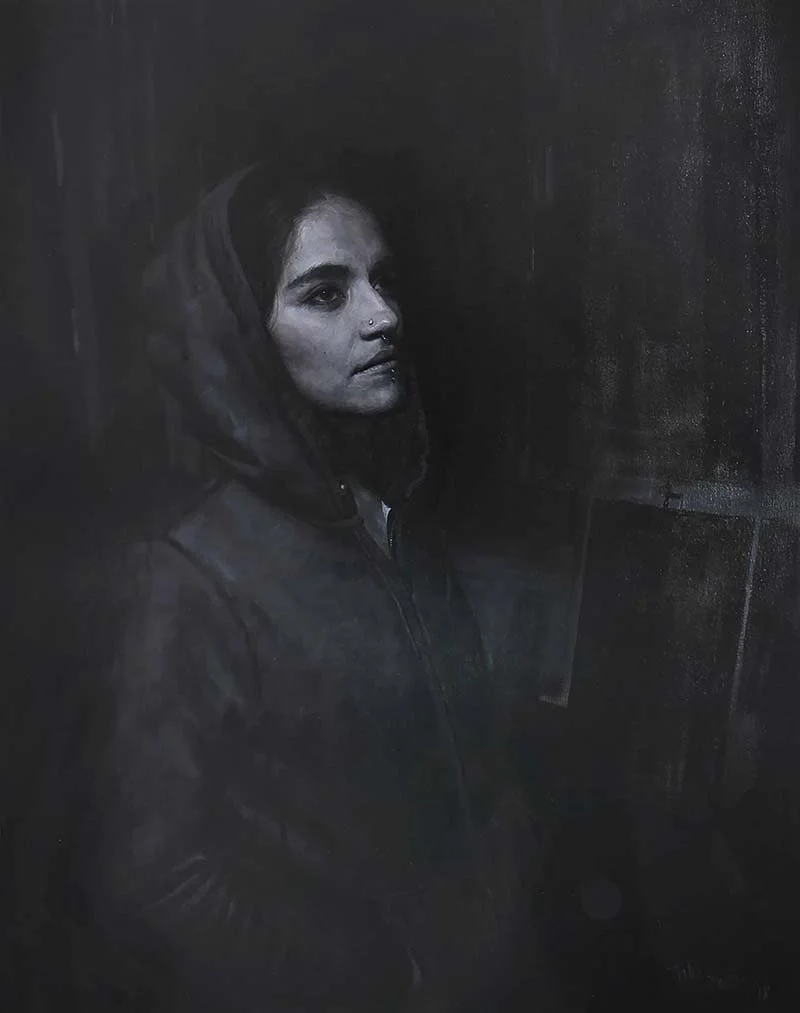
James Mortimer (b. 1989) is a British painter and sculptor whose work investigates the deep, fundamental instincts of the human experience. A graduate of the Bath School of Art and Design and recipient of the Kenneth Armitage Sculpture Prize, Mortimer has exhibited at the Royal Academy of Arts, the Saatchi Gallery, and Christie’s London. His practice, characterized by sparse interiors and vast, non-specific landscapes, draws on a "magpie" approach to art history and literature. Based in Oxford, he balances a rigorous studio schedule with an interest in the "artist-gardener" tradition. @jamesmortimerart
How did your upbringing in Swindon shape your imagination and your approach to art?
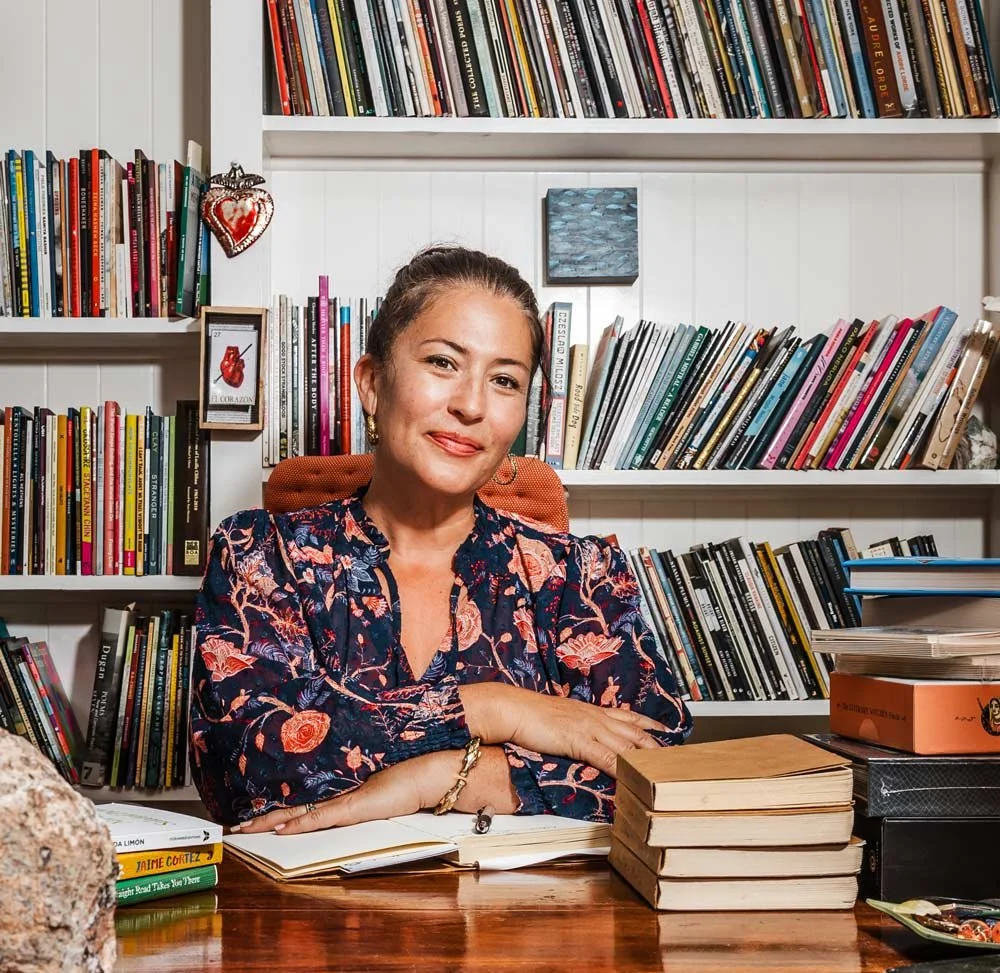
I was born and raised in Swindon, a post-industrial town in the UK. It's not exactly an artistic hotbed, but that probably meant I had to find escapism and beauty in art and books. My mother had some kind of hoarding disorder, and our house was a jumble of thousands of books — all sorts: novels, natural history, art books, nothing organised. We were probably one of the only homes in our area with that many books, let alone a library’s worth.
Can you recall a moment when you recognized art as your chosen path?
Art’s always been my language — all children make art, but it was the thing I was most drawn to and most encouraged in. I’m not sure what the importance of the arts is — it just feels fundamental, like rhythm or the need to tell stories. People will always create, no matter the circumstances.
Describe a typical day in your studio.
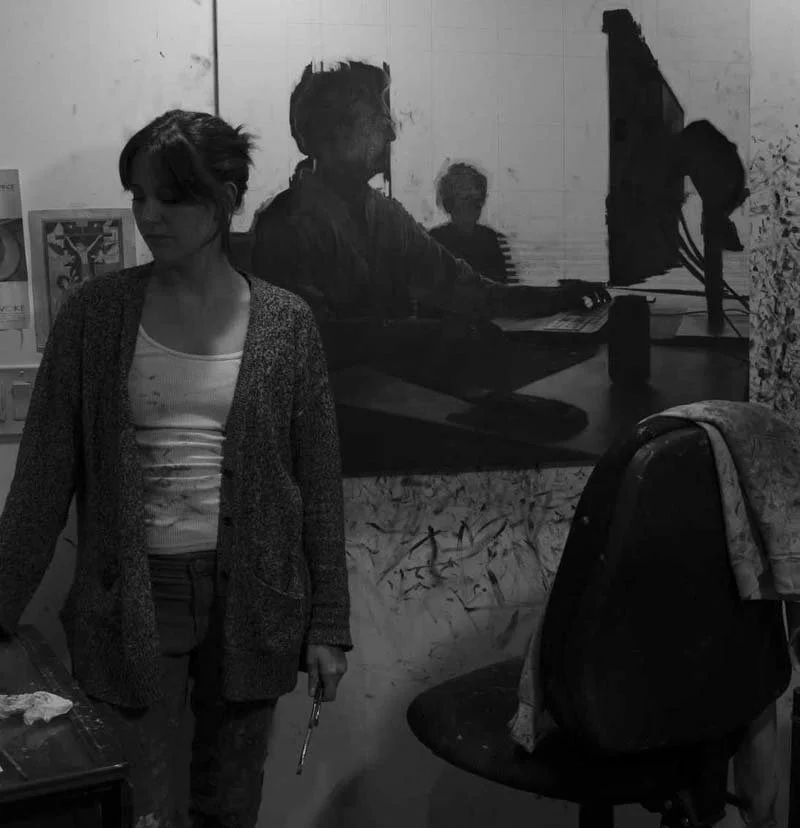
I keep 9-to-5 hours, and start the day by sketching with my left hand (I’m right-handed) as an exercise — it’s a low-stakes way to make marks without a plan, and usually something interesting comes out. I stole the idea from Maggie Hambling who starts her days the same way. I work at a big easel with paints and brushes on a trolley beside me. I use quick-drying oils that cure in about a day — I’m too impatient for long drying times. I tend to work hour-long sessions with breaks in between, to keep focus - it’s good to have that structure, and then within that there’s room for atmosphere.
Tell us about your current projects and the primal themes driving your work.
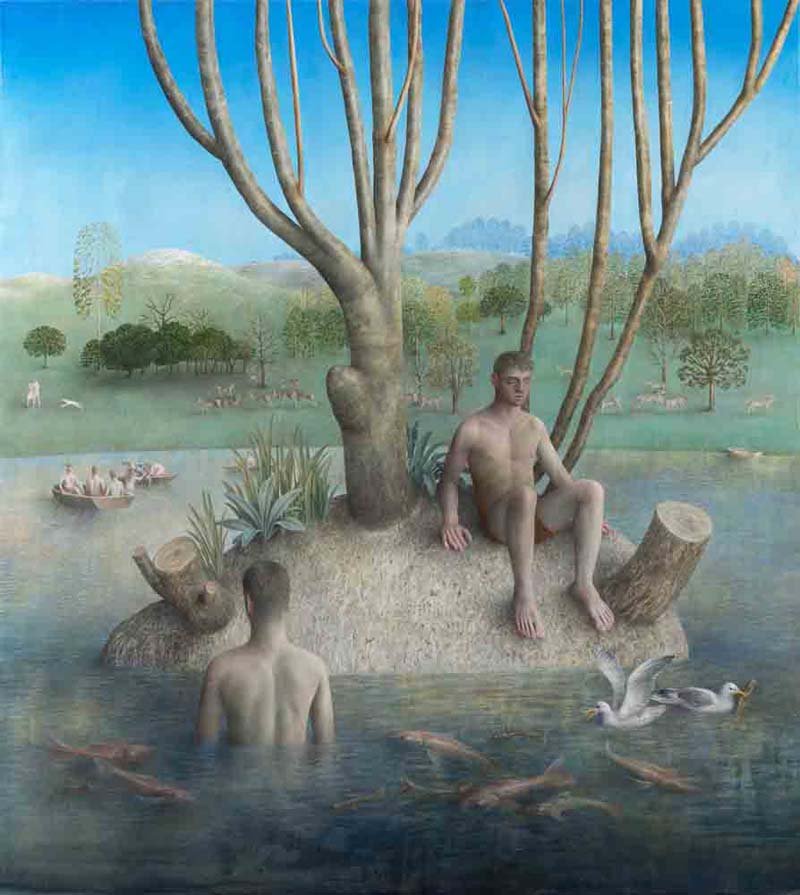
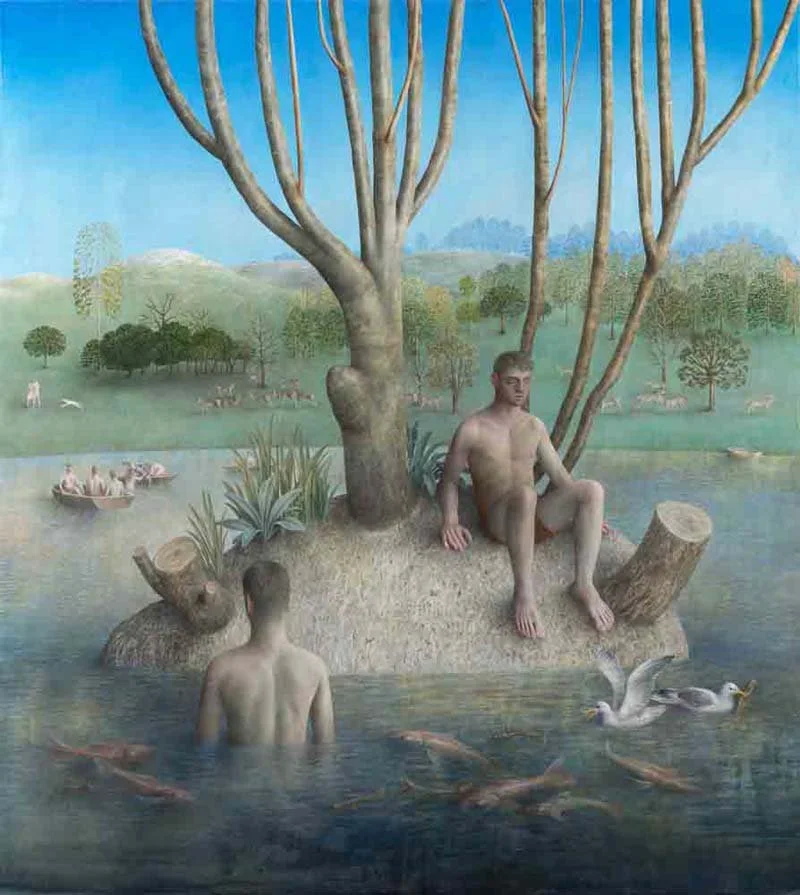
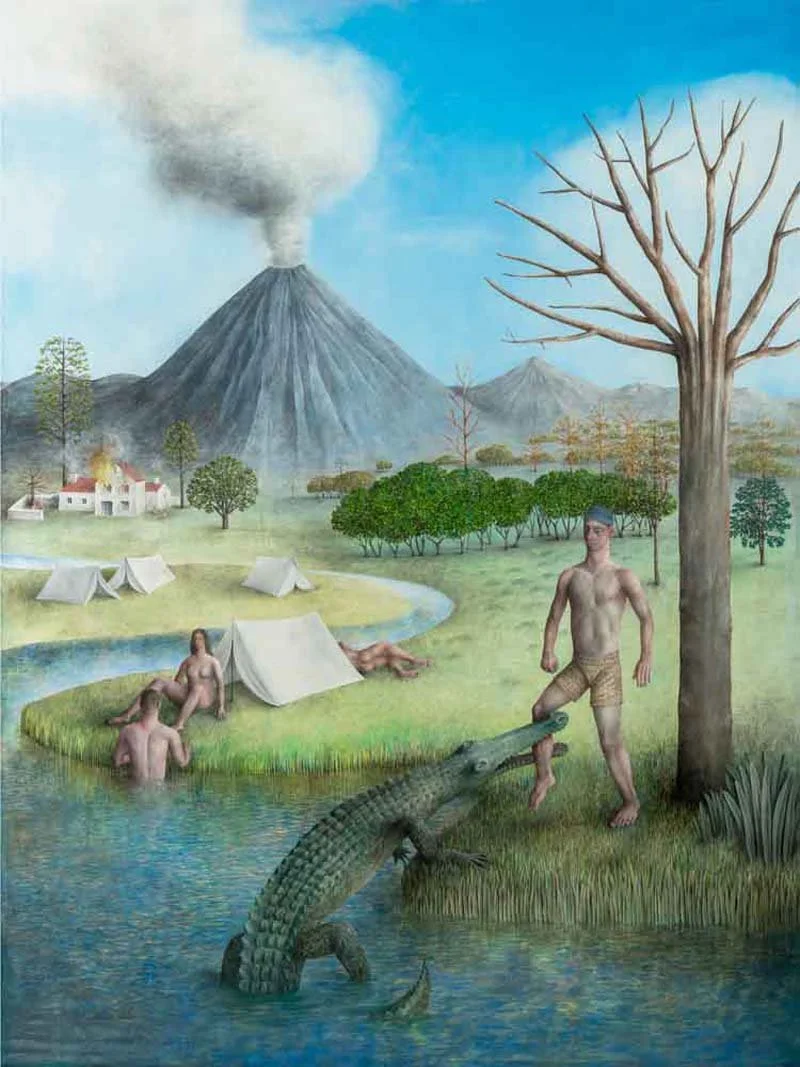
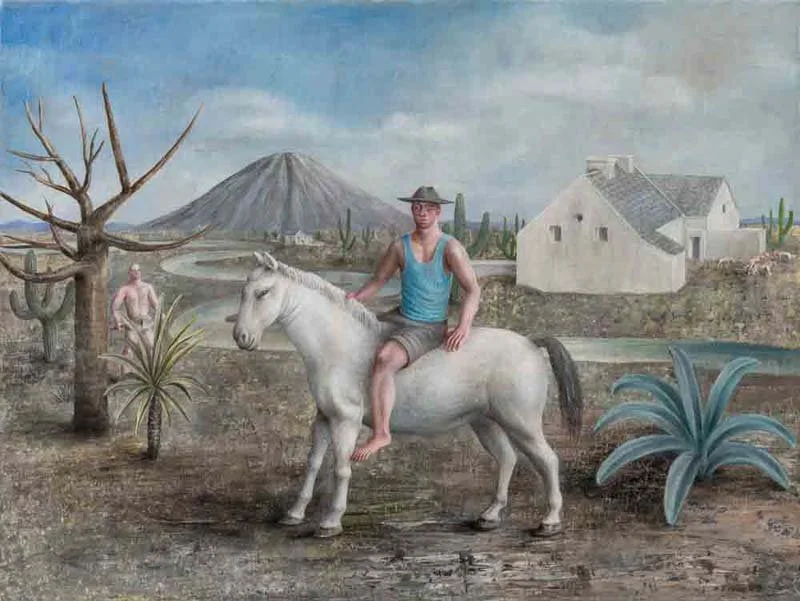
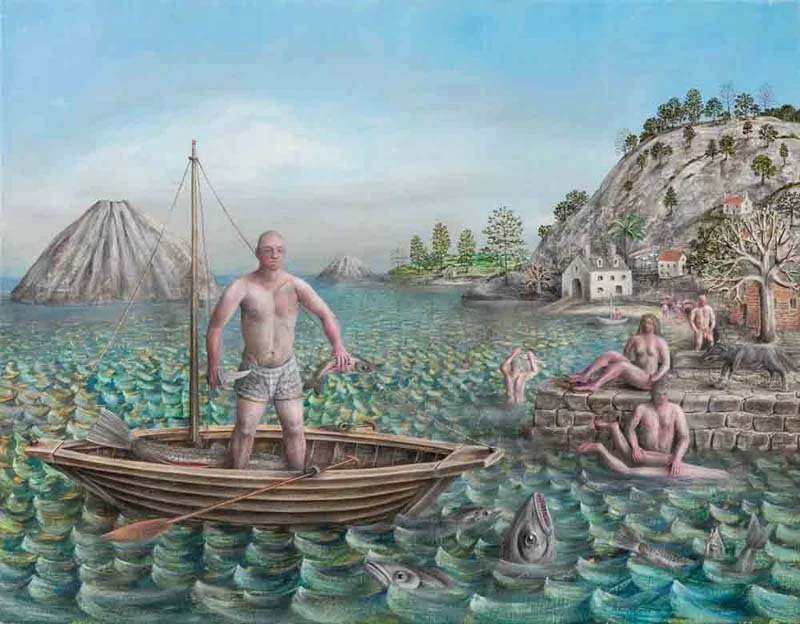
I’m finishing a group of small and large paintings that are heavy on landscape. None are specific places — some look a bit like Cornwall, where I spent a lot of my childhood, mixed with deserts and jungles, and mountain scenes that look like Poland, where I spend a lot of time too (my partner's Polish). The recurring themes are distant horizons, sparse interiors, people and animals circling each other — they all seem to come back to the same thing: the primal.
When viewers experience your art, what emotions or ideas do you hope they connect with?
I'm usually drawing on what's personal and specific to me — though it's not autobiographical — and ideas for pieces usually come unconsciously when sketching. Without being lofty, I'd hope the specificness taps into something deep and fundamental — if it then connects with people, it’s hopefully on an instinctive level rather than an intellectual one.
Which artists, past or present, would you like to meet, and what would you like to discuss with them?
Probably Michelangelo and Picasso, for their energy and talent — and because they'd both have been good to have a drink with. Alive, I’d say Anselm Kiefer and Maggie Hambling: both chain-smokers, extremely witty, and neither actually seem to talk much about art. And then Marina Abramović — unexpectedly funny in interviews and very singular. I technically passed her by during her 512 Hours show at the Serpentine in 2014, where she and her assistants moved visitors around the gallery like chess pieces and got us to hold hands and meditate — that sort of thing. It was quite a moment. I wouldn't want to ask much about art, I’d rather see who they are behind the mask.
Do you draw inspiration from literature, craft, or other disciplines?
Sometimes from books, if a description sparks an image. Otherwise, I’m a bit of a magpie with art — I look at everything. Even bad work usually has something interesting in it, an idea that could be taken further. I’m also drawn to craft and how things are made; sometimes just the grain of a wooden table or the structure of a building can set something off.
What is the significance of the community in Oxford to your creative practice?
I live in Oxford and, other than it being beautiful, the people and community are quite unique — even for someone not connected to the university. Everyone’s working on something interesting or eccentric, but no one takes themselves too seriously. The St Giles Fair is also worth mentioning — it’s complete chaos and hell on earth, but quite the spectacle. The only downside is how flat it is; I miss hills and distant views.
Can you describe a project that challenged you creatively or emotionally—and how you worked through it?
Doing a residency at Colstoun in Scotland last year was a good challenge. Paring my studio setup down to what could fit in a rucksack gave a real insight into what was essential for the work, and having just a month to make a body of work gave a kind of hyper-focus that produced some interesting results. I made lots of small, intense paintings and sketches, and one large piece, and came up with all sorts of ideas I'm still working on. It reminded me how useful limitations are for creativity.
Tell us about important teachers/mentors/collaborators in your life.
My secondary-school art teacher, Ms Parker, was the first person to buy a painting from me (a Cornish seascape), which was a real boost. I've had a few people — family friends, some tutors — who’ve given good advice and motivation at the right moments, and my grandmother was also important. She home-schooled me for a bit and took me to ceramics classes every week, where I made little models. I wouldn’t be doing what I am now without those bits of encouragement along the way.
Sustainability in the art world is an important issue. Does being in nature inspire your art or your process?
I spend a lot of time outdoors, but it’s hard to say what might directly influence the work — occasionally a scene, texture or landscape can lead to an idea. I’ve also become a keen gardener over the last year. Our place in Oxford has a walled garden that was neglected for decades, which I’ve been restoring. It's slowly turning into a wildlife-friendly space with hardy perennials, herbs and self-seeding plants that all survived this year's drought with almost no input - working with nature instead of against it. I’m hopefully joining a noble tradition of artist-gardeners.
In an era where digital tools like AI are redefining reality, what is the importance of the physical, handmade act of creation?
I don’t really have a strong view. Ideally it frees people from mundane tasks, like with industrial automation. In art it might shift the landscape in certain ways, like when photography or printing came along — but there’s something about the human need to make things with our hands that can’t be changed.
Exploring ideas, art and the creative process connects me to…
a way of interpreting the world, keeping myself occupied, and turning thoughts into something real.