

In what ways can art change a person’s perspective of the world?
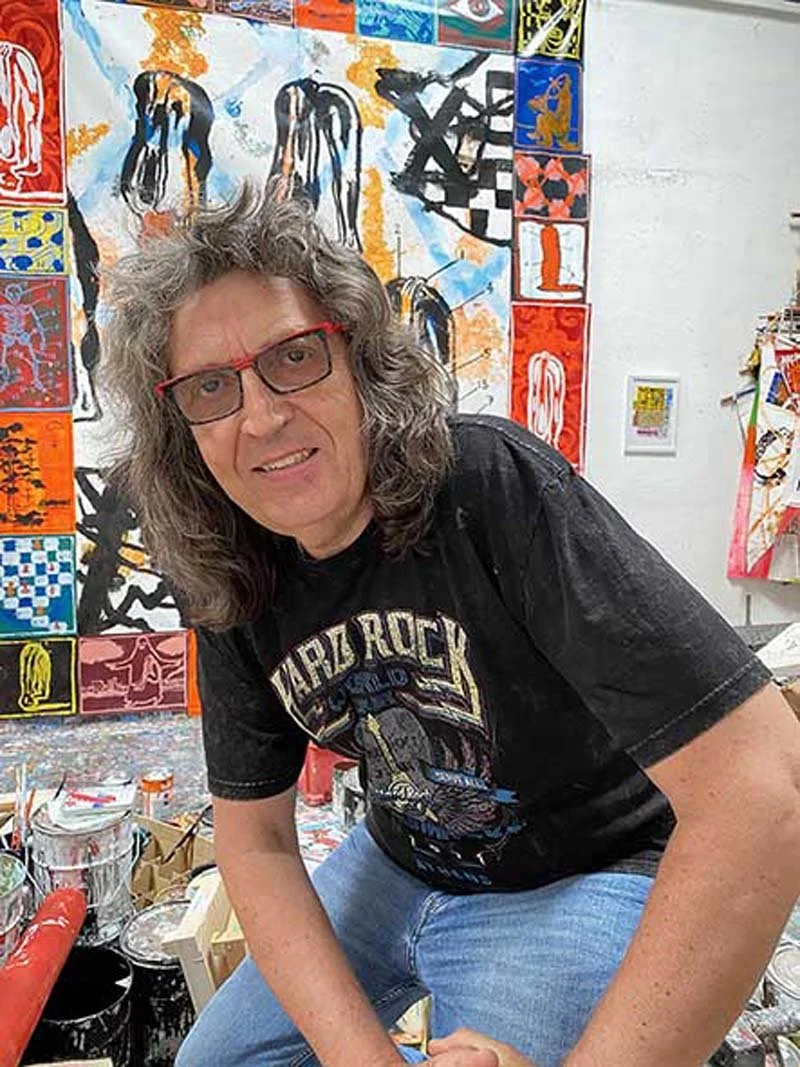
Hermann Josef Hack was born in 1956 in Bad Honnef, Germany. Hack studied art in the Joseph Beuys Class in Kunstakademie Düsseldorf. In 1991, Hack founded the GLOBAL BRAINSTORMING PROJECT and realized more than 250 public art events and took part in more than 50 international art exhibitions in England, France, China, India, Israel, Brazil, Peru, the USA, Germany, and more. He took part in documenta IX 1992 with “Van Gogh TV“ and was awarded several international art prizes, such as Prix Ars Electronica 1997, and the German Federal Cross of Merit for his art in 2017. His philosophical impulses brought new perspectives to art, for example, "Only art will change climate change" or "we need an aesthetic of global survival." Hack expanded the Social Sculpture of his teacher Joseph Beuys into a "Global Social Sculpture.” Hack lives near Cologne, Germany.
In his work, he wants to offer a change of perspectives. We need a new aesthetics, the aesthetics of global survival. Art is the key to invent our future,” Hack states. @hackhermannjosef
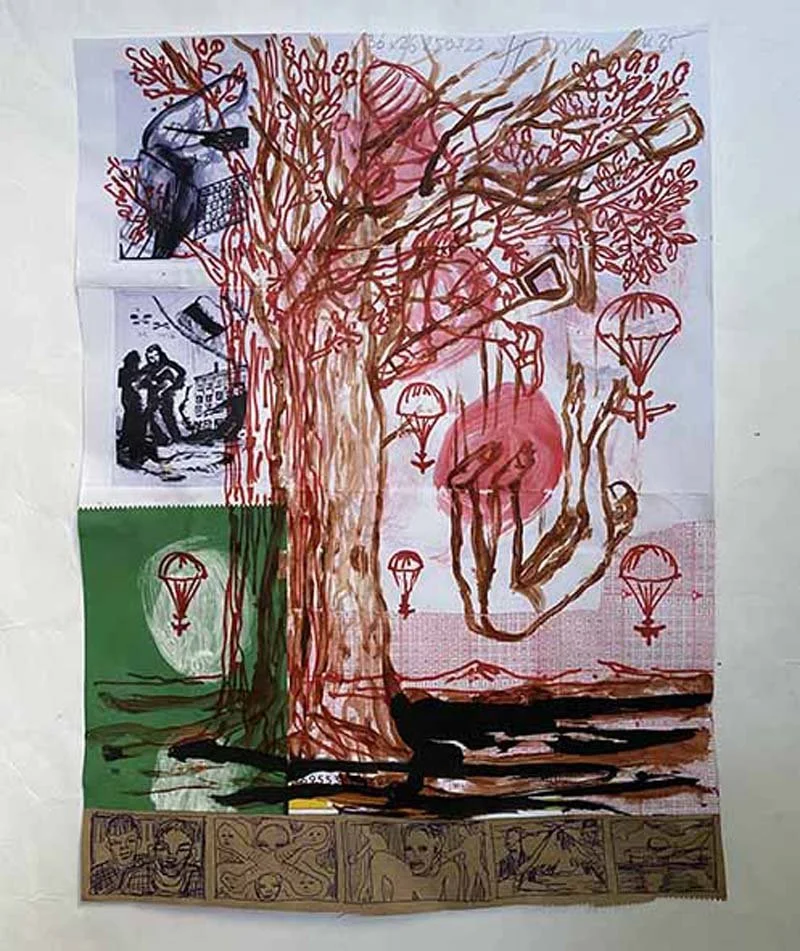
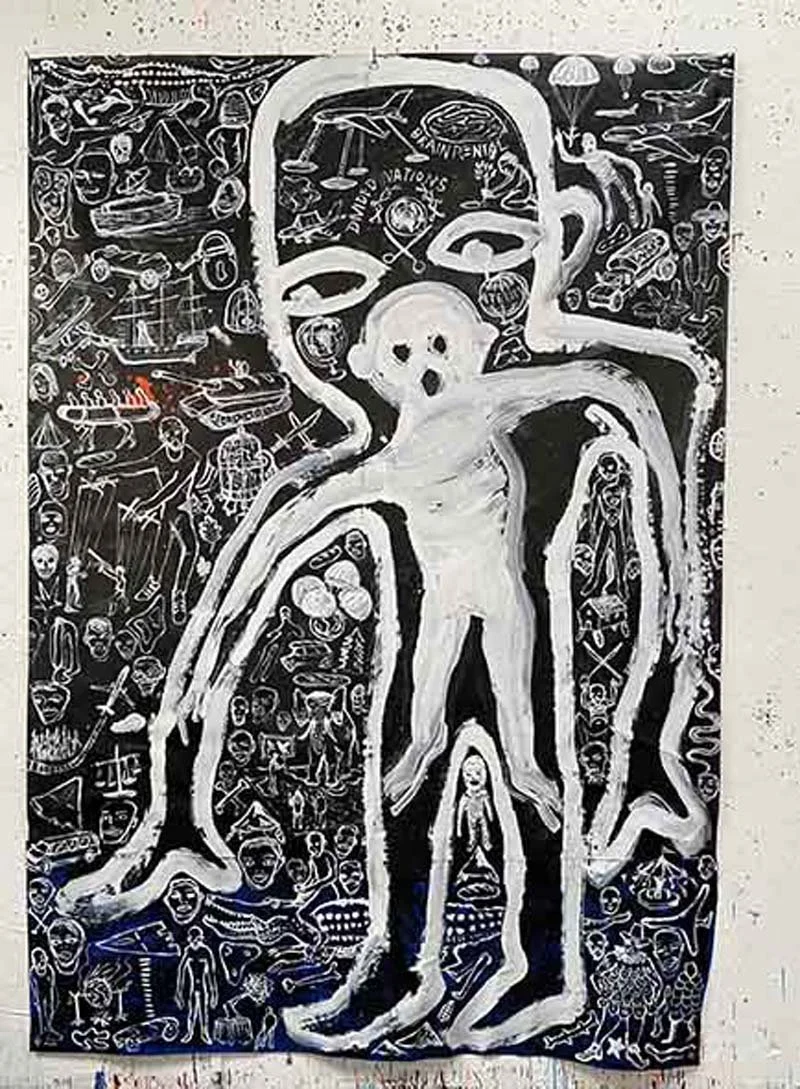
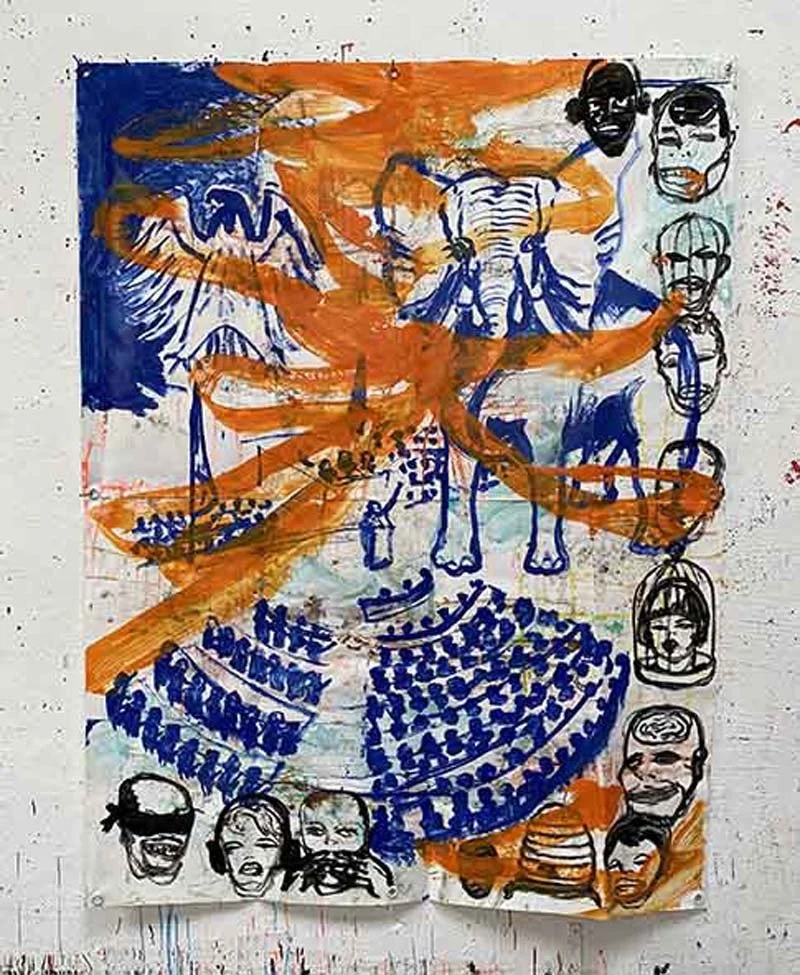
Where were you born and raised? How did it influence your art and your thinking about the world?
I was born in a small village near Cologne, Germany, and enjoyed all the advantages of a sheltered childhood in the midst of beautiful nature, but I also knew hard work and the worries of the simple people to make a living. With my art, I also wanted to reach people who don't regularly go to museums and who don't have a solid understanding of art history. I wanted to convey something to the viewers of my art that is meaningful to them and not just serves my vanity.
When did you first fall in love with art and realize you wanted to be an artist? For you, what is the importance of the arts?
My first happy experiences with art were sitting on my mother's lap, drawing animals, people, and objects with me. When I started school, I noticed how my talent impressed others when I was asked to draw a classmate. I realized early on that I could capture people's attention with my art. For me, it was an inner obligation to handle this ability responsibly and to use it meaningfully. Like no other medium, art can transport people to another world, thus creating a change of perspective and enabling new visions that we urgently need for our future. I founded the Global Brainstorming Project in 1991 to create a platform through art where all visions, ideas, and designs for a sustainable future could be presented and discussed in exchange with researchers, scientists, and the general public. To date, I have realized over 250 actions and projects with it, together with my colleague and friend Andreas Pohlmann, who joined in 1994.
What does your typical day in the studio look like? Walk us through your studio and your most-used materials and tools.
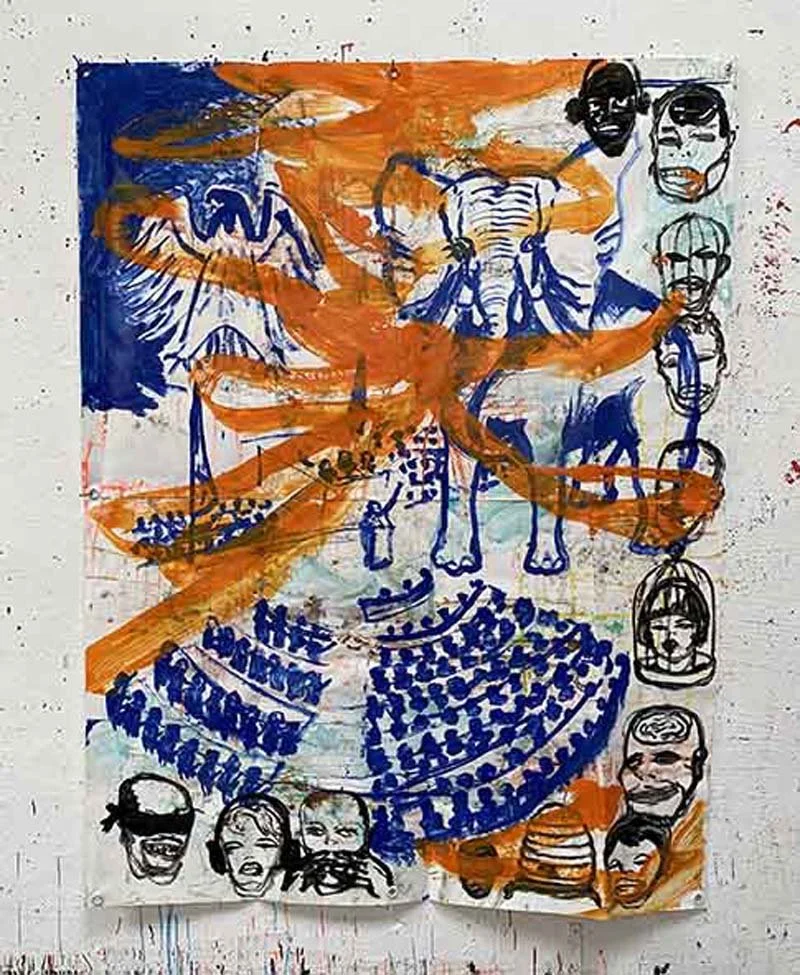
In the morning, before I go to the studio, I usually do a few drawings or paper works at home. My studio is located in a nature reserve opposite a large pond where rare birds breed, surrounded by a wooded area. In the studio, I prepare my large-format paintings. For this, I glue scraps of truck or tent tarpaulin, which I recycle from waste, together to form larger formats and place them on the floor. In dry weather, I also like to work outside in front of my studio. I prime the painting surfaces with several layers of paint, a special printing paint that is weather-proof and can be used outside. Over time, I've developed my own paint that adheres permanently to the tent canvas. I paint on the ground, laying my paintings flat on the ground. When they're finished, I attach eyelets, which I then use to mount them on the wall. Each painting is photographed and later rolled up and stored in a large stack in a corner of my studio. The fact that the images are rollable makes them lightweight and environmentally friendly to transport, and easy to install. The material itself is part of the message; it's sustainable and can be easily displayed anywhere, even in refugee camps or outdoors, in the forest, etc., which I've already done.
What projects are you at work on at the moment? And what themes or ideas are currently driving your work?
I'm currently working on depicting changes in perspective in my paintings, not in a technical sense, but in a metaphorical sense. I show my subjects from a normal view and from a view rotated 90 degrees. Not like Georg Baselitz, who turns his subjects upside down to distance himself from them, but rather to attune the viewer to new perspectives. This has been the ongoing search since the founding of the Global Brainstorming Project for new ways of expressing a change of perspective in our society, which should lead to new insights for a sustainable transformation.
What do you hope people feel when they experience your art? What are you trying to express?
I want to inspire the viewer to become aware of their potential for change for the better and, through my images, inspire a desire for change. If we want to reach people, this is not done by imparting knowledge alone, but above all by appealing to their emotions. Art is a language unto itself, one that cannot be explained otherwise. My images are intended to speak for themselves and allow the viewer to experience for themselves that change is possible.
Which artists, past or present, would you like to meet? And why?
Leonardo da Vinci, Albrecht Dürer, Max Beckmann, Egon Schiele, Basquiat, Warhol—there are many interesting people to talk to, and from their works, I can see that we have common ground.
Do you draw inspiration from music, art, or other disciplines?
I get my inspiration from contacts with scientists and researchers in the field of earth system research, by walking through the city, or by jogging through the forest. Of course, this can also be done by looking at the work of other artists in museums or on Instagram.
A great thing about living in my city/town is…
When I walk through my city, many people greet me, people I often don't know. Because I've involved several school classes in my art projects, following the motto "think globally, act locally," and I invite young people to visit my studio, many of my fellow citizens know me, also because I'm often featured in the media.
Can you describe a project that challenged you creatively or emotionally—and how you worked through it?
A major project that shaped me early on was my participation in the world's first interactive television project at the documenta in 1992 with the Ponton artist group. Shortly after founding my Global Brainstorming Project GBP, I was invited to produce my own TV show there, using my research contacts and my ideas for direct communication. I subsequently organized several pioneering projects in new media. I covered the sky above certain cities with my virtual roof and created what media scientists call a precursor project to social media like Facebook (Prof. Dr. Tilman Baumgärtel). Equally worthy of mention are the projects with refugees in Sri Lanka in 2010, Lebanon in 2014, and Peru in 2015, which I conducted together with Andreas Pohlmann. The people were immediately enthusiastic and actively participated in our painting activities and the coloring book for refugee children. We then presented the results to children of the same age in Germany and encouraged them to get in touch with the children in the refugee camps.
Tell us about important teachers/mentors/collaborators in your life.
Apart from my mother, who instilled in me a love of drawing, Joseph Beuys was an impressive figure for me. However, I was bothered by the fact that his influence remained limited to the inner circle of the art scene, even though he intended otherwise. I later expanded his Social Sculpture into a Global Social Sculpture. In 1994, I met Andreas Pohlmann, an artist with shared interests in research, science, nature, and social issues. Since then, we have worked closely, each on his own work, but also in daily exchanges of ideas and in many joint projects. We both engage with leading researchers, scientists, and philosophers and seek contact with people interested in shaping the future.
Sustainability in the art world is an important issue. Can you share a memory or reflection about the beauty and wonder of the natural world? Does being in nature inspire your art or your process?
As mentioned, I enjoy working outdoors and have even exhibited my paintings in the forest. I was influenced by my youth in the countryside, surrounded by nature, and I want to ensure that this remains possible for future generations. That's why I use recycled materials and, since founding the GBP, have focused on global change. I jog in the forest three times a week and let myself be inspired by nature in every season.
AI is changing everything - the way we see the world, creativity, art, our ideas of beauty and the way we communicate with each other and our imaginations. What are your reflections about AI and technology? What is the importance of human art and handmade creative works over industrialized creative practices?
In the 1990s, I used the latest media to involve as many people as possible in my brainstorming sessions with researchers and scientists in remote locations around the world. At the time, I was considered a pioneer, and my projects were celebrated in leading computer magazines. I was awarded the Prix Ars Electronica and am considered an inventor of social media (Prof. Dr. Tilman Baumgärtel on my contributions to Van Gogh TV). I exploited the possibilities of communication technology for my art, allowing even the poorest and most diverse social classes to share in its benefits. Just as early, however, I also recognized that these inventions were being hijacked by large corporations to pursue their commercial goals rather than serve culture. Therefore, I practiced slowing down in my work and devoted myself to painting and drawing. I don't see any contradiction in this. Rather, I am convinced that we should utilize technological advances to ensure the survival of our species. However, the cultural component is at least as important, because we are cultural beings. And art cannot be created by AI. It's all about using the tools wisely. The idea and its intellectual implementation never come from the machine, but always from humans.
Exploring ideas, art and the creative process connects me to…
the world as it is and to many possibilities of future worlds to create.